
There is something calming about holding a heavy porcelain cup that has survived decades of morning brews and afternoon chats. Collectors often find that focusing on a specific color palette, like the cool tones of blue and green, makes a shelf look intentional rather than cluttered. Whether you are hunting at a local thrift shop or browsing online auctions, knowing the specific styles can help you spot a true gem among the rows of dusty dishes.
This guide explores a variety of blue and green teacup designs that bring a sense of history to your kitchen. You will learn about classic patterns, unique materials, and how to spot the characteristic details of different eras. These pieces do more than just hold tea; they serve as small works of art that make your daily routine feel a bit more grounded.
Blue Willow Pattern China Tea Cups

The Blue Willow pattern is perhaps the most famous design in the history of ceramics. These china tea cups tell a legendary story of two lovers through intricate scenes of willow trees, bridges, and birds. Most versions feature a stark white background with a deep cobalt blue transfer print that looks sharp and classic on any table.
When you look for these, check the underside for maker marks like Churchill or Johnson Brothers. Older versions might have a slightly blurred print, which adds to the vintage tea cup aesthetic. These cups are sturdy enough for daily use but look beautiful when grouped together in a large display.
Hand-Painted Floral Mint Green Tea Cup
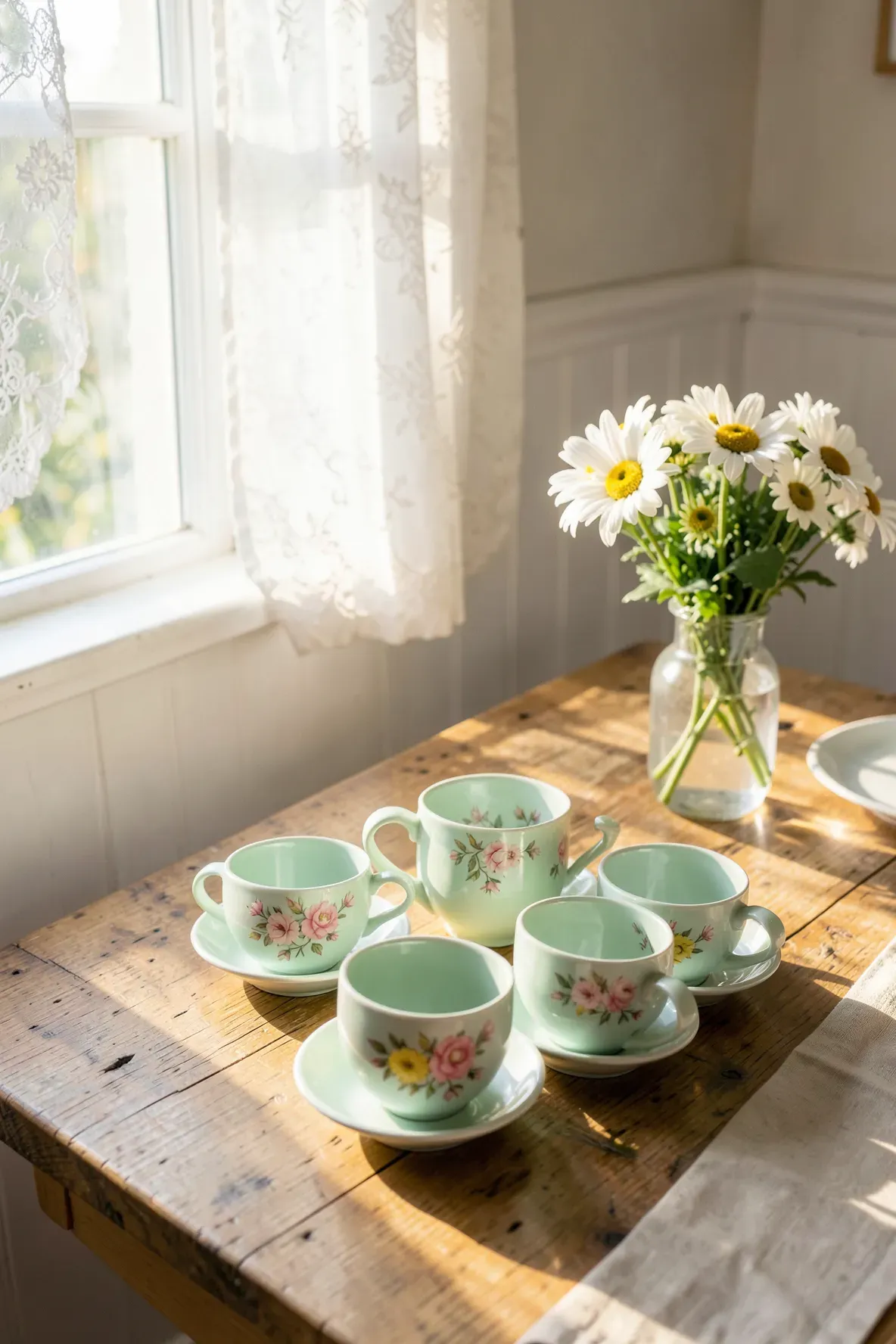
A mint green tea cup with hand-painted flowers offers a soft, feminine look that was very popular in the mid-1900s. Because these are painted by hand, no two cups are exactly the same. You might find tiny variations in the petals or the way the green glaze sits around the rim, which gives the piece a personal touch.
To keep these looking good, avoid the dishwasher. The high heat and harsh soap can strip away the delicate floral details over time. Instead, wash them by hand with a soft cloth to preserve the light pastel colors and the artist’s original work.
Victorian Cobalt Blue Bone China with Gold Filigree
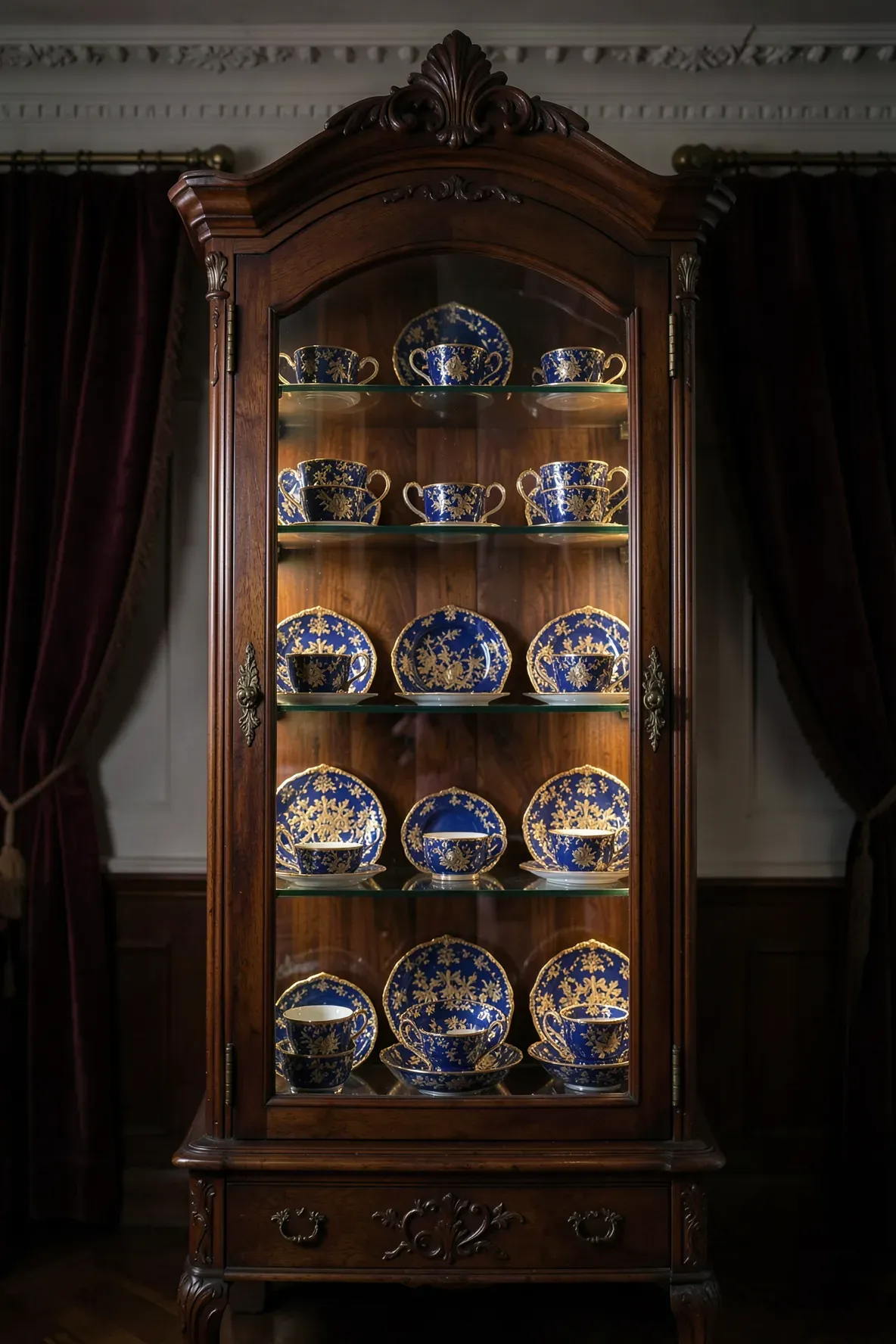
Victorian-era cups often feature a rich, dark cobalt blue that feels very formal. These antique tea cups are usually decorated with heavy gold filigree or lace-like patterns along the edges. The contrast between the dark blue and the bright gold makes these pieces stand out in a collection.
Because bone china is thin and translucent, you can hold these up to the light to see the quality of the material. Look for sets that still have the gold trim intact, as the gilding can wear off if the previous owners used them frequently. These are best saved for special occasions or as a centerpiece in your cabinet.
Pale Robin Egg Blue Pedestal Teacup Set
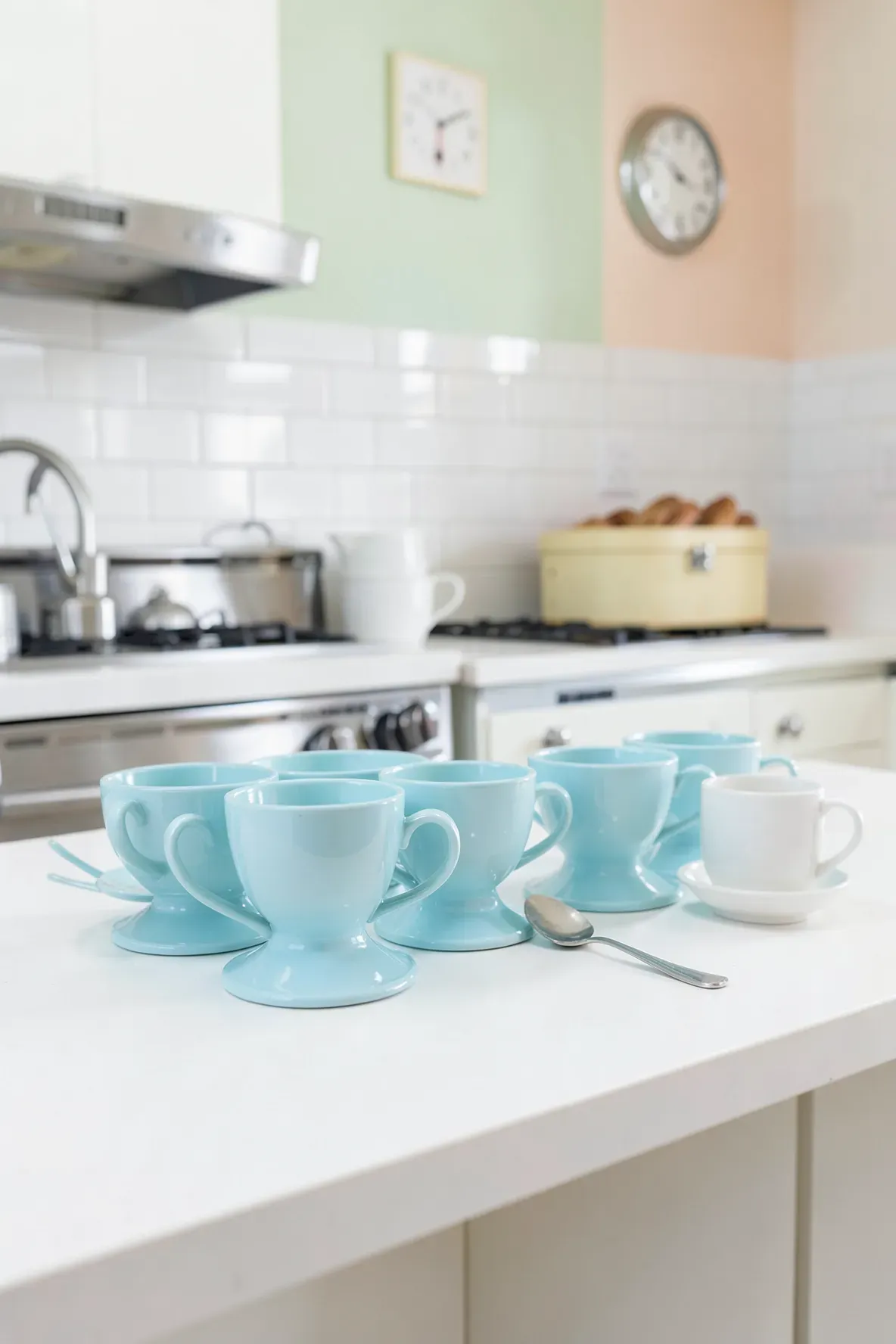
A pedestal teacup set sits on a small raised base, giving the cup a taller and more elegant profile. The robin egg blue color is a favorite for those who like a bright, cheerful kitchen. This specific shade of blue was a staple in 1950s kitchenware and pairs well with white or silver accessories.
These sets often come with a matching saucer that has a deep well to keep the pedestal base secure. When shopping for these, run your finger along the base to check for small chips, as the pedestal is the most vulnerable part of the design. They look great when mixed with other pastel colors for a varied look.
Art Deco Geometric Navy Blue Coffee Cups
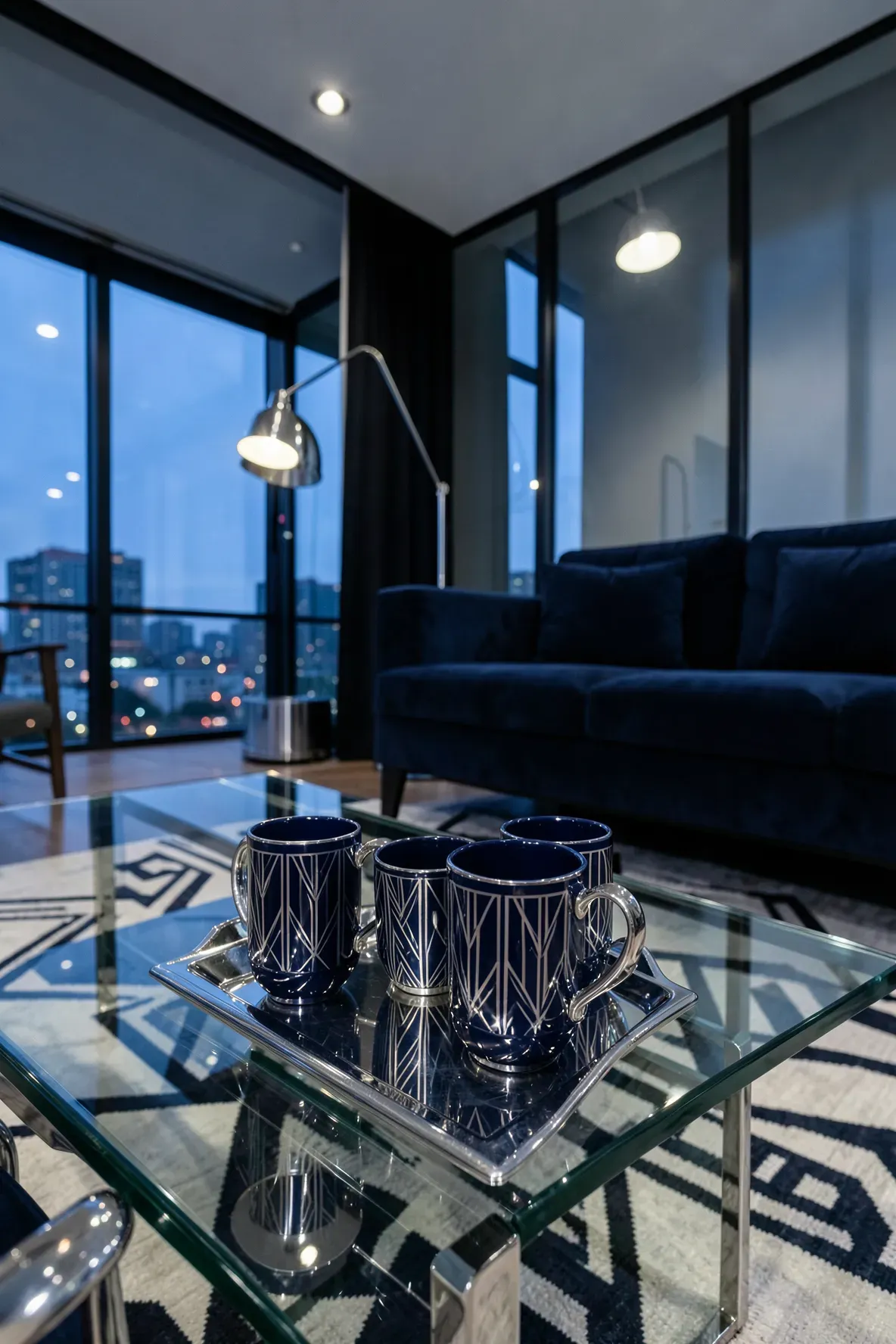
If you prefer sharp lines over floral patterns, Art Deco vintage coffee cups are a great choice. These designs often use navy blue in bold, geometric shapes like triangles or stepped lines. The style is much more modern and architectural than the flowery designs of the previous century.
These navy blue pieces often feature silver or chrome accents instead of gold. They fit well in a modern home that still appreciates vintage craftsmanship. Look for marks from the 1920s or 30s to find authentic pieces from this era.
Mid-Century Modern Turquoise Ceramic Tea Sets Vintage
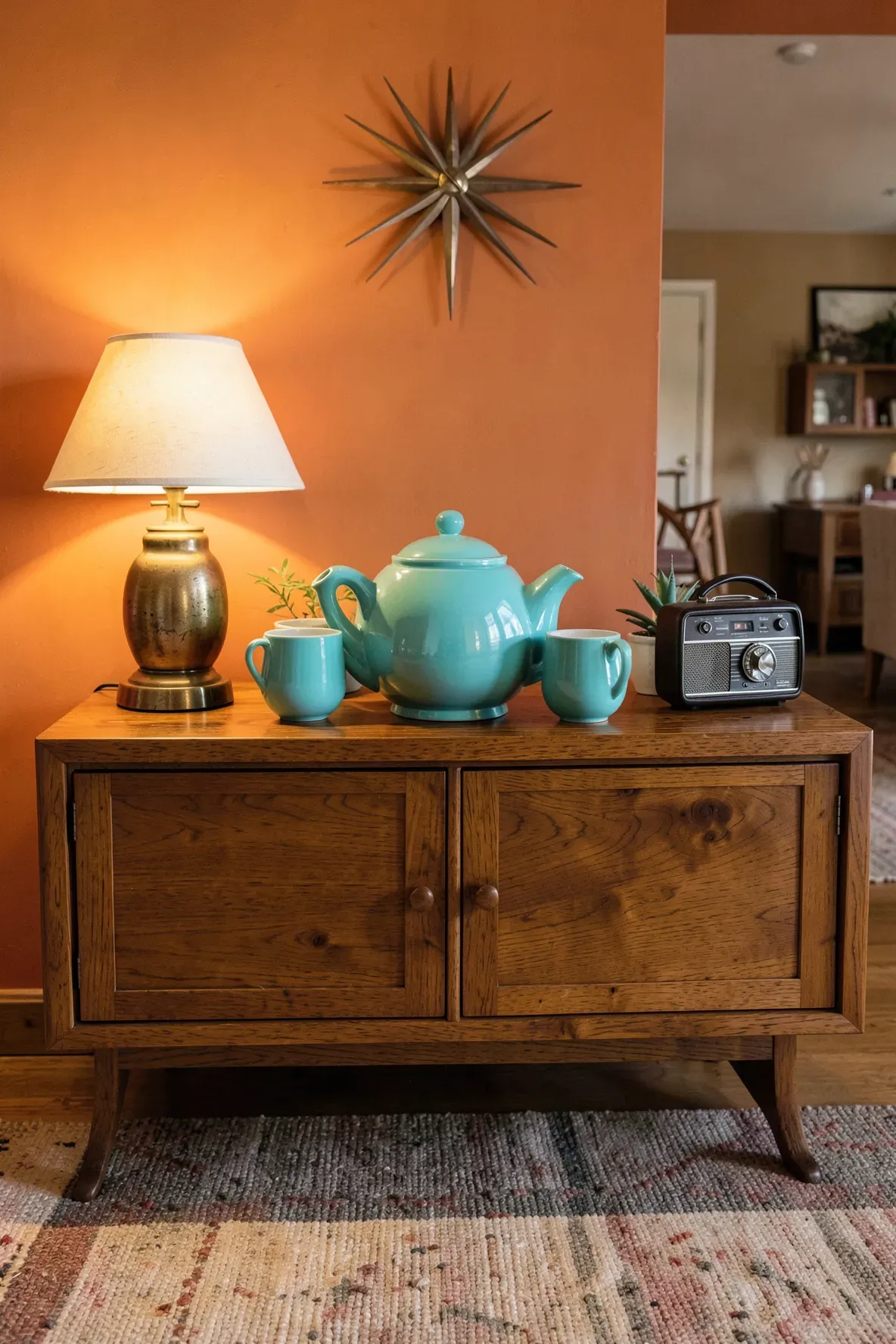
Mid-century tea sets vintage collectors love often come in bold turquoise ceramic. These sets moved away from thin bone china and toward thicker, more durable stoneware or earthenware. The shapes are usually simple and organic, reflecting the design trends of the 1960s.
You can often find these in full sets including a teapot, sugar bowl, and creamer. The solid turquoise glaze is easy to clean and holds heat well, making it a practical choice for people who actually want to drink their tea while it’s hot. They add a bright pop of color to a wooden sideboard or open shelving.
Japanese Celadon Green Tea Cup with Crackle Glaze
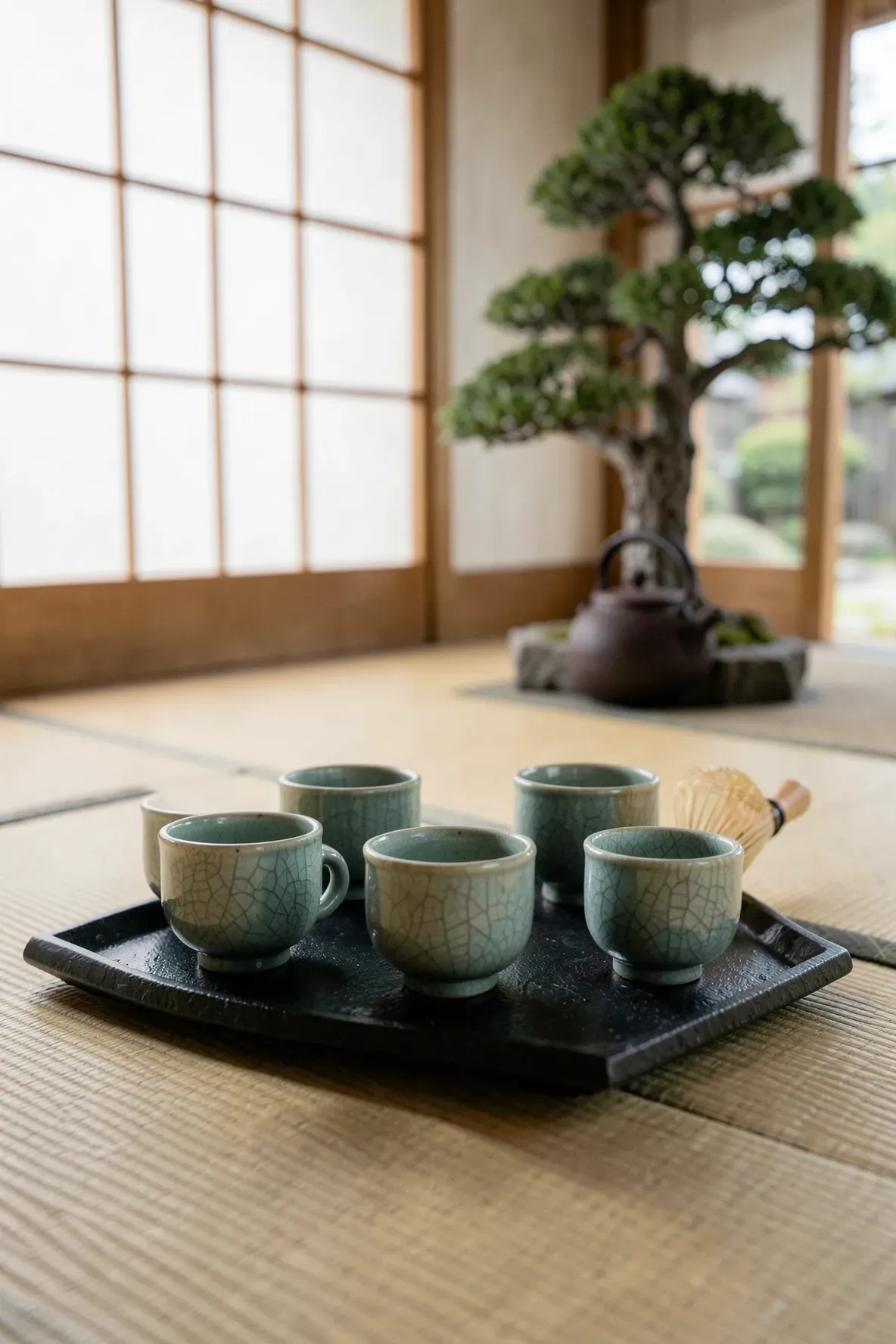
Celadon is a soft, pale green glaze that originated in Asia and has a serene, watery appearance. A Japanese green tea cup in this style often features a crackle glaze, where tiny, intentional cracks spiderweb across the surface. This isn’t a defect; it is a celebrated aesthetic choice that adds texture to the piece.
These cups are often handleless, designed to be held with both hands to feel the warmth of the tea. They work well for green tea or herbal blends. The subtle color makes them easy to pair with other natural materials like bamboo or wood.
English Rose Blue Calico Transferware
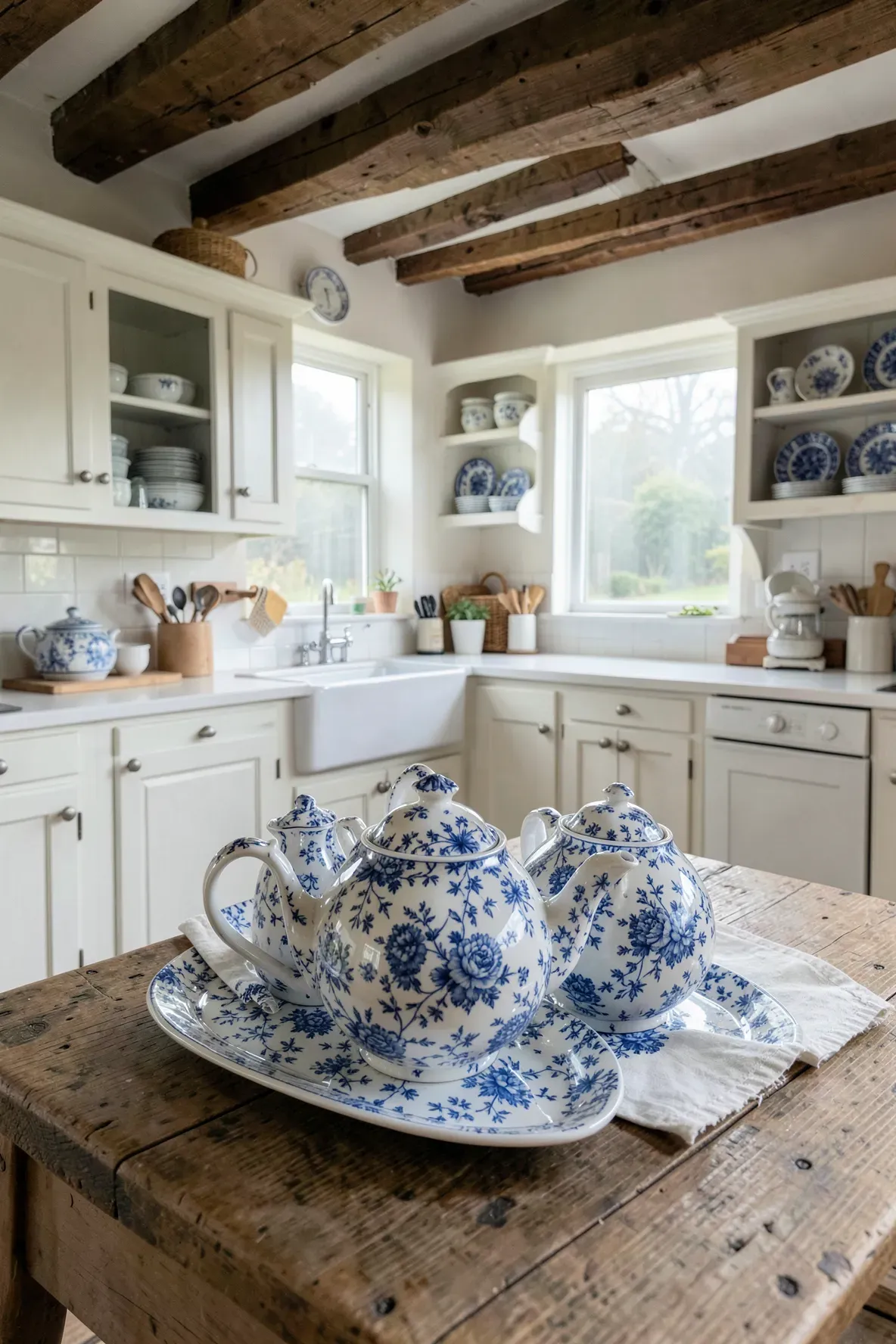
Blue Calico is a dense, all-over floral pattern that originated in England. Unlike the Blue Willow pattern which features a specific scene, Calico is a repeating print of tiny blossoms. It has a cozy, farmhouse feel that works well in a casual kitchen setting.
Burleigh is the most famous maker of this pattern. These pieces are usually quite durable and can handle regular use. If you are building a collection, you can find everything from mugs to dinner plates in this blue and white style to match your teacups.
Sage Green Fluted Porcelain Antique Tea Cups
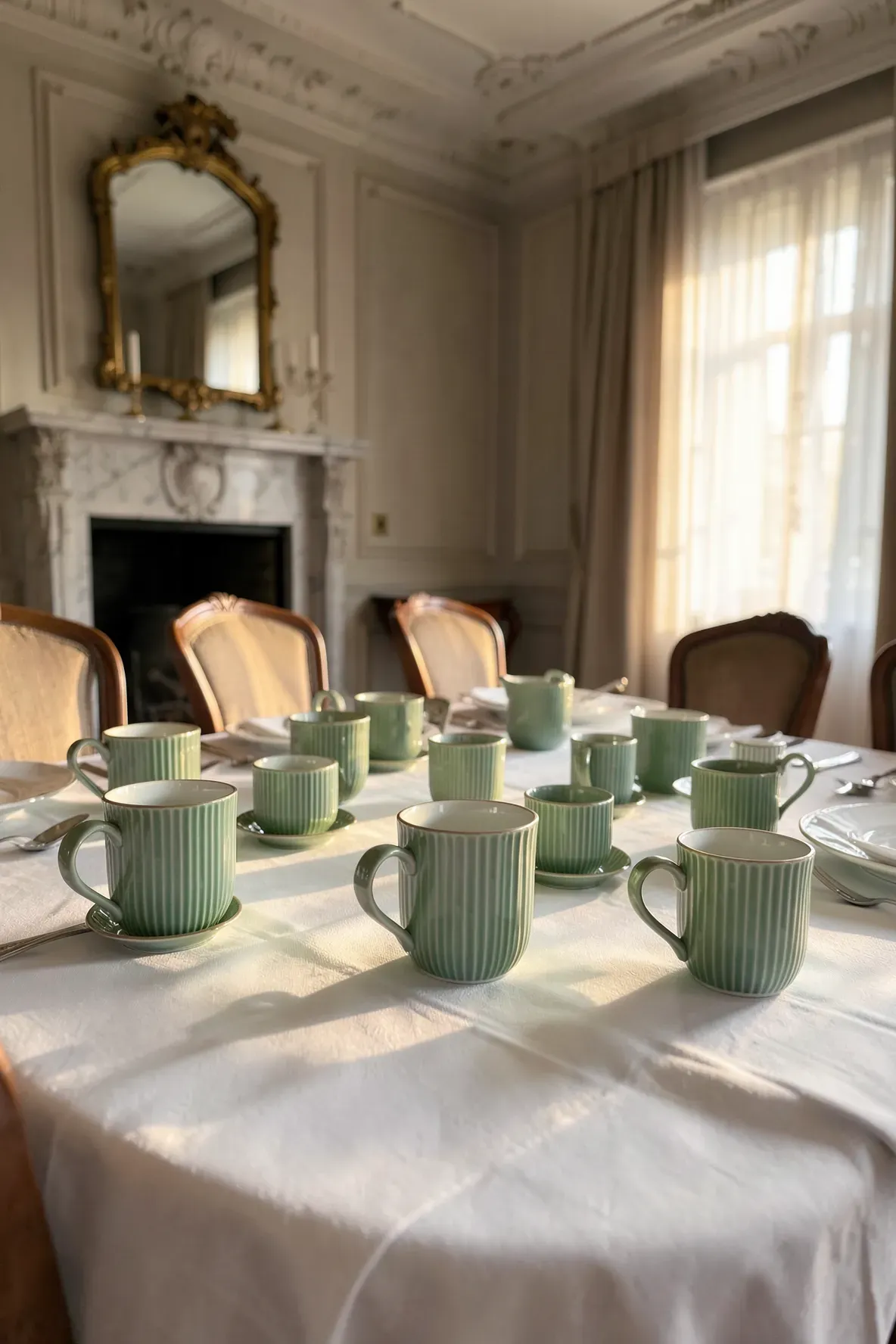
Fluted porcelain has vertical ridges that add a tactile element to the cup. In a soft sage green, these antique tea cups look sophisticated and earthy. The fluting catches the light differently at various angles, highlighting the shape of the porcelain.
Sage green is a neutral enough color that it doesn’t overwhelm a space. These cups look particularly nice when paired with white linens. Check the edges of the ridges for any wear, as these raised areas are where the glaze tends to thin out first over the years.
Wedgwood Style Blue Jasperware with White Relief
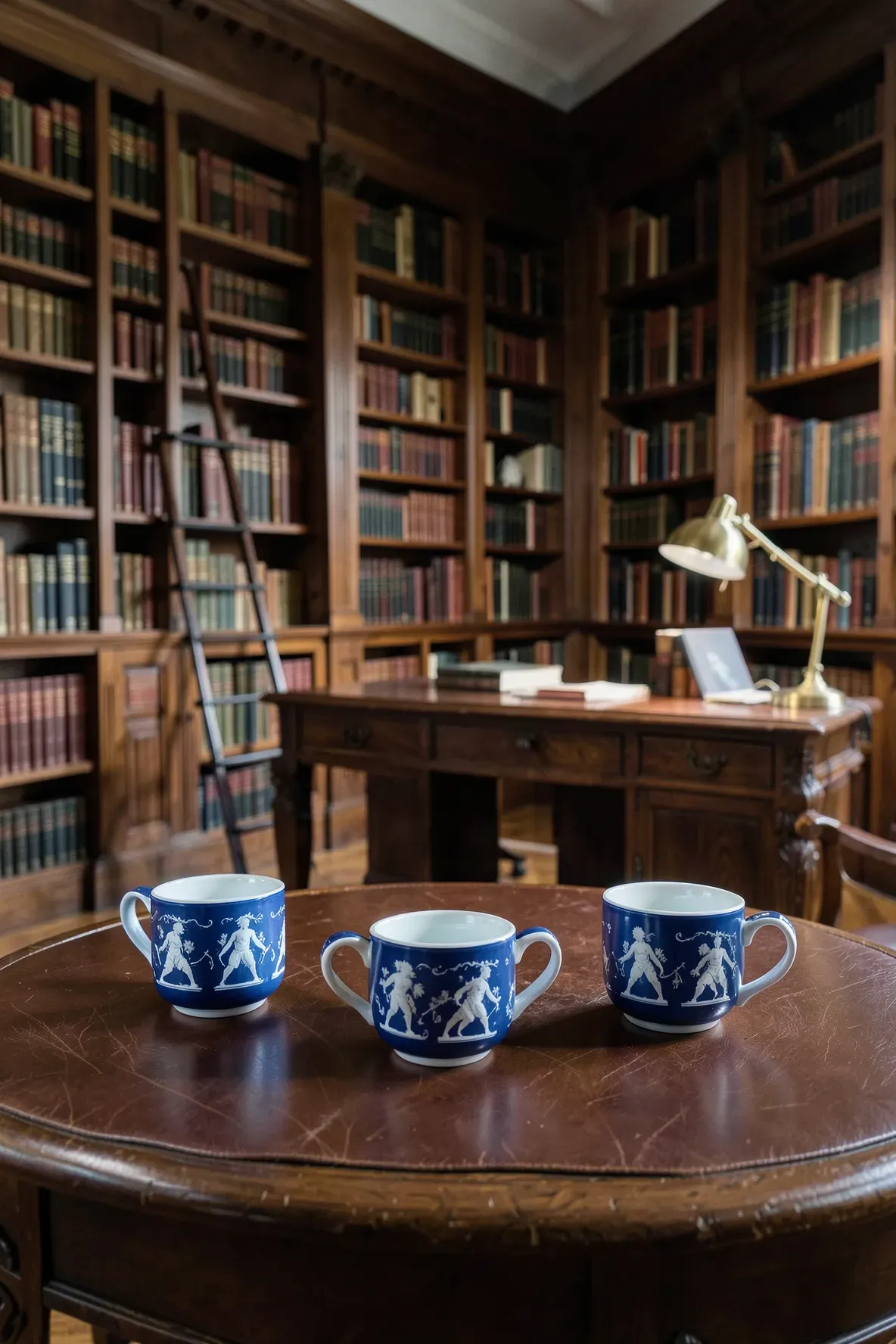
Jasperware is a matte stoneware that is most famous in its “Wedgwood Blue” shade. It features white unglazed relief decorations, often depicting scenes from Greek mythology. The texture is smooth and stony, which is very different from the shiny glaze of most china tea cups.
Because the surface is matte, it can pick up dust or oils from your hands more easily than glazed porcelain. You can clean these with a soft toothbrush and warm soapy water to keep the white relief looking crisp against the blue background. These pieces are iconic and immediately recognizable.
Royal Blue Scalloped Edge China Tea Cups
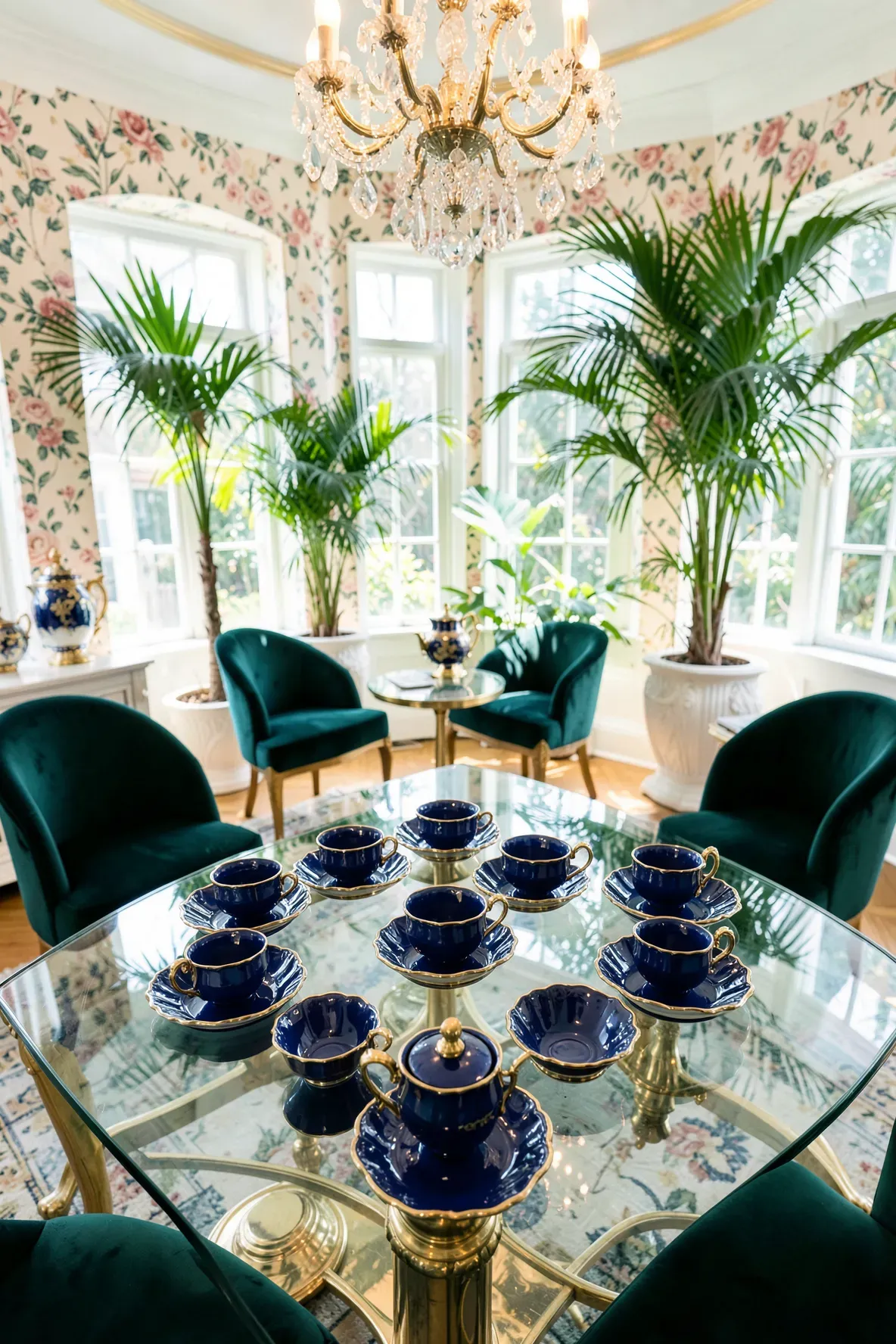
A scalloped edge adds a wavy, petal-like border to the rim of the cup and saucer. When finished in a vibrant royal blue, these cups look regal and polished. The scalloped detail is often highlighted with a thin line of gold or silver to make the shape stand out.
These are great for adding a bit of flair to a tea cup display. The shape is a bit more delicate than a straight rim, so be careful when stacking them. It is usually better to store them side-by-side or on hooks to avoid chipping the decorative edges.
Floral Chintz Patterned Green Tea Cup
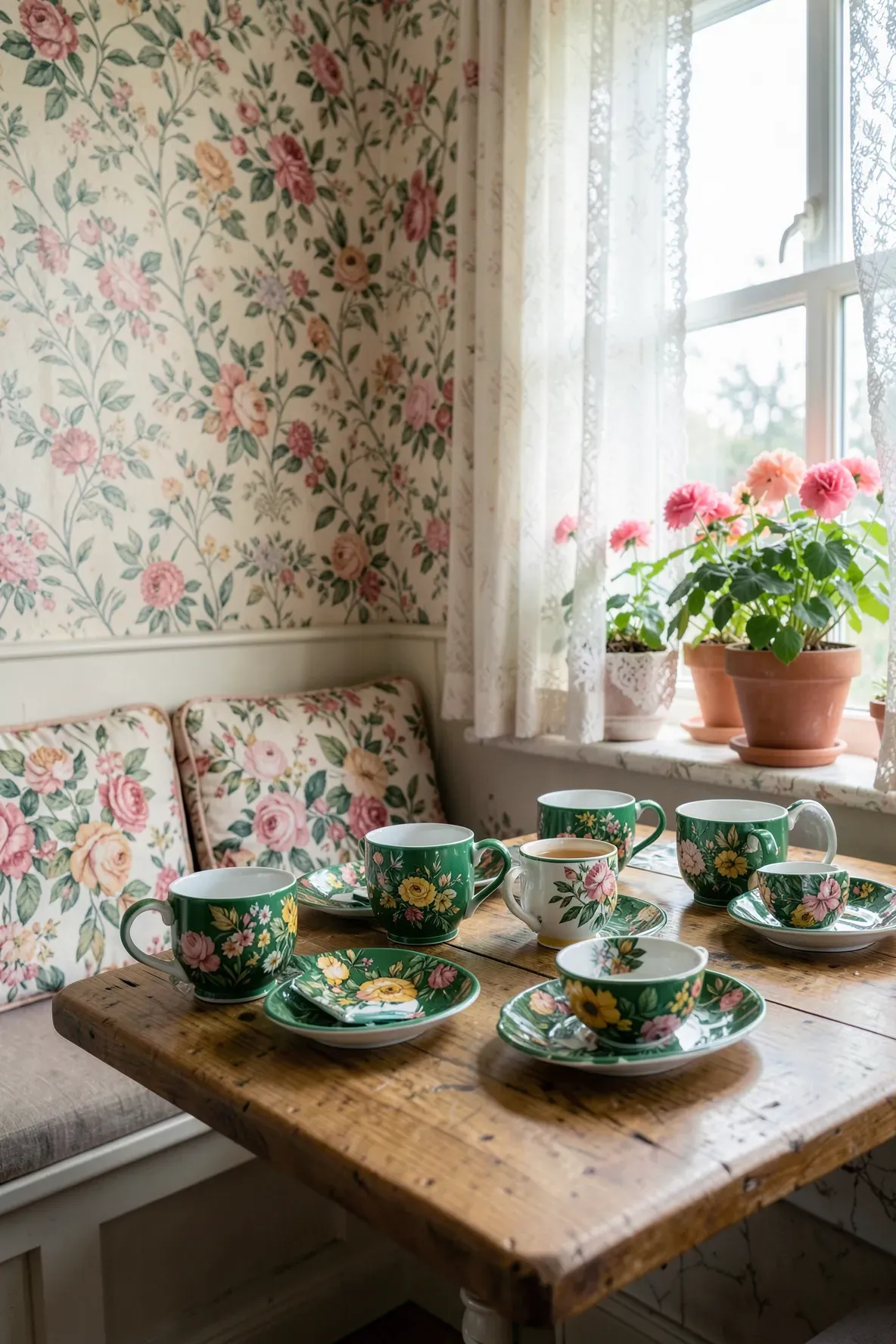
Chintz is a style where the entire surface of the cup is covered in a dense, colorful floral pattern. A green tea cup in a chintz style often uses a leafy green background to tie the various flower colors together. It is a very busy, maximalist look that was a huge trend in the early 20th century.
Royal Winton is a brand known for high-quality chintz patterns. These pieces are highly collectible and can be quite valuable. When you buy these, look for “crazing,” which are tiny cracks in the clear overglaze. While common in old chintz, pieces without crazing are usually more desirable.
Gilded Navy Blue Teacup Set with Matching Saucer
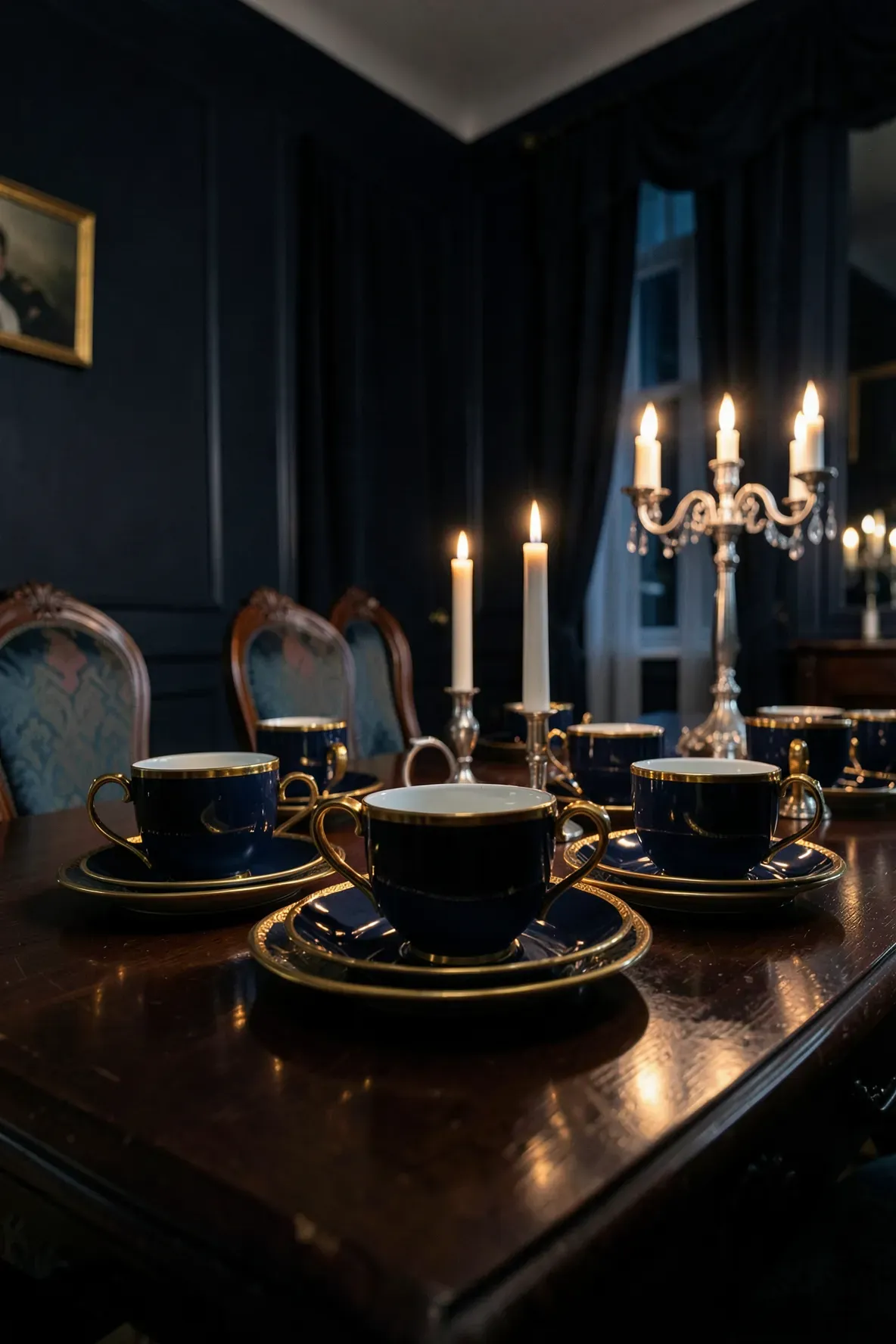
A navy blue teacup set with heavy gilding offers a moody, dramatic look. The dark blue provides a perfect backdrop for gold accents, which might include solid gold handles or wide bands of gold around the middle of the cup. This style was often used for formal tea services.
When looking at tea images for inspiration, you will see these often used in winter or evening settings. The dark color makes the gold pop brilliantly under warm indoor lighting. Always check that the saucer matches the cup exactly, as the gold patterns should line up perfectly.
Rustic Teal Stoneware Vintage Coffee Cups
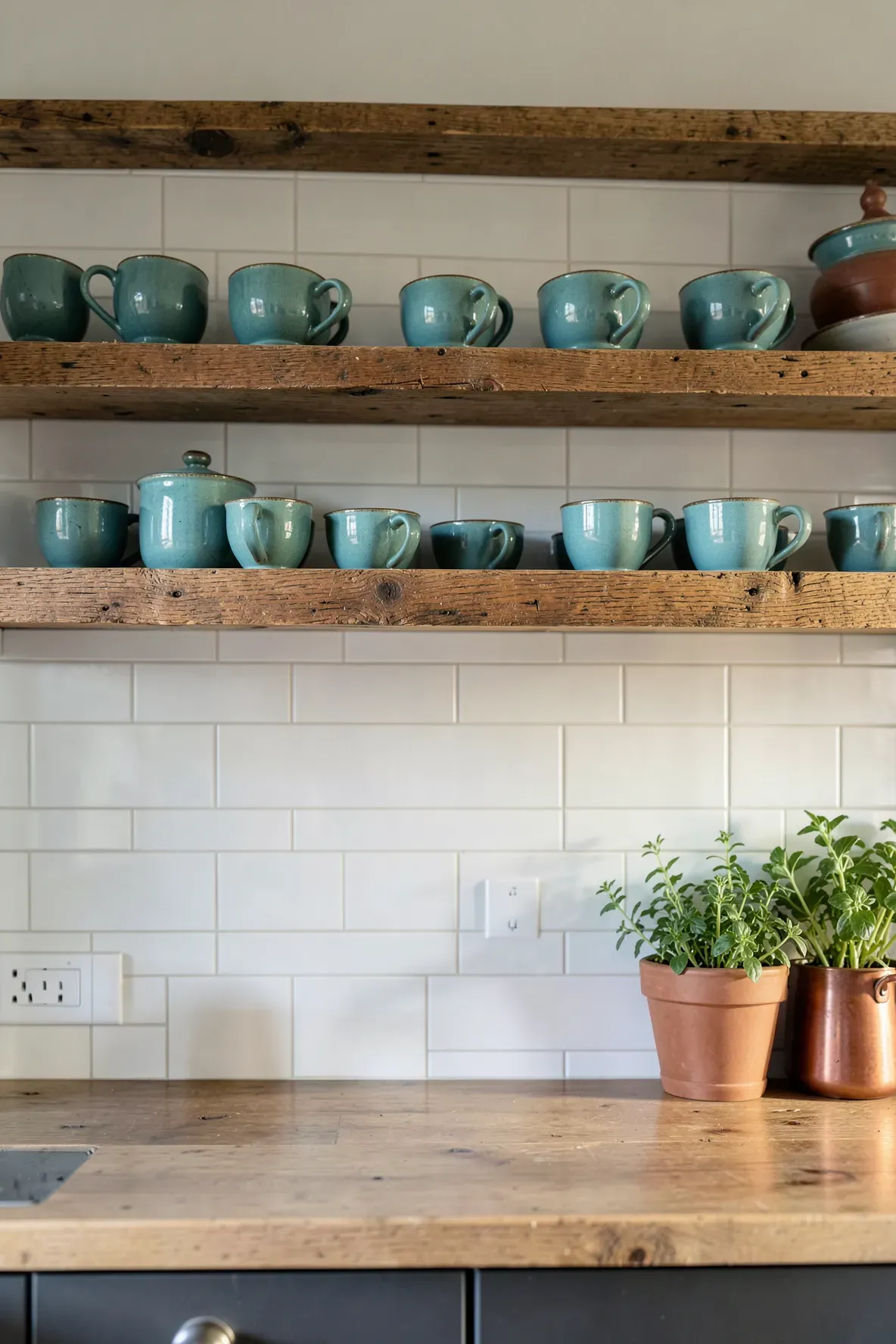
For those who prefer a more grounded, handmade feel, rustic teal stoneware is a great option. These vintage coffee cups are usually heavier and thicker than bone china. The teal glaze often has variations in color, with some areas looking more green or blue depending on how the kiln heat hit the piece.
These are perfect for a morning coffee or a large cup of tea. They are generally much more durable and less prone to cracking than delicate porcelain. They look best in a kitchen with natural wood accents and open shelving.
Delft Blue Windmill Patterned Antique Tea Cups

Delftware is a traditional Dutch style of blue and white pottery. These antique tea cups usually feature hand-painted scenes of windmills, tulips, or canal houses. The blue is typically a soft but distinct shade that has been used for centuries.
Authentic Delft pieces are often hand-marked on the bottom with the city of Delft or specific factory marks. Even the souvenir versions from the mid-century have a charming, nostalgic look. They are a staple for anyone who loves a blue and white color scheme.
Emerald Green Glass Teacup with Silver Trim
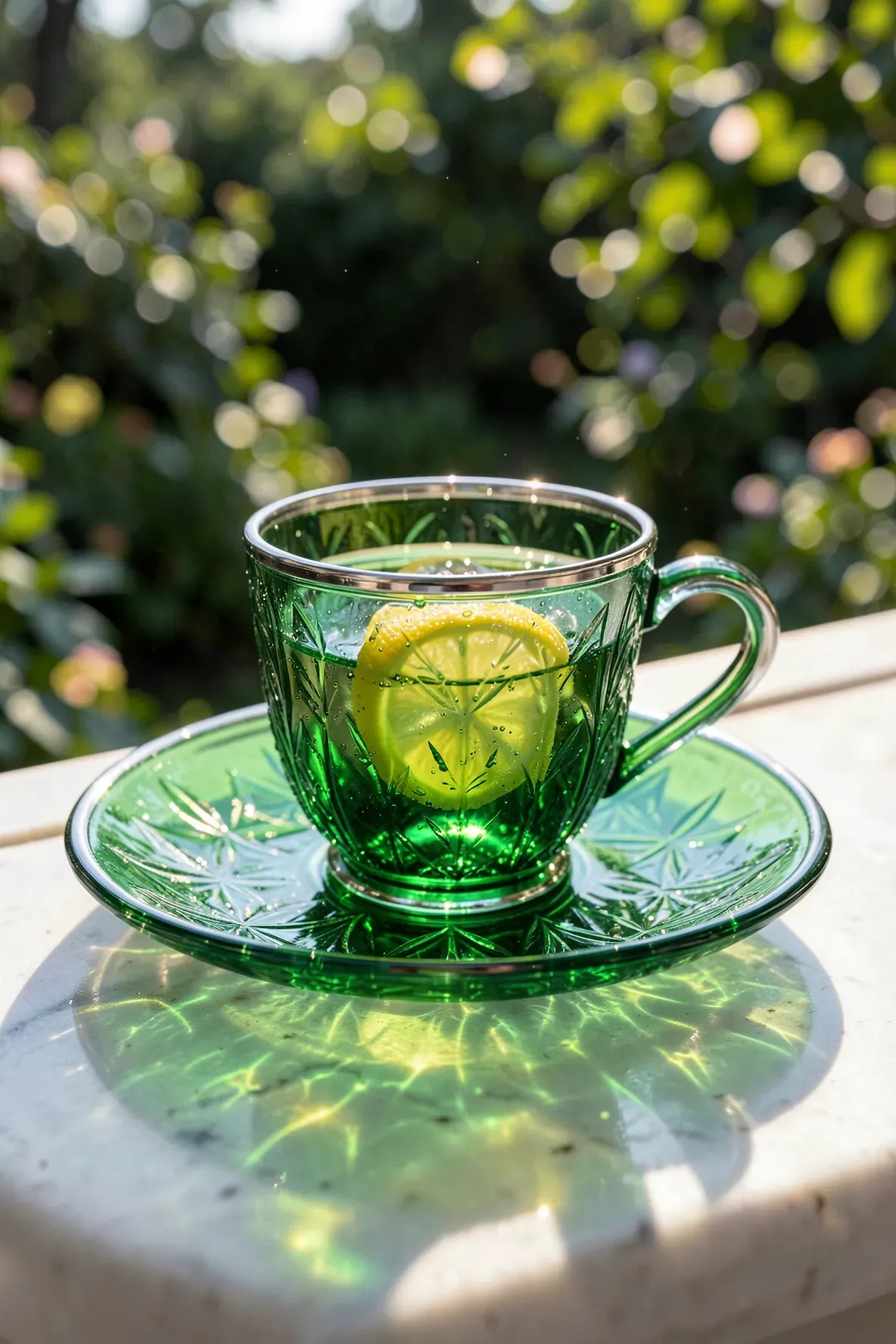
Not all vintage cups are made of ceramic. Emerald green glass cups were popular during the Depression era and again in the 1960s. The translucent green glass glows when light passes through it, and a silver trim along the rim adds a touch of elegance.
Be careful with hot liquids in these glass cups. Unless they are specifically tempered, sudden temperature changes can cause old glass to crack. It is often safer to use these for iced tea or simply keep them as decorative pieces in a sunny window where the green color can shine.
Powder Blue Lustreware Vintage Tea Cup Aesthetic
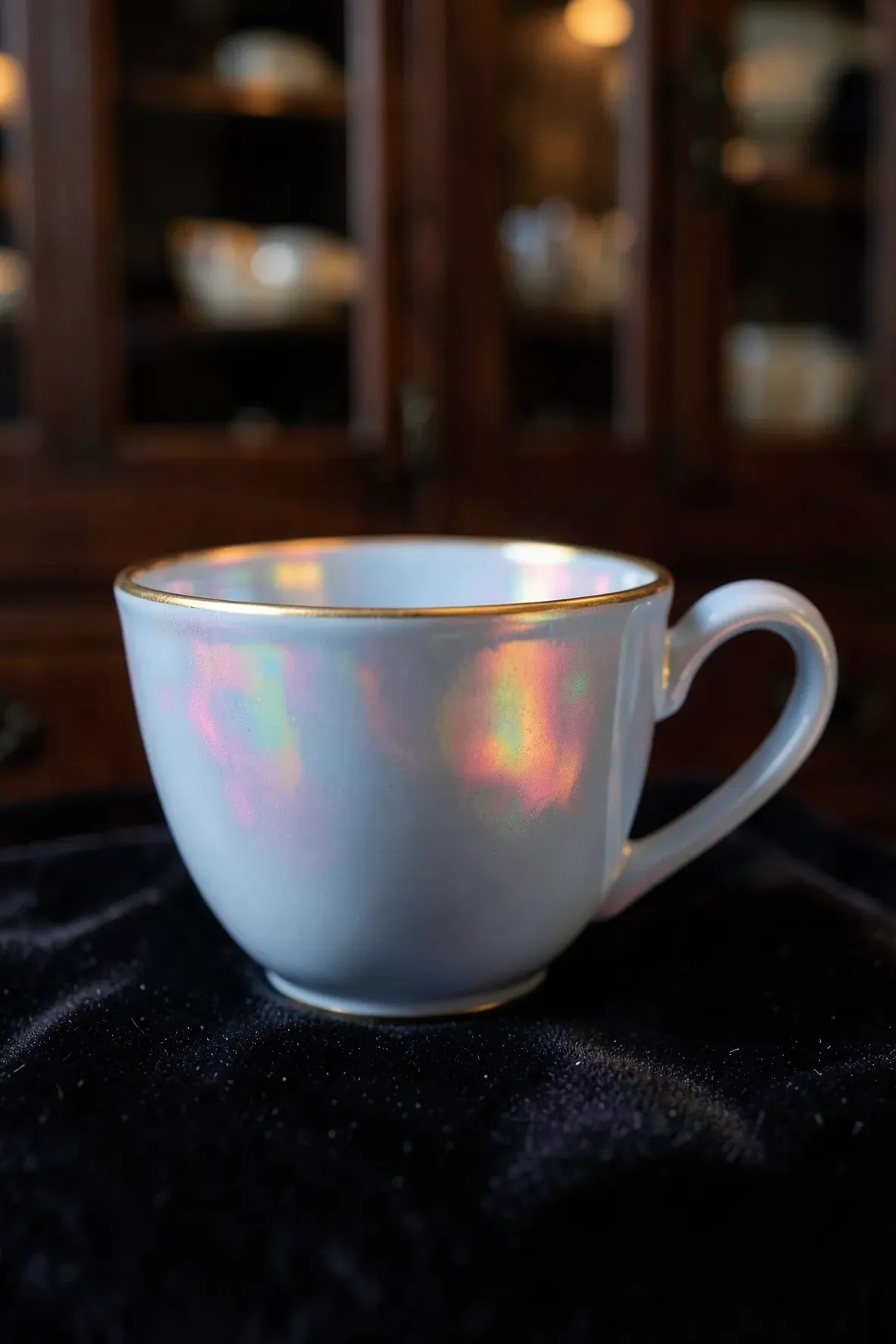
Lustreware has a metallic, iridescent finish that looks like a thin layer of oil on water. A powder blue cup with a lustre finish will shimmer with pink, purple, and gold highlights when you move it. This vintage tea cup aesthetic is very distinct and was popular for tea sets in the 1920s.
Because the lustre finish is a very thin metallic film, it is easily scratched. Never use abrasive sponges on these pieces. They are purely decorative in many collections because the finish can wear away with frequent handling, but they add a magical quality to a display shelf.
Hand-Glazed Forest Green Tea Cup
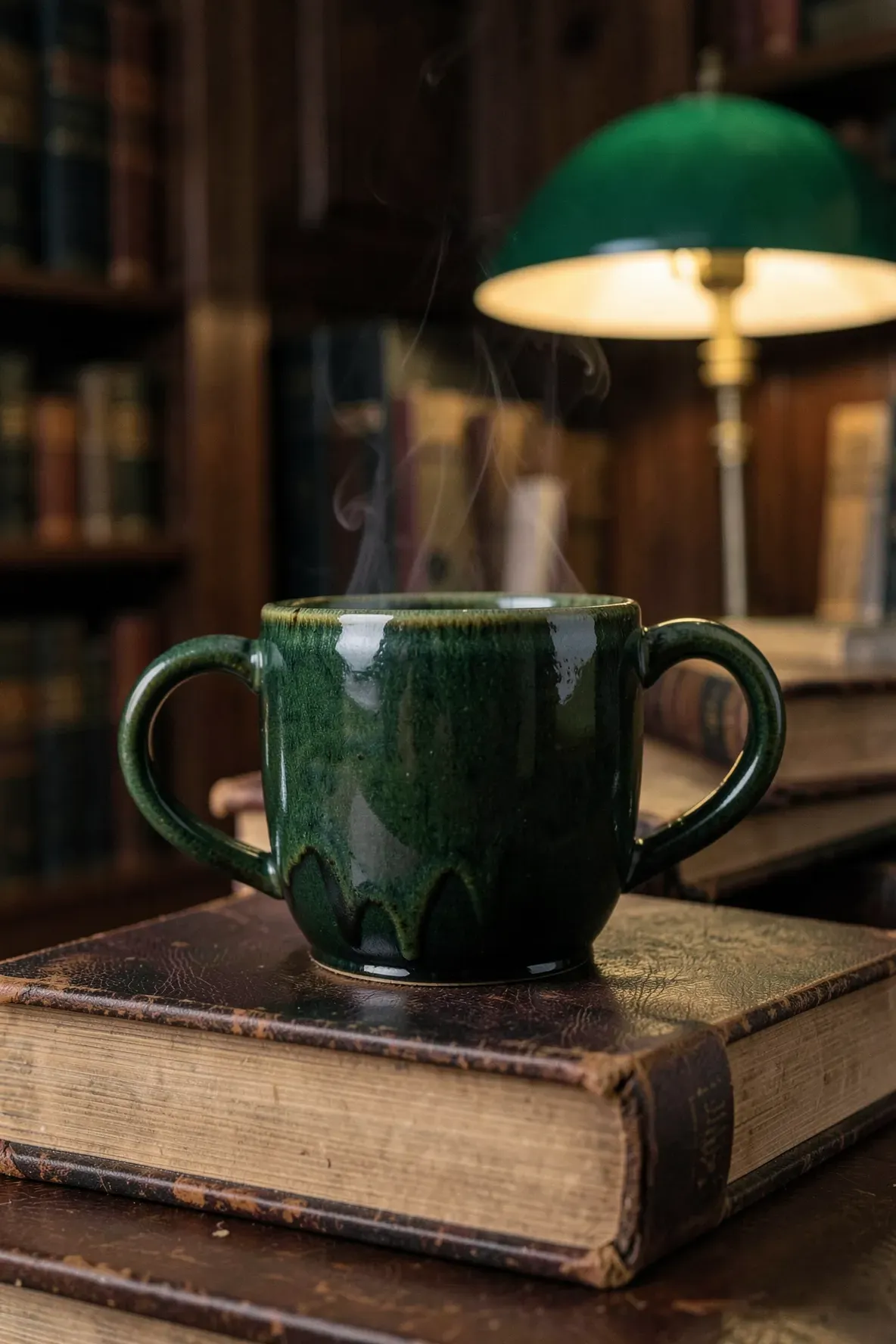
Forest green is a deep, comforting color that feels very traditional. A hand-glazed cup in this shade often has a slight drip effect near the bottom where the glaze pooled during firing. This gives the cup a unique, artisanal character that mass-produced items lack.
These cups feel sturdy and substantial in the hand. They are excellent for a library or a cozy nook. The dark green color hides tea stains well, making them a low-maintenance choice for someone who drinks a lot of black tea.
Wall Mounted Wooden Shelving for Vintage Tea Cups Display
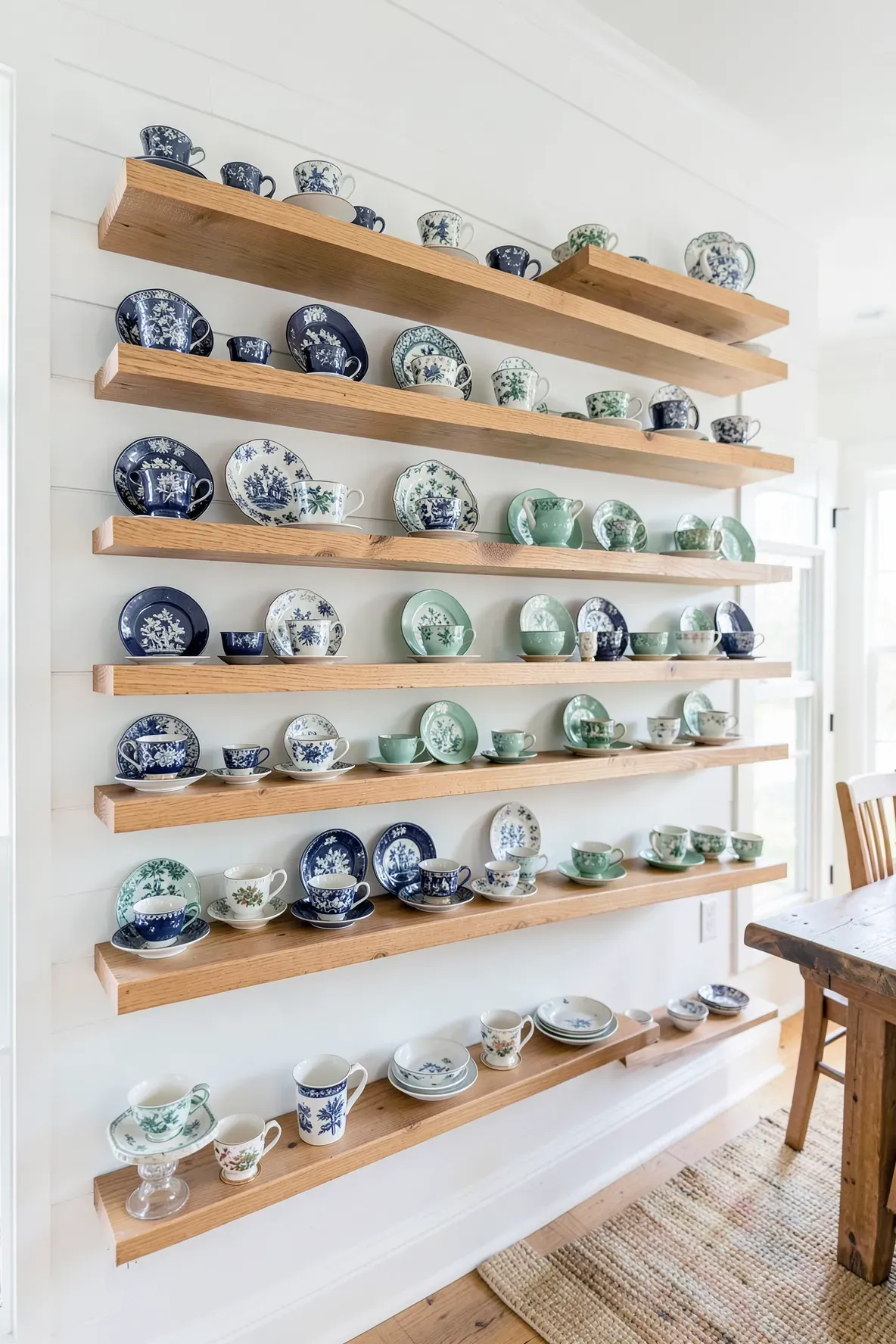
Once you have built a collection, you need a way to show it off. A vintage tea cups display works best on wall-mounted wooden shelving with small grooves to hold the saucers upright. This allows you to see the pattern on the saucer and the shape of the cup at the same time.
Try organizing your cups by color, transitioning from deep navy blues into bright mint greens. This creates a gradient effect that is very pleasing to the eye. Make sure the shelf is mounted securely, as a collection of ceramic cups can become quite heavy once you have a dozen or more on display.