
Creating a front yard in an arid climate doesn't mean you have to settle for a boring patch of dirt or a messy collection of cactus. Modern desert landscaping focuses on the balance between minimalist structure and the raw beauty of the Southwest. By using clean lines and a thoughtful mix of materials, you can build a space that feels intentional, sophisticated, and entirely at home in a dry environment.
This article covers how to organize your outdoor space using geometric patterns, select plants that offer architectural contrast, and use hardscape materials to add depth. You will find practical ways to use gravel, specimen plants, and lighting to make your yard look as good at night as it does during the day.
Structuring the Space with Geometric Layouts

Modern design relies on order. In a desert yard, this often starts with clear, geometric shapes like rectangles and squares. You can define these areas using concrete pavers, steel edging, or even different colors of stone. Instead of curved, flowing flower beds, try straight lines that lead the eye toward the front door. This structure provides a visual anchor that keeps the desert's natural ruggedness from looking cluttered. Think about creating 'zones' for different materials to give the yard a sense of purpose and scale.
Selecting Drought Tolerant Plants for Visual Contrast
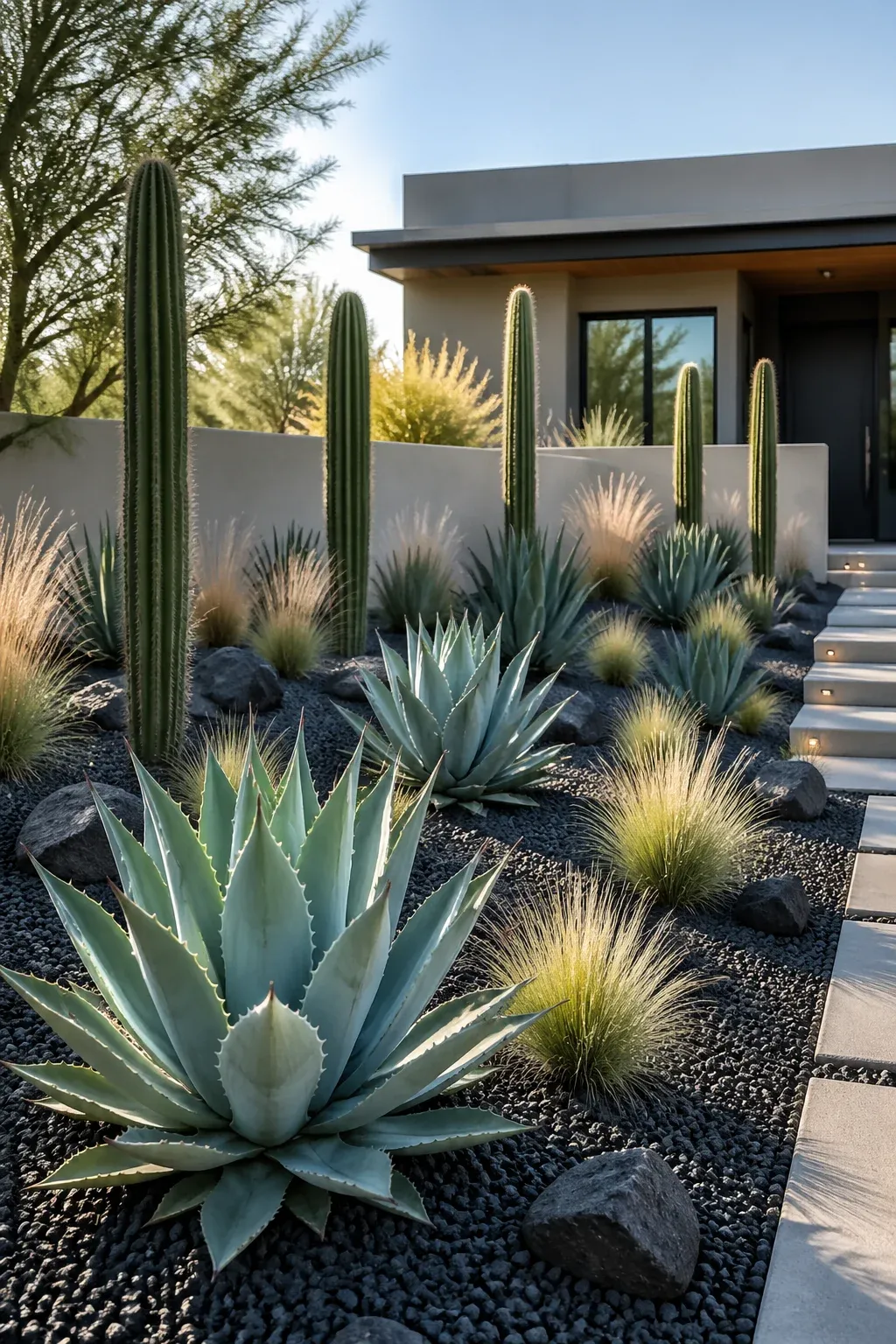
Plants in a modern desert yard should be chosen for their shape and color rather than just their ability to survive heat. Look for species that offer a strong contrast against flat hardscape surfaces. For example, the soft, silvery foliage of Agave or the upright, blue-green stalks of a Mexican Fence Post cactus pop against a dark grey wall or light gravel. Mix fine-textured plants like deer grass with bold, fleshy succulents. This variety ensures the yard feels alive and layered without requiring much water.
Using Hardscape Materials to Create Depth
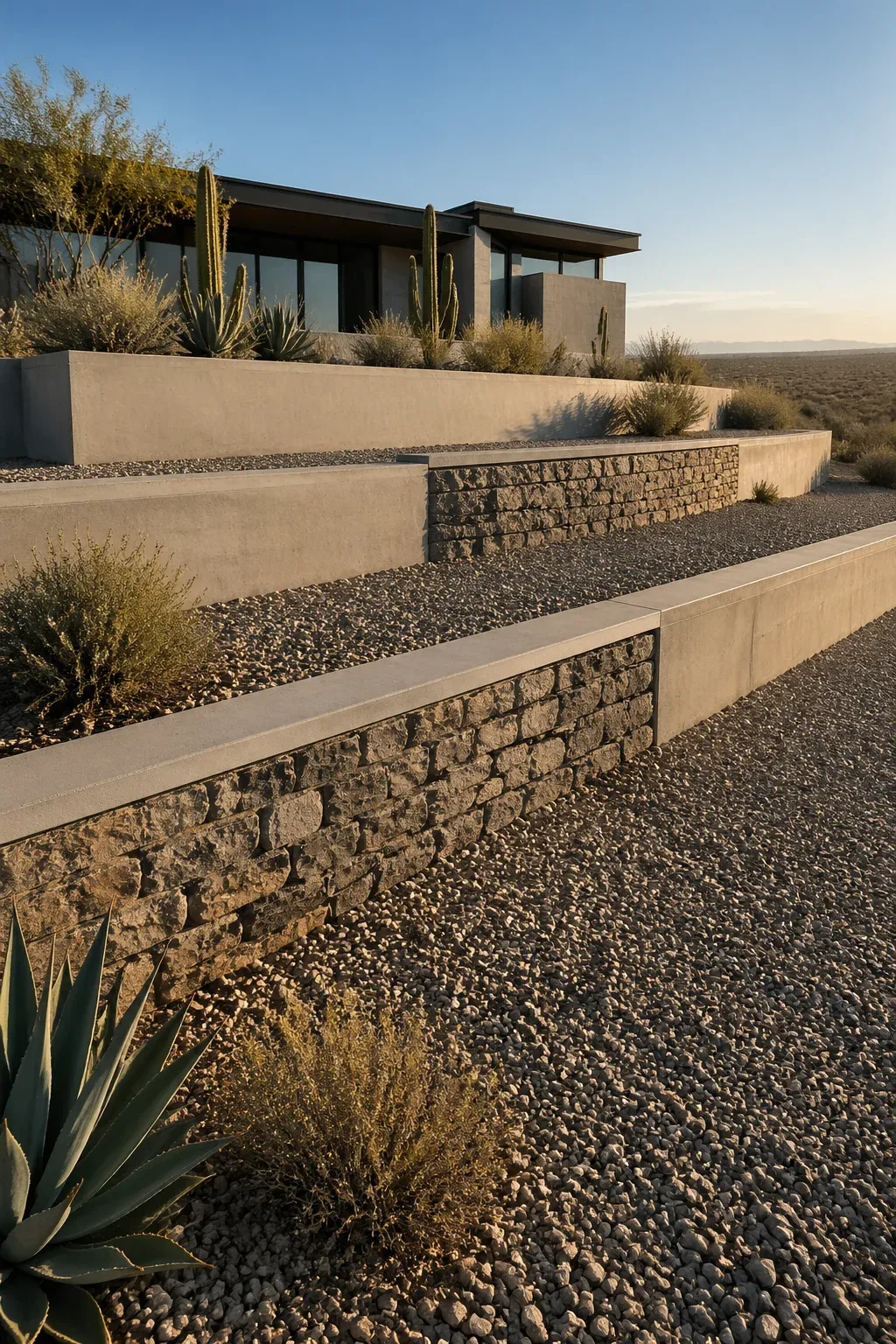
Hardscaping is the backbone of desert design. Using materials like poured concrete, weathered steel, or natural stone walls adds vertical and horizontal depth. You can use low retaining walls to create tiered levels, which is especially helpful if your lot has a slope. These structures do more than just hold back soil; they create shadows and highlights that change throughout the day. Using a mix of smooth concrete and rough stone provides a tactile quality that makes the yard feel more high-end and custom-built.
Incorporating Decorative Gravel and Stone Mulch
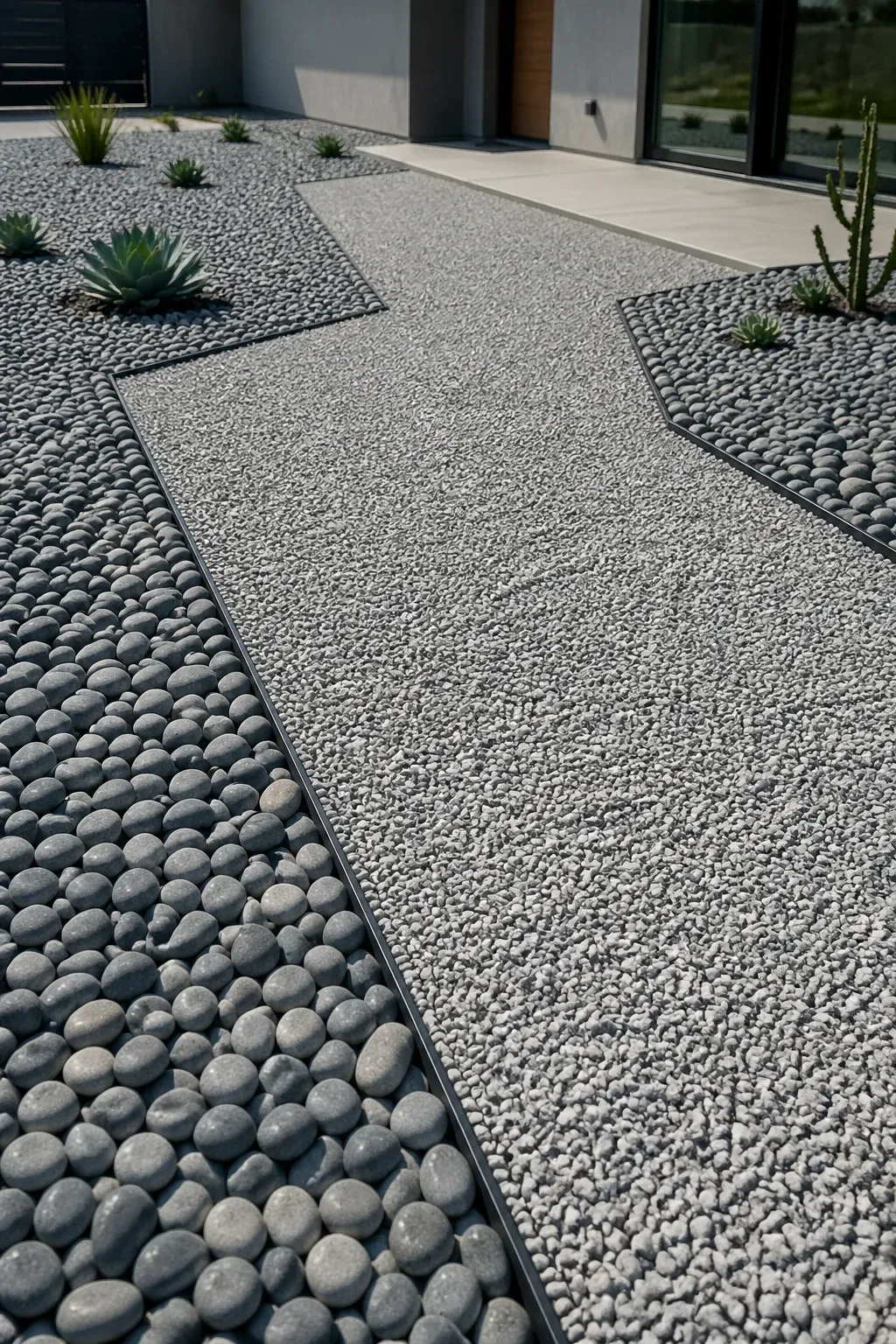
Gravel is more than just a ground cover; it is a design tool. In a modern yard, the size and color of the stone matter. Using a single type of gravel across the entire yard can look flat. Instead, use different sizes—like a fine crushed stone for walkways and larger river rocks for drainage areas or accents. Choose colors that complement your home's exterior. Cool greys and tans work well for a contemporary look. Be sure to use a heavy-duty weed barrier underneath to keep the lines looking sharp and maintenance-free.
Adding Architectural Interest with Large Specimen Plants
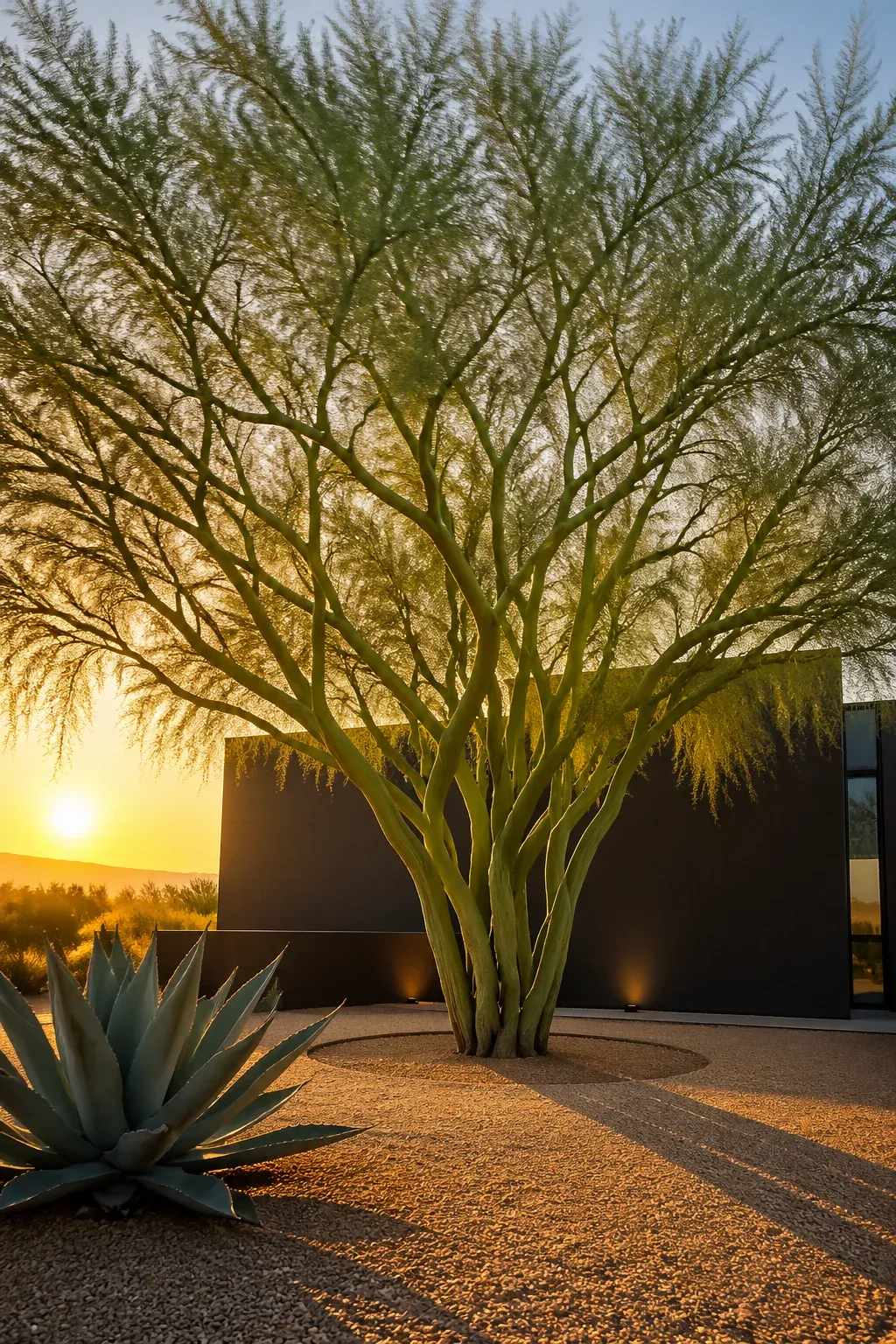
A specimen plant acts like a piece of living sculpture. In a front yard, a single, large Ocotillo, an ancient Yucca, or a multi-trunk Palo Verde tree can serve as a focal point. These plants have unique silhouettes that stand out against the sky or a blank wall. Position them where they can be seen from the street or through a front window. Because these plants are often the most expensive part of the landscape, give them plenty of space so their natural form isn't crowded by smaller shrubs.
Lighting the Yard to Highlight Nighttime Shapes
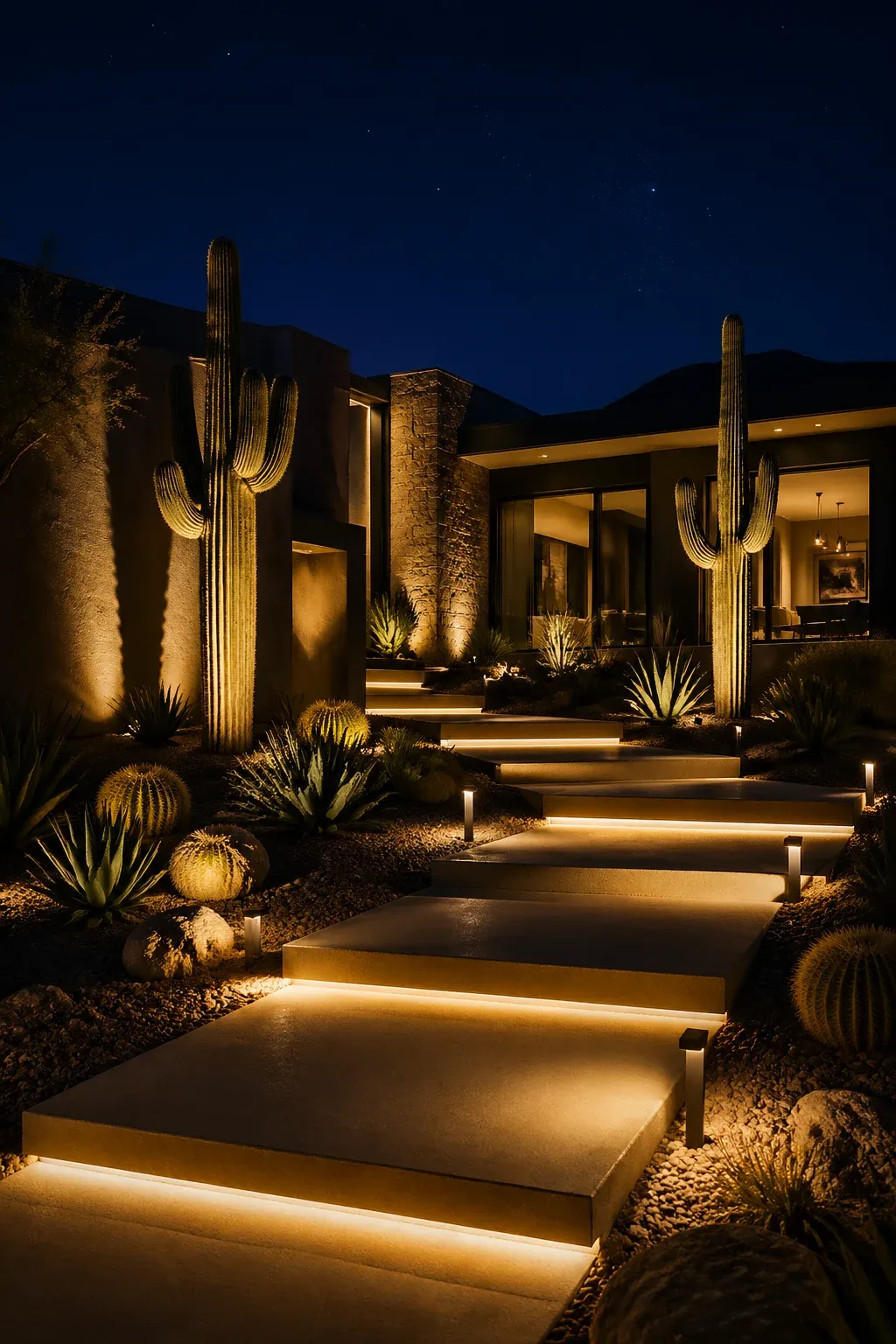
The desert heat often makes the evening the best time to enjoy your yard. Good lighting should focus on the shapes of your plants and the textures of your walls. Use uplighting at the base of large cacti to cast dramatic shadows. Path lights should be low and discreet, focusing the light downward to guide visitors without causing glare. Linear LED strips under the lip of a concrete step or wall can emphasize the geometric layout you worked so hard to create. Focus on a few key areas rather than lighting everything at once.
Building a modern desert yard is about embracing the environment while adding a sense of human-made order. By focusing on clean lines, varied textures, and bold plant choices, you can create a front yard that is both sustainable and visually striking. Take a look at your current space and see where a few straight lines or a well-placed specimen plant could make a difference.