
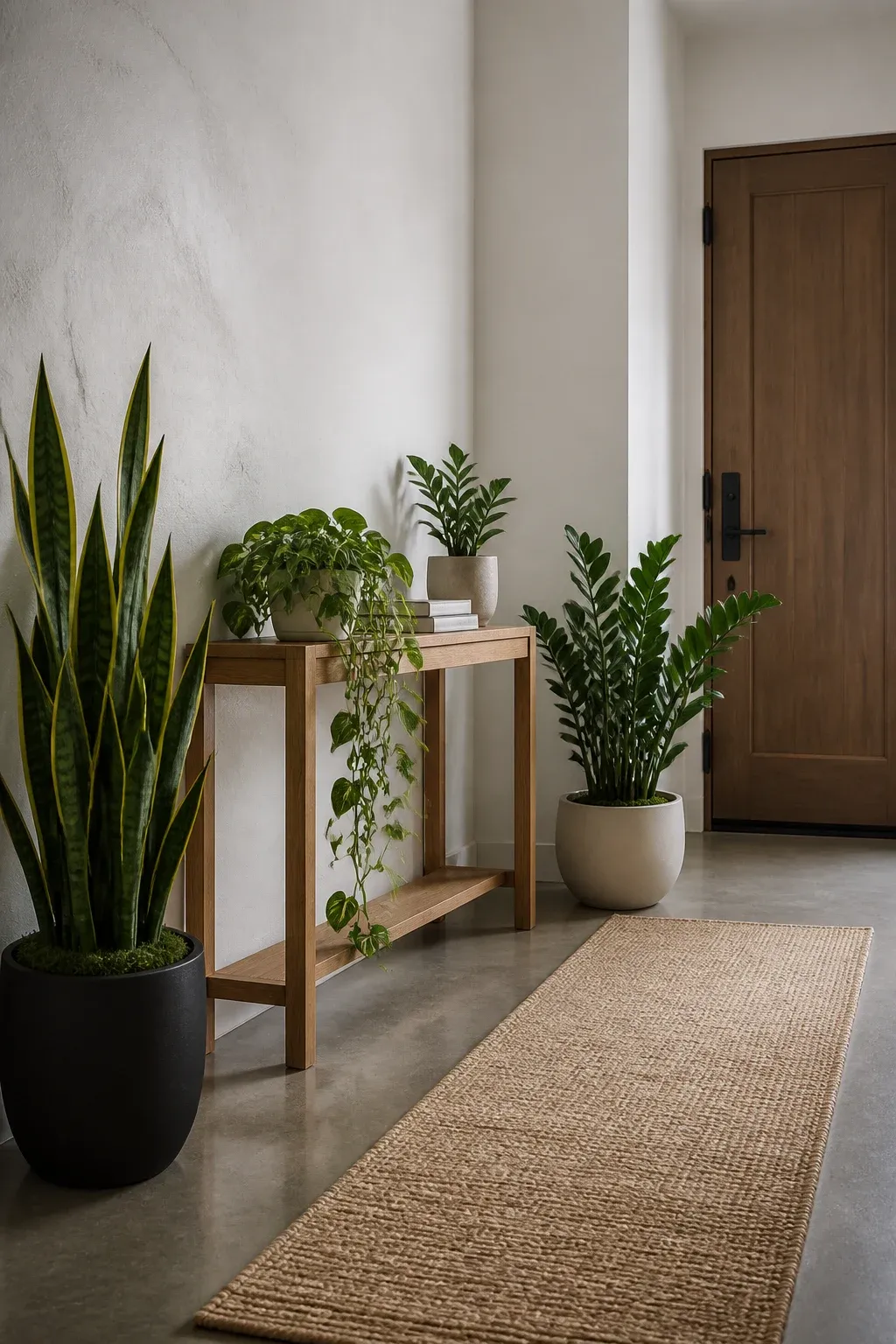
The entryway is the first thing you see when you walk through the door after a long day. It sets the tone for your entire home, yet it often becomes a cluttered space for shoes and mail. Using greenery can change that, turning a hectic transition area into a quiet, calming space that feels like a true sanctuary. Plants do more than just look good; they soften hard edges and bring a sense of life to the foyer.
In this article, you will learn how to choose the right plants for often-dim hallways, how to select natural materials for your containers, and the best ways to arrange your greenery to fit your specific floor plan. By focusing on simple additions, you can make your entrance feel more intentional and welcoming for both yourself and your guests.
Choosing the Right Plants for Low Light Hallways
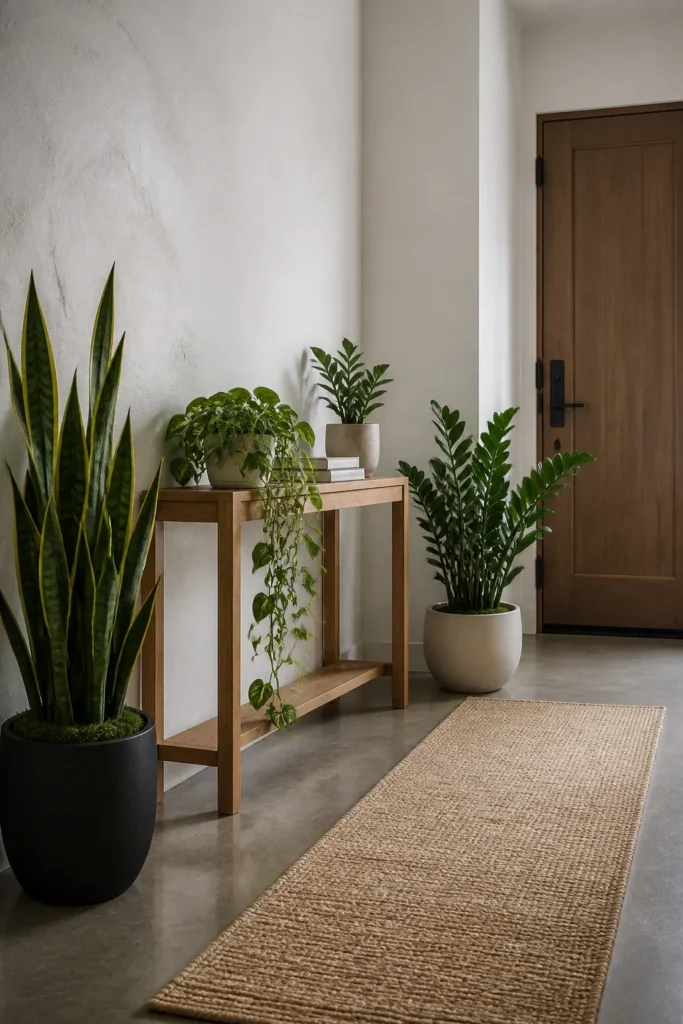
Most entryways suffer from a lack of natural light. Since these spaces are often tucked away from large windows, you need plants that thrive in shade or indirect light. The Snake Plant is a classic choice because it is nearly impossible to kill and handles dim corners with ease. Its upright leaves also save floor space.
Another reliable option is the ZZ plant. It has waxy, deep green leaves that reflect what little light is available, making the space feel brighter. If you want something with more flow, the Pothos is excellent. It can sit on a console table and let its vines drape down, adding a soft, organic shape to the entryway without needing a sun-drenched spot.
Selecting Natural Pots and Planters for a Softer Look
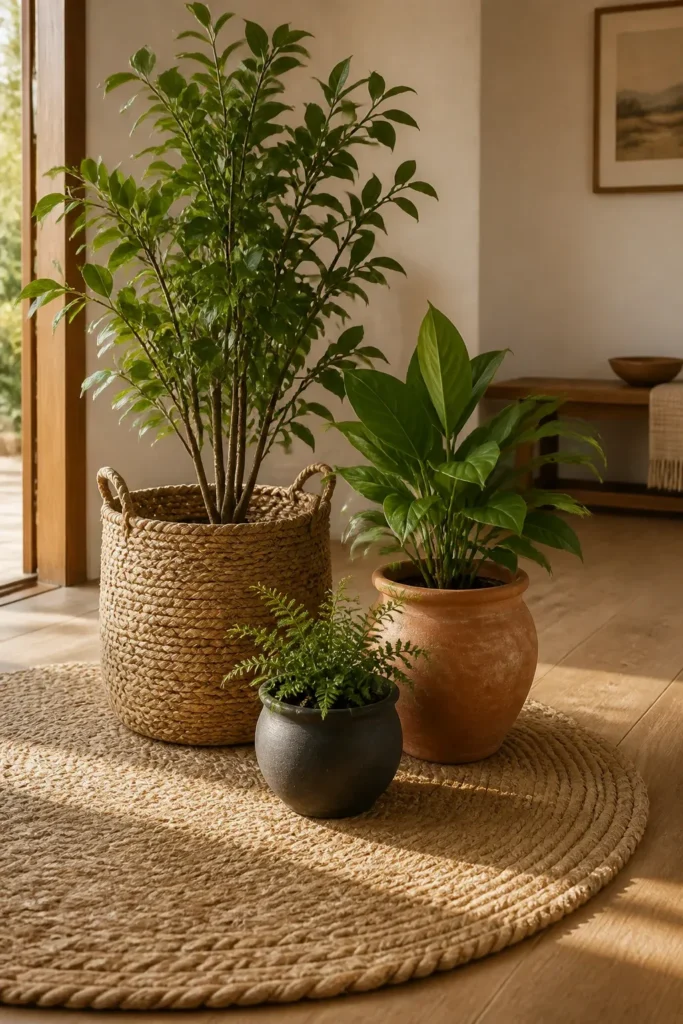
The container is just as important as the plant itself when you want a quiet atmosphere. Shiny plastic or bright metals can feel cold or clinical. Instead, look for natural materials like terracotta, stone, or woven bamboo. These textures add warmth and a tactile quality that feels grounded.
Baskets made from seagrass or jute are particularly effective in entryways. They hide the plastic nursery pots and bring a rustic, handmade feel to the room. If your home has a more modern look, consider matte ceramic pots in earthy tones like sand, charcoal, or sage. These colors blend into the background, letting the green of the leaves be the main focus.
Arranging Greenery to Suit the Size of Your Space
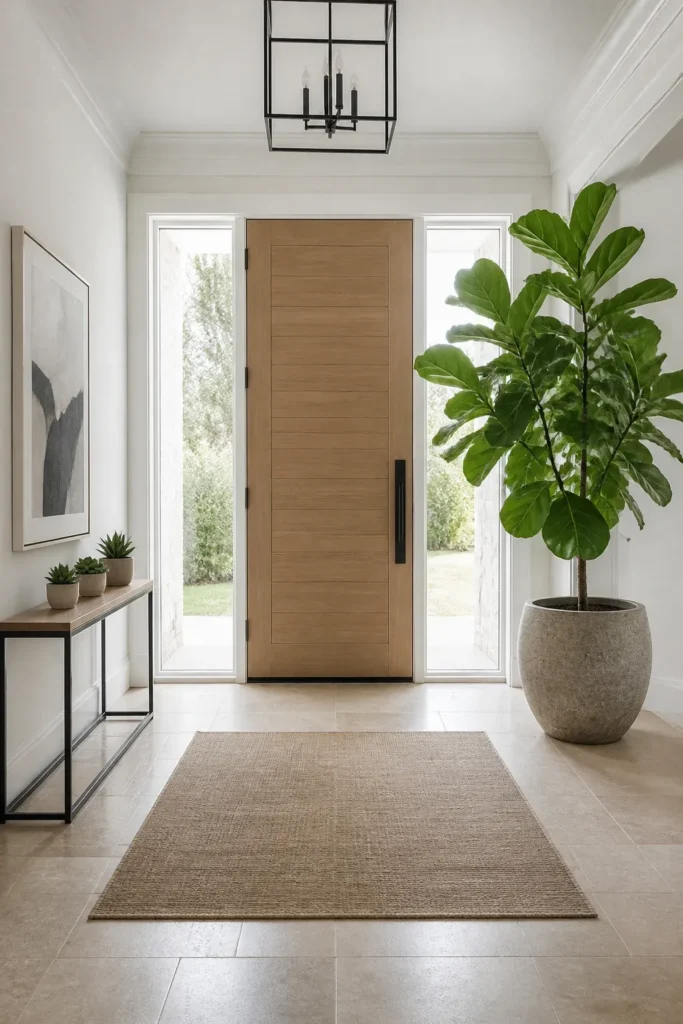
How you place your plants depends on the square footage of your foyer. If you have a wide entrance, a large floor plant like a Fiddle Leaf Fig or a tall bamboo stalk can act as a focal point. Placing a larger plant near the door creates a clear transition from the outside world into your home.
For smaller or narrower spaces, avoid cluttering the floor. Use a narrow console table to hold a single, striking plant, or place a small pot on a wall-mounted shelf. Grouping plants in odd numbers, like three different heights, usually looks more natural than a single lonely pot. Keep the path clear so that the greenery feels like an invitation rather than an obstacle.
Keeping Your Entrance Plants Healthy and Vibrant
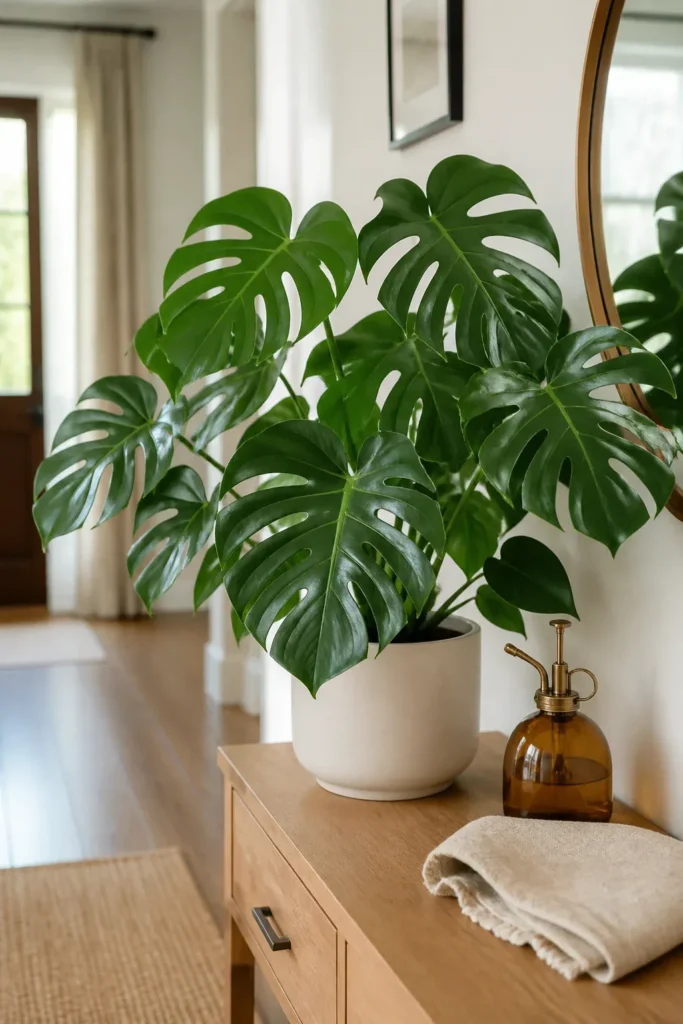
Plants in entryways face unique challenges like drafts from the front door and inconsistent light. To keep them looking their best, wipe the leaves with a damp cloth every few weeks. Dust builds up quickly in high-traffic areas and can block the plant's ability to photosynthesize.
Be careful not to overwater. Because these areas are often cooler and darker, the soil stays moist longer than it would in a sunny living room. Always check the soil with your finger before adding more water. If your hallway is truly dark, you might want to rotate your plants every two weeks, moving them to a sunnier room for a few days to recharge.
Incorporating Vertical Greenery for Narrow Passageways
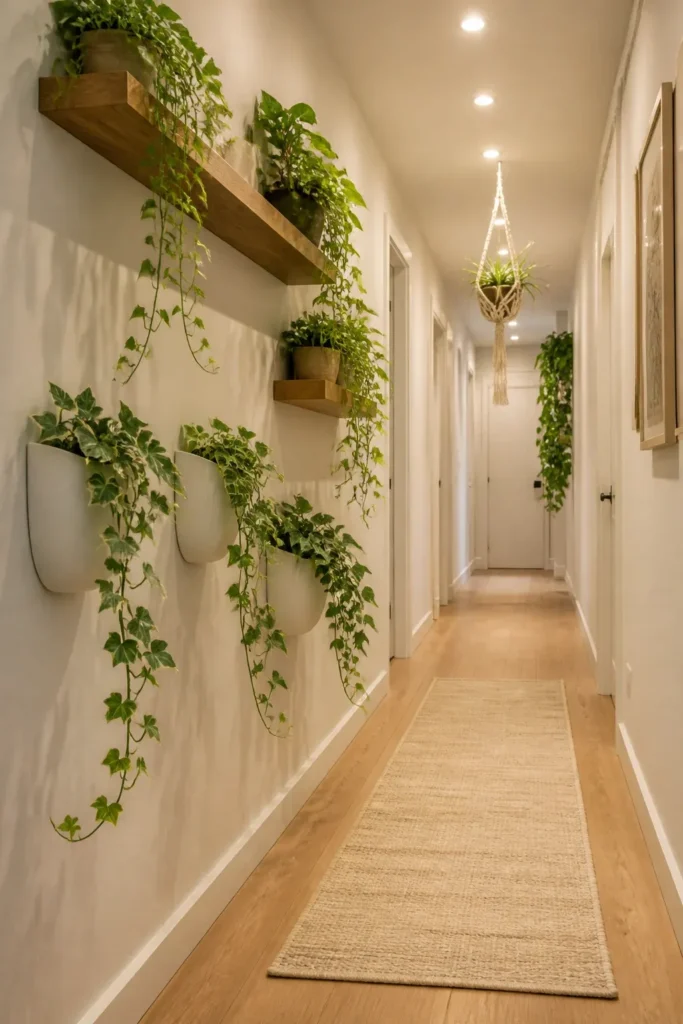
When floor space is limited, look up. Vertical gardening is a smart way to add life to narrow hallways without making the space feel cramped. Wall planters or hanging macrame holders can lift plants to eye level, which draws the gaze upward and makes a small entryway feel taller.
A simple bamboo trellis or a set of floating shelves can support climbing plants like English Ivy. This creates a 'living wall' effect that softens the long, flat surfaces of a hallway. Using the walls for greenery keeps the floor clear for foot traffic while still providing that hit of nature as soon as you step inside.
Matching Plant Textures with Your Existing Decor
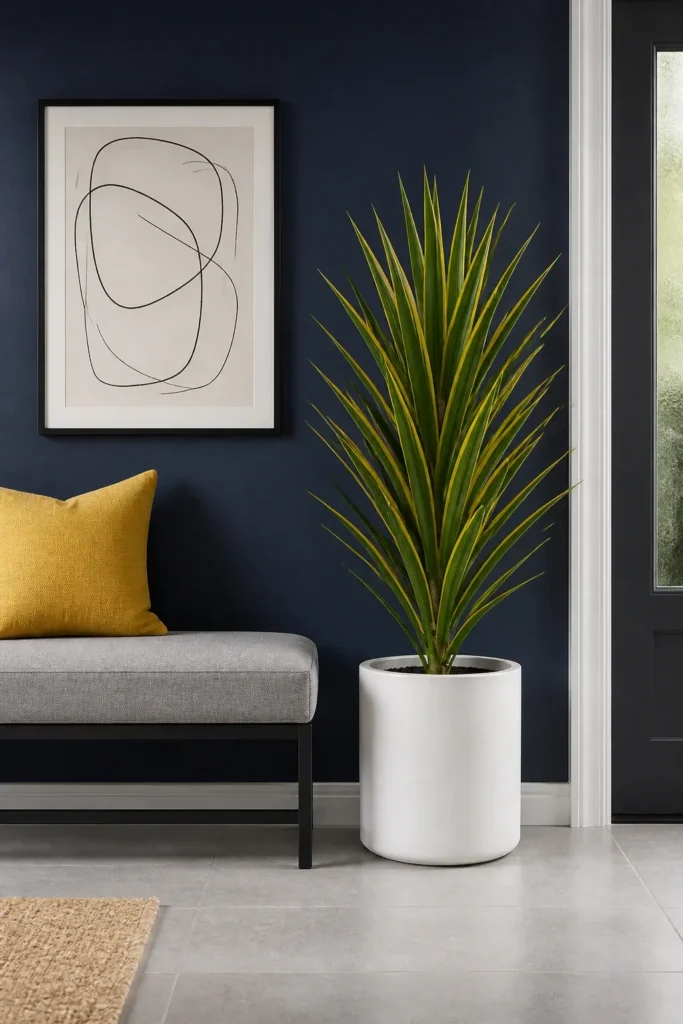
To make the entryway feel cohesive, look at the textures already present in your home. If you have a lot of wood and soft rugs, plants with soft, feathery fronds like a Boston Fern will complement that coziness. If your decor is more minimalist with clean lines, go for plants with structural, architectural shapes like a Yucca or a Dracaena.
Consider the leaf color as well. Variegated plants with white or yellow stripes can liven up a dark-painted hallway. Darker, solid green leaves provide a moody, sophisticated feel that works well against light-colored walls. Matching the 'vibe' of the plant to your furniture ensures the greenery looks like a part of the home rather than an afterthought.
Creating a quiet entryway doesn't require a full renovation. By adding a few well-chosen plants in natural containers, you can turn a transition zone into a peaceful welcome. Start with one or two low-maintenance species and see how they change the mood of your home. A little bit of nature at the front door goes a long way in making your living space feel more like a retreat.