
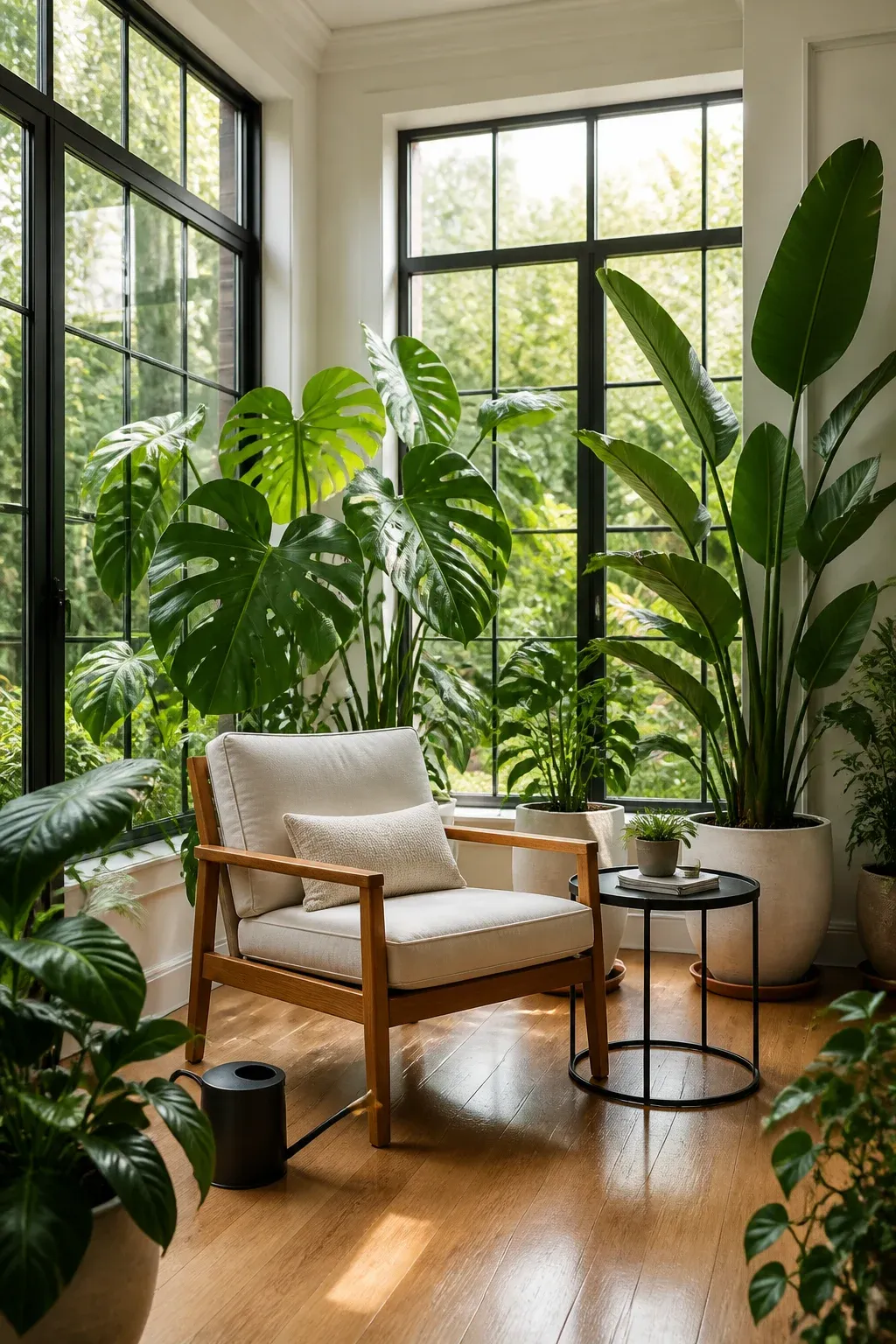
Many of us start with a few pots on a windowsill and quickly end up with a room dedicated to greenery. While these spaces are great for the plants, they often become cluttered storage areas for soil bags and watering cans rather than a place where people actually want to spend time. Turning a plant room into a comfortable living area makes the most of your square footage and lets you enjoy the air-purifying benefits of your hobby in comfort.
This article covers how to balance the needs of your tropical friends with human comfort. You will learn how to choose furniture that survives high humidity, how to layer lighting for both growth and mood, and how to organize the mess so your indoor jungle feels like a home instead of a greenhouse.
Choosing Furniture That Works Around Your Greenery
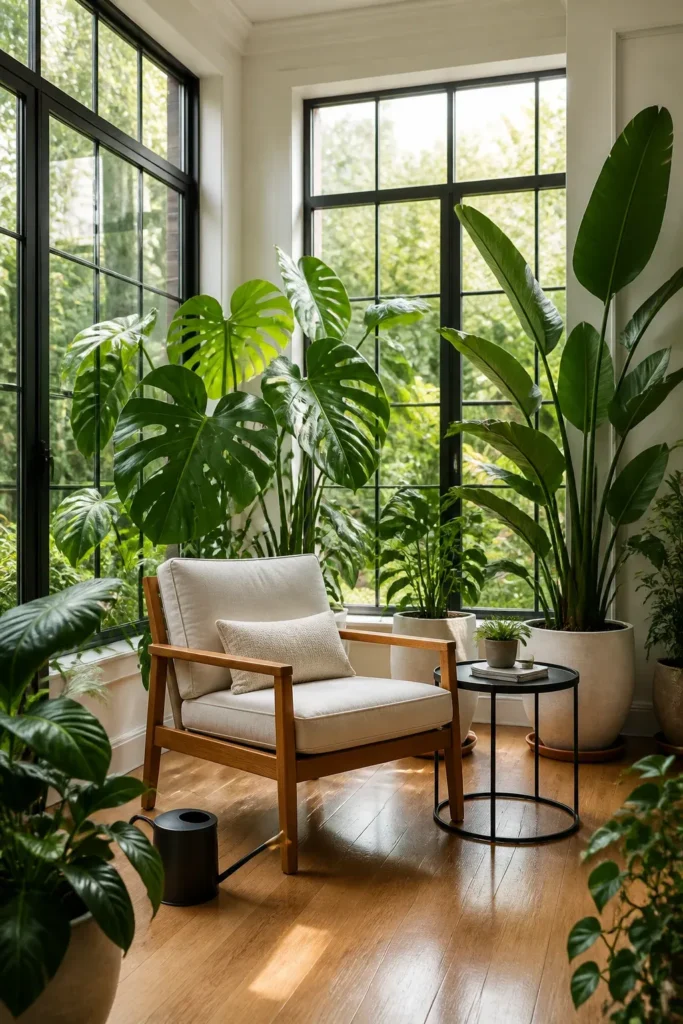
When you share a room with dozens of plants, your furniture needs to handle moisture and occasional soil spills. Natural materials like teak, bamboo, or powder-coated metal are better choices than delicate fabrics or untreated wood that might warp. If you want a comfortable chair, look for outdoor-rated upholstery or use removable, washable covers. This way, if a leaf drips after a misting or a pot overflows, you won't ruin your favorite seat. Think about the scale of your furniture too. Low-profile chairs allow more light to reach the plants behind them, ensuring your seating doesn't create unwanted shadows for sun-loving species.
Adding Soft Textures to Balance Hard Surfaces
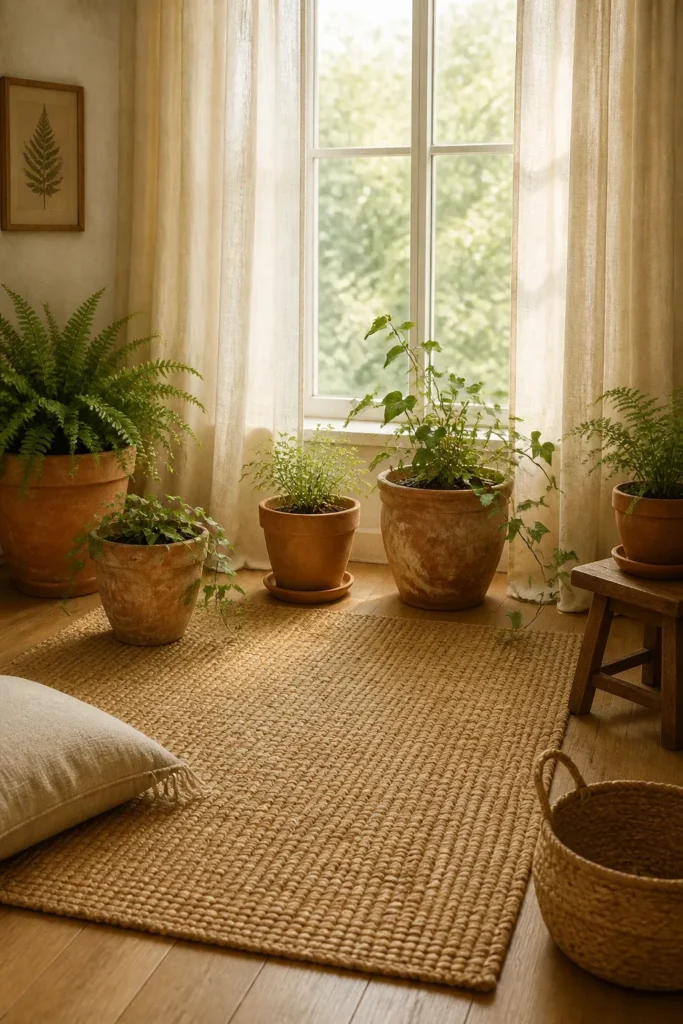
Plant rooms often have tile or wood floors and lots of ceramic or terracotta pots, which can make the space feel cold or echoey. To make the room feel like a part of your home, add soft layers. A washable jute or sisal rug can ground the space and handle the dirt that comes with gardening. Adding linen curtains can soften the light and the look of the room without blocking the sun entirely. These textures provide a necessary contrast to the waxy leaves and hard pots, making the environment feel warm and inviting rather than clinical.
Setting Up Lighting for Both People and Plants
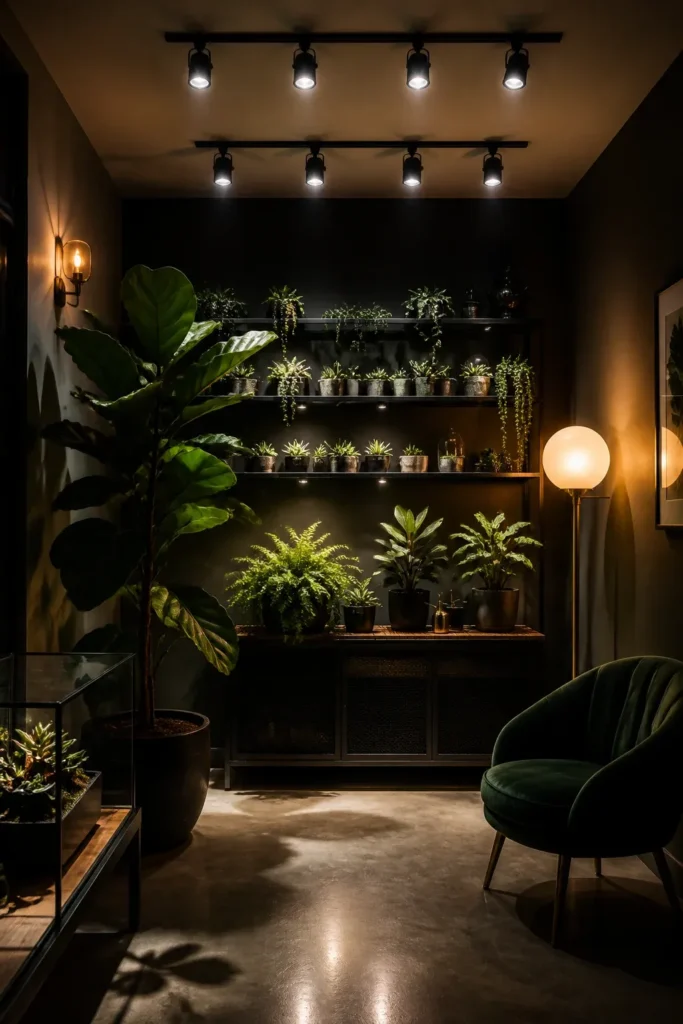
The bright, blue-toned lights often used for plant growth can be harsh on human eyes and make a room feel like a laboratory. To fix this, use a layered approach. Keep your high-intensity grow lights on timers for when you aren't in the room, or choose full-spectrum LED bulbs that mimic natural sunlight while looking warm to the eye. Supplement these with floor lamps or wall sconces that use soft, warm bulbs. This allows you to turn off the 'work' lights in the evening and enjoy a cozy, well-lit atmosphere that highlights the silhouettes of your plants without the glare.
Including Practical Surfaces for Daily Use
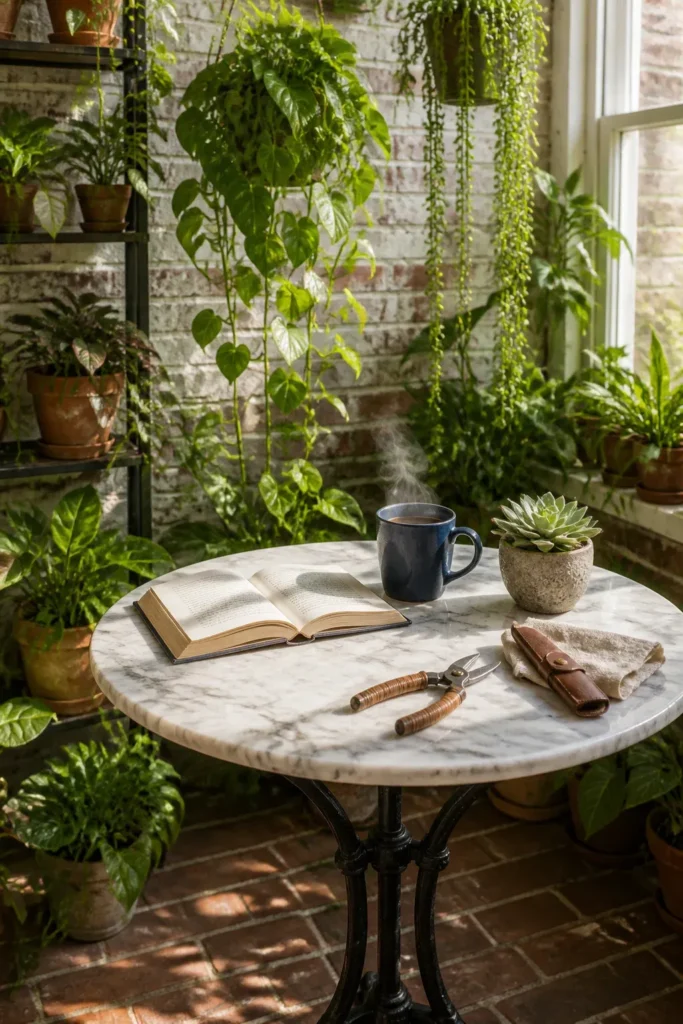
A plant room shouldn't just be for plants; it should be for you to enjoy them. Adding a small bistro table or a sturdy side table gives you a place to set a cup of coffee or a book. Make sure these surfaces are water-resistant. Stone tops or metal trays are excellent because they don't ring when wet. Having a clear surface also provides a temporary spot to prune a plant or repot a small succulent without having to run to the kitchen or garage. It bridges the gap between a hobby space and a functional living area.
Organizing Maintenance Tools Out of Sight
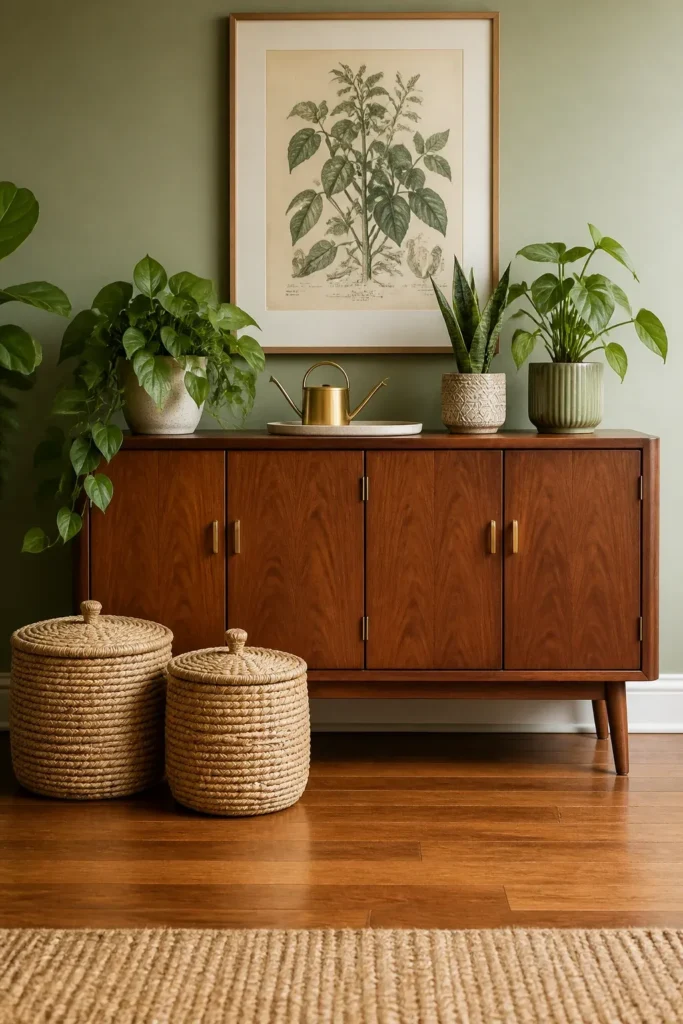
Nothing kills the vibe of a relaxing indoor garden like a pile of plastic nursery pots and half-empty bags of fertilizer in the corner. Use closed storage to keep the room looking tidy. A wooden cabinet or a vintage sideboard can hold your watering cans, shears, and soil while doubling as a plant stand on top. If space is tight, use decorative woven baskets with lids to hide smaller items like misting bottles and twine. When the tools are hidden, the focus stays on the beauty of the plants rather than the chores required to keep them alive.
Creating a Natural Flow with Room Layout
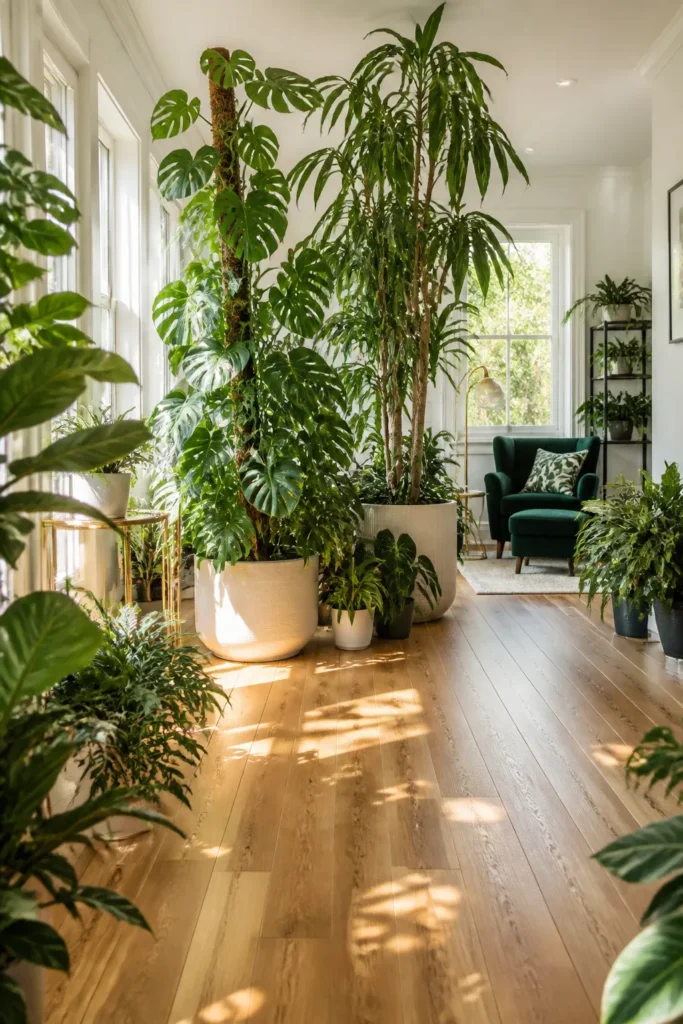
It is tempting to push all your plants to the windows, but this often leaves a big, empty space in the middle of the room. Instead, try grouping plants at different heights to create natural dividers. Use a tall monstera or a bamboo screen to create a cozy corner for a reading chair. Make sure there are clear walking paths so you can reach every plant for watering without tripping over pots. By treating your plants as architectural elements rather than just a collection, you create a room that feels intentional and easy to move through.
Creating a comfortable plant room is all about finding the middle ground between a greenhouse and a living room. By choosing durable furniture, softening the space with rugs, and hiding the messy tools, you turn a hobby area into a true sanctuary. Take a look at your plant collection today and see where you can carve out a little space for yourself to sit and enjoy the greenery you have worked so hard to grow.