
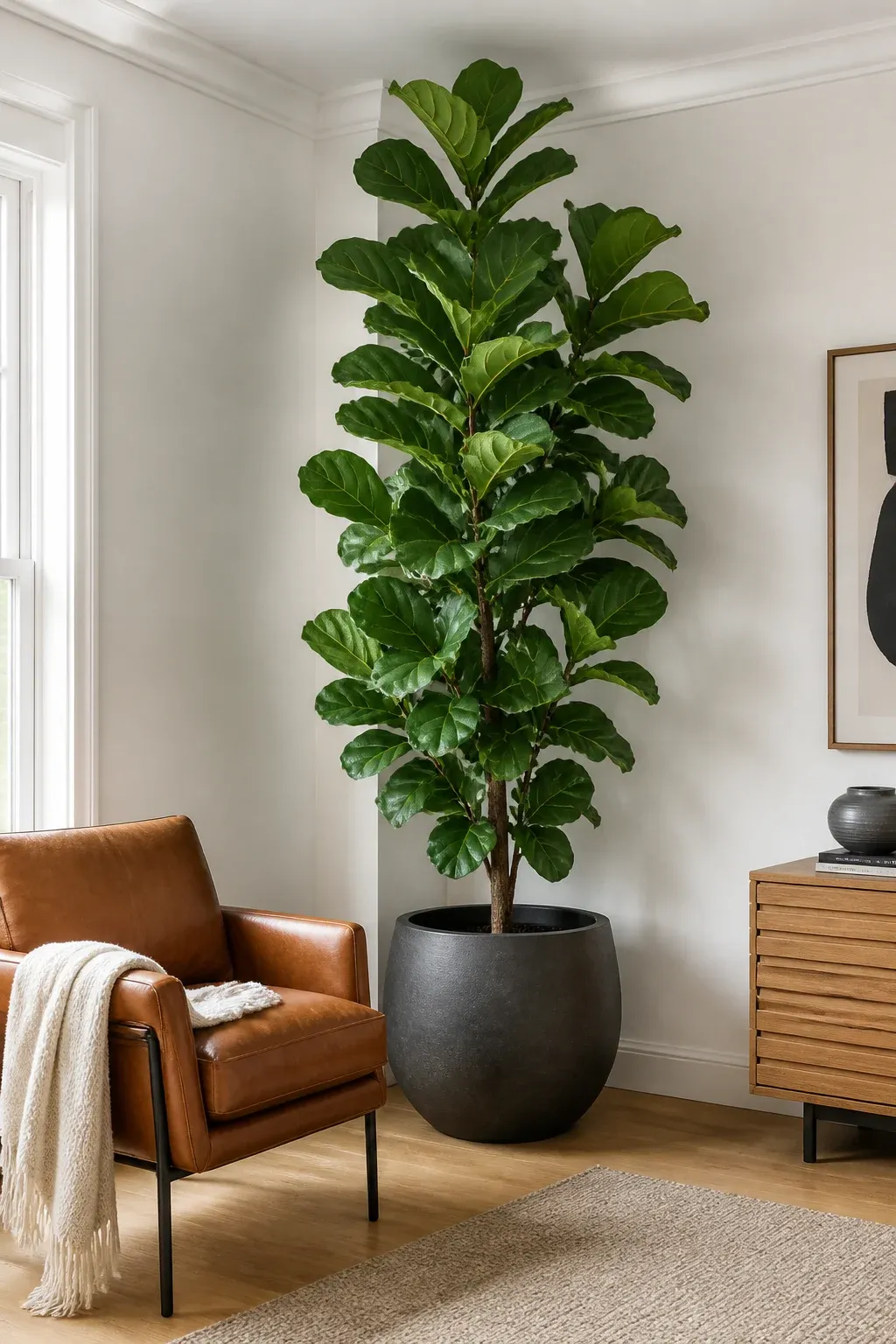
Empty corners often make a room feel unfinished or cold. These awkward gaps are the spots where furniture doesn't quite fit and shadows tend to gather. Adding live plants is one of the simplest ways to soften those hard lines and bring a sense of life to your home. Whether you have a tiny nook in a hallway or a large void in the living room, greenery can bridge the gap between your walls and your furniture.
In this guide, we will look at how to choose the right plants for different light levels and how to use various supports to make the most of your floor space. From vertical growth to hanging displays, you can turn a forgotten corner into a focal point that cleans your air and improves your mood.
Using Vertical Space with Tall Potted Varieties
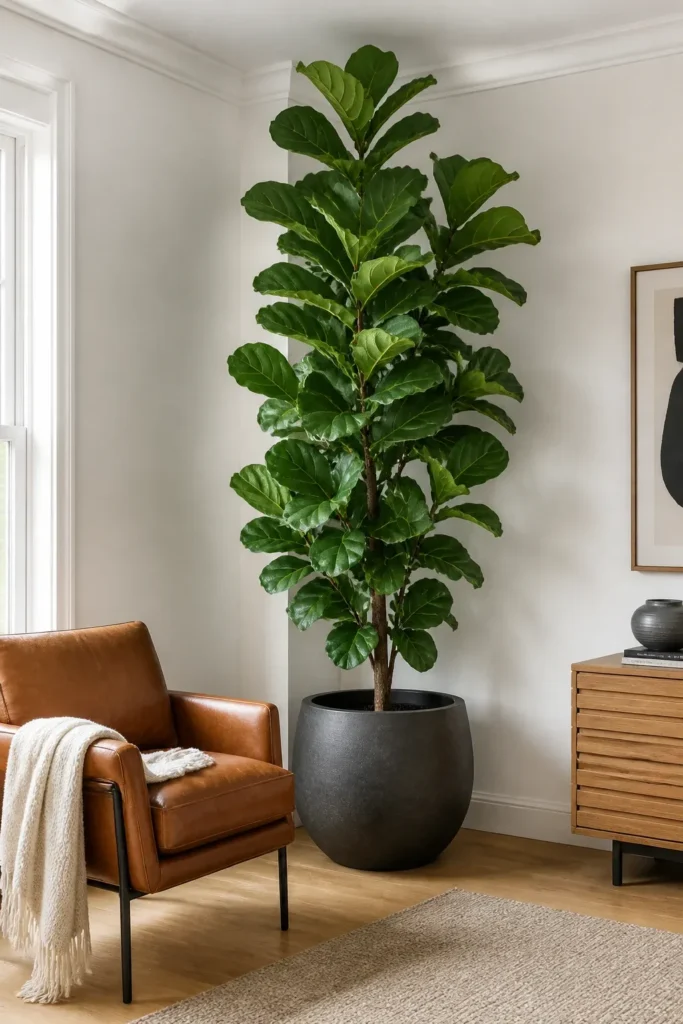
When you have a large, empty corner, a single tall plant often works better than several small ones. Large-leafed varieties like the Fiddle Leaf Fig or the Monstera Deliciosa can fill a wide area and provide a bold architectural look. If your corner is narrow, look for plants that grow straight up rather than out. The Snake Plant or a tall bamboo stalk in a heavy ceramic pot provides height without taking up much floor width.
To get the best look, choose a pot that complements your room's color palette but is heavy enough to prevent the plant from tipping. If your chosen plant isn't quite tall enough yet, you can place a small sturdy crate or a decorative block inside the planter to give the nursery pot a boost. This creates immediate height while the plant is still maturing.
How to Use Tiered Stands for Tight Floor Areas
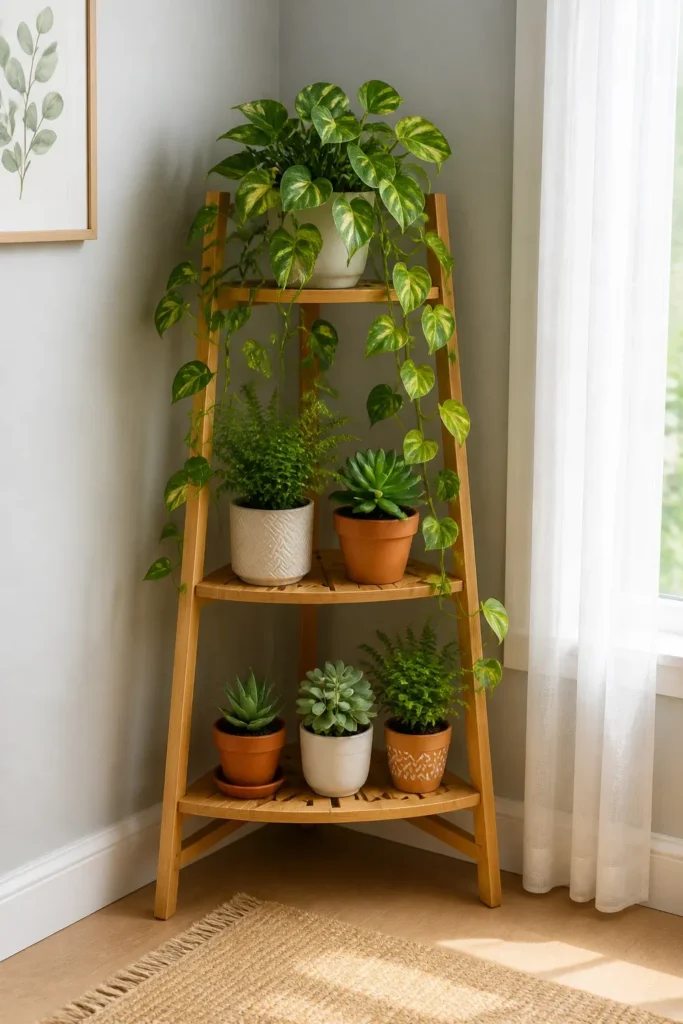
Not every corner has room for a massive pot. In tight spots, a tiered plant stand allows you to stack greenery vertically. This is a great way to display a collection of smaller succulents, ferns, or herbs without cluttering the floor. Using a stand with three or four levels lets you create a 'mini jungle' effect in a footprint no larger than a dinner plate.
When arranging plants on a stand, place the heaviest and largest pots at the bottom for stability. Use the top tiers for trailing plants like Pothos or Heartleaf Philodendron. As these vines grow, they will drape down the sides of the stand, hiding the structure and making the corner look like a solid wall of leaves. This approach works especially well in apartments where floor space is at a premium.
Hanging Greenery from Ceiling Hooks and Wall Brackets
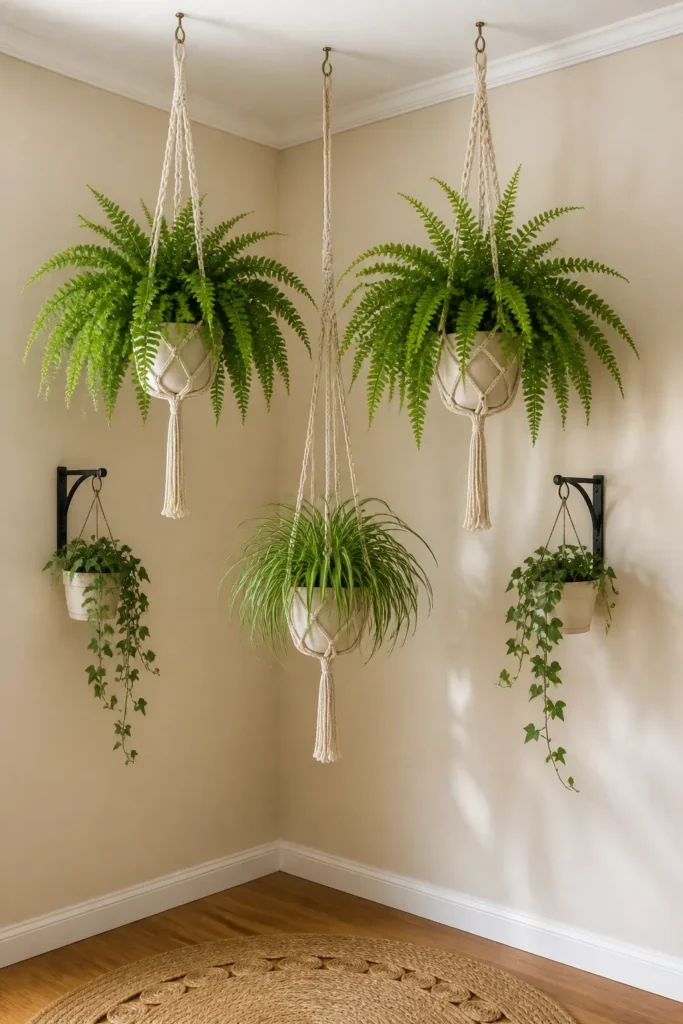
If you have pets that dig in dirt or small children, keeping plants off the floor is a practical necessity. Hanging plants from the ceiling or using wall-mounted brackets turns an empty corner into a three-dimensional display. Macramé hangers or simple jute ropes add a natural texture that pairs well with green leaves.
For a deep corner, try staggering the heights of two or three hanging pots. This adds depth and fills the upper third of the room, which is often left bare. Spider plants and Boston ferns are classic choices for this because they grow outward and downward, creating a full, rounded shape. Just make sure your hooks are securely anchored into a ceiling joist or use the proper wall toggles to handle the weight of watered soil.
Choosing the Right Species for Low Light Corners
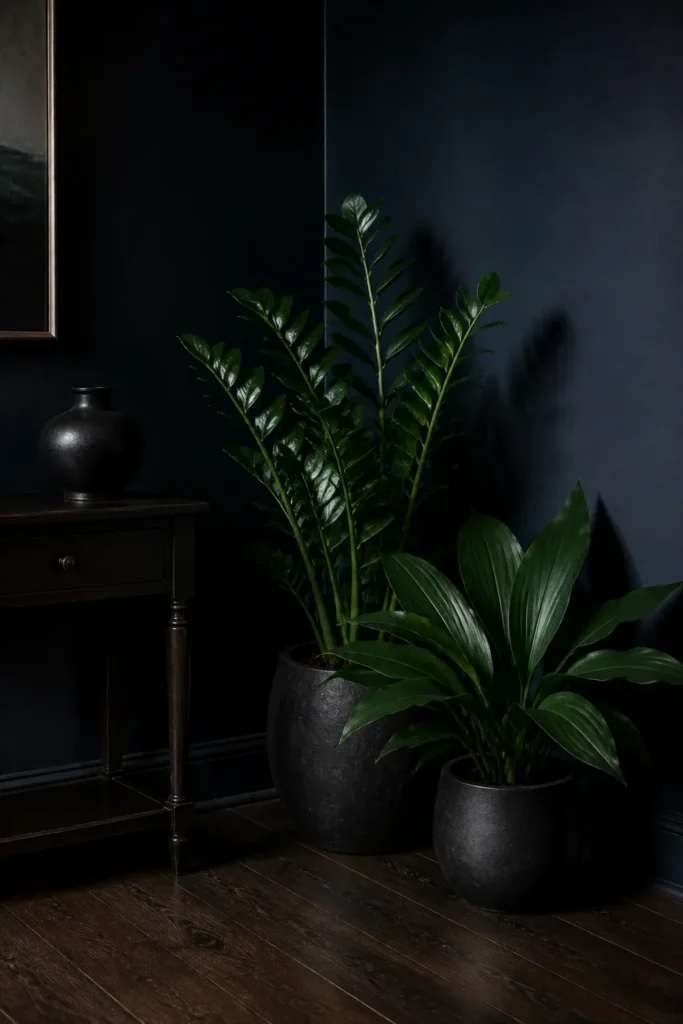
Many corners are tucked away from windows, meaning they stay relatively dark throughout the day. Putting a sun-loving plant in these spots will lead to yellowing leaves and spindly growth. Instead, look for 'low light' champions that can thrive in the shadows. The ZZ plant is a top choice because it can handle very little light and infrequent watering.
Cast Iron Plants and certain varieties of Dracaena are also reliable for dim areas. These plants have dark green leaves that are efficient at absorbing what little light reaches them. If a corner is truly pitch black, you might need to rotate your plants every two weeks, moving one to a brighter spot while another takes its place in the corner. This keeps the plants healthy while ensuring your decor stays consistent.
Using Furniture and Built-in Shelving for Small Plants
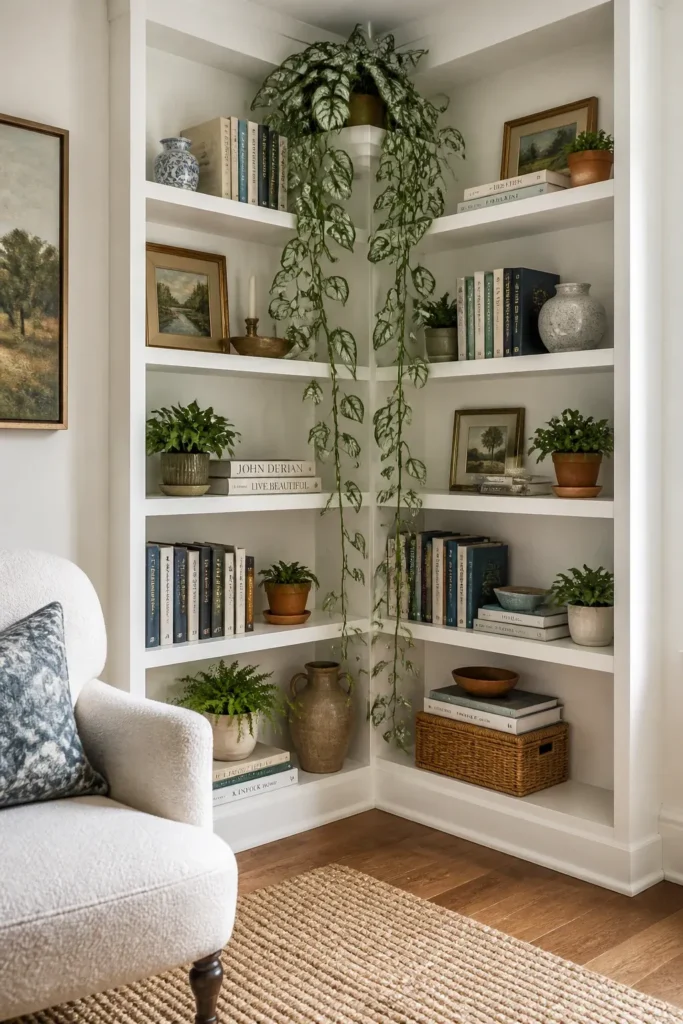
Sometimes a corner is better filled by adding a small piece of furniture, like a bar cart, a side table, or a bookshelf. You can then use these surfaces as a stage for smaller plants. A stack of books on a corner table provides the perfect pedestal for a small terracotta pot. This breaks up the flat surface and adds different heights to your decor.
If you have built-in shelving that meets in a corner, use that intersection for trailing varieties. Placing a string of pearls or a silver satin pothos on the highest shelf allows the vines to frame the corner naturally. It softens the sharp 90-degree angle where the walls meet and makes the built-in feel more integrated with the rest of the room's natural elements.
Maintaining Health in Enclosed Interior Spaces
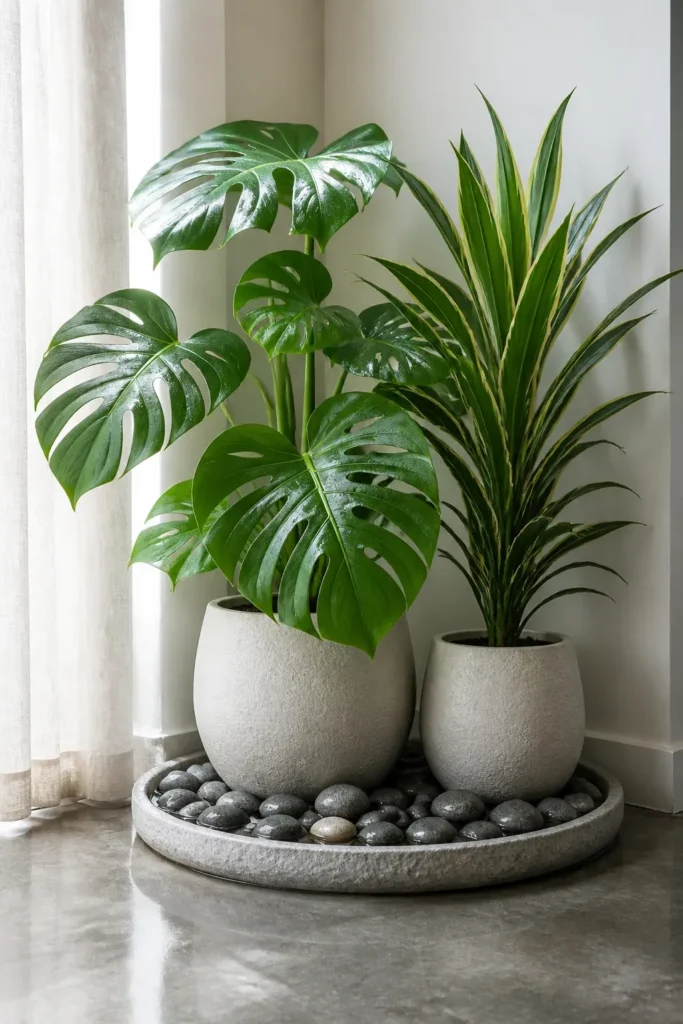
Corners can sometimes have stagnant air, which may lead to dust buildup on leaves or pest issues like spider mites. To keep your corner plants healthy, wipe the leaves down with a damp cloth once a month. This helps the plant breathe and ensures it can photosynthesize properly.
Be careful not to overwater plants in corners. Because these areas often have less light and less airflow, the soil stays wet for much longer than it would near a breezy window. Always feel the soil two inches down before adding more water. If the corner is particularly dry during winter, a small tray of pebbles and water placed near the base of the plant can help raise the local humidity without the need for a bulky humidifier.
Filling an empty corner with plants is an easy way to make your home feel more inviting and balanced. By choosing the right height, using vertical stands, or hanging greenery from above, you can turn a dead space into a vibrant part of your living environment. Take a look at the quietest corner in your home today and see which of these methods might bring it to life.