
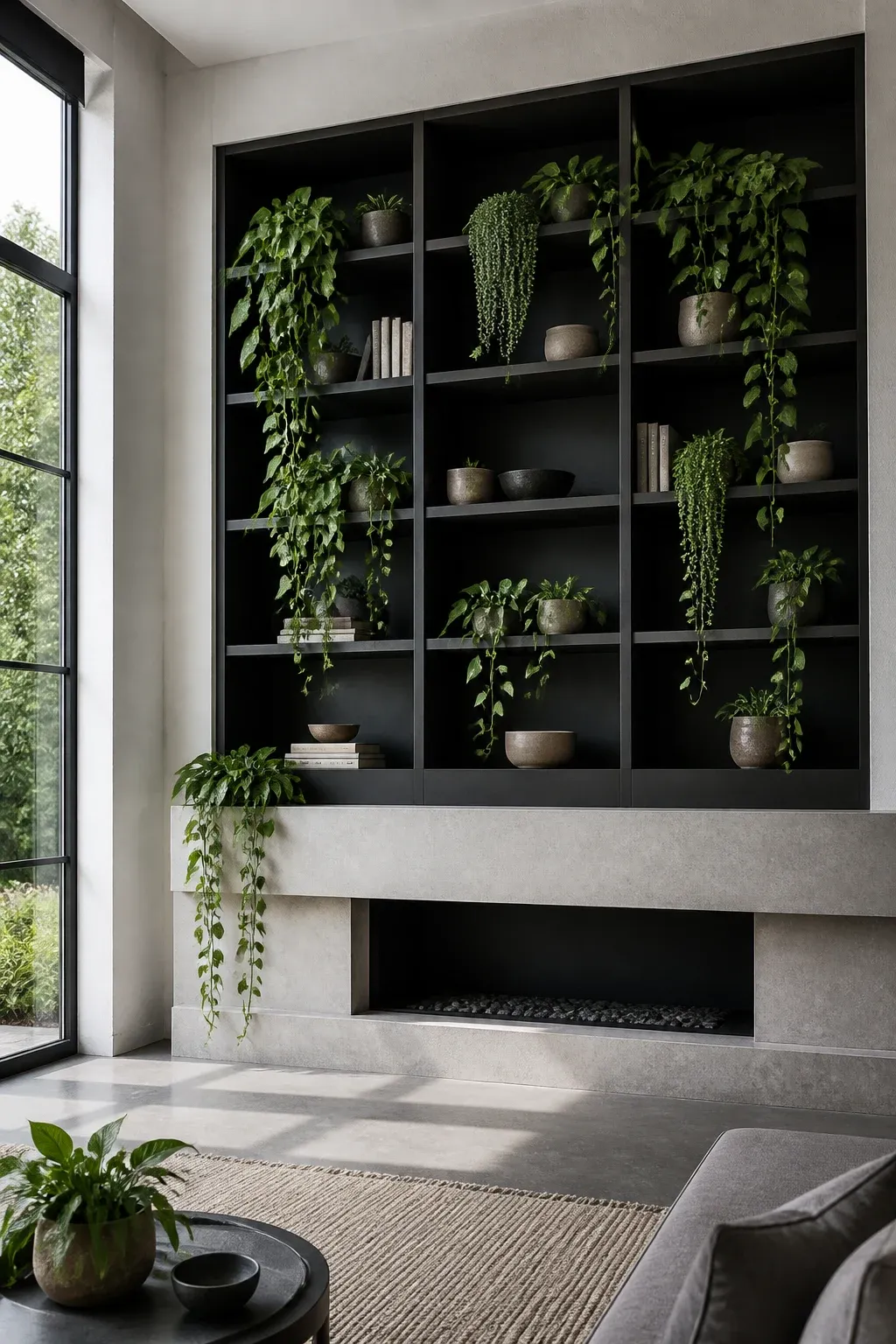
Modern living rooms often lean heavily on clean lines, metal surfaces, and geometric shapes. While this style looks sleek, it can sometimes feel cold or overly rigid. Introducing living greenery is one of the most effective ways to balance these hard edges without losing the contemporary aesthetic. Plants act as organic sculptures that breathe life into a space and make a house feel like a home.
In this guide, we will look at how to use trailing vines, large floor plants, and varied leaf shapes to create a more comfortable atmosphere. You will learn how to choose the right greenery to contrast with minimalist furniture and how to use natural materials like bamboo or wicker to add warmth to your decor.
Breaking up sharp architectural angles with trailing foliage
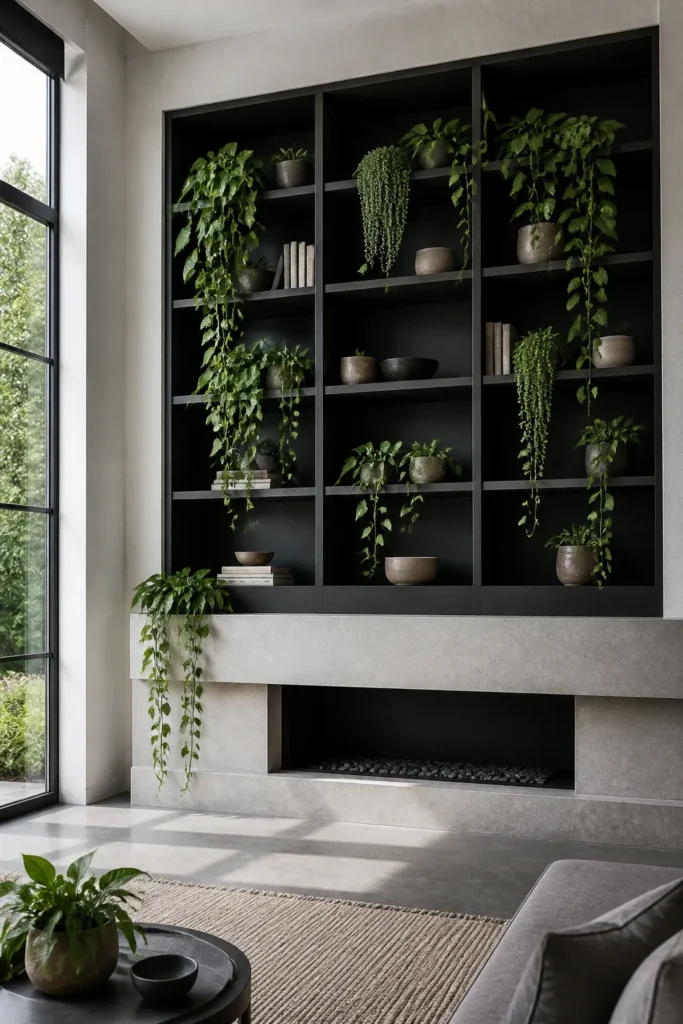
Modern homes often feature built-in shelving, rectangular mantels, and sharp window frames. These straight lines can feel harsh if left bare. Trailing plants like Pothos, Heartleaf Philodendron, or String of Pearls are great for softening these boundaries. When you place a trailing plant on a high shelf or a mantel, the stems naturally spill over the edge in irregular, flowing patterns. This visual break disrupts the long, straight lines of the furniture. It draws the eye away from the rigid structure and replaces it with a softer, organic silhouette. For the best effect, let the vines grow to different lengths so they don't look too manicured.
Using large floor plants to fill empty corners
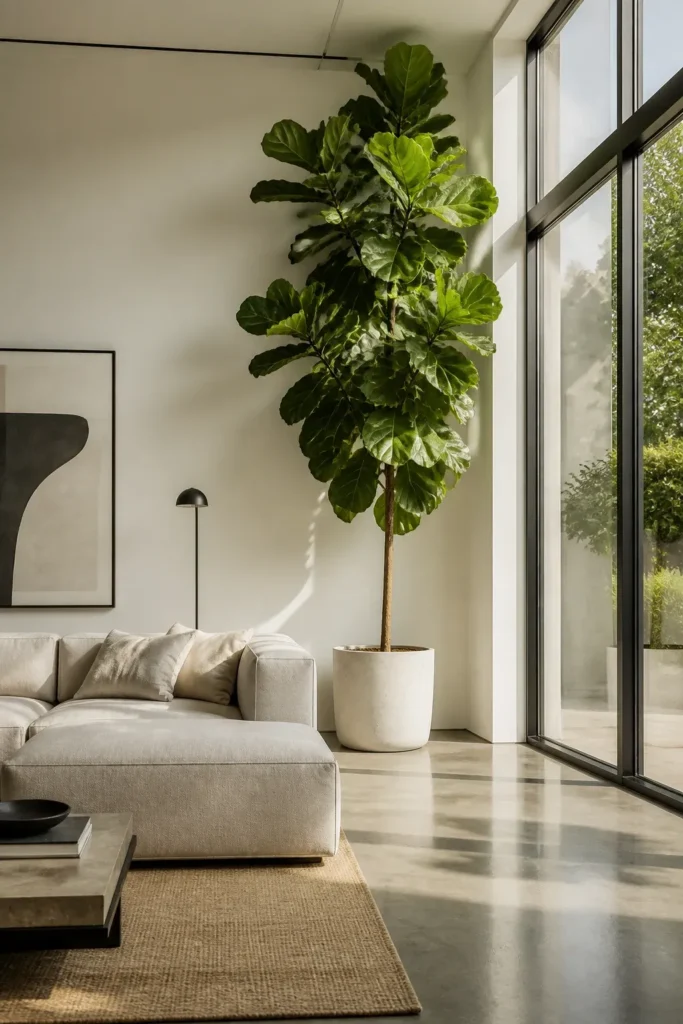
Empty corners in a modern living room can sometimes feel like wasted space or look unfinished. Instead of adding more furniture, a large-scale plant can fill that gap while adding a vertical element of life. Species like the Fiddle Leaf Fig, Bird of Paradise, or a tall Bamboo palm work well here. These plants have a presence that matches the scale of larger sofas and coffee tables. A tall plant in a corner acts as a transition between the floor and the ceiling, making the room feel more integrated. Place them in a spot that gets decent light, and use a heavy pot to keep them stable.
Choosing leaf shapes that contrast with minimalist furniture
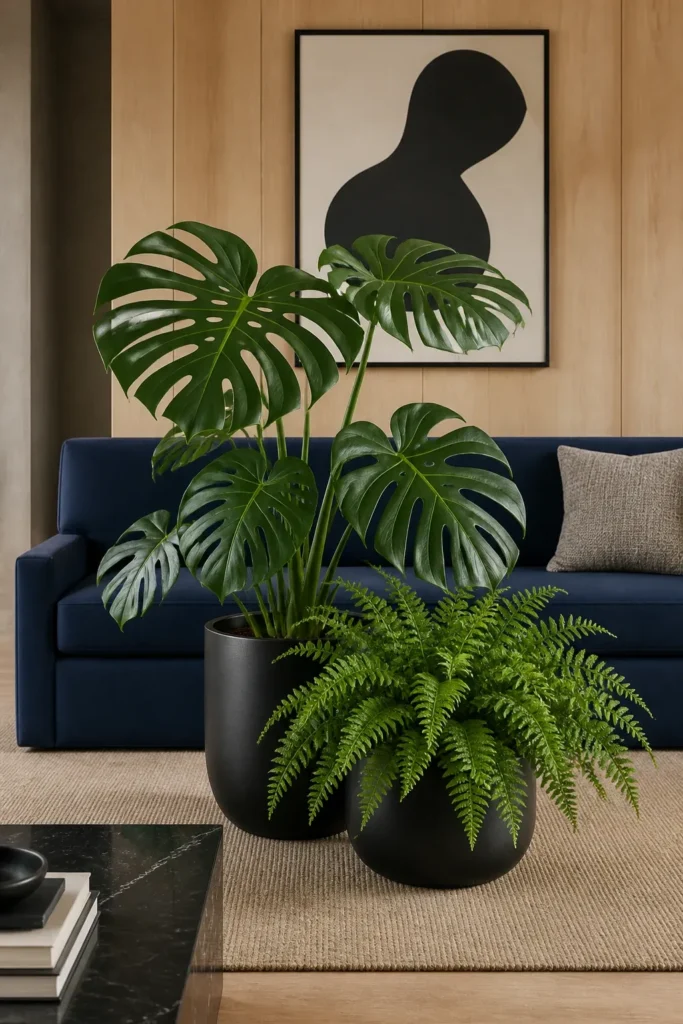
Minimalist furniture is usually defined by flat surfaces and solid colors. To create a visual balance, look for plants with complex or unusual leaf shapes. The Monstera Deliciosa is a classic choice because its large, perforated leaves provide a bold contrast to the smooth fabric of a modern sofa. If your furniture is very boxy, consider plants with fine, feathery foliage like the Parlor Palm or a Fern. The delicate texture of these leaves provides a light, airy feel that counters the weight of heavy, dark furniture. Mixing these textures prevents the room from feeling one-dimensional.
Adding texture through natural planters and woven baskets
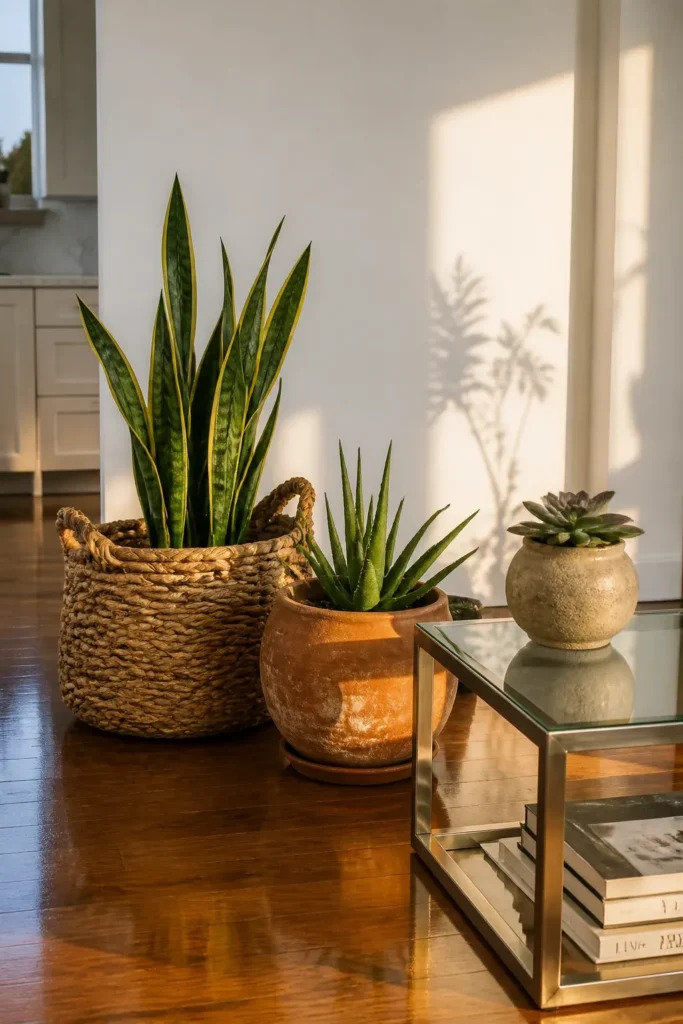
The container you choose is just as important as the plant itself. In a room filled with glass, steel, or polished wood, natural materials provide much-needed tactile variety. Woven seagrass baskets, bamboo planters, and terracotta pots add a rustic touch that grounds the space. These materials bring in earthy tones and organic textures that soften the look of a high-gloss floor or a metal side table. If you prefer a cleaner look, choose stone or unglazed ceramic pots. These still offer a natural feel without being too distracting.
Creating depth with tiered plant stands and shelving
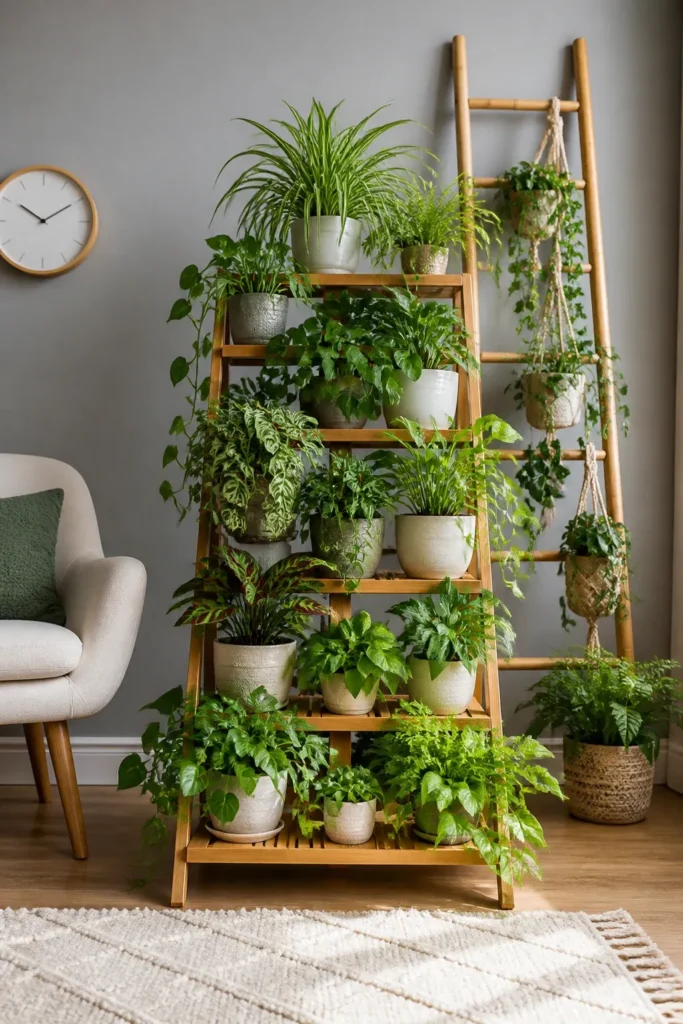
A common mistake is placing all plants at the same eye level. To make a living room feel more dynamic, vary the heights of your greenery. Using tiered plant stands or bamboo ladders allows you to stack plants vertically, creating a 'green wall' effect that adds depth to the room. This technique is especially useful in smaller living rooms where floor space is limited. By grouping plants of different heights together, you create a lush focal point that mimics how plants grow in nature. This layering effect makes the room feel more lived-in and less like a showroom.
Balancing neutral color palettes with varied shades of green
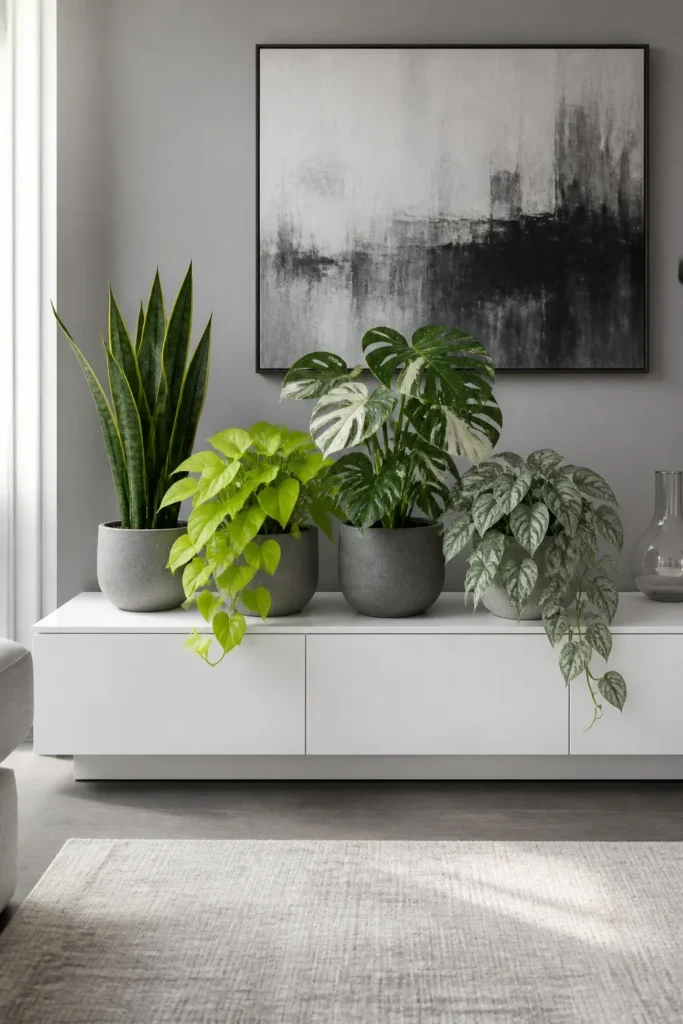
Modern design often relies on a palette of grey, white, and black. Greenery is the easiest way to add color without clashing with your existing decor. However, not all greens are the same. A Snake Plant offers deep, dark forest greens, while a Neon Pothos provides a bright, lime-colored pop. Using a mix of these shades adds complexity to a neutral room. Variegated plants, which have leaves with white or yellow splashes, can also help bridge the gap between your white walls and the darker green foliage. This subtle variation keeps the eye moving and makes the space feel more vibrant.
Integrating plants into your modern living room does more than just decorate a corner; it changes the way the room feels. By focusing on leaf texture, varied heights, and natural materials, you can turn a sterile space into a relaxing sanctuary. Start with one or two large pieces and gradually add smaller trailing plants to see how they change your perspective on the room.