
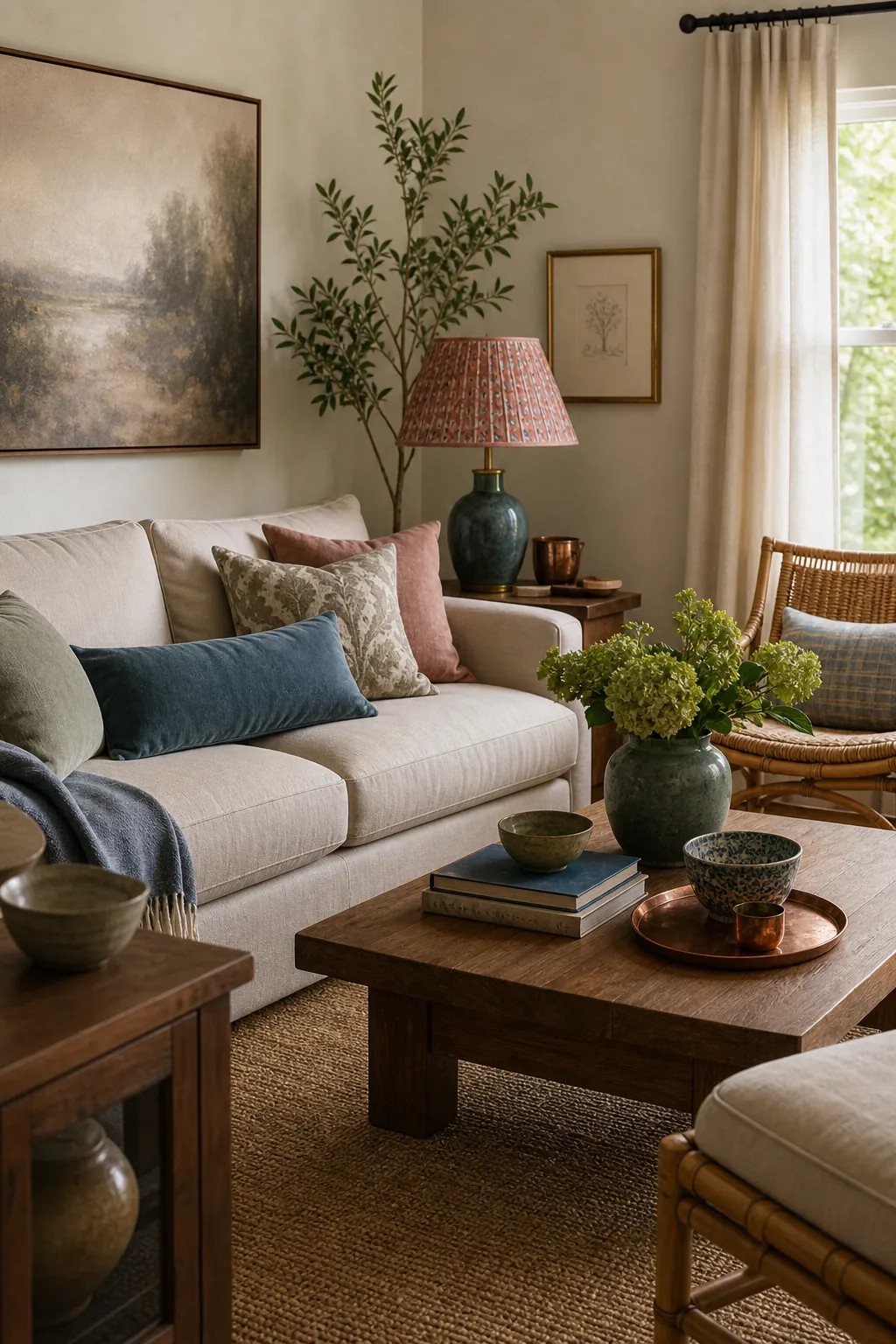
The worst way to use a home decor trend is to let it bully you into replacing a room that already works. A good trend should act more like a lens. It helps you see what feels tired, what can stay, and what small change would make the whole room feel current again.
That distinction matters in 2026. The official trend direction is not one single look. IKEA’s 2026 Style Guide points to joy, storage, restorative design, and emotional longevity. Etsy’s 2026 forecast names Patina Blue and Washed Linen, both of which lean into comfort and character. The ASID 2026 Trends Outlook frames interiors around wellness, adaptability, and long-term value.
That lines up with what homeowners keep asking in decorating forums: How do I make this feel fresh without replacing all the furniture? The answer is not a shopping spree. It is choosing the parts of a trend that can sit on top of what you already own.
Use Warm Color As An Accent, Not A Mandate
Warm color is still moving into interiors, but that does not mean every wall has to become terracotta or every sofa has to be replaced with rust velvet. The smarter update is to bring warmth into the room where it is easy to change later: pillows, throws, lampshades, art, planters, and small ceramics.
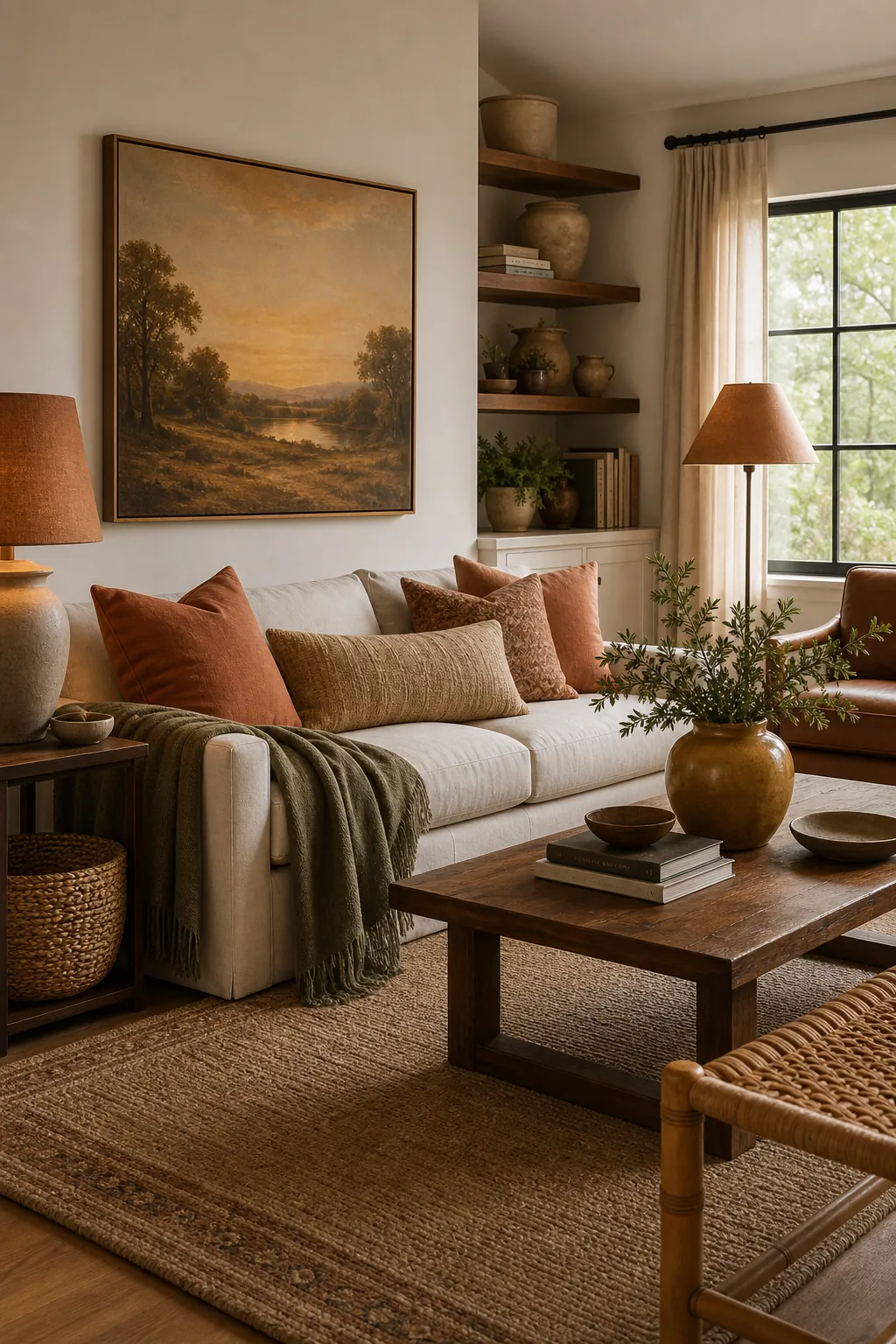
If your room is gray, white, or beige and feels chilly, start with three small warm notes. Try an olive throw, a clay vase, and a warmer piece of art. The goal is not to erase the old room; it is to change its temperature.
Keep the biggest pieces quiet unless you already wanted to replace them. Trends date fastest when they are locked into expensive items. They age more gracefully when they live in layers you can rotate.
Add Washed Linen Where You Touch The Room
Washed linen works because it changes the feeling of a room without shouting for attention. It looks softer than crisp hotel linen and less perfect than polished synthetic fabrics. That is why it is useful in real homes: it can be rumpled and still look intentional.
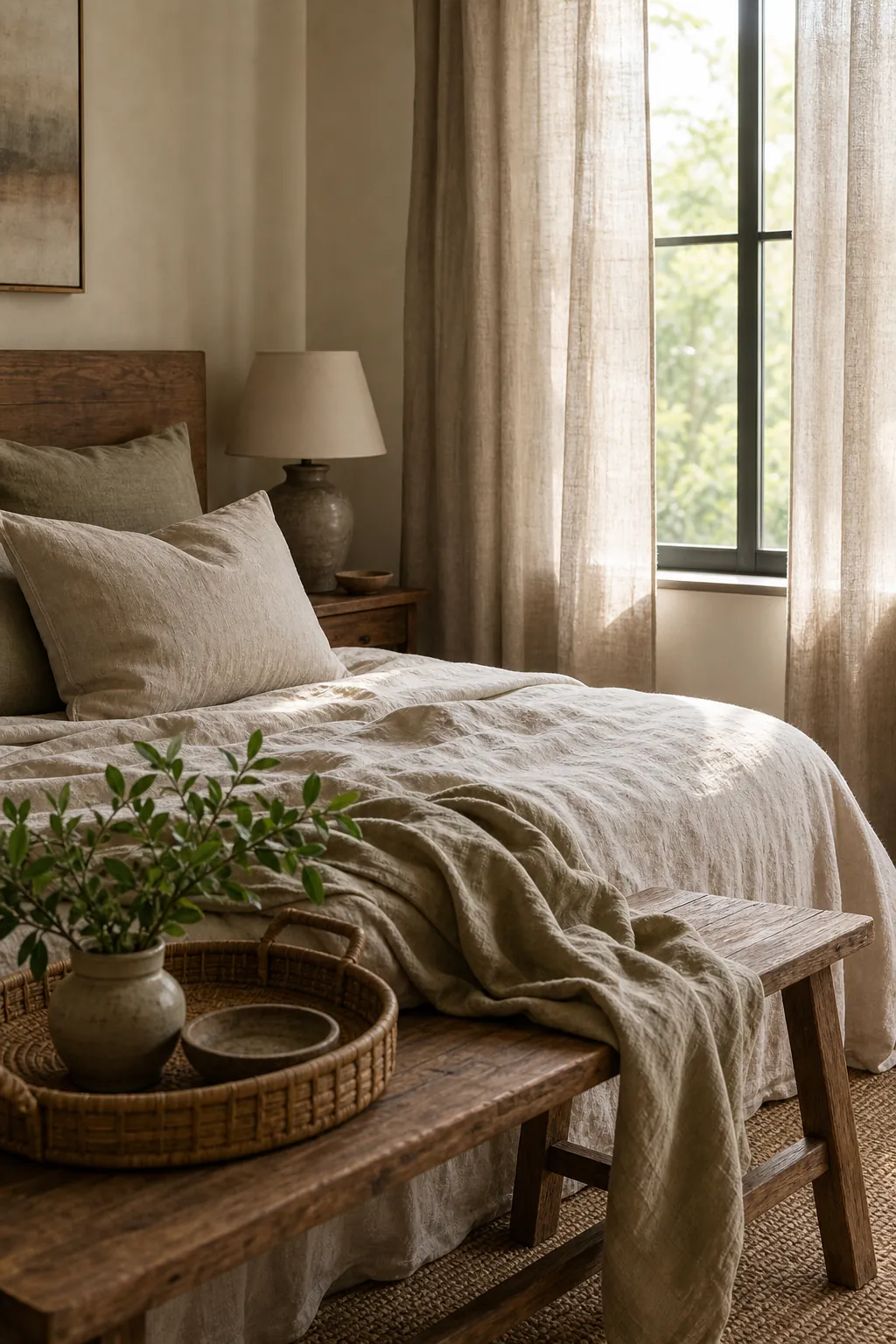
The best places to use it are the places your body already understands: bedding, sofa pillows, curtains, napkins, table runners, and relaxed slipcovers. A linen layer makes a room feel more human because it wears in instead of looking ruined by daily life.
Pair it with structure so it does not look sloppy. Washed linen curtains beside a clean wood table, linen pillows on a tailored sofa, or linen bedding with a bamboo tray gives the softness a frame.
Try Patina Blue In One Confident Spot
Patina Blue is one of the easier 2026 color ideas to use because it has history built into it. It sits between blue, green, and aged metal, so it can feel coastal, vintage, earthy, or refined depending on what you put beside it.
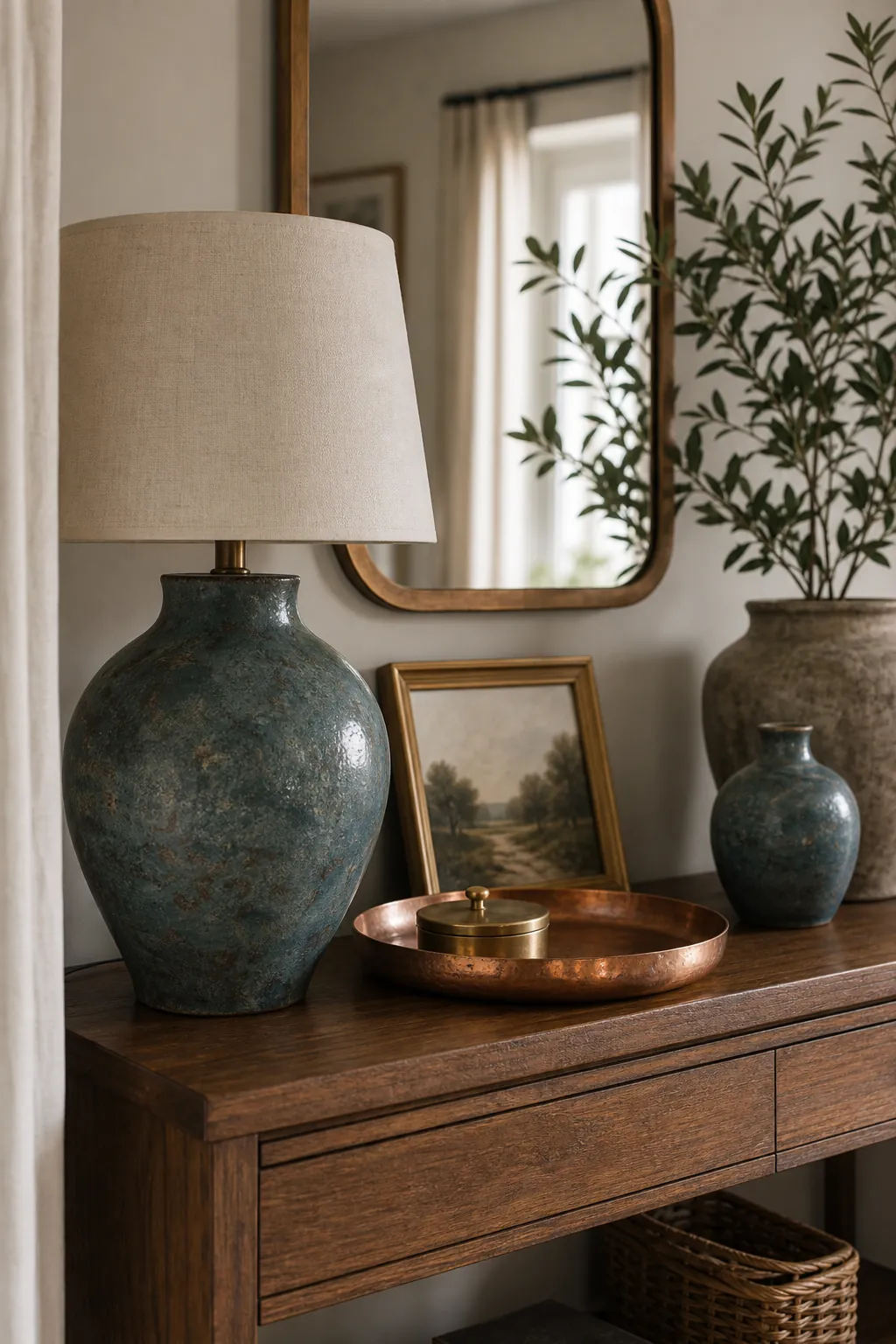
Do not scatter tiny blue objects everywhere. Choose one confident spot: a lamp base, a ceramic vase, a small cabinet, a framed textile, or a cushion pair. Then place it near warm metal, natural wood, or linen. That contrast keeps the color from feeling like a random teal accent.
If your room already has blue, use Patina Blue to deepen it. If your room is mostly warm neutrals, use it as the cool note that keeps the palette from becoming too heavy.
Use Playful Color In Small Doses
Joyful color is one of the clearest 2026 signals, but it does not have to turn your home into a theme. The trick is to put playful color on pieces that are allowed to be playful: lamps, art, cushions, trays, flowers, side tables, frames, or a single small chair.
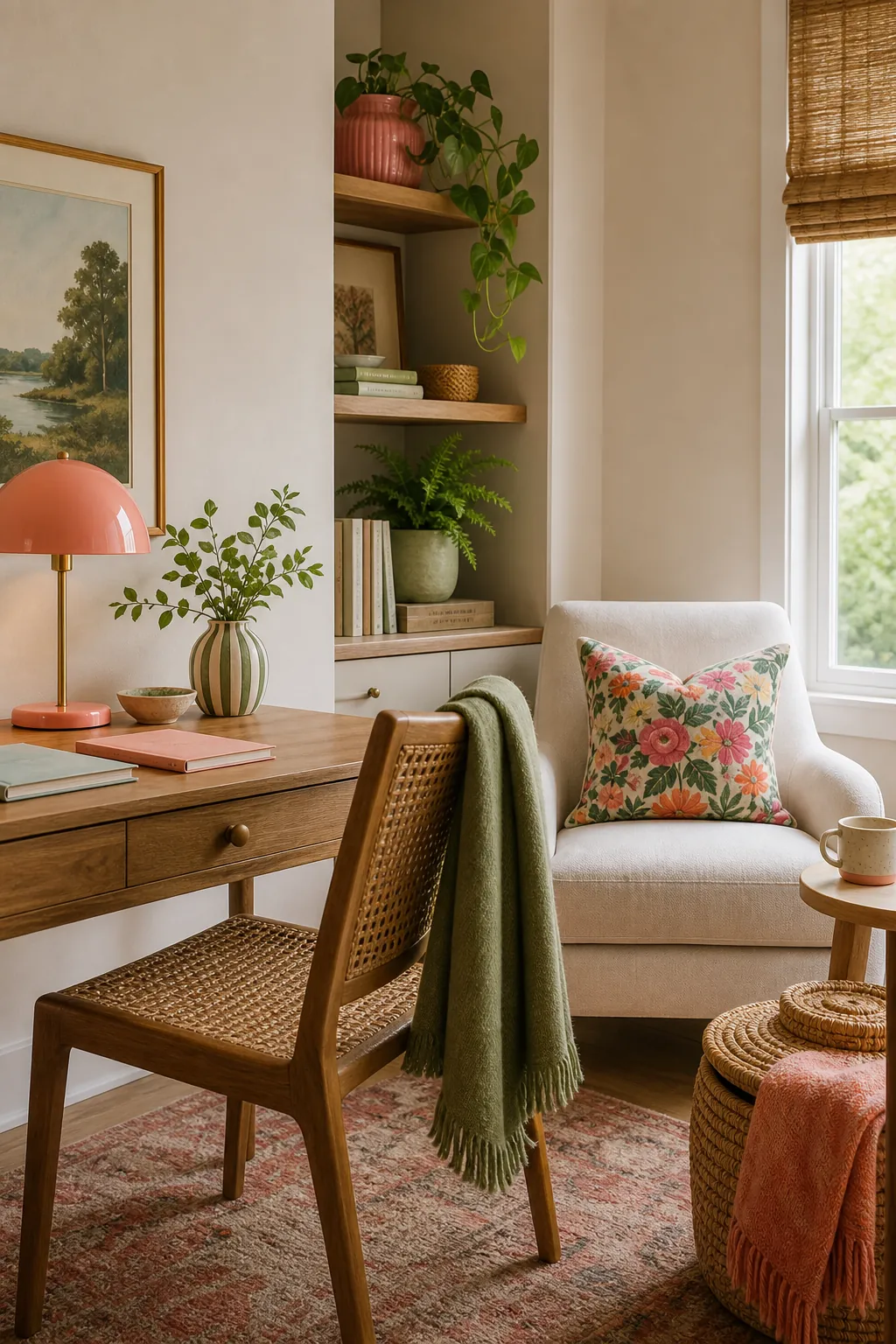
A coral lamp can wake up a beige desk. A pink tray can make a brown coffee table feel deliberate. A striped vase can carry a color story from one side of a room to the other. Small color works best when the foundation is calm enough to hold it.
- Use one playful accent in a quiet corner.
- Repeat the color once, but in a different scale.
- Keep the surrounding furniture simple.
- Avoid buying the whole matching collection.
Bring In Craft Instead Of More Stuff
Natural craftsmanship is not just a style category. It is a way to add evidence of the hand: woven bamboo, rattan, pottery, wool, carved wood, stitched linen, and imperfect glaze. These pieces give a room character without requiring a remodel.
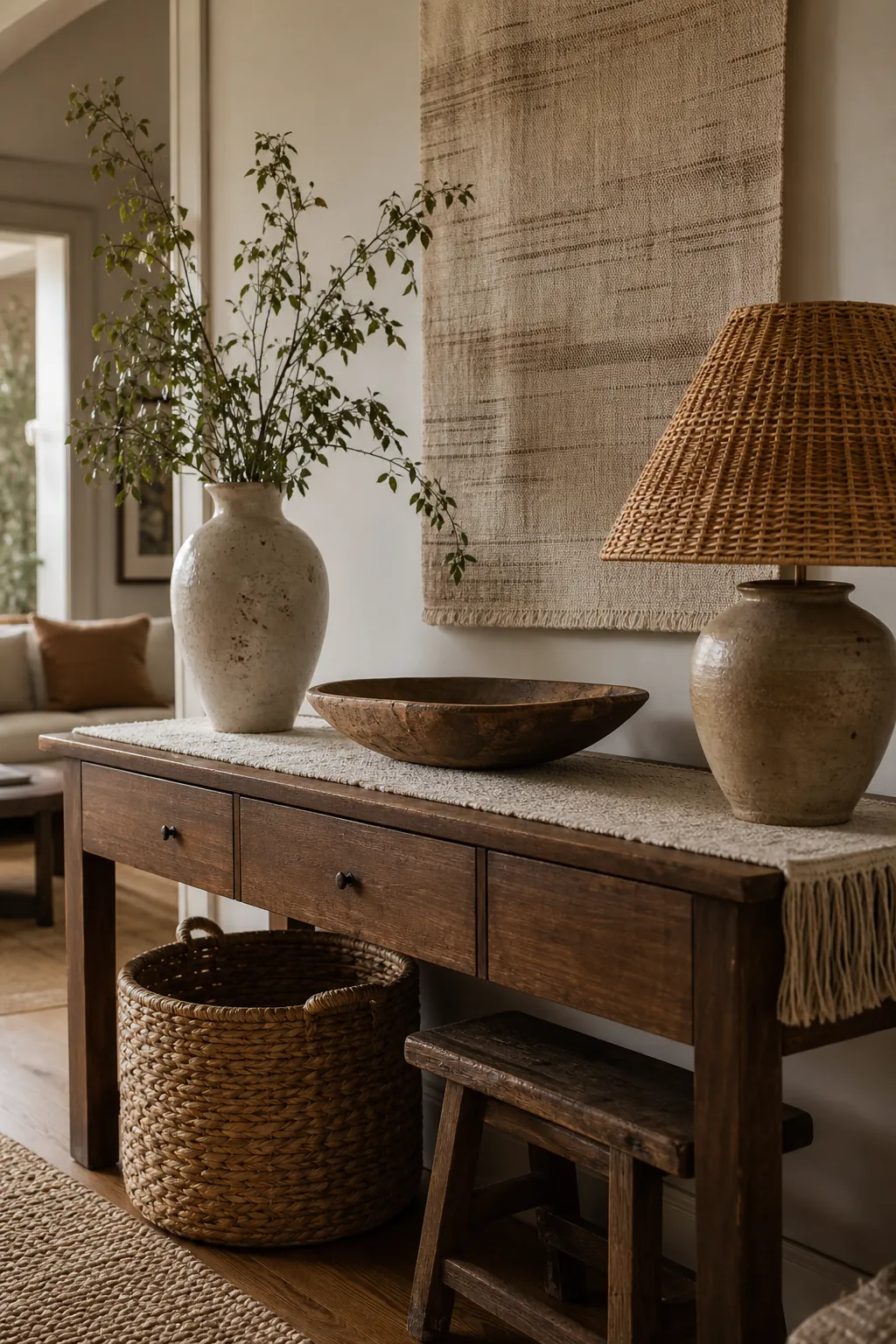
The difference between craft and clutter is usefulness. A woven basket that holds blankets earns its place. A ceramic bowl that catches keys earns its place. A bamboo tray that gathers tea, remotes, or bedside objects earns its place. Choose craft pieces that solve a small problem while adding texture.
This is where natural materials can update a room quietly. They make a flat space feel layered, and they tend to outlast one-season colors.
Let One Vintage Piece Do The Work
Retro and vintage influence will keep showing up in 2026, but the most livable version is selective. One vintage piece often does more for a room than five new objects designed to look vintage.
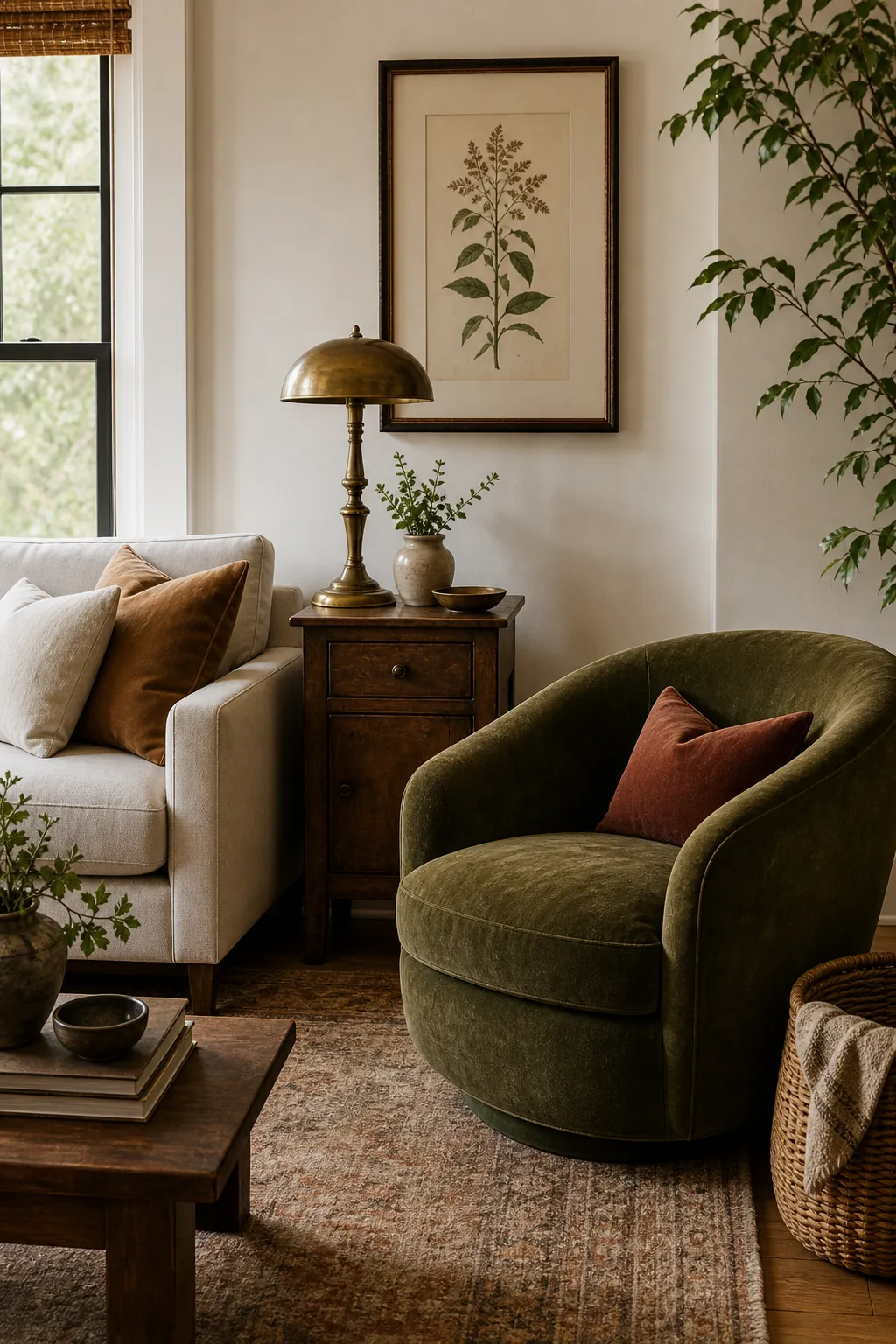
Look for a side table, small cabinet, lamp, mirror, framed art, or accent chair that brings a different age into the room. A room ages better when it contains more than one time period. That is why many spaces with real wood, real metal, and inherited pieces still feel good after trends move on.
If you are nervous, keep the vintage piece in a classic material: wood, brass, bronze, cane, stone, wool, leather, or ceramic. Then let newer textiles or art keep it from feeling stuck in the past.
Make Storage Part Of The Decor
The art of storage is not about displaying everything. It is about making the useful things look considered. This trend is especially helpful if your home is small, busy, or shared by people with real daily routines.
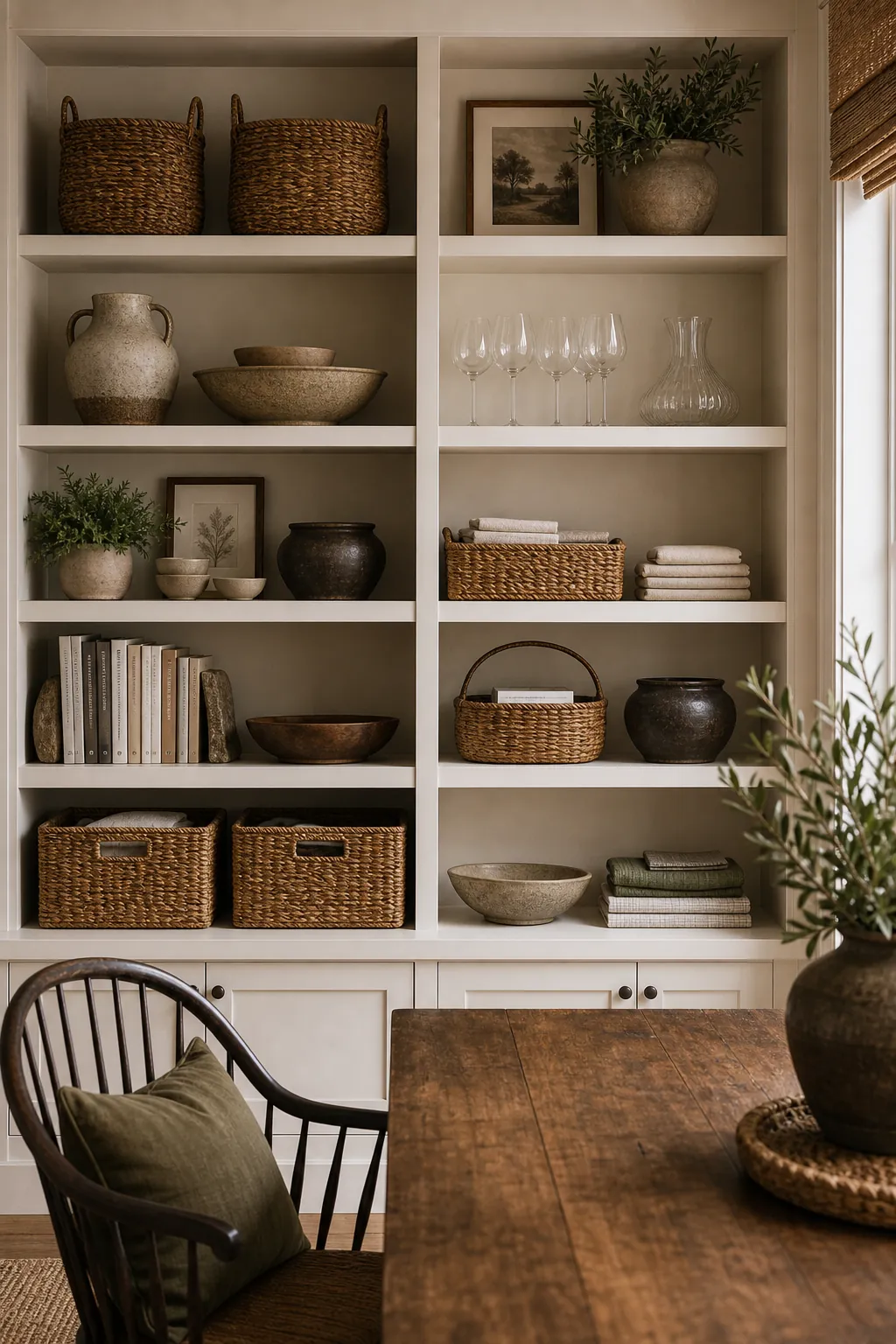
Use woven baskets for the things you do not want to see, and open shelves for the things that can carry visual weight: ceramics, glassware, folded linens, books, framed photos, and trays. The hidden rule is negative space. If every shelf is full, storage stops looking intentional and starts looking like overflow.
A practical test: if you would not want to dust it, do not display it. If you use it often and it looks good grouped with similar materials, let it become part of the room.
Create A Restorative Corner Before You Redesign A Room
Wellness design can sound expensive, but the most useful version is small and sensory. Start with one corner where the light, sound, smell, touch, and view feel better than the rest of the room. That corner can be a reading chair, bedside table, bath shelf, or breakfast nook.
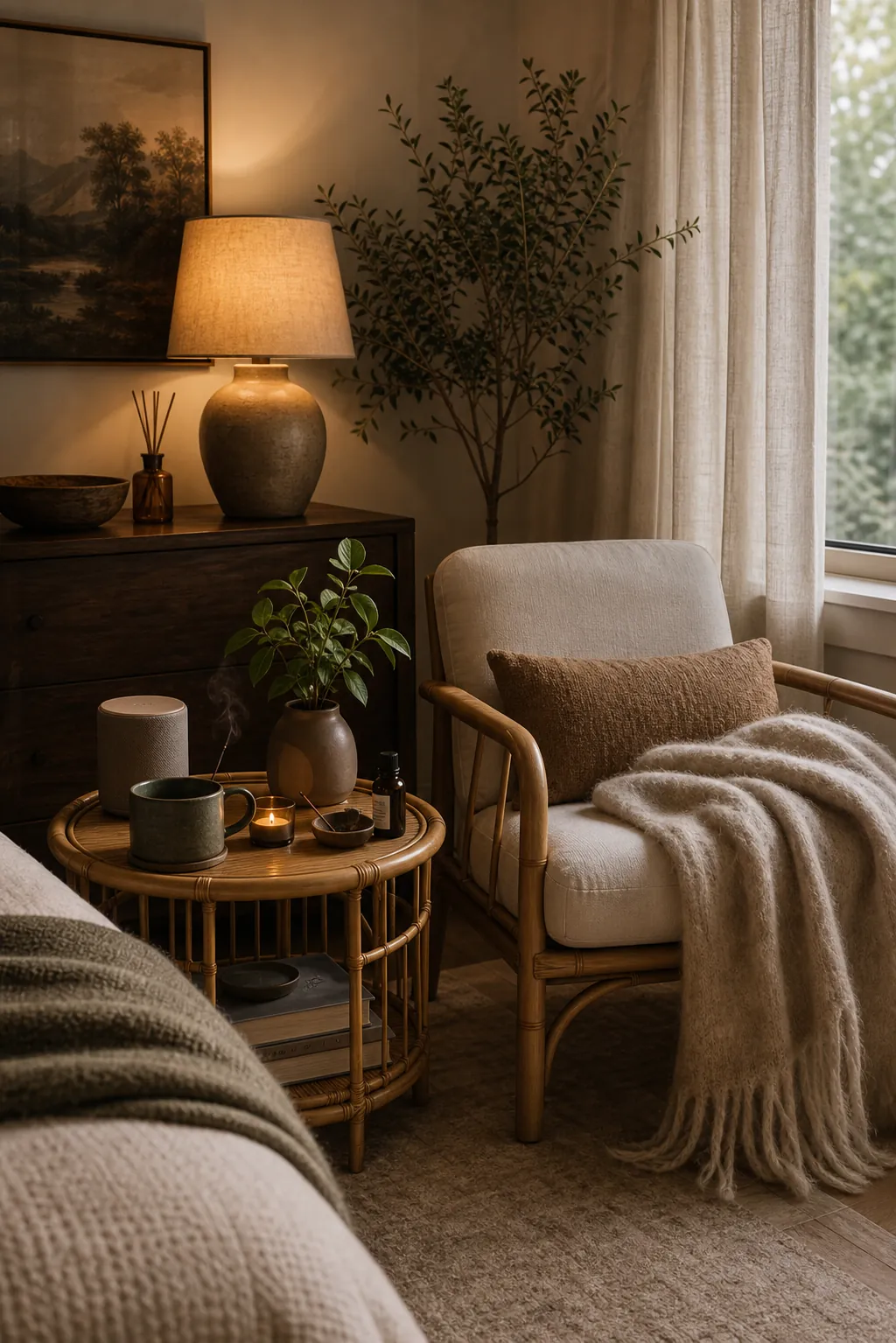
Use a dimmable lamp, a washable throw, a plant, a small table, a tray, and one object that supports a habit you actually want: tea, reading, journaling, music, stretching, or quiet breakfast. A restorative home is built through repeated daily relief, not through a single expensive purchase.
The Trend-Proof Test
Before you buy anything trend-driven in 2026, ask four questions:
- Can it work with the furniture I already own?
- Can I move it to another room if I change my mind?
- Does it improve how the room feels or functions?
- Would I still like the material if the trend name disappeared?
If the answer is yes, the trend is probably worth using. If the answer is no, let it stay in the forecast. The best 2026 update is not the one that makes your home look newly decorated. It is the one that makes your existing home feel more like itself.