
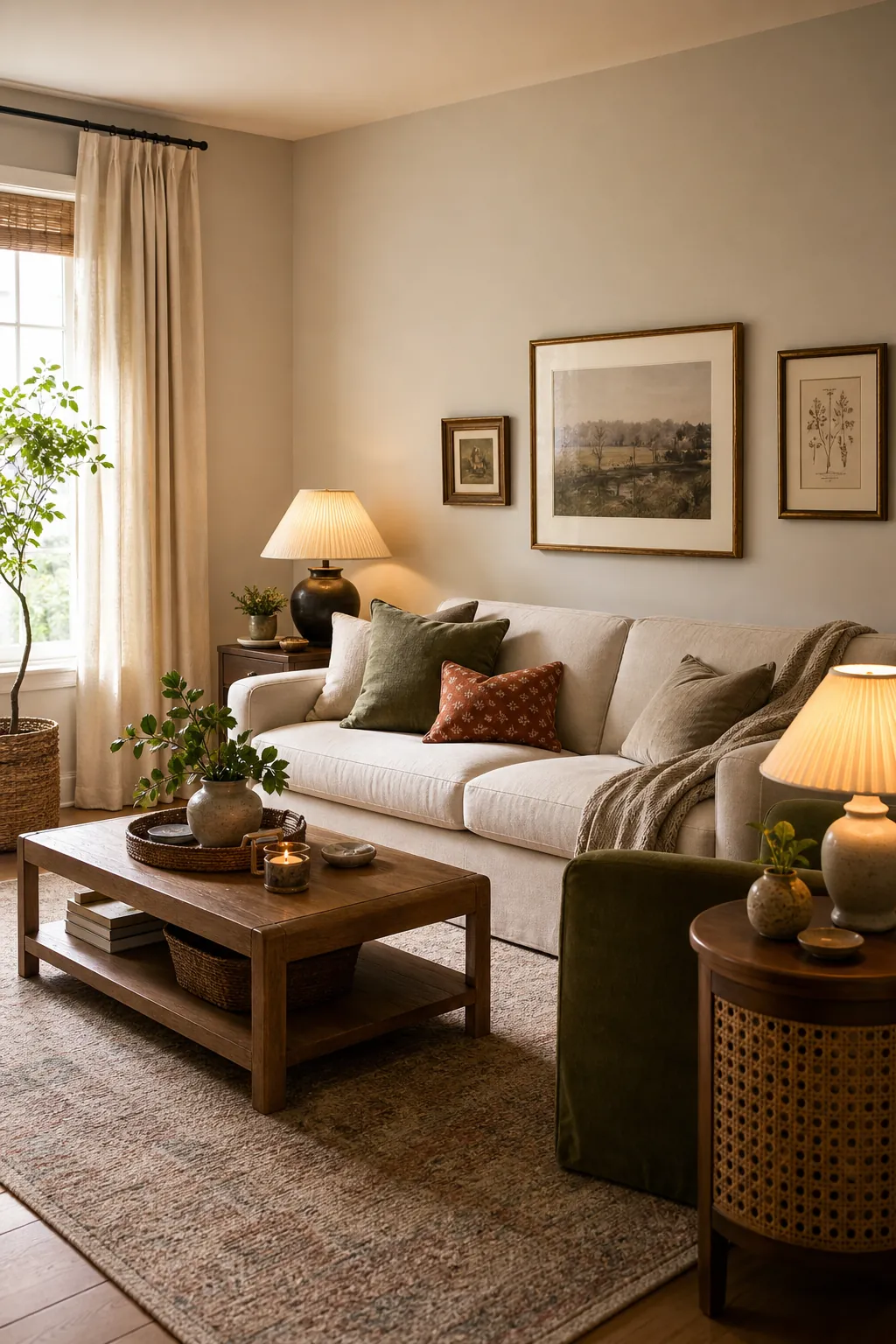
The quickest way to make a room look more expensive is usually not buying a dramatic new sofa. It is fixing the small things that make the room feel unfinished: the rug is too small, the curtains stop short, the only light comes from the ceiling, and every surface is carrying a few too many objects.
That is why the best upgrades are often quiet. A room looks expensive when the scale feels intentional, the lighting is soft, and the eye knows where to rest. You can keep the same furniture and still change the entire impression of the space.
Start With The Three Expensive-Looking Signals
Before buying anything, stand in the doorway and look for three signals: scale, light, and editing. These decide whether a room feels pulled together or like a collection of separate purchases.
- Scale: curtains, rugs, art, lamps, and pillows should be large enough to belong to the room.
- Light: the room should have warm pools of light at different heights, not one harsh ceiling source.
- Editing: the room needs fewer random small objects and more deliberate groupings.
If a room feels cheap even though you like the pieces, one of those three signals is usually off.
Hang Curtains High And Wide
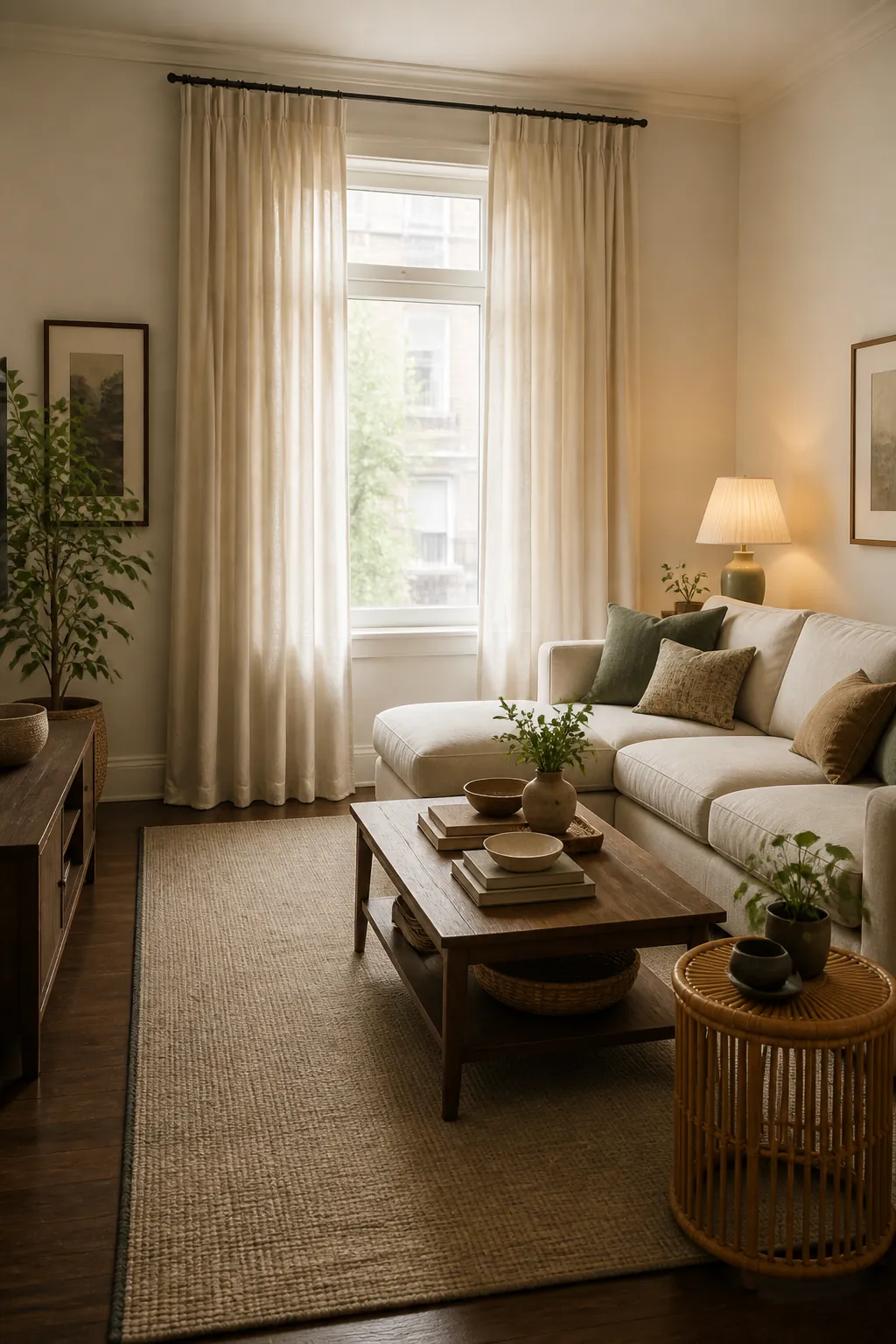
Short curtains are one of the fastest ways to shrink a room. Mount the rod closer to the ceiling, extend it wider than the window frame, and let the panels reach the floor. The fabric does not have to be expensive. The length and placement do most of the work.
The goal is to make the window feel taller and the wall feel more generous. Even simple linen-look panels look better when they are hung with confidence instead of squeezed tightly around the glass.
Use A Rug That Connects The Furniture
A tiny rug floating in the middle of the floor makes every piece around it look disconnected. In a living room, try to get at least the front legs of the sofa and chairs on the rug. In a bedroom, let the rug extend beyond the sides and foot of the bed so your feet land on softness.
If the budget is tight, choose a larger flatweave, jute, wool-look, or indoor-outdoor rug over a smaller plush one. Bigger and simpler usually reads more expensive than small and busy.
Turn Off The Overhead Light
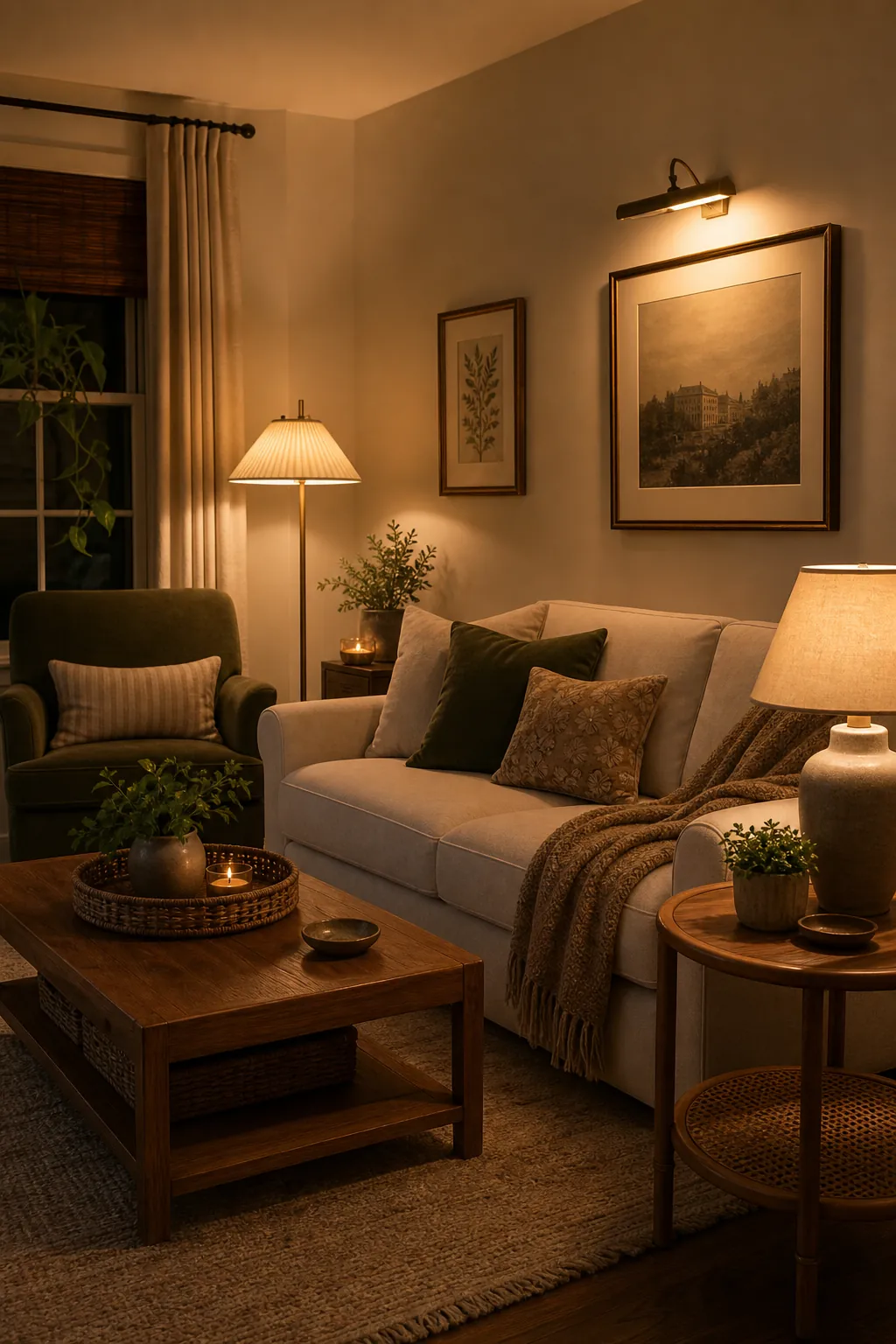
Overhead light is useful when you are cleaning. It is rarely flattering when you are living in the room. Add lamps at different heights: one table lamp near seating, one floor lamp in a dark corner, and one small accent lamp or picture light where the room needs glow.
Use warm bulbs and keep the shades simple. Expensive rooms are not brighter. They are better lit. The best lighting makes corners feel considered, faces look softer, and finishes look richer.
Edit Surfaces Until They Look Intentional
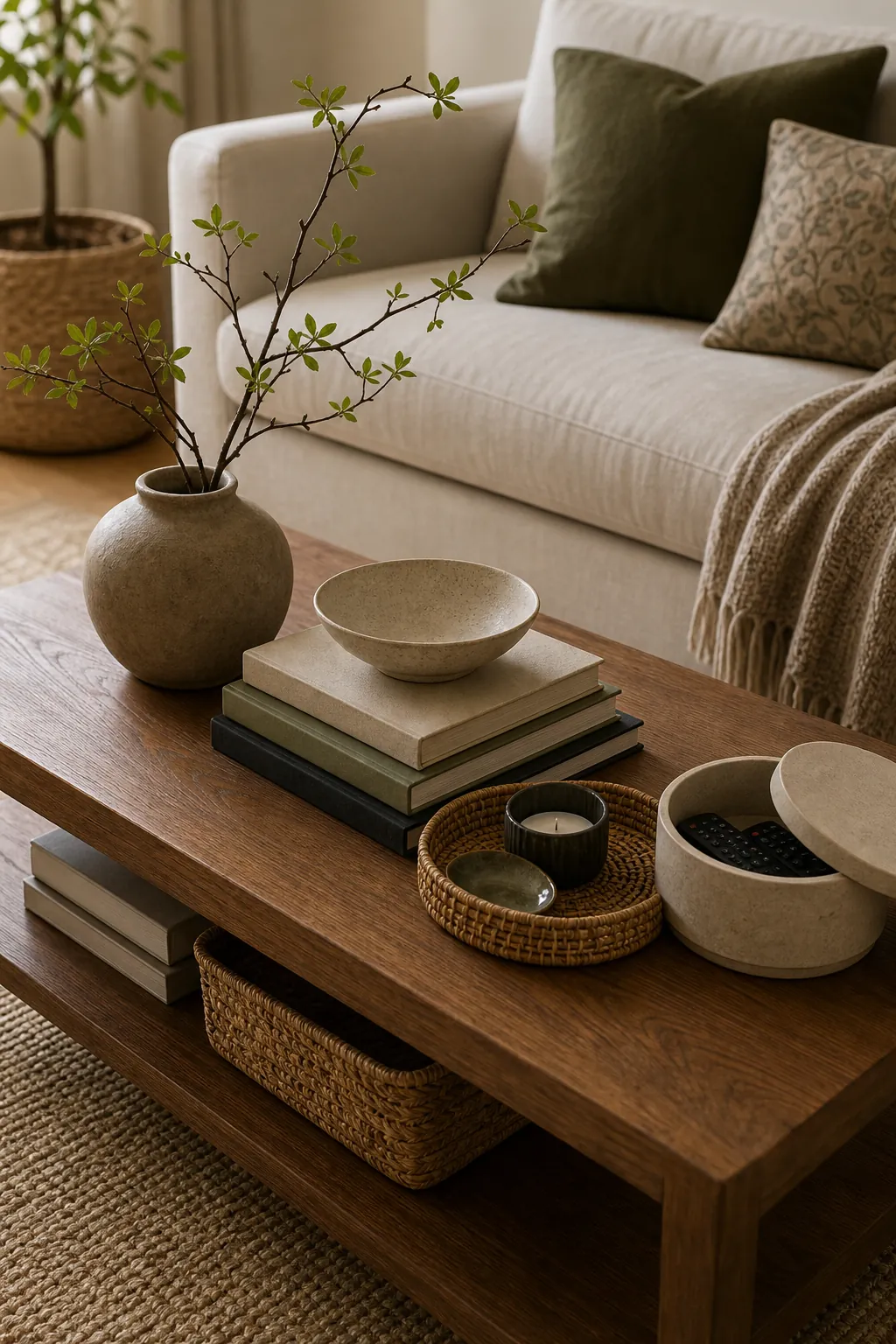
Most coffee tables, consoles, and nightstands do not need more styling. They need less. Remove everything first, then add back a few objects with different heights and textures: a tray, a lidded box, a bowl, a vase, or a short stack of books with plain covers.
The expensive-looking trick is containment. Remotes go in a box. Keys go on a tray. Small loose things either disappear or become part of one clear grouping.
Upgrade The Art Without Replacing Every Frame
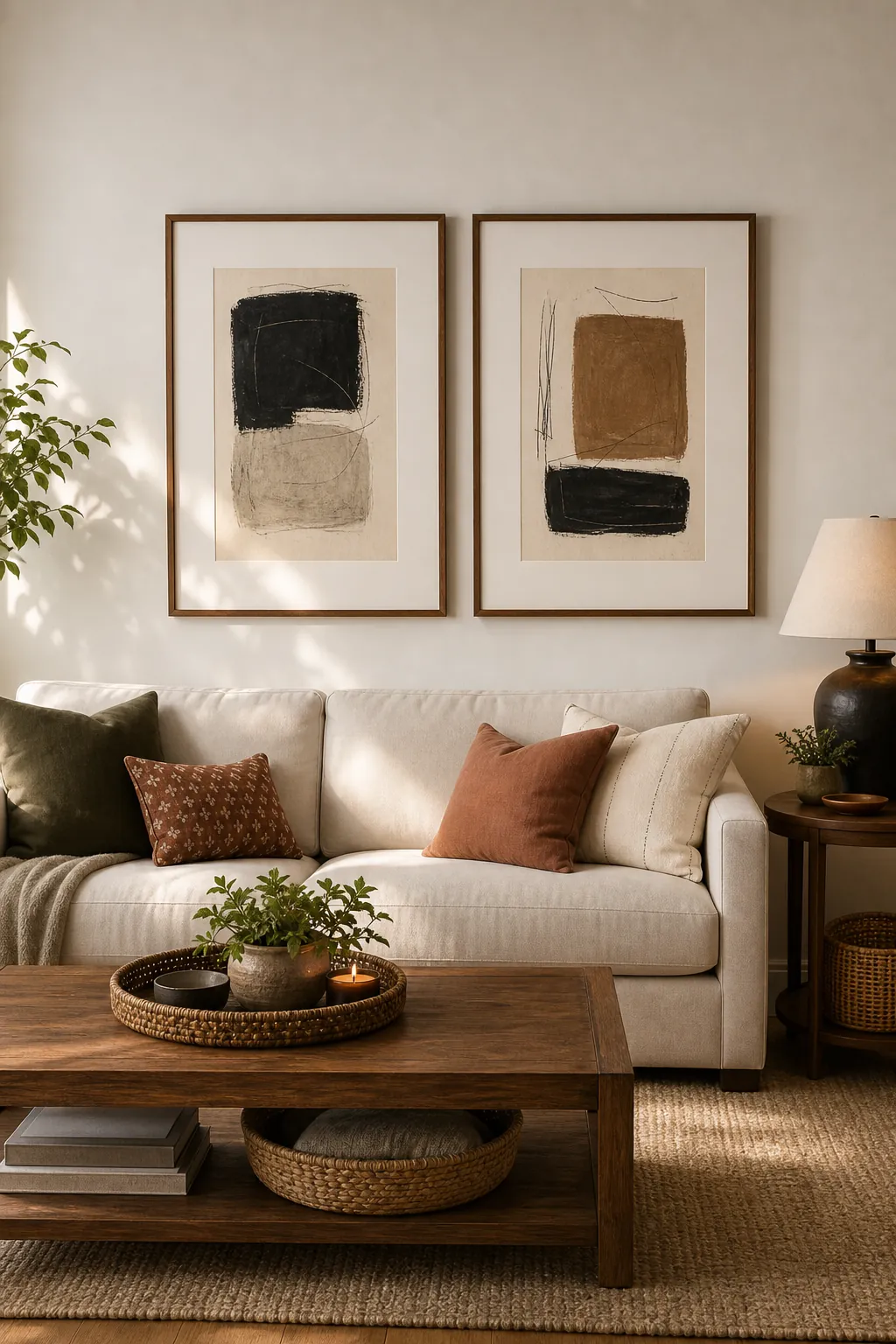
Small art hung too high can make a room feel temporary. Bigger pieces, wider mats, and a lower hanging height immediately feel more finished. If your prints are small, put them in larger frames with generous mats instead of crowding the wall with several tiny frames.
Over a sofa, a headboard, or a console, the art should feel connected to the furniture below it. One or two larger pieces usually look calmer and more expensive than a scattered gallery of small frames.
Repeat Materials On Purpose
A room can feel expensive when it repeats a few materials instead of collecting one of everything. Choose two or three finishes and let them show up more than once: warm wood, black metal, brushed brass, stone, linen, ceramic, bamboo, or woven natural fiber.
This does not mean matching sets. It means rhythm. A bamboo tray on the coffee table, a woven basket near the sofa, and a natural shade on a lamp can make the room feel connected without looking overly coordinated.
Make Pillows Look Full, Not Fussy
Flat, undersized pillows make a sofa or bed look tired. Use fewer pillows, but choose better scale. If the covers allow it, use inserts that are slightly larger than the cover so the corners fill out. Mix one quiet pattern with solids and texture rather than using five unrelated prints.
The formula is simple: fewer pillows, fuller shapes, tighter colors. A linen pillow, a textured wool pillow, and one muted pattern can do more than a pile of bargain cushions fighting for attention.
Give The Bed A Tailored Finish
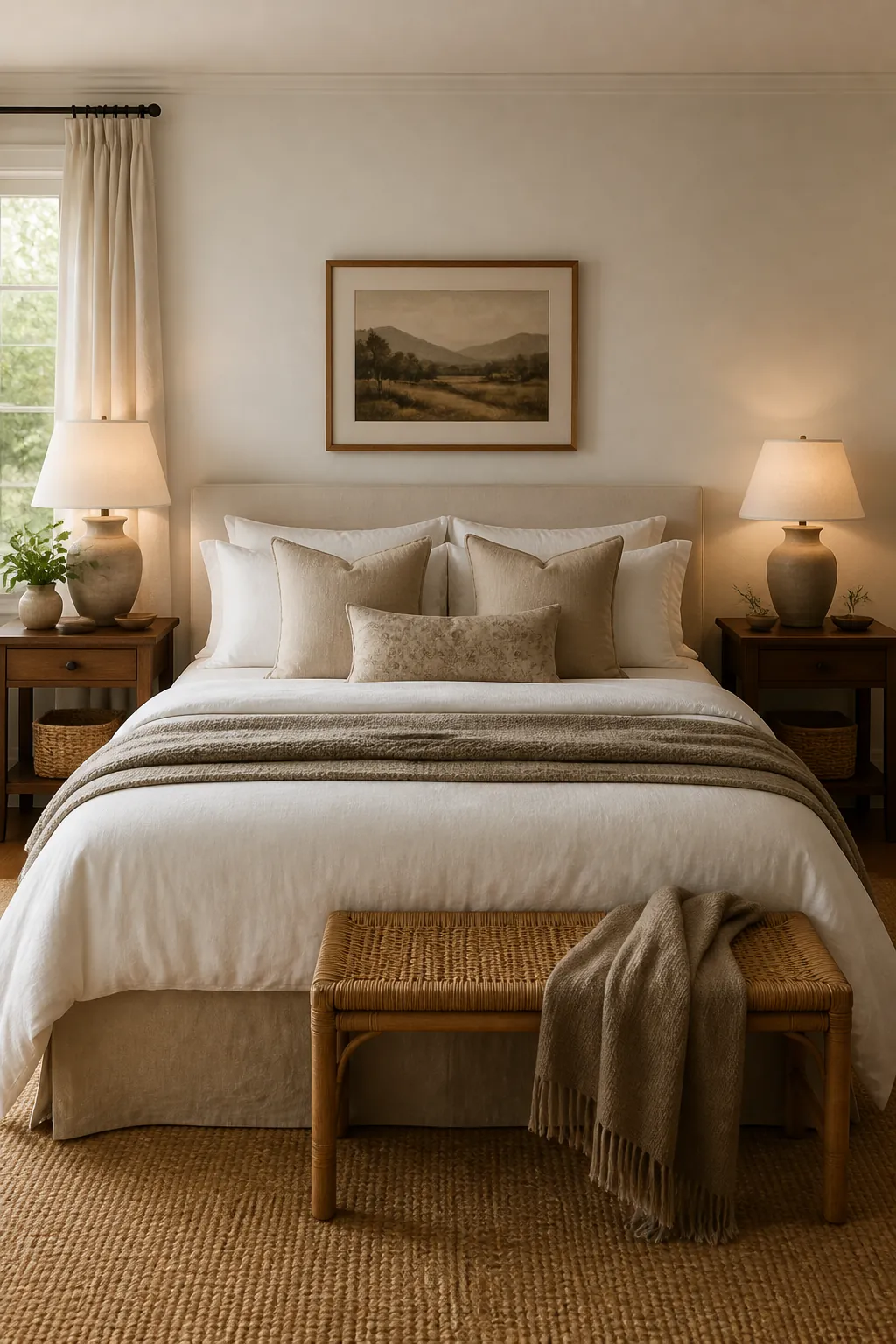
Bedrooms often look unfinished because the bed frame, storage, cords, or random items under the nightstand are visible. You do not need hotel bedding. You need a clean edge. Tuck the duvet properly, fold a throw across the foot, keep the nightstands mostly clear, and use lamps that have enough size for the bed.
If the bed frame is not beautiful, conceal it with a tailored bed skirt, a bench, or baskets that look intentional. The bed is the largest object in the room, so small improvements there change everything.
Hide The Practical Mess
Cords, visible packaging, mismatched storage bins, and overflowing baskets can undo otherwise good decor. Expensive-looking rooms do not hide that real life exists. They just give real life a better place to land.
- Use cord covers or route cords behind furniture.
- Decant daily items into simple containers where it makes sense.
- Choose baskets with lids for shoes, toys, pet supplies, or throws.
- Replace worn lampshades, switch plates, and cabinet pulls when they make the room feel dated.
These changes are not glamorous, but they are powerful because they remove visual noise.
Make The Entryway Feel Deliberate
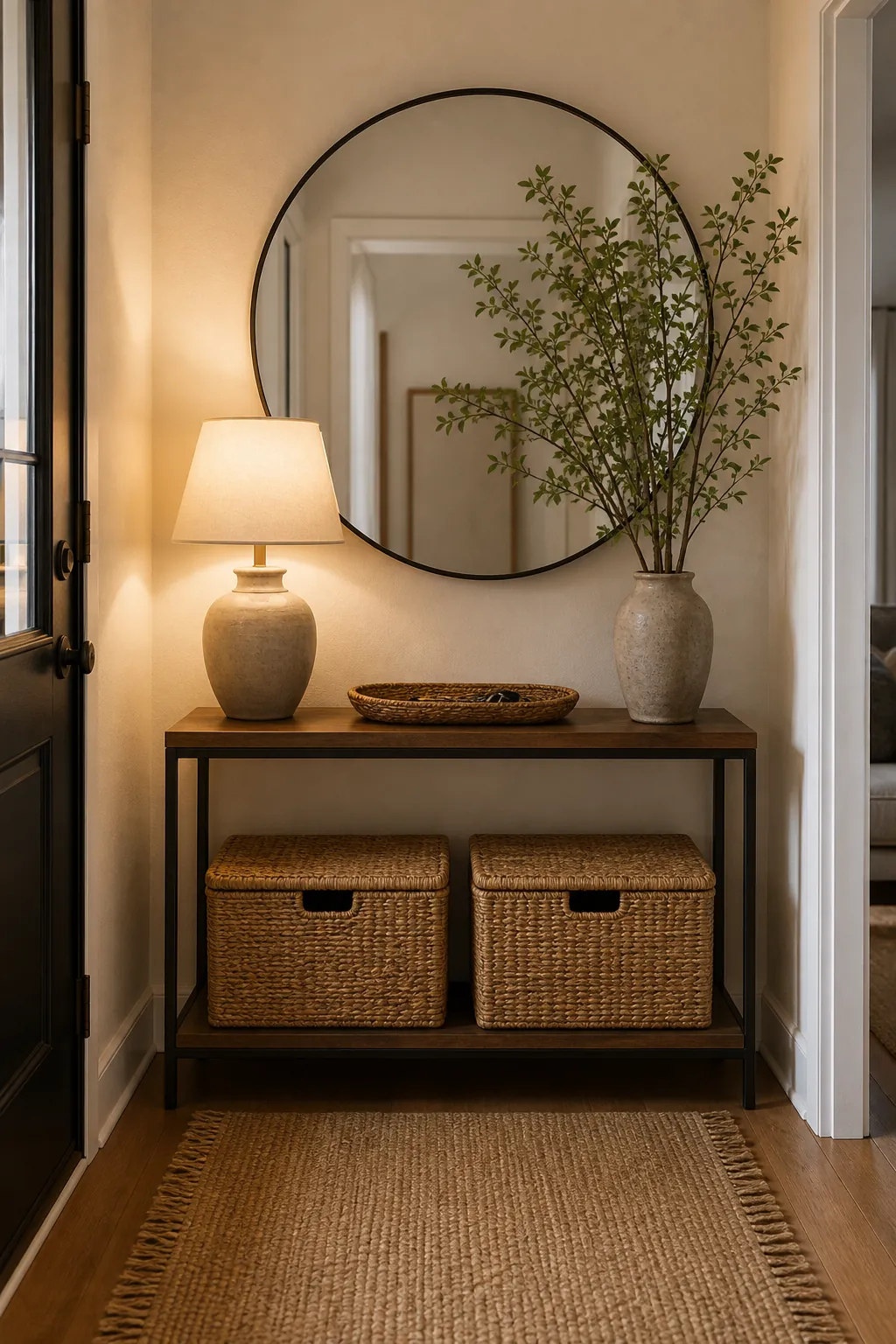
The entryway sets the tone before anyone reaches the living room. A larger mirror, one lamp, a narrow console, and concealed storage can make even a small entry feel considered. Keep the surface almost empty: a tray for keys, one vessel, and maybe a branch or greenery with height.
The first surface people see should look calm, not like a drop zone. If shoes and bags have to live there, use closed or lidded storage so the function stays but the mess disappears.
The Fastest Room Audit
If you want the most visible change this weekend, do not start by shopping. Start with this audit:
- Move curtain rods higher and wider if the current placement makes the window look small.
- Check whether the rug connects the furniture or floats alone.
- Turn off the ceiling light and see where the room still needs lamps.
- Remove one third of the small objects from visible surfaces.
- Group what remains on trays, in bowls, or inside lidded storage.
- Repeat one natural material, such as wood, linen, bamboo, or woven fiber, in at least three places.
The room will not look expensive because every object costs more. It will look expensive because the choices look calmer, larger, warmer, and more deliberate. That is the real upgrade: not more decor, but better decisions with the decor you already have.