
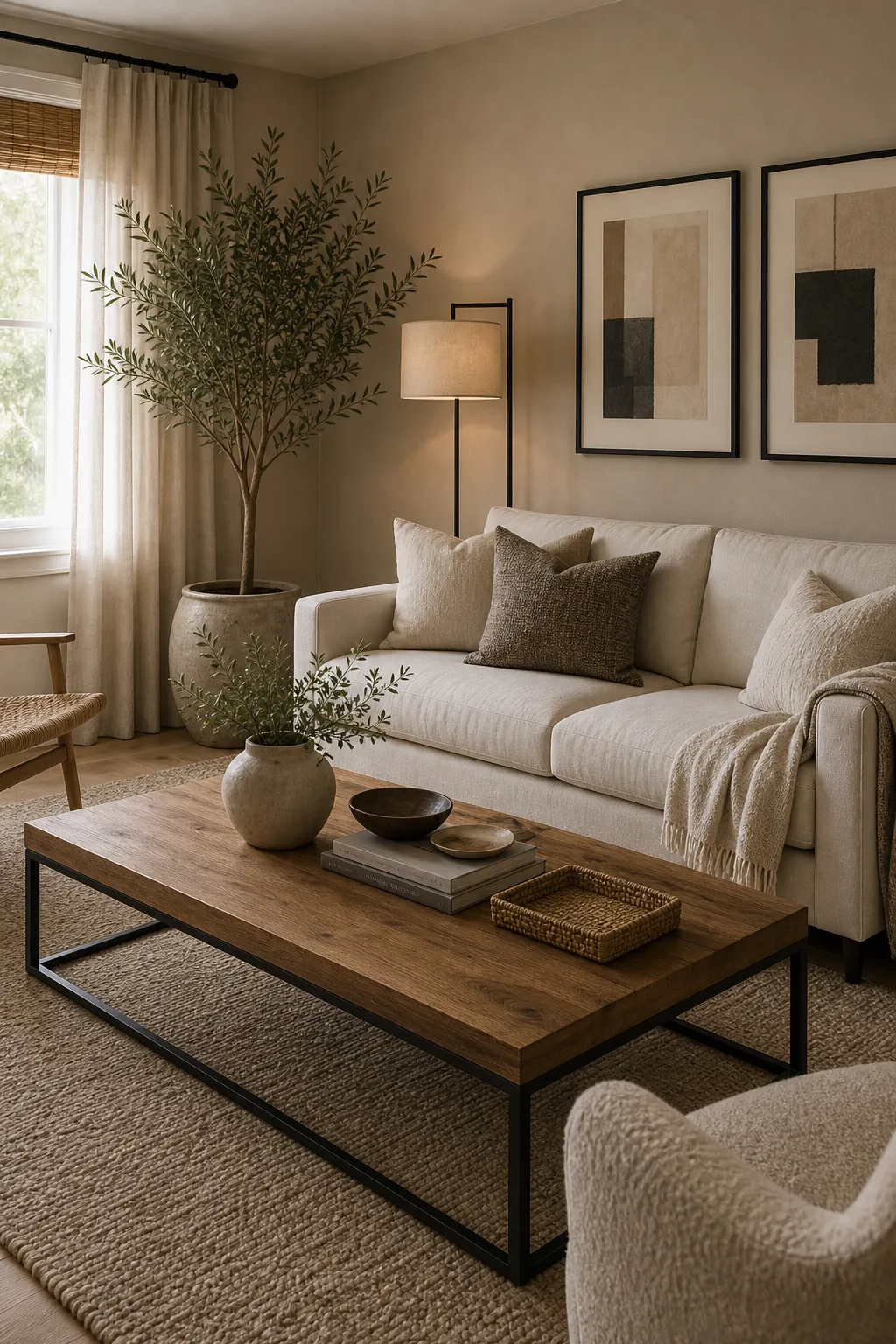
Black metal accents can make a beige living room feel sharper, more modern, and more finished. They can also make the same room feel cold if they are too heavy, too random, or fighting against the softer materials in the space.
The secret is to use black metal as a line, not as the whole story. Think curtain rods, picture frames, lamp arms, table bases, shelf brackets, cabinet pulls, fireplace tools, and slim chair frames. In a beige room, these details act like punctuation. They define the shape of the room without stealing its warmth.
The best beige living rooms with black metal accents still feel soft first. The black gives structure. Beige gives calm. Wood, linen, wool, rattan, stone, and plants keep the room human.
Use Black Metal as the Room’s Outline
A beige living room can look unfinished when every edge is pale. The sofa blends into the wall, the rug blends into the floor, and the windows disappear. Black metal solves that by giving the room an outline.
Start with the easiest architectural lines: a black curtain rod, a black floor lamp, a black-framed mirror, or black picture frames. These pieces do not require a full redesign, but they make the room feel more intentional immediately.
The key is proportion. Thin black lines usually look better than bulky black blocks in a soft beige room. A slim metal frame feels tailored. A heavy black media console can dominate the palette unless the room is large and balanced with plenty of texture.
Repeat Black in Three Places
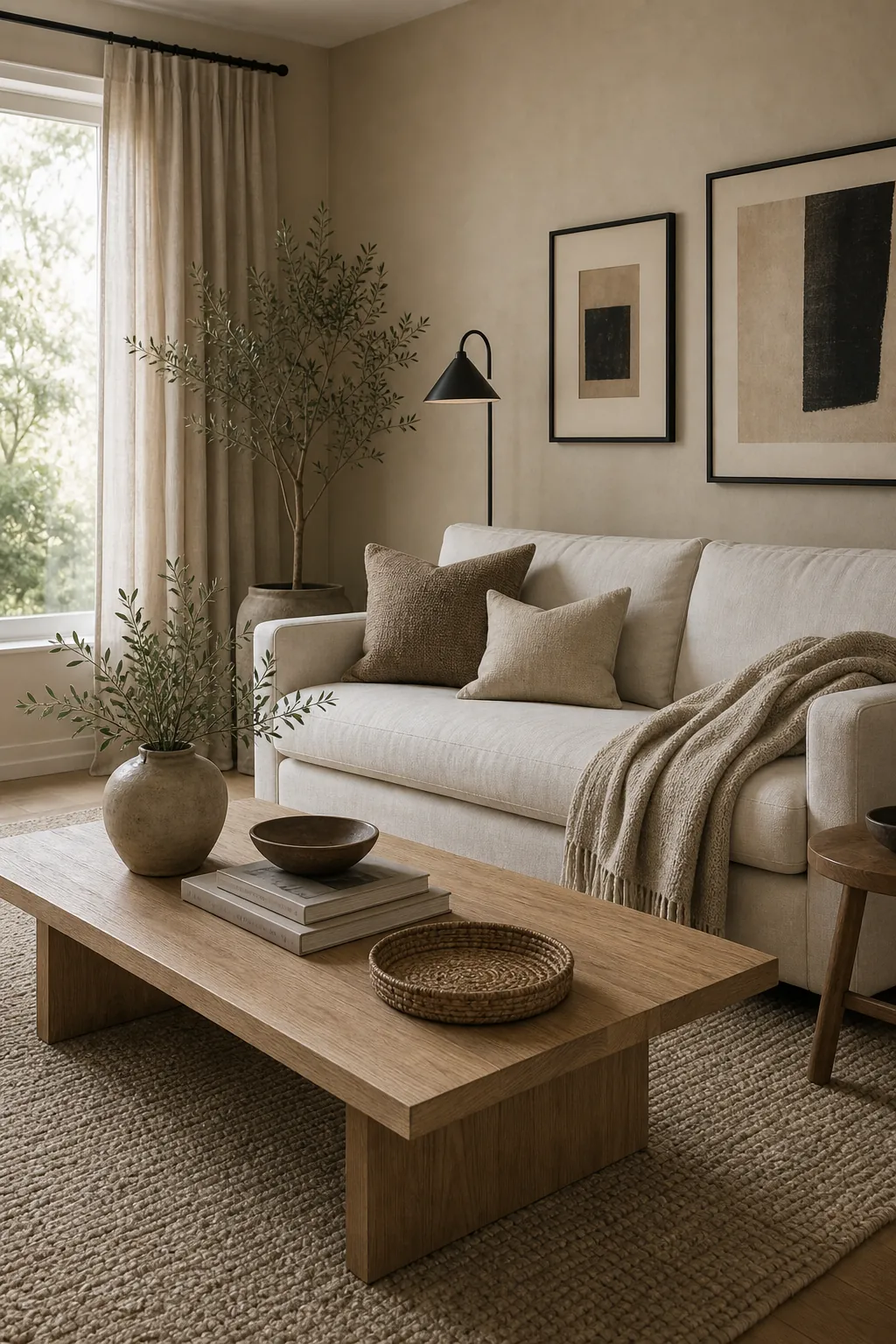
One black metal piece can look accidental. Two can feel mismatched. Three creates a rhythm. This is one of the simplest ways to make black accents look designed instead of random.
Try a black curtain rod, black picture frames, and a black floor lamp. Or a black coffee table base, black cabinet pulls, and black sconces. Or black metal chair legs, a black mirror frame, and a black tray. The pieces do not need to match exactly, but they should feel related in finish and weight.
Keep the repetition spread around the room. If all the black is on one wall, the room can feel lopsided. Place one black element high, one at eye level, and one low near the seating area so the eye moves naturally through the space.
Choose Matte, Aged, or Soft Black Finishes
Not every black metal finish has the same effect. Glossy black can look sleek and dramatic. Matte black feels quieter and more modern. Aged bronze or blackened brass feels warmer and more relaxed. Wrought iron feels rustic or Mediterranean. Powder-coated black feels clean and practical.
For most beige living rooms, matte black or blackened bronze is the safest choice. These finishes create contrast without looking too shiny or harsh. If your room has warm woods, cream upholstery, and woven materials, a softer black finish will feel more natural than a high-gloss one.
Balance Metal With Warm Wood
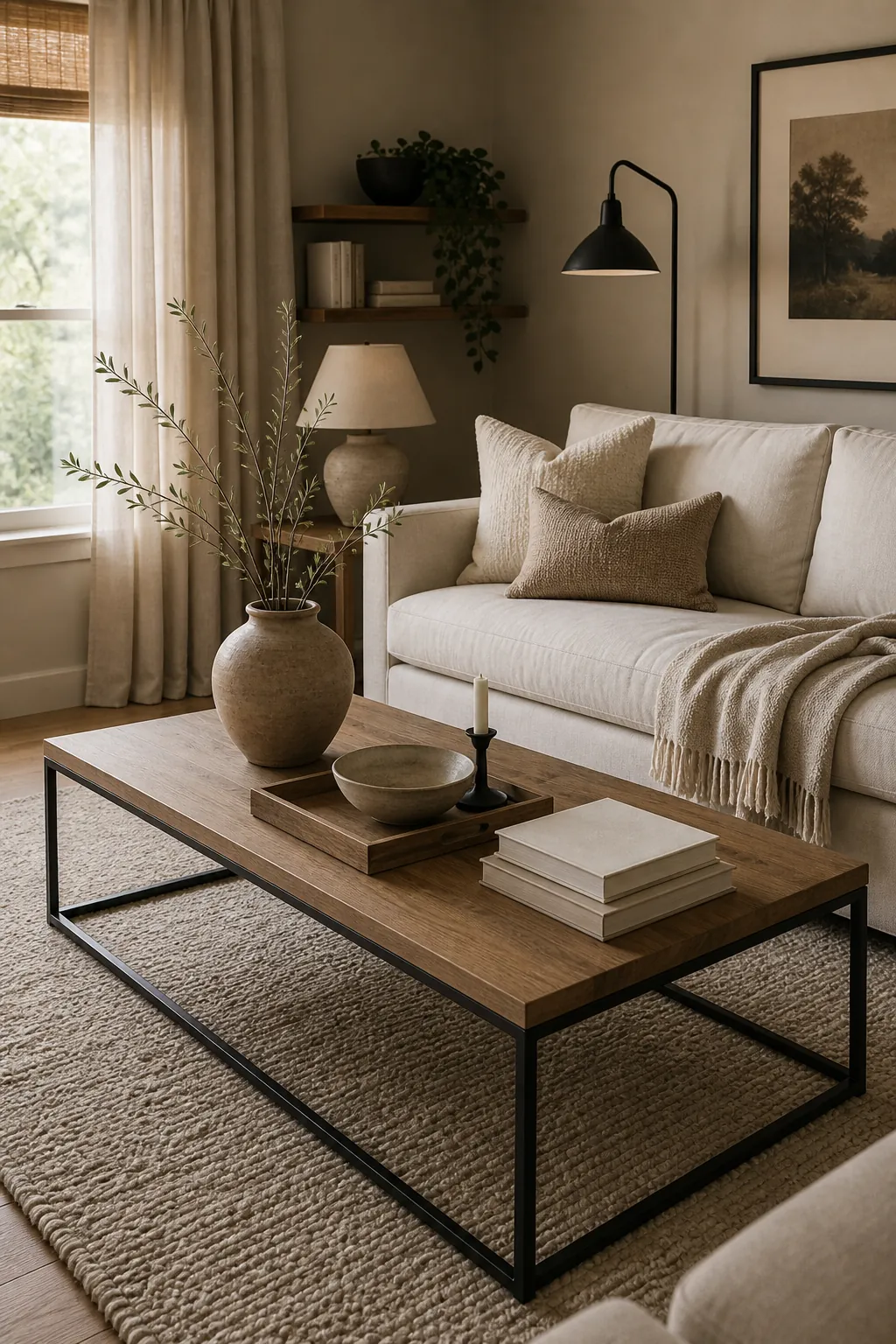
Black metal gives a beige room structure, but wood keeps it from feeling cold. This is especially important if the room already has white walls, cool floors, or a lot of straight modern furniture.
Pair a black metal coffee table base with an oak top. Use a black metal bookcase with wood shelves. Choose black metal chairs with woven seats. Put a walnut bowl or wood tray on a black-framed table. The metal gives definition, and the wood adds warmth.
If your room has very pale wood, black will look crisp and graphic. If your room has medium or dark wood, black will feel more grounded and mature. Both can work, but the styling should follow the mood. Pale oak wants airy linens and light rugs. Walnut wants deeper beige, bronze, leather, and heavier texture.
Let Lighting Carry Some of the Black
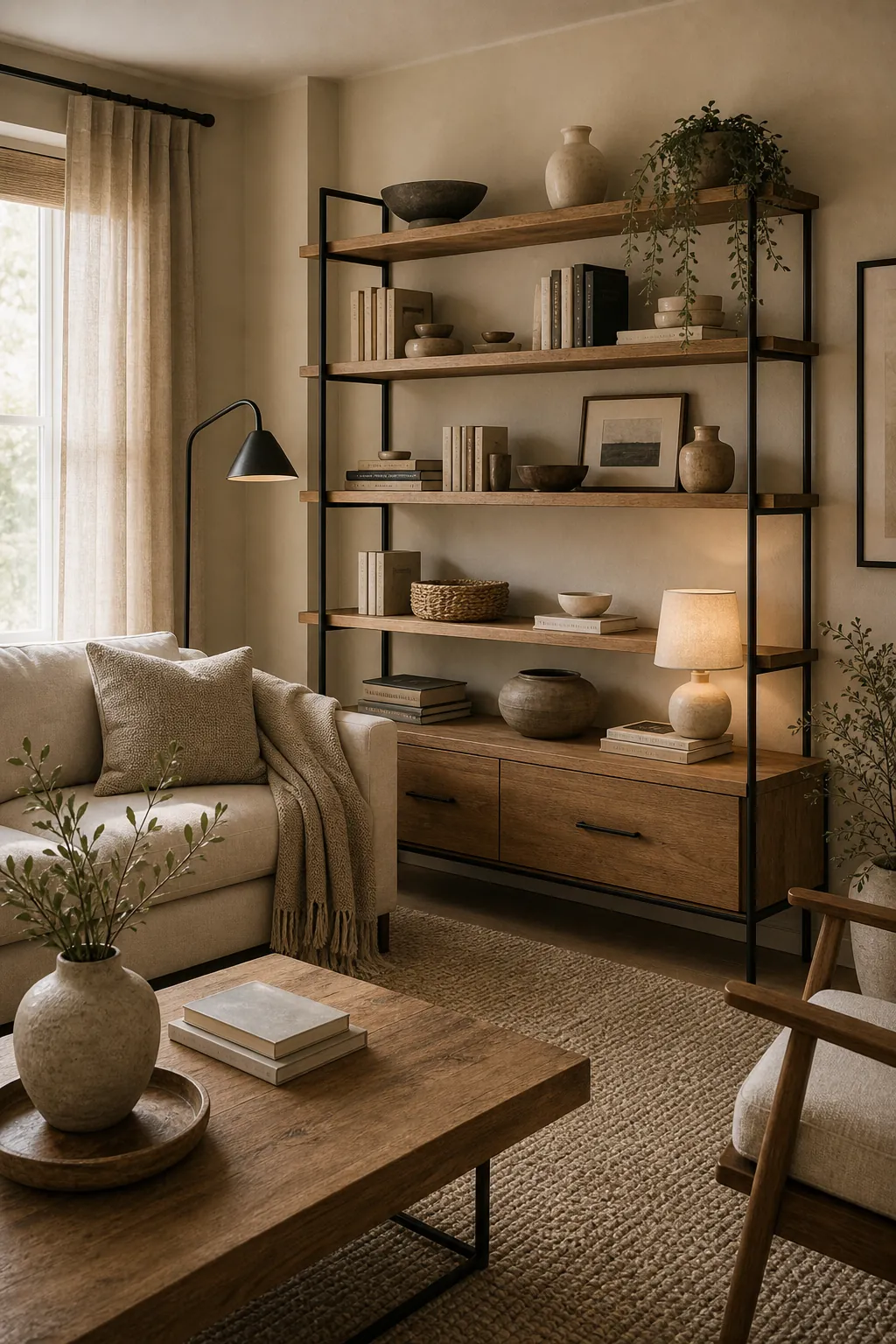
Lighting is one of the best ways to introduce black metal because it naturally belongs at different heights. A black floor lamp can define a reading corner. A black table lamp can sharpen a side table. Black sconces can frame art, shelves, or a fireplace.
In a beige room, lamp shades matter. A black metal base with a white shade can look crisp. A black metal arm with a linen shade feels softer. A black lamp with a dark shade looks dramatic, but it needs enough warm light and pale surfaces nearby so it does not feel heavy.
Use warm bulbs with beige and black. Cool lighting can make beige look gray and black look stark. Warm lighting helps the metal recede into the room while making wood, fabric, and wall color feel richer.
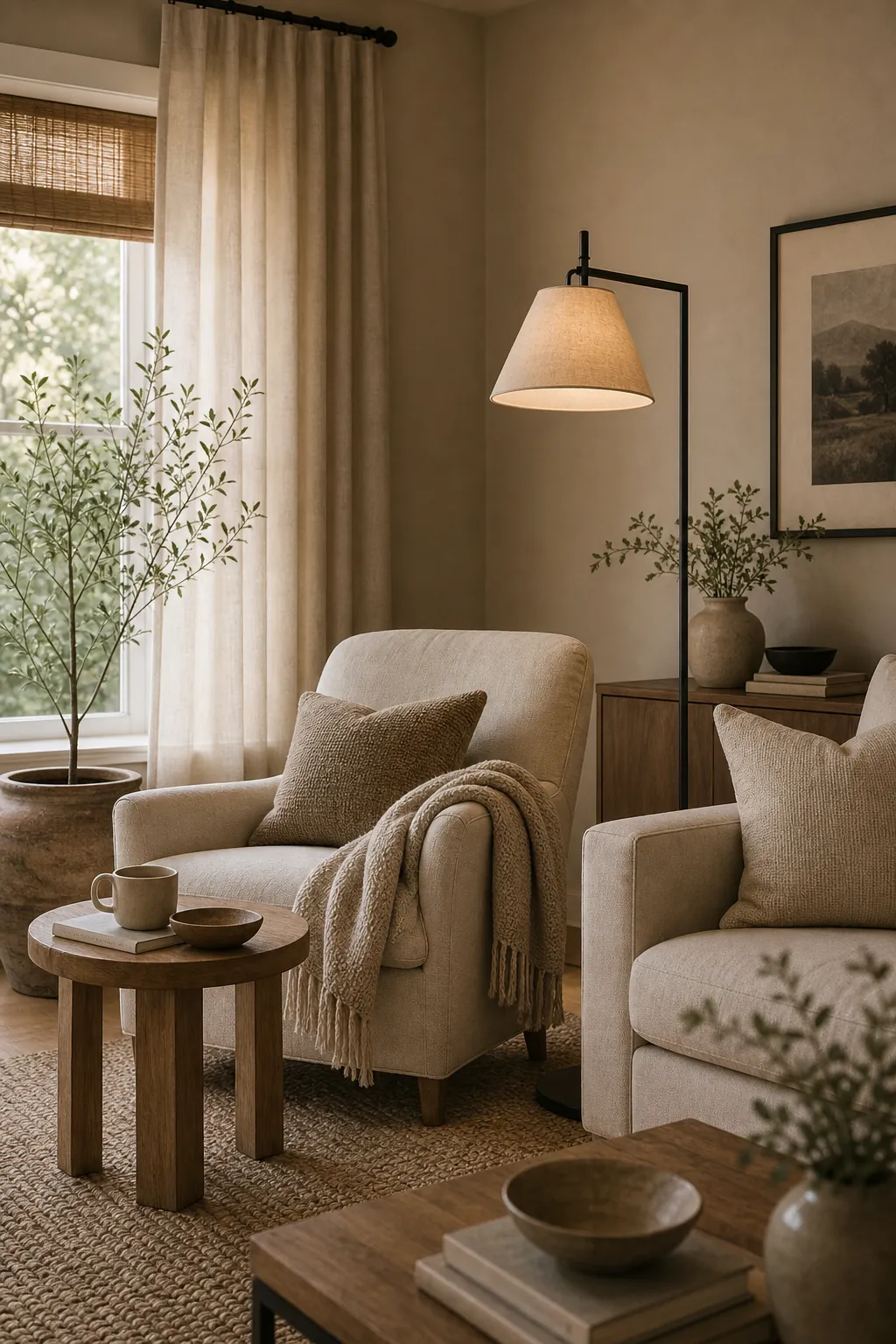
Use Black Frames to Make Beige Walls Feel Finished
Black frames are useful when beige walls feel blank but you do not want a loud color scheme. They create structure around art and photos, which helps a neutral room feel more collected.
For a softer look, mix black frames with natural wood frames. Use art that includes cream, tan, brown, charcoal, olive, muted blue, or rust. The frames will sharpen the wall, and the art will keep the room from becoming beige and black only.
If a gallery wall feels too busy, use one oversized black-framed piece above the sofa. Make sure it is wide enough for the furniture below it. Small art over a large sofa is one reason neutral living rooms feel unfinished.
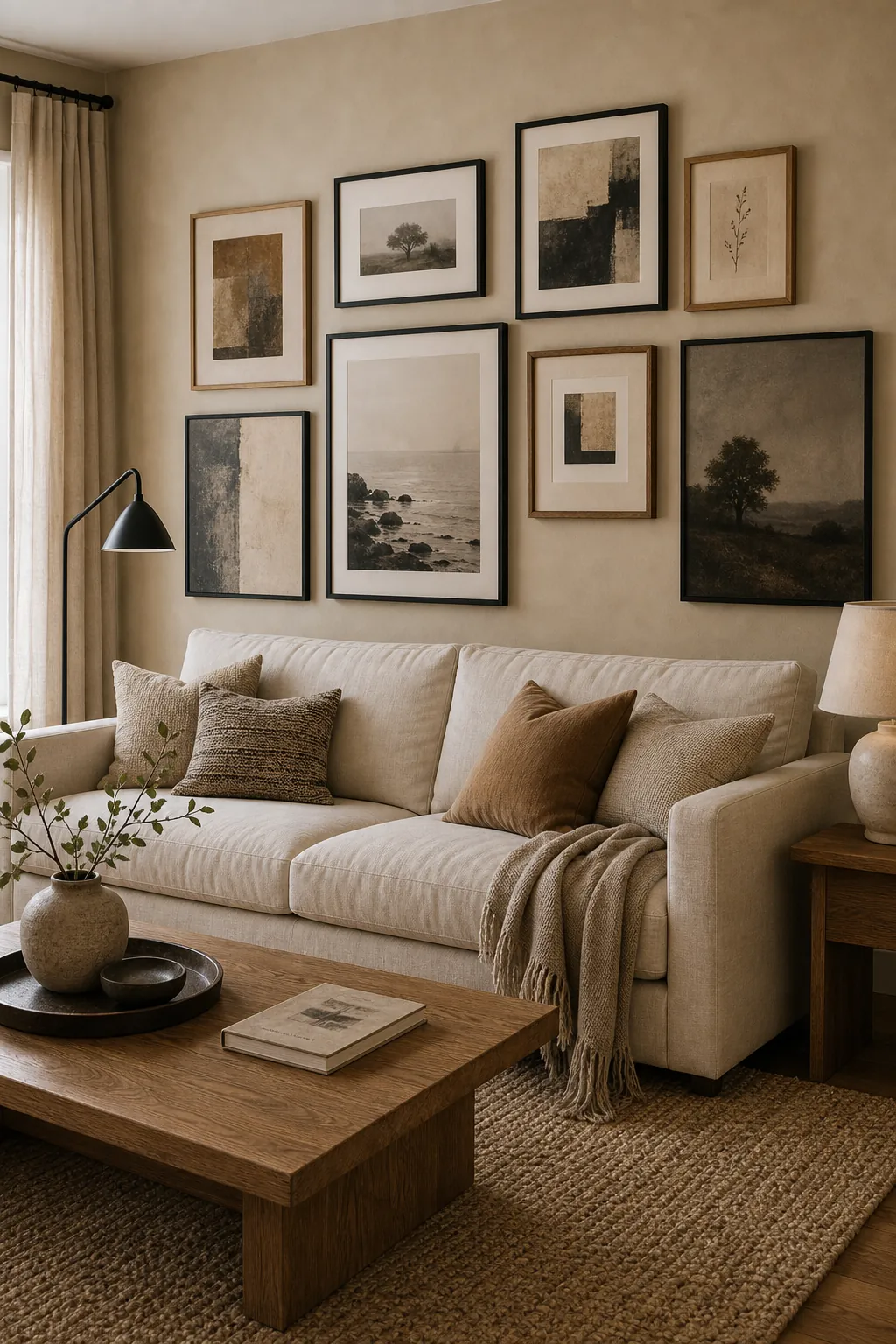
Keep the Soft Materials Generous
Black metal looks best in a beige room when the soft materials have enough presence. If the rug is too small, the curtains are missing, and the pillows are flat, the metal will feel exposed and harsh. If the textiles are generous, the black becomes a clean contrast.
Use a large rug, full curtains, layered pillows, a throw blanket, and at least one soft shade on a lamp. Add natural texture through linen, wool, boucle, jute, cane, rattan, leather, or heavy cotton. These materials absorb the sharpness of black metal and make the room more comfortable.
Texture is what lets beige and black feel expensive instead of basic. A beige sofa with black metal legs can look plain on a flat rug. The same sofa on a thick woven rug, beside linen curtains and a wood side table, feels intentional.
Try Black Metal in Small Rooms
Small beige living rooms can use black metal, but the pieces should stay visually light. Choose open frames, slender legs, wall-mounted lights, glass tops, and small black details instead of blocky black furniture.
A black metal side table with a narrow profile can be better than a heavy dark wood table. A black picture light can make a plain wall feel polished without taking floor space. A black curtain rod can add definition while leaving the room open and bright.
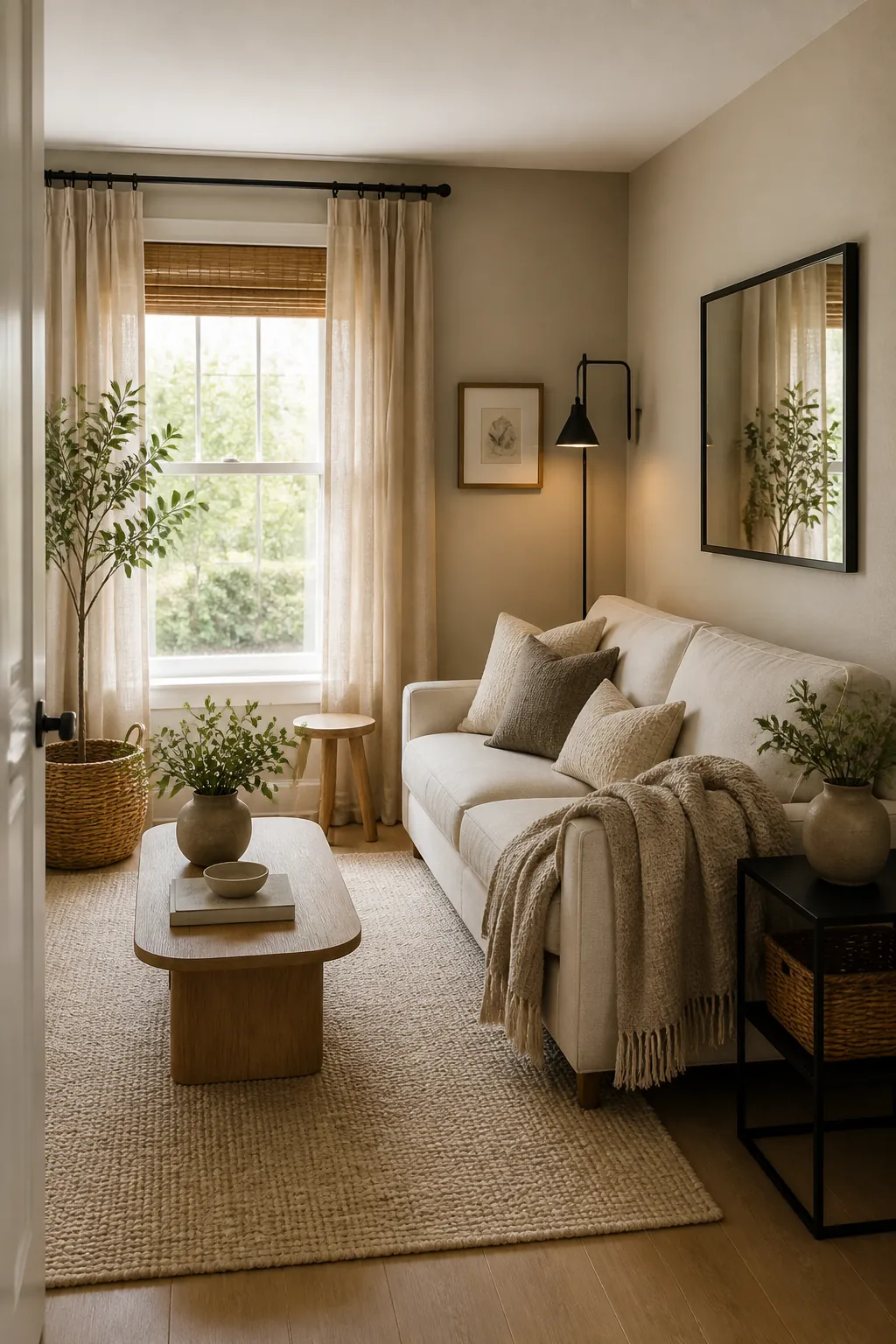
Black Metal Accent Ideas That Work Well With Beige
- Black curtain rods: an easy way to frame windows and repeat black high in the room.
- Black metal floor lamps: useful for height, contrast, and warm evening light.
- Black-framed art: ideal for beige walls that need definition.
- Black metal coffee table bases: modern without making the whole table dark.
- Black shelf brackets: a subtle way to add structure to wood shelves.
- Black cabinet pulls: good for built-ins, media cabinets, and storage pieces.
- Black metal mirrors: useful above consoles, mantels, or narrow walls.
- Black sconces: polished beside art, shelves, or a fireplace.
- Black trays or bowls: small accents that help repeat the color on tables.
Avoid These Common Mistakes
- Using one lonely black piece: repeat black at least two or three times so it looks intentional.
- Choosing pieces that are too bulky: thin black metal usually suits beige rooms better than heavy blocks.
- Ignoring wood and texture: black metal needs warm materials nearby to soften it.
- Mixing too many black finishes: matte black, glossy black, wrought iron, and bronze can look messy if all are used at once.
- Using cool white bulbs: they can make beige feel dull and black feel severe.
- Forgetting scale: tiny art, tiny rugs, and tiny lamps will not balance strong black lines.
A beige living room with black metal accents should not feel like a black-and-beige theme. It should feel like a warm neutral room with better definition.
Use beige for softness, wood for warmth, texture for comfort, and black metal for the outline. When those roles are clear, the room feels calm and structured at the same time.