
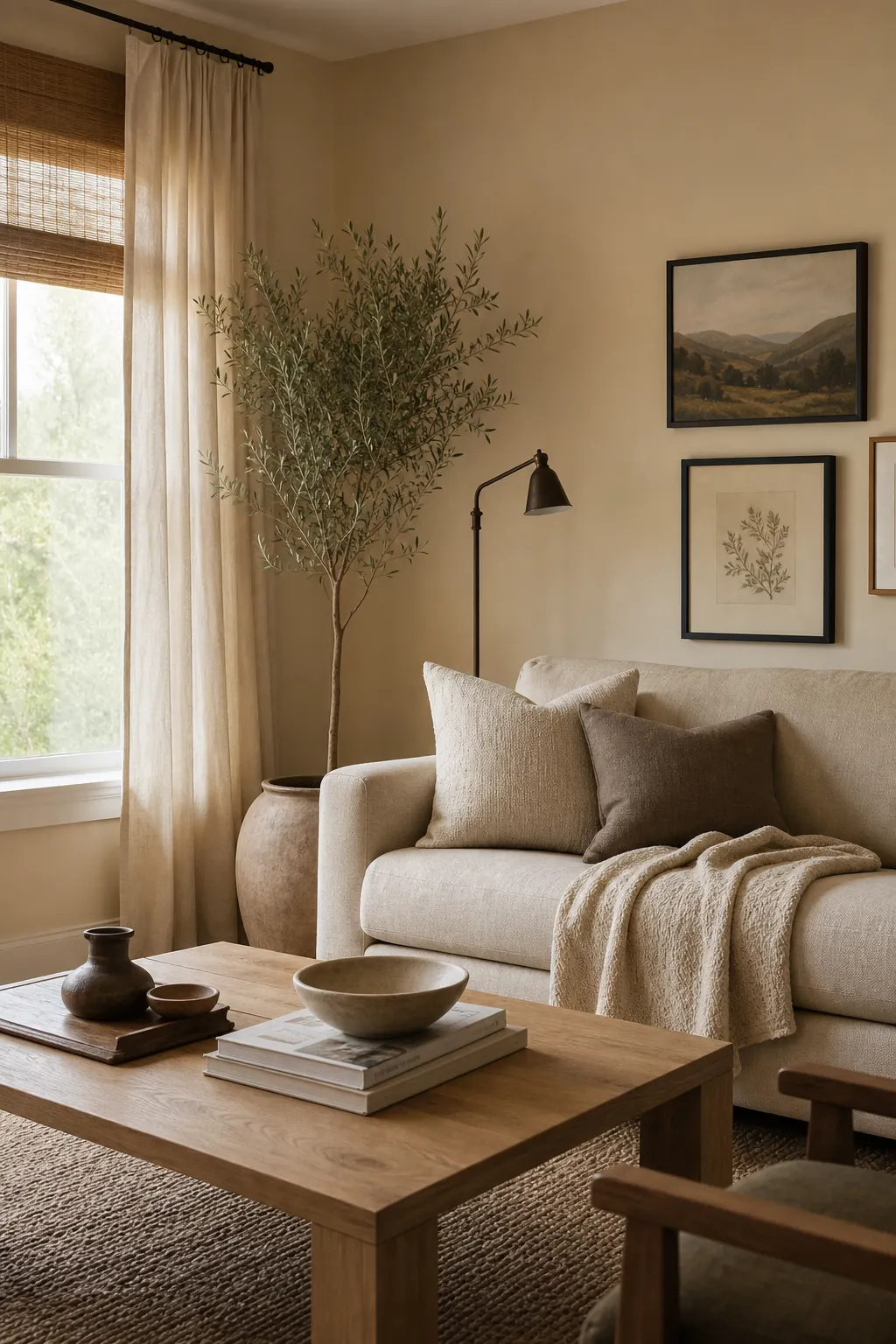
A beige and wood living room can look soft, natural, and expensive without drifting into a flat “everything is oatmeal” palette. The difference is not usually the beige itself. The difference is whether the room has range: light and dark, smooth and nubby, matte and reflective, low pieces and tall pieces, open space and grounded weight.
That is why so many neutral rooms feel almost finished but not quite alive. The sofa is pleasant. The wood table is warm. The rug is safe. But when every piece sits in the same beige-to-honey family, the eye has nowhere to land. The room can be calming, but it does not feel layered.
The best beige and wood rooms do not fight the neutral palette. They make it more deliberate. They use wood as the warmth, beige as the quiet background, and texture as the decoration. Then they add a few darker notes so the whole space has shape.
Start With One Dominant Wood Tone
Before adding anything new, choose the wood tone that already leads the room. It might be your floor, coffee table, media console, exposed beams, or the legs of your sofa and chairs. That dominant tone becomes the anchor for every other wood decision.
If your main wood is pale oak, keep the room airy with oatmeal upholstery, linen curtains, jute, woven shades, and light ceramics. If your main wood is walnut, let the room feel richer with deeper beige, camel, aged brass, olive branches, and creamy walls. If your wood is honey or orange-toned, balance it with cooler taupe, ivory, black accents, or muted green so it does not turn too yellow.
The goal is not to match every wood piece. Matching can make a beige room look like a furniture showroom. Instead, repeat the dominant tone two or three times so it feels intentional, then bring in one supporting wood tone for depth.
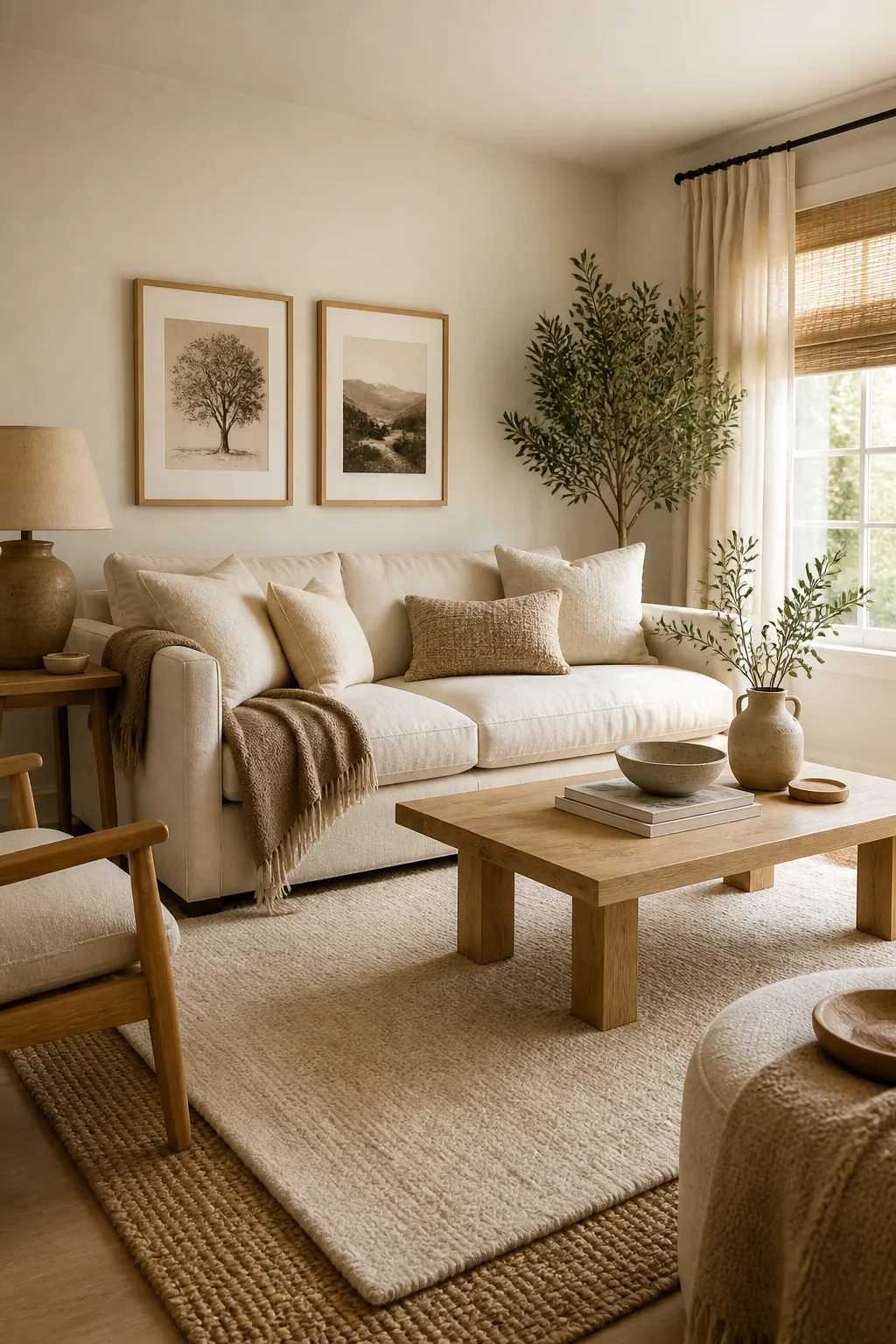
Mix Woods by Undertone, Not by Exact Color
Wood tones are easier to mix when you look at their undertone first. Warm woods lean golden, red, orange, or brown. Cool woods lean gray, ash, or washed taupe. Natural unstained woods often sit somewhere in the middle and can bridge both sides.
In a beige living room, the safest mix is usually one light warm wood plus one medium or dark warm wood. Pale oak with walnut works because the contrast is obvious. Oak with another almost-oak finish can look accidental if the tones are close but not quite the same.
If your flooring is fixed and it is not your favorite tone, avoid copying it everywhere. Put a rug under the main seating area to separate furniture from the floor, then repeat your preferred wood tone through a tray, picture frame, side table, or stool. That small repetition gives the room a new rhythm without replacing the floor.
Use Beige in Layers, Not One Flat Shade
A beige room needs more than one beige. It needs cream, oatmeal, sand, camel, taupe, stone, and maybe a touch of mushroom or greige. When these shades are close but not identical, the room feels softer and more natural.
The trick is to vary both the color and the material. A beige cotton sofa, a wool rug, a linen curtain, a ceramic lamp, a wood table, and a nubby throw can all live in the same quiet palette because they catch light differently. A beige sofa, beige flat-weave rug, beige pillows, beige walls, and beige art in the same value will usually feel dull even if every item is nice.
Think in texture before you think in color. Boucle, linen, wool, jute, rattan, travertine, plaster, cane, clay, and raw wood all make beige feel layered without making the room busy.
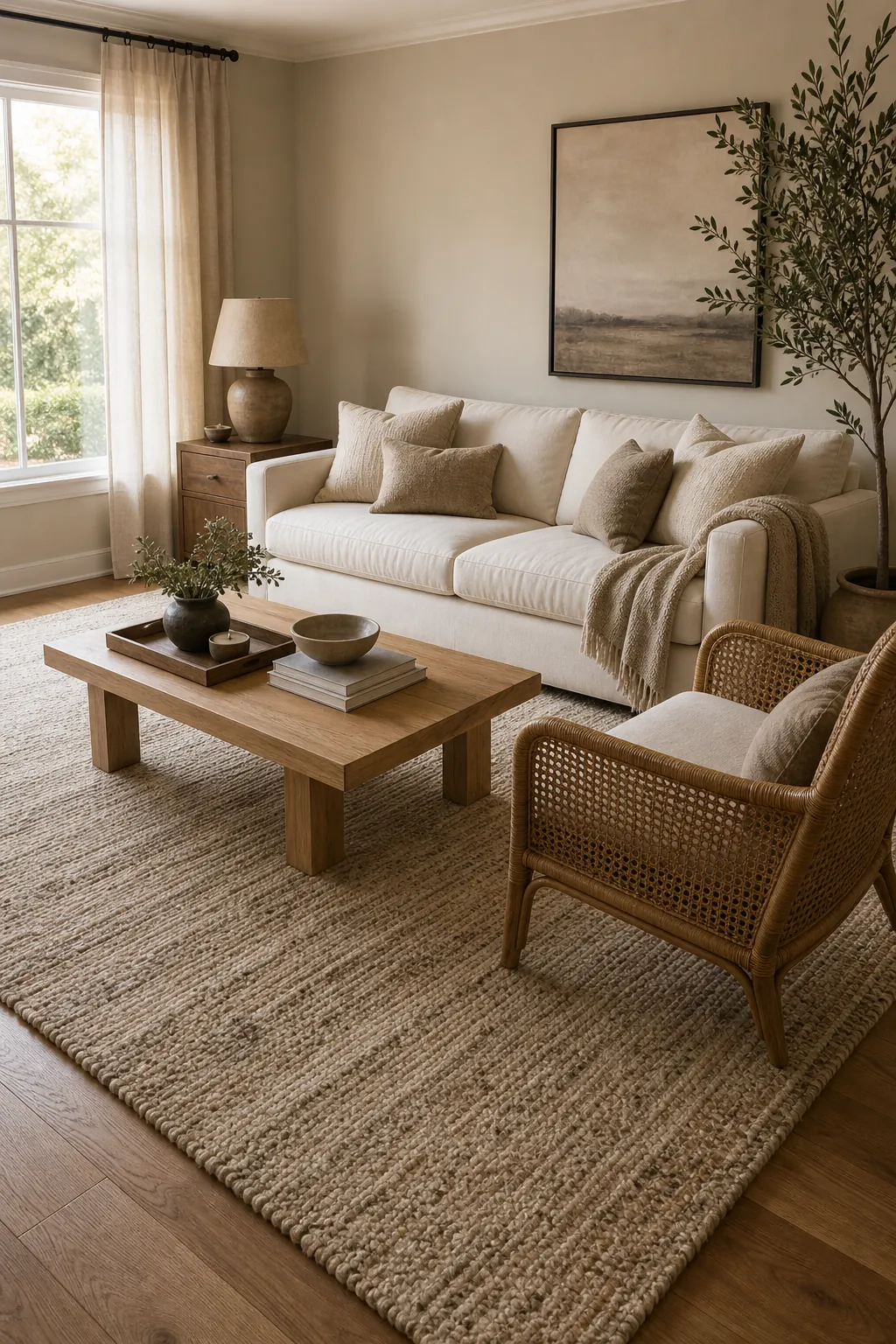
Add One Dark Note So the Room Has Shape
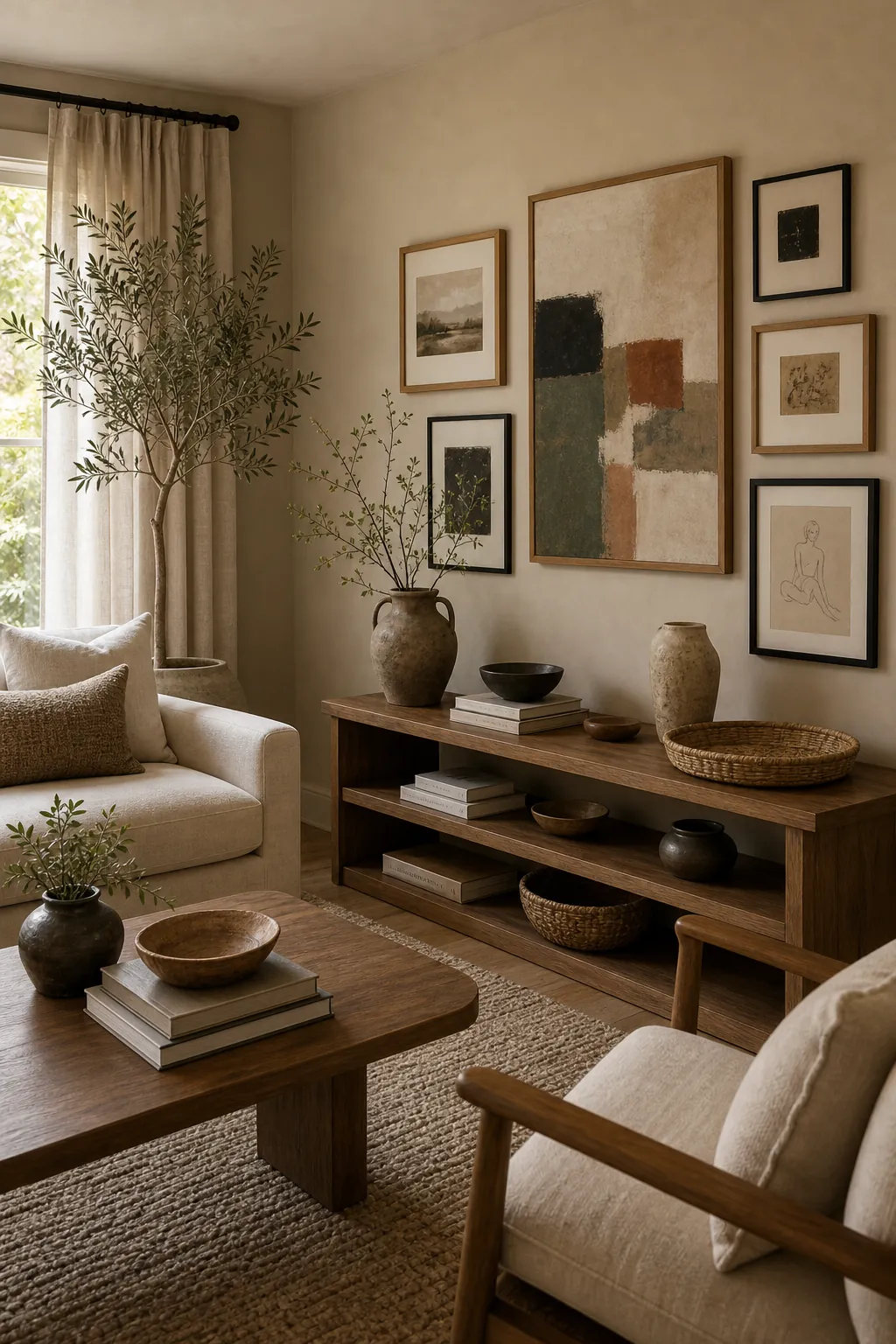
Soft rooms still need contrast. Without it, the furniture can visually blur together. You do not need a black wall or a dramatic sofa to fix this. A few grounded details are enough: a dark wood bowl, slim black picture frames, a charcoal lamp shade, a bronze floor lamp, a dark-lined rug, or a walnut side table.
Dark accents work best when they are repeated lightly around the room. One black object can look random. Three small black or dark brown moments can make the room feel edited. Try a black curtain rod, a black-framed print, and a dark metal floor lamp. Or use walnut in a coffee table, a frame, and a small stool.
If your beige room already feels very warm, choose black, dark bronze, espresso, or smoke gray. If it feels too cool, choose dark walnut, aged brass, cognac leather, or deep olive instead. The dark note should give the room definition, not make it severe.
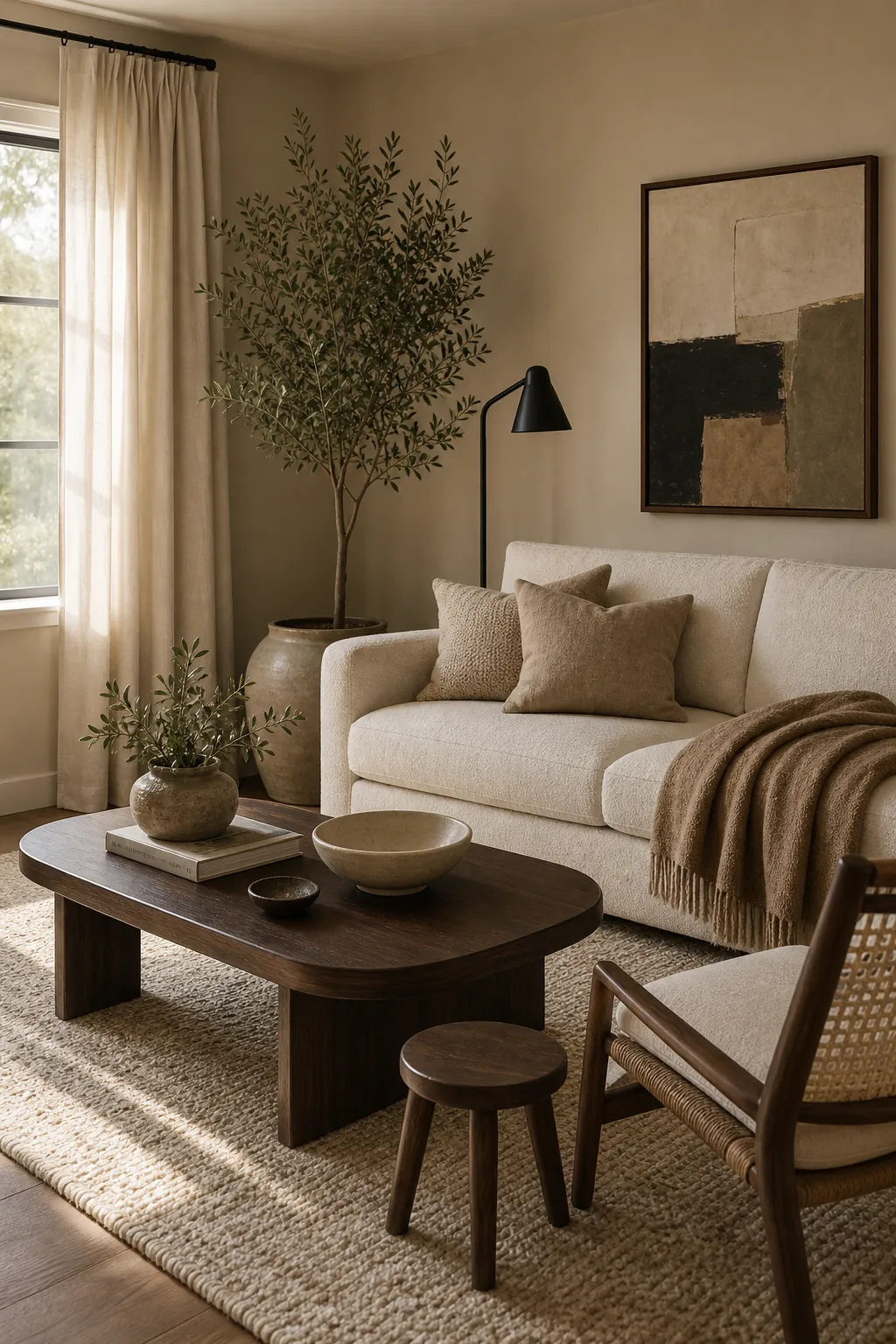
Make the Layout Feel Collected, Not Pushed to the Walls
When people ask why a beige living room feels boring, the answer is often layout before color. Furniture pushed flat against every wall can make even good pieces feel disconnected. A soft natural room needs a conversation area with weight in the middle.
Start with the rug. In most living rooms, the rug should be large enough that the front legs of the sofa and chairs sit on it. This instantly makes the seating look intentional. Then place the coffee table close enough to use, usually within easy reach from the sofa. If you have chairs, angle them slightly toward the sofa instead of leaving them stranded in a corner.
Scale is what makes beige look designed. A tiny coffee table, small art, short curtains, or a rug floating in the middle of the floor can make a neutral room look unfinished. Larger pieces do not have to be expensive; they just need to fit the size of the room.
Soften the Windows With Curtains or Woven Shades
Window treatments matter in beige and wood rooms because they add vertical softness. Bare windows can make the lower half of the room feel furnished while the upper half feels empty. Linen-look curtains, cotton panels, bamboo shades, or woven Roman shades all work with a natural palette.
For a calm look, choose curtains close to the wall color but one step lighter or deeper. Hang the rod higher than the window when possible, and extend it wider than the frame so the curtains can stack on the wall rather than blocking light. This makes the window feel larger and gives the beige palette a more finished look.

Bring in Greenery Without Turning the Room Boho
Plants are one of the easiest ways to make beige and wood feel alive, but they do not have to push the room into a busy boho style. One sculptural tree in a heavy pot can be better than ten small plants scattered around the room.
Choose greenery by shape. An olive tree feels airy and Mediterranean. A rubber plant feels bold and glossy. A ficus or fiddle-leaf fig gives height. Branches in a ceramic vase feel quiet and seasonal. Put the plant where the room needs height: beside a sofa, near a window, behind an accent chair, or next to a media console.
The planter matters as much as the plant. For a soft natural look, choose ceramic, terracotta, concrete, rattan, woven seagrass, or matte black. Avoid tiny plastic nursery pots left exposed; they make the room feel temporary.
Use Art to Break Up the Beige
Art is where a beige and wood room can show personality without losing its calm base. You do not need loud color. Try abstract art with cream, charcoal, rust, olive, brown, and soft blue. Try black-and-white photography in warm wood frames. Try one oversized piece instead of many small pieces if the wall feels empty.
If you are nervous about color, pull one muted accent from the art and repeat it twice: a rust pillow, an olive throw, a smoky blue vase. The repetition makes the color feel intentional instead of accidental.
Neutral rooms need personal pieces more than colorful rooms do. A beige palette can look generic if every accessory is new and trend-based. Vintage art, handmade pottery, family objects, travel books, and thrifted frames make the room feel collected.
Layer Lighting Instead of Relying on the Ceiling
Lighting can make beige look expensive or lifeless. A single overhead light often flattens warm wood and washes beige upholstery into one tone. Layered lighting gives the room dimension at night.
A simple formula works well: one floor lamp for height, one table lamp for glow, and one small accent light for a shelf, art wall, or dark corner. Use warm bulbs rather than harsh cool bulbs. If the room feels too yellow, adjust the lampshades and bulb temperature before blaming the beige palette.
Lamp materials can reinforce the natural look. Try ceramic bases, linen shades, dark bronze arms, wood stems, paper shades, or travertine bases. A lamp is also a good place to add contrast if you do not want dark furniture.
Style the Coffee Table With Fewer, Better Pieces
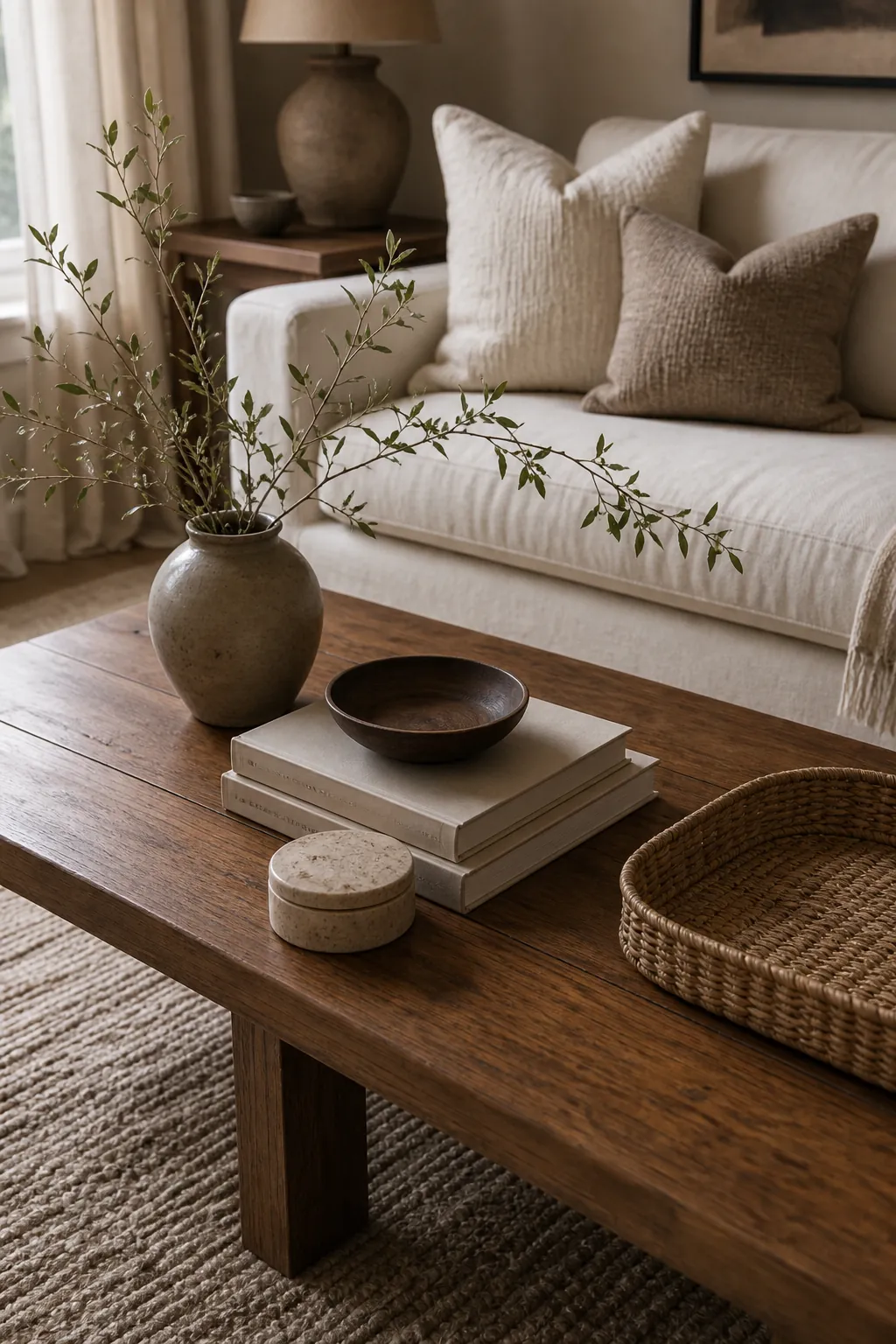
A beige and wood living room can quickly look cluttered if every surface is filled with small beige objects. Coffee table styling should give the eye a few clear shapes: something low, something tall, something textured, and something personal.
For example, place two stacked books on a wood table, add a stoneware bowl, set a small branch arrangement in a ceramic vase, and finish with one candle or lidded box. Leave open space around the grouping. The empty space is what makes the styling look intentional.
If your coffee table is the same tone as the floor, add a tray or books to create separation. If the table feels too heavy, add a lighter ceramic piece or glass vase. If the room feels too pale, add a dark bowl, black candleholder, or rich wood object.
Try These Beige and Wood Pairings
- Light oak, cream linen, jute, and black frames: airy, modern, and easy to style.
- Walnut, camel, travertine, and olive branches: richer and more grounded without feeling dark.
- Honey wood, ivory, taupe, and aged brass: warm but not overly yellow.
- Natural pine, white boucle, woven shades, and terracotta: relaxed and earthy.
- Medium oak, mushroom beige, charcoal art, and ceramic lamps: quiet but more tailored.
Small Changes That Make the Biggest Difference
If the room already has the main furniture, do not start by replacing the sofa. Start with the changes that create the most visual range.
- Add a larger rug if the current one floats under only the coffee table.
- Hang curtains higher and wider to add softness and height.
- Repeat one dark accent in at least three small places.
- Replace flat pillows with linen, velvet, wool, or textured covers.
- Add one tall plant where the room feels visually low.
- Use fewer tabletop objects but choose pieces with better shape and texture.
- Move furniture off the walls enough to create a real seating area.
The room does not need to become colorful to become interesting. It needs contrast, texture, scale, and repetition. When those pieces are working, beige and wood can feel calm without feeling empty.
The Soft Natural Formula
For a beige and wood living room that feels soft but not flat, use this formula: one leading wood tone, two or three beige shades, one dark accent, one living green element, one large textile moment, and layered lighting.
That formula keeps the room natural while giving it enough structure to feel designed. Beige becomes the calm backdrop. Wood brings warmth. Texture gives depth. Contrast gives shape. The result is a living room that still feels quiet, but no longer feels unfinished.