
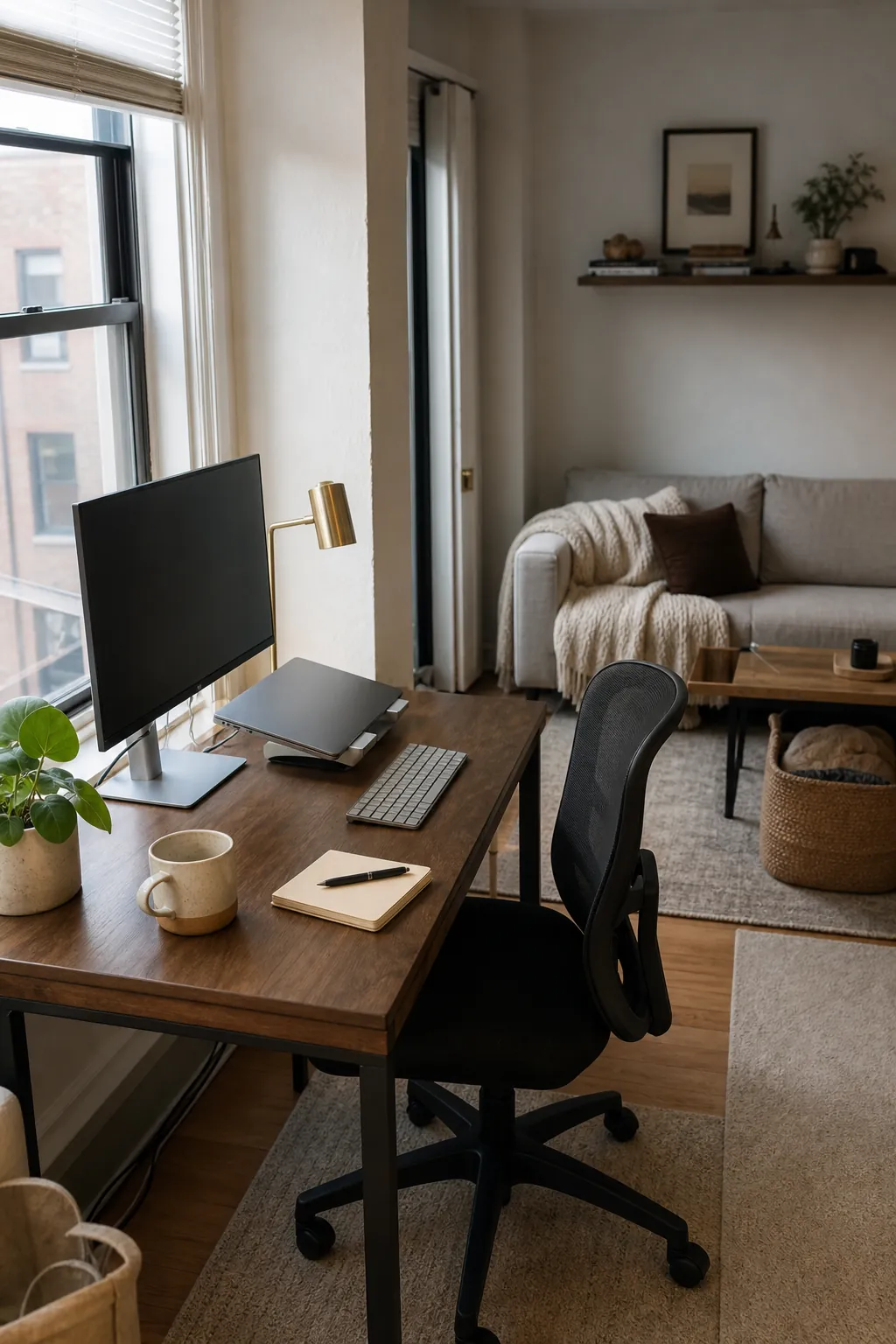
The hardest part of working from home in a small apartment is not finding a desk. It is deciding what your apartment is allowed to become during the workday, and what it has to become again when you close the laptop.
A spare-room office lets you shut a door. A studio or tight one-bedroom asks for a sharper plan: your work zone has to borrow space without taking over your home. That means the best setup is rarely the biggest desk. It is the one that gives you a decent camera background, a comfortable chair path, a place for cables, and a way to make work visually disappear at night.
Use these small apartment ideas as layout formulas, not as shopping fantasies. Measure first, pick the least annoying tradeoff, then buy the smallest pieces that solve the real problem.
Start With The Sacrifice
Every small work-from-home layout sacrifices something. The mistake is pretending it will not. If you try to keep the full sofa, full dining table, full TV wall, full bed clearance, and full office setup, the apartment becomes a storage unit with a keyboard.
Before moving furniture, choose the function that can shrink. If you work from home five days a week, the desk deserves better real estate than the dining table you use for twenty minutes. If you host people often, the desk may need to fold, roll, or hide. If video calls are constant, the background and lighting matter more than squeezing the desk into the first empty corner.
- If the living room is TV-heavy: move the sofa forward and put a slim desk behind it, or combine the desk and media wall.
- If the dining area is underused: turn it into the work zone and make meals work with a smaller table, drop-leaf table, or counter stools.
- If the bedroom is the only quiet spot: use a real desk there, but add a closing ritual so the room does not feel like the office after dark.
- If there is a closet, alcove, or hallway wall: build a compact station there before giving prime living space to a desk.
Put Daylight Beside You, Not Behind You
Window placement is where many small apartment desks go wrong. A desk directly in front of a bright window can feel cheerful, but it often creates glare on the screen. A window behind you can make your face dark on video calls. The easiest compromise is a desk with daylight coming from the side.
Side light gives you the good part of a window without turning every meeting into a lighting problem. Put the desk perpendicular to the window, then let a bookcase, plant shelf, curtain, or simple art wall become the camera background. If the only possible wall puts the window behind you, add a lamp in front of you and use curtains to soften the backlight.
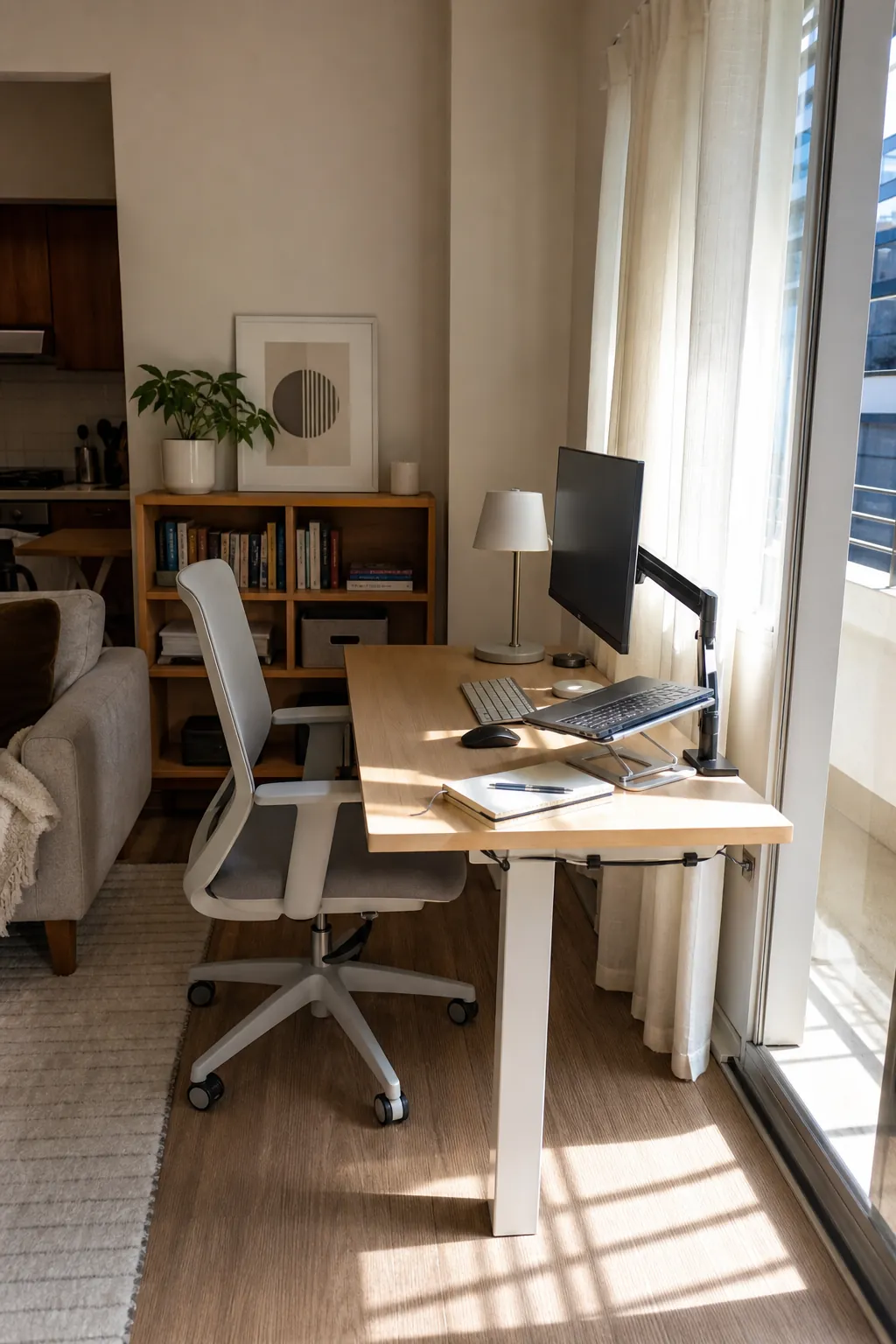
This layout works especially well in a one-bedroom apartment where the living room wall is short. A 36-inch to 48-inch desk can sit sideways near the balcony door or window, while the shelf behind it does double duty as storage and a tidy call background.
Make A Closet Office That Actually Closes
A closet office is not just a cute idea. In a studio, it can be the difference between living beside work and living inside work. The important move is to measure the depth before buying the desk. Many closets are too shallow for a bulky chair and a deep desktop, but they can handle a narrow writing desk, wall-mounted surface, or compact monitor arm.
The door is the feature. If the closet doors can slide or swing closed after work, the setup earns its space. Add a small lamp, one shelf above the monitor, a cable channel, and a stool or slim task chair that can tuck fully under the work surface.
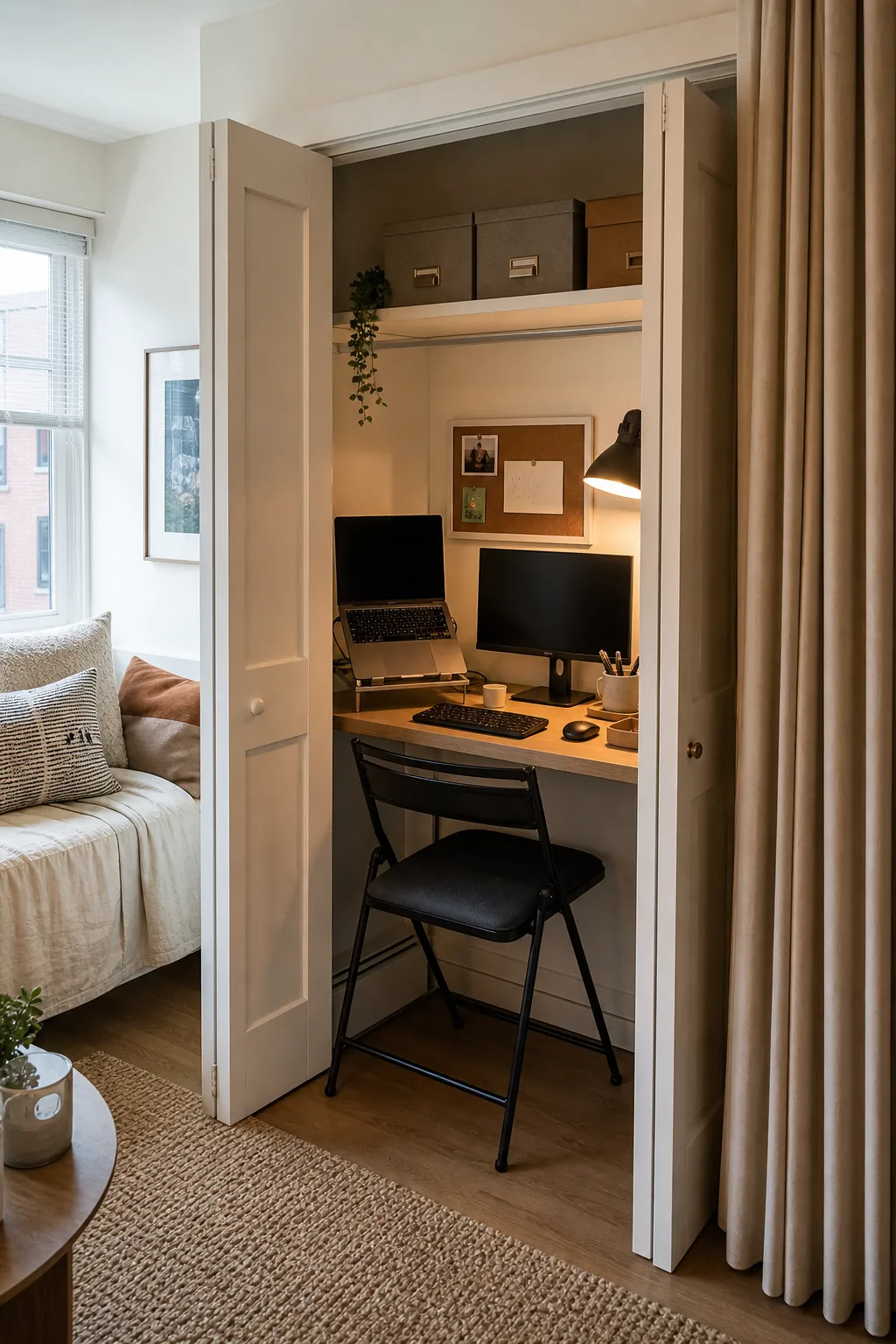
Keep the closet office visually calm. One tray for work tools, one shelf for papers, and one warm lamp are better than filling every inch. The goal is not to create a miniature corporate office. The goal is to create a small work pocket that does not leak into the rest of the apartment.
Use The Back Of The Sofa
If your sofa is pushed tight against a wall, you may be wasting the one strip of space that can create a work zone without adding another corner. Pull the sofa forward and place a narrow console desk behind it. This gives the desk a defined edge, keeps the living room facing the same direction, and avoids the awkward feeling of a random desk floating in the room.
A behind-the-sofa desk works best when the chair has a real path. Do not rely on hope here. Tape the footprint on the floor. Sit down. Push the chair back. Walk around it. If the chair blocks the only route to the kitchen, balcony, or bathroom, the layout will annoy you every day.
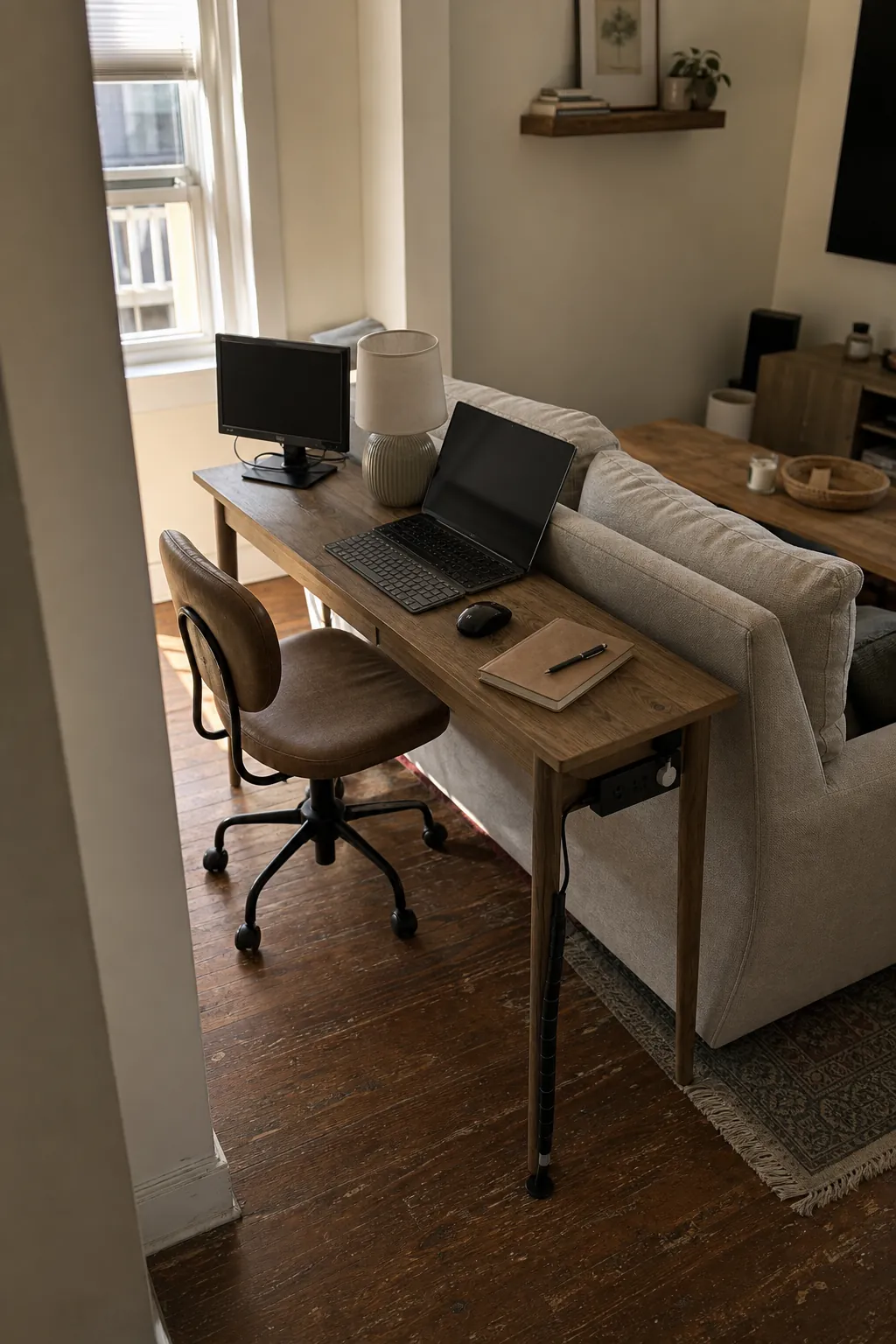
This setup is strongest for laptop work, writing, admin tasks, and people who do not need a heavy multi-monitor station. Use a monitor arm or a low-profile riser if you need a screen. Choose a chair that looks like it belongs in the living room, but do not choose looks over back support if you sit there all day.
Let The Dining Table Earn Its Footprint
Many small apartments have a dining table that mostly collects mail. If that is your reality, stop treating the table as sacred. A dining table can become a strong work station if you create a reset system that keeps dinner from feeling like a meeting room.
The reset system is simple: a laptop stand, keyboard, mouse, notebook, and charger all live in one tray, cart, or lidded box. When work starts, the tray opens. When work ends, the entire work kit leaves the table. That one habit matters more than buying a clever transforming desk you will never fold.
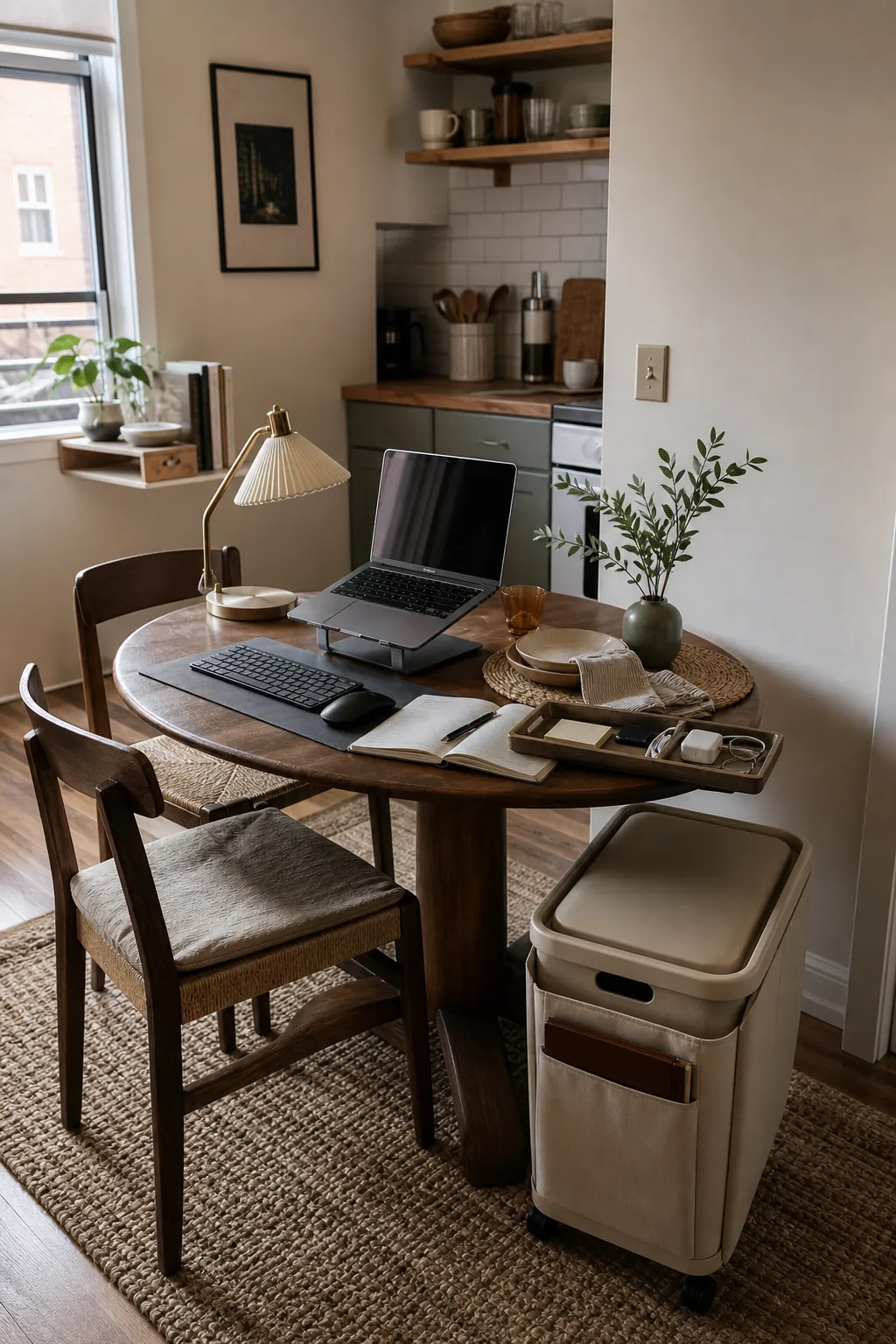
If you live alone, a small round table or drop-leaf table can be more useful than a rectangular table jammed against the wall. If you share the apartment, give each person a separate work tray so the table does not become a negotiation every morning.
Make The Bedroom Office Less Mentally Loud
People often hear that they should never work in the bedroom. In a small apartment, that advice can be useless. Sometimes the bedroom is the only quiet place, the only place with a door, or the only room where a monitor can stay set up.
The bedroom office can work if you reduce the visual tension. Put the desk away from the bed if possible. Face a wall, window side, or corner instead of staring directly at the pillows. Use a small rug, wall shelf, or lamp to mark the work area as its own zone. At the end of the day, close the laptop, turn off the desk lamp, and clear the chair seat completely. That small reset tells your brain the room has changed jobs.
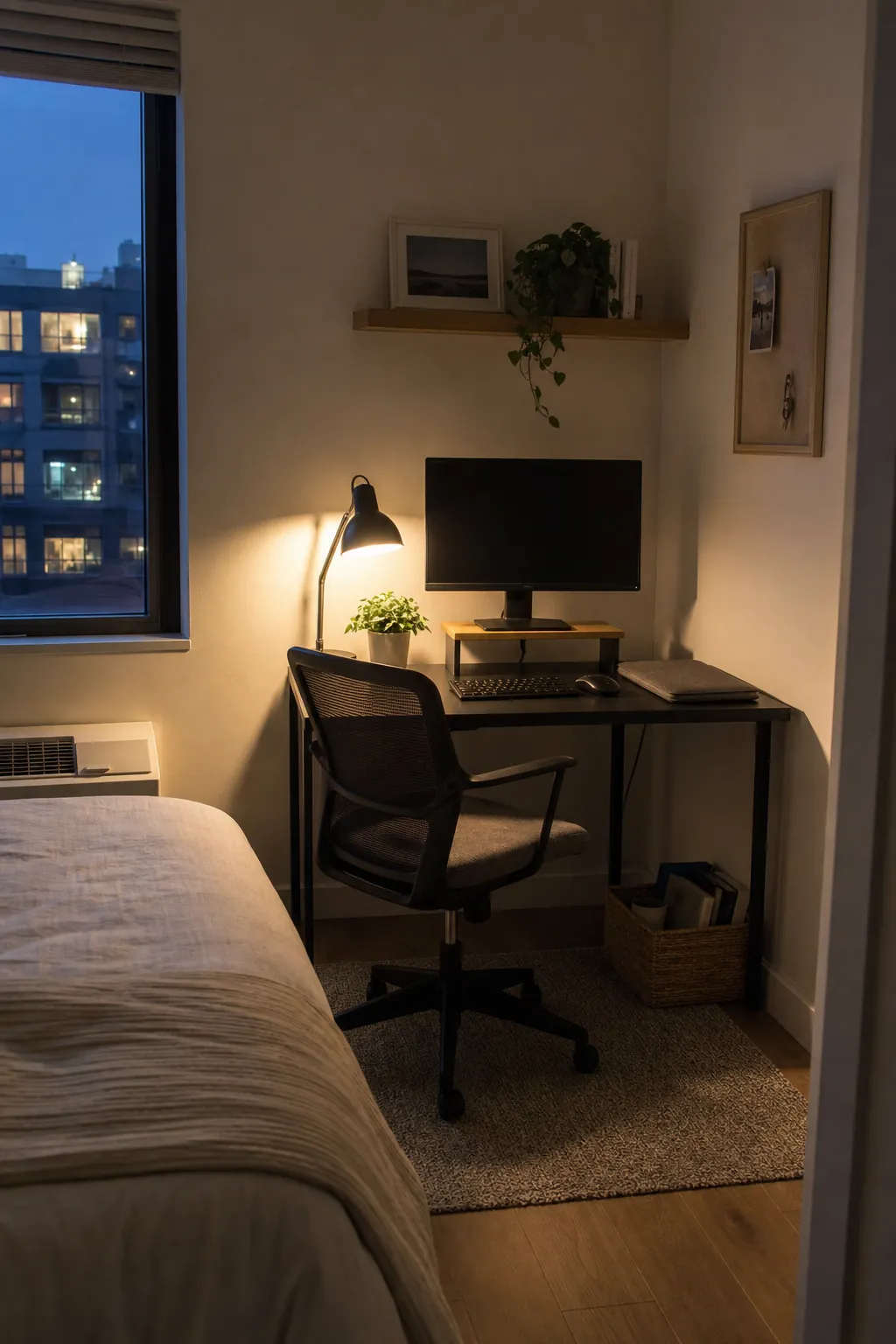
If you use a larger monitor, avoid placing it where it becomes the last thing you see from bed. A simple fabric cover, folding screen, or cabinet-style desk can soften the effect without pretending the office is not there.
Steal A Wall Without Blocking The Apartment
Entryways, hallway ends, and short blank walls are easy to ignore because they look too small. But a wall-mounted desk or shallow floating shelf can turn a pass-through area into a useful work perch for laptop days, bills, planning, or a second work spot when you need a change of scenery.
The rule is depth control. In a narrow apartment, a deep desk can ruin the walking path. A shallow wall desk with a fold-flat chair keeps the hallway functional. Add one vertical shelf above it instead of a floor bookcase, and run cables straight down to a covered outlet strip.
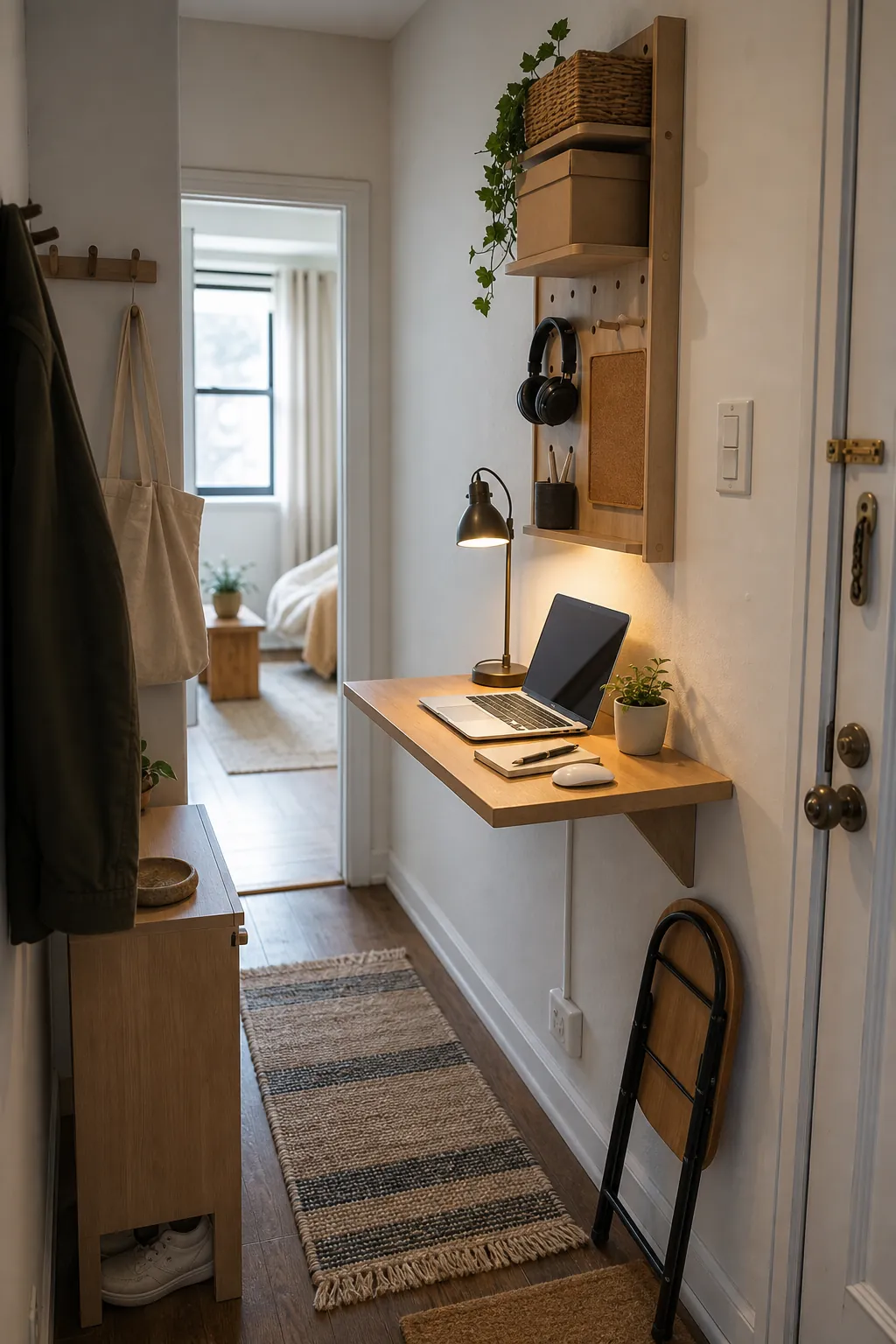
This is not the best setup for eight hours of intense work unless you pair it with a good chair and proper monitor height. It is excellent for a compact secondary station, a renter-friendly command center, or a way to keep the main living area from becoming the default office.
Keep The Office From Spreading
Small apartments do not usually fail because the desk is too small. They fail because work objects spread. Cables stay out. Papers migrate. The office chair becomes a coat rack. The monitor becomes the visual center of the room. The fix is containment.
- Use one work tray: everything that starts the workday should fit inside it or on it.
- Choose vertical storage: shelves, peg rails, wall pockets, and cork boards beat extra floor furniture.
- Hide cables early: cable sleeves, adhesive clips, and a mounted power strip make a cheap desk look intentional.
- Pick one visual cue: a desk lamp, mat, or small plant can signal work mode without decorating the entire apartment around your job.
- Stop buying oversized office furniture: measure the chair first, especially the width, arm height, and how far it needs to roll back.
What To Measure Before You Buy Anything
A small apartment punishes vague shopping. Measure the actual space before ordering a desk, chair, cabinet, or monitor arm. The best-looking setup online may fail because the chair cannot pull out, the outlet is on the wrong wall, or the desk blocks a closet door.
- Desk width: 30 inches can work for laptop-only days, while 40 to 48 inches feels better for a laptop plus monitor.
- Desk depth: 18 to 24 inches is usually the sweet spot in tight apartments; deeper desks need more walking room.
- Chair clearance: check how far the chair needs to move back when you sit, stand, and turn.
- Camera view: open your laptop camera before finalizing the layout, then look at what is behind you.
- Outlet path: if the cable route crosses a walking path, rethink the layout or use a safer wall route.
For comfort, keep the screen high enough that you are not folding your neck all day, and keep your keyboard and mouse low enough that your shoulders can relax. A tiny desk is not a win if it makes your body pay rent too.
The Best Setup Is The One You Can Reset
The smartest small apartment work zone has a beginning and an ending. It may be a closet you can close, a dining table tray you can pack away, a sofa desk with hidden cables, or a bedroom corner that turns quiet after the lamp goes off.
Do not ask, “Where can I squeeze a desk?” Ask, “Where can work live during the day without stealing the whole apartment at night?” That question will lead you to a better layout than any generic tiny-office checklist.