

The fastest way to make a small apartment feel smaller is to decorate the floor. A cute side table, a basket by the sofa, a plant stand, a storage bench, a rolling cart: each one feels harmless on its own. Together, they turn the only open path through the apartment into a maze.
The better move is more ruthless. In a small apartment, decor has to earn its footprint. If it does not clear a surface, replace a piece of furniture, hide daily clutter, or make the room feel calmer, it probably belongs on the wall, above the room, inside furniture, or not in the apartment at all.
These small apartment decor ideas focus on wall mounted decor, vertical storage, floating shelves, compact furniture, and renter friendly decor that keeps as much floor space open as possible.
Start With The Floor You Want Back
Before buying anything, stand in the apartment and look only at the floor. Ignore the walls for a minute. Where do your feet hesitate? Where do bags land? Which corner has become a pile because there is no better place for the things in it?
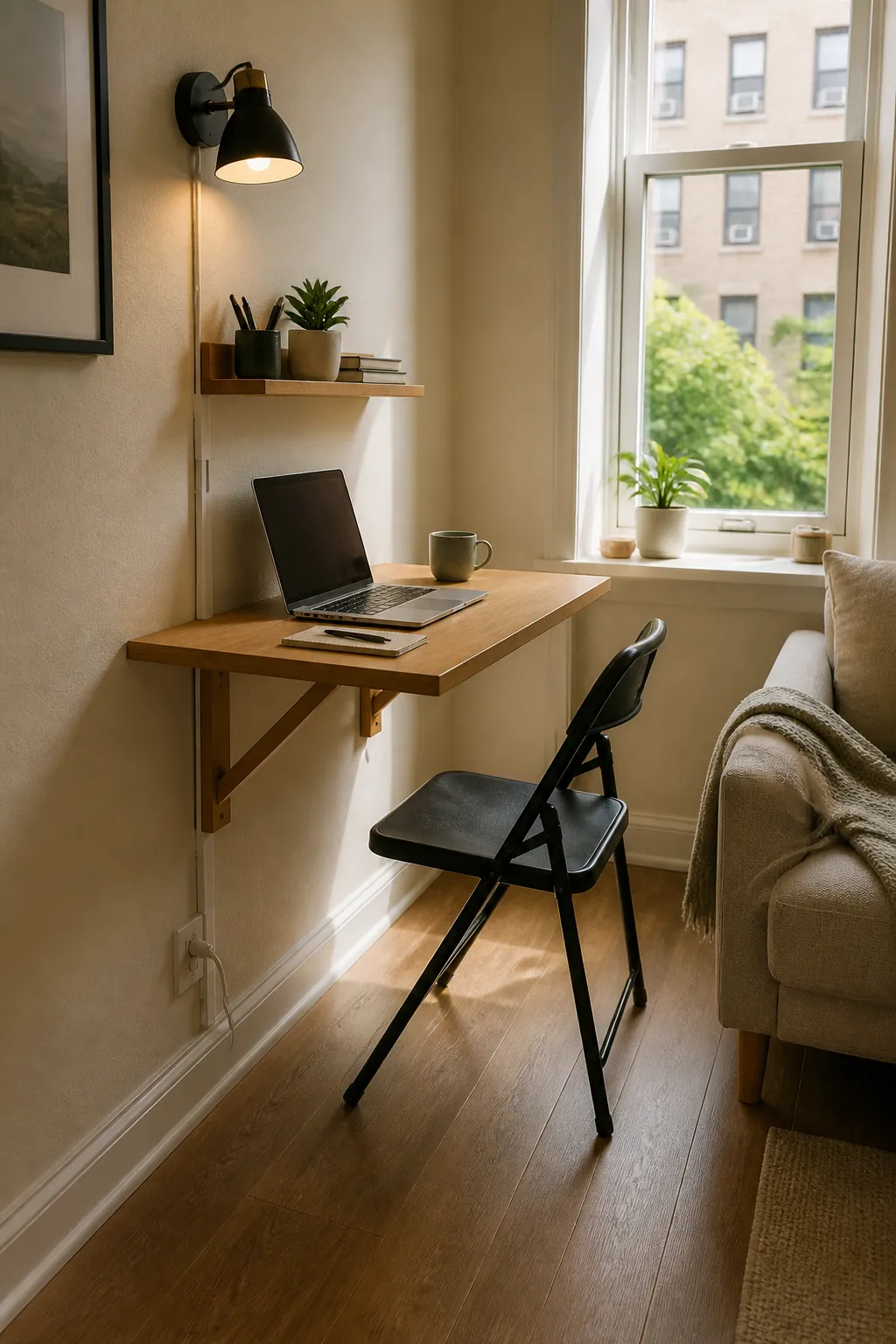
This is the small-space test most people skip: do not ask where you can add storage first; ask what floor space you are trying to rescue. A shelf above the sofa is useful if it removes books from a side table. A wall hook rail is useful if it stops coats from living on dining chairs. A floating desk is useful if it replaces a permanent desk you rarely need.
- Mark furniture footprints with painter’s tape before buying anything bulky.
- Keep at least one clear walking path from the entry to the kitchen, bathroom, and bed.
- Choose one landing zone for keys, bags, mail, and shoes instead of scattering them across the apartment.
- Use the upper third of the walls for items you do not reach for every day.
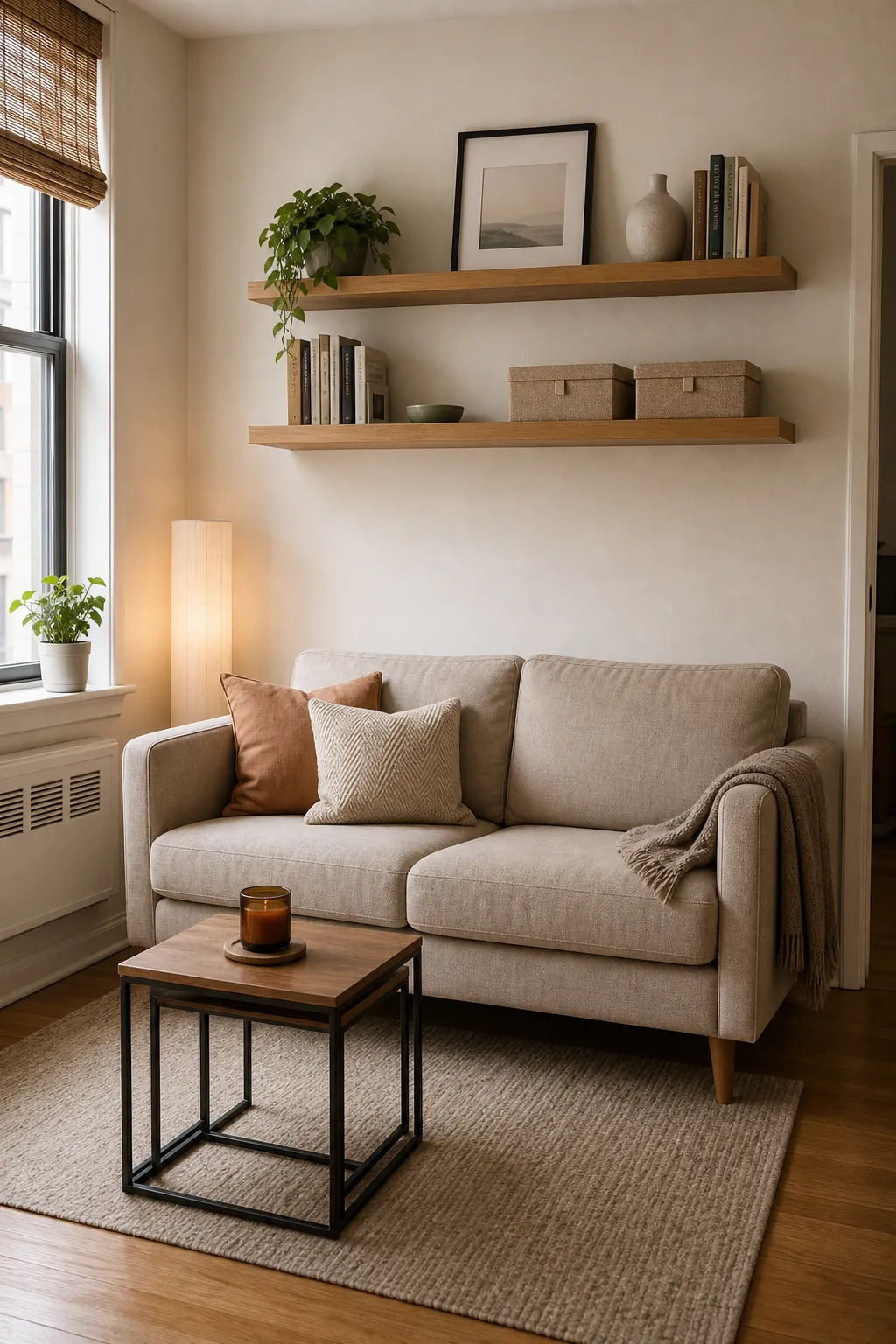
Use Floating Shelves Only Where They Replace Something
Floating shelves can save a small apartment, but they can also become a wall-mounted junk drawer. The difference is intention. A floating shelf should replace a floor item, not create a new place to collect random objects.
The strongest places for floating shelves are above furniture that already exists: over a sofa, over a desk, above a radiator cover, beside a bed instead of a nightstand, or over a kitchen sink where open shelves can hold the pieces you use daily. That keeps the shelf visually tied to a zone instead of making the whole wall feel busy.
For clean small apartment decor, limit each shelf to a tight mix: one practical group, one warm texture, and one personal object. For example, a stack of everyday bowls, a small trailing plant, and one framed print. If every shelf has books, candles, boxes, plants, baskets, and souvenirs, the room reads as storage instead of decor.
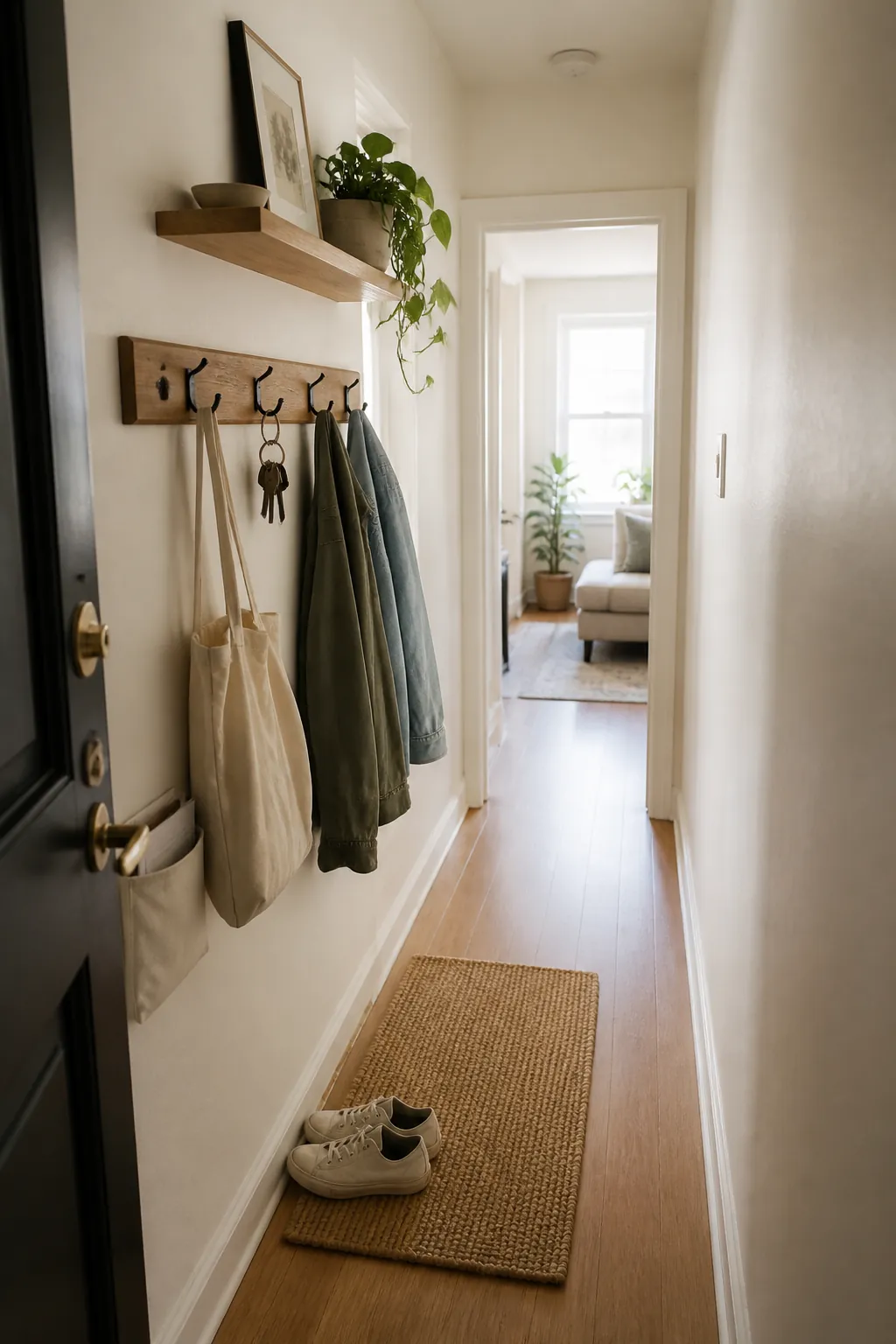
Turn Empty Wall Zones Into Storage Lanes
Most small apartments have wasted vertical space in the same places: above doors, above the sofa, beside the fridge, behind doors, above the toilet, near the entry, and over the bed. These are not just blank walls. They are storage lanes.
The trick is to match the storage lane to the type of object. Heavy, ugly, or mismatched items belong behind closed doors or in lidded boxes. Light, useful, good-looking items can stay visible. That is why open vertical storage works so well for mugs, cutting boards, baskets, books with similar spines, folded towels, small plants, and framed art, but fails quickly with tangled cords, half-used toiletries, plastic packaging, and paperwork.
- Entryway: a slim rail with hooks, one wall pocket, and a narrow shelf for keys.
- Kitchen: a peg rail or wall grid for mugs, utensils, pans, and dish towels.
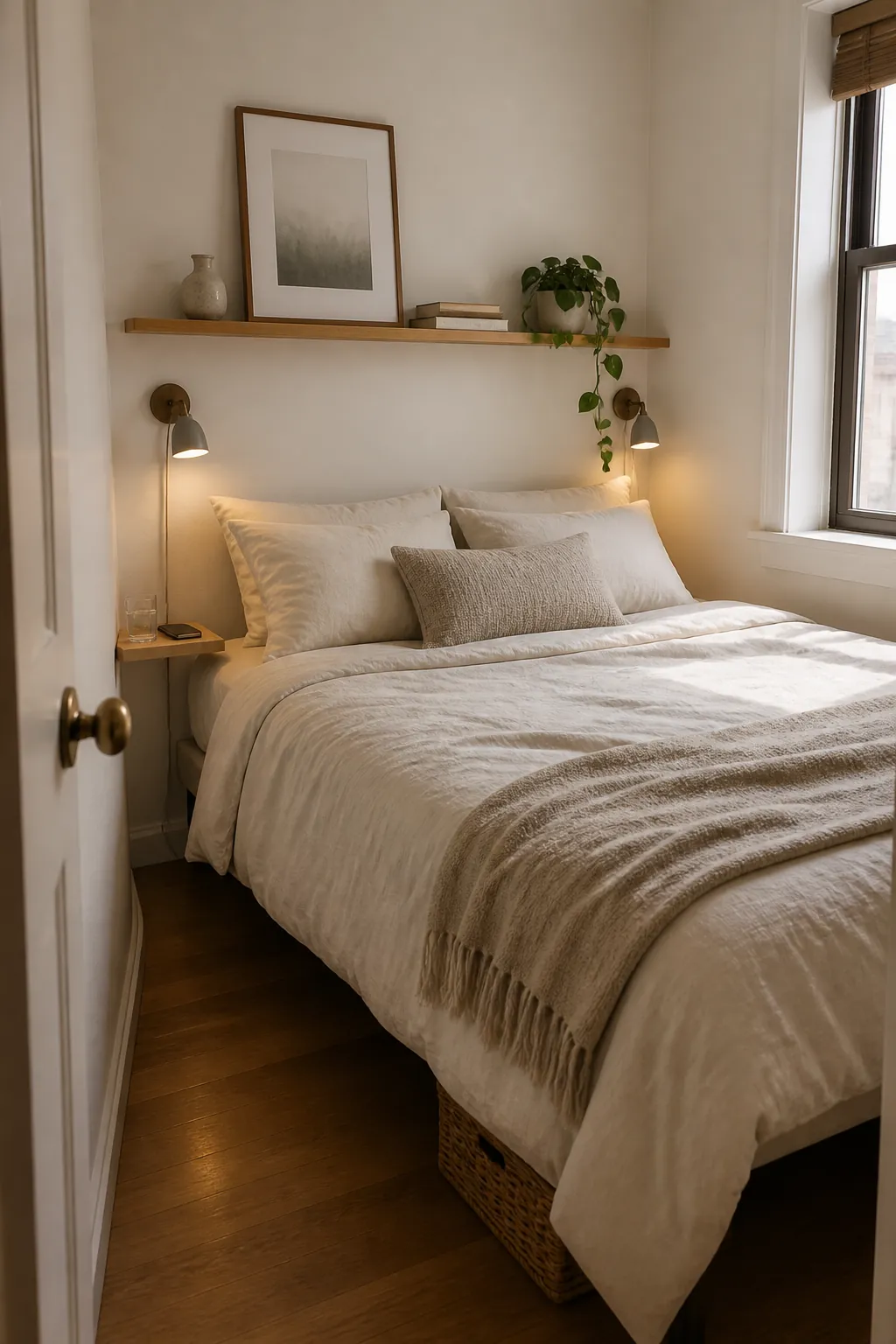
- Bedroom: a picture ledge or shelf above the headboard instead of a second nightstand.
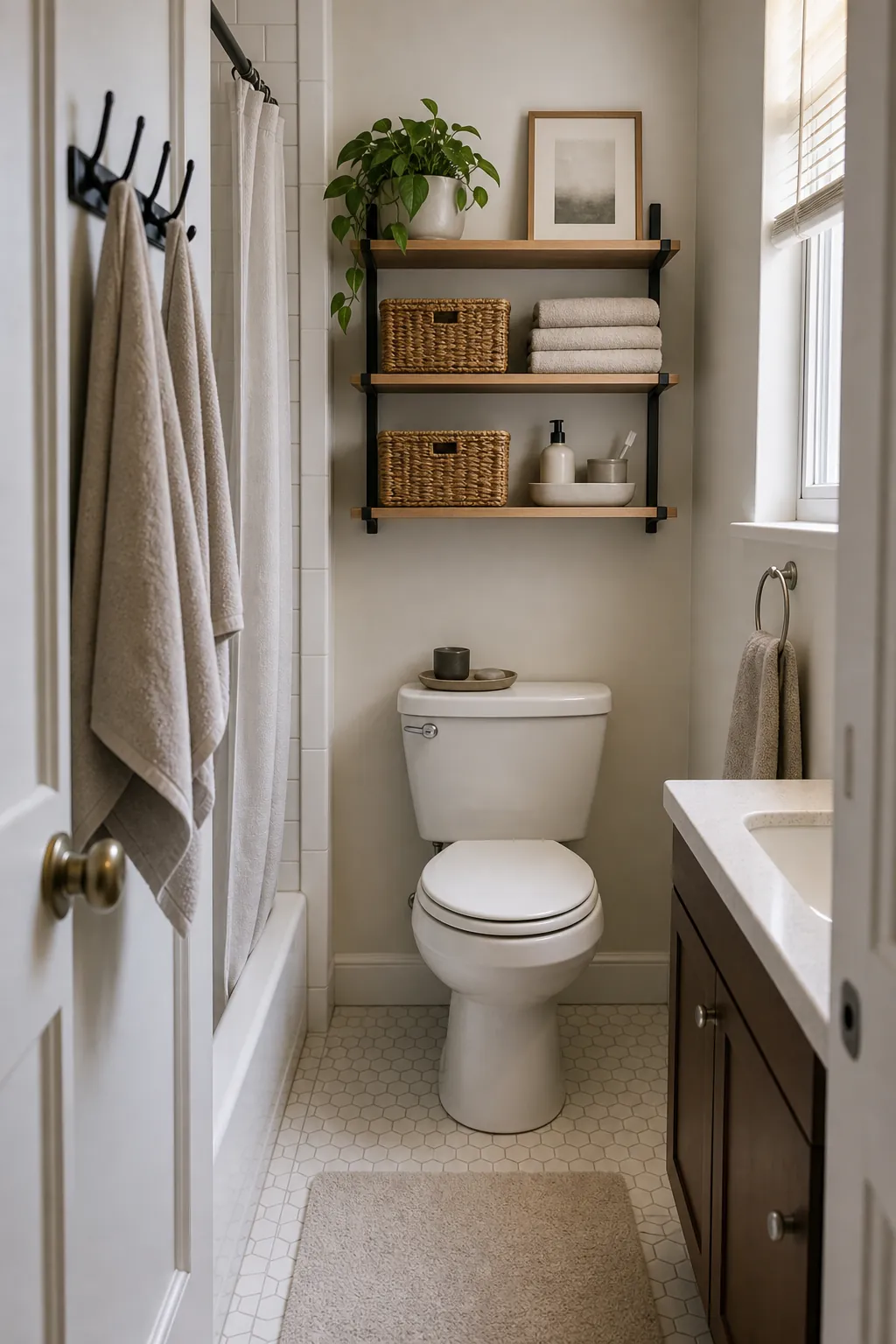
- Bathroom: over-toilet shelving with closed baskets for extra supplies.
- Living area: a wall-mounted reading light so you can skip a floor lamp.
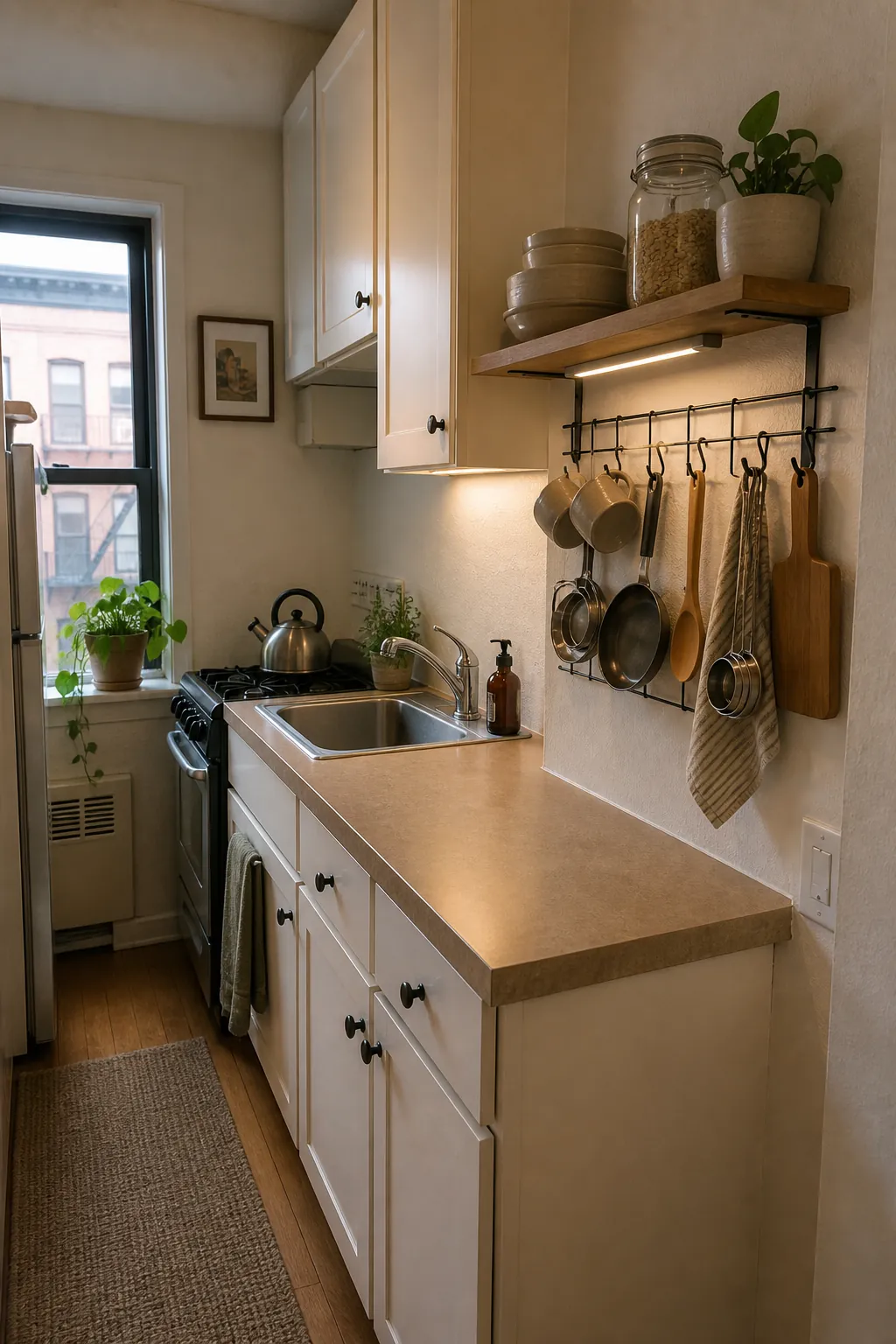
Choose Closed Storage Low And Open Display High
A small apartment feels cluttered faster than a larger room because everything is close to eye level. That is why open shelving on every wall can backfire. It technically adds apartment storage, but it also makes every spare mug, bottle, basket, and charger part of the room’s visual noise.
A calmer rule is simple: closed storage below eye level, open display above eye level. Low cabinets, storage benches, and lidded boxes hide the messy daily stuff. Open shelves higher up can hold the pretty or uniform things: books, ceramics, baskets, folded linens, plants, or framed art. The floor stays clearer, and the room does not feel like a stockroom.
If you are using vertical storage in a rental, check the wall type and weight limit before loading shelves. For anything heavy, use proper anchors if your lease allows it. If drilling is not allowed, keep wall mounted decor light and move serious storage to tall freestanding pieces that use a small footprint, such as a narrow bookcase, over-toilet unit, or tension pole system.
Make Renter Friendly Decor More Reliable
Renter friendly decor is not only about avoiding holes. It is about choosing methods that actually hold up in real apartments with humidity, textured paint, old plaster, and summer heat. Adhesive strips can be great for lightweight art, but they are not a plan for heavy shelves or valuable pieces.
Use adhesive strips for flat, light wall decor. Use tension rods for curtains, fabric panels, and some temporary storage pockets. Use over-door organizers where the door can still close cleanly. Use picture ledges or small screw hooks only if your lease allows minor holes and you know how to patch them well.
The safest renter-friendly wall decor is light, flat, and easy to remove: unframed prints, fabric banners, small mirrors, peel-and-stick panels, lightweight cork boards, and narrow rails for everyday items. Save heavy mirrors, deep shelves, and loaded cabinets for places where you can anchor them correctly.
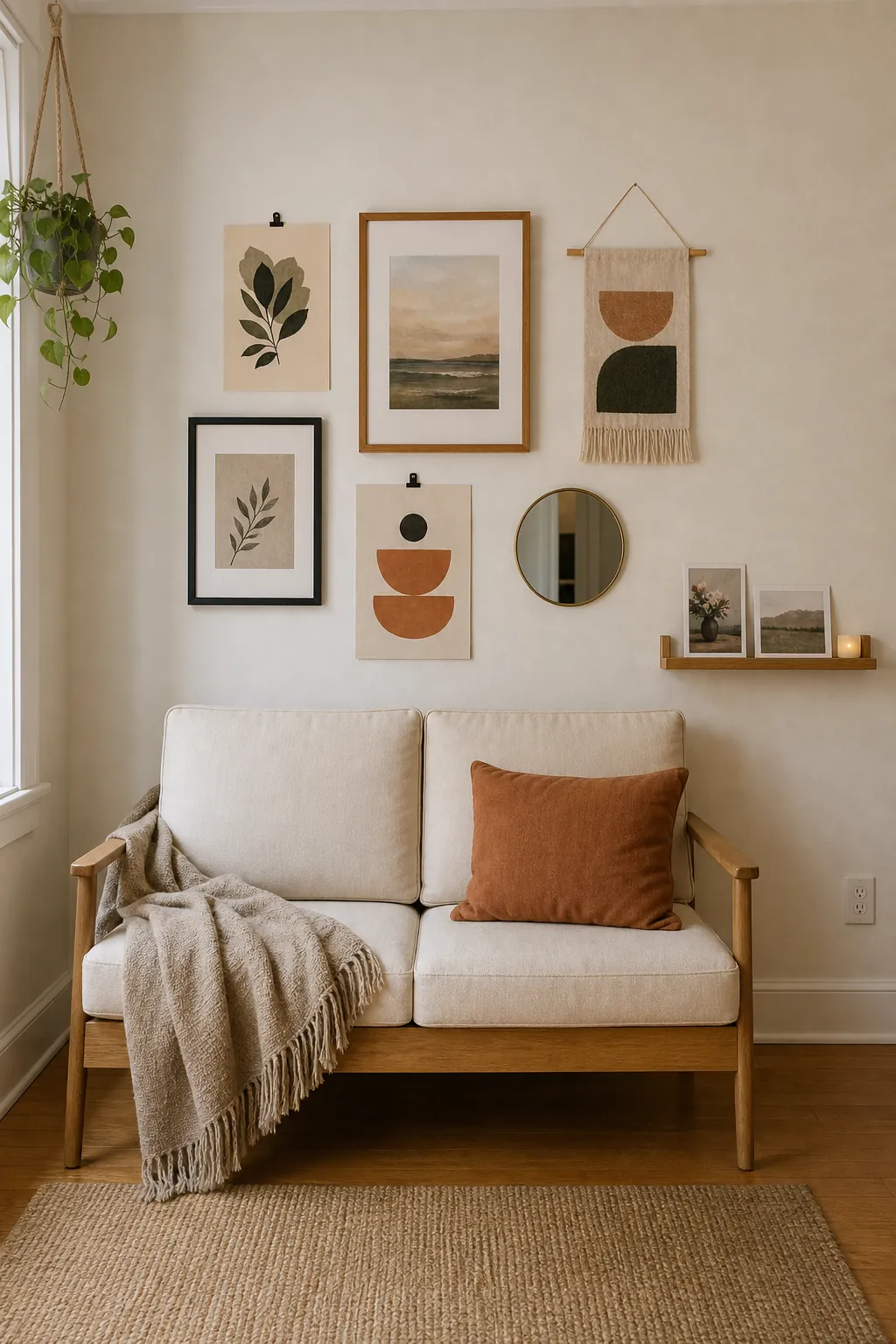
Use Compact Furniture That Changes Jobs
Compact furniture is not automatically small-space furniture. A tiny accent chair that no one sits in still wastes floor space. A small table that holds clutter full-time is still clutter. The best compact furniture changes jobs during the day or replaces two pieces at once.
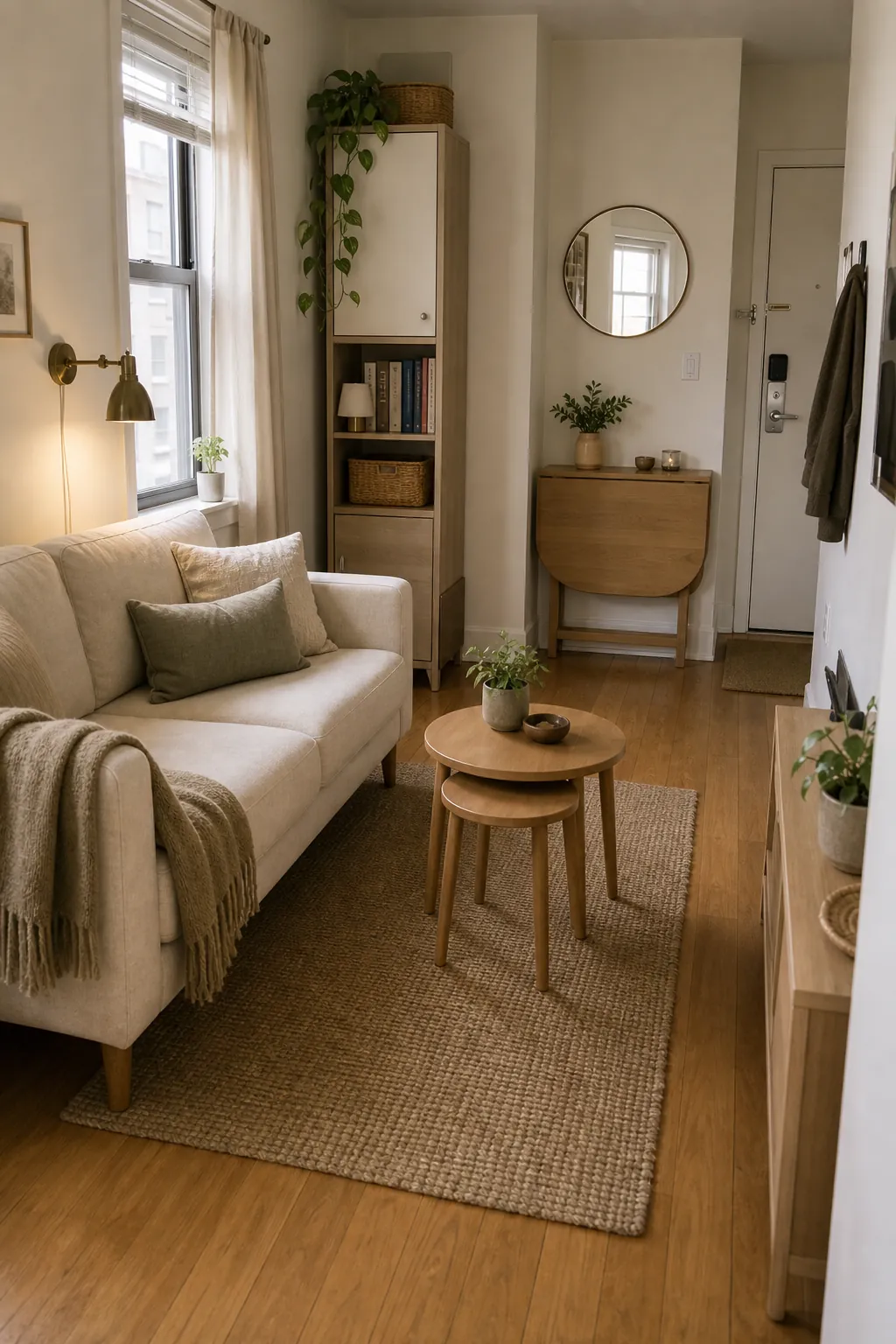
A wall-mounted folding desk can turn a hallway or bedroom corner into a work zone without leaving a desk in the room all day. A drop-leaf dining table can become a console when closed. A storage ottoman can replace a coffee table if it holds blankets, games, or out-of-season textiles. A daybed can replace a sofa and guest bed in a studio.
Before buying compact furniture, ask one blunt question: what does this remove? If the answer is nothing, it may be cute, but it is not solving the small apartment problem.
Give The Bedroom Storage Without Crowding The Bed
Small bedrooms often fail because every solution lands beside the bed: nightstands, lamps, laundry baskets, hampers, books, plants, and extra drawers. The room may technically hold them, but the bed starts to feel boxed in.
Instead, move as much as possible upward and inward. Use a wall sconce instead of a table lamp. Use a narrow ledge for a book and phone instead of a full nightstand. Store seasonal clothes in under-bed bins or vacuum bags if the bed frame allows it. If you need a dresser, choose height over width so the footprint stays smaller.
Above-bed storage needs restraint. Keep it shallow, secure, and calm. No heavy stacks over your head, no deep shelves that make the bed feel cave-like, and no crowded display that drops dust into the sleep zone. A slim shelf, one framed piece, a trailing plant placed safely to the side, and warm wall lighting are usually enough.
Treat The Bathroom Like A Vertical Closet
The bathroom is usually where no floor space ideas matter most. A laundry basket, extra shelf, or rolling cart can make a tiny bathroom impossible to use. The wall above the toilet, the back of the door, and the side of the vanity are usually better storage targets.
Use closed baskets for backup toiletries, open trays for the daily routine, and hooks for towels instead of towel bars when wall width is tight. If you add over-toilet shelving, keep the bottom shelf high enough that the toilet area does not feel cramped. In a rental, a freestanding over-toilet unit can work when wall mounting is not allowed, but choose one with a slim frame and anchor it safely if possible.
Keep Wall Decor From Becoming Wall Clutter
Small space decor still needs personality. Bare walls can make a tiny apartment feel temporary and unfinished. The mistake is covering every blank space with small pieces until the room feels visually noisy.
Pick one larger wall moment per zone instead of sprinkling decor everywhere. In the living area, that might be a mirror plus two floating shelves. In the entry, a hook rail plus one print. In the bedroom, a ledge and one soft textile. Repeating one material, such as light wood, black metal, rattan, linen, or warm brass, helps separate zones while keeping the apartment cohesive.
The final self-check is simple: can you vacuum, walk, open doors, pull out chairs, and sit down without moving decor first? If the answer is yes, your small apartment decor is doing its job. If the answer is no, the floor is telling you what to edit next.