
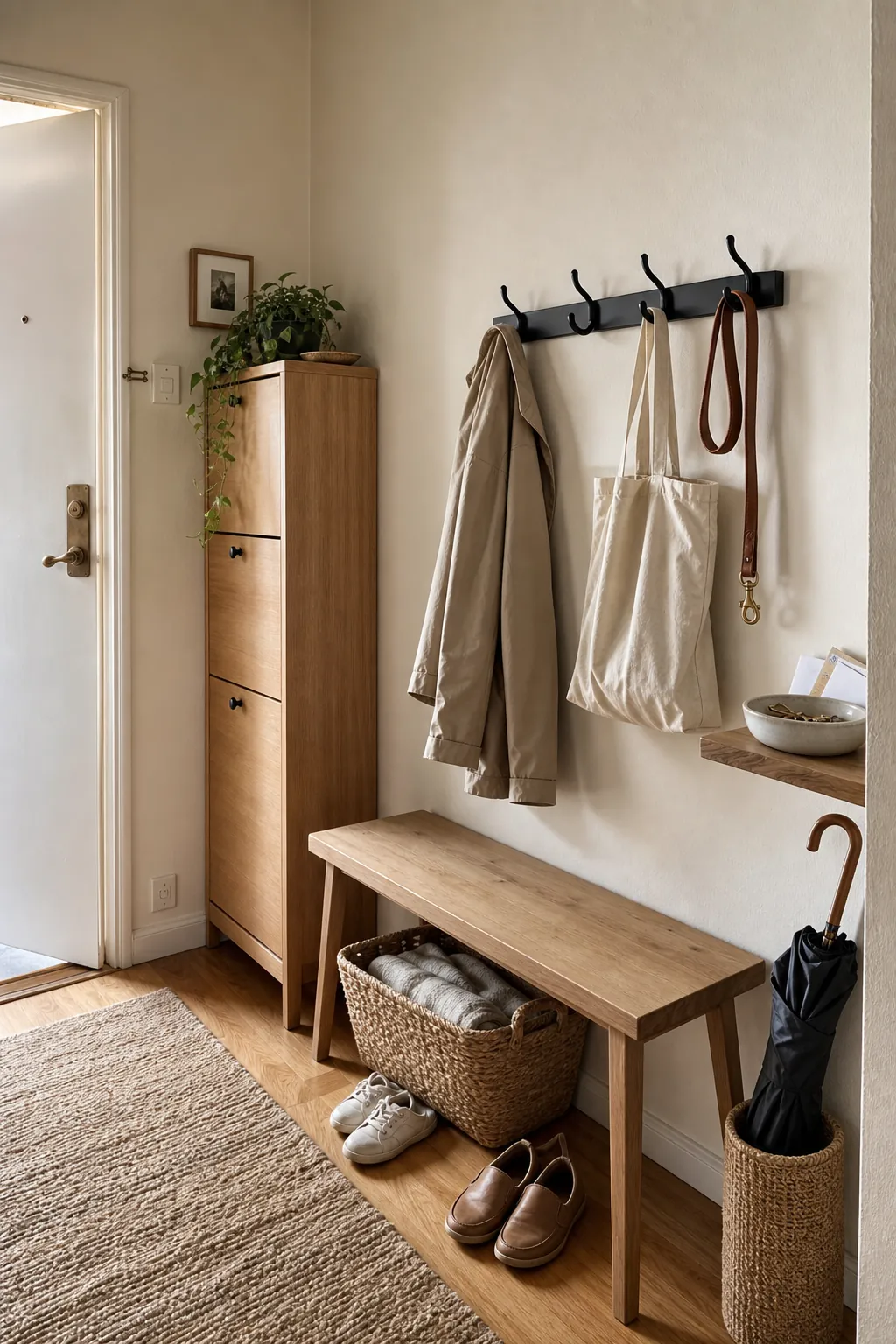
The fastest way to make a small apartment feel messy is to let the first three feet inside the door become a decision pile. Shoes wait on the floor. Keys migrate to the kitchen counter. Mail lands on the nearest chair. A tote bag blocks the closet because there is nowhere better to put it.
A good drop zone fixes that by giving every repeat item a place to land in one motion. It does not need a mudroom, a wide hall, or a built-in cabinet. In a small apartment, the best version is usually a narrow landing zone that uses the wall, the back of a door, a slim shoe cabinet, or a tiny bench instead of stealing floor space.
The rule is simple: build for the things you actually drop, not the entryway you wish you had.
Start With the Mess Pattern
Before buying a bench or hooks, stand inside your door at the end of a normal day and look for the repeated clutter. Most small apartment entryway problems come from five categories: shoes, keys, bags, mail, and outerwear. If you have pets, add leashes and waste bags. If you commute, add headphones, badges, sunglasses, or a charging cable.
Do not start with furniture. Start with a quick inventory:
- What hits the floor first? Shoes, tote bags, backpacks, and packages usually need low storage.
- What gets lost most often? Keys, wallets, and earbuds need a visible tray or small shelf.
- What creates visual clutter? Coats, umbrellas, mail, and pet gear need limits, not just more hooks.
- What blocks movement? Anything deeper than the door swing or walkway is usually the wrong piece.
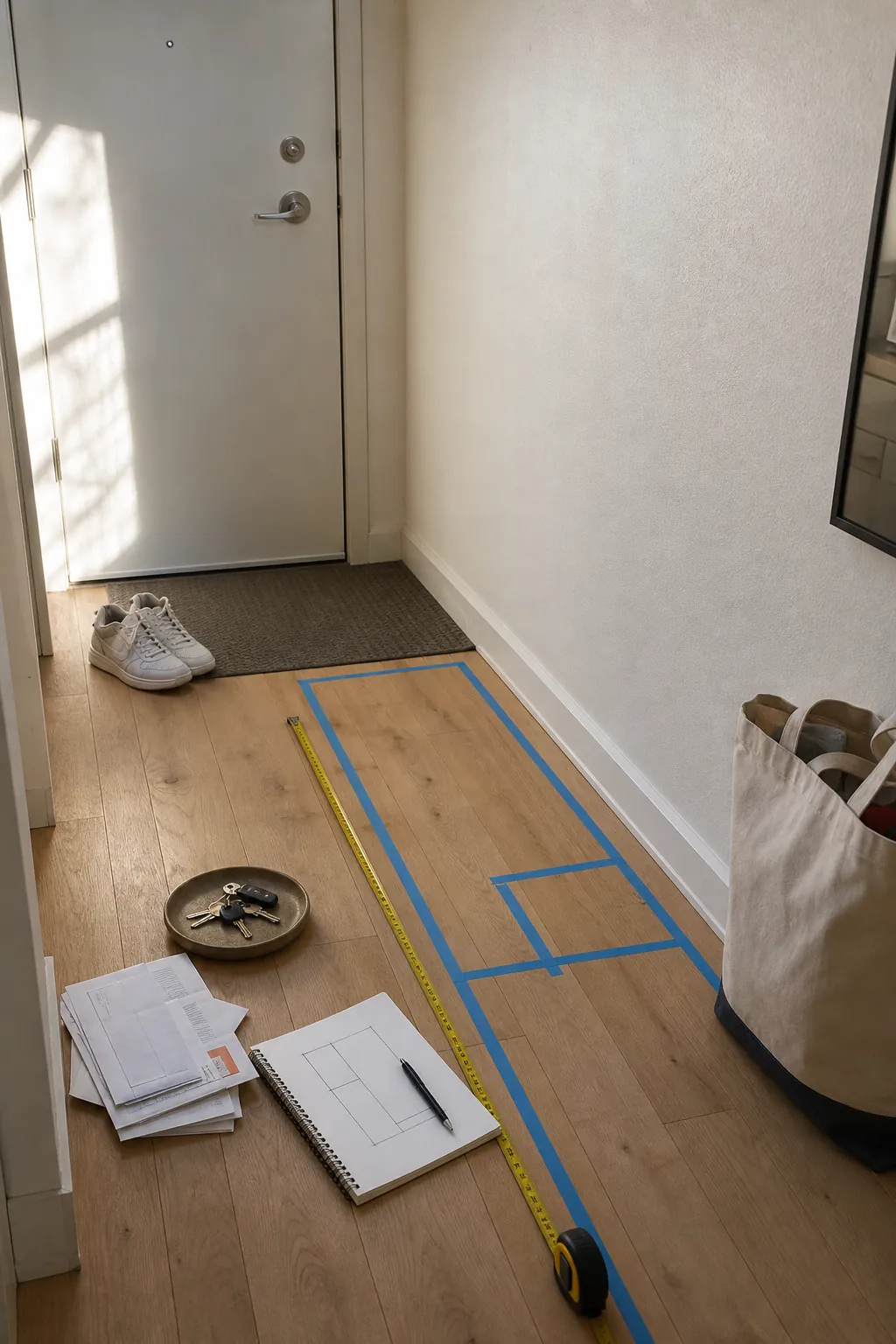
The goal is not to organize everything you own at the door. The goal is to intercept the daily items before they spread into the rest of the apartment.
Pick a Drop Zone That Fits Your Floor Plan
Small apartments usually have one of three entry situations. Each needs a different setup.
If you have a blank wall beside the door
Use the wall first. A rail of wall hooks, a shallow shelf, and a shoe tray can create a complete entryway organization system without a furniture footprint. Keep hooks at a comfortable shoulder height and reserve the lowest wall area for shoes, baskets, or a slim cabinet.
If your door opens straight into the living room
Create a visual edge instead of pretending you have a hallway. A narrow rug, a small wall-mounted shelf, and one closed shoe cabinet can make the first few feet read as a small entryway, even when it is technically part of the living room.
If you only have the back of the door
Use over-door storage or a light hook rail for soft items, then move heavier storage to the nearest wall or closet. Door storage works best for scarves, reusable bags, dog leashes, and umbrellas. It is usually not the right place for heavy backpacks or a pile of coats.
Use the Wall Like a Tiny Mudroom
In a tight apartment, vertical storage is the difference between a useful drop zone and a cluttered corner. The wall can hold the items that need to be grabbed on the way out, while the floor stays clear enough for the door, shoes, and walking space.
A strong wall setup has three levels:
- High level: a small shelf, mirror, or mail slot for things you check with your eyes.
- Middle level: hooks for coats, bags, leashes, and hats.
- Low level: shoe storage, a tray, a basket, or a compact bench.
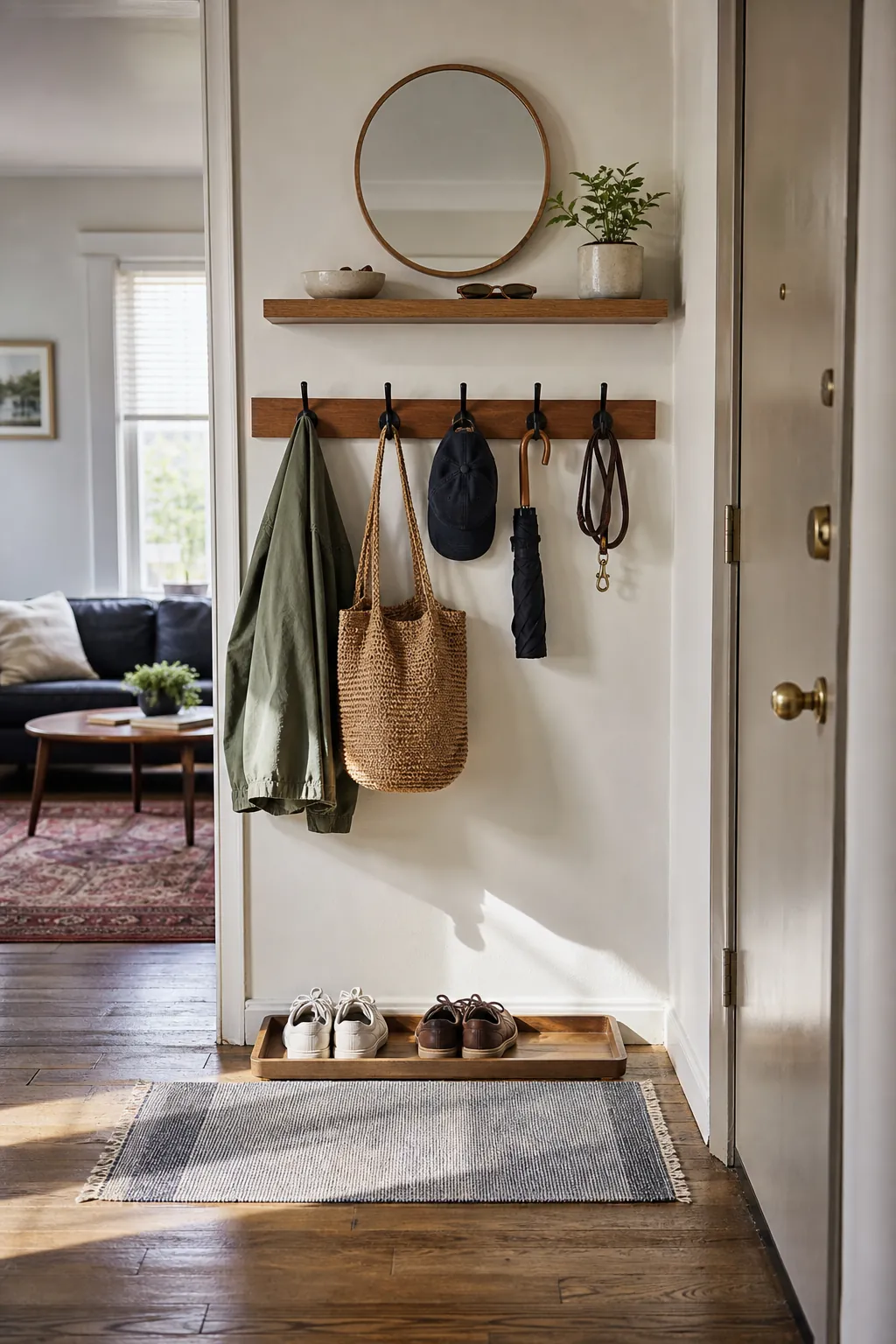
The mistake is hanging too many hooks. More hooks can look helpful, but in a small space they often become coat storage, not a daily drop zone. Limit the hooks to the number of items you want visible. If you live alone, two to four hooks may be enough. For two people, use a short rail and assign zones by side rather than adding hooks across the whole wall.
Solve Shoe Storage First
Shoes are usually the biggest reason an apartment storage plan fails at the entry. They are awkward, dirty, and used daily, so they cannot be hidden too far away. But if every pair lives by the door, the entry becomes a shoe pile.
Use a two-tier rule:
- Daily shoes stay in the drop zone. Keep one or two pairs per person near the door.
- Everything else moves out. Dress shoes, out-of-season shoes, and backup pairs belong in a closet, under-bed box, or closed cabinet away from the entry.
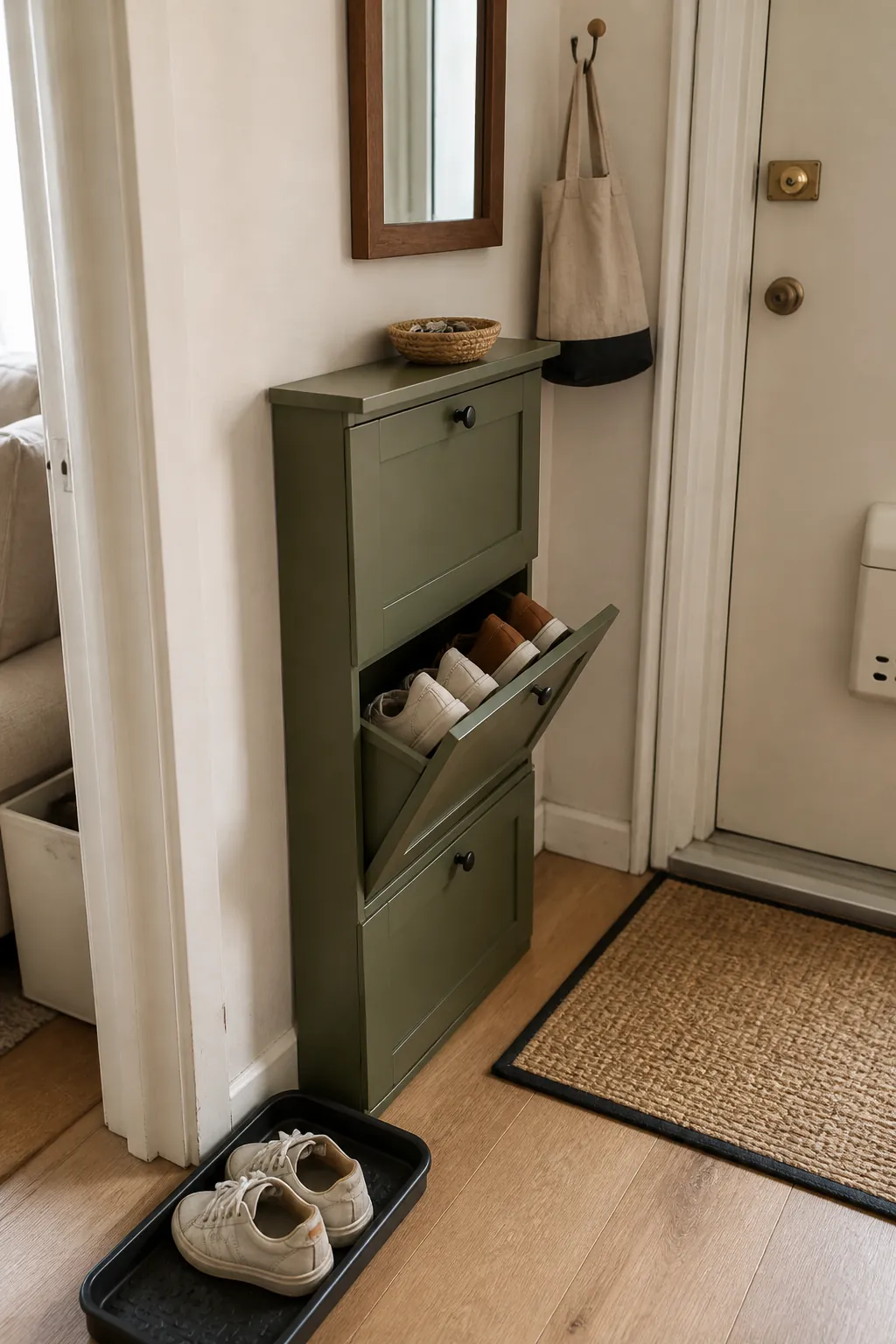
For very narrow spaces, look for a shallow tilt-out shoe cabinet, a low open rack, or a boot tray that fits the width of the wall. Closed shoe storage looks calmer in a living-room entry, while open trays are easier for people who will not open a cabinet every time they come home.
The best choice is the one you will actually use when your hands are full.
Add a Bench Only If It Earns the Space
An entryway bench can make a small drop zone feel finished, but it is not automatically practical. In a tight entry, a bench has to do at least two jobs: give you a place to sit and hold shoes, baskets, or bags underneath.
Choose a bench when you regularly sit to put on shoes, have children, need a landing spot for packages, or have enough wall length to keep the walkway open. Skip it when the bench would become a package shelf, block a closet, or narrow the path from the door.

If you do use a bench, keep it narrow and calm. A wood bench with two baskets below, a cushion, and one hook rail above can do more for small space organization than a bulky hall tree that tries to imitate a suburban mudroom.
Give Small Items a Hard Stop
Keys and mail need a hard stop because they are small enough to disappear and easy enough to set down anywhere. A drop zone should remove the decision. When you walk in, the keys go in one tray, sunglasses go beside them, and mail goes into one vertical sorter or shallow basket.
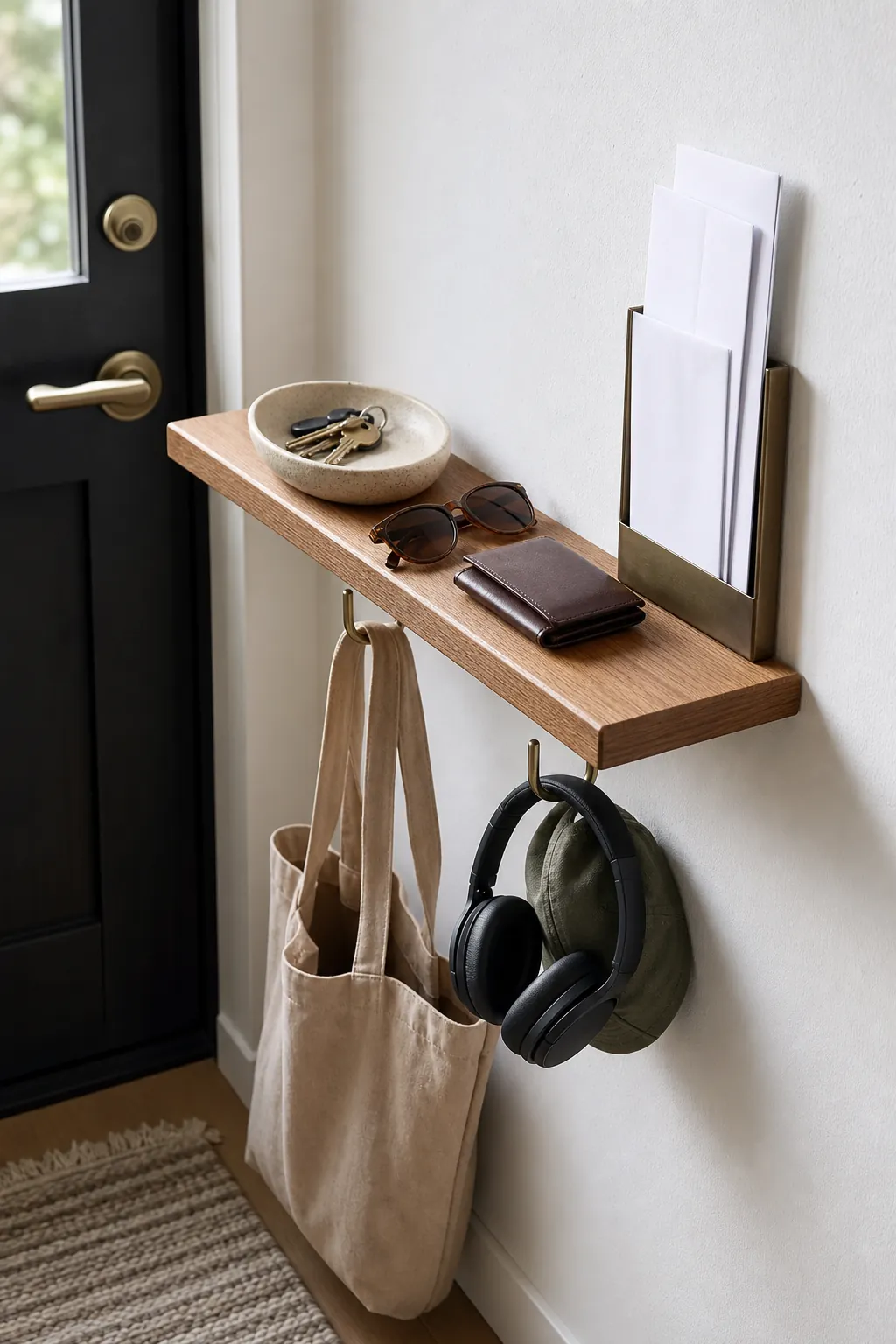
Keep this part small on purpose. A key tray is not a junk drawer with better lighting. If the shelf is deep enough for receipts, coins, random tools, lip balm, coupons, and loose batteries, it will collect all of them. A shallow shelf or tray makes the limit visible.
For mail, separate the action from the storage. The entry can hold mail for one or two days, but bills, documents, and papers you need to keep should move to a desk, file box, or command center. The drop zone is the checkpoint, not the archive.
Make It Renter-Friendly Without Making It Flimsy
Many apartment renters hesitate to build an entry setup because they cannot drill, do not want wall damage, or are unsure what the lease allows. You still have options, but the weight of the item should decide the method.
- Use adhesive hooks for light items only. Keys, hats, dog leashes, and a light tote are safer than heavy winter coats.
- Use over-door hooks for soft overflow. They are useful for scarves, umbrellas, or reusable bags when wall space is unavailable.
- Use freestanding pieces for heavy storage. Shoe cabinets, benches, and baskets do not rely on wall strength.
- Check the door swing. A hook that technically fits can still dent a wall or stop the door from opening fully.
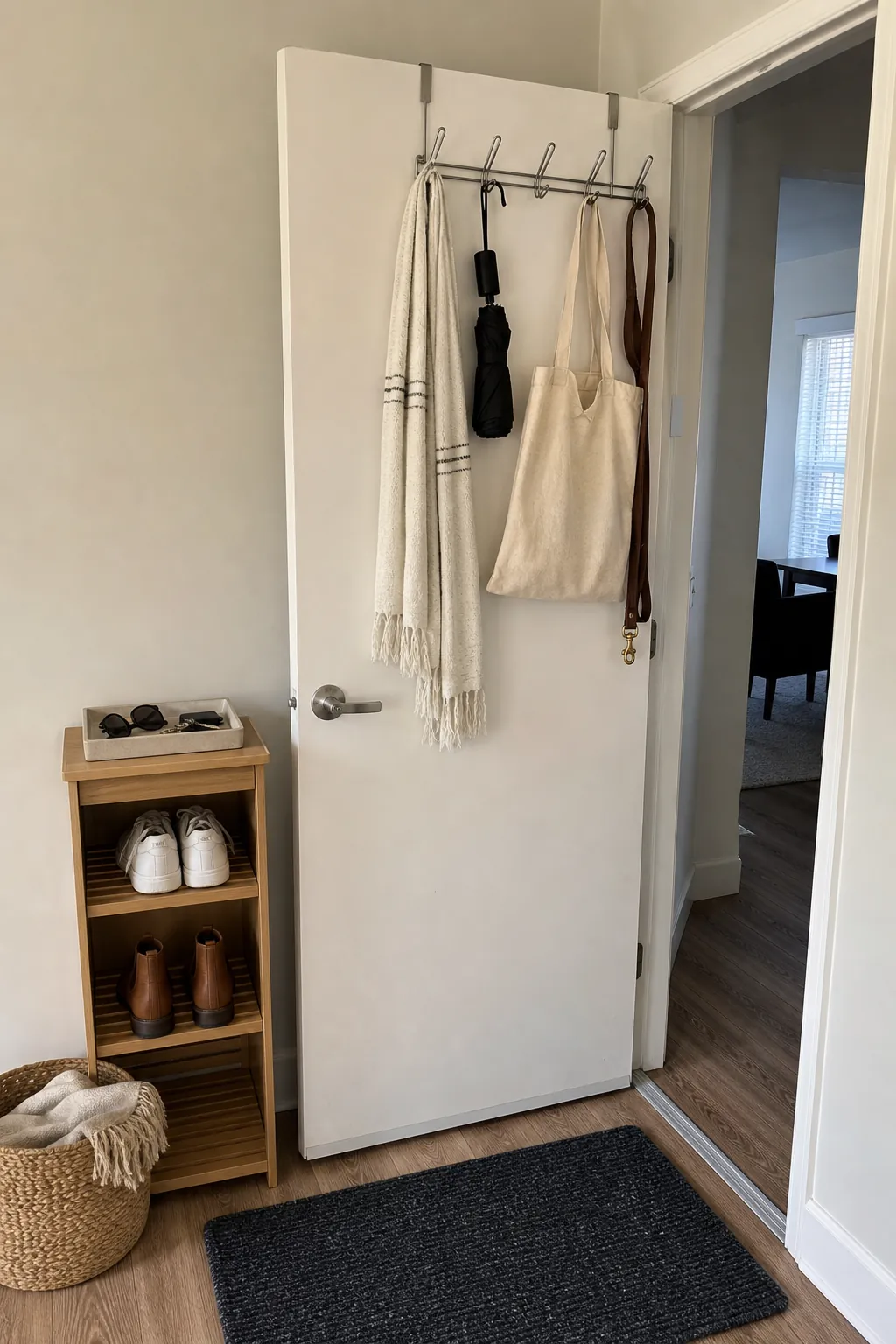
If drilling is allowed, wall-mounted storage can still be apartment-friendly when it is deliberate. A short rail installed cleanly often causes less chaos than five temporary hooks that fail, shift, or leave residue.
Create a Drop Zone When You Have No Entryway
No-entryway apartments need a boundary more than they need a hallway. If the front door opens into the living room, use three quiet signals: a rug, a vertical storage element, and a closed piece for shoes. Together, they tell the eye, “this is the arrival spot.”

Keep the pieces visually related to the room. A black metal rack may work in an industrial studio, but it can look harsh in a soft living room. A slim wood cabinet, woven basket, or simple peg rail often blends better with Natural Home & Decor style while still doing the practical work.
The most important detail is depth. In a no-entryway room, every inch you project into the space is visible. A shallow cabinet or shelf usually beats a deep console table because it keeps the arrival zone from becoming a barrier.
Keep the System From Growing
A drop zone fails when it slowly becomes long-term storage. The fix is a weekly reset that takes less than five minutes. Put away extra shoes. Move papers to their real home. Clear the tray. Remove coats you are not wearing this week. Empty the basket before it becomes a mystery bin.
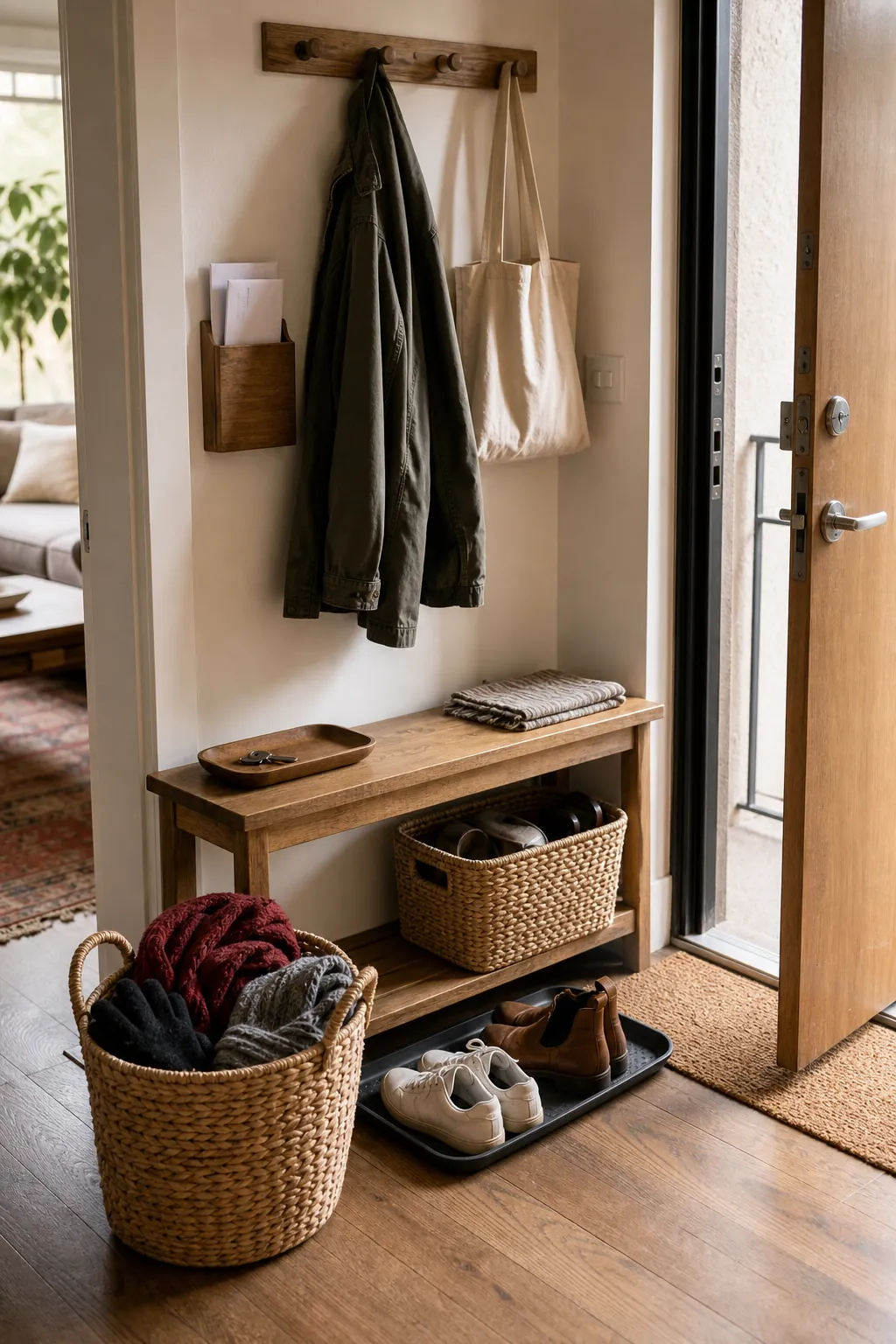
Use limits you can see:
- One tray for keys and pocket items. When it fills, clear it.
- One mail slot or basket. When it fills, sort it.
- One daily shoe spot per person. When it overflows, rotate shoes out.
- One hook per active outer layer. Store the rest elsewhere.
A Simple Small Apartment Drop Zone Formula
If you want the easiest starting point, use this formula:
- A washable rug to define the landing area.
- A shallow shoe solution for daily pairs only.
- Two to four hooks for coats, bags, or leashes.
- A tiny shelf or tray for keys and sunglasses.
- One mail container that gets emptied weekly.
- Optional bench storage only if it does not block the path.
That is enough. The best drop zone in a small apartment is not the biggest or most styled one. It is the one that catches the daily mess at the door, keeps the walkway open, and makes leaving tomorrow morning easier than arriving tonight was.