
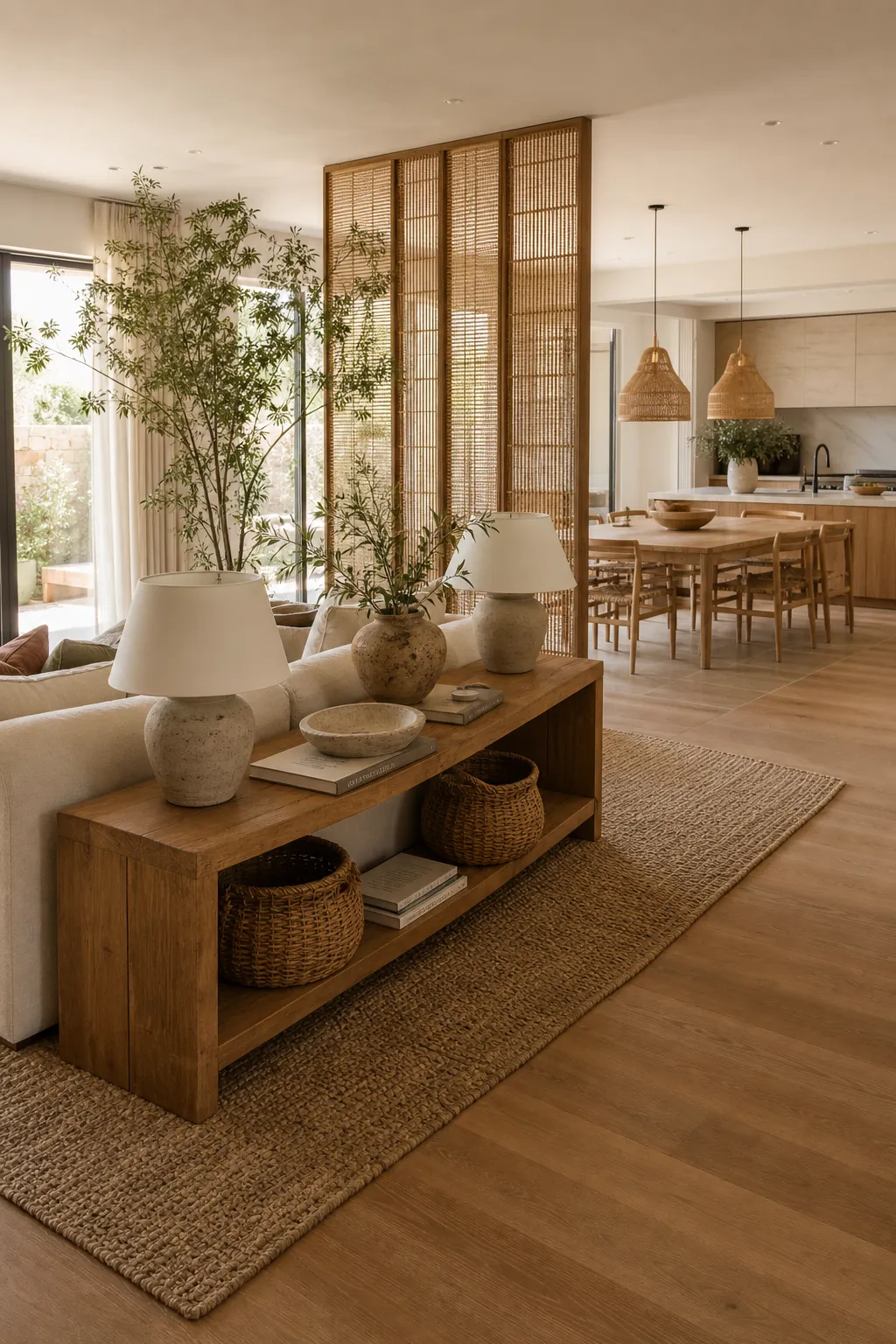
Open-plan homes are generous, but they can also feel strangely unfinished: the sofa floats, the dining table looks exposed, and the kitchen visually takes over everything. The fix is not more furniture. It is natural decor that gives each zone warmth, weight, and a quiet relationship to the next zone.
For this kind of Open Plan Living, the best rooms usually share three qualities: tactile materials, repeated wood and fiber tones, and enough softness to make one large room feel human. That is why Natural Home Decor works so well in an open layout. Linen, wool, jute, oak, stone, clay, baskets, branches, and plants give the eye a calm rhythm without forcing every corner to match.
Start by anchoring the living zone
The most common mistake in Open Concept Decor is using a rug that is too small. In a closed room, a small rug looks awkward. In an open room, it makes the seating area feel like it is drifting. Choose a rug large enough for at least the front legs of the sofa and chairs to sit on it, then layer texture if the room still feels thin.
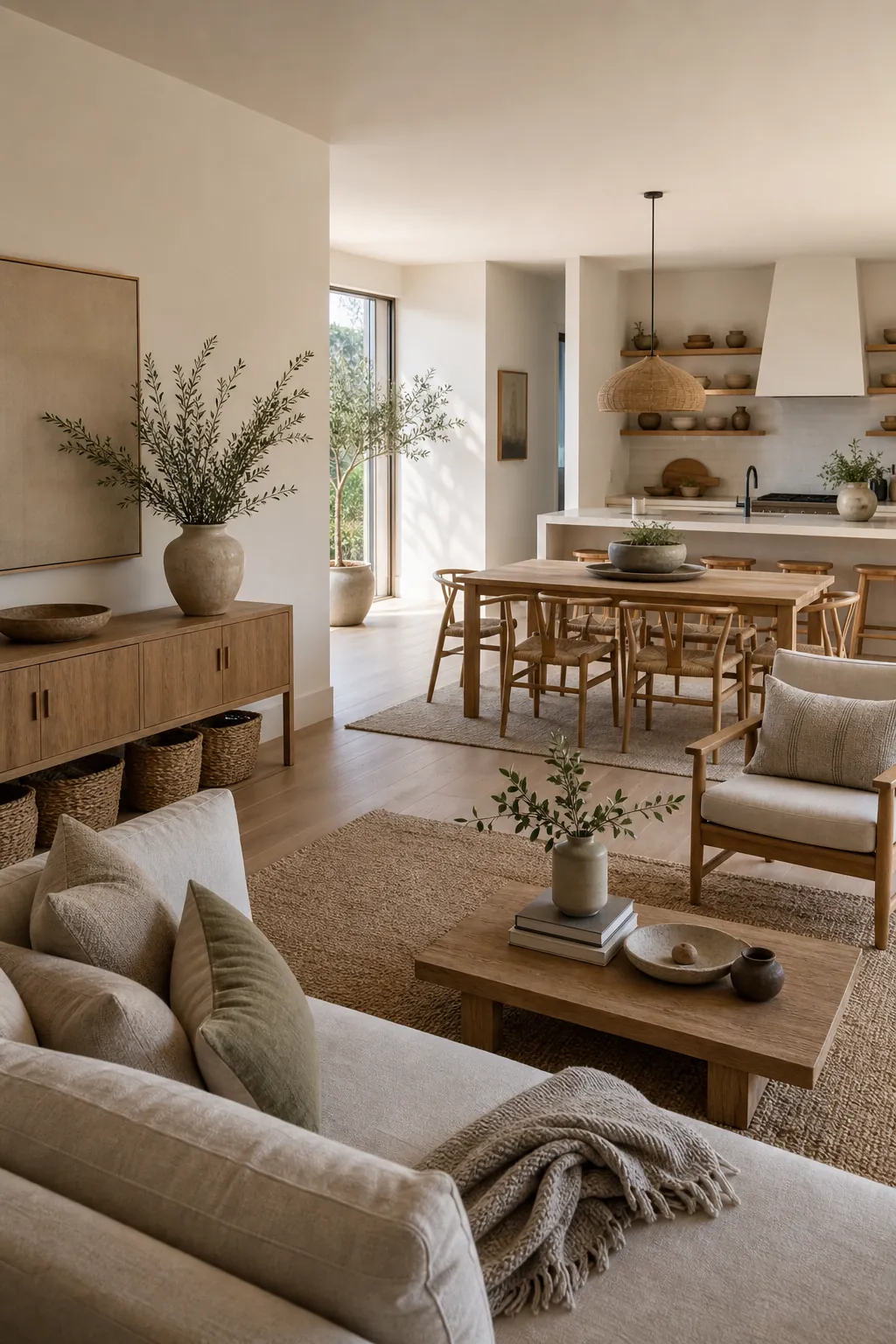
A jute base with a softer wool rug on top is especially useful because it adds scale and comfort at the same time. Keep the coffee table substantial enough to hold the center of the arrangement. A pale oak, reclaimed wood, or rounded walnut table gives Wood Decor a real job instead of turning it into a small accessory.
- Let the rug define the conversation area, not just the coffee table.
- Use linen or boucle upholstery to soften the large room acoustically and visually.
- Add one grounded piece, such as a heavy wood table or woven ottoman, so the zone has weight.
Repeat natural materials, but do not match everything
A connected kitchen, dining, and living room needs continuity. It does not need a furniture set. The more useful approach is to repeat a few materials in different forms: oak stools in the kitchen, a woven pendant over the dining table, a wool rug in the living area, and ceramic vessels across shelves and tables.

This is where Organic Modern Decor feels more relaxed than a strict minimalist room. You can mix pale oak with a darker side table, smooth stone with rough pottery, and linen curtains with cane chairs. The space stays cohesive because the materials belong to the same natural language, while the variation keeps Neutral Home Decor from becoming flat.
Try choosing one main wood tone, one secondary wood tone, and one grounding accent. For example: pale oak as the main tone, walnut as the secondary tone, and matte black or dark bronze in tiny amounts. The small dark notes give the room definition without stealing the calm mood.
Make the dining area feel intentional
Dining areas in open homes often become the visual middle child: too exposed to feel intimate, too small to compete with the kitchen, and too close to the sofa to feel distinct. Give the dining zone its own texture and light, then let it borrow colors from the living room.
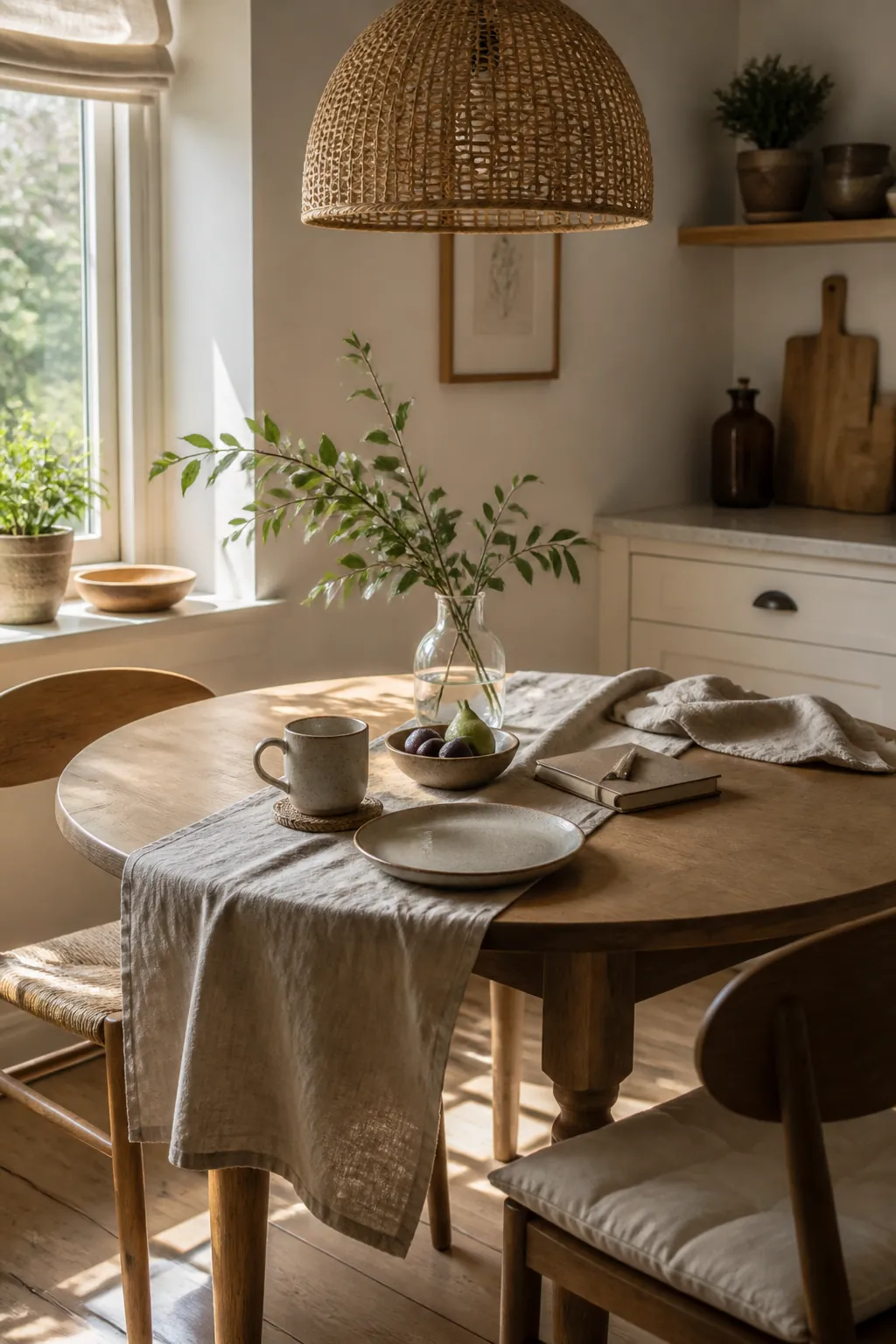
A pendant light is one of the easiest ways to make a dining table feel placed rather than temporary. Woven rush chairs, a linen runner, handmade dishes, and a simple bowl of fruit or branches can do more than a crowded centerpiece. The goal is not to decorate every inch. It is to make the table feel ready for daily life.
If the table sits close to the sofa, repeat one color from the pillows or rug on the dining side. A muted olive napkin, clay-toned bowl, or warm taupe seat cushion is enough. These small echoes make Natural Home Styling feel deliberate without turning the room into a showroom.
Use soft dividers instead of hard barriers
Open-plan homes need definition, but they rarely benefit from heavy visual walls. A console behind the sofa, an open slat screen, a tall plant, or a pair of large baskets can create a boundary while keeping light and movement intact.
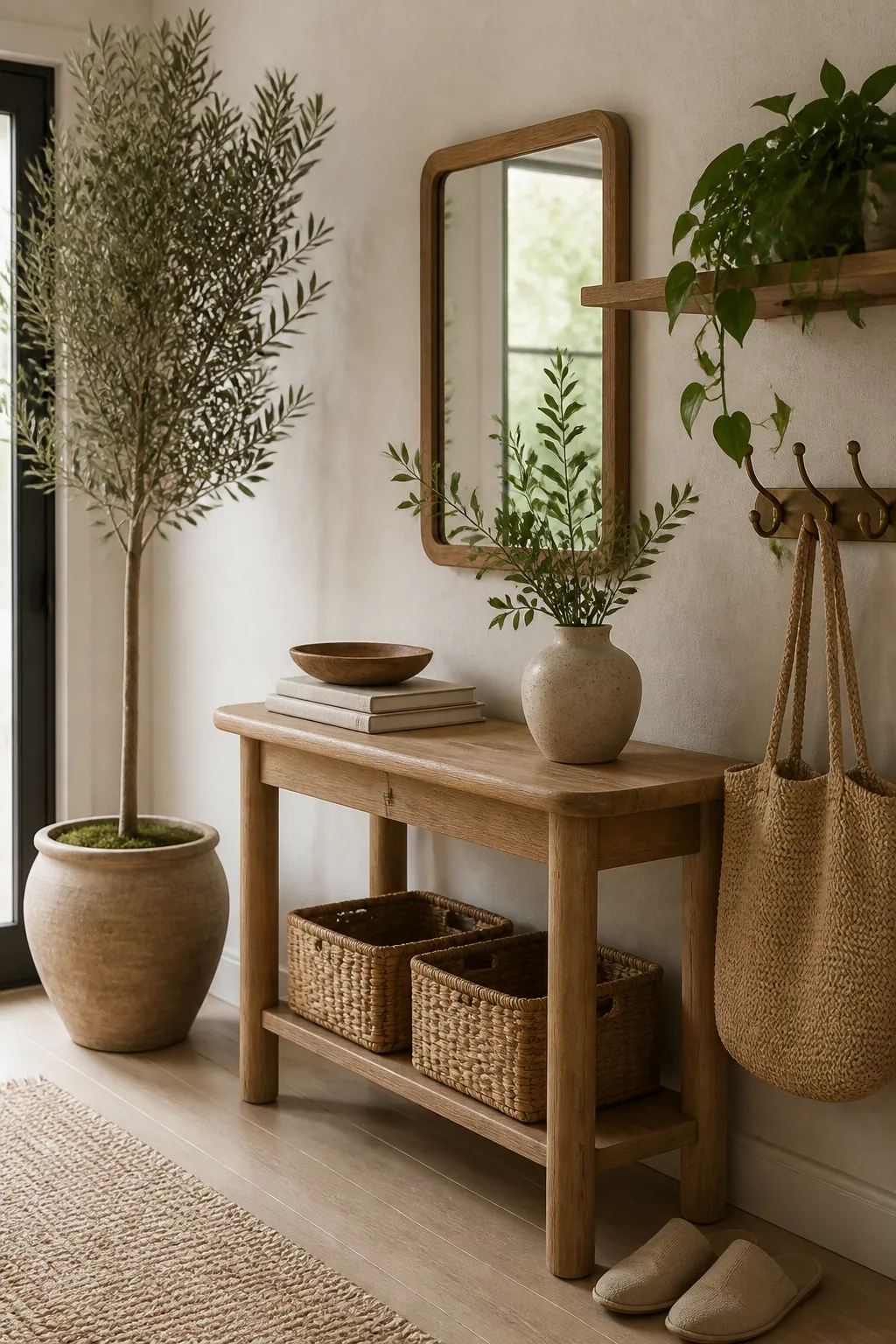
This works especially well when the back of the sofa faces the kitchen or entry path. A narrow console gives that back view a finished purpose. Add a ceramic lamp, a shallow bowl, a stack of books, and one branch arrangement. Then stop. In Earthy Interiors, restraint is what makes texture feel elegant.
Plants are also useful dividers because they soften the line between zones. Choose one larger tree or sculptural plant instead of scattering many small pots. A single olive tree, ficus, or rubber plant in a clay or woven planter gives height, life, and a natural pause between functions.
Layer lighting so the room changes after sunset
A large open room can feel bright during the day and cold at night if it relies on ceiling lights. Cozy Living Room lighting needs layers: a floor lamp near the sofa, a ceramic table lamp on a console, a pendant over the dining table, and a few low-glow accents that make corners feel occupied.
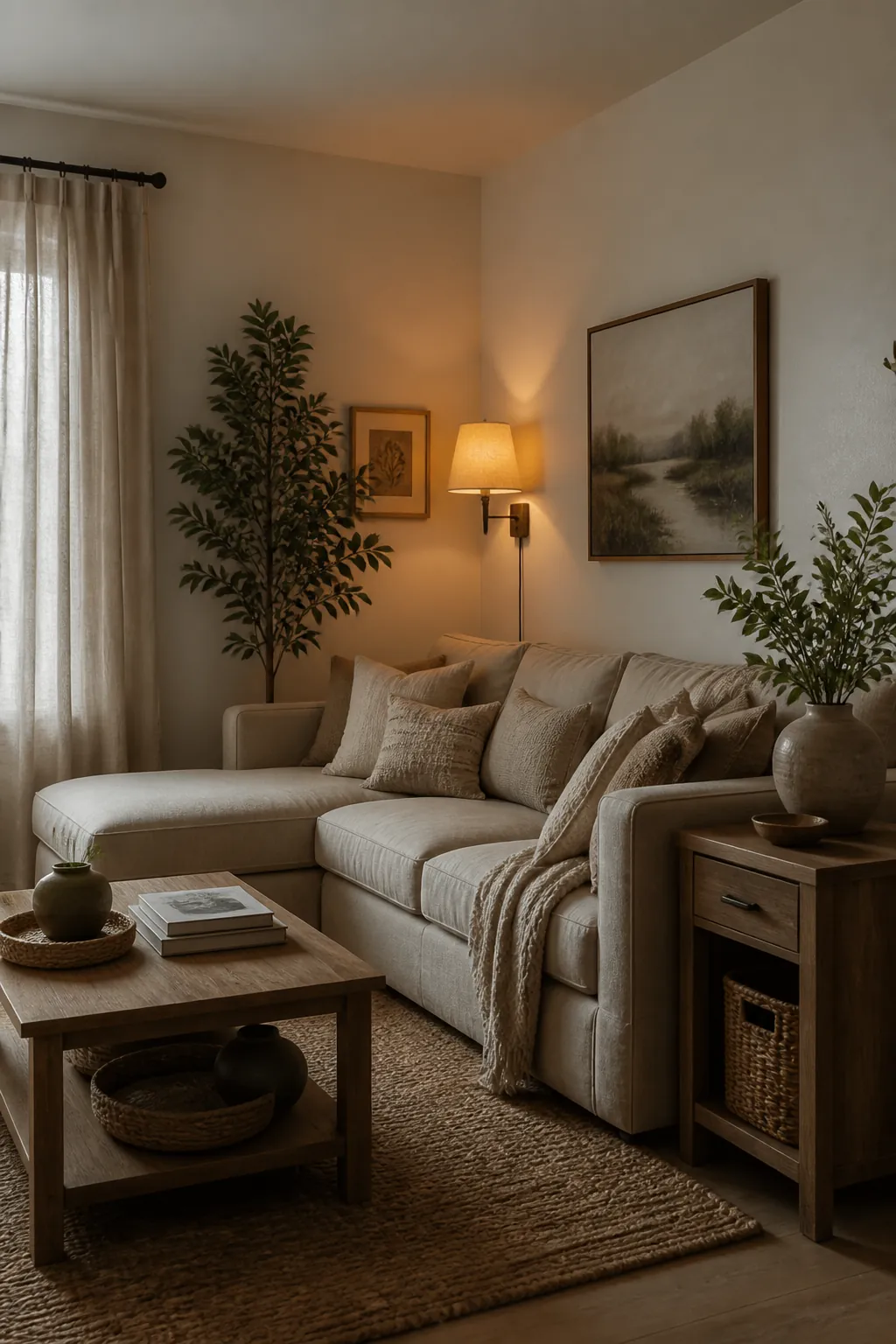
Natural materials look their best under warm, indirect light. Linen shows softness, pottery casts quiet shadows, wood grain becomes richer, and woven shades add pattern without another print. If your open room feels unfinished at night, lighting is often the missing layer rather than another chair or more wall art.
- Use warm bulbs instead of cool white bulbs in living and dining areas.
- Place lamps at different heights so the room does not depend on one overhead source.
- Let the dining pendant act as a visual anchor even when the table is not in use.
Keep storage quiet and styling edited
The fastest way to lose a Calming Home feeling is to let every surface become decorative. Open-plan rooms have fewer visual breaks, so clutter travels farther. Use closed storage for the practical items and reserve open shelves for fewer, larger, more tactile pieces.

Choose baskets for blankets, trays for remotes, and cabinets for the things that do not need to be seen. On shelves, vary shape and height: a round vessel, a low bowl, a stack of books, a framed print, and a branch arrangement. Leave breathing room around them. Negative space is part of the decor.
When the room still feels plain, add depth before adding more objects. A clay vase against a plaster wall, a walnut bowl on a pale oak table, a wool throw over linen, or olive branches beside a cream sofa will usually create more warmth than another set of small accessories.
A simple formula for a cozy natural open plan
Build the room from the floor up: large rug, comfortable seating, warm wood, woven texture, soft lighting, edited surfaces, and greenery with real scale. Then repeat those materials lightly across the kitchen and dining areas. This gives Open Plan Living a sense of flow without making it feel like one huge undecorated box.
The best cozy natural decor does not shout. It makes the room easier to live in. It gives every zone a reason to be there, every material a relationship to the next, and every open sightline something calm to land on.