
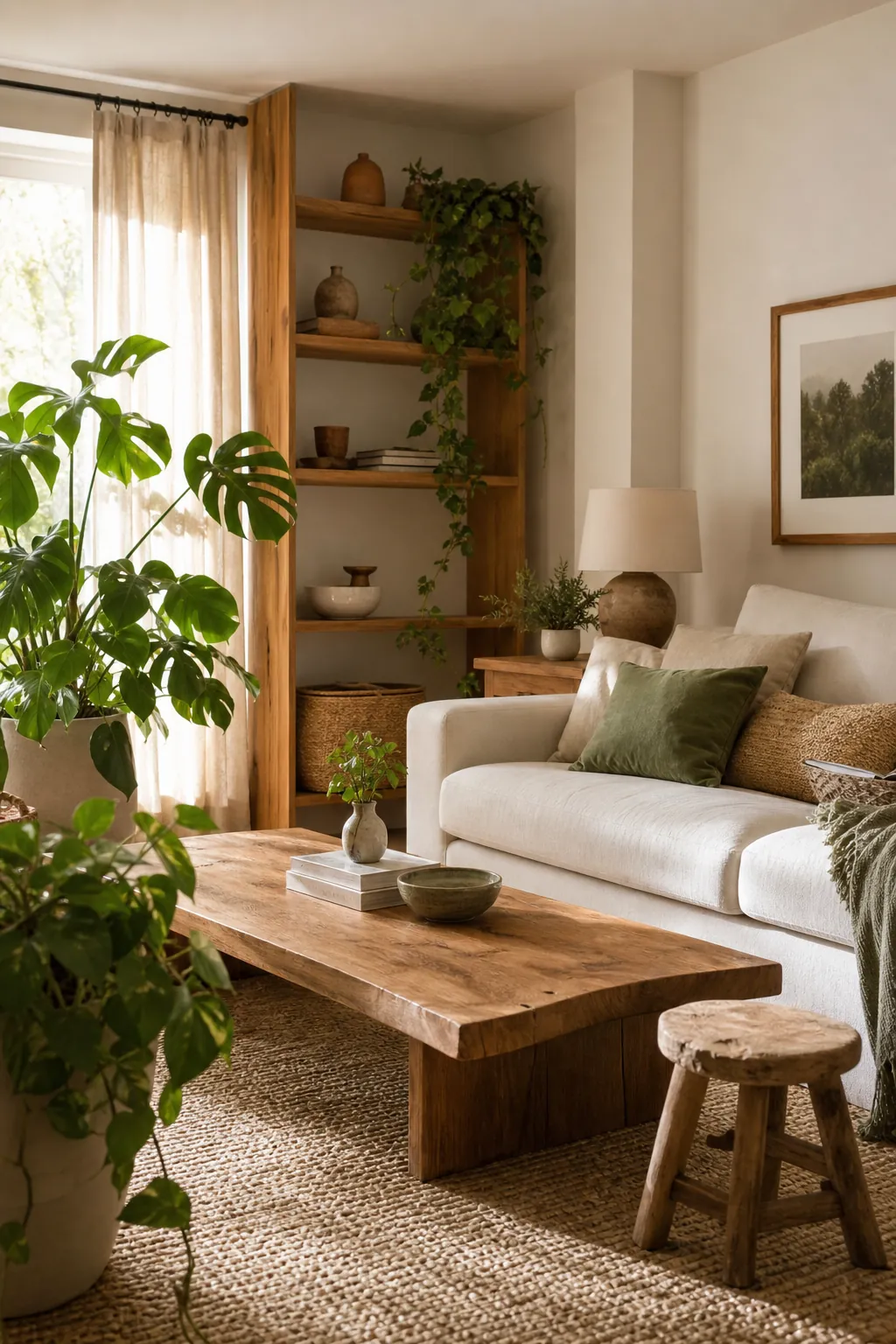
A room can have the right sofa, the right paint color, and the right rug, yet still feel a little flat. The missing layer is often simple: wood gives the room warmth, and plants give it movement. Together, they make neutral home decor feel less like a showroom and more like a place where someone actually exhales.
This is especially true in organic modern decor, where the palette may stay quiet but the textures need to do more work. Wood accents bring grain, age, and natural variation. Plants break up straight lines, soften corners, and add a living shape that fabric alone cannot create. The goal is not to turn your home into a greenhouse or a rustic cabin. The goal is to use natural materials with enough restraint that the space still feels calm.
Start Where The Room Feels Most Rigid
The easiest way to use wood and plant decor is to look for the stiffest area first. In many homes, that is an entryway, a blank wall, a media console, a square coffee table, or a corner where every surface is painted, upholstered, or metal. Those are the places where a warm wood tone and one healthy plant can change the whole mood.
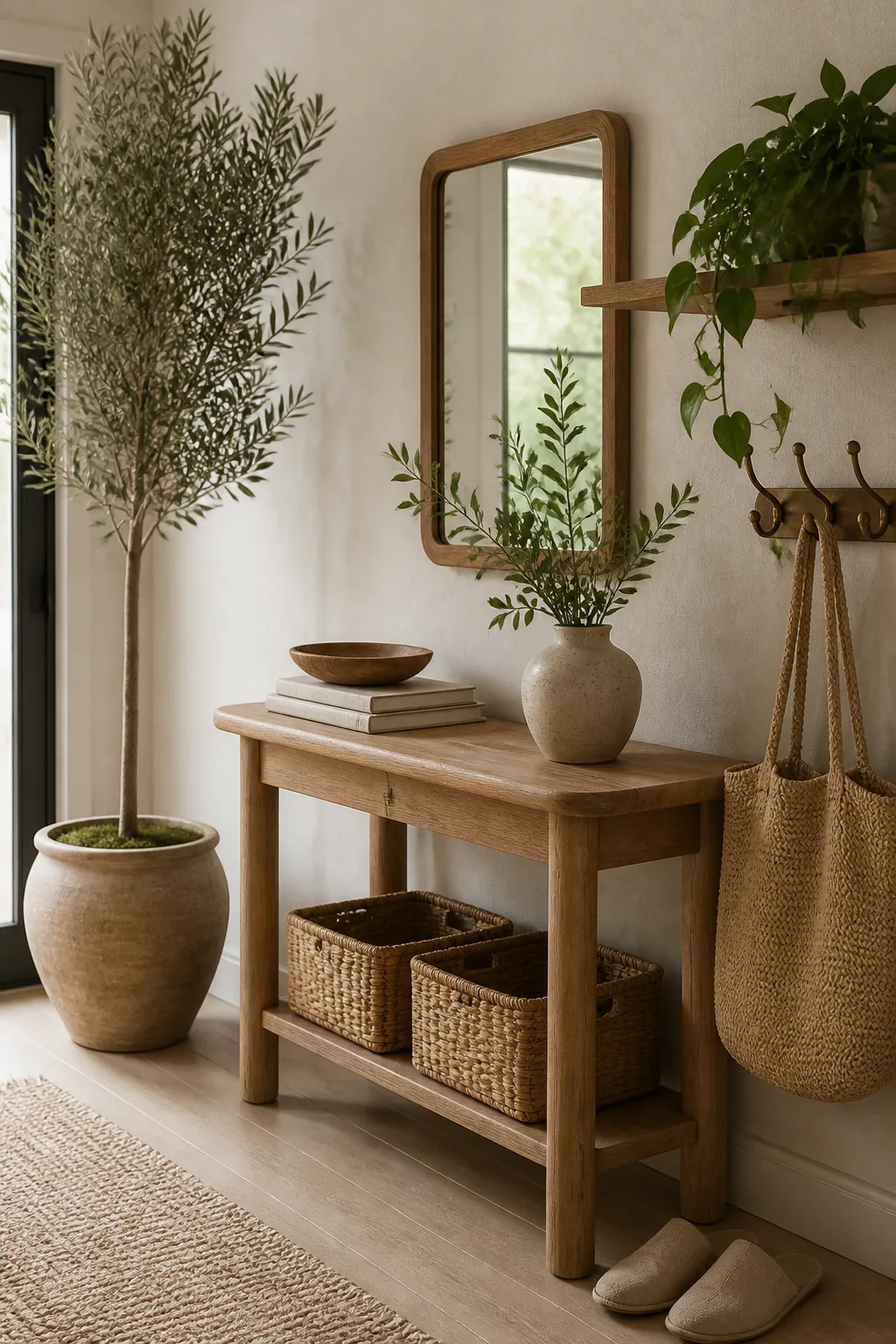
An entry table is a good example because it handles function and atmosphere at the same time. A slim oak console, a woven basket, a clay planter, and a wood-framed mirror can make a pass-through zone feel intentional. Keep the styling useful: a bowl for keys, a hook for a bag, a basket for shoes, and one plant with enough height to soften the vertical lines.
Do not start by buying more small decor. Start with one real wood piece that has visible grain and one plant that changes the silhouette of the area. Small accessories only work after the main shapes are right.
Use Wood Tone As The Warmth, Not The Theme
Wood decor works best when it feels repeated, not matched. A light oak table, a slightly deeper walnut tray, and a natural wood picture frame can live together if the rest of the room stays calm. What makes a room feel messy is not mixed wood by itself; it is too many competing finishes, too many shiny surfaces, and too many decorative pieces fighting for attention.
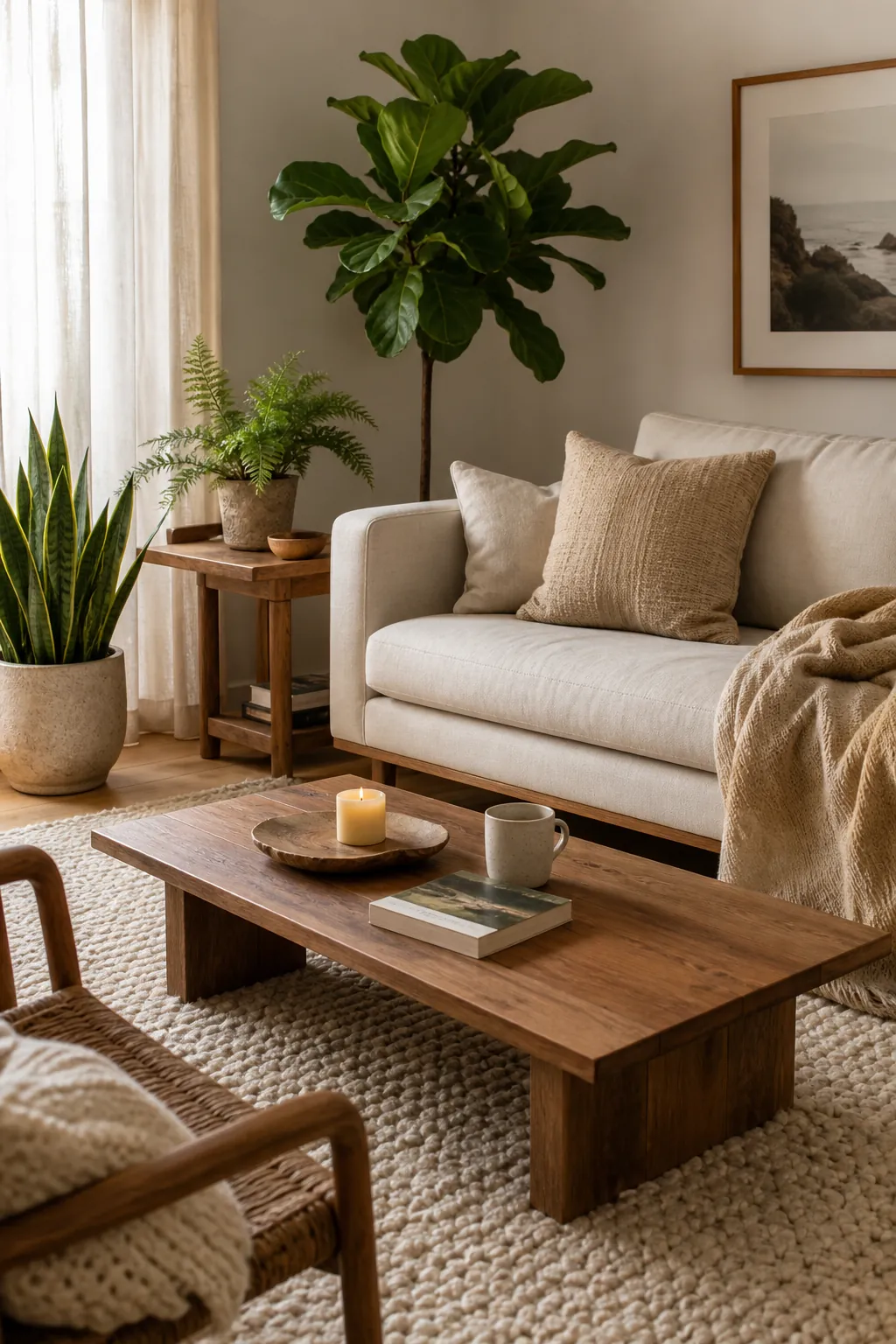
In a cozy living room, use wood accents as the bridge between soft textiles and greenery. A coffee table, side table, tray, lamp base, or frame can repeat the same warm note without making the room feel themed. Add plants at different heights so the eye does not stop at the furniture line: one floor plant, one tabletop plant, and one trailing plant will usually do more than five tiny pots lined up in a row.
- For pale rooms: choose honey oak, ash, bamboo, or light walnut to keep the look airy.
- For high-contrast rooms: use medium walnut, aged teak, or reclaimed wood to soften black, white, and stone.
- For rental rooms: add wood through movable pieces such as stools, trays, shelves, baskets, and frames.
Let Plants Break Up Straight Lines
Plants are not just color. They are shape. A room with a rectangular sofa, rectangular art, rectangular windows, and rectangular shelves often needs something irregular. Leaves create curves, shadows, and small changes from week to week. That is why plants are so effective in earthy interiors and calming home spaces: they make the room feel less fixed.
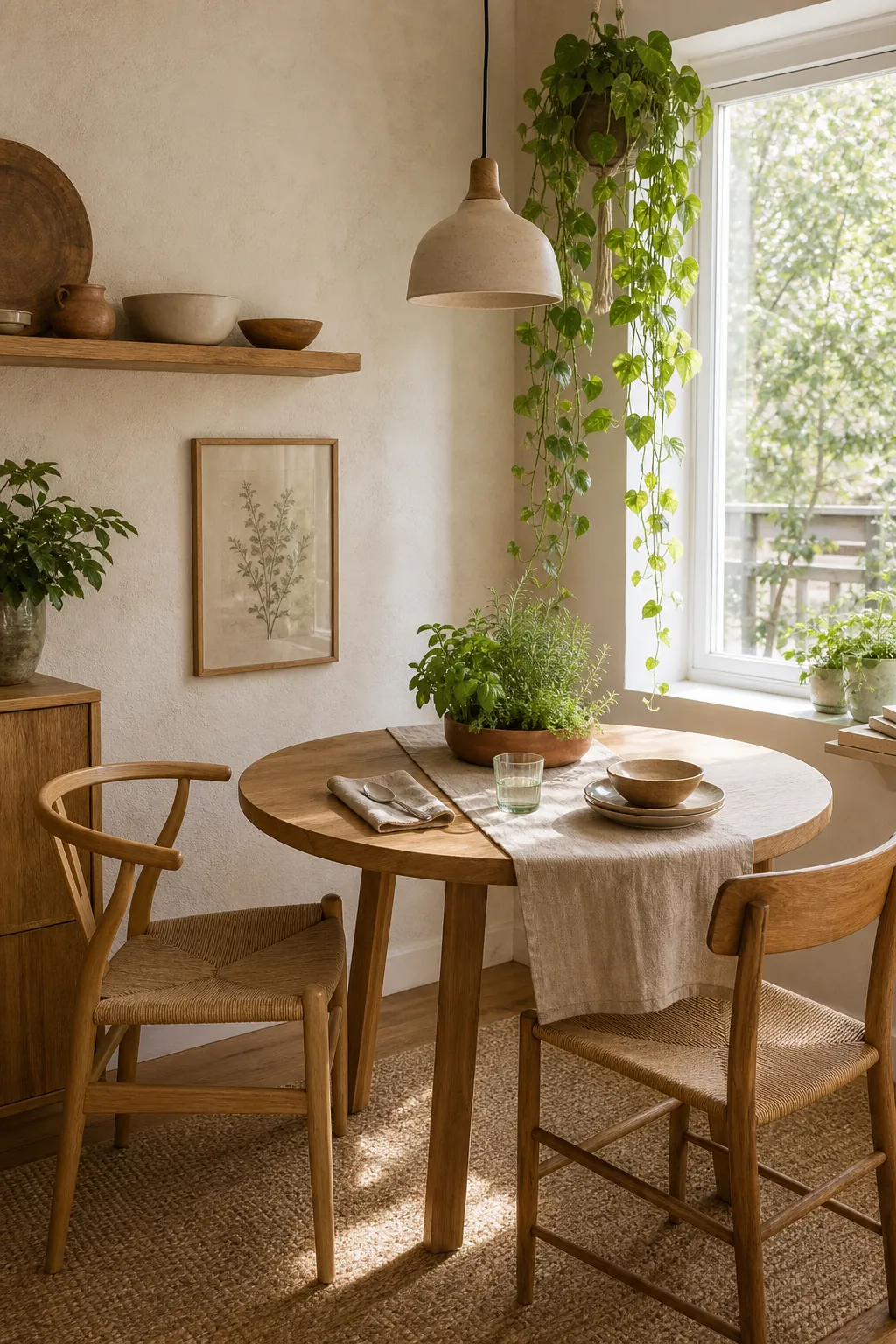
In a dining nook, a round wood table already softens the geometry. Add a trailing plant near the window, a small herb pot on the table, and a woven seat or linen runner, and the area starts to feel warmer without adding clutter. This is the most reliable formula for natural home decor: one wood surface, one living shape, one tactile textile, and one handmade object.
If your plants always look accidental, group them with a material cue. Put a fern on a wooden stool. Place herbs on a tray. Use two clay planters in the same tone. A plant by itself can look like a leftover. A plant connected to wood, ceramic, or woven texture looks like part of the room.
Make The Bedroom Quiet, Not Empty
Bedrooms often become either too bare or too decorative. Wood and plants help you find the middle. A light wood bed frame, a simple nightstand, a plant near the window, and linen bedding can make the room feel restful without turning it into a heavily styled space. The key is to use texture instead of visual noise.
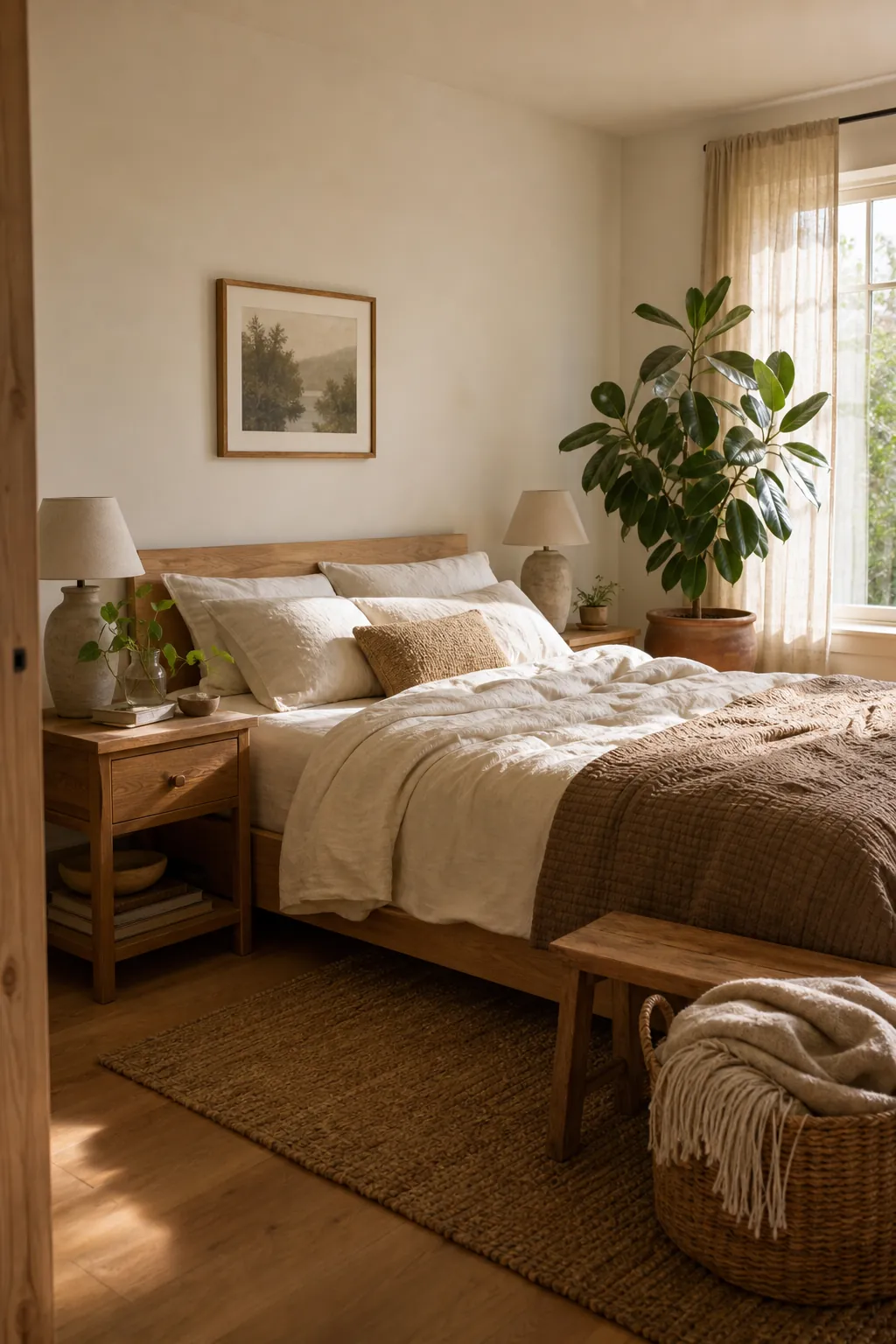
For a warm minimalist decor approach, keep the palette close but vary the surfaces. Smooth wood, rumpled linen, matte ceramic, woven jute, and leafy green all read differently even when the colors are quiet. That is why a neutral bedroom can feel rich without becoming busy.
Avoid placing every plant on the nightstand. One small cutting or pothos is enough beside the bed. Let the larger plant sit near the window or in an empty corner where it can create height. The room will feel softer and less crowded.
Style Shelves With Breathing Room
Open shelves are where wood accents can either calm the room or make it feel cluttered. The difference is spacing. A shelf packed edge to edge with small objects rarely feels soft. A wood shelf with a trailing plant, a few handmade bowls, one framed print, and empty space between them feels intentional.
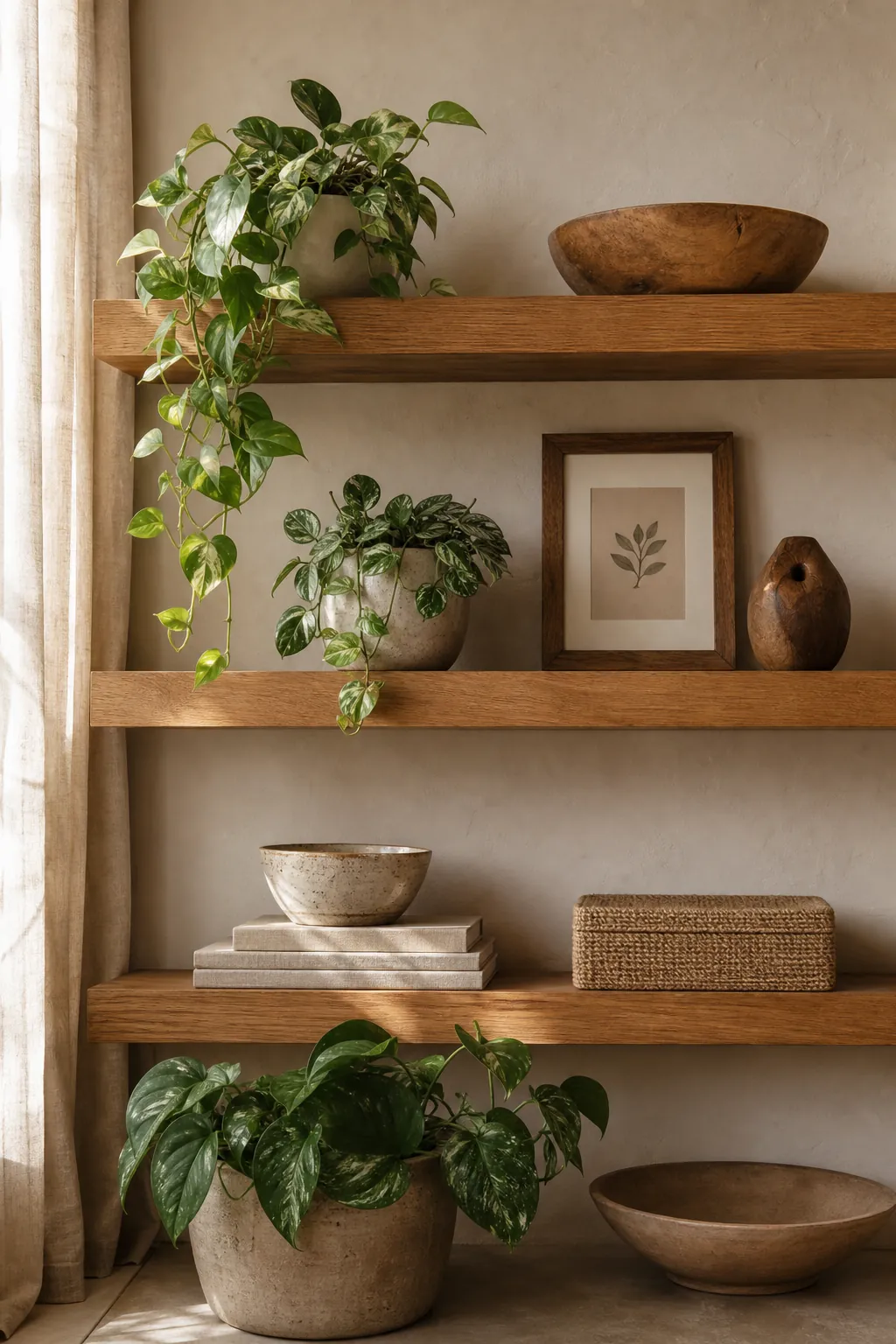
Think in threes: something wood, something living, and something handmade. Then leave room around the grouping. That small amount of negative space is what keeps natural materials from looking like a collection of things. It also makes the plant shape more visible.
- Use a trailing plant to soften the shelf edge.
- Repeat one wood tone in a bowl, frame, or carved object.
- Add ceramic or stone so the shelf does not become all wood and leaves.
- Hide visual clutter in a woven box instead of displaying every small item.
Create One Soft Corner Before Redecorating The Whole Room
If your home feels cold, you do not need to solve every wall at once. Build one soft corner and let it teach you what the room needs. A chair, a wood side table, a lamp with a linen shade, a plant with height, and a textured rug can change how the whole room feels because it creates a clear invitation to sit down.
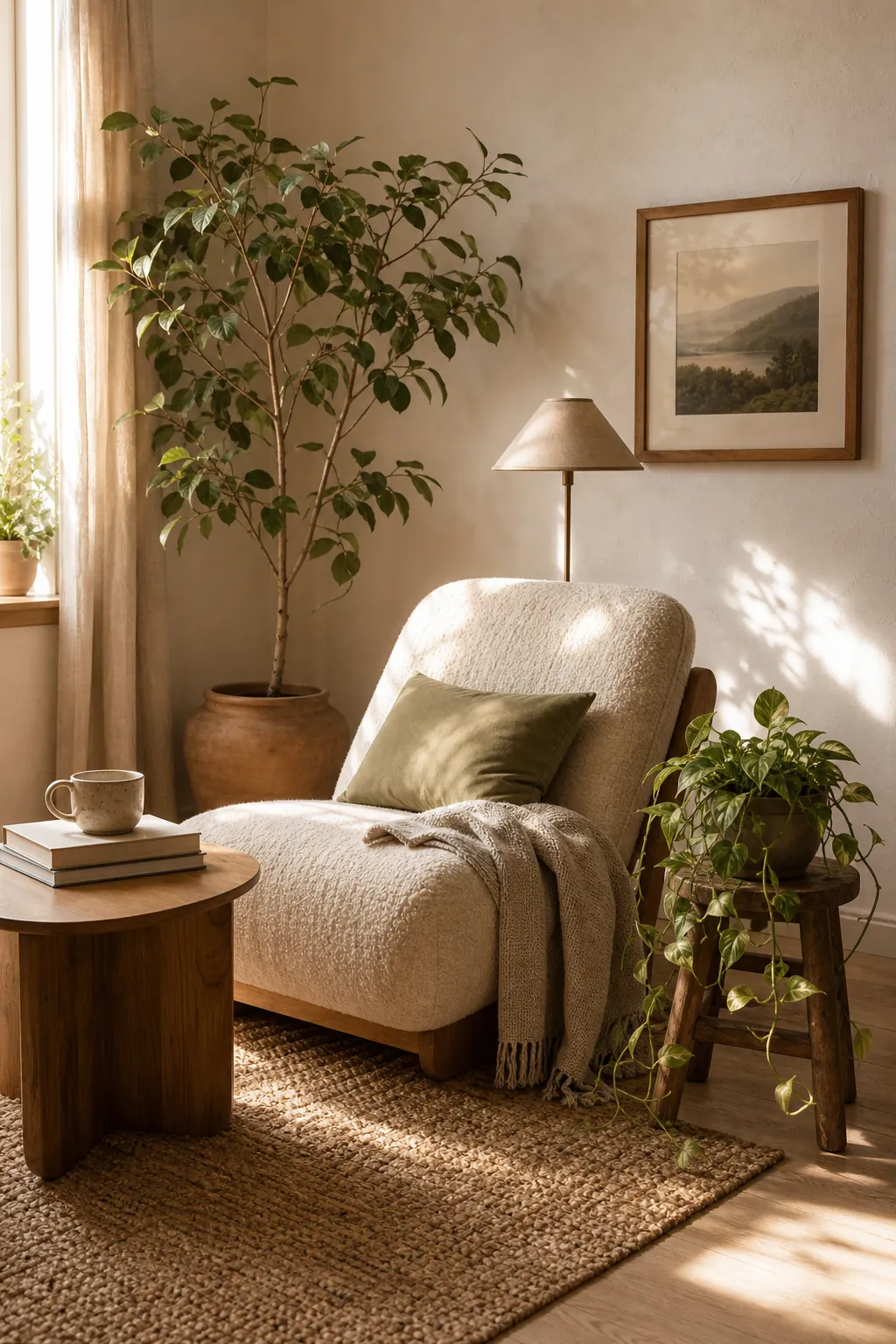
This is also the safest way to test earthy interiors if you are worried about making the house too rustic. Keep the chair simple, the wood piece warm, the plant sculptural, and the rug natural. If the corner feels right, repeat one or two of those materials elsewhere. The room will start to connect without looking copied.
The Simple Formula That Keeps It Soft
Good wood and plant decor is less about buying the perfect object and more about balance. Too much wood can feel heavy. Too many plants can feel chaotic. Too many beige pieces can feel unfinished. The softer home sits between those extremes.
- Use one strong wood anchor in each area: table, shelf, stool, frame, bench, or tray.
- Add plant height variation instead of many tiny pots at the same level.
- Mix natural materials such as linen, jute, ceramic, wool, stone, rattan, and clay.
- Keep the color palette quiet so texture becomes the interest.
- Leave negative space around shelves, tables, and corners so the room can breathe.
The best version does not announce itself. It simply makes the room feel warmer when you walk in. A little visible grain, a few real leaves, and a handful of honest textures can turn a neutral room into a calming home that still feels clean, modern, and easy to live with.