
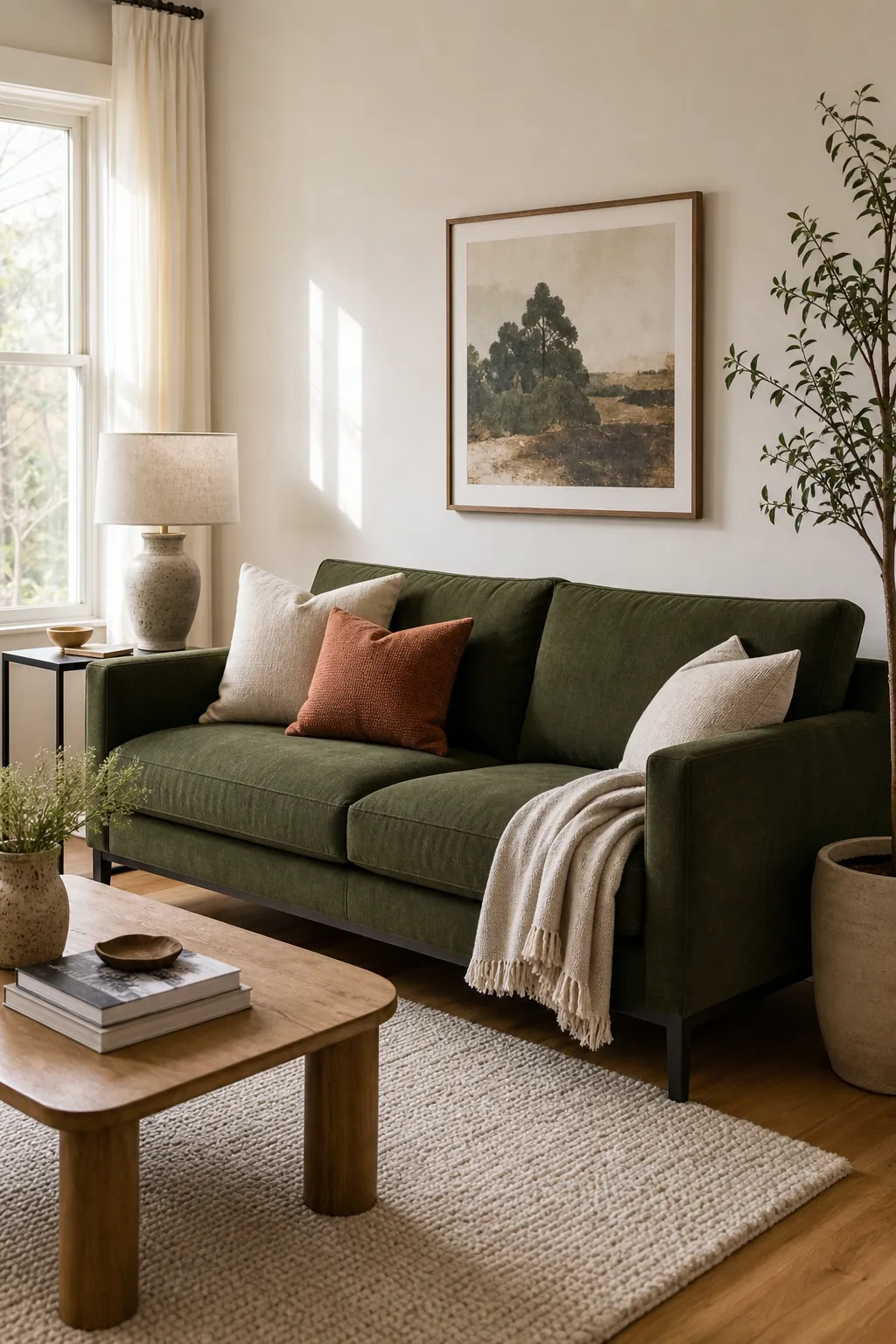
A green couch does not need a green room around it. In most homes, the mistake is trying to prove the sofa belongs by repeating green on every wall, pillow, plant, rug, and print. That usually makes the room feel themed instead of thoughtful. The better move is to let the couch be the color decision, then build everything else around balance, texture, and quiet repetition.
The goal is not to hide a bold sofa. It is to make the green couch feel intentional without letting it dominate every decorating choice. A few neutral pillows, the right area rug, warm wood tones, and selective accents can make a green living room feel calm, layered, and easy to live with.
Start With a Restrained Color Palette
Before buying anything new, decide what job the sofa is doing. If the couch is olive, moss, forest, or sage, it is already carrying the main color story. The surrounding palette should give it room: warm white, oatmeal, ivory, taupe, light oak, black, clay, rust, or muted brass. These shades keep the room grounded while still giving the sofa enough contrast to look designed.
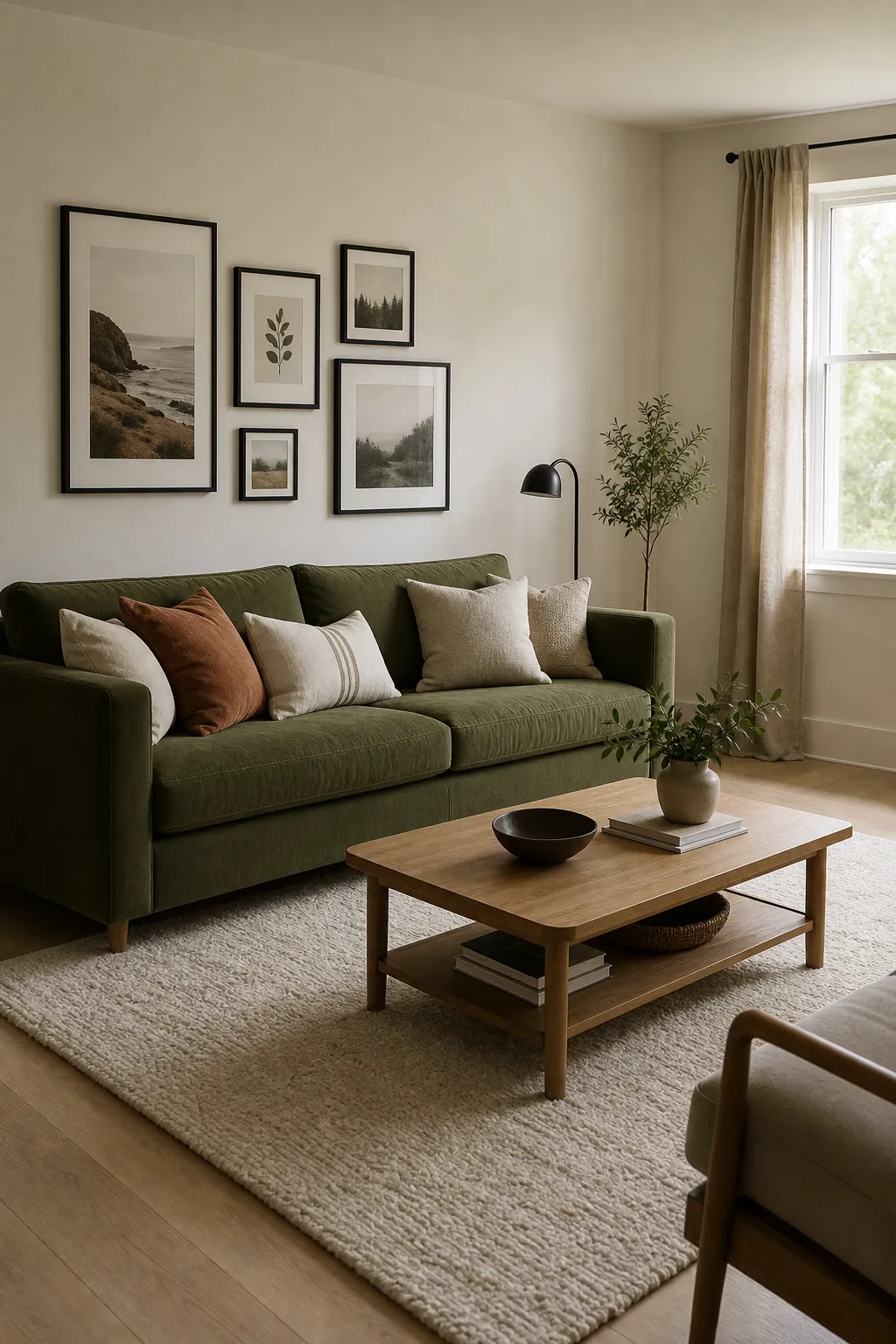
For balanced decor, repeat green lightly rather than literally. One botanical print, a small plant, or a stripe inside a patterned pillow is enough. If the walls, curtains, rug, pillows, and artwork all chase the same green, the room starts to look more like a set than a home.
Use Neutral Pillows to Calm the Sofa
Throw pillows are the easiest place to overdo green sofa styling. Matching green pillows can work in small doses, but a full row of them usually flattens the couch into one heavy block. Neutral pillows create breathing room and make the sofa color feel richer by contrast.
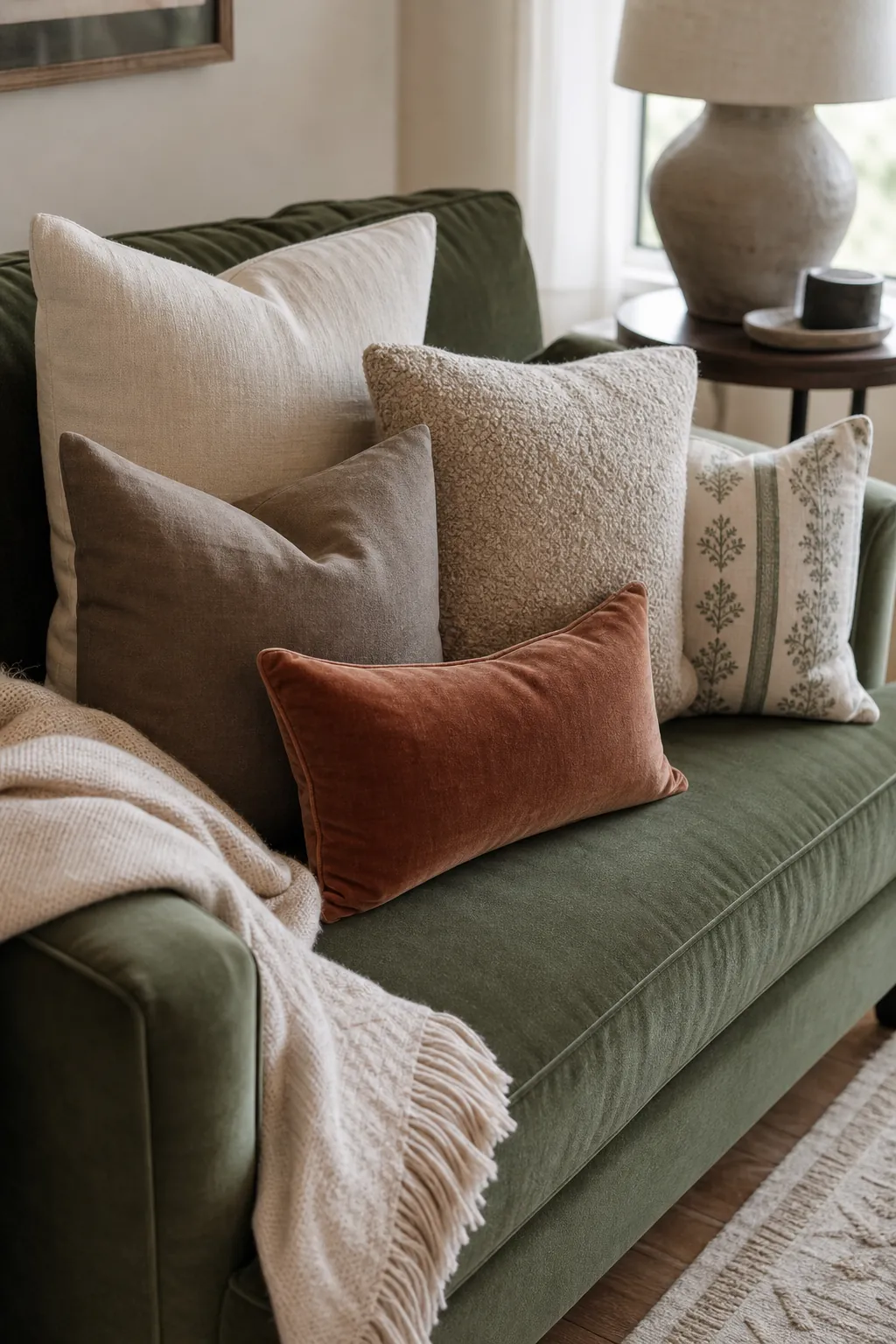
Try one larger ivory pillow, one textured oatmeal pillow, one taupe pillow, and one smaller warm accent in rust, clay, or muted ochre. That mix gives you contrast, softness, and a little warmth without turning the sofa into a pillow display. Texture matters more than pattern here: linen, boucle, cotton, velvet, and woven throws make living room decor feel layered even when the color palette is simple.
Choose an Area Rug That Lightens the Room
A strong sofa color needs a rug that anchors the seating area without competing for attention. Cream, oatmeal, warm beige, faded tan, or a low-contrast vintage pattern usually works better than a dark or saturated rug. The rug should be large enough for at least the front sofa legs to sit on it, because a small rug can make even beautiful furniture feel disconnected.
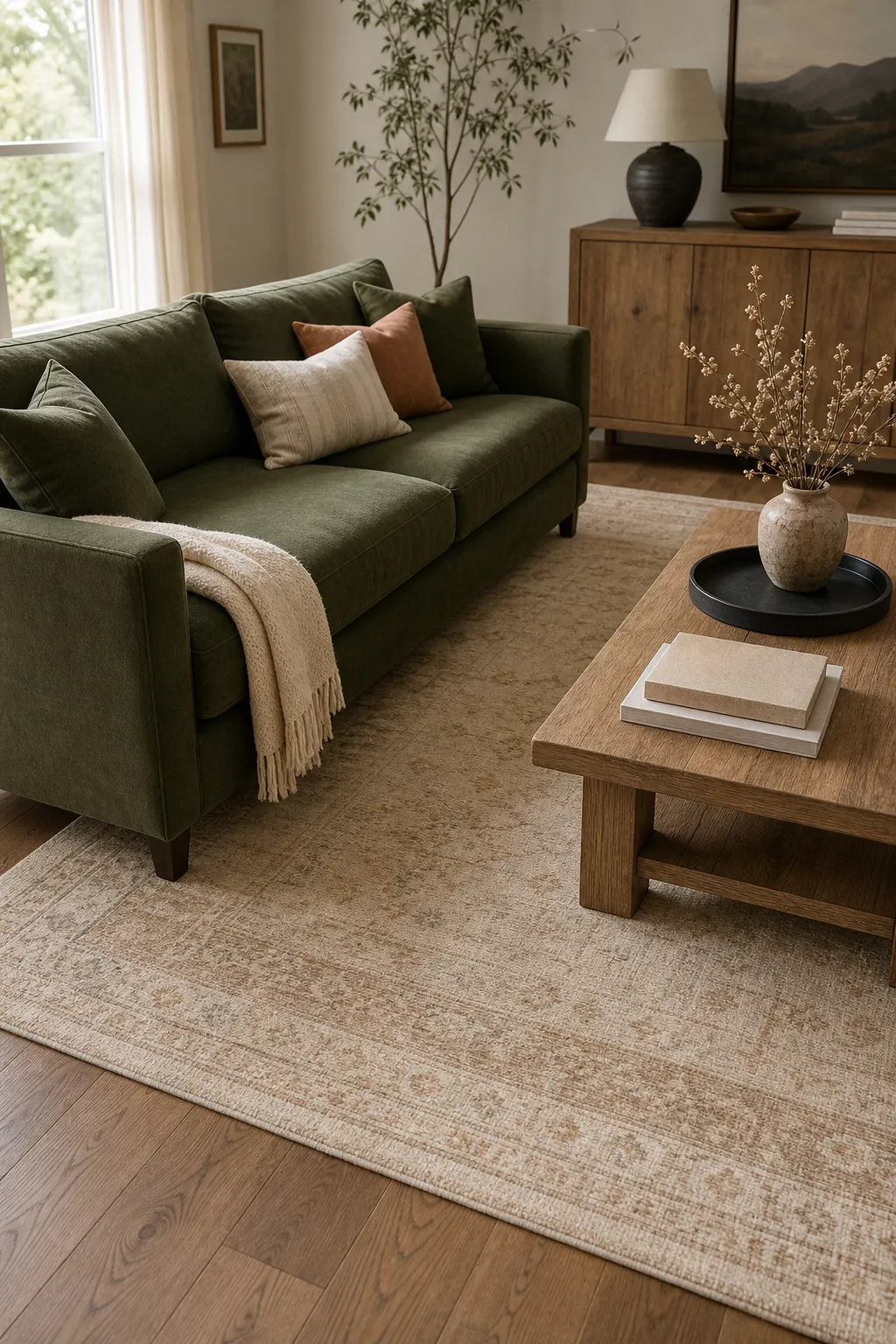
If your green couch leans cool, pick an area rug with warmer undertones so the space does not feel chilly. If the sofa is a yellow olive, a creamy rug with subtle gray or taupe can keep the room from looking too earthy. The rug is not there to repeat the sofa color; it is there to give the sofa a calmer stage.
Let Wall Art Repeat Green in Small Amounts
Artwork can help a green couch belong, but it should not look like you searched for “green prints” and filled the wall. A better gallery wall mixes black-and-white photography, abstract landscapes, warm neutral drawings, and one piece with a small green note. That single echo is often enough to connect the sofa to the wall.
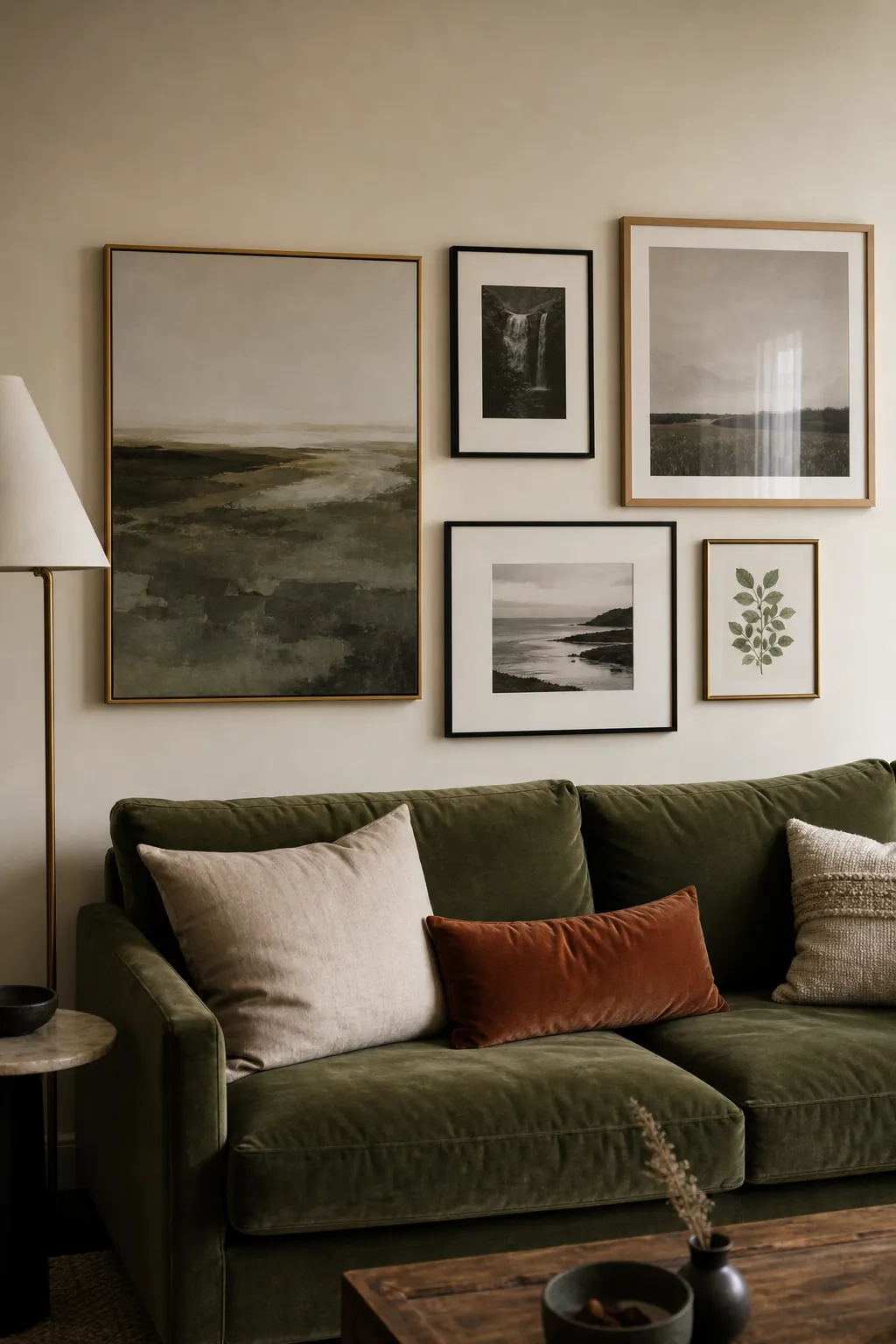
Scale is just as important as color. Tiny frames floating too high above a bold sofa can make the couch feel heavier. Use fewer, larger pieces or a gallery arrangement that spans a meaningful portion of the sofa width. Thin black, oak, or muted brass frames are especially useful because they add structure without adding another loud color.
Add Warm Accents Instead of More Green
Green is calming, but too much of it can make a room feel flat or cold. Warm accents keep the space human. A terracotta vase, rust pillow, brass reading lamp, wood coffee table, or woven basket can soften the couch without stealing focus. The trick is to choose one warm family and repeat it two or three times.
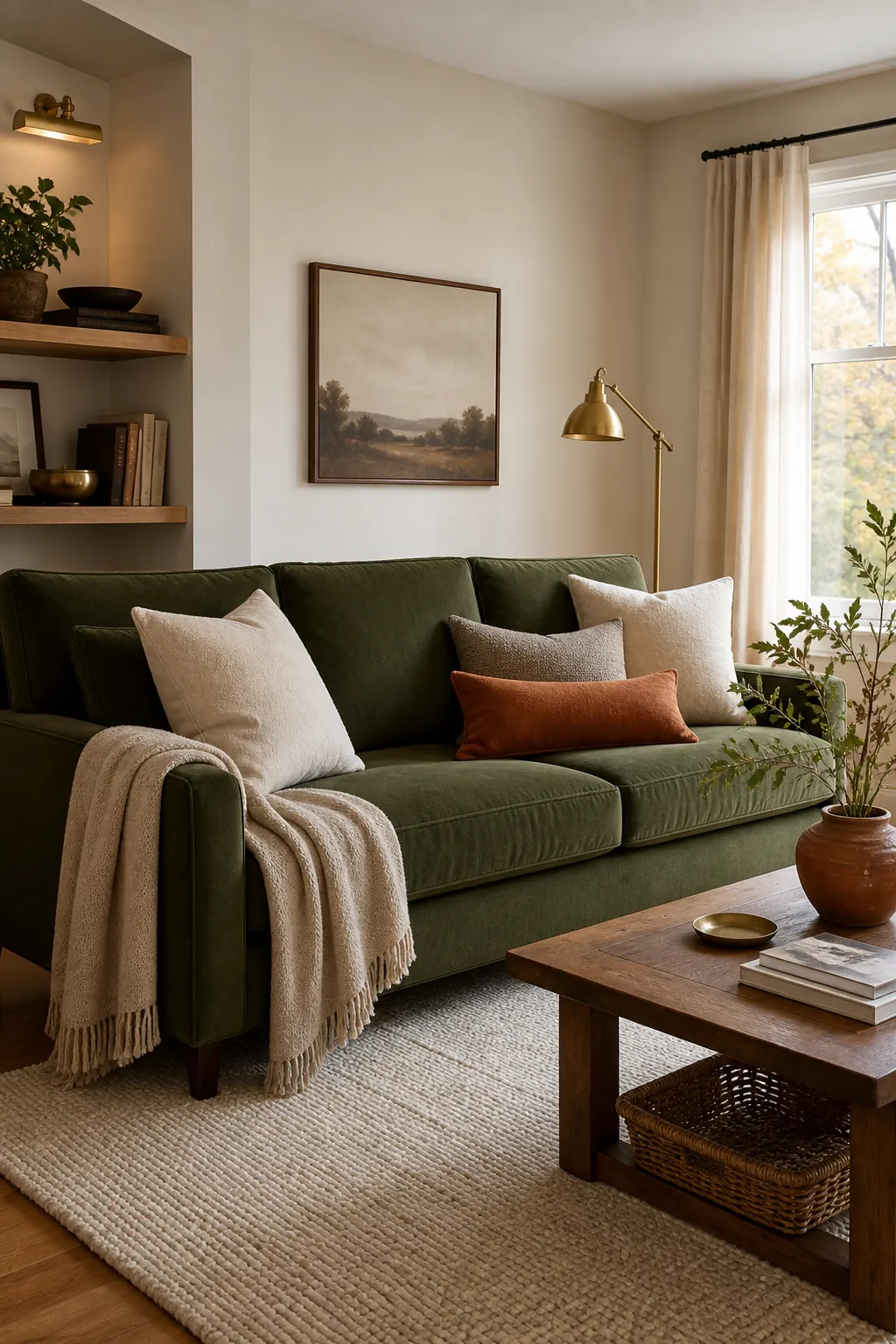
For example, a rust lumbar pillow, a terracotta vase, and a warm brass lamp can connect across the room. That is enough. If you keep adding orange, gold, red, and yellow pieces, the room starts to compete with the couch again. Interior styling feels more expensive when accents are edited, repeated, and allowed to breathe.
Use Plants Sparingly Around a Green Sofa
Plants are a natural partner for a green couch, but they are also one of the fastest ways to overdo the theme. Instead of surrounding the sofa with greenery, place one larger plant near a window and one smaller plant on a side table or shelf. That gives the room a fresh echo without turning the sofa area into a jungle corner.
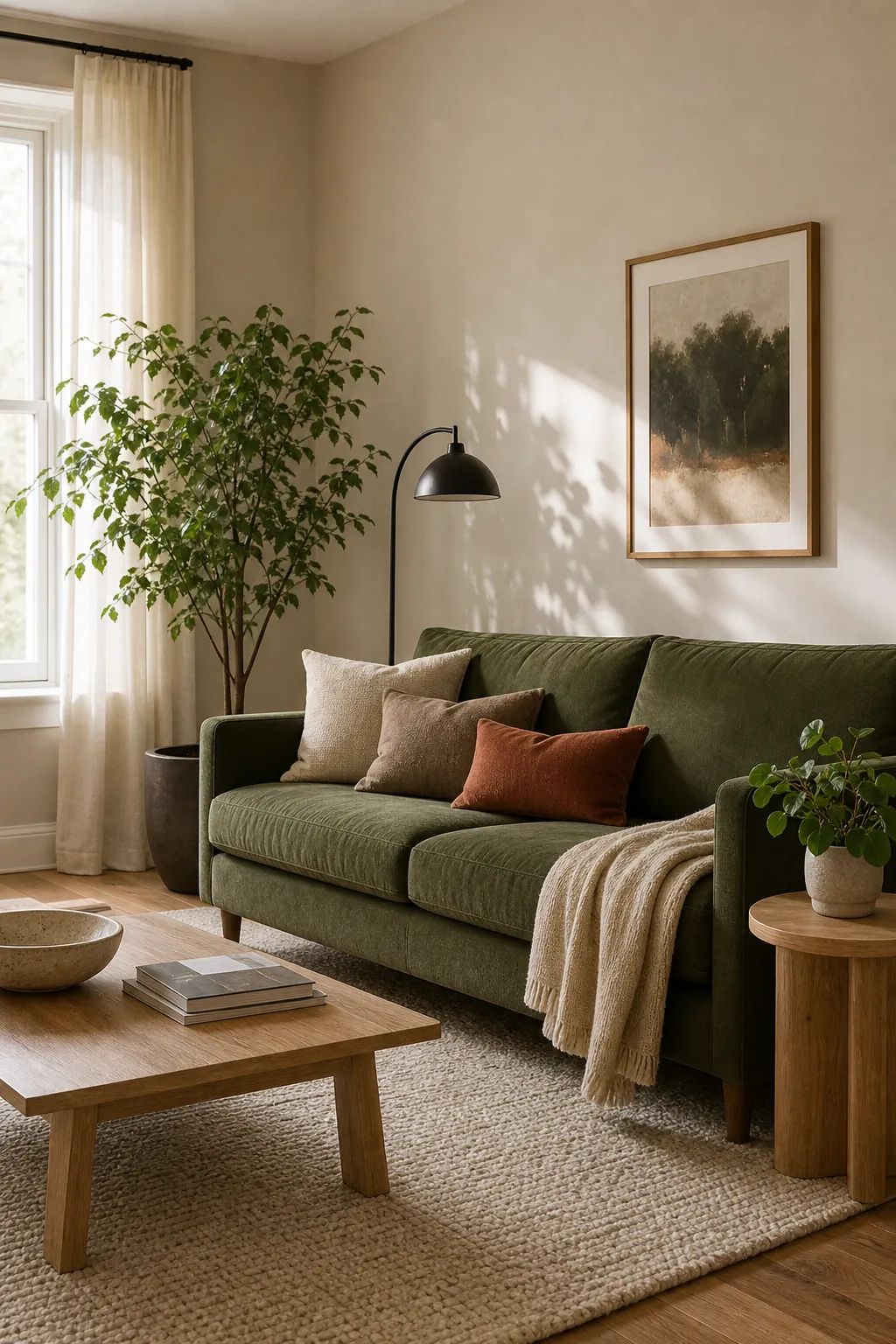
Leave negative space on the wall, floor, and side tables. A green couch already has presence, so every nearby accessory should earn its place. If a plant blocks the sofa shape, crowds the lamp, or makes the room feel visually busy, move it farther away. Balanced decor often comes from removing one more thing, not adding one more thing.
The Simple Formula That Usually Works
If you feel stuck, use this formula: green couch, light neutral rug, neutral pillows, one warm accent color, wood texture, black detail, and one subtle green repeat. That combination works because every piece has a job. The sofa supplies color, the rug supplies air, the pillows soften the seat, the warm accent prevents coldness, wood adds natural texture, black gives definition, and the small green repeat makes the couch feel connected.
- Use three to five pillows, not every pillow you own.
- Keep the rug quiet enough that the couch remains the focal point.
- Repeat green once or twice, not everywhere.
- Choose warm accents in the same family so the room feels cohesive.
- Edit accessories until the sofa has breathing room.
The best green living room does not announce every design decision. It lets the sofa feel confident, then uses quieter pieces to support it. When the room has contrast, texture, warmth, and space, a green couch looks bold without looking like too much.