

A queen bed can work in a small bedroom, but only when the layout is honest about clearance. The mistake is trying to decorate around the bed before deciding how the room needs to move. Start with the path from the door, the closet, and the window. Then let every piece of furniture earn its space.
The best small bedroom layout ideas for a queen bed usually have one thing in common: they protect a simple walking route first, then use storage and lighting to make the room feel intentional instead of crowded.
Measure the Real Room Before You Move Anything
A queen mattress is about 60 by 80 inches, and the frame often adds a few more inches. In a compact bedroom, those extra inches matter. Tape the bed footprint on the floor and check the awkward moments: the door swing, the closet door, the dresser drawers, and the place where you naturally step out of bed.
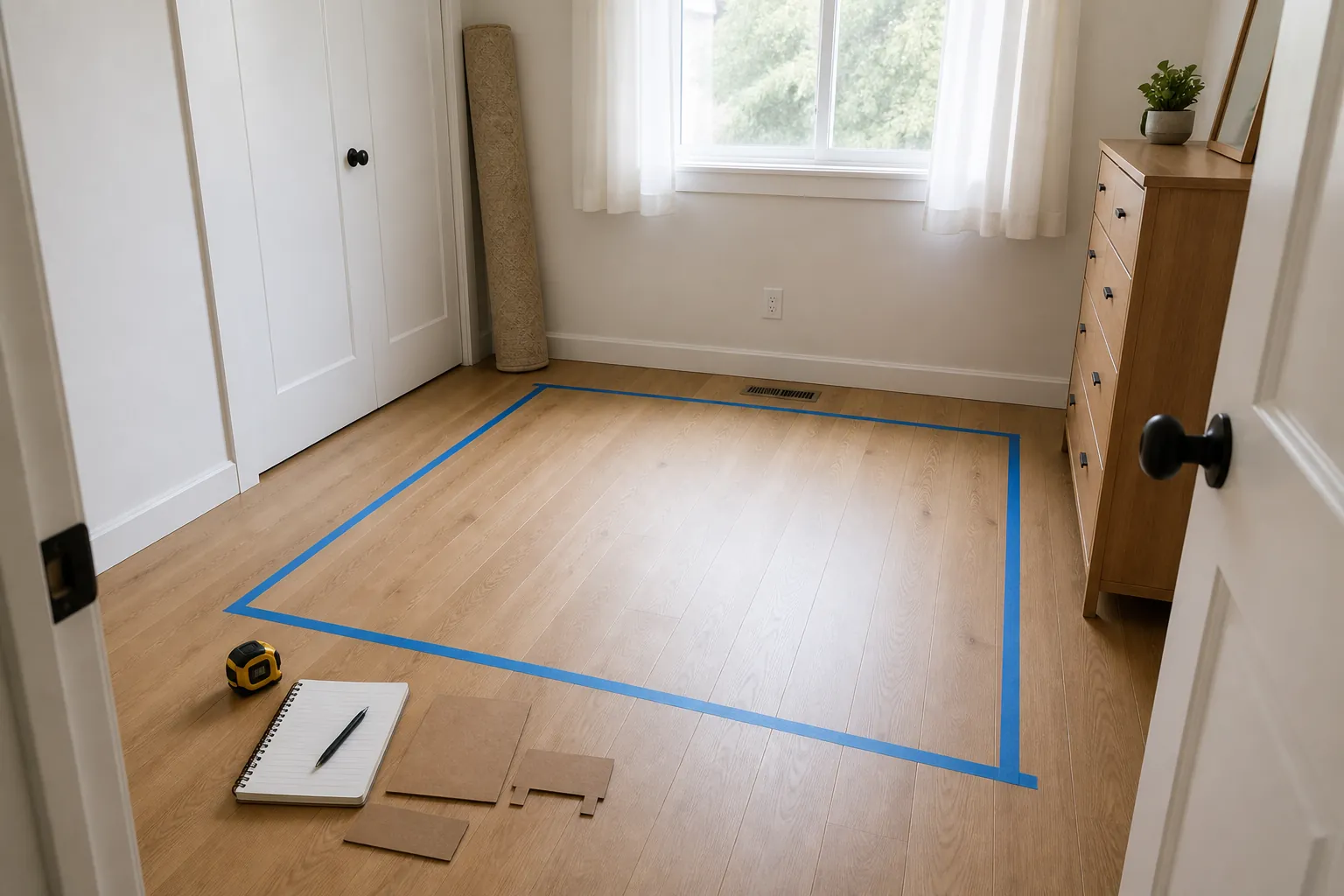
For a realistic queen bed layout, aim for at least one comfortable walking lane rather than two perfect ones. A room can still feel usable if one side is tighter, but it feels frustrating when every daily action requires stepping sideways.
Use the Longest Clear Wall When You Want Balance
If the room has one uninterrupted wall, that is usually the cleanest place for the headboard. Centering the queen bed on that wall makes the room feel calmer, especially when the window, closet, and door remain accessible. This arrangement works well when two people share the bed or when you want the bedroom to feel more symmetrical.
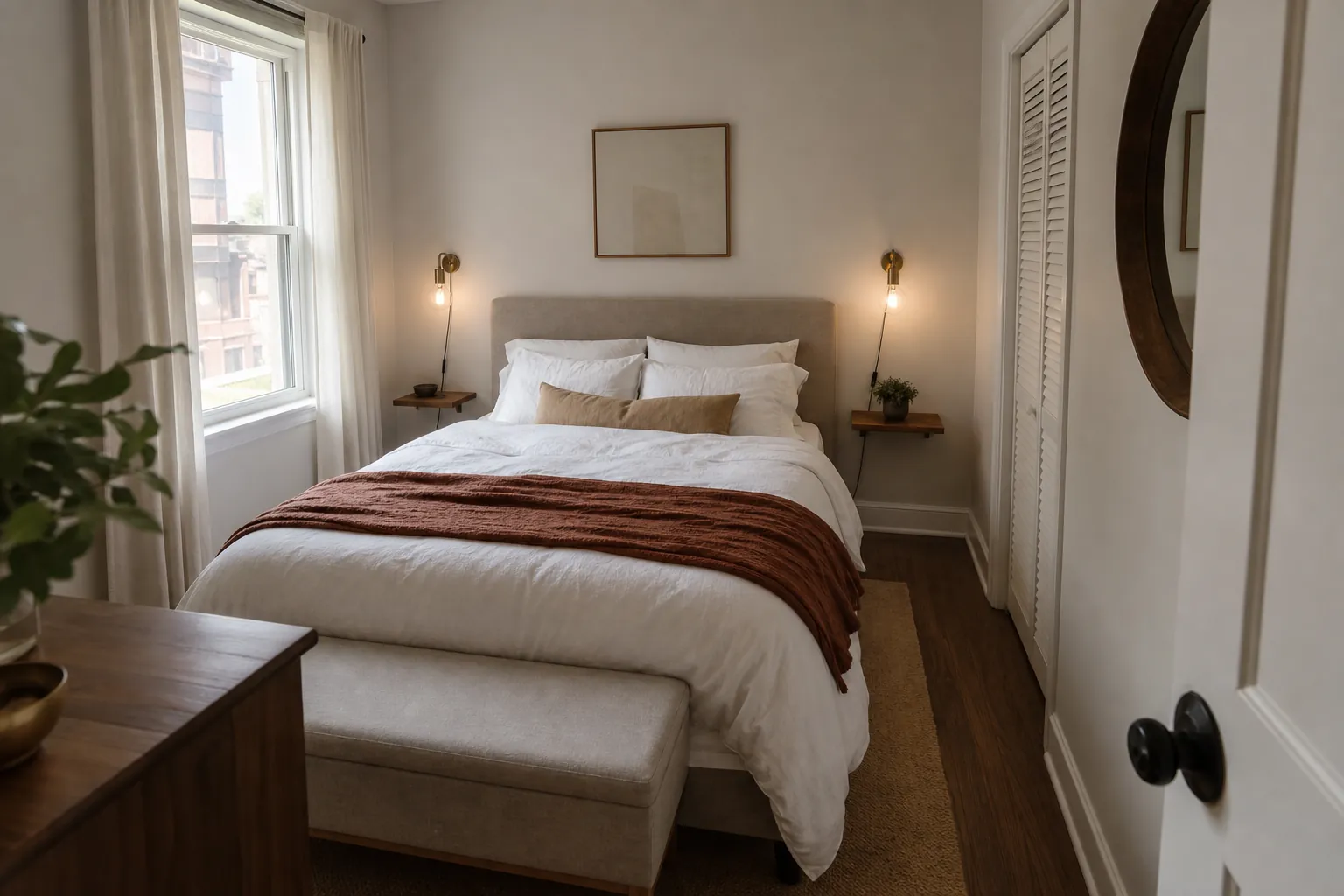
Keep the frame low, skip a heavy footboard, and use narrow bedside surfaces. A centered bed can look elegant in a compact bedroom, but bulky nightstands quickly steal the inches that make the layout livable.
Try a Corner Bed When Floor Space Matters More Than Symmetry
A corner queen bed is not automatically a compromise. In a very small room, putting one long side against the wall can create one generous walking lane for getting dressed, opening drawers, or reaching the closet. The key is to style it deliberately so the bed placement feels planned.
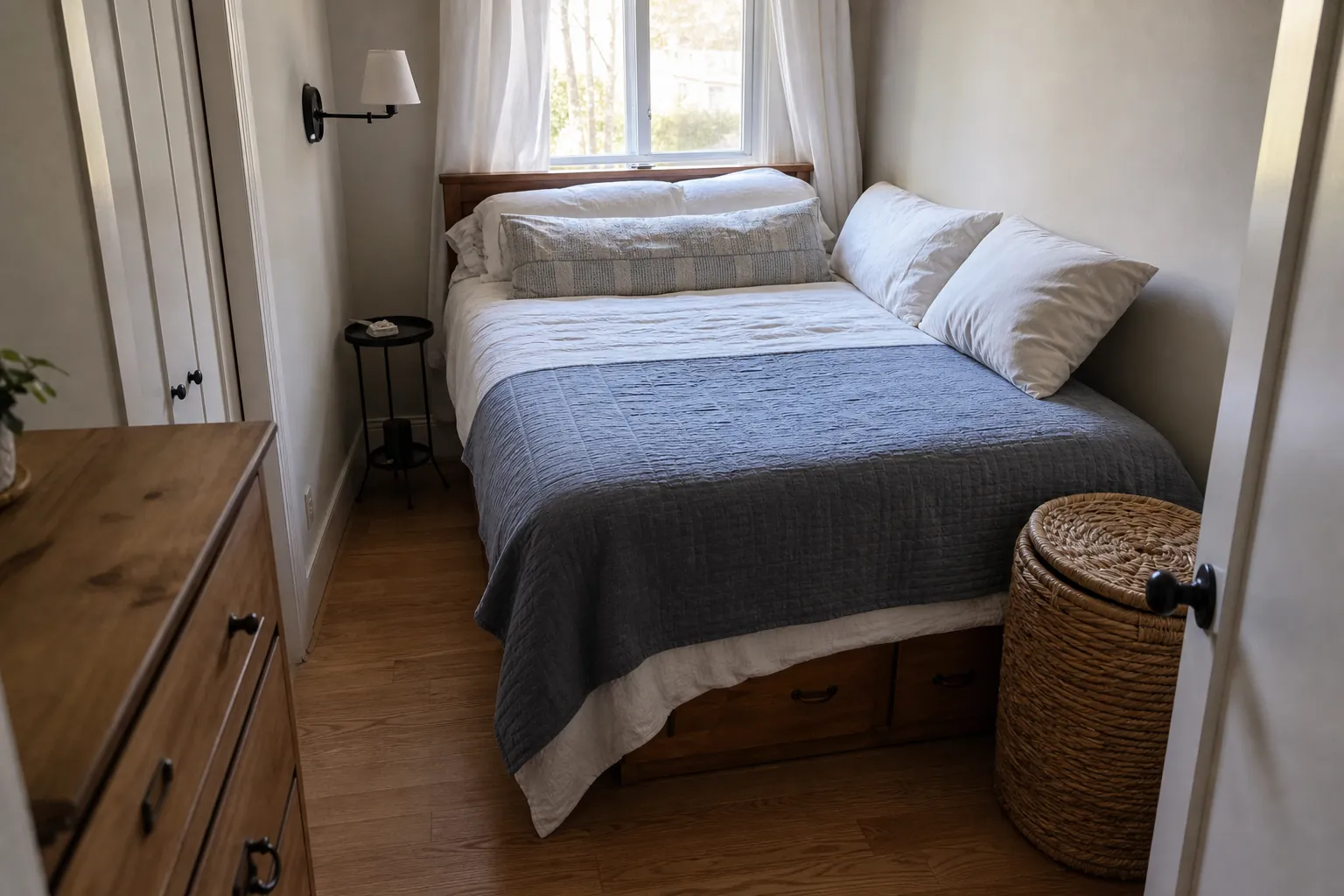
Use layered pillows along the wall, a slim table on the open side, and accessible under bed storage along the aisle. This is often the strongest small room design when the bedroom also needs a dresser, hamper, or desk.
Replace Bulky Nightstands With Floating Surfaces
Traditional nightstands are often too deep for a small bedroom with a queen bed. A floating shelf, wall-mounted drawer, or tiny ledge gives you a place for a phone and water without blocking the path. Pair it with a wall sconce so you do not need a lamp base.
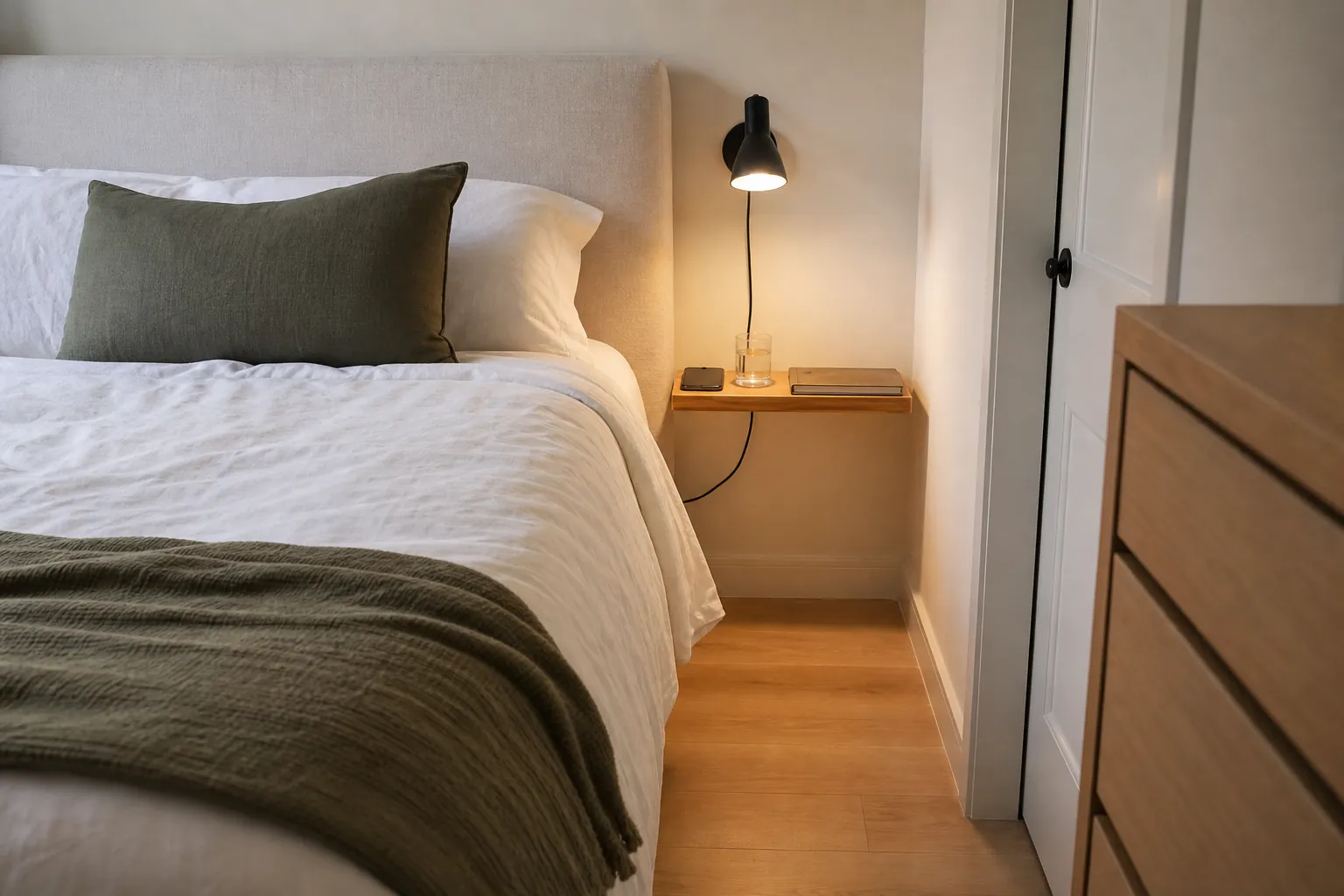
This small change improves furniture placement because the floor stays visually open. It also makes cleaning easier and keeps the bed wall from feeling crowded.
Make the Bed Do Storage Work
When the queen bed takes most of the floor, it should also solve some bedroom storage. Use shallow drawers, lidded bins, or rolling boxes for off-season bedding, extra shoes, and folded blankets. Choose containers that pull out from the side you can actually access.
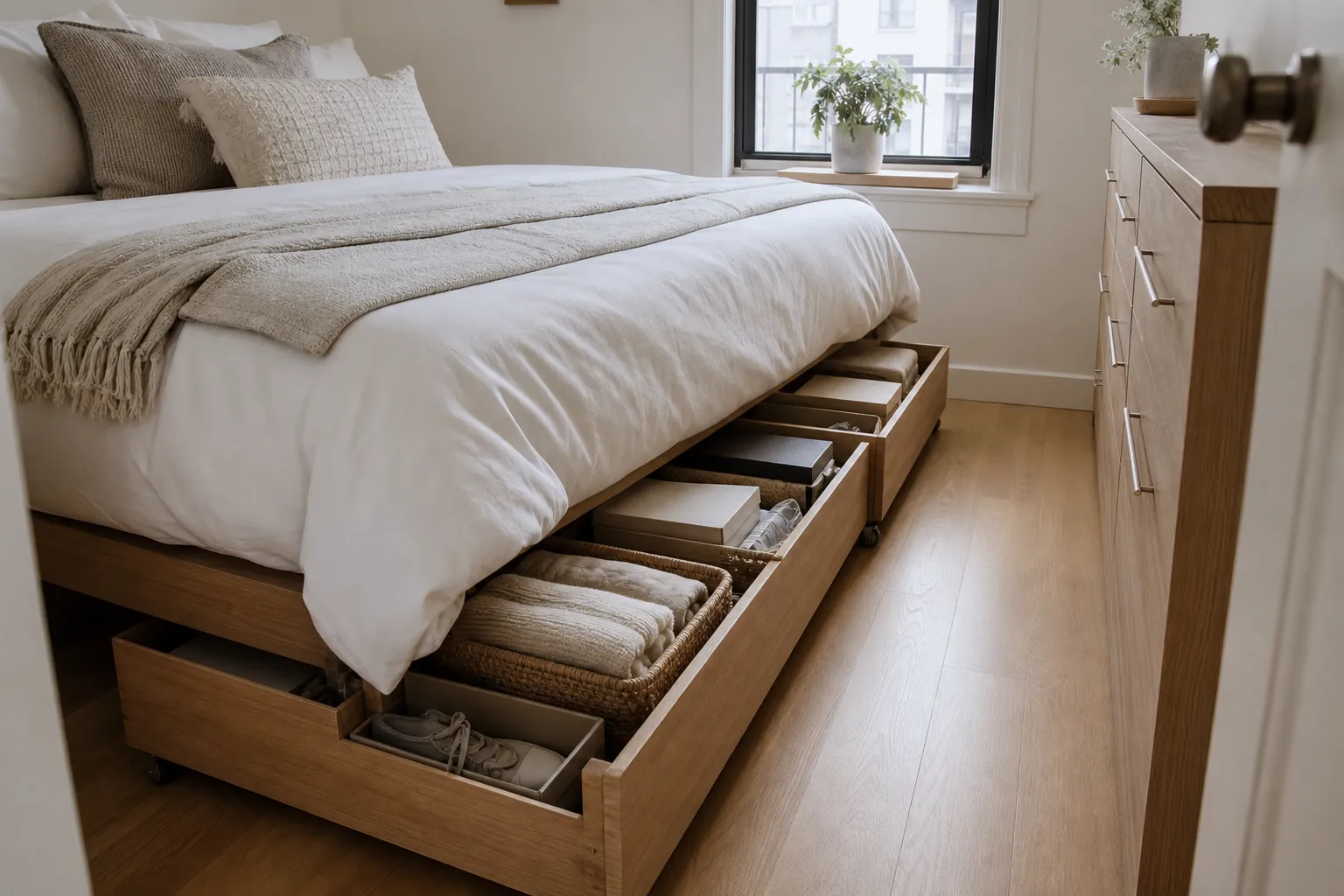
A bed with storage only works if the room still gives the drawers room to open. If both sides are tight, use soft zip bags that slide from the foot of the bed instead of rigid drawers that fight the layout.
Choose One Secondary Function, Not Three
Small bedrooms often fail because they try to hold a queen bed, two nightstands, a dresser, a desk, a reading chair, open shelving, and extra laundry storage. Pick the one secondary function you truly need. For most rooms, that means either a dresser wall or a slim desk that doubles as a vanity.
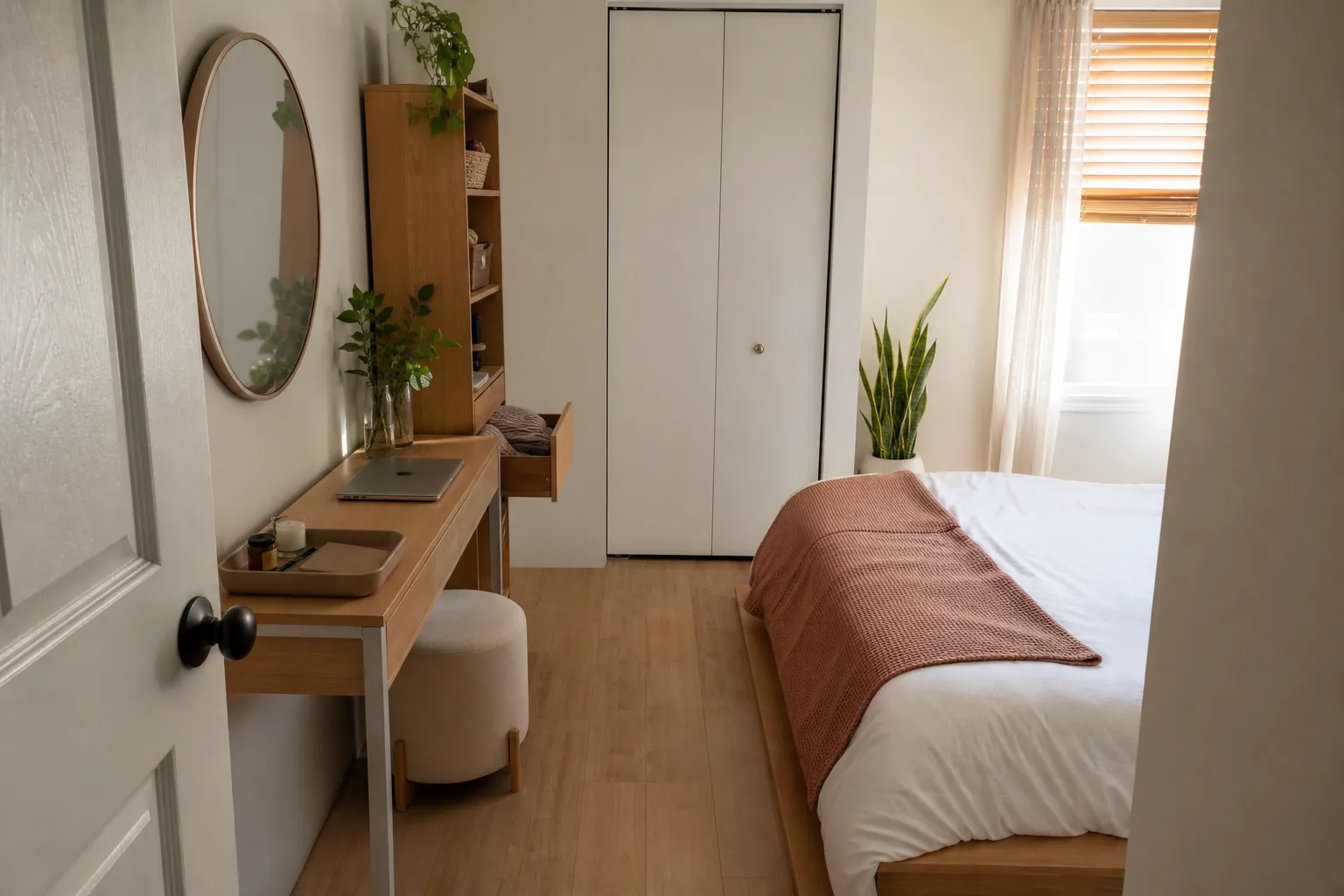
Look for pieces that are shallow, leggy, and easy to tuck in. A stool under a desk, a wall mirror above a dresser, and vertical shelves near the door can handle bedroom organization without shrinking the main path.
Quick Layout Rules That Keep a Queen Bed Usable
- Protect the door-to-bed path first. If the entry feels blocked, the whole room feels wrong.
- Keep at least one side of the bed comfortable. Two narrow lanes are nice, but one usable lane is often enough.
- Use wall lighting. Sconces free up surface space and make the bed wall feel lighter.
- Choose shallow storage. Deep dressers and wide nightstands are the fastest way to ruin a small bedroom layout.
- Let vertical space work. Hooks, high shelves, and tall narrow storage keep the floor clearer.
A queen bed in a small bedroom is not the problem. The problem is pretending the room has space for full-size versions of every other piece. Once the bed placement is settled, the rest of the room should become quieter, slimmer, and more useful.