

A small bedroom closet usually overflows for one boring reason: it is asked to hold every season, every backup item, every “maybe I’ll wear it” piece, and the clothes you wore once but do not want to wash yet. The fix is not a bigger pile of organizers. The fix is to give each overflow category a place that looks intentional from the doorway.
These small bedroom closet overflow ideas are built around one rule: visible storage has to stay edited, and bulky storage has to disappear. That keeps clothes storage practical without turning the room into a second closet.
Start with a tight daily closet zone
If the main closet is already packed, do not begin by adding more containers. Pull the closet back to the clothes you reach for every week. Use one hanger type, keep short garments together, and leave a little air between sections so the rail does not read as a solid wall of fabric.
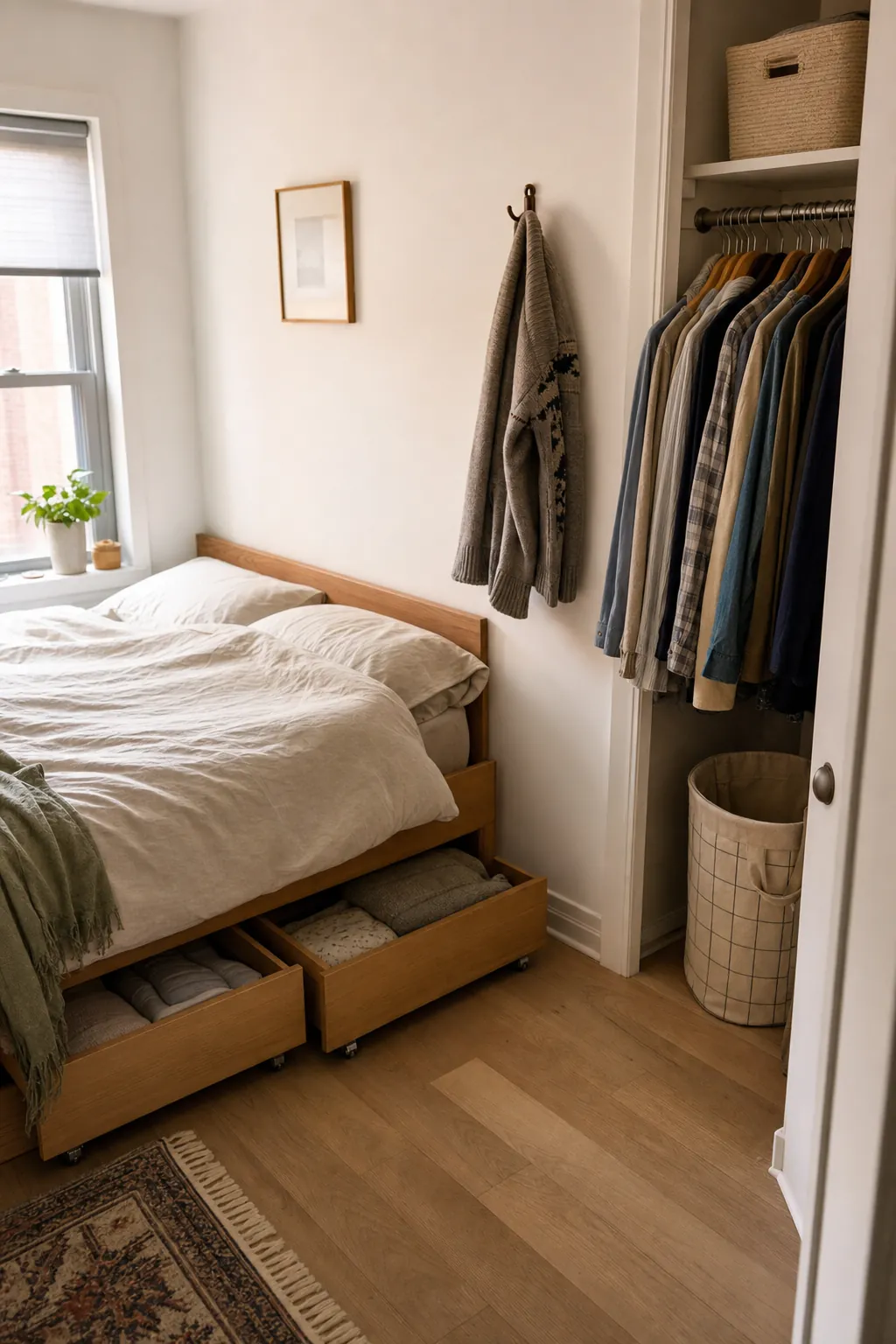
This is the part of closet organization that makes the whole bedroom feel calmer. The closet should hold daily decisions, not every possible outfit. Move off-season pieces, formalwear, spare bedding, and rarely used shoes into secondary storage so the main rail stays easy to reset.
Move seasonal bulk under the bed
Under-bed storage works best when it is treated as a seasonal archive, not a junk drawer. Use shallow zip bags, rolling drawers, or breathable fabric bins for sweaters, thick scarves, spare jeans, and backup linens. Keep the most-used items out of this zone so you are not pulling bins open every morning.
- Put bulky sweaters and off-season clothes in the deepest under-bed bin.
- Use one bin for extra bags, hats, or scarves so accessories do not scatter.
- Keep a small gap at the front of the bed so the storage can open without moving furniture.
For small bedroom storage, this is often the cleanest tradeoff: the room looks tidy because the overflow is hidden, but the items are still easy to reach when the season changes.
Use an open wardrobe only for edited everyday pieces
An open wardrobe can solve closet overflow, but only if it is treated like a capsule rack. Once it becomes a second full closet, the bedroom starts to feel crowded. Keep the rack narrow, use matching hangers, and limit it to the clothes you actually wear this week.

The trick is negative space. If every inch of the rack is full, it will look like clutter even when the clothes are clean. Add one low bin below for workout clothes, pajamas, or folded knits, but avoid stacking boxes above eye level where they make the room feel heavy.
Choose storage bins by category, not by empty space
Storage bins make a small closet look tidy only when each bin has a job. “Extra clothes” is too vague; it becomes a place where everything disappears. Better categories are sweaters, sleepwear, workout sets, bags, winter accessories, or clothes waiting for repair.
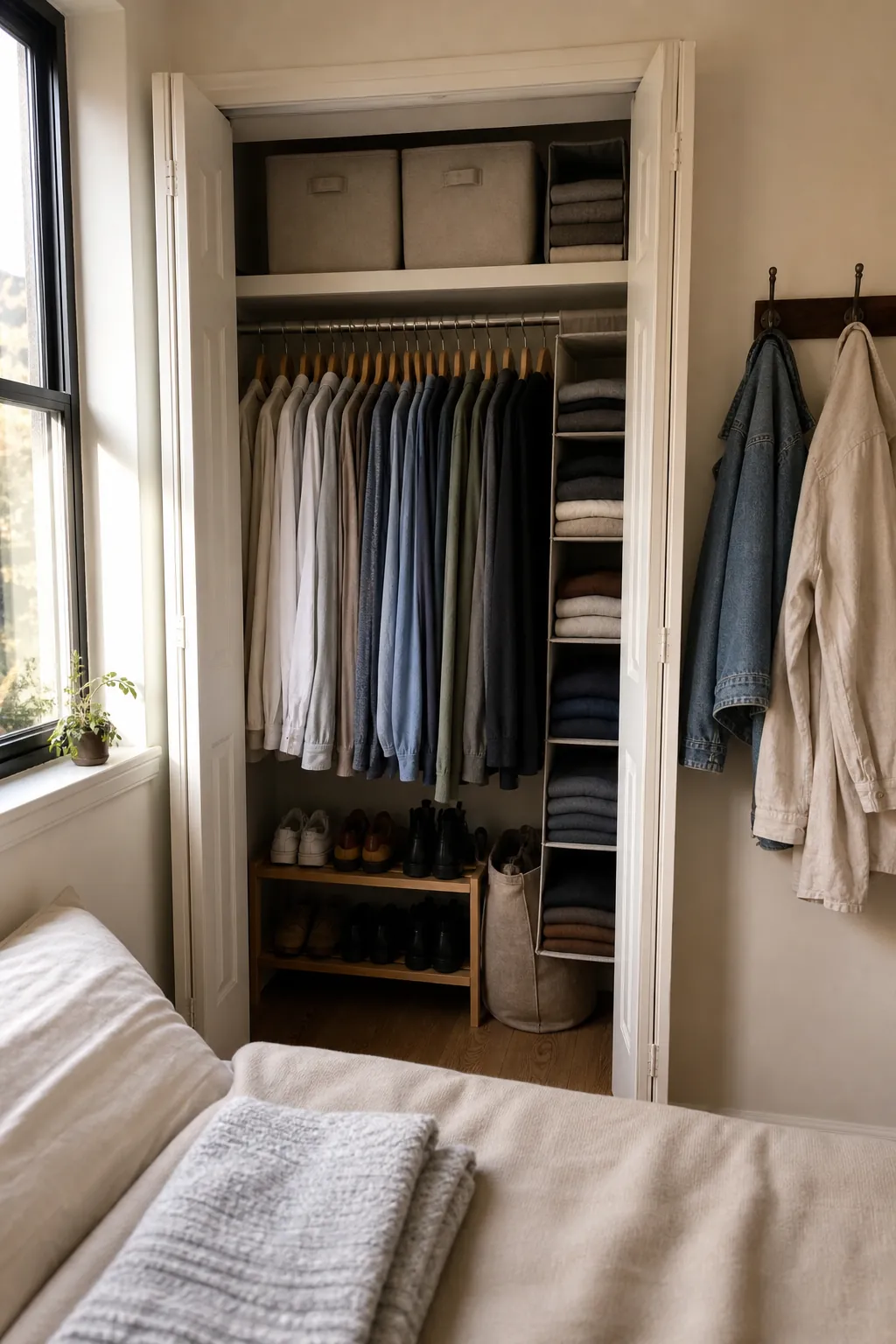
Use fewer, larger categories for items you access rarely, and tighter categories for daily pieces. That keeps bedroom organization simple enough to maintain when you are tired. The goal is not a perfect closet photo. The goal is a system you can restore in three minutes.
Create a landing spot for half-worn clothes
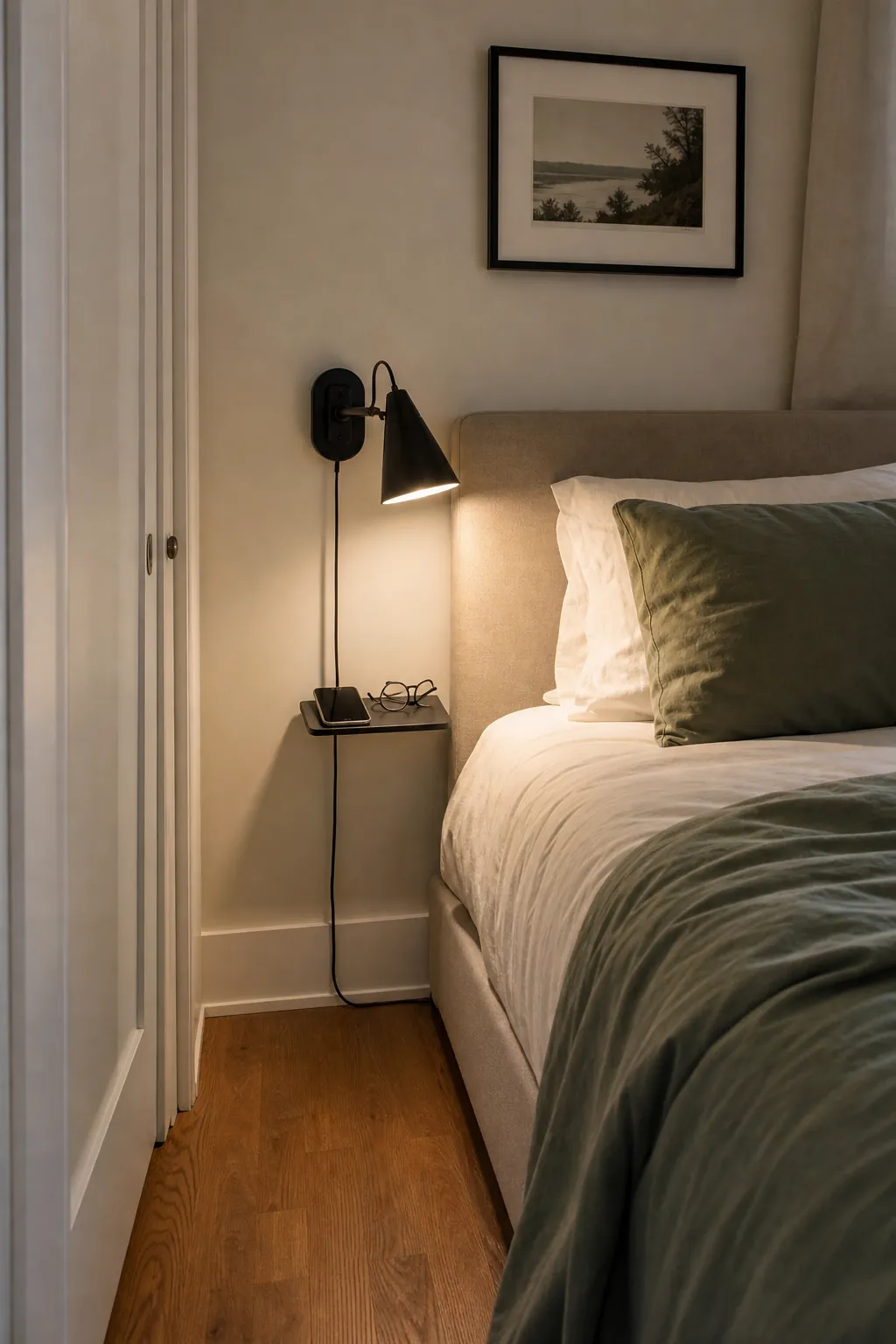
Many tidy bedrooms fail because there is no place for the clothes that are not clean-clean and not laundry-dirty. They end up on the chair, bed rail, floor, or closet handle. A small hook rail fixes that without pretending the category does not exist.

Keep the rule visible: one hook per item, no layering, and clear it on laundry day. A hook rail works better than a chair because it gives the clothes a boundary. It also keeps the floor clear, which matters more in a small space than another decorative basket.
Take overflow vertical, but leave breathing room
When the floor plan is tight, vertical storage can absorb overflow without stealing walking space. Use a shallow shelf, over-door organizer, or wall-mounted cubby for scarves, belts, bags, folded knits, and small accessories. Keep the colors quiet and the containers consistent so the wall does not feel busy.
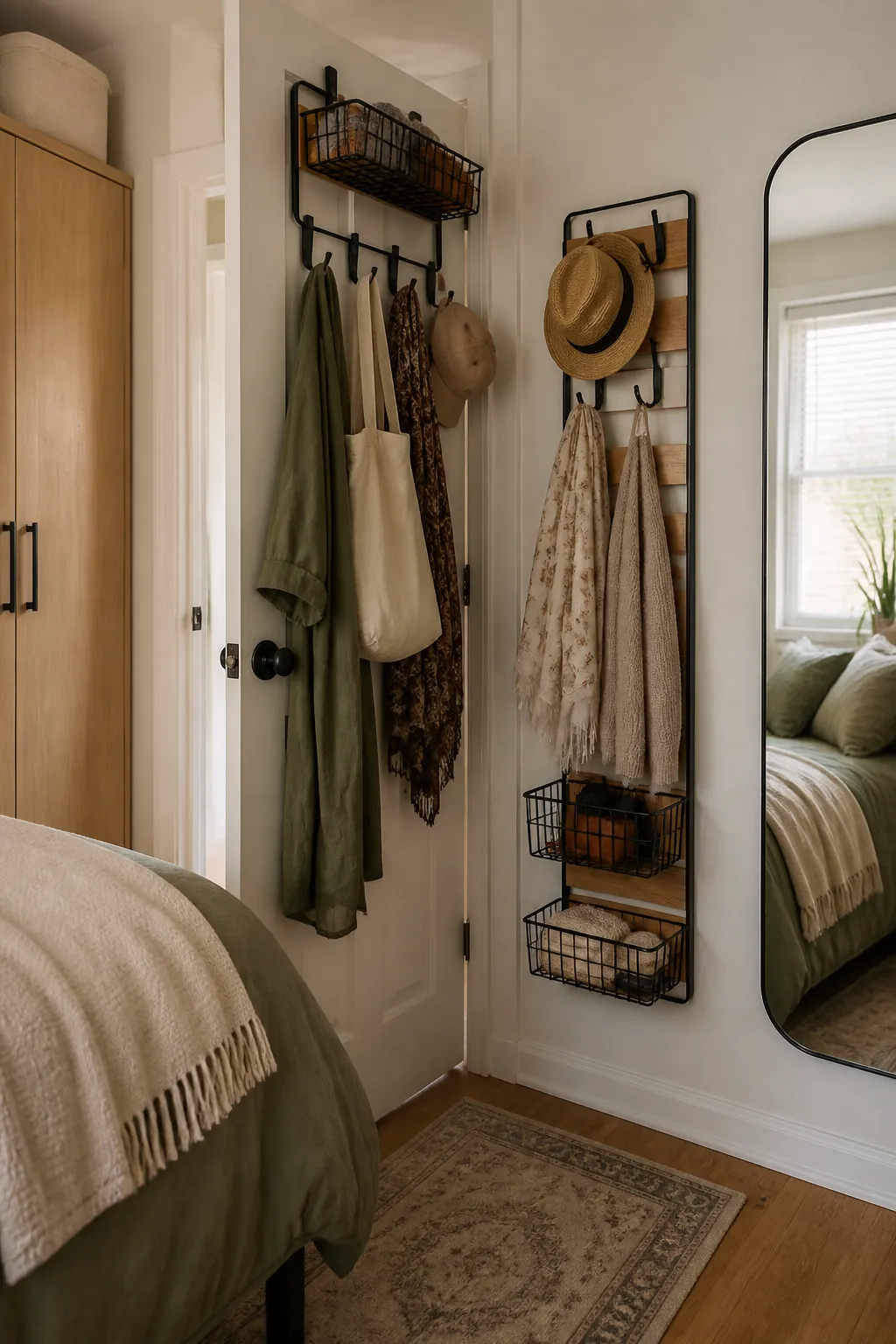
The important detail is restraint. Vertical storage should free the room, not wallpaper it with stuff. Leave one shelf partly empty if you can. That empty space is what makes small closet ideas look designed instead of desperate.
Keep the tidy look with a weekly reset
Closet overflow comes back when every storage zone is allowed to stretch. Once a week, return clean clothes to the main closet, move seasonal pieces back to their bin, empty the hook rail, and pull out anything you keep skipping over. A donation bag near the closet is often more useful than another organizer.
For a tidy bedroom, the best system is the one with limits. If the open wardrobe is full, something goes back into the closet or laundry. If the under-bed bin cannot close, it is time to edit. If the hook rail holds yesterday, last week, and the sweater you forgot about, reset it before it becomes a wall pile.
Small space storage works when every overflow item has a destination and every destination has a limit. That is what makes a small bedroom closet feel bigger without adding square footage.