
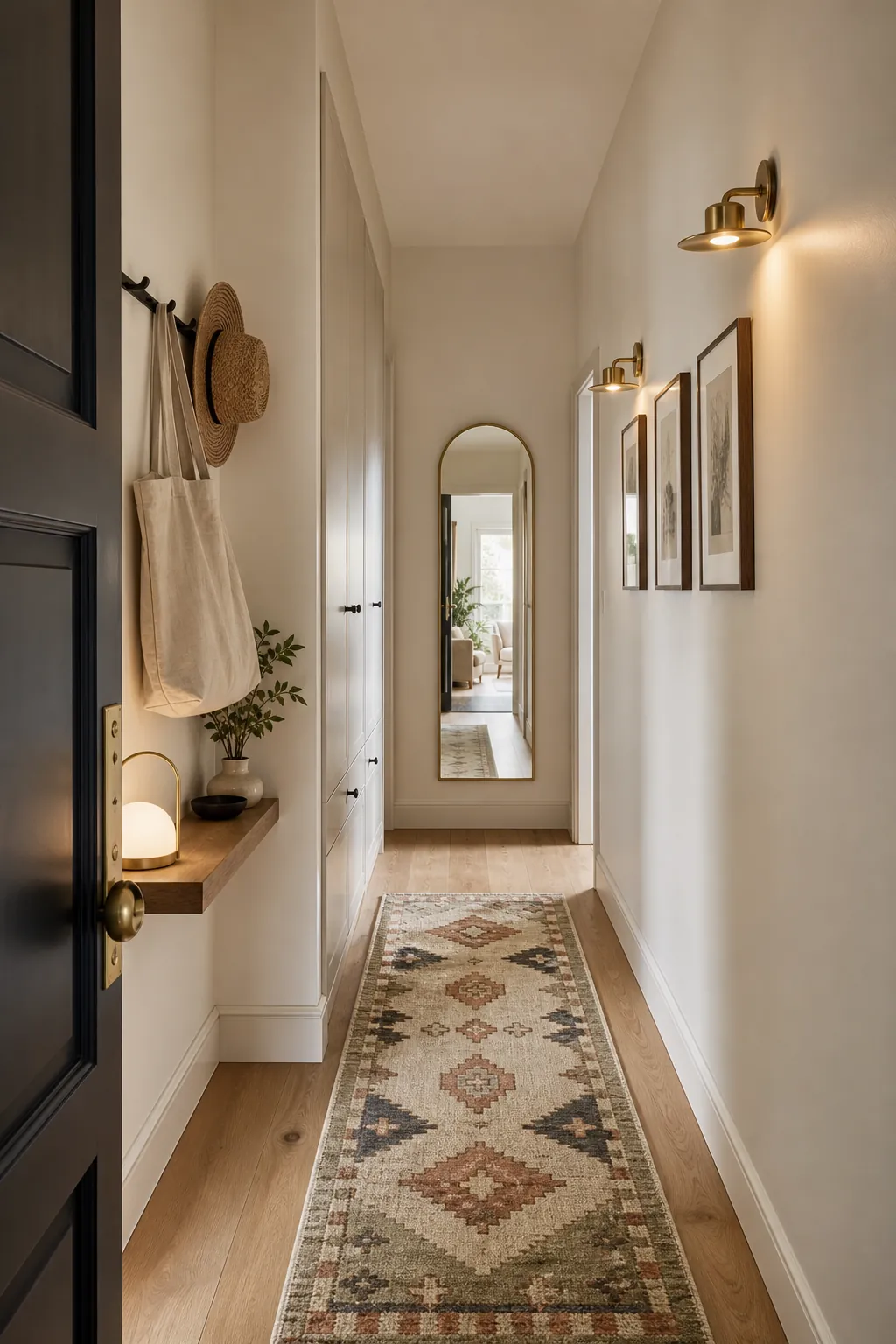
A narrow hallway usually gets treated like a problem to hide: too long, too dark, too tight, too awkward for real furniture. But the shift that makes the biggest difference is simpler than a renovation. Stop decorating it as leftover space and give it one clear job.
That job might be a polished entryway, a visual transition between rooms, a tiny mudroom, or a quiet gallery-style passage. Once the hallway has a purpose, every decision becomes easier: what stays, what leaves, where the eye should land, and how much empty space should remain.
The best narrow hallway ideas do not try to fill every wall. They create rhythm, light, and function without stealing shoulder room. Use this approach if your long narrow hallway feels like a tunnel, your entryway decor never quite settles, or your small hallway decor keeps turning into clutter.
Start With One Sentence: What Is This Hallway For?
Before buying anything, finish this sentence: “This hallway is the place where we…” Drop keys, transition into the home, display family photos, store shoes, guide guests to the living room, or create a calm pause between busy rooms.
That sentence protects you from the most common mistake: mixing a console table, a bench, hooks, baskets, art, mirrors, plants, and shoe storage into a passage that only had room for two of those things. In a tight foyer or small-space entry, restraint is not boring. It is what makes the design read as intentional.
- If the hall is an entry: choose hooks, a catchall tray, and closed shoe storage.
- If the hall is a transition: choose art, lighting, and a runner rug.
- If the hall is a mini mudroom: choose shallow storage, washable materials, and one landing zone.
- If the hall feels unfinished: choose paint, trim, and one end-wall focal point.
Use Wall Rhythm So the Length Looks Designed
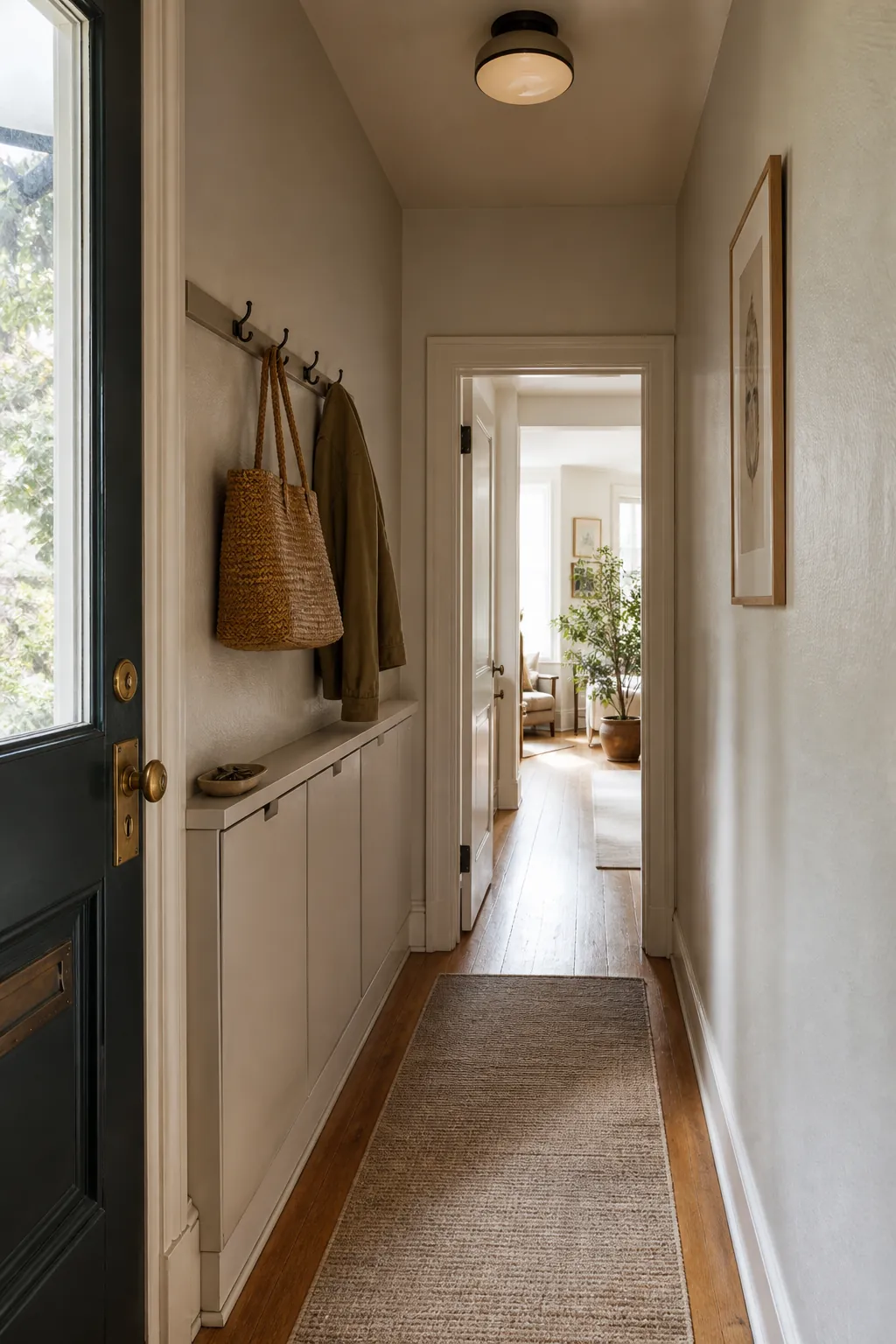
A long hallway looks accidental when every piece is a different height, width, color, and distance apart. The easiest fix is rhythm. Repeat one line, one frame size, one trim detail, or one lighting style so the eye understands the length as a sequence.

 Check on Amazon
Picture-frame molding, a chair rail, beadboard, or a painted lower wall can make a narrow passage feel architectural. You do not need heavy contrast. In many homes, a soft tonal shift works better than a dramatic two-color split because it adds structure without closing the walls in.
For hallway decor, keep spacing almost boringly consistent. Three frames hung in a clean row will often look more expensive than nine mismatched pieces fighting for attention. If the corridor is especially tight, use slim frames with wide mats instead of bulky shadow boxes.
Choose a Runner Rug That Guides Instead of Crowds
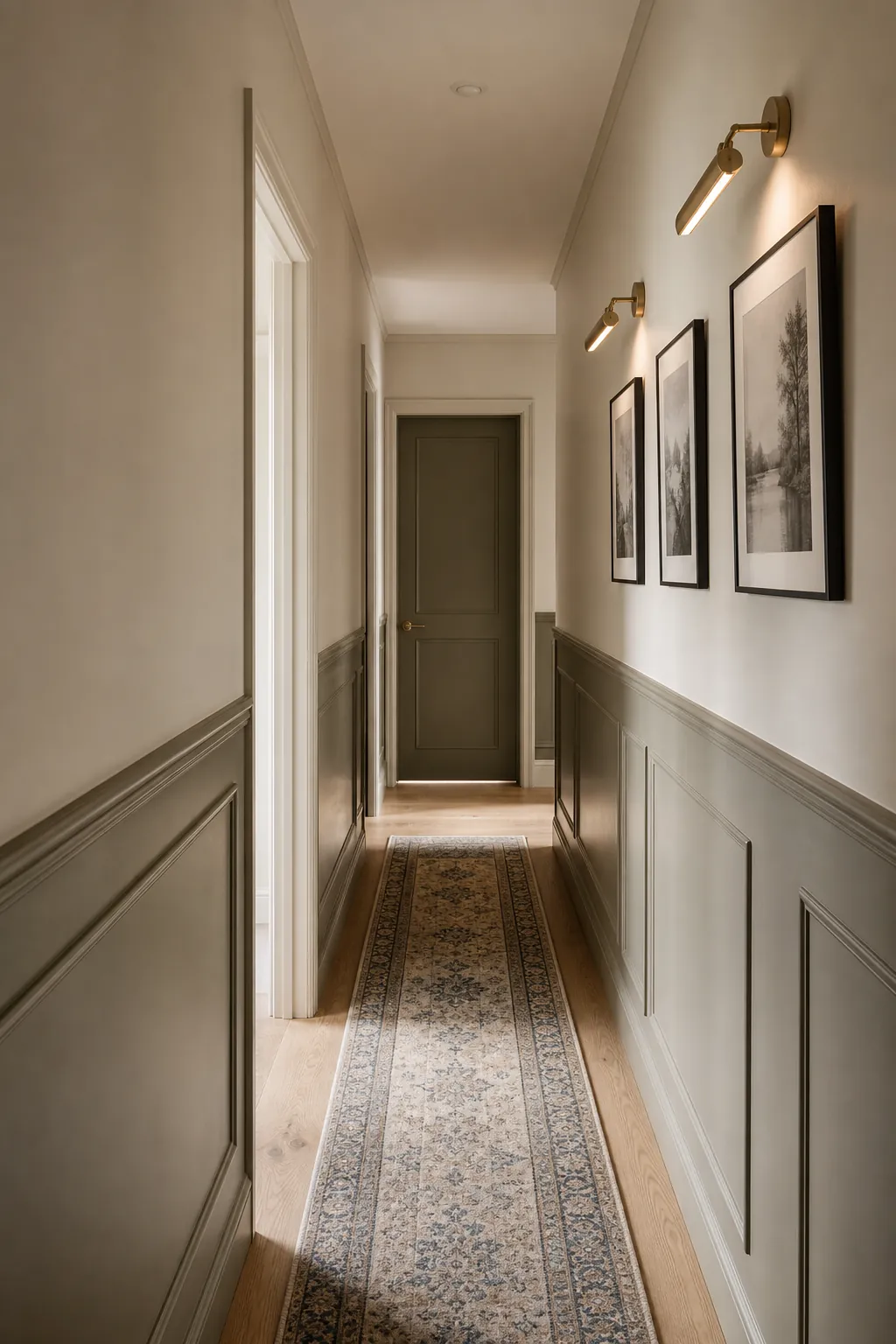
Runner rugs are one of the fastest ways to make a long narrow hallway feel deliberate, but only when the scale is right. The rug should lead the eye forward while leaving a visible border of flooring on both sides. If it touches the baseboards or bunches near door swings, the hall will feel smaller and less functional.

For small hallway decor, look for low-pile or flatwoven runners, especially near an entryway where shoes, mud, and daily traffic matter. A faded pattern hides wear better than a solid light rug. A proper rug pad is not optional in a narrow route; the most beautiful runner still fails if it slides underfoot.
If your hallway is very long, the runner does not have to cover every inch. It can begin after the door swing and stop before the final threshold. The goal is not wall-to-wall softness. The goal is a visual path.
Layer Light Before You Add More Decor
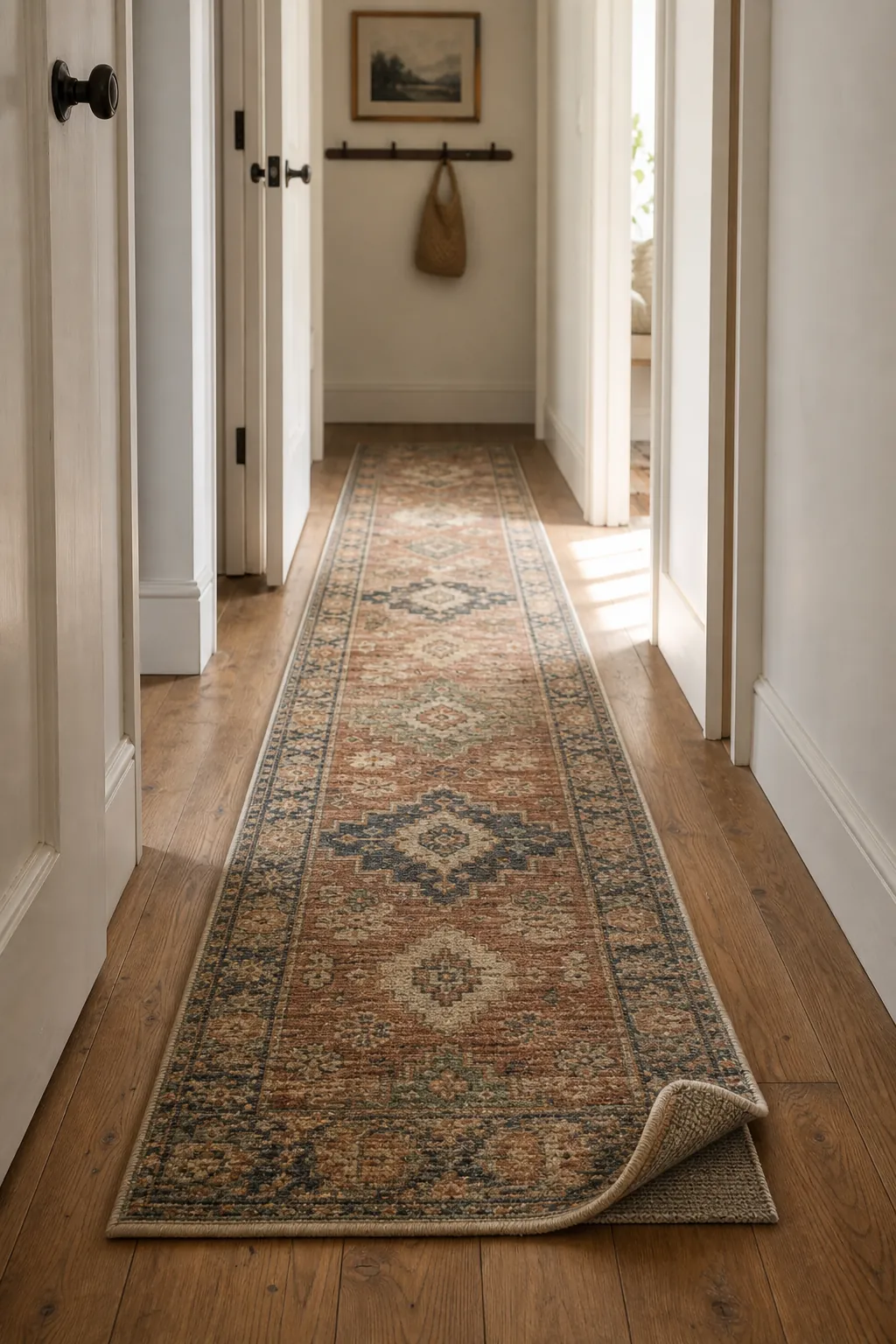
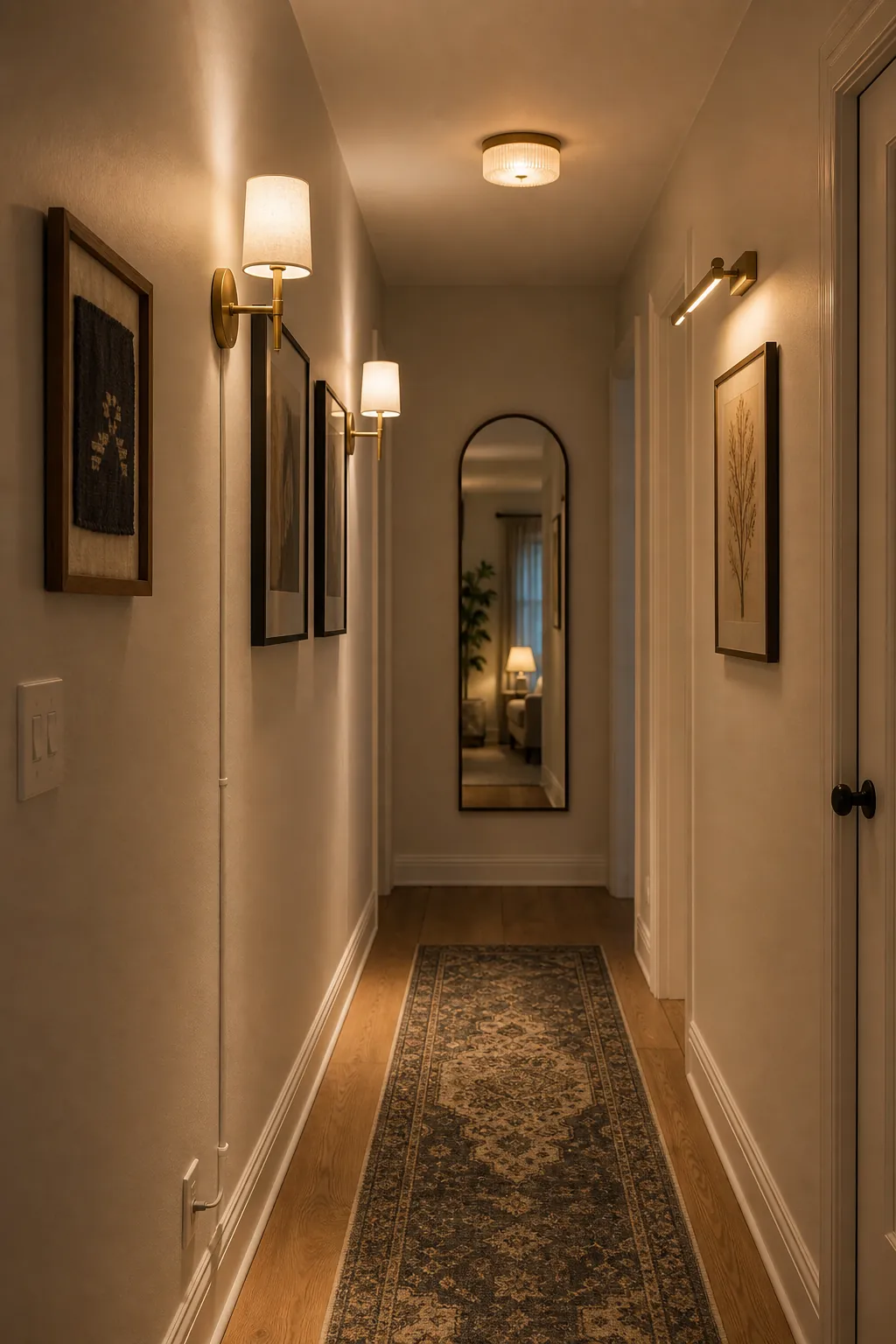
Many narrow hallways are not actually too plain. They are underlit. When the only light is one ceiling fixture, the walls can look flat and the far end can feel heavy. Better lighting changes the mood before you buy another frame, basket, or mirror.
Acrylic Decorative Night Light with Dusk-to-Dawn Sensor, Dimmable Nightlights, Adjustable Brightness for Bathroom,Hallway,Bedroom,Kids Room,Soft White” imageurl=”https://m.media-amazon.com/images/I/81SRTgCW-qL._AC_SX679_PIbundle-2,TopRight,0,0_SH20_.jpg”]
If you can hardwire sconces, repeat them along one wall. If you cannot, use plug-in sconces with neat cord channels, rechargeable picture lights, or a small lamp on a shallow shelf where traffic allows. Keep bulbs warm, but not orange. A soft 2700K glow usually flatters paint, wood, and textiles.
Mirrors help most when they reflect light or a finished view, not when they reflect another blank wall. Place one near the end of the hall, across from a doorway, or where it catches daylight. A mirror is not the plan; it is a tool for the plan.
Use Shallow Storage That Disappears Into the Wall
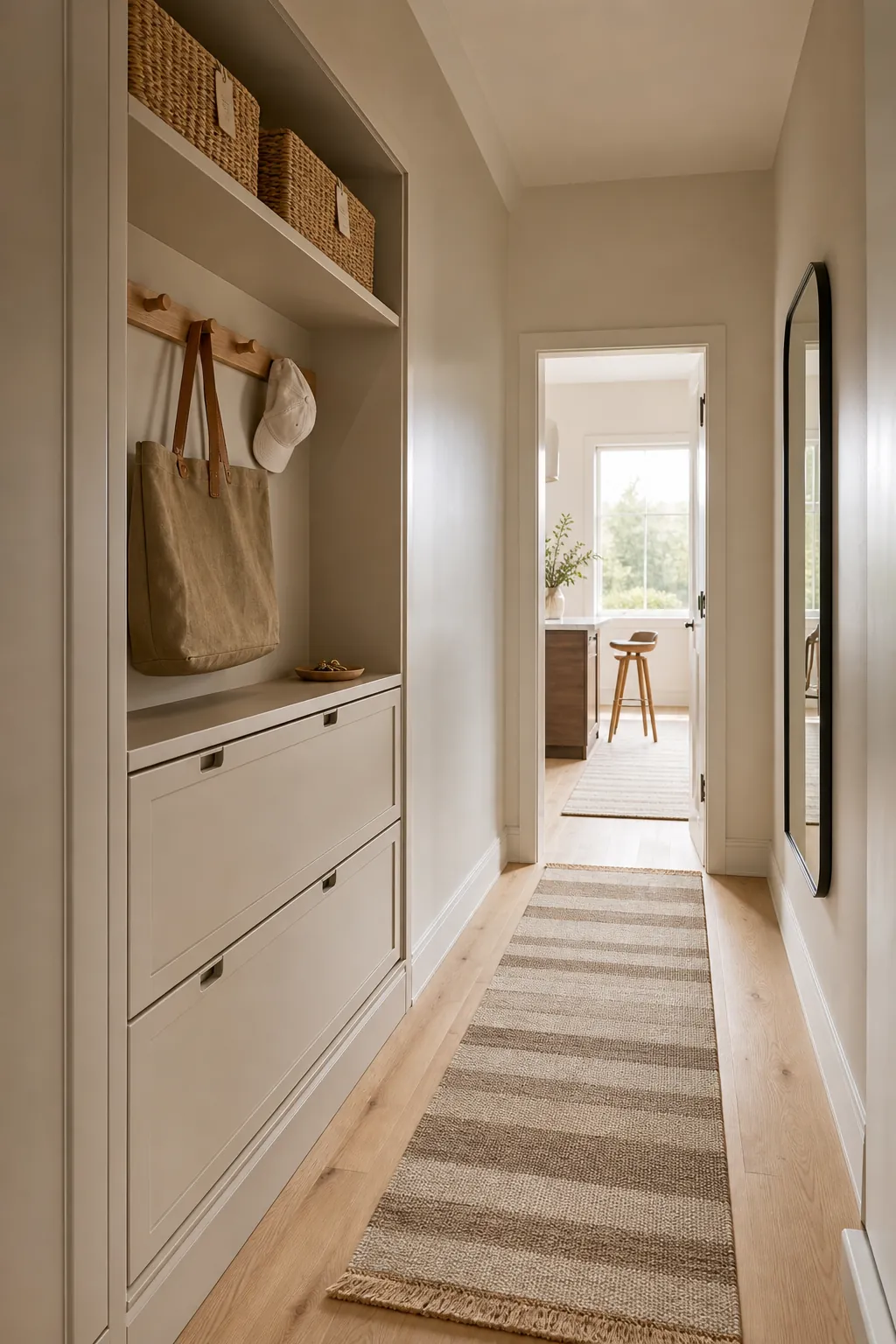
Home organization in a narrow hallway has to be honest. If open baskets become overflow, the hallway stops feeling intentional and starts feeling like a storage lane. Closed, shallow pieces are usually better than deep furniture, especially near an entry where daily items multiply quickly.

Look for wall-mounted shoe cabinets, slim closed cupboards, peg rails, recessed shelves, or built-ins painted the same color as the wall. In a small mudroom idea, the winning formula is not “more storage.” It is fewer visible categories: shoes hidden, bags on hooks, keys in one tray, seasonal extras somewhere else.
If you need a bench, measure the walking clearance first. In many long narrow hallway layouts, a bench sounds useful but becomes the place where bags, jackets, and parcels pile up. A hook rail plus closed shoe storage often works harder and looks calmer.
Give the End Wall a Reason to Exist
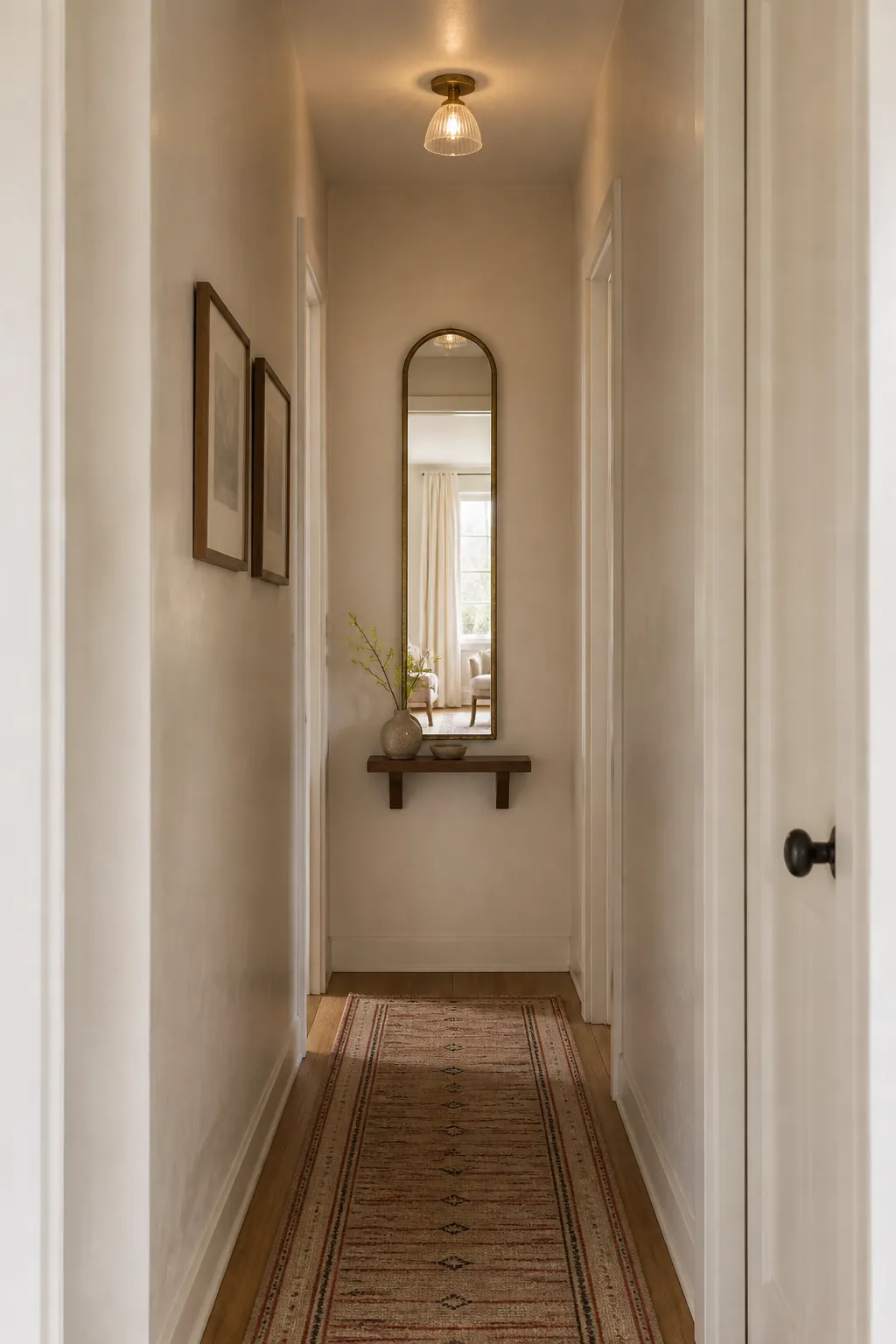
The far end of a long narrow hallway can make or break the space. If it is blank, the hallway feels like a tunnel. If it is crowded, the hallway feels like a dead end. The best answer is a small focal point that pulls the eye forward without blocking movement.

Try a narrow mirror, one special piece of art, a tiny wall-mounted shelf, a painted door, or a sconce above a small framed textile. The end wall is also a good place for deeper color because it creates destination energy without squeezing the side walls.
This is where foyer ideas can help even if your home does not have a true foyer. The hallway can still offer an arrival moment. One composed end point makes the whole passage feel chosen.
The Simple Edit That Makes It Last
After you style the hallway, remove one thing. Then remove one more. Narrow spaces are unforgiving because every object is close to the body. A great entryway can have personality, but it also needs breathing room.
Use this final check: Can two people pass? Can doors open fully? Can a bag swing without hitting frames? Can guests understand where to put things without asking? If the answer is yes, the hallway is not just decorated. It is working.
A narrow hallway feels intentional when it has a role, a rhythm, and a reason for every object. Choose the purpose first, repeat a few quiet design moves, light it well, and keep the path clear. That is how a pass-through space becomes one of the most thoughtful parts of the home.