
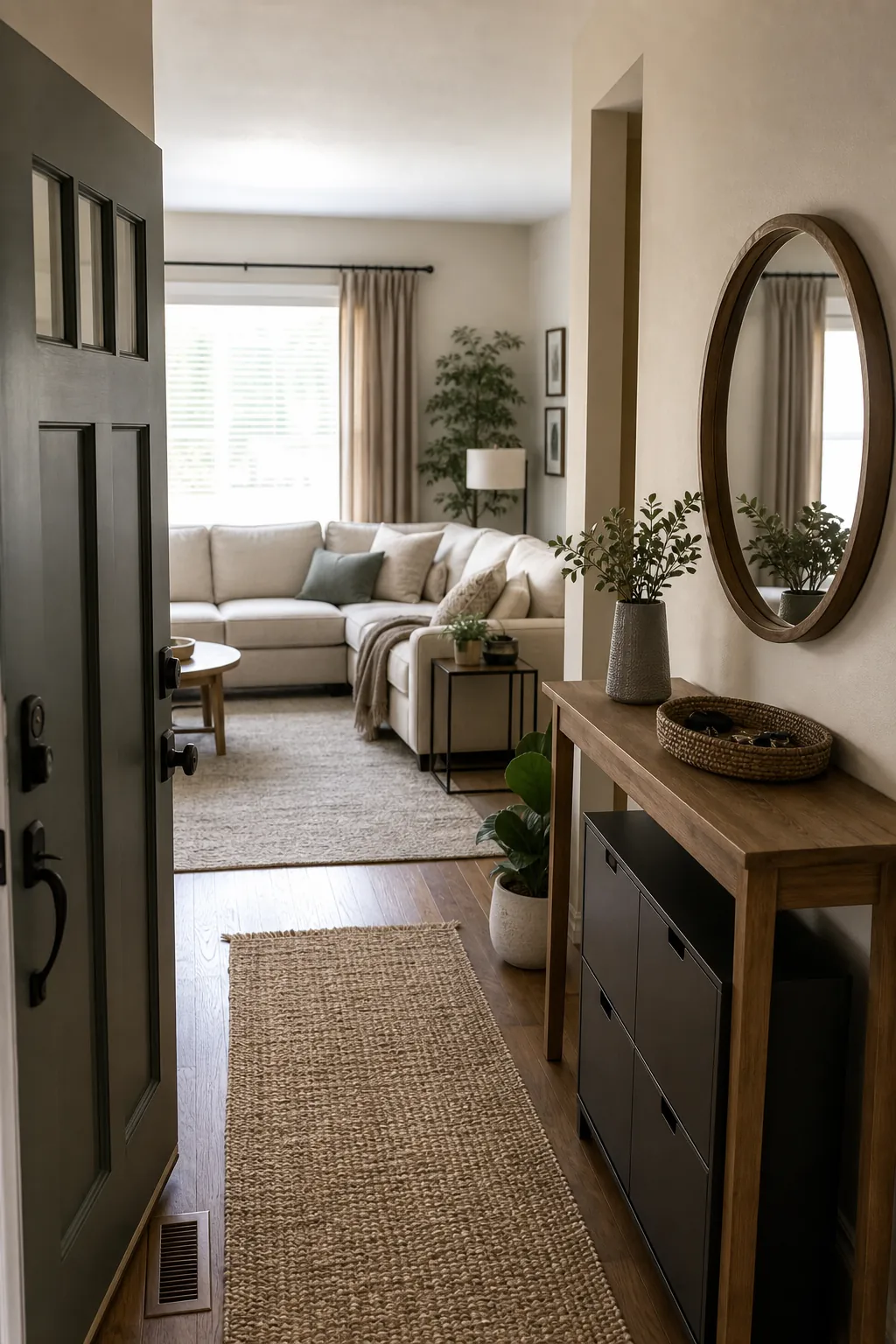
When the front door opens straight into the living room, the problem is not that your home lacks a foyer. The real problem is that guests, shoes, bags, mail, and sightlines all land in the same place. A good open living room entry fixes that first five feet. It gives the door a job, gives clutter a destination, and gives the living room a little breathing room.
The best entryway ideas for homes like this are not about pretending you have a grand hall. They are about building a small entryway that feels intentional from the second you step inside. Use the floor, wall, furniture backs, storage, and light to create a pause before the room begins.
Start by Drawing an Invisible Line
Before buying anything, stand outside the door and open it fully. Watch where the door swings, where your body naturally steps, and where the living room begins. That little landing zone is your entry, even if the builder never gave it a name.
Most awkward open entries fail because every piece is too random: a mat here, shoes there, a console squeezed somewhere else. Instead, decide on a clear rectangle. It may be only three feet by five feet, but it needs defined edges. A runner rug, a slim cabinet, a wall hook row, or the back of a sofa can all mark the boundary.
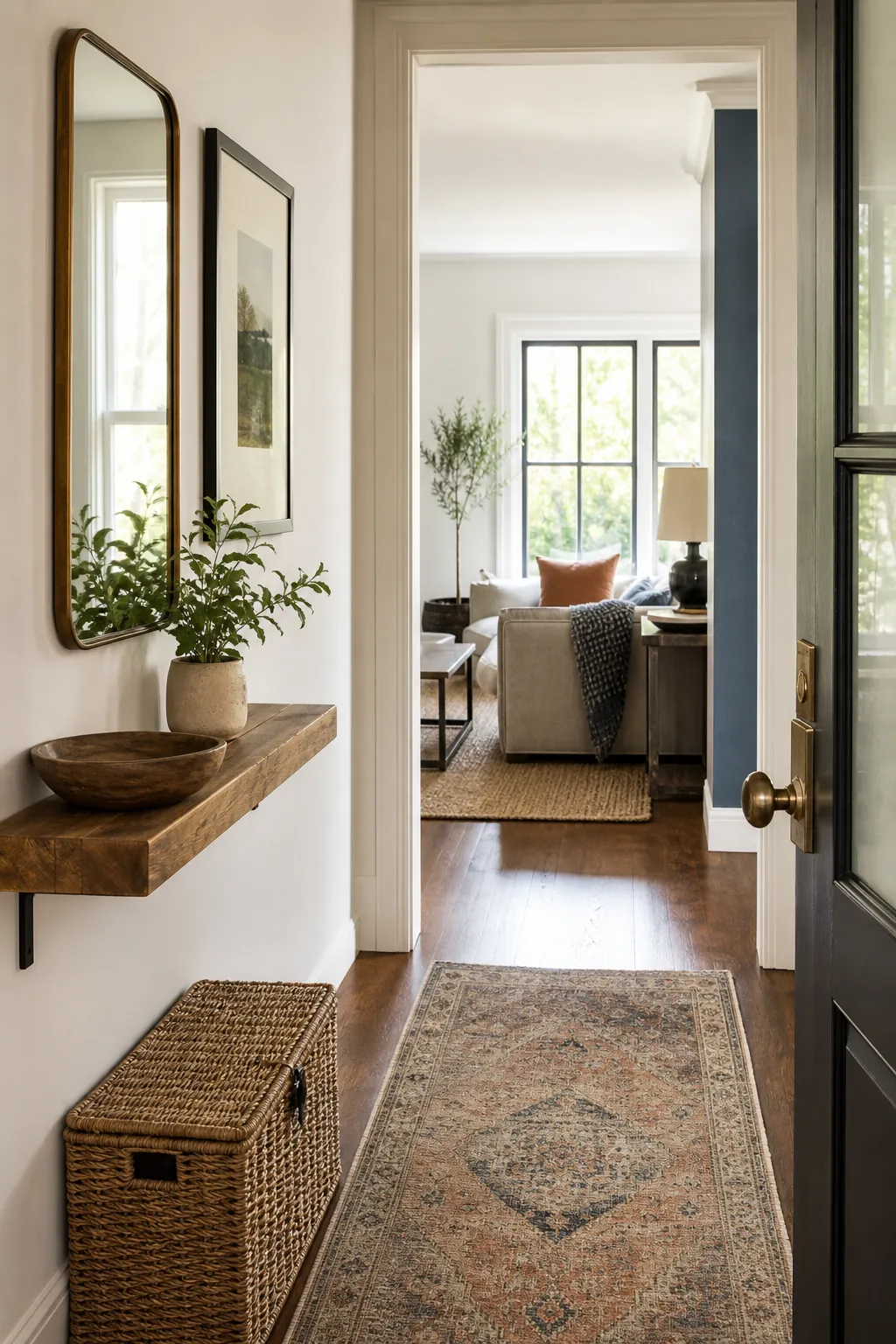
For a very tight entry, keep the first layer shallow: a wall ledge instead of a deep console, closed shoe storage instead of open piles, and a runner rug that points inward. The goal is not more decor. The goal is a cleaner transition from outside to home.
Use the Sofa Back as a Soft Divider
If the door opens directly onto the seating area, the sofa may be your strongest entryway solution. Turning the sofa so its back faces the door creates a psychological wall without adding construction. Add a narrow console behind it and the space suddenly has a landing strip for keys, mail, and a lamp.
This works especially well in an open living room entry where you need privacy but cannot block light. Keep at least a comfortable walking lane between the door and sofa. If you have to turn sideways to enter with groceries, the layout is too tight.
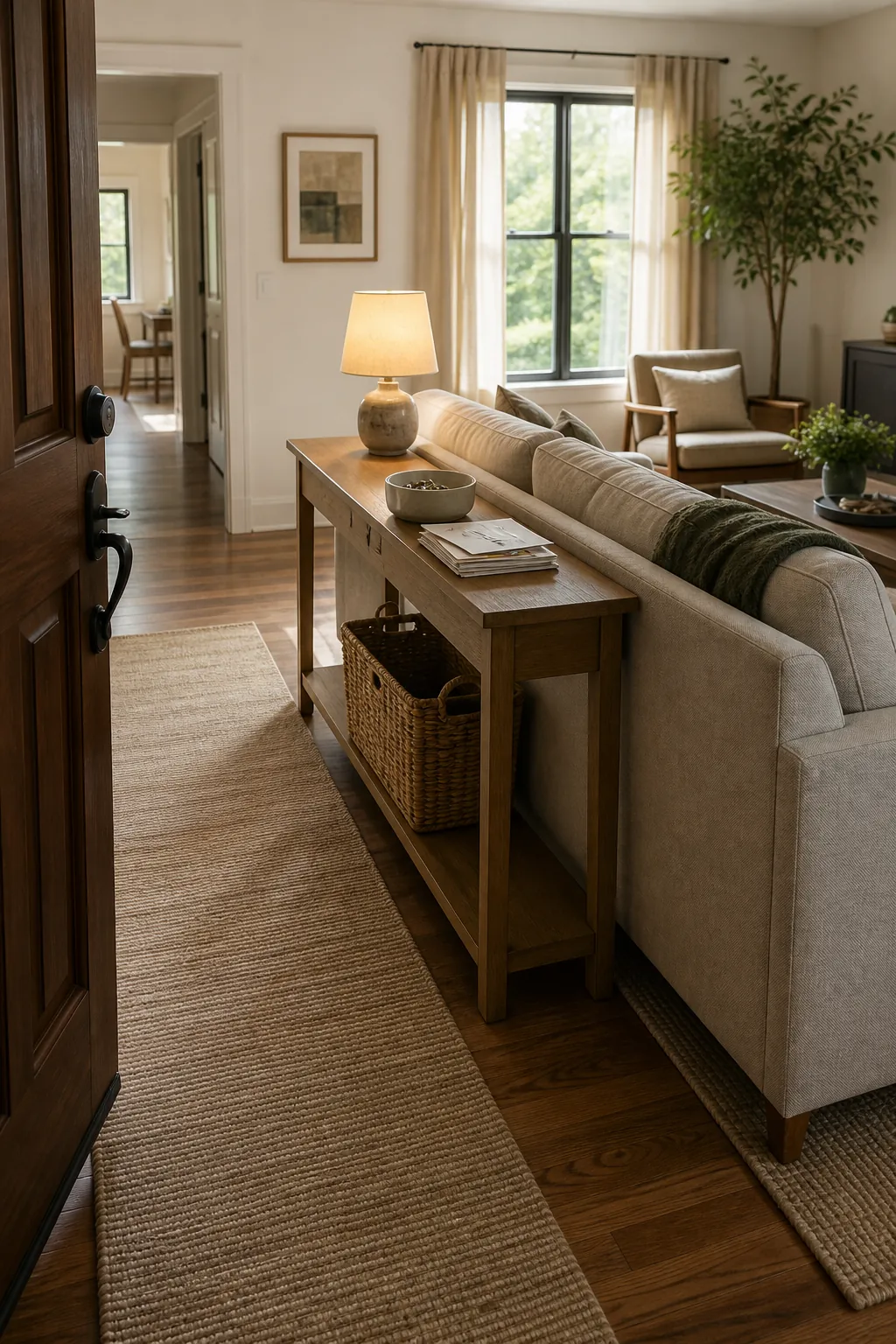
Style the console lightly. A small lamp, one tray, a basket underneath, and maybe a mirror are enough. When the surface becomes a dumping ground, the entry starts to feel like clutter attached to the living room instead of a deliberate foyer idea.
Choose a Divider That Still Lets the Room Breathe
A full partition often makes a small space feel smaller. A freestanding shelf, open bookcase, slatted screen, or low cabinet can create a threshold while still letting daylight and sightlines move through the room. This is one of the most renter-friendly entryway solutions because it changes the feeling of the floor plan without changing the building.
The trick is restraint. Use closed baskets on the lower shelves to hide shoes, scarves, and everyday home organization clutter. Keep upper shelves lighter so the divider does not become a visual wall. If the entry needs privacy, screen it. If it needs storage, close it.
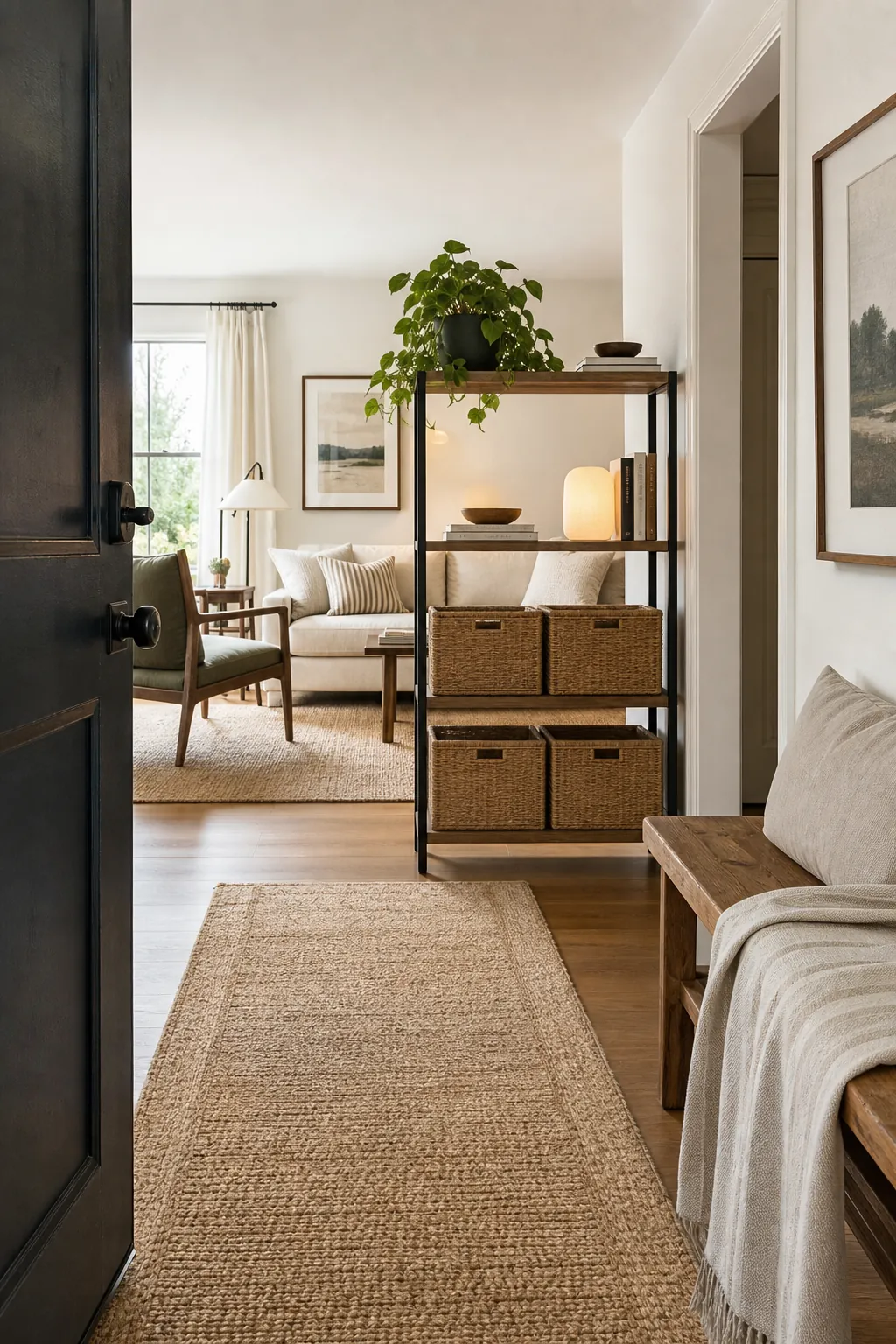
Make sure the divider is stable, proportional, and set far enough from the door that it does not feel like an obstacle. The entry should guide people in, not make them negotiate furniture the moment they arrive.
Give Every Daily Item a Closed Place to Land
Open hooks are convenient, but too many visible bags and coats can make the living room look messy from the sofa. Mix quick-access pieces with closed storage. A bench with drawers, a lidded basket, a shallow shoe cabinet, or a small cabinet with doors keeps the practical side of the entry from taking over the room.
This is where mudroom ideas can help, even if you do not have a mudroom. Borrow the functions, not the bulk: a place to sit, a place for shoes, a place for outerwear, and a small landing area for keys. Keep the depth slim so the furniture serves the doorway instead of crowding it.
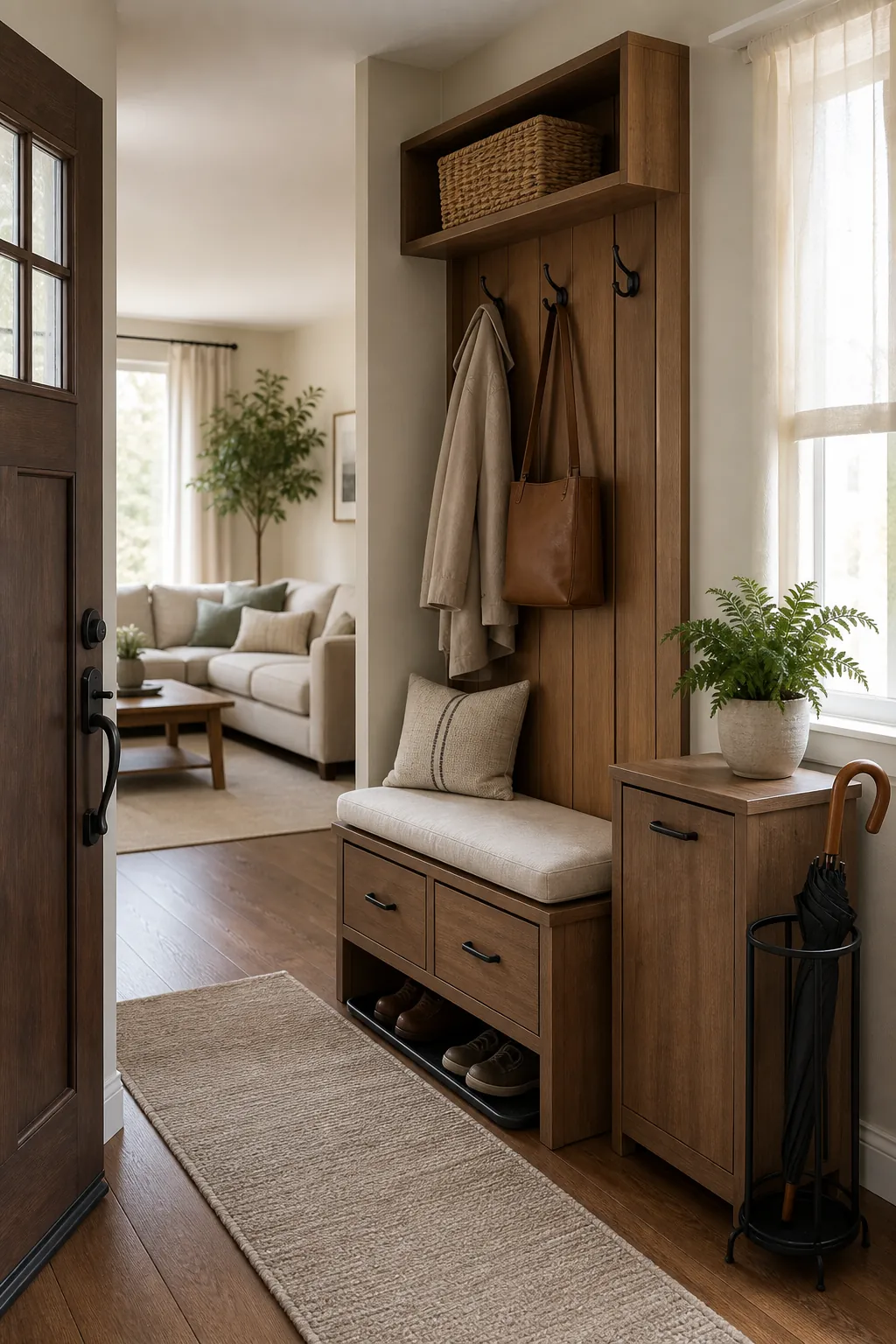
For families, closed storage is what keeps the system alive. If the only solution is perfect styling, it will fail on a Tuesday. A real entryway has to reset quickly after school bags, wet shoes, returns, mail, and grocery runs.
Let Runner Rugs Do More Than Decorate
Runner rugs are one of the easiest ways to turn a door area into a foyer. They tell the eye where the entry begins, protect the high-traffic floor, and create a path that does not compete with the living room rug. In a small space decor plan, the rug is not an afterthought. It is the floor plan.
Choose a low-pile, washable, or durable flat-weave runner so the door clears it easily. Leave a small strip of floor between the runner and the living room rug if possible. That gap makes each zone feel intentional instead of like one rug accidentally ran into another.
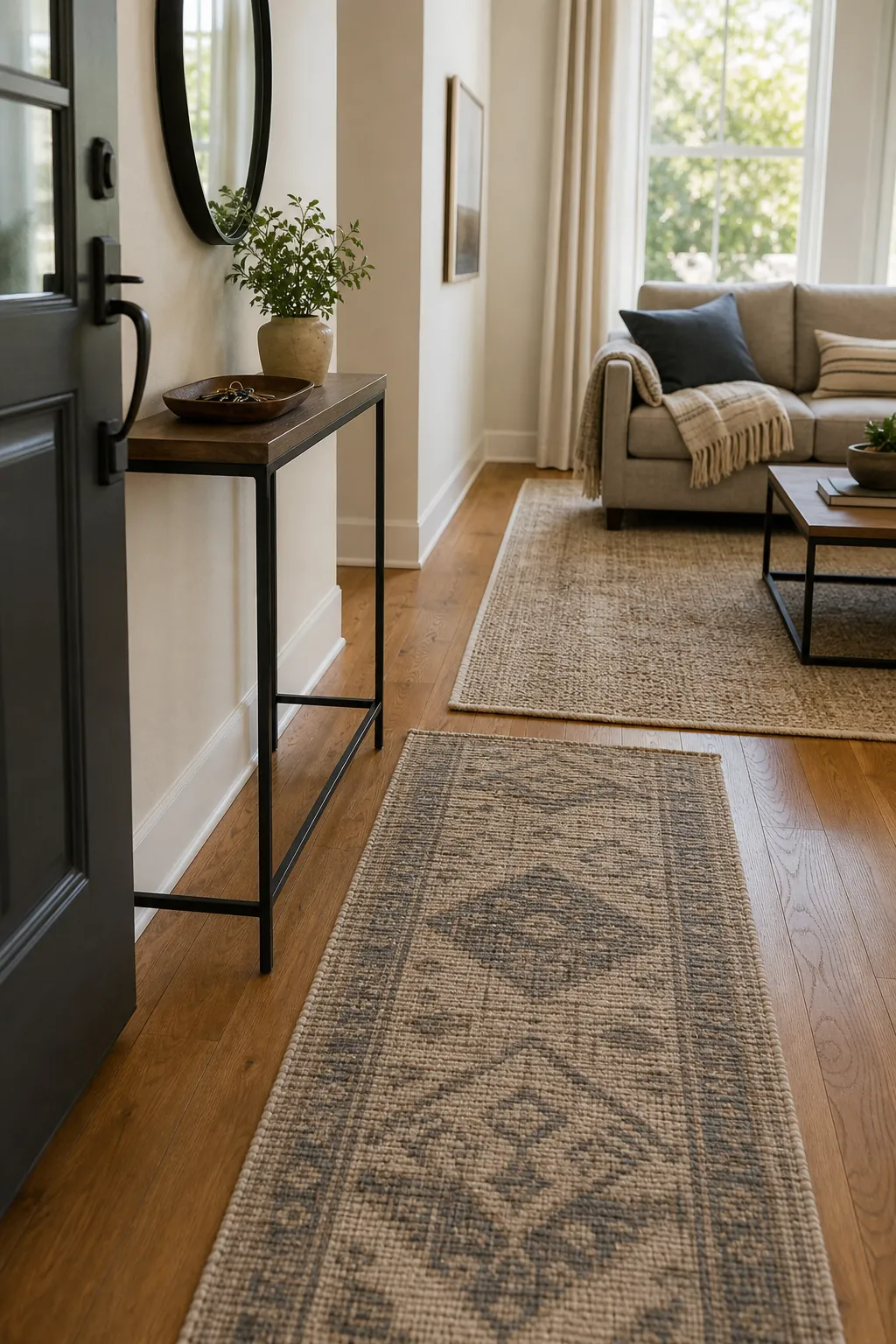
If your room already has a patterned living room rug, choose a quieter runner with texture instead of another loud print. If the living room rug is plain, the runner can carry more pattern. The two should coordinate, but they do not need to match.
Make the Entry Wall Feel Like a Destination
When there is no hallway, the wall by the door has to work harder. A mirror, sconce, color block, peel-and-stick wallpaper, framed art, or narrow console can turn that wall into a visual arrival point. This kind of hallway decor works even when there is technically no hallway.
The mistake is filling the wall with random pieces. Pick one strong anchor, then support it. A round mirror over a slim console, a plug-in sconce over a bench, or a painted panel behind hooks gives the eye a reason to stop. That pause is what makes an entry feel like a room instead of the corner where the door happens to be.
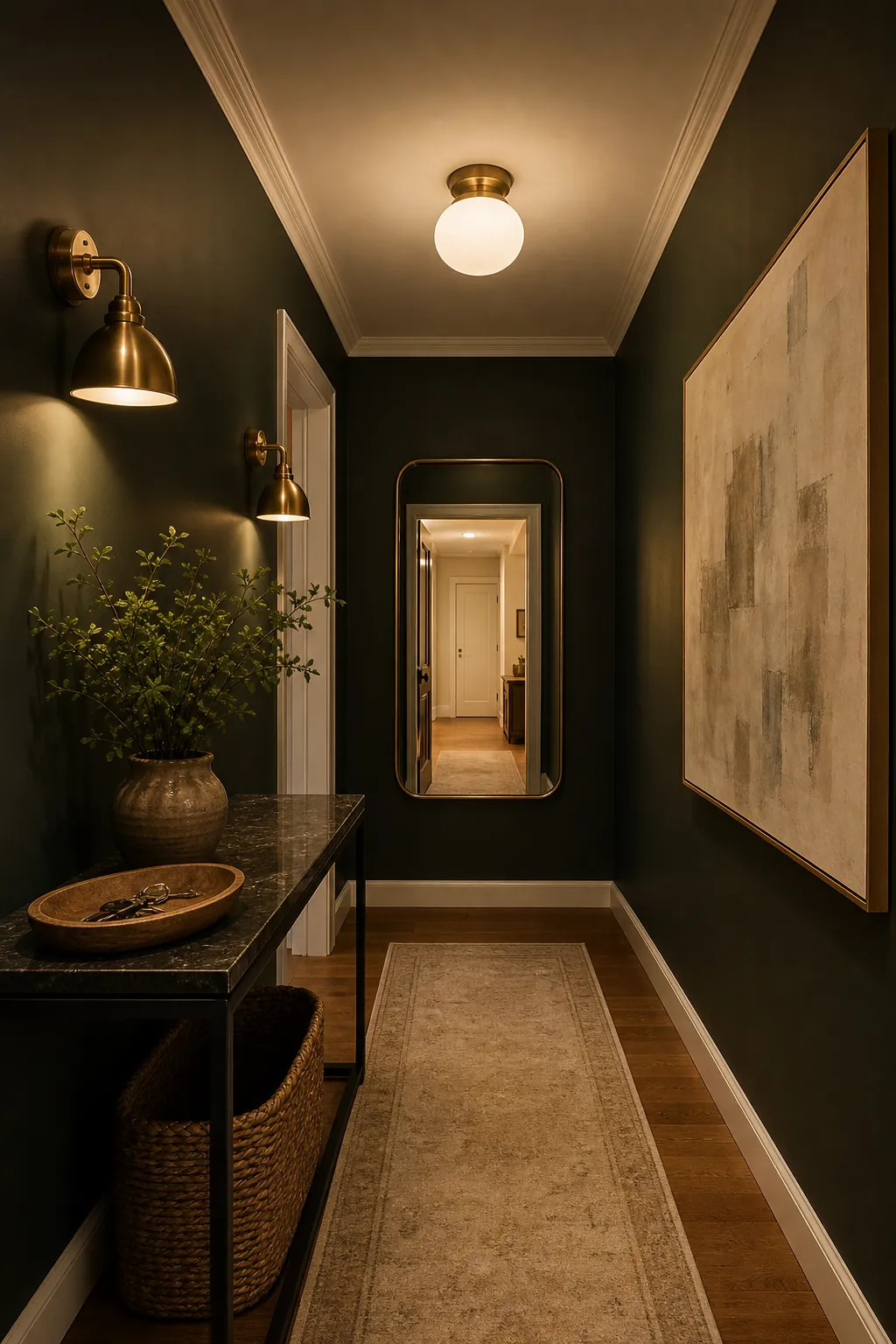
Use lighting to separate the entry from the living room at night. A small lamp on a console or a plug-in wall light gives the door area its own mood. It also makes the first step inside feel more welcoming than walking straight into one overhead living room light.
Keep the Living Room View Calm From the Door
The view from the threshold matters. If the first thing you see is the side of a toy pile, a tangled shoe mess, or the back of a TV, the whole room feels less settled. Stand at the door and edit what is visible from that exact spot.
- Hide the daily mess low. Use drawers, baskets, and closed cubbies below eye level.
- Keep one vertical moment. A mirror, art piece, tall plant, or sconce lifts the entry so it does not feel like storage only.
- Protect the walkway. No stool, basket, or shoe tray should narrow the natural path into the room.
- Repeat one material. Echo the living room wood tone, metal finish, or textile color so the entry feels connected.
The best entryway decor in this layout is useful first and attractive second. If it holds the things you actually carry through the door, the space will look better because it works better.
A Simple Formula That Works in Most Open Entries
If you are stuck, use this formula: one floor boundary, one landing surface, one closed storage piece, one vertical anchor, and one light source. That might be a runner rug, a slim console, a shoe cabinet, a mirror, and a small lamp. Or it might be a washable mat, a wall shelf, a storage bench, a hook rail, and a plug-in sconce.
You do not need all the furniture at once. Start with the thing causing the most friction. If shoes are the problem, solve shoes. If the living room feels exposed, solve the boundary. If the door area feels dark, solve the light. A small entryway becomes convincing when each choice removes a real annoyance.
Homes that open straight into the living room can still feel calm, welcoming, and organized. The secret is to stop waiting for a foyer and start building a threshold. Once the first few feet have purpose, the whole living room feels more settled.