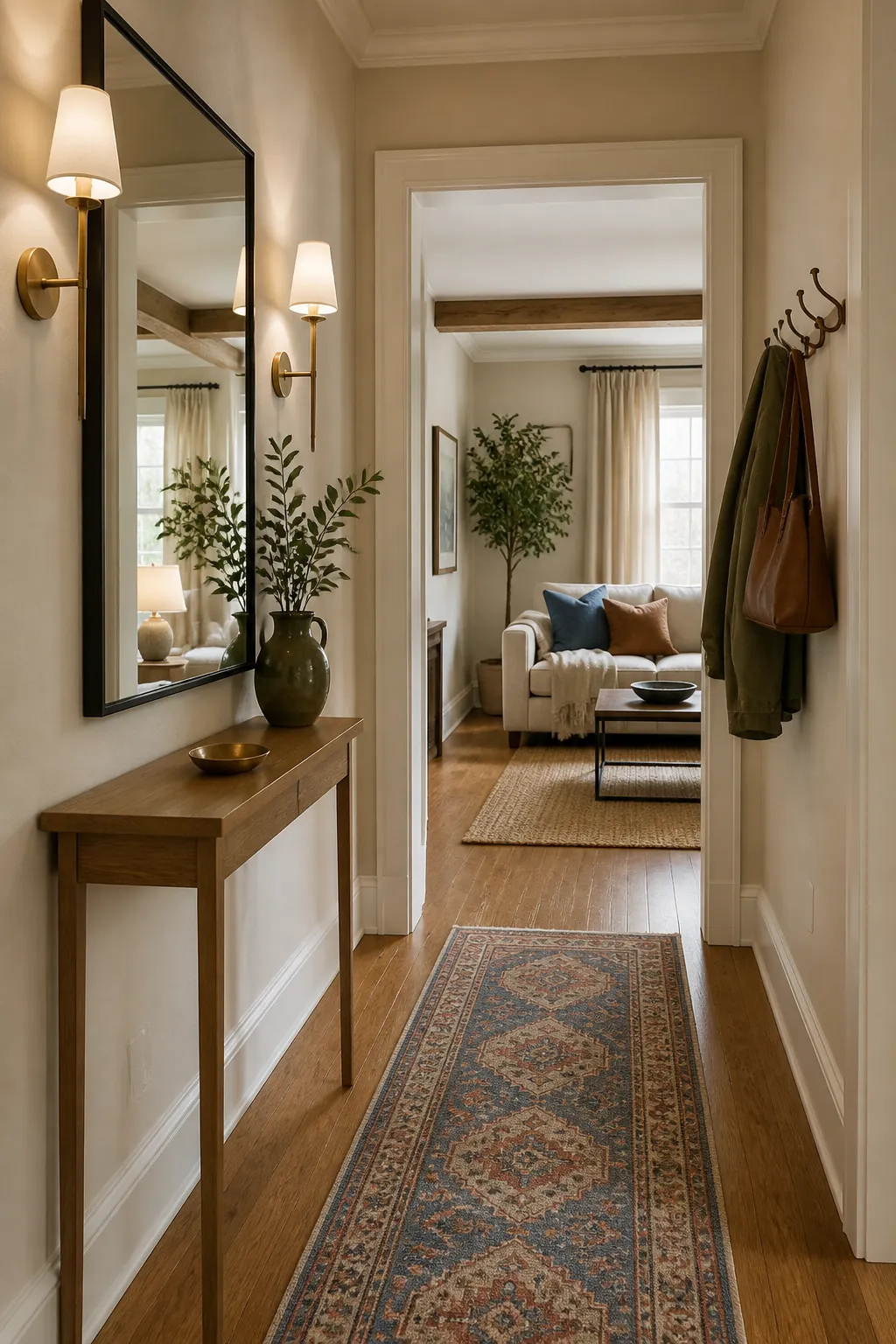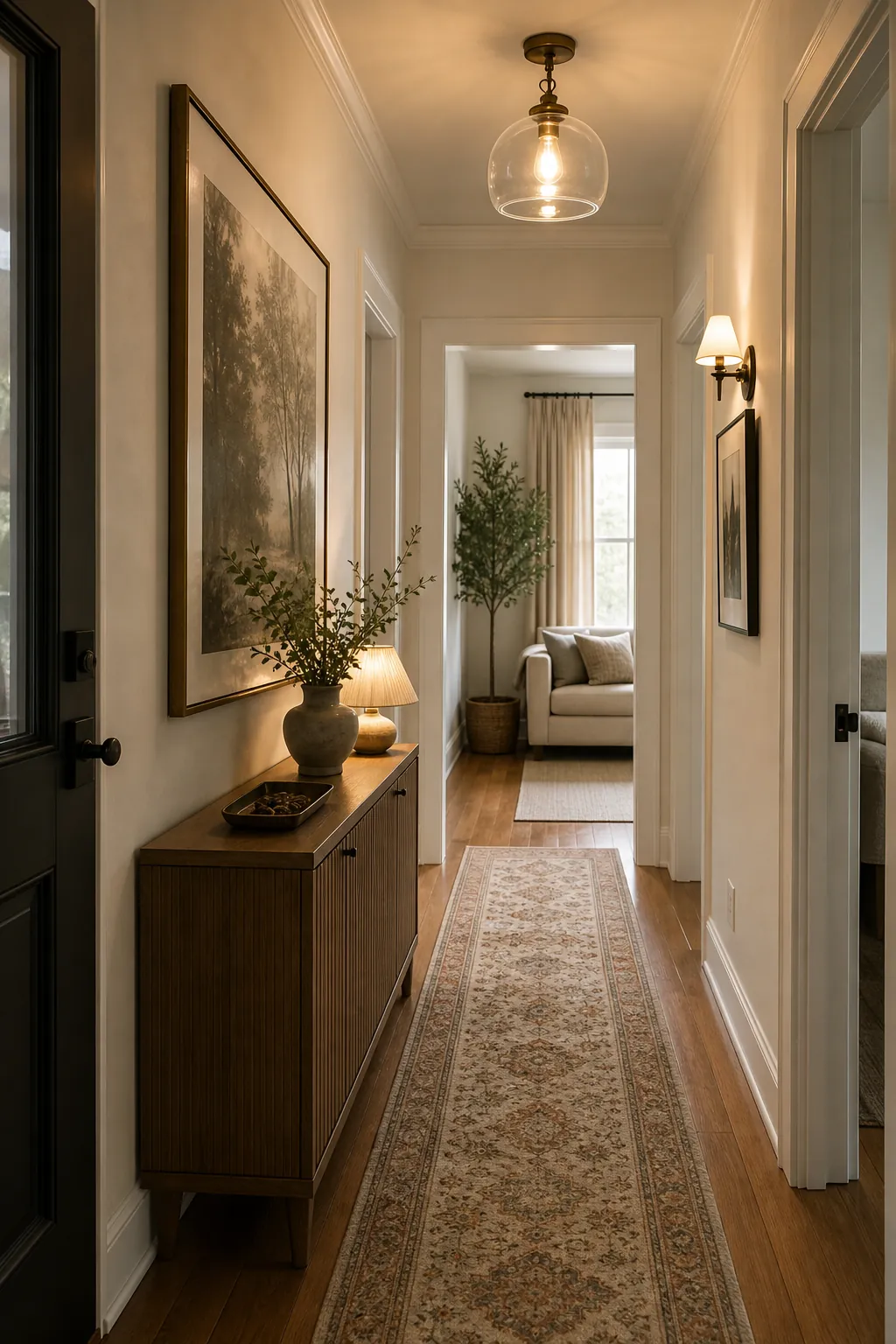
A plain hallway is rarely a decorating problem because it lacks space. It usually feels unfinished because it lacks a decision. The walls are blank, the floor is doing all the visual work, the ceiling light is too cold, and the drop zone near the door quietly collects shoes, bags, mail, and keys.
The fix is not to fill every inch. The strongest Hallway Makeover starts with one clear focal moment, then supports it with lighting, texture, and just enough Home Organization to keep the space from sliding back into clutter. Think of the hallway as a narrow room with a job, not as a leftover strip between better rooms.
Choose One Focal Wall Before Buying Anything
The fastest way to make a hallway look intentional is to decide where the eye should land. In many homes, that is the wall at the end of the hall, the first blank stretch after the front door, or the section across from a console or bench. Without that anchor, every small purchase competes for attention.
Start with one move: a large framed print, a pair of stacked artworks, a mirror, wall molding, grasscloth-style wallpaper, or a saturated paint color on a short end wall. This is where Wall Decor earns its place. A single confident choice often looks more polished than five small pieces trying to rescue a blank wall.
If your hallway is narrow, keep the focal point shallow. Art, mirrors, trim, and wallpaper add depth without stealing walking space. If your hallway is wider, a slim console can work, but the rule still holds: one focal idea first, accessories second.
Use a Runner Rug to Make the Walk Feel Designed
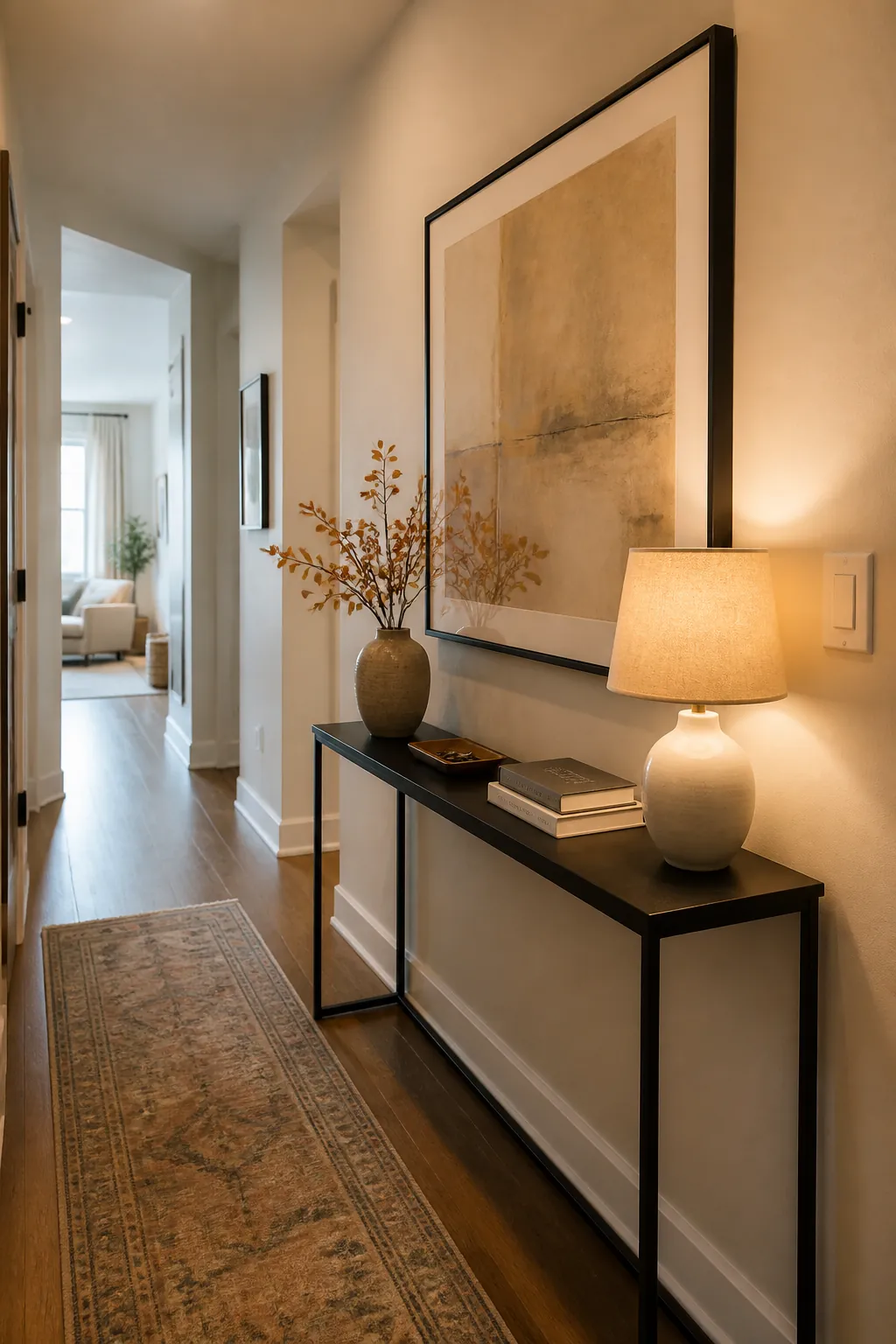
A hallway without a runner can feel like a pass-through. A runner turns it into a path. It adds softness, absorbs sound, protects flooring, and gives the eye a line to follow. This is why Runner Rugs appear again and again in practical Hallway Decor advice: they solve both visual and everyday problems.
For the cleanest look, leave a visible border of flooring on both sides instead of pushing the rug wall to wall. In a tight hallway, a low-pile runner is easier to live with than something plush, especially near doors. Pattern helps disguise traffic, while a quieter texture works when the wall decor is already bold.
The mistake is choosing the runner last. Pick it early enough that it can set the palette. Pull one color from the rug into art, a lamp shade, a tray, or a hook rail so the hallway reads as a small composition instead of separate purchases.
Fix the Lighting Before You Add More Decor
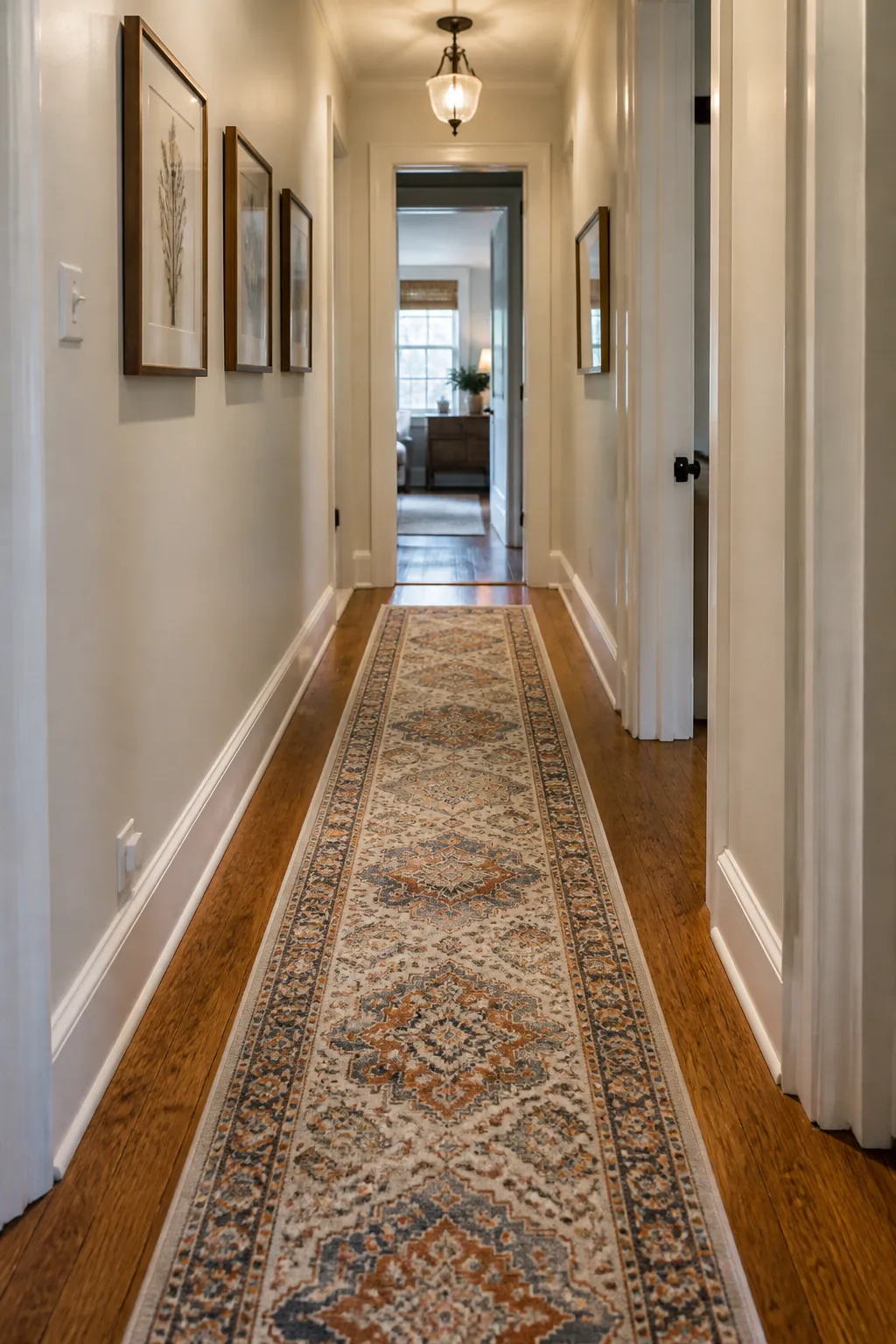
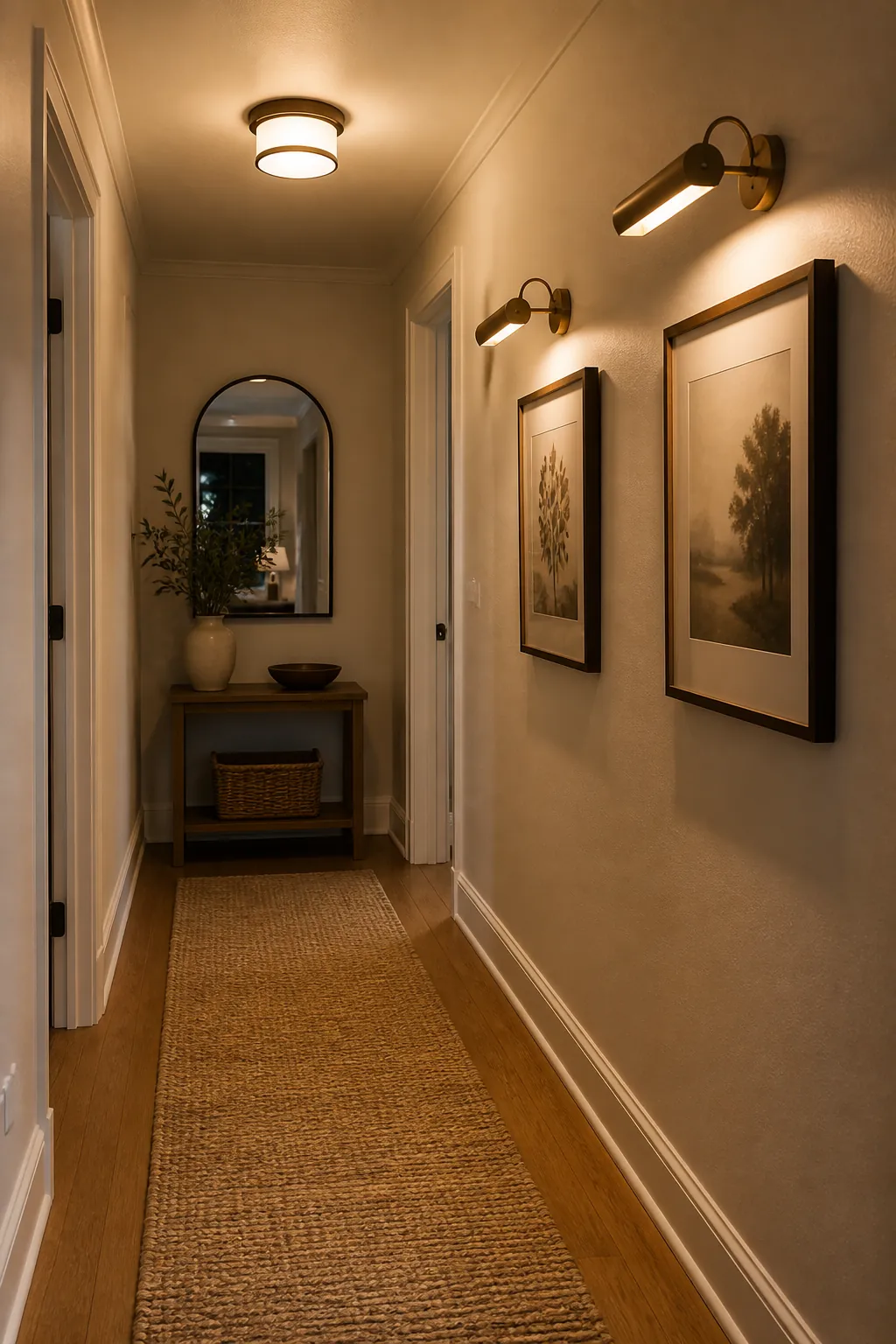
Many plain hallways do not look plain in daylight; they look plain under one harsh ceiling fixture. Before adding another basket or frame, look at the light. A warm flush mount, a small pendant, picture lights, rechargeable sconces, or a table lamp on a slim console can change the mood faster than another decorative object.
Good Interior Styling is not only about what you place in the room. It is about what the room makes visible. Warm light brings out wood grain, rug texture, wall color, and framed art. Cold overhead light flattens all of it and makes even expensive pieces feel temporary.
If wiring is not an option, use renter-friendly lamps, plug-in picture lights, or battery sconces with restraint. The goal is not a showroom glow; it is a softer arrival. A hallway should feel like the house has already started welcoming you before you reach the living room.
Create a Drop Zone That Looks Deliberate
A hallway near the front door has to handle real life: shoes, coats, keys, school bags, dog leashes, packages, and mail. Ignoring that function usually creates clutter. Overbuilding it makes the entry feel cramped. The best Entryway Decor sits between those two extremes.
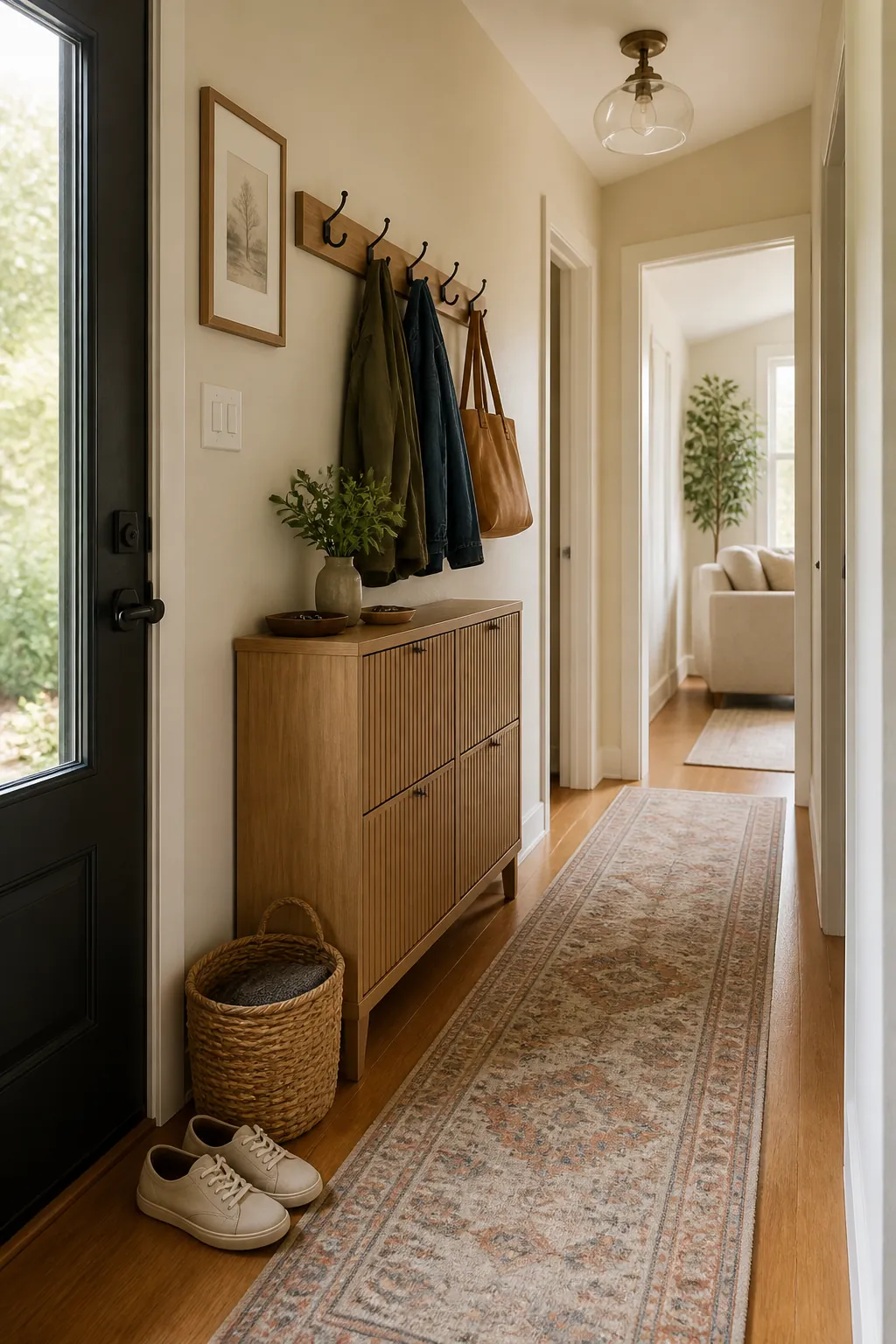
Use vertical storage first. A clean hook rail, a shallow shelf, a wall pocket, or a slim closed shoe cabinet keeps the floor open. If you have room for a bench, choose one with breathing space underneath or baskets that can slide away. In a small apartment or compact foyer, even a tray for keys and one lidded basket can make the difference between styled and messy.
The styling trick is to make the practical piece match the decor language. Brass hooks with a warm runner, black hooks with a black-framed mirror, woven baskets with natural wood, or painted storage that echoes the wall color will feel like part of the design. That is how Mudroom Ideas become elegant enough for the front of the house.
Make Small Space Decor Work With Scale, Not More Stuff
The usual fear is that a small hallway cannot handle a bold choice. The opposite is often true. A tight space can take one strong moment because you experience it quickly. What it cannot handle is a dozen tiny objects with no hierarchy.
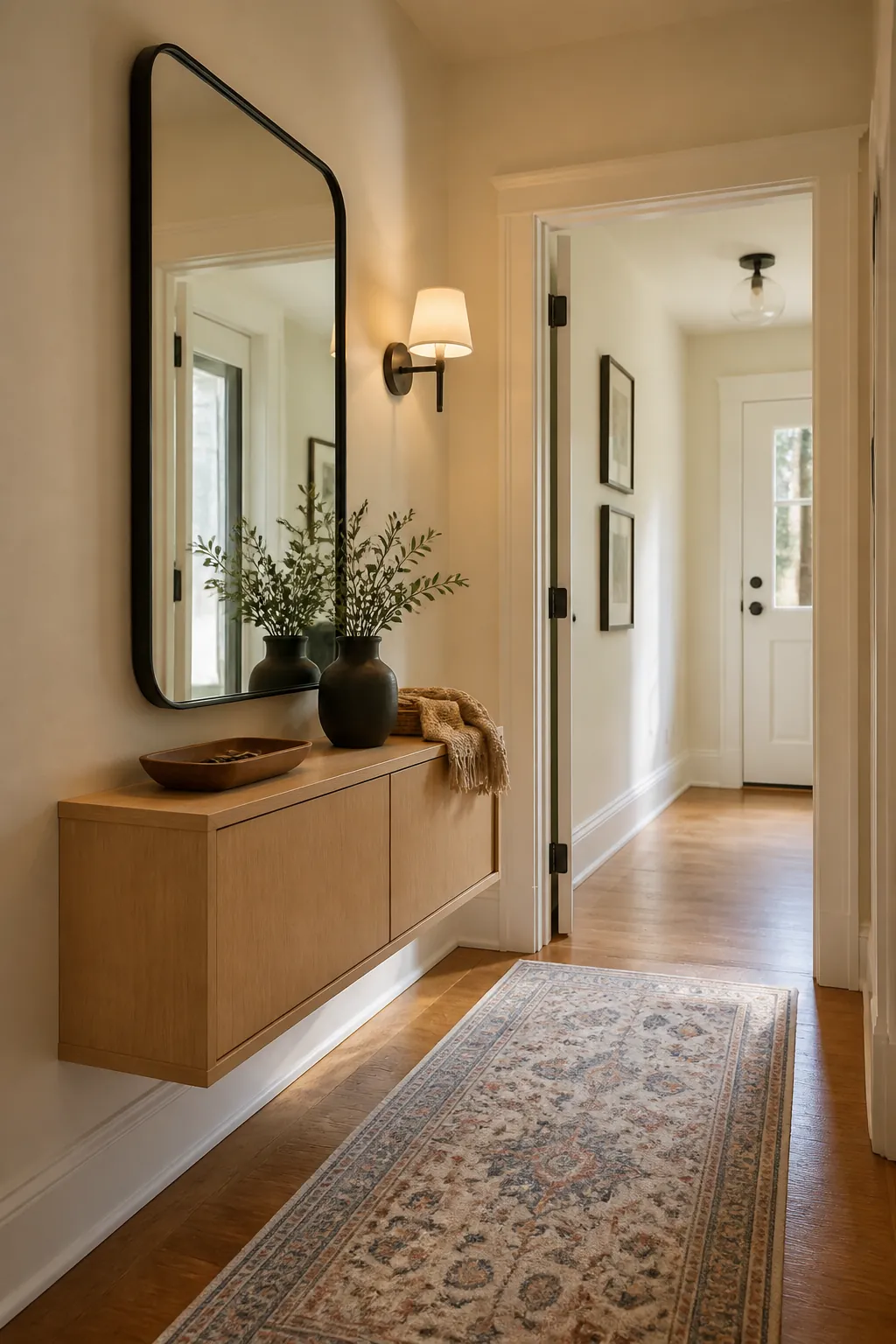
For Small Space Decor, scale matters more than quantity. Try one oversized mirror instead of three small mirrors. Choose one long runner instead of scattered mats. Hang one larger artwork at the end of the hall instead of a random row of undersized frames. Use a slim console with closed storage rather than open shelves full of small items.
This approach also helps with Foyer Ideas in homes that barely have a foyer. A mirror creates the pause, a rug defines the landing, a hook rail gives function, and a small lamp or sconce gives atmosphere. You are not pretending the space is bigger. You are making it clearer.
Tie the Hallway to the Rooms Around It
A decor moment should not feel dropped in from another house. The hallway can be bolder than the surrounding rooms, but it still needs a relationship to them. Repeat one finish, one color, one material, or one shape from nearby spaces so the transition feels intentional.
If the living room has warm wood, bring in a wood frame or console. If the kitchen has black hardware, repeat black in the mirror frame or hooks. If the bedroom side of the hall is soft and neutral, use texture through a runner, linen shade, or woven basket instead of loud color. These small echoes are the quiet part of good Interior Styling.
The best hallway transformation is the one that makes people slow down for a second without blocking the way. A focal wall, a runner, warm light, and a restrained drop zone can turn a plain strip of wall into the moment that sets the tone for the whole home.