
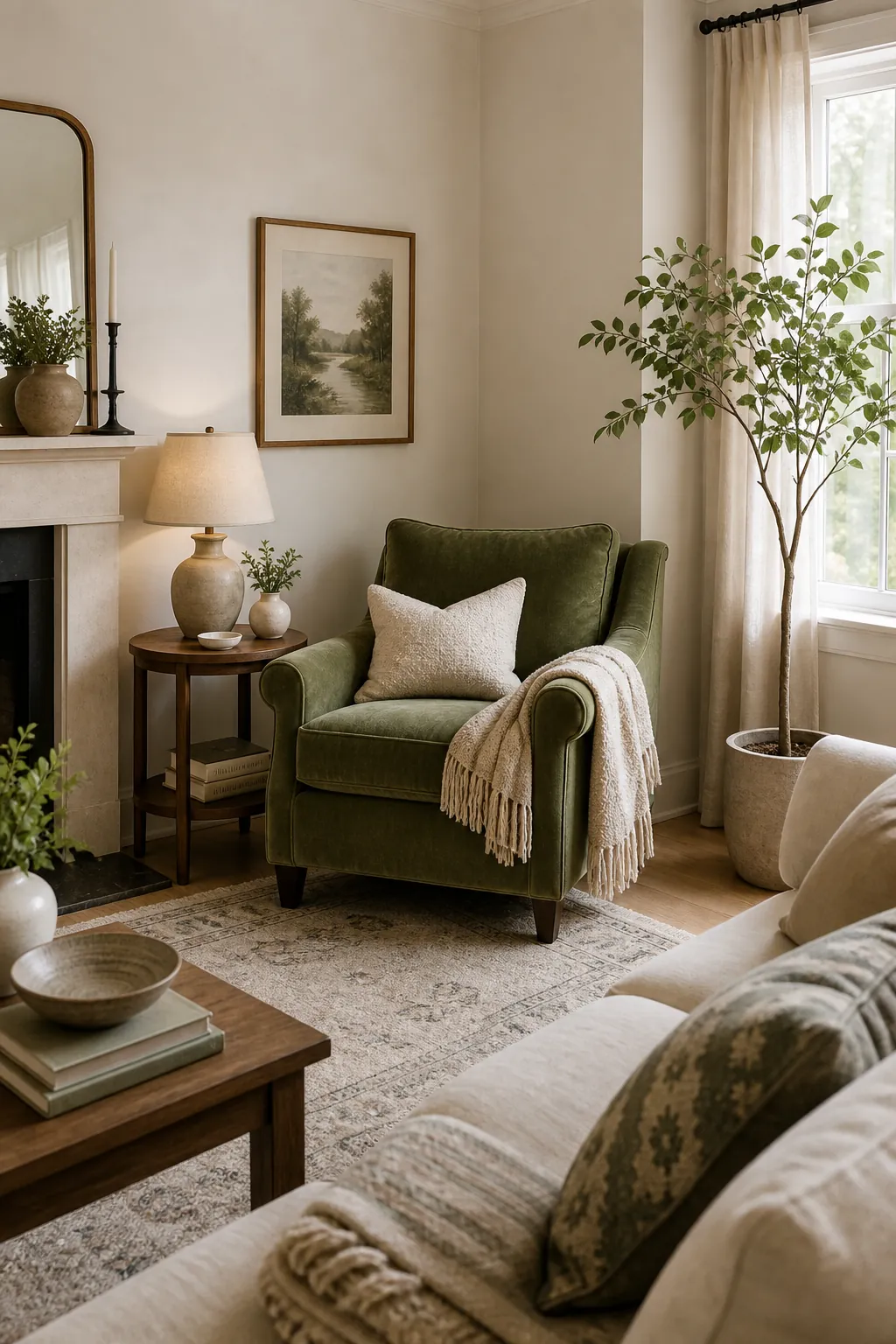
A green accent chair can make a living room corner feel finished, but only if it does more than fill an empty spot. The best corners work because the chair has a purpose: a place to read, drink coffee, talk with someone on the sofa, or give the room one confident color note.
The mistake is treating the chair like a loose decoration. A pretty chair pushed into a blank corner still looks accidental. A useful corner has three things: clear floor space, a light source, and one small landing surface. Once those are right, the green decor becomes easier to repeat through pillows, art, plants, or a quiet pattern.
Start With the Job of the Corner
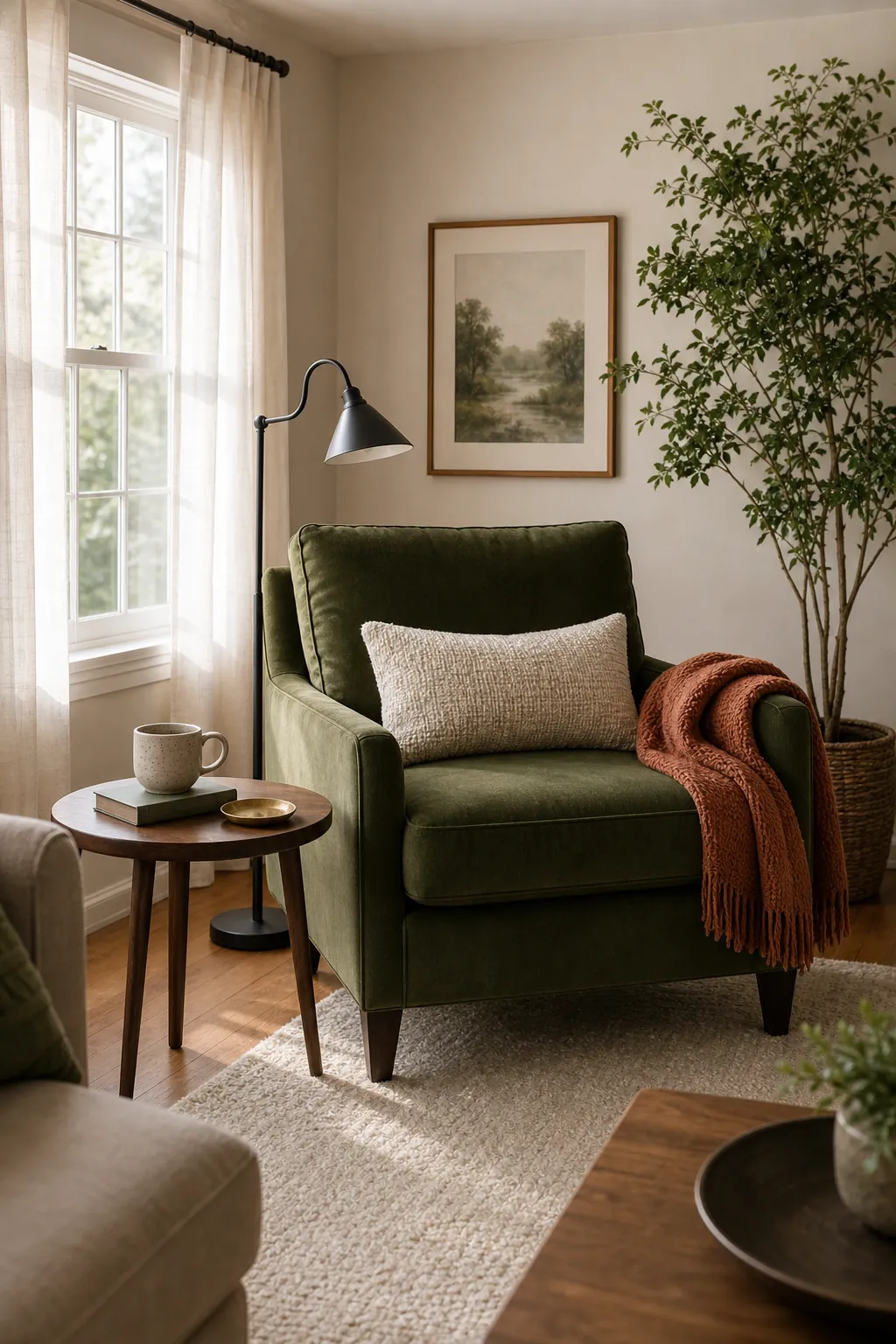
Before choosing pillows or a table, decide what the living room corner should actually do. If it is close to a window, make it a reading corner. If it faces the sofa, make it a conversational seat. If it sits near a bookcase, let it become the soft pause in a more functional wall.
This matters because the right chair position changes the whole room. Pull the green accent chair a few inches away from the wall, then angle it toward the main seating area. That small turn makes the chair feel invited into the room instead of parked in a leftover gap. Leave enough open floor around the front legs so the corner still feels easy to walk past.
A corner chair should look intentional from across the room and comfortable from up close. If it only does one of those things, the styling will feel incomplete.
Use Scale to Keep a Small Corner From Feeling Crowded
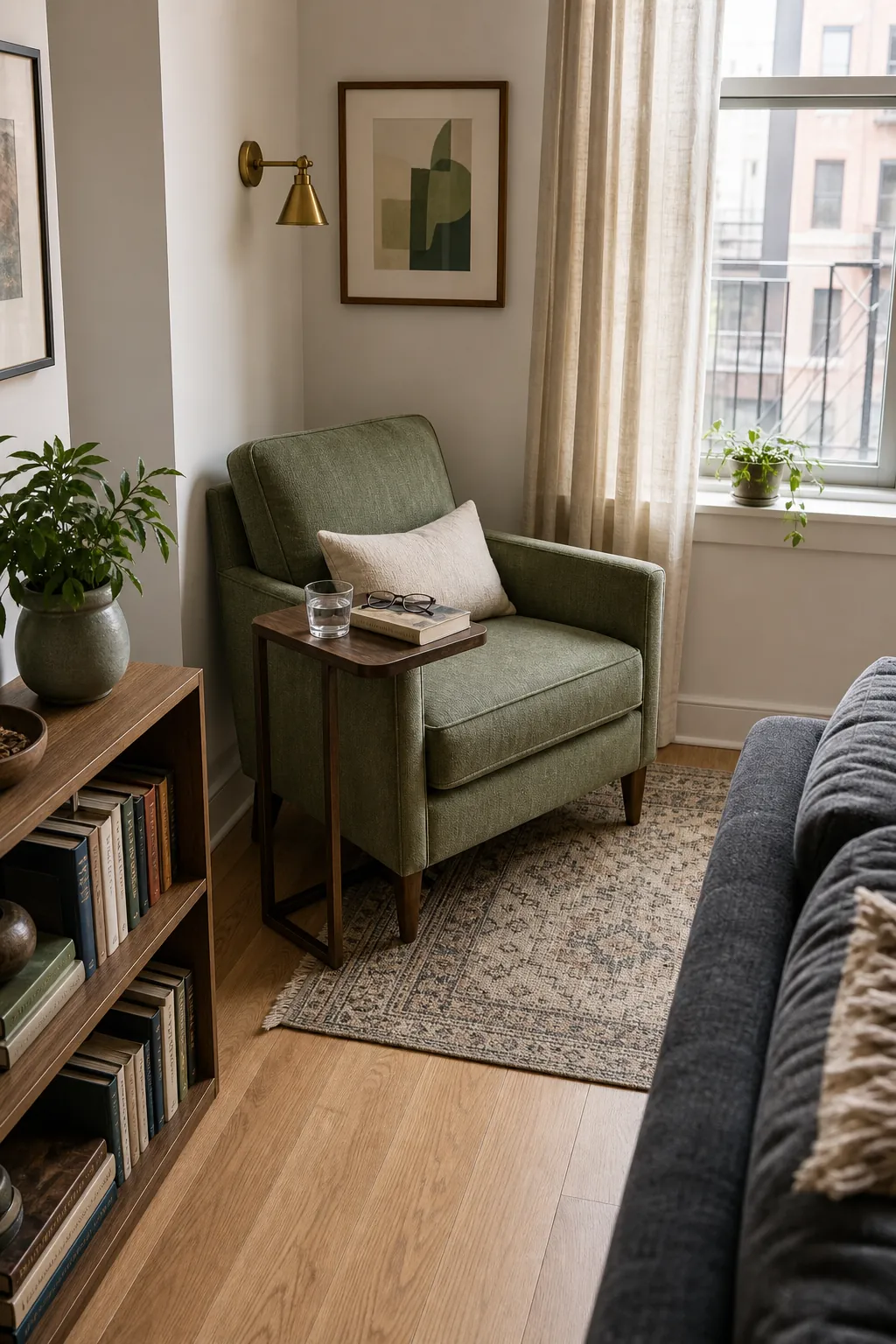
For a small living room corner, the best accent chair styling usually starts with restraint. Choose a chair with a medium-height back, visible legs, or a rounded barrel shape instead of a bulky recliner profile. The chair can still be comfortable, but it should not visually block the corner.
If there is not room for a wide side table, use a C-table, a small pedestal table, or a wall sconce instead of a floor lamp. The goal is not to make the corner tiny; it is to make every piece earn its place. A narrow table for a book and a drink often works better than a large table covered with decor.
One practical test: stand at the entrance of the room and check whether the chair blocks a path, a window, or the line of sight to the sofa. If it does, rotate it or reduce the surrounding pieces before adding more decor.
Repeat Green Lightly Instead of Matching Everything
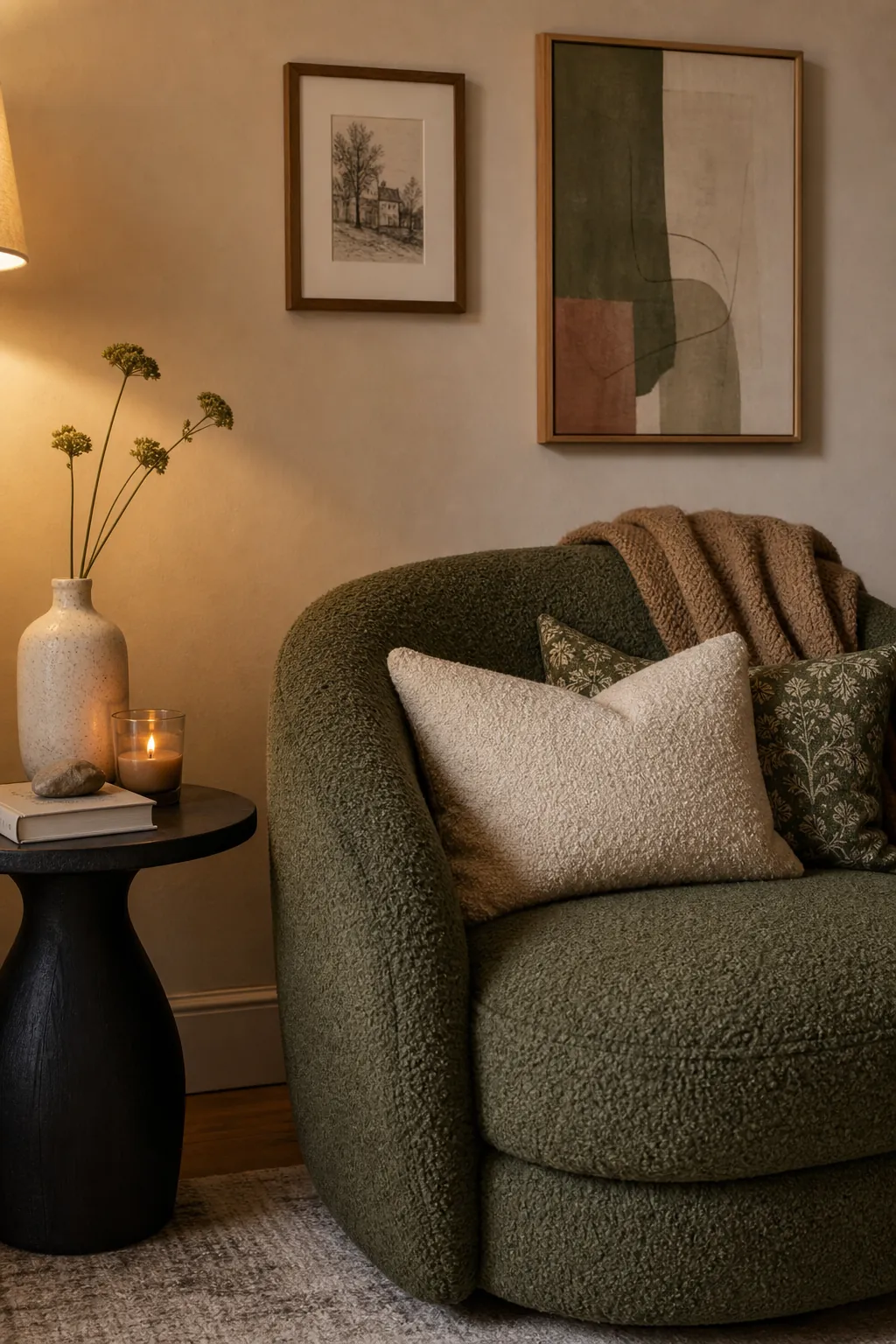
The chair can be the strongest green in the room. It does not need a matching green sofa pillow, green curtains, green art, and green vases all shouting the same note. A better approach is to repeat green quietly in two or three places: a thin line in a pillow, a muted landscape print, a ceramic planter, or a small pattern in the rug.
This is where interior styling starts to feel grown up. Olive works beautifully with rust, oatmeal, black, walnut, brass, cream, and clay. Sage works with pale oak, linen, charcoal, white, and warm stone. Emerald can handle deeper contrast, but it still benefits from soft neutrals nearby.
Do not ask every object to match the chair. Ask a few objects to acknowledge it. That is the difference between green decor that feels layered and green decor that feels themed.
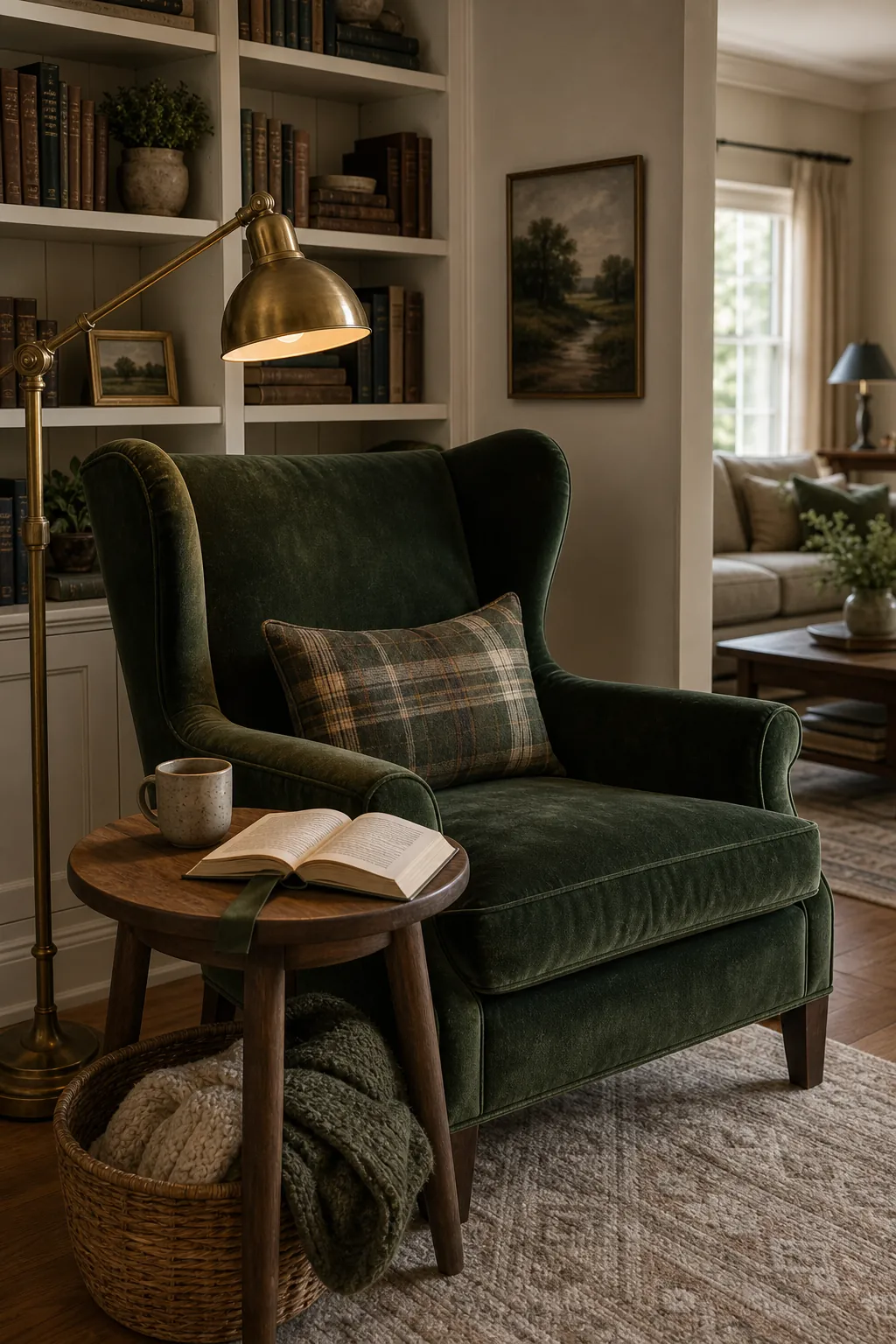
Make a Real Reading Corner, Not Just a Pretty Chair
A reading corner needs more than a chair and a pillow. It needs light at the right height, a place to set a cup, and enough comfort that someone would actually sit there for more than five minutes. If the chair is green velvet, boucle, linen, or leather, let the texture do part of the decorating for you.
For lighting, a floor lamp works well if the corner has room. A wall sconce is better when the chair sits in a narrow pass-through space. The side table decor should stay useful: one book, one cup, one small lamp or vase, and maybe a small dish. When the table is too styled, the corner stops feeling usable.
Add one textile that makes the chair feel softer. A cream pillow, plaid lumbar cushion, or beige throw can tone down a bold green accent chair without hiding it. This is especially helpful if the rest of the living room styling is neutral.
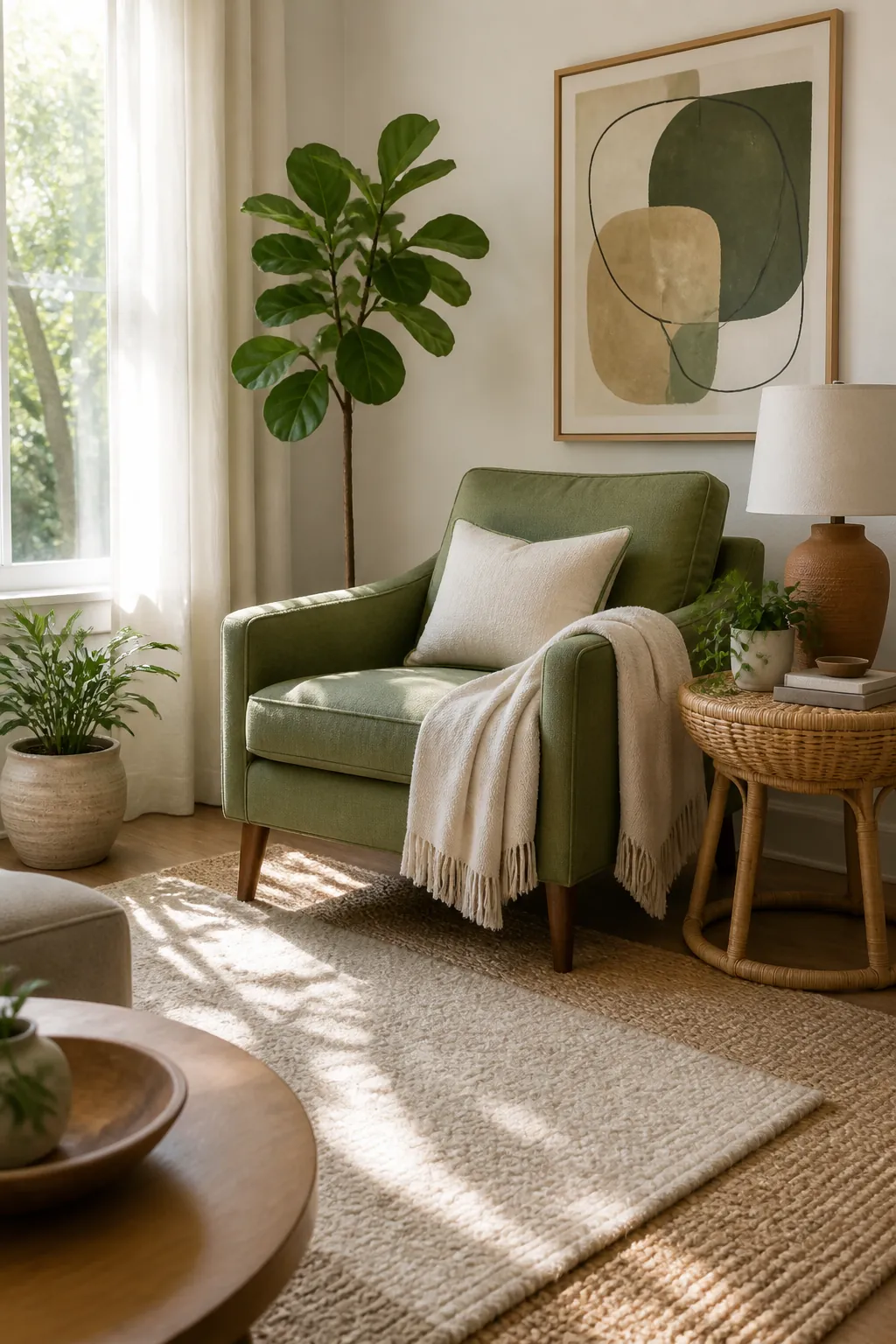
Add Plants and Natural Texture With Breathing Room
Plants are an easy partner for a green chair, but too many can make the corner look busy. One tall plant behind or beside the chair is usually enough. If you add a second plant, keep it lower and simpler so the chair remains the main feature.
Natural texture helps green feel relaxed: jute, rattan, oak, linen, wool, terracotta, and handmade ceramics all soften the color. This works especially well for sage and fern green chairs, where the mood should feel fresh rather than dramatic.
The key is negative space. Leave a little bare floor, a little empty wall, and a little open tabletop. A cozy corner is not the same thing as a crowded corner.
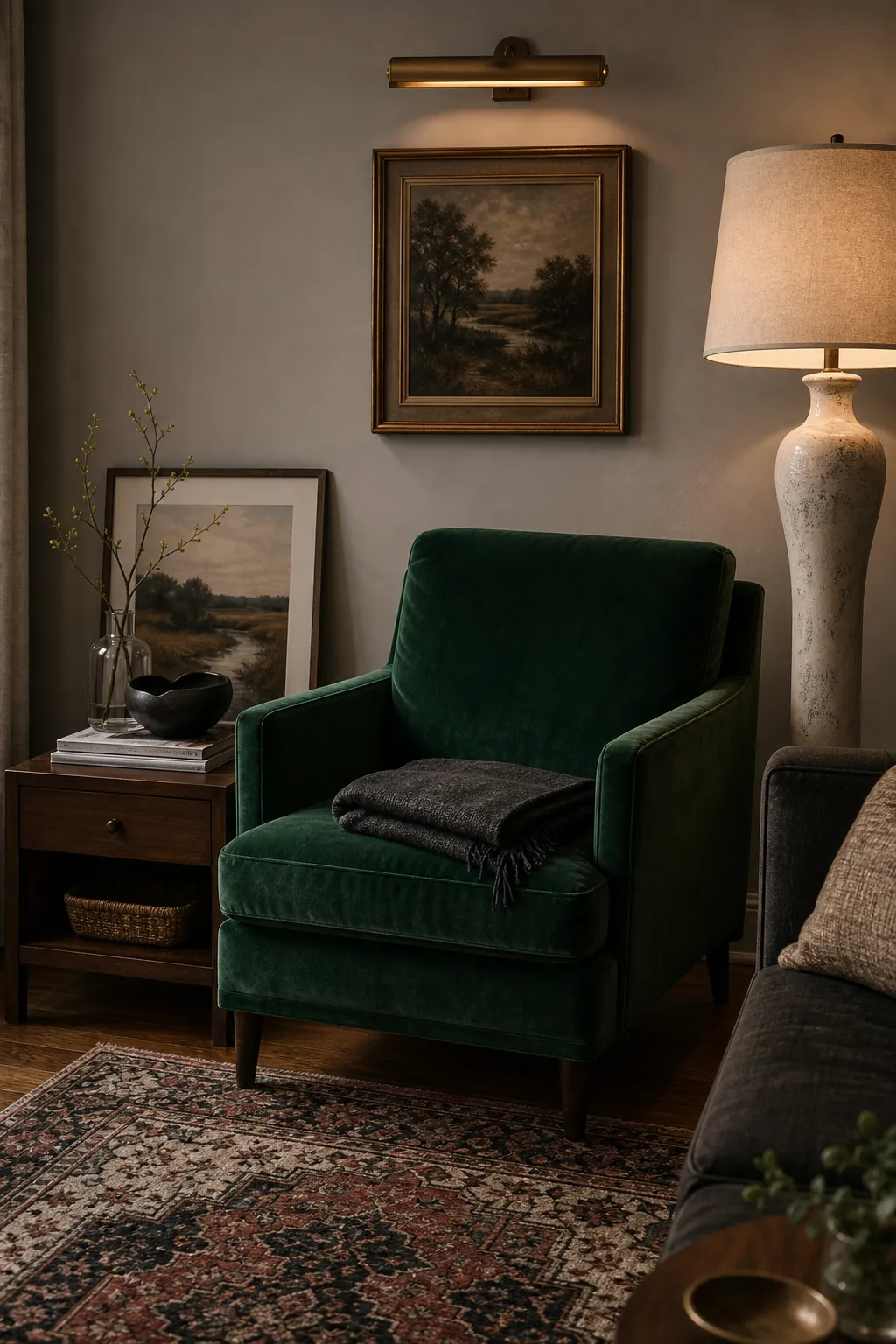
Let a Dark Green Chair Be the Mood, Not the Whole Room
Emerald, forest, and deep olive chairs can look rich without making the room feel heavy. The trick is contrast. Put the chair against a warm neutral wall, add a lighter lampshade, and use a rug with cream or faded red to break up the darkness. Brass, walnut, black metal, and charcoal all work, but keep at least one nearby element light.
If the living room already has dark walls or a dark sofa, choose softer chair decor: a pale pillow, oatmeal throw, light artwork, or a table lamp with a fabric shade. The green should bring depth, not close the room in.
When in doubt, style the corner around comfort first. A well-placed green accent chair, a lamp, a small table, and two quiet color repeats will almost always look better than a corner filled with objects trying to prove the theme.
A Simple Formula for Styling the Corner
- One green accent chair with the right scale for the corner.
- One light source, either a floor lamp, table lamp, or wall sconce.
- One small surface for a drink, book, or remote.
- One soft textile, such as a pillow or throw, to make the chair inviting.
- Two quiet green repeats in art, plants, a rug, or a small accessory.
That formula keeps the corner useful and keeps the color under control. The result is a green accent chair that looks chosen, not squeezed in.