
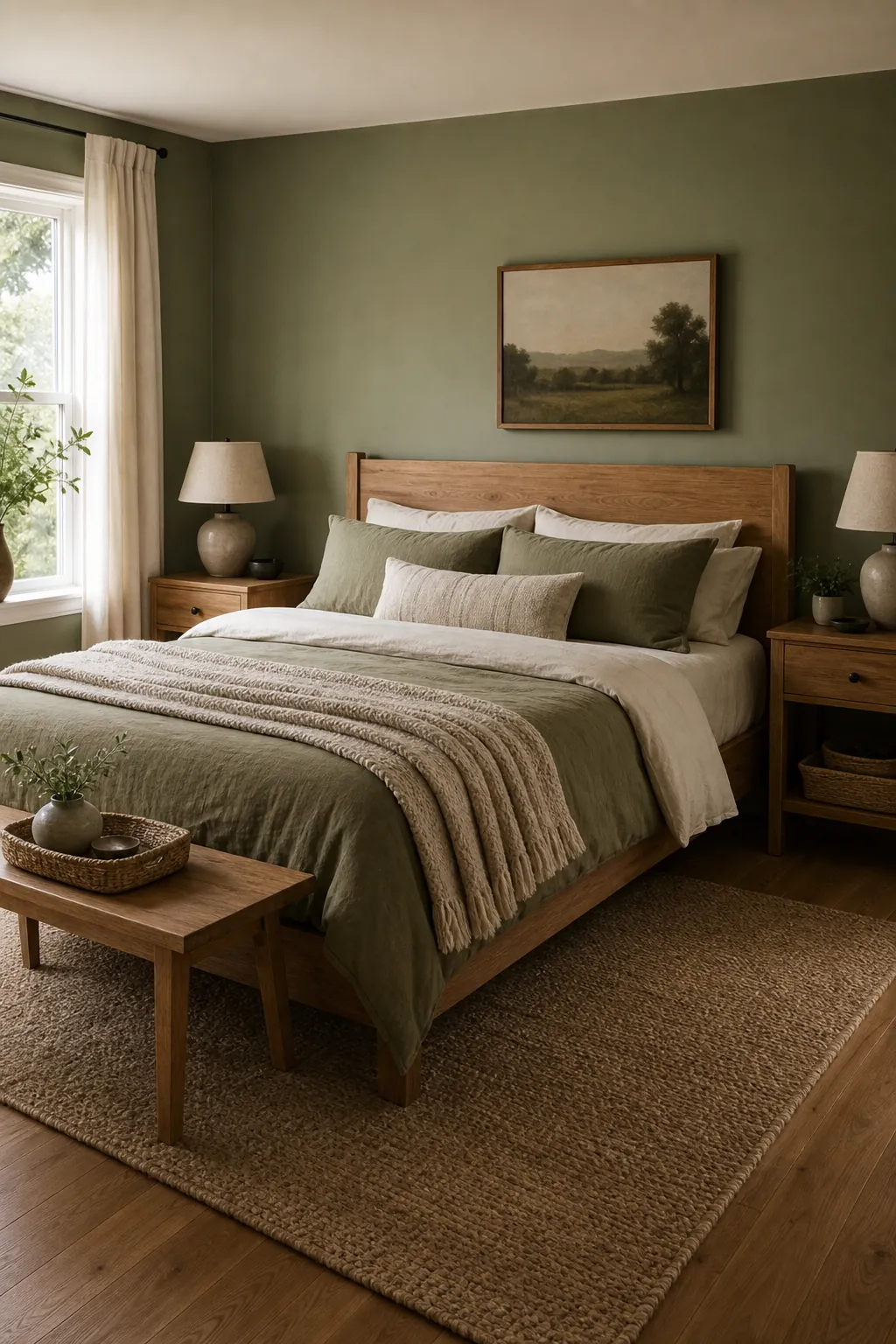
A green bedroom can go wrong in two opposite ways: it can turn too dark and heavy, or it can look like a pile of unrelated natural decor. The fix is not buying a perfectly matched furniture set. The fix is choosing one clear green direction, then letting the natural wood furniture, bedding, textiles, and small accents repeat that direction quietly.
The best green bedrooms feel calm because every choice has a job. The wall color sets the mood, the wood tone warms it up, and the bedding softens the whole room. Once those three pieces work together, the rest of the bedroom decor becomes much easier.
Start With the Green, Not the Furniture Set
Reddit decorating threads around green bedroom ideas keep circling the same problem: people know they want a natural, earthy bedroom, but they are unsure whether the room should lean sage, olive, forest, or mint. That decision matters more than the nightstand shape because green changes dramatically with natural light.
For a bedroom that needs to feel restful, start with a green that has gray, brown, or yellow undertones instead of a clean, bright green. Sage works well when the room needs to stay light. Olive works well when the room already has cream bedding and warm wood accents. Deep forest green works best as an accent wall, not automatically on all four walls.
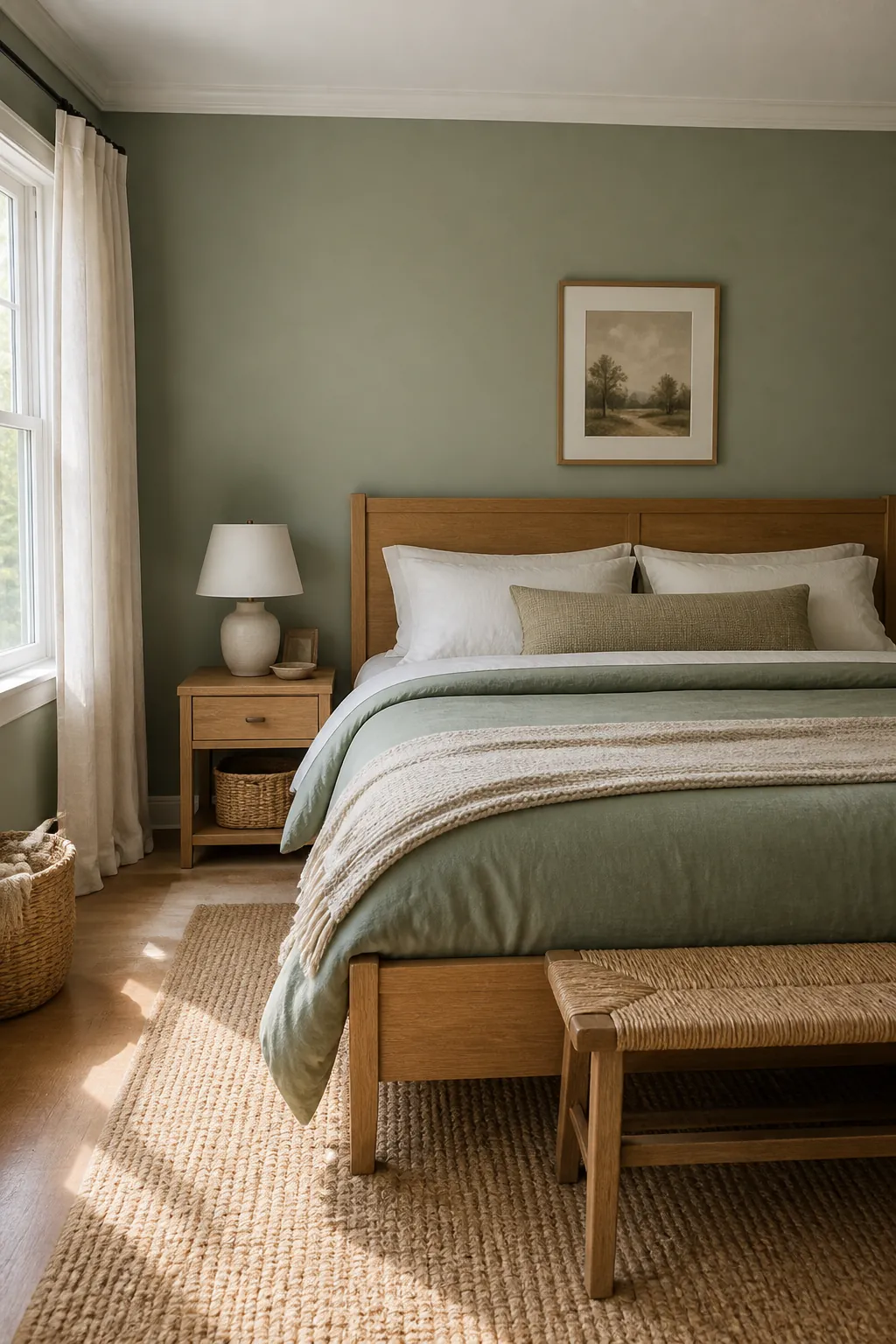
If the room has little daylight, avoid making the green do all the work. Use green bedding, curtains, art, or a rug first. That gives the calm bedroom feeling without turning the space flat or gloomy.
Choose One Wood Tone Family
Natural wood furniture does not need to match exactly. In fact, matching bedroom sets can make an earthy bedroom look stiff. The better rule is to keep the wood tones in the same temperature family. Light oak, ash, maple, and pale bamboo usually play well together. Walnut, teak, cherry, and medium acacia belong to a warmer, richer family.
The trouble starts when the room mixes very orange wood, gray-washed wood, espresso furniture, and yellow oak with no bridge between them. Pick one anchor piece, usually the bed frame, then repeat its undertone two or three times in smaller places. A mirror frame, bench, lamp base, picture frame, or tray can make mixed pieces look intentional.
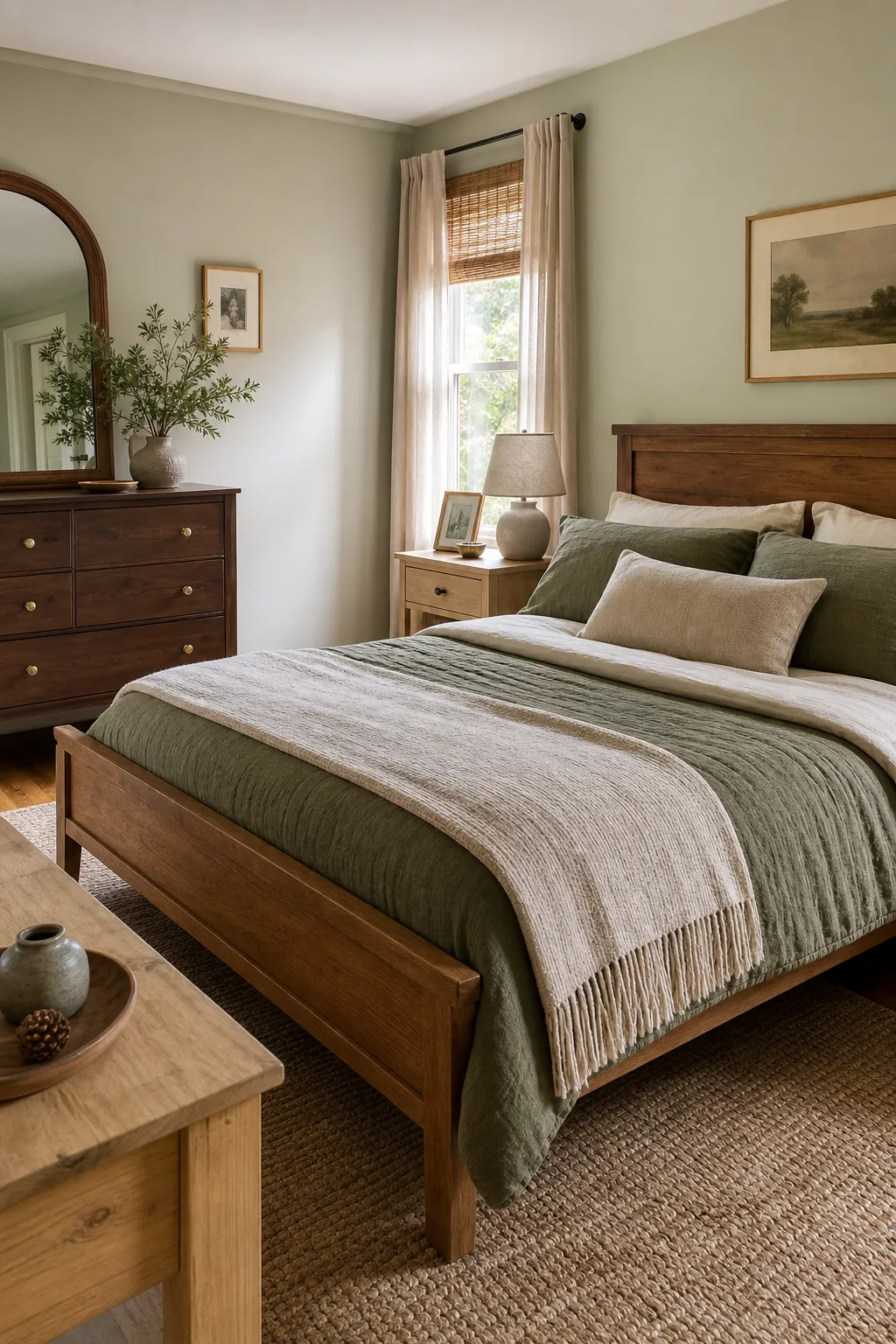
If you already own mismatched wood pieces, do not rush to replace everything. Use bedding, curtains, a large rug, and repeated metal hardware to connect the furniture. A calm bedroom can handle contrast when the main palette stays disciplined.
Let Green Bedding Carry the Color
Green bedding is the easiest way to test the palette before committing to paint. It also helps renters, small bedrooms, and rooms with dark carpet. A sage duvet, olive quilt, or muted green linen cover can make natural wood furniture feel softer without requiring a full repaint.
The key is contrast. If the furniture is pale wood, use a slightly deeper green on the bed. If the furniture is dark wood, use softer green bedding with cream, oatmeal, or white sheets. That keeps the bed from disappearing into the room.
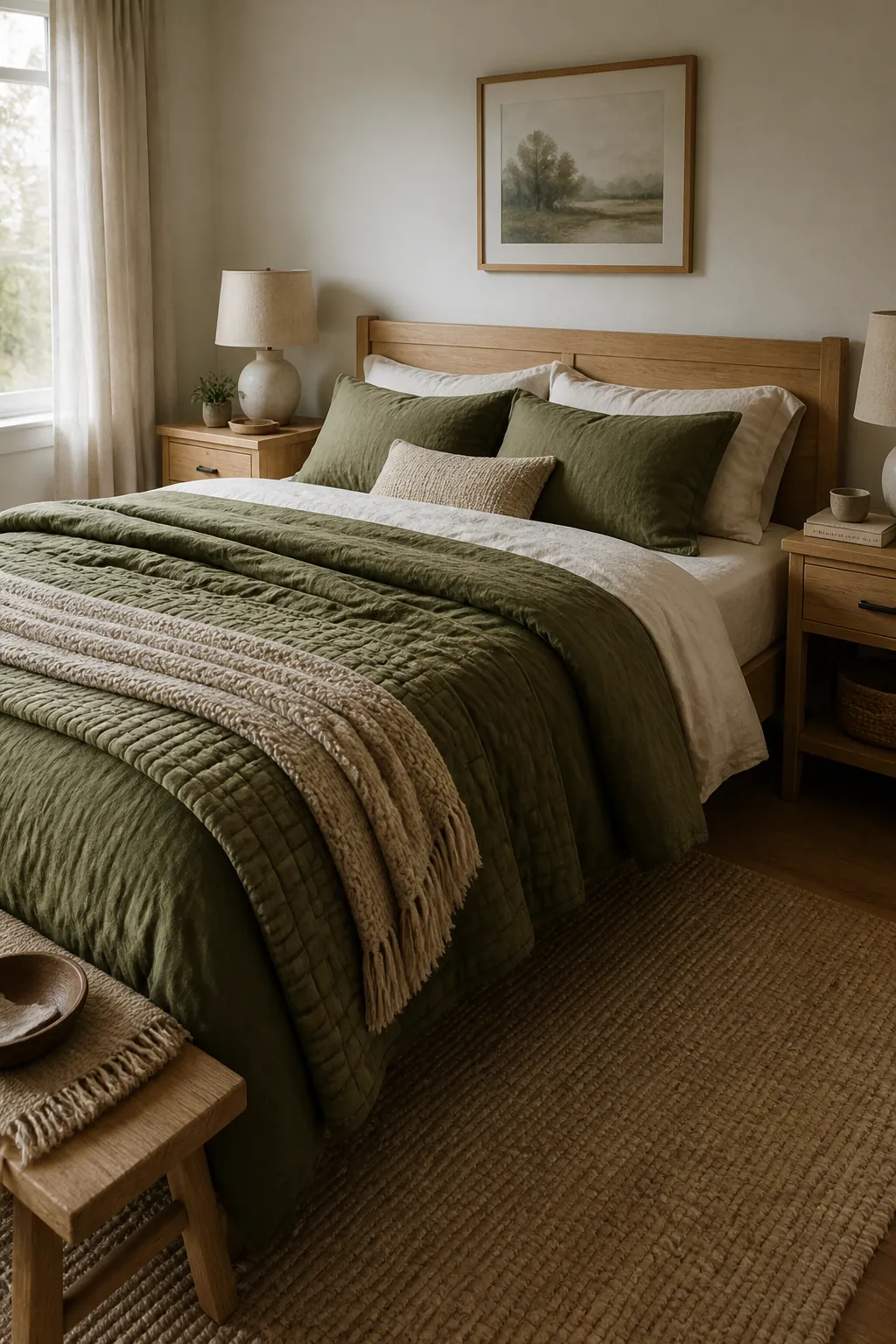
For a cozy bedroom, layer at least three textures on the bed: smooth sheets, a washed cotton or linen duvet, and a knit, quilted, or wool throw. The room will feel more finished even if the furniture is simple.
Use Cream and Natural Fiber to Stop Green From Feeling Cold
Green can feel fresh, but in a bedroom it also needs warmth. Cream, warm white, oatmeal, flax, jute, rattan, wool, cotton, and linen are the materials that keep green bedroom decor from looking sharp or sterile.
This is where natural home decor earns its place. A woven basket under a bench, a jute rug, a linen curtain, and a ceramic lamp all soften the edges of wood furniture. The goal is not to fill the room with rustic accessories. The goal is to add enough touchable texture that the green feels livable.
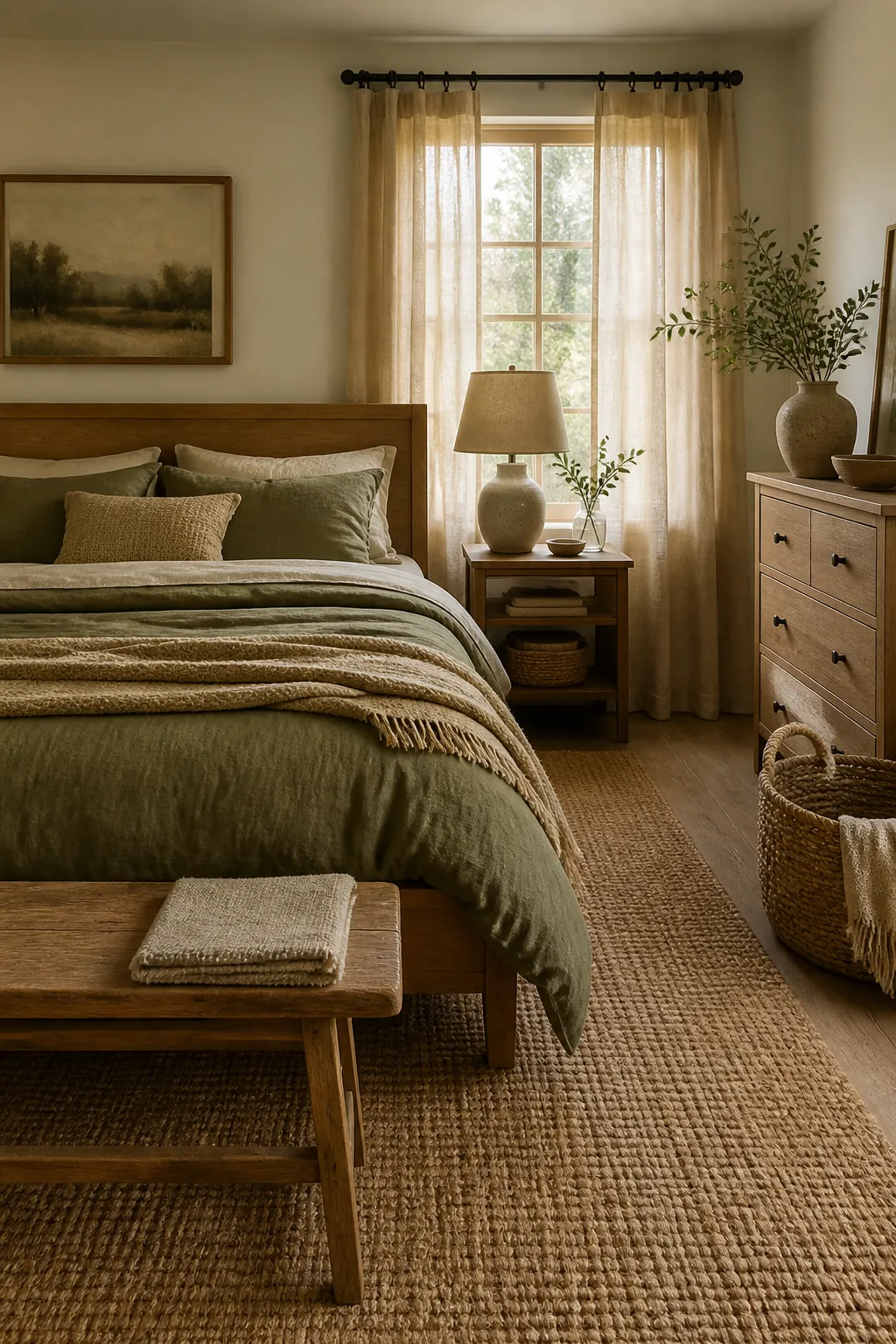
If the room is small, keep the large textiles light and let green appear on the bed, lampshade, art, or one painted wall. The room will still read as a green bedroom, but it will not shrink visually.
Balance Dark Wood With Softer Green
Dark wood furniture can look beautiful with green, but it needs air around it. The mistake is pairing dark wood with dark green walls, dark bedding, dark curtains, and heavy lamps all at once. That creates drama, but it can also make the bedroom feel smaller and busier than intended.
With walnut, cherry, espresso, or antique wood, use green in softer layers: eucalyptus, gray-green, sage, olive linen, or a patterned quilt with cream in it. Then add one light surface near each dark piece so the room has breathing room. Think white lampshades, pale curtains, a warm rug, or light artwork above the headboard.
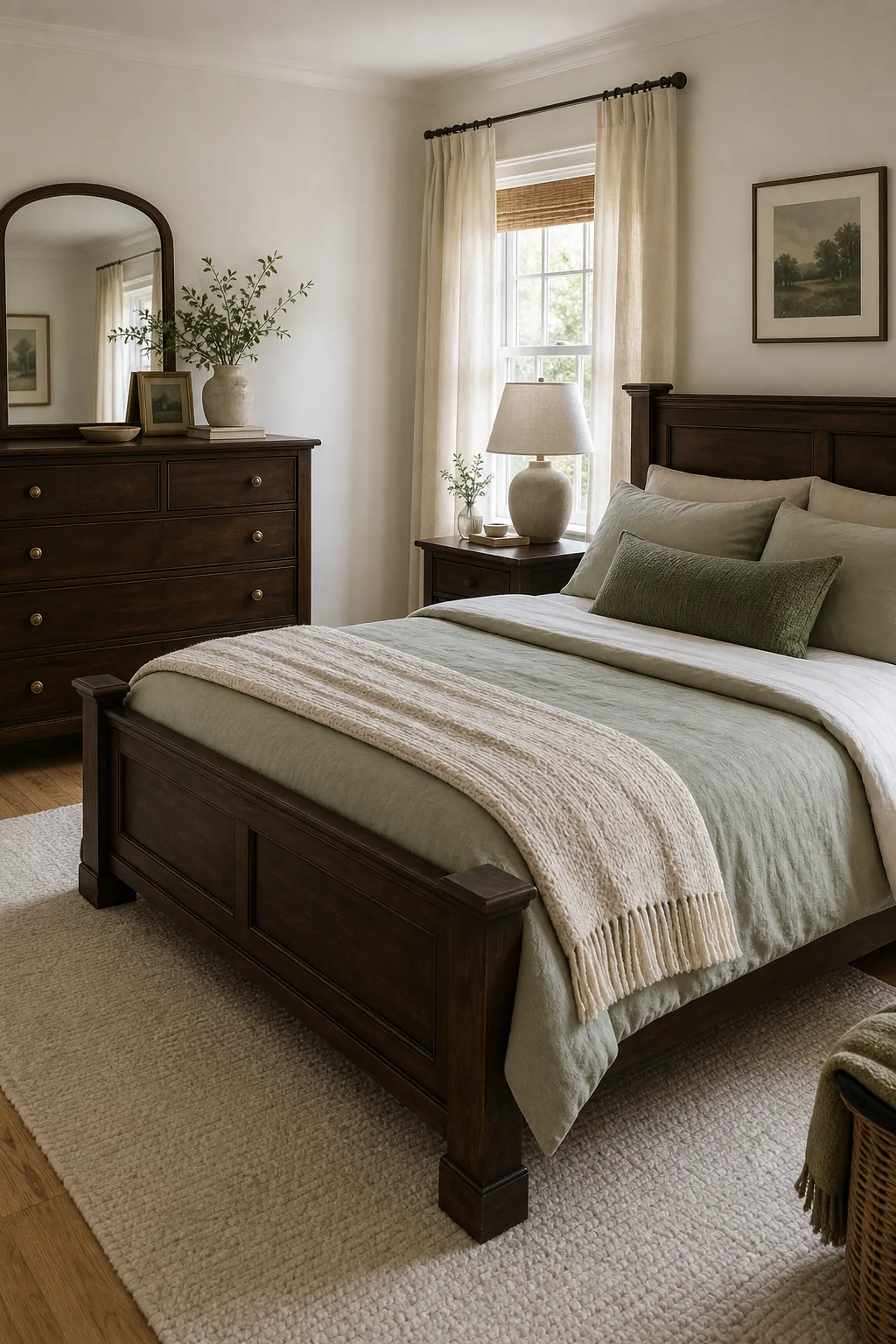
This approach keeps the room cozy instead of heavy. It also lets older wood furniture feel intentional rather than like a piece you are trying to hide.
Make the Nightstand Styling Do Less
A natural bedroom often gets cluttered at the nightstand because every small object feels charming by itself. The better styling rule is simple: one useful lamp, one vertical item, one small tray or dish, and one living or organic detail.
For example, pair a wood nightstand with a linen shade lamp, a framed print, a ceramic dish, and a single trailing plant. That is enough to repeat wood accents, green, texture, and personal style without making the surface noisy.
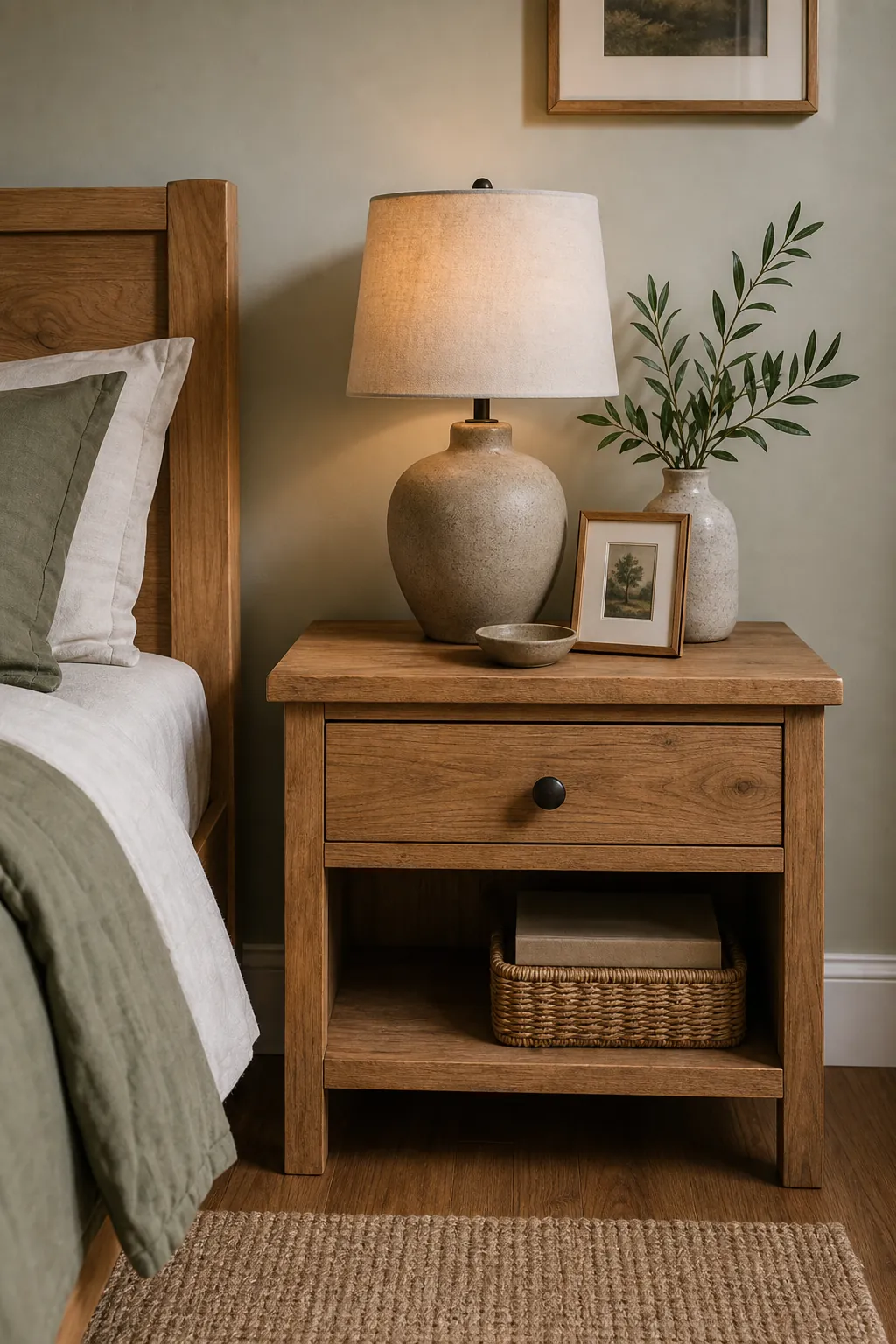
If the nightstands do not match, give them one shared element. Use the same lamp shape, the same hardware color, matching art frames, or similar baskets underneath. They can be different and still feel like part of the same bedroom styling plan.
Bring in Plants Without Turning the Room Into a Greenhouse
Plants make sense in a green bedroom, but too many plants can make the room feel busy, especially when the furniture already has strong grain. Use plants as punctuation. One tall plant near a window, one small plant on a dresser, or one trailing plant on a shelf is usually enough.
The plant container matters as much as the plant. Choose terracotta, matte ceramic, woven baskets, or simple clay pots to connect the greenery back to the natural wood furniture. Shiny plastic planters often break the earthy bedroom mood.
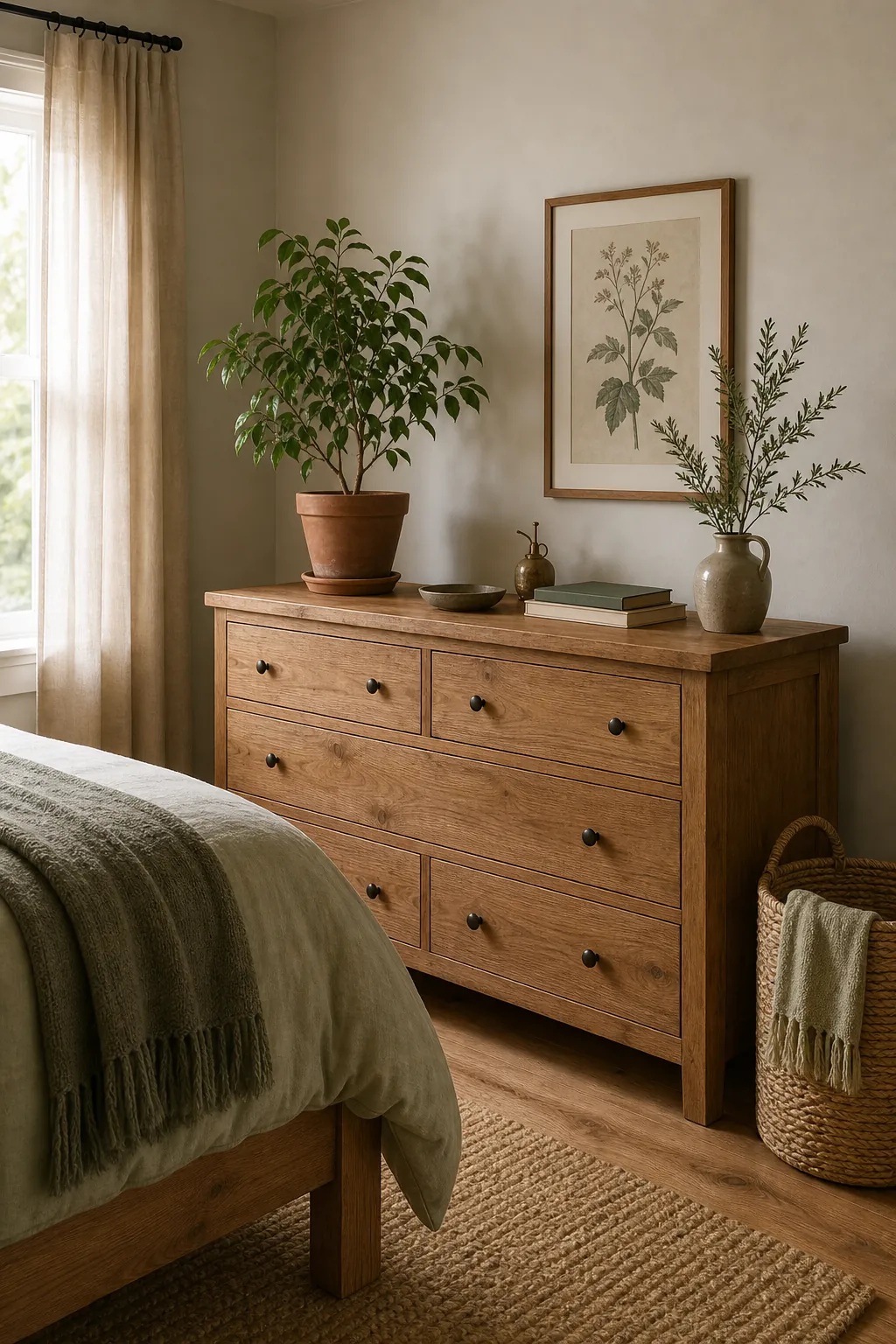
If your room gets low light, use dried branches, preserved eucalyptus, botanical art, or green-patterned textiles instead. The color story can still feel natural without forcing live plants into a room where they will struggle.
Use a Simple Final Palette
When a green bedroom with natural wood furniture feels off, the palette is usually doing too much. A reliable formula is one green, one wood family, one warm neutral, one white or cream, and one small contrast color.
- Light and airy: sage green, light oak, warm white, linen, and black accents.
- Earthy and cozy: olive green, medium walnut, oatmeal, terracotta, and brass.
- Soft and natural: eucalyptus green, ash wood, cream, jute, and clay.
- Moody but calm: deep green accent wall, dark wood, ivory bedding, woven texture, and aged brass.
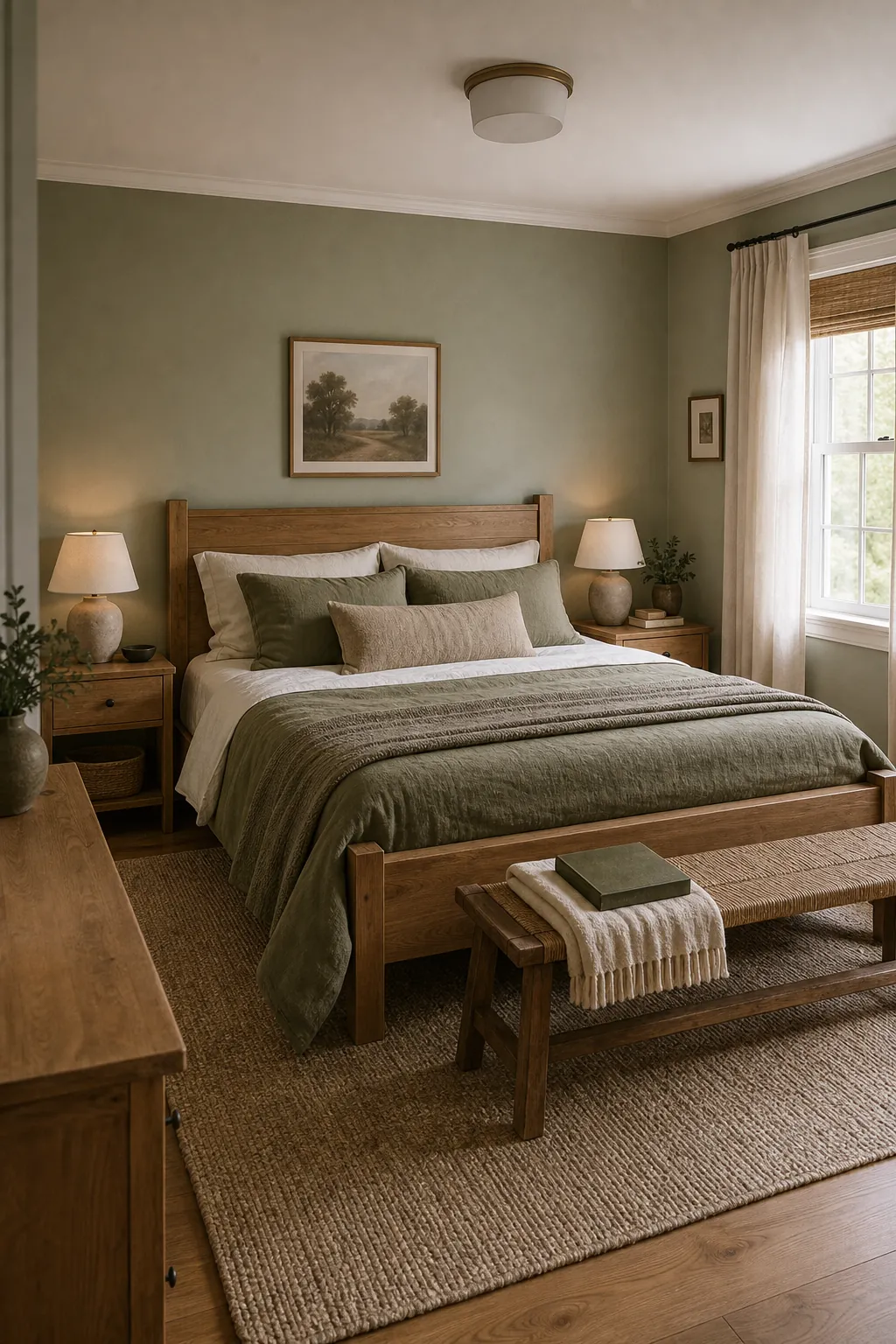
The room does not need more ideas after that. It needs repetition. Repeat the green in two or three places. Repeat the wood undertone in two or three places. Repeat texture through bedding, rug, curtains, and baskets. That is what makes a green bedroom feel calm, cozy, and natural instead of randomly decorated.
The best version is not the most decorated one. It is the room where the green helps you exhale, the wood keeps everything grounded, and every small choice supports the same quiet mood.