
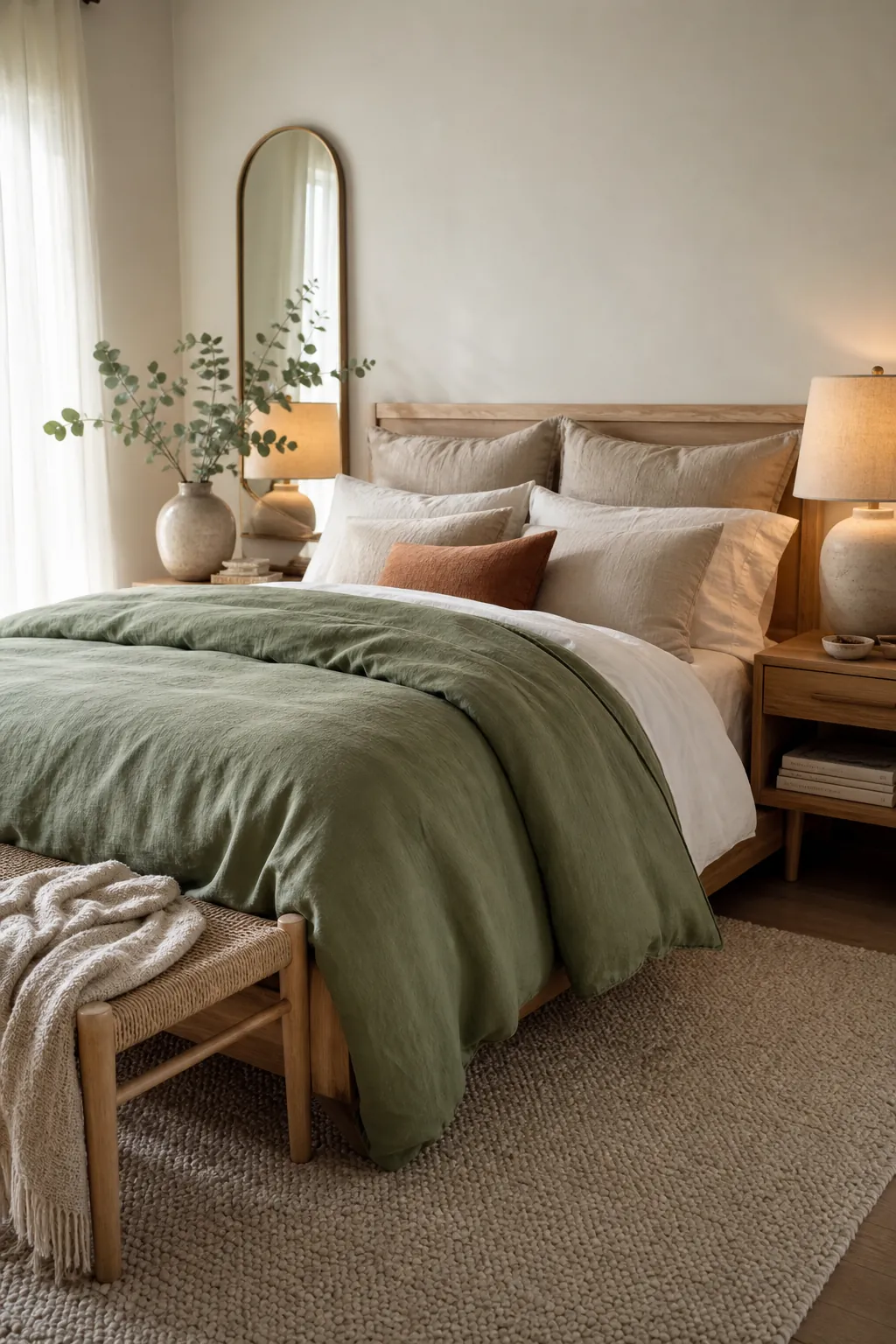
Green bedding can make a bedroom feel calm, earthy, and pulled together. It can also go flat fast if the room already has low light, dark furniture, gray walls, or heavy window treatments. The trick is not to avoid green. The trick is to give it enough light-colored space around it so the bed feels intentional instead of shadowy.
The most useful rule is simple: let green be the color story, not the entire visual weight of the room. Pair it with breathable neutrals, lighter textures, reflective details, and soft lighting that keeps the color from reading muddy at night.
Choose a Green That Works With Your Actual Light
Green bedding changes more than people expect once it is in a real bedroom. A sage duvet that looks fresh online can read gray in a north-facing room. Olive can feel rich in daylight but heavy beside dark floors. Forest green can be beautiful, but it needs sharper contrast around it.
Before you commit, look at the bedding in the room during the morning, afternoon, and evening. If the room is naturally dim, lean toward muted sage, eucalyptus, moss, or soft olive instead of very deep emerald. If you already own dark green bedding, you can still make it work. You just need brighter supporting pieces.
Put Cream, White, or Oatmeal Right Next to the Green
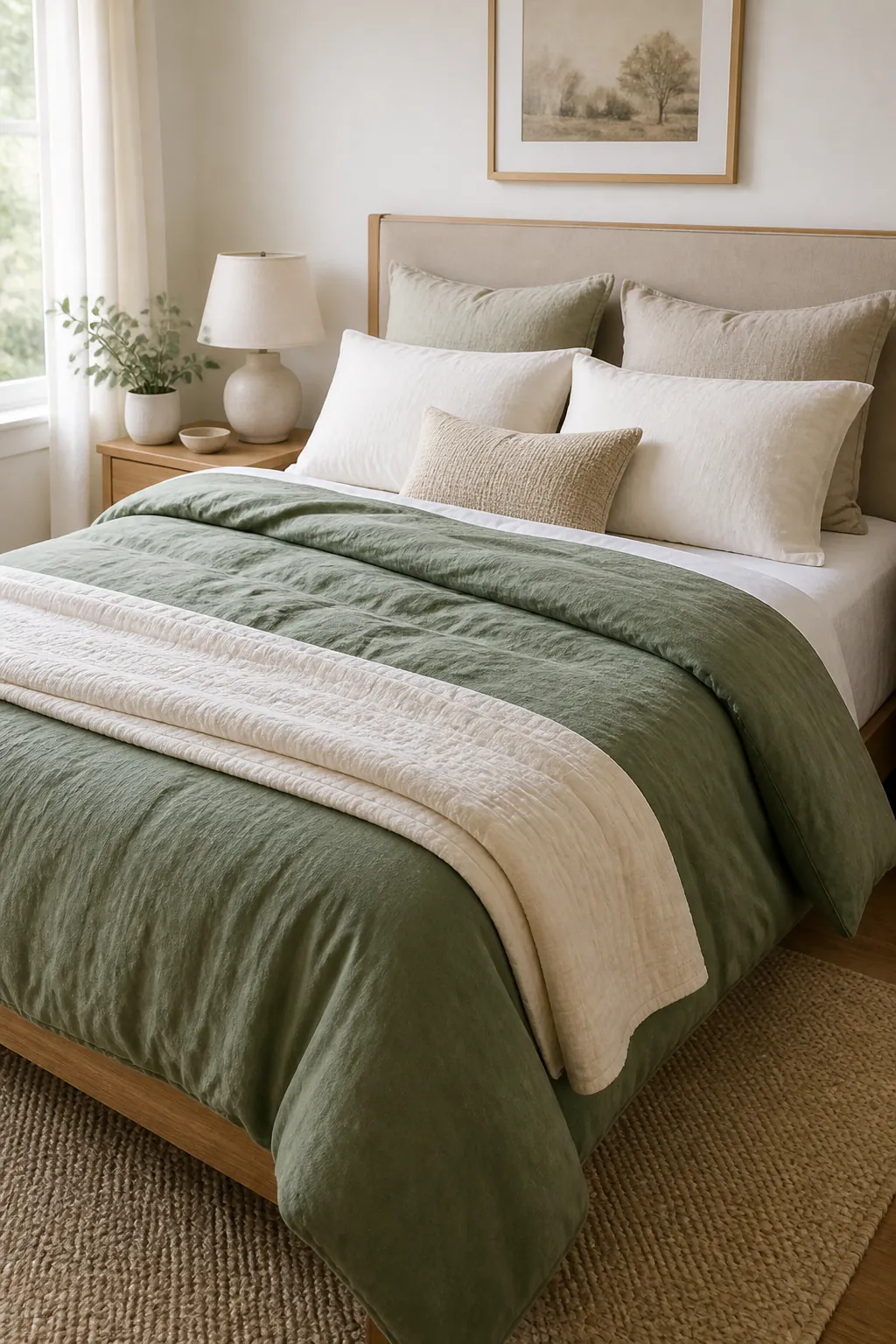
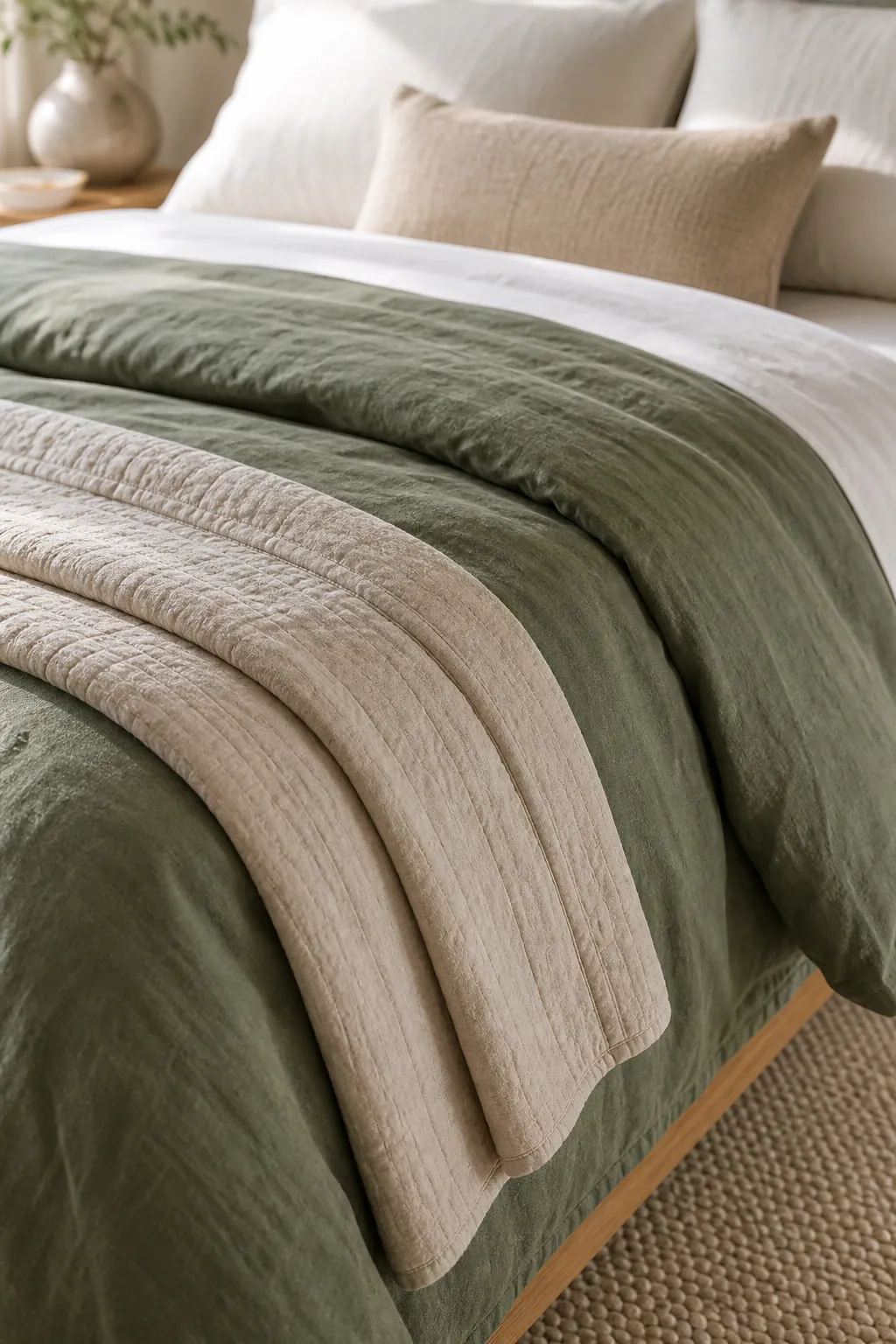
If green bedding is making the bed look too dark, the fastest fix is not a new wall color. It is contrast placed directly on the bed. Use cream sheets, white pillowcases, oatmeal shams, a pale quilt, or a linen throw where the eye first lands.
This works because the bed usually takes up the most visual space in the room. When every visible layer is green, the whole bed becomes one large dark block. When the green is broken by lighter bedding, it starts to feel layered and styled. The green still reads as the main color, but the room no longer feels swallowed by it.
- Use white or ivory sheets if the green is medium or dark.
- Use oatmeal, flax, or warm beige if stark white feels too crisp.
- Add one patterned pillow with green, cream, and a warm accent color to connect the palette.
- Keep black, charcoal, and very dark brown accents small unless the room has strong daylight.
Layer the Bed Instead of Using One Heavy Green Block
A green comforter by itself can look dense, especially in a small bedroom. Layered bedding gives the color breaks, shadows, and texture. Fold a pale quilt across the lower third of the bed. Let white sheets show at the top. Mix a green duvet with neutral pillows instead of matching every pillow to the duvet.
The goal is not a perfect catalog bed. The goal is a bed that has movement. Layered bedding makes green feel cozy without making the bedroom feel closed in. It also lets you adjust the balance seasonally. In summer, show more white and linen. In winter, bring back deeper green with wool, velvet, or a heavier throw.
Use Light Curtains and a Rug to Brighten the Area Around the Bed
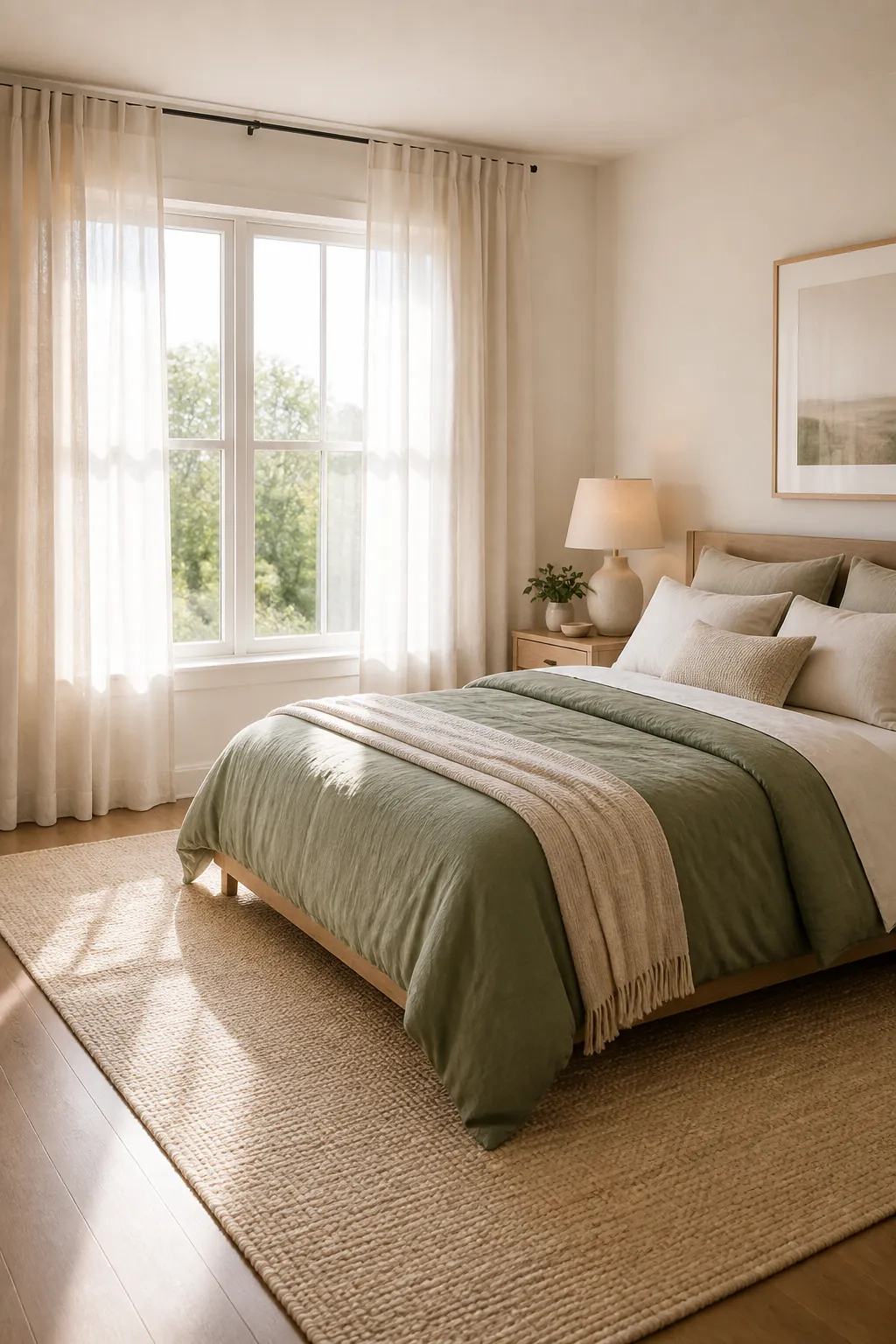
When a green bed feels too dark, the cause is often everything around it. Dark floors, short curtains, a bulky dresser, and bare walls can make even soft green bedding look heavier than it is. Give the room bigger light surfaces so the bed has room to breathe.
Start with the textiles that cover the most space. Hang ivory, warm white, or natural linen curtains higher and wider than the window. Add a cream, jute, or pale patterned rug if the floor is dark. These pieces do not compete with green bedding; they lift it. They also make the bedroom feel softer, which matters when you want a cozy bedroom without a cave-like effect.
Add Soft Lighting at Bed Height
Overhead lighting often makes green bedding look either dull or harsh. A single ceiling light throws shadows into corners and flattens fabric color. Bedrooms need lower, softer light sources that sit near the bed, dresser, or reading chair.
Use two bedside lamps, wall sconces, or a floor lamp with a warm white bulb. If the bedding is sage or olive, soft lighting helps the color feel gentle instead of gray. If the bedding is deep green, warm lamps make it feel rich instead of heavy. A bedroom with green bedding should have pools of light, not one bright blast from above.
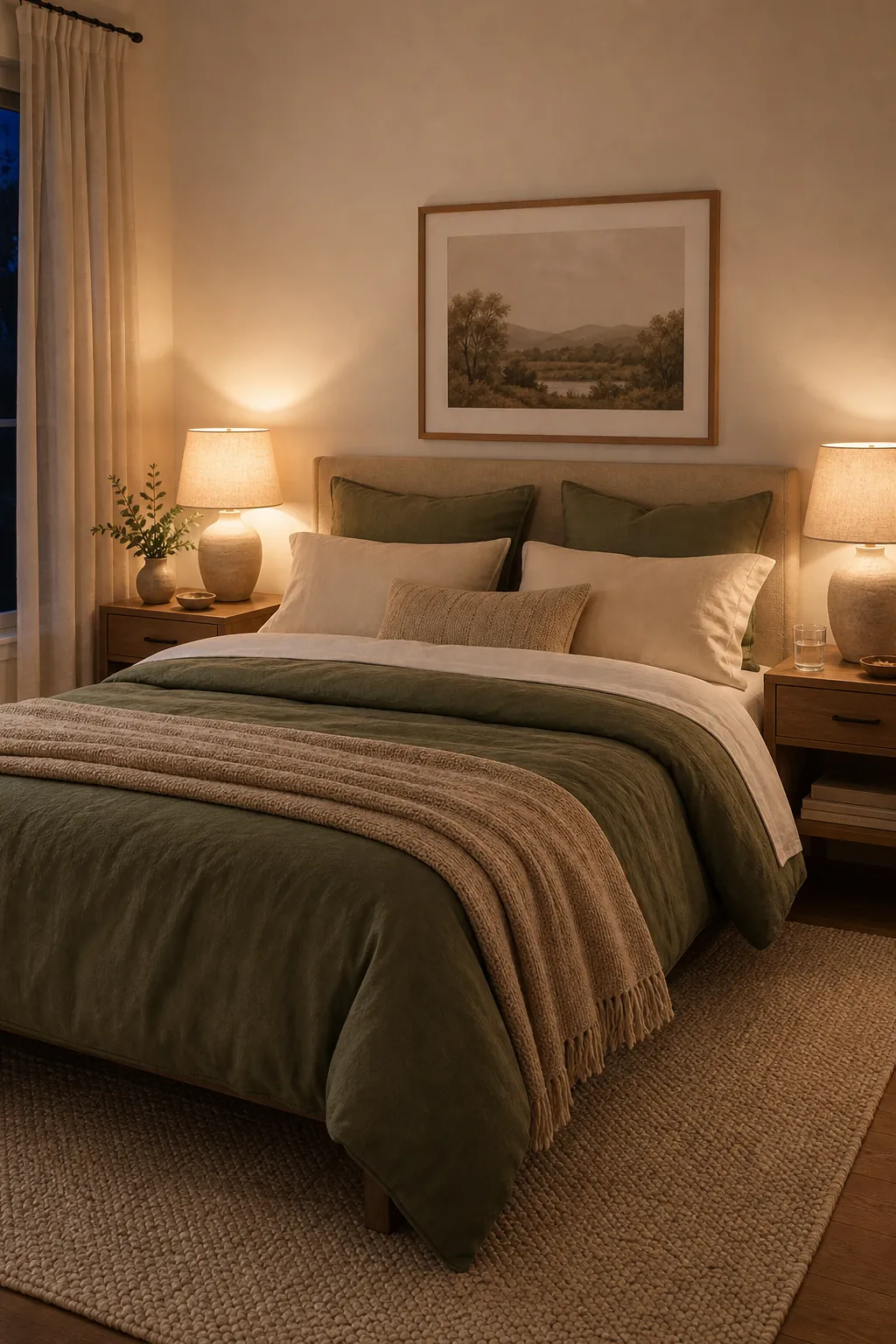
Bring in Natural Texture Without Adding Too Much Darkness
Green bedding pairs beautifully with wood, rattan, woven shades, linen, ceramic lamps, and dried stems. Those natural materials make the room feel earthy and relaxed. The mistake is using too many dark finishes at once. Dark wood bed frame, dark nightstands, dark rug, dark art, and dark green bedding can make the room lose definition.
Choose lighter or mid-tone natural pieces when possible: oak, cane, pale walnut, woven baskets, beige ceramics, and flax linen. If your furniture is already dark, balance it with lighter art mats, a pale rug, cream lampshades, or a large mirror. The green will still connect to the earthy bedroom mood, but the room will feel more open.
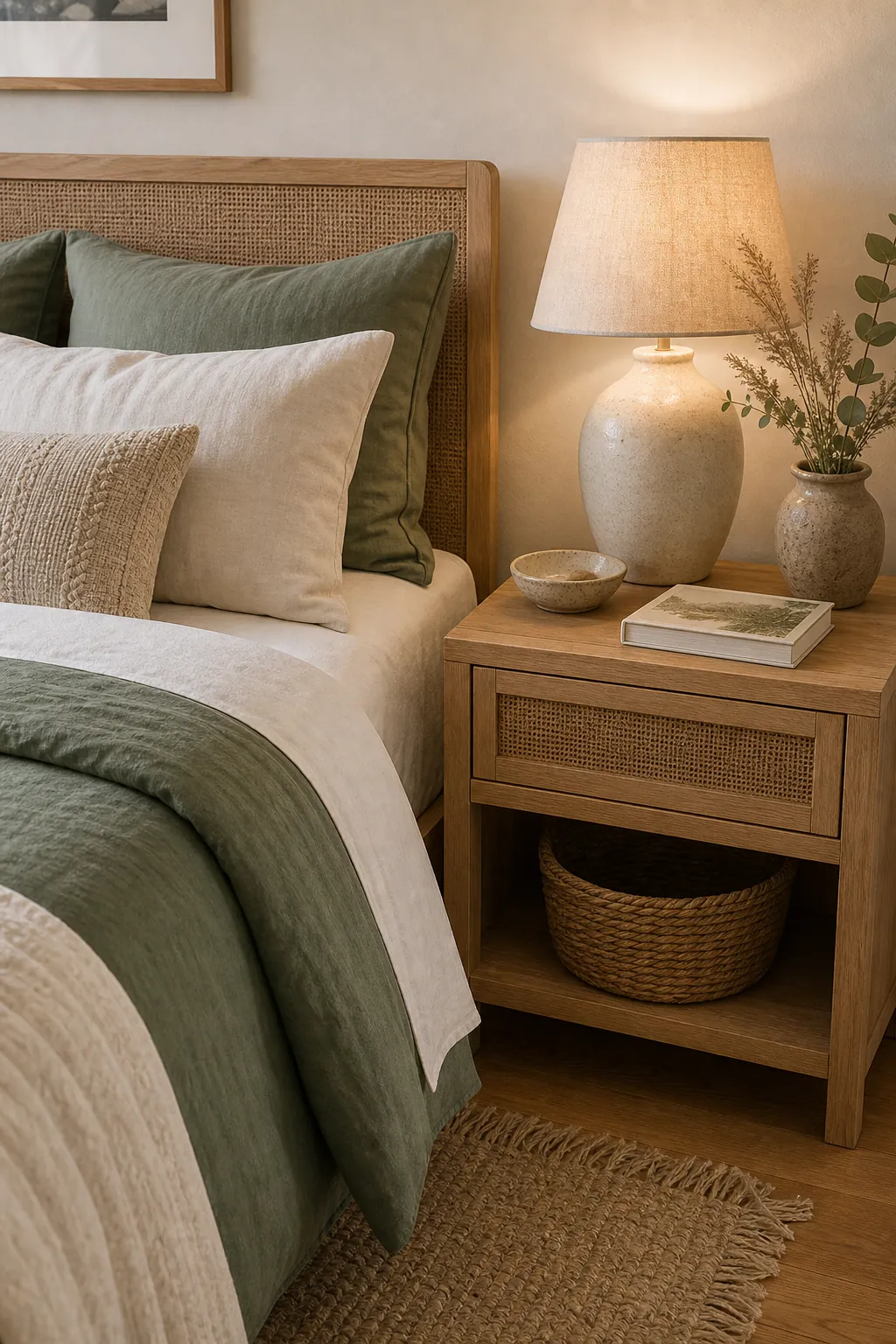
Use Accent Colors That Warm the Green Instead of Fighting It
Green bedroom styling does not have to stay neutral, but the accent colors should be chosen carefully. Dusty rose, clay, rust, muted gold, soft blue, and warm beige can make green bedding feel more complete. Bright red, icy gray, or too much black can make the palette feel abrupt unless the room is intentionally high contrast.
If you are worried that pink or rose will feel too feminine, use it in a small amount: one pillow, a piece of art, or a vase. Clay and terracotta are safer if you want warmth without sweetness. Brass or aged gold works well in lamp bases, curtain rods, and mirror frames because it reflects light while adding warmth.
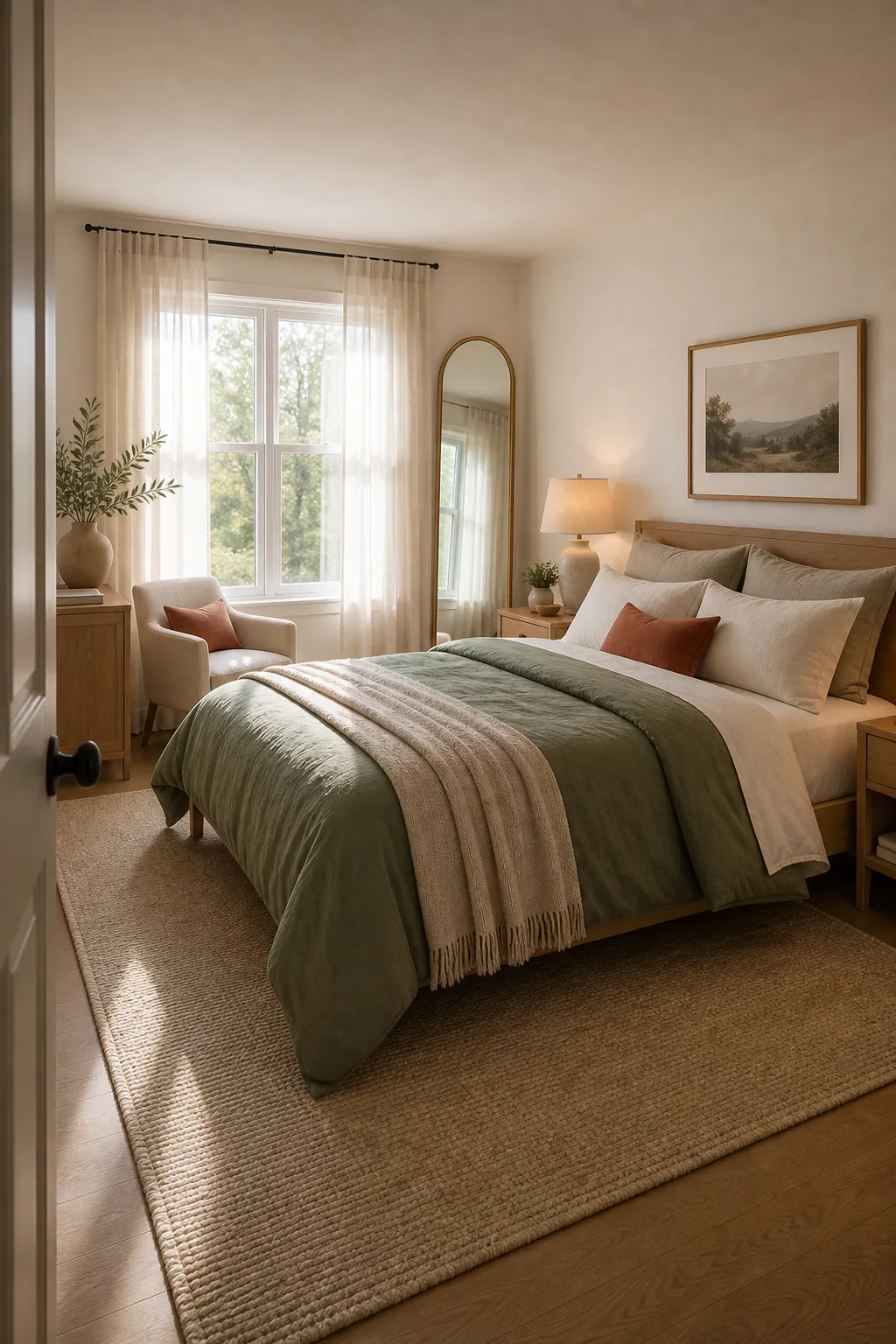
Keep the Walls and Decor Visually Clean
Green bedding already gives the bedroom a strong color anchor. If the room feels dark, avoid filling every blank space with small dark objects. Use fewer pieces with more visual breathing room: one large print over the bed, a mirror over the dresser, a simple branch arrangement, or a pair of matching lamps.
This is especially important in a small bedroom. Clutter absorbs light because it creates more shadows and visual stops. A clean nightstand, a lighter lampshade, and wall art with white space can do more for light bedroom decor than adding another decorative pillow.
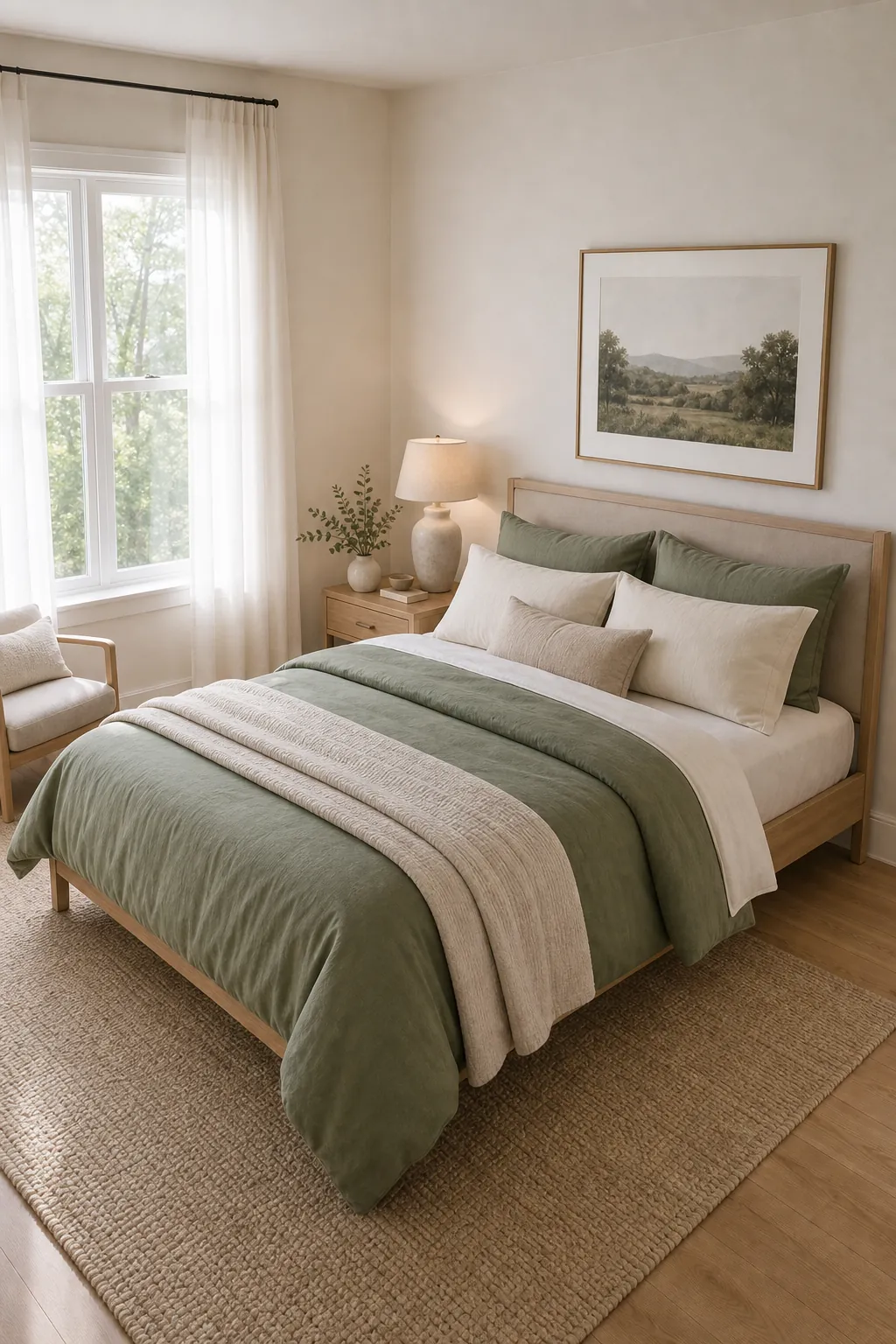
A Simple Formula for Green Bedding That Still Feels Bright
If you are starting from scratch, build the room in this order: green bedding first, then pale sheets, then one warm neutral layer, then lighting, then larger surrounding textiles. This keeps the room from becoming a pile of disconnected decor decisions.
- Main color: sage, olive, moss, eucalyptus, or forest green bedding.
- Light balance: white, cream, oatmeal, flax, or pale beige sheets and pillows.
- Texture: linen, cotton, waffle weave, wool, jute, cane, or light wood.
- Warmth: clay, muted gold, terracotta, dusty rose, or warm brass accents.
- Light control: bedside lamps, pale curtains, mirrors, and a rug if the floor is dark.
The best green bedroom does not have to be pale or plain. It just needs contrast in the right places. Let the bedding bring the color, then let the rest of the room bring air, warmth, and light.