
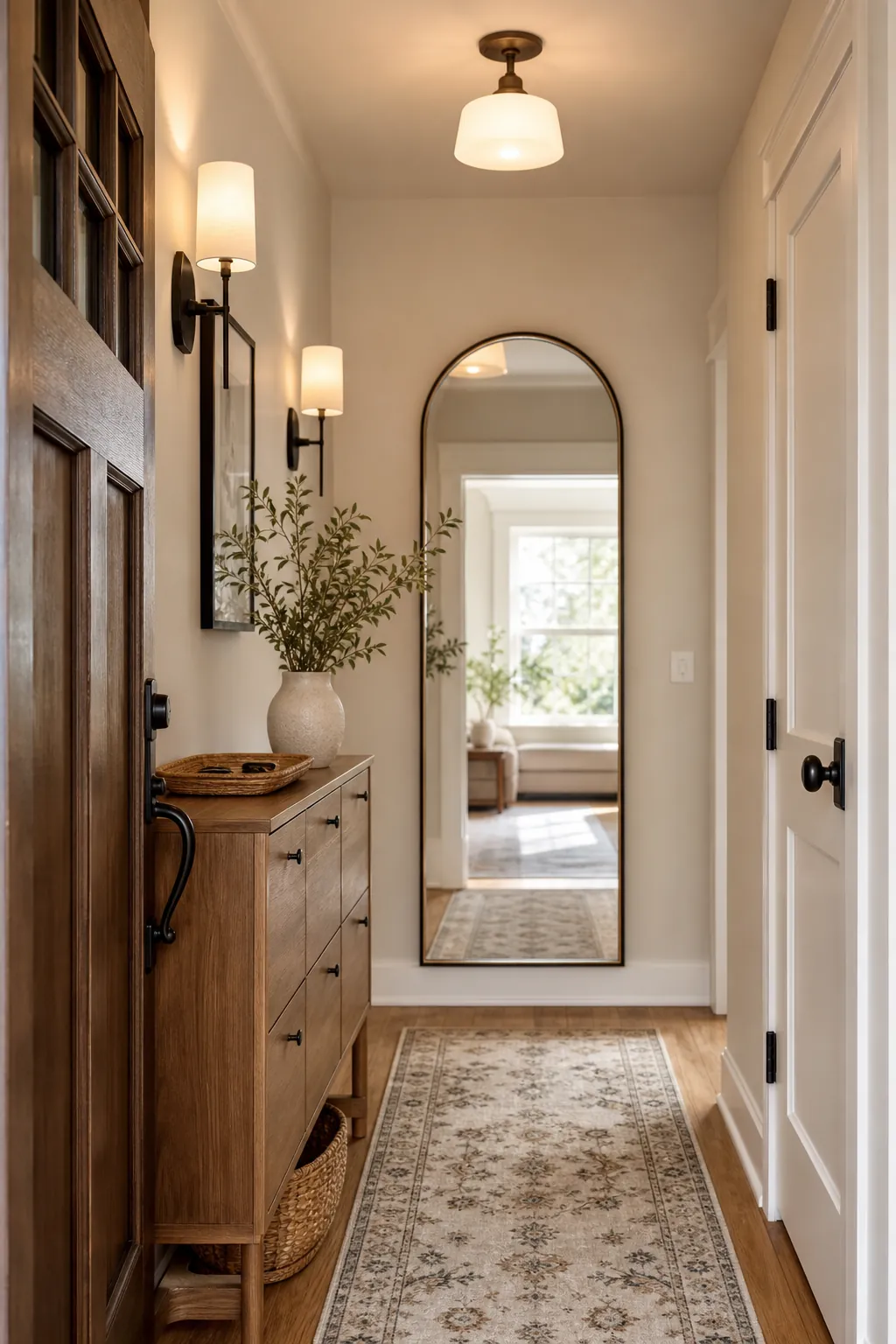
A dark entryway usually feels worse than it really is because everything is working against the first glance: one weak ceiling light, a dark floor, coats near the door, and a mirror or art piece that reflects nothing useful. The fix is not to buy more entryway decor at random. The fastest way to make a dark entryway feel brighter is to control where the light lands, reduce visual clutter, and give the eye one clear path forward.
This guide is for the common problem people describe when they search for dark hallway ideas: a narrow foyer, limited natural light, no room for bulky furniture, and a space that needs to work every day. You do not need a full remodel. You need a better sequence.
Start With Lighting Before You Judge the Paint
Paint gets blamed first, but hallway lighting usually creates the real problem. A single overhead bulb throws a hard pool of light on the floor and leaves the walls, corners, mirror, and door area in shadow. That makes the entry feel smaller even when the wall color is technically light.
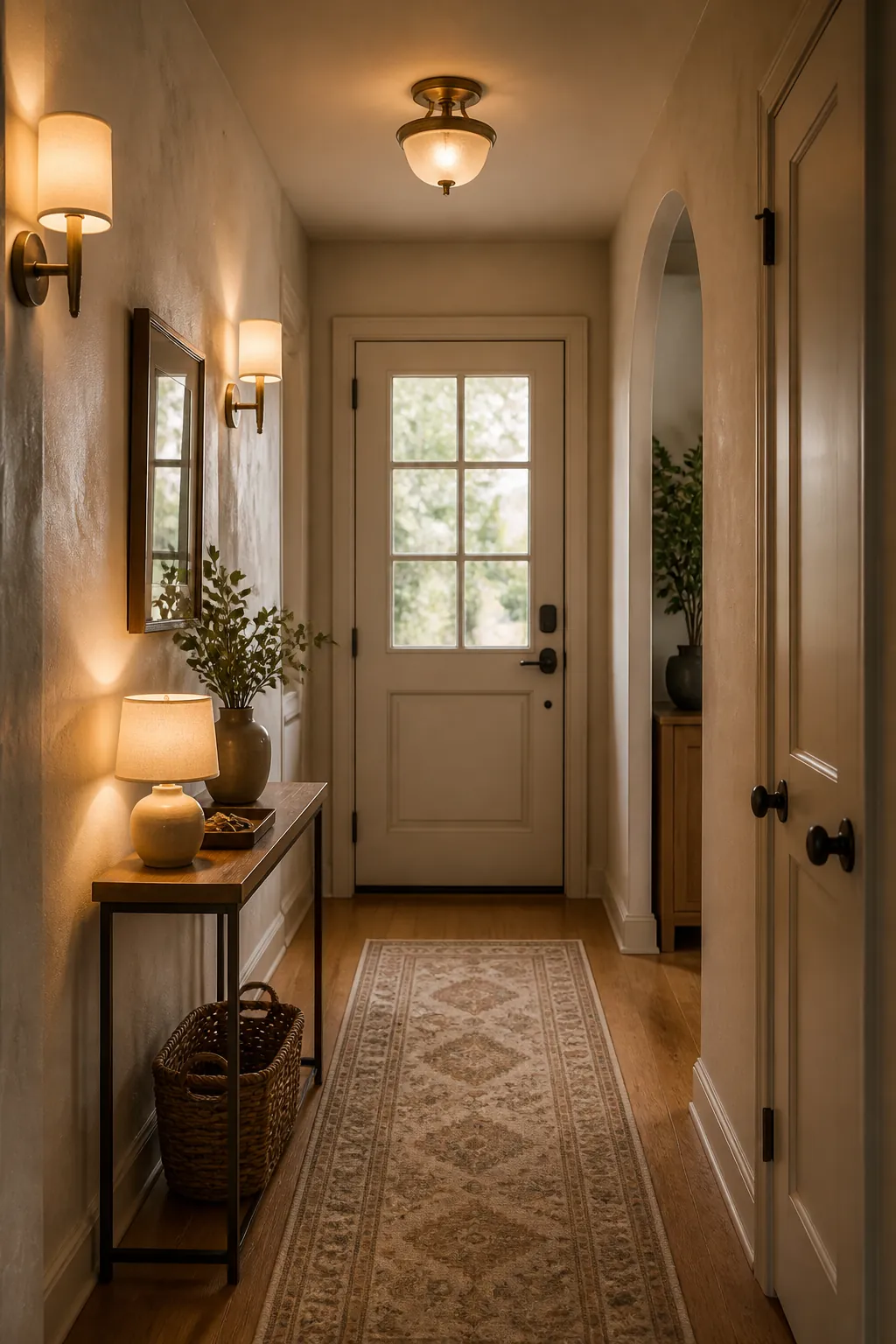
Think in layers instead. Use the ceiling light for general brightness, then add a lower source that gives the walls a glow. Wall lights, plug-in sconces, a slim lamp on a console, or a rechargeable picture light can change the mood without making the space look overdecorated.
- For a narrow entryway: choose flush or semi-flush fixtures so nothing crowds headroom.
- For a rental: use plug-in wall lights, battery picture lights, or a table lamp where an outlet already exists.
- For a long hallway: repeat lighting down the length so the far end does not disappear into shadow.
Warm white bulbs are usually more flattering than cool blue light in an entry. The goal is not the brightest bulb possible. It is even, comfortable light that reaches the walls, the mirror, the floor, and the place where you drop keys or take off shoes.
Use Warm Reflective Color Instead of Flat White
White paint can help, but in a windowless foyer it can also turn cold and gray. If the entry has little natural light, look at warm off-white, soft cream, pale greige, or a gentle beige-gray that works with your floor. A brighter entryway comes from reflection plus warmth, not from a stark color alone.
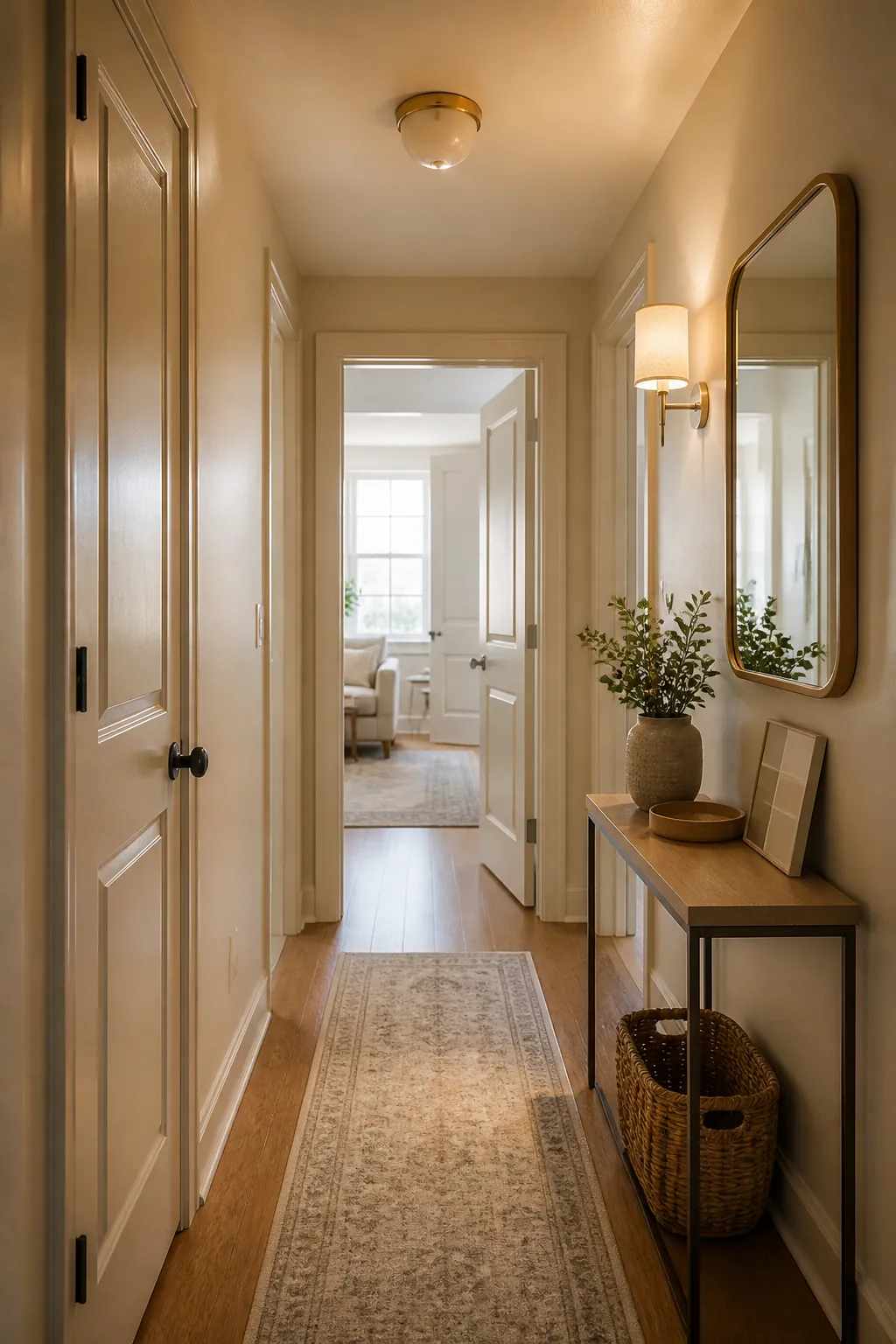
In tight spaces, contrast can chop the room into pieces. If the trim, doors, and walls are all fighting each other, the hallway reads busier and darker. Painting trim and walls in the same family can make the space feel taller and calmer. If you like contrast, keep it intentional: one light wall color, one warm metal finish, one wood tone, and one accent color.
Before you repaint, test color beside the actual floor and under the bulb you will use at night. A color that looks soft in a sunny living room can turn yellow, blue, or muddy in a dark hallway.
Place Mirrors Where They Reflect Light, Not Clutter
Mirror decor is one of the most useful foyer ideas, but only when the mirror reflects something worth doubling. If it reflects a coat pile, a blank wall, or a dark door, it can make the entry feel more crowded. If it catches light from an adjoining room, a lamp, a window, or a pale wall, it can make the whole entry feel wider.
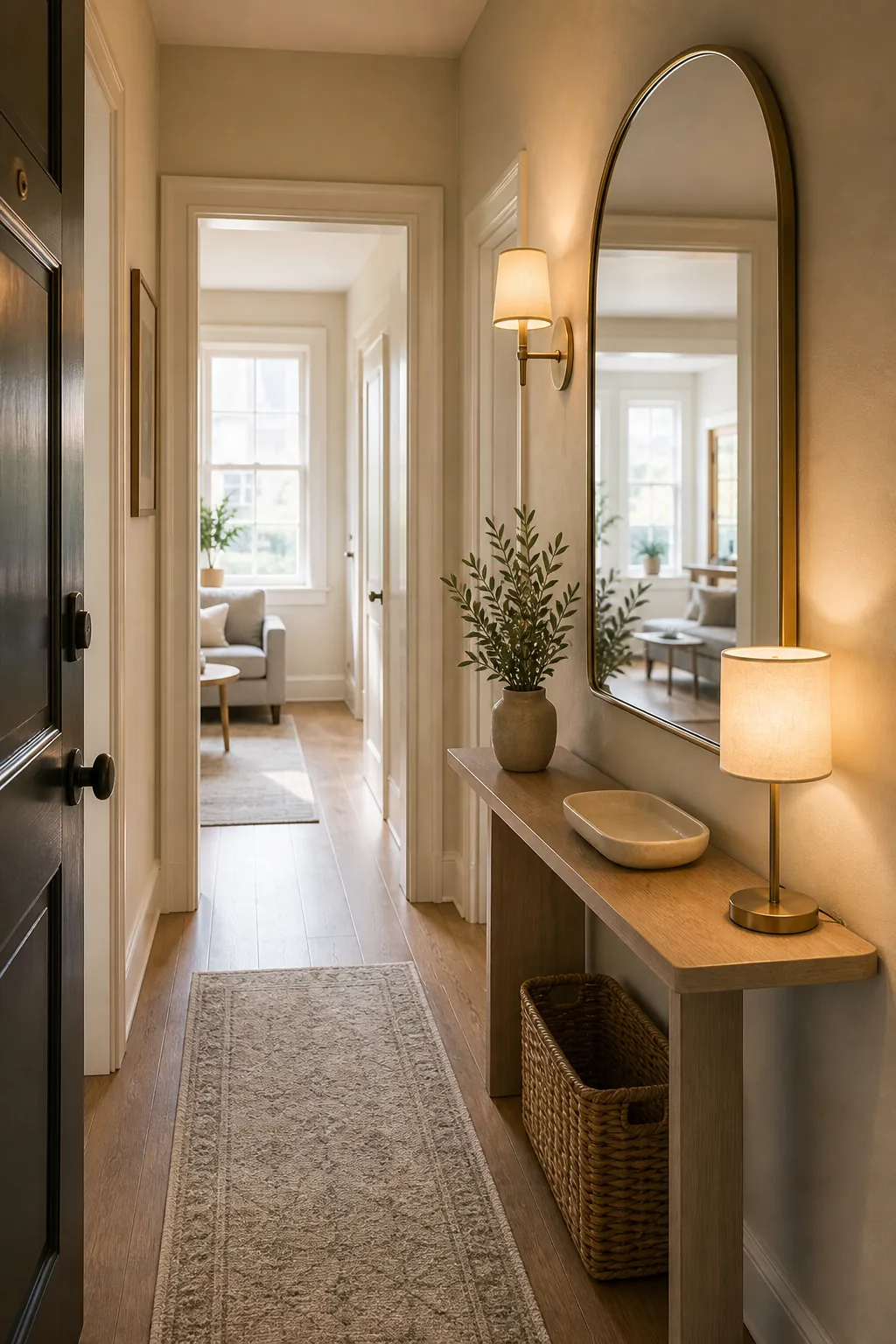
For most dark entries, one large mirror is stronger than several tiny mirrors. Hang it where it can pull light across the space, or place it at the end of a short hallway to stop the eye from hitting a dead wall. If you have a slim console, center the mirror above it and keep the surface simple: a tray, a lamp, and one natural element are enough.
Do not hang a mirror just because the entry is dark. Stand where guests enter and look at what the mirror will reflect. If the reflection is messy, solve that first.
Choose a Runner Rug That Lightens the Floor Without Looking Fragile
Dark floors can make an entry feel heavy, but a pale rug that cannot handle shoes is not practical. Runner rugs work best when they brighten the path, add softness, and survive real traffic. A medium-light pattern is usually better than a solid cream rug because it hides dust, leaves, and everyday marks.
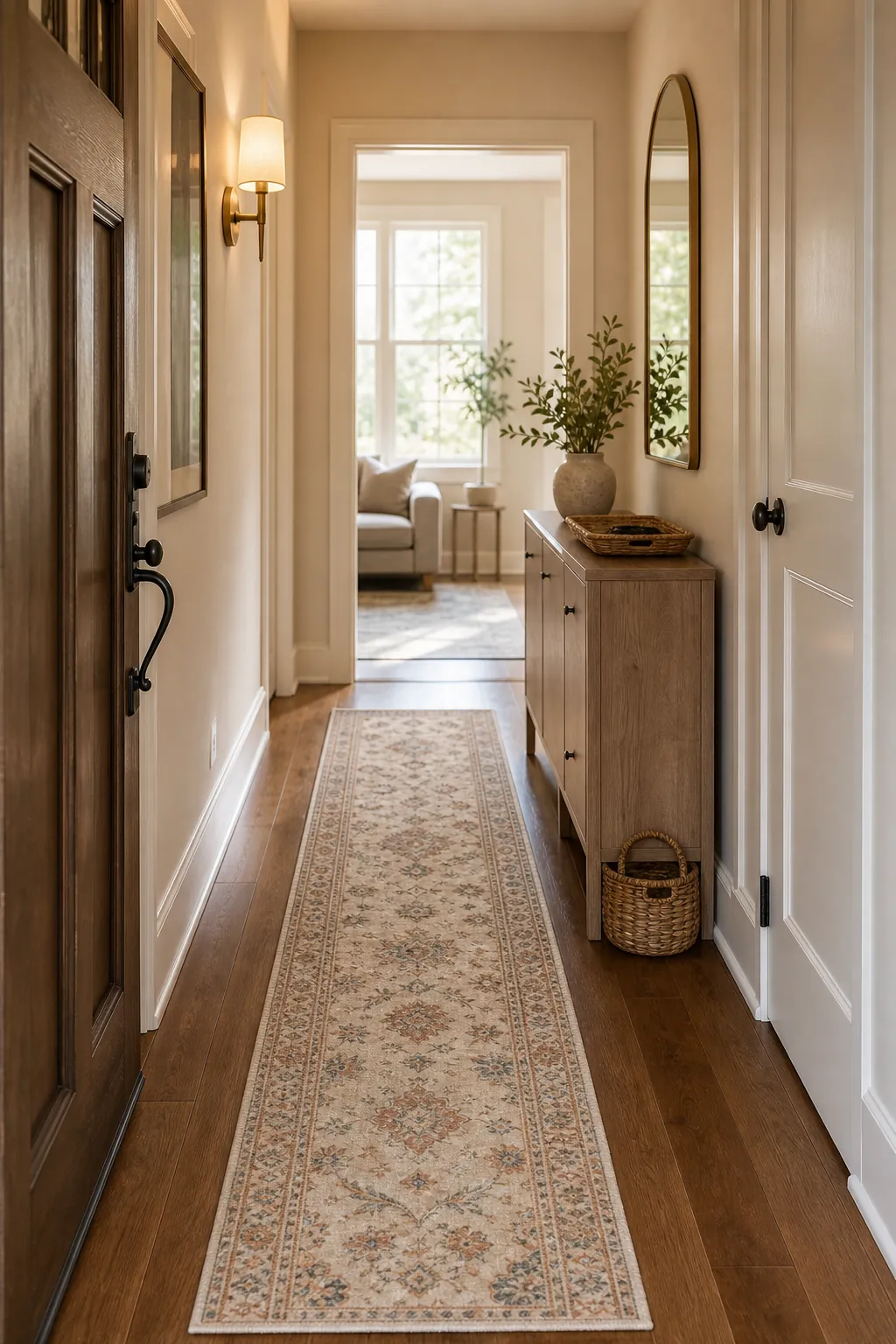
Pick a runner that is long enough to look deliberate. One tiny mat by the door and another small rug down the hall can make the floor look broken up. A single runner gives the eye a continuous line and makes the hallway feel more finished.
- For narrow spaces: leave visible flooring on both sides so the rug does not look squeezed in.
- For dark tile or wood: try warm ivory, oat, tan, muted terracotta, soft blue, or a low-contrast stripe.
- For busy households: choose washable, low-pile, or indoor-outdoor materials with a proper rug pad.
Make Storage Slim, Closed, and Easy to Use
Most dark entries are also clutter magnets. Shoes, backpacks, dog leashes, coats, umbrellas, keys, and mail all land in the same few square feet. When the entry is narrow, open clutter blocks light and makes the walls feel closer.
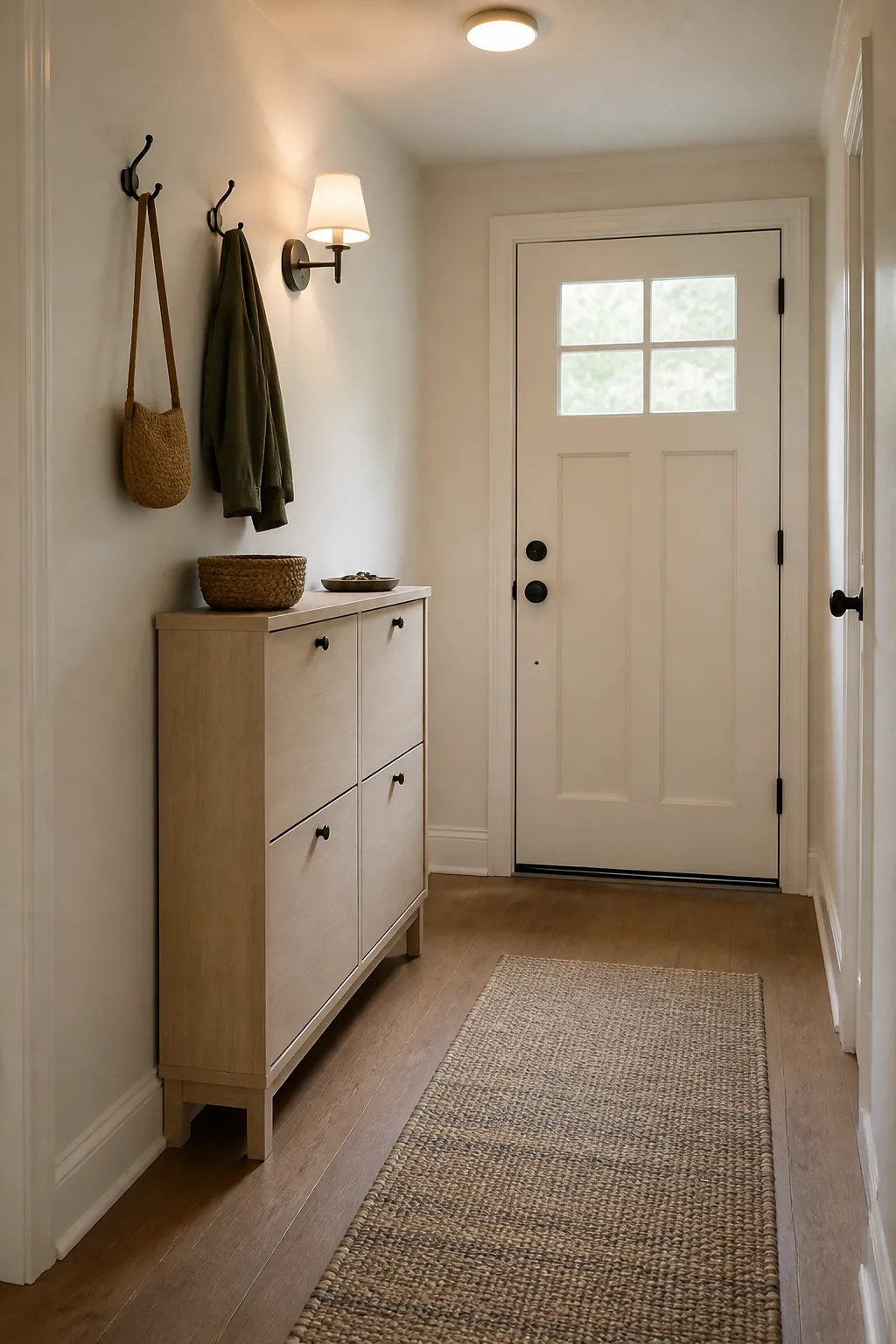
The best home organization move is not more baskets. It is giving each daily item a shallow place to disappear. A narrow shoe cabinet, wall-mounted hooks, a key tray, a small drawer, or labeled bins inside a closet can do more for brightness than another decorative object.
Keep the most-used items reachable and hide everything else. If hooks are necessary, make them look intentional: repeat the same hook finish, limit the number of coats that stay there, and keep bulky seasonal items somewhere else. A bright entryway has breathing room around the things you use every day.
Add Texture So the Entry Feels Designed, Not Empty
Once lighting, color, mirror placement, and storage are working, texture keeps the space from feeling blank. This is where small space decor can do a lot with very little. Natural wood, bamboo, rattan, woven baskets, linen shades, ceramic trays, and leafy branches make a narrow entry warmer without adding visual weight.
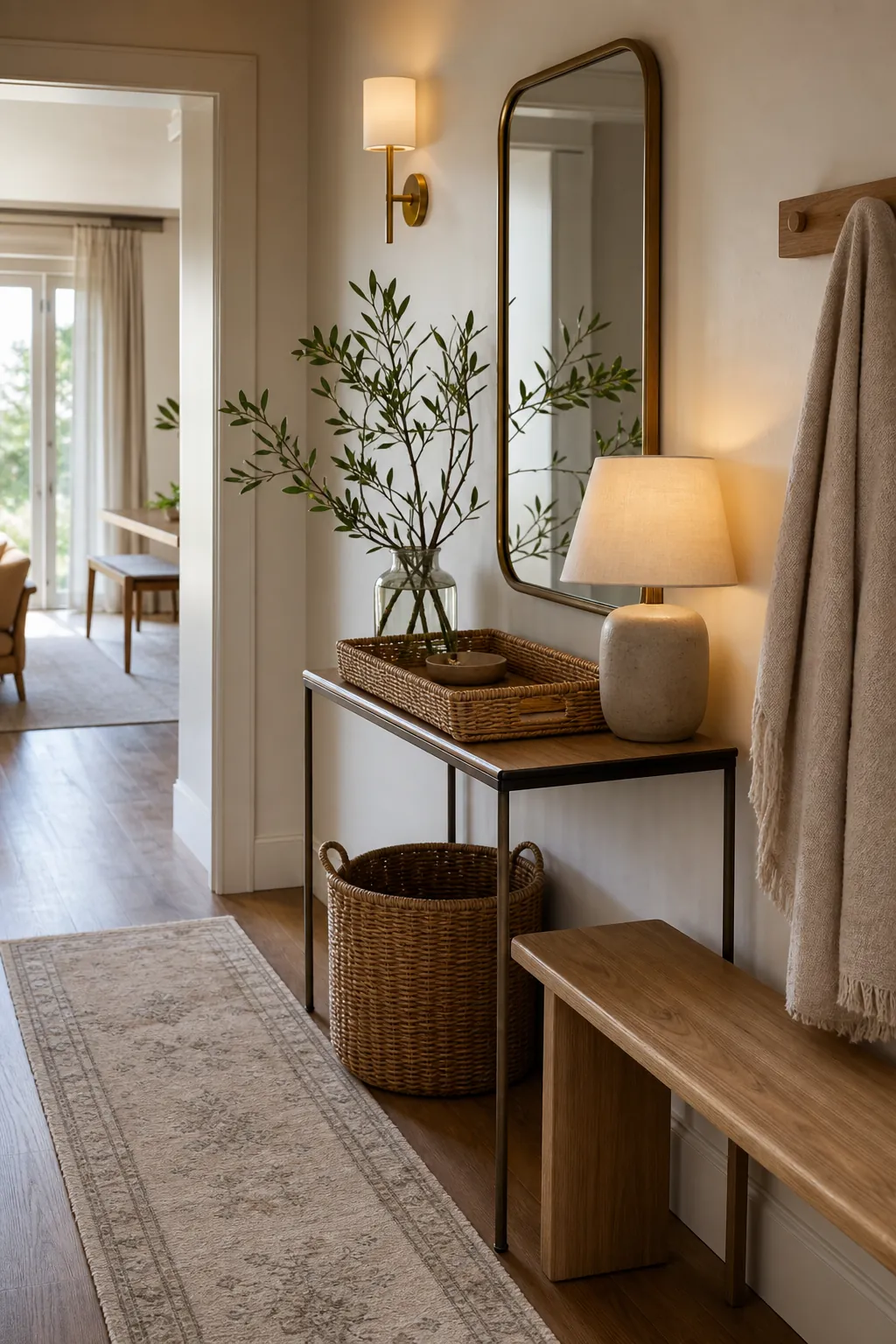
Use texture where it will not interrupt traffic. A woven shade on a lamp, a bamboo tray for keys, a slim wood bench, or a rattan basket under a console can soften the entry while keeping the floor clear. If you add art, choose fewer larger pieces rather than a scattered wall of tiny frames.
Plants help too, but only if the light is realistic. In a truly dark foyer, use cut branches, dried greenery, or a high-quality faux stem instead of forcing a live plant to struggle.
Use a Simple Upgrade Order So You Do Not Waste Money
The most common mistake is buying decor before solving the room’s actual problem. If the entry is dark because the bulb is weak, the mirror reflects clutter, and shoes cover the floor, new artwork will not fix it. Work in this order.
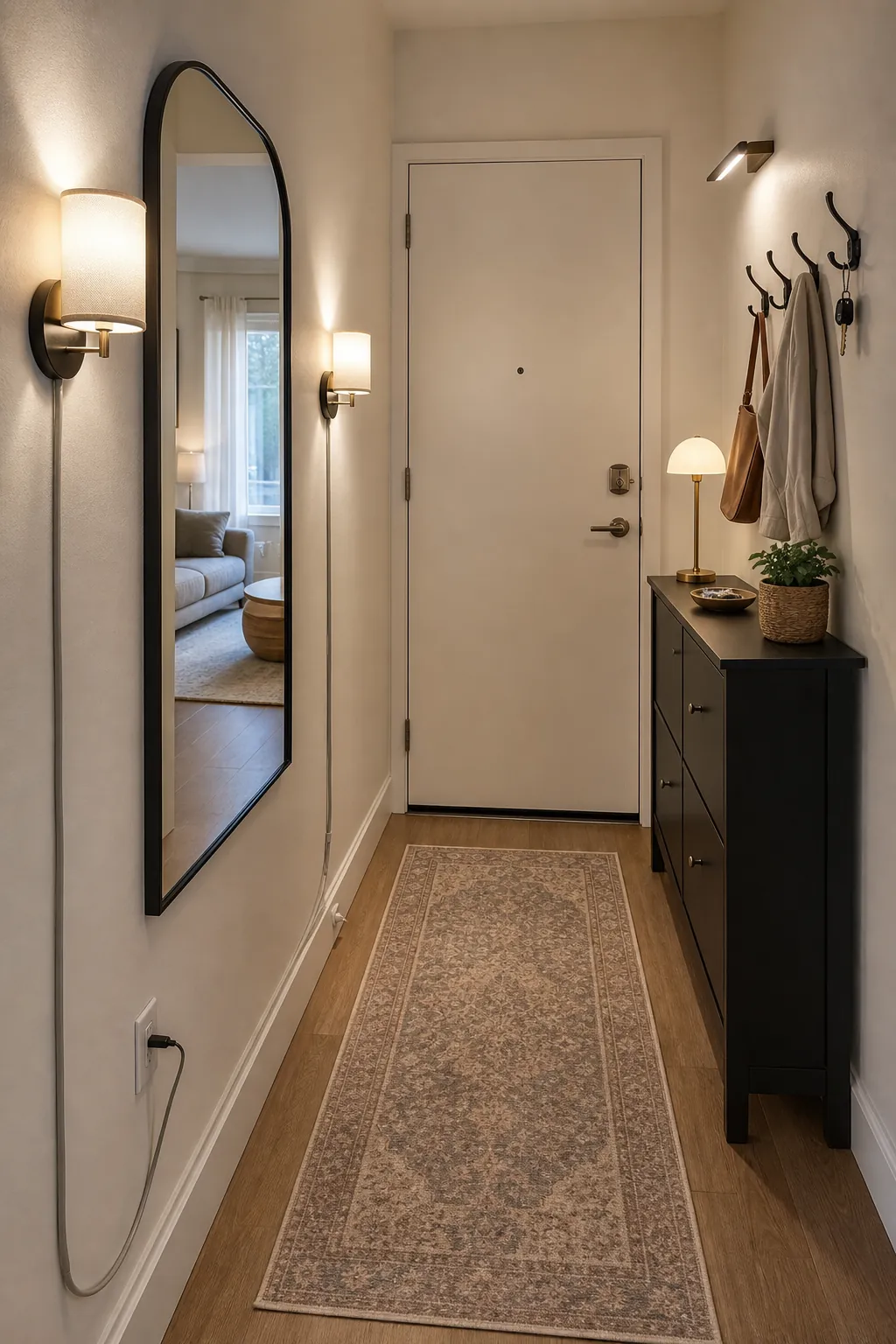
- Change the bulb and fixture quality first. Get even, warm light before judging any color or decor.
- Clear the floor and door area. Remove anything that makes the first view feel crowded.
- Add one reflective focal point. Use a mirror only where it can reflect light or depth.
- Choose one continuous runner. Let it brighten the path and make the hallway feel intentional.
- Upgrade storage. Go slim, closed, and vertical wherever possible.
- Add texture last. Use natural materials and a few larger accents instead of many tiny objects.
If you rent, start with plug-in or rechargeable wall lights, removable hooks, a washable runner, a leaning mirror secured safely, and a narrow freestanding shoe cabinet. If you own and plan to stay, hardwired wall lights, a better ceiling fixture, glass-paneled doors, or built-in storage can make the change feel permanent.
The Bright Entryway Formula
A dark entryway does not need to become plain. It needs fewer competing shadows, fewer loose items, and a stronger first impression. The formula is simple: layer the lighting, warm up the surfaces, reflect something bright, define the floor, hide the clutter, and finish with texture.
When those pieces work together, even a narrow hallway can feel like a real welcome instead of a pass-through you apologize for.