
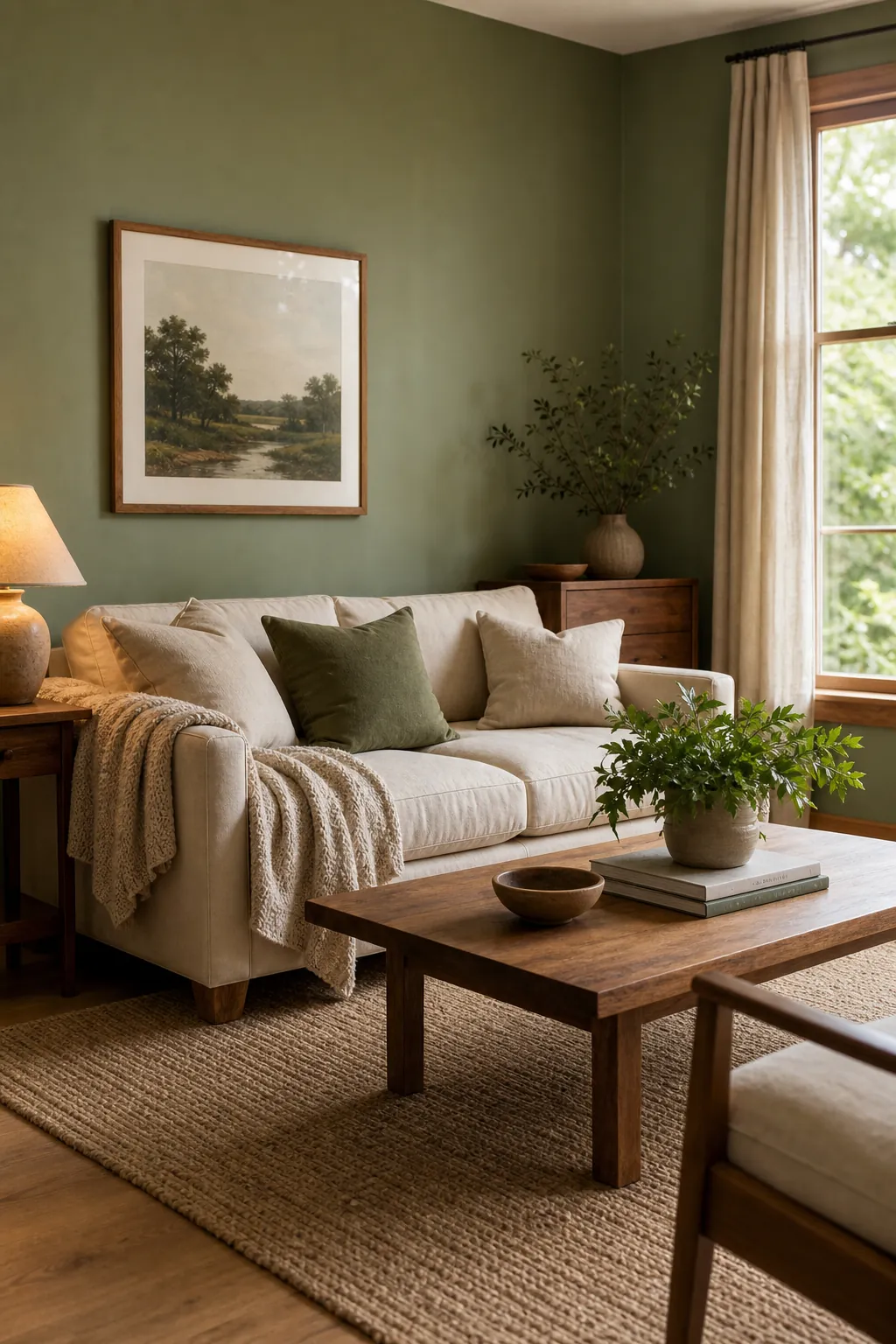
A green room can go wrong in two opposite ways. It can feel flat and themed, as if everything was bought to match the paint. Or it can feel too heavy, especially when the green is dark, the light is weak, and the furniture has no breathing room.
The better goal is not “more green.” It is a room where green sets the mood, and everything else keeps that mood balanced. In real Green Room Decor, the color should feel calm, grounded, and lived in, not like a single decorating decision that took over the space.
The easiest way to get there is to treat green as a visual weight. The deeper the green, the more you need warmth, contrast, texture, and light to keep the room cozy instead of closed in.
Start by deciding how much visual weight the green should carry
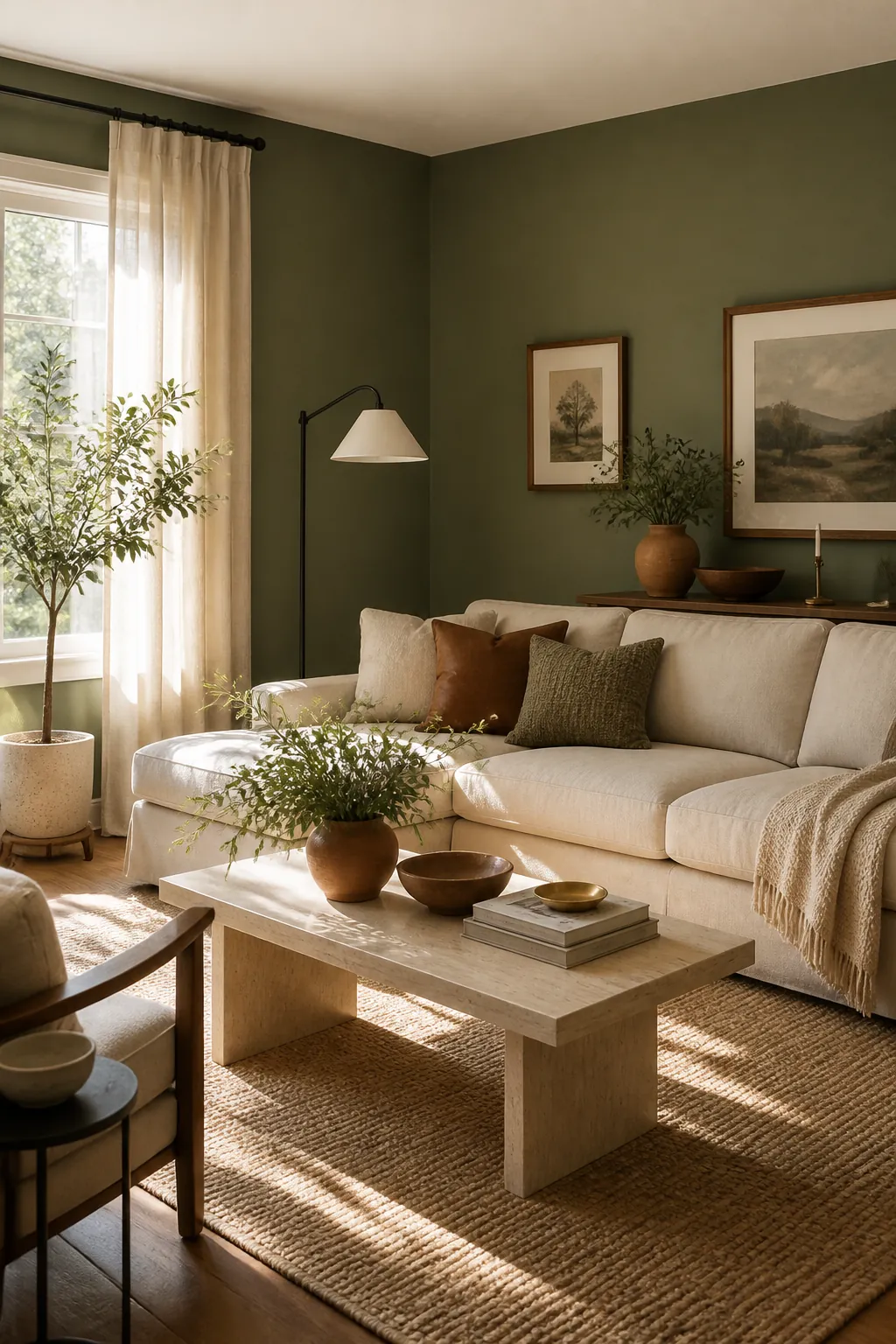
Before you buy pillows or repaint another wall, decide what role green is playing. A soft sage wall can act almost like a neutral backdrop. A forest green accent wall is heavier and more dramatic. A green sofa has a different job again, because it sits in the middle of the room and becomes part of the furniture plan.
This is where many rooms start to feel unbalanced. The homeowner likes the green, adds more green, then wonders why the space feels smaller or colder. A balanced room usually has one clear green anchor, then supporting pieces that calm it down.
Use this rule: one large green move is enough for most living rooms. If the walls are green, let the sofa, rug, curtains, or main chairs bring in neutral accents. If the sofa is green, keep the wall color quieter. If the built-ins are green, let them be the focal point instead of competing with a second bold green surface.
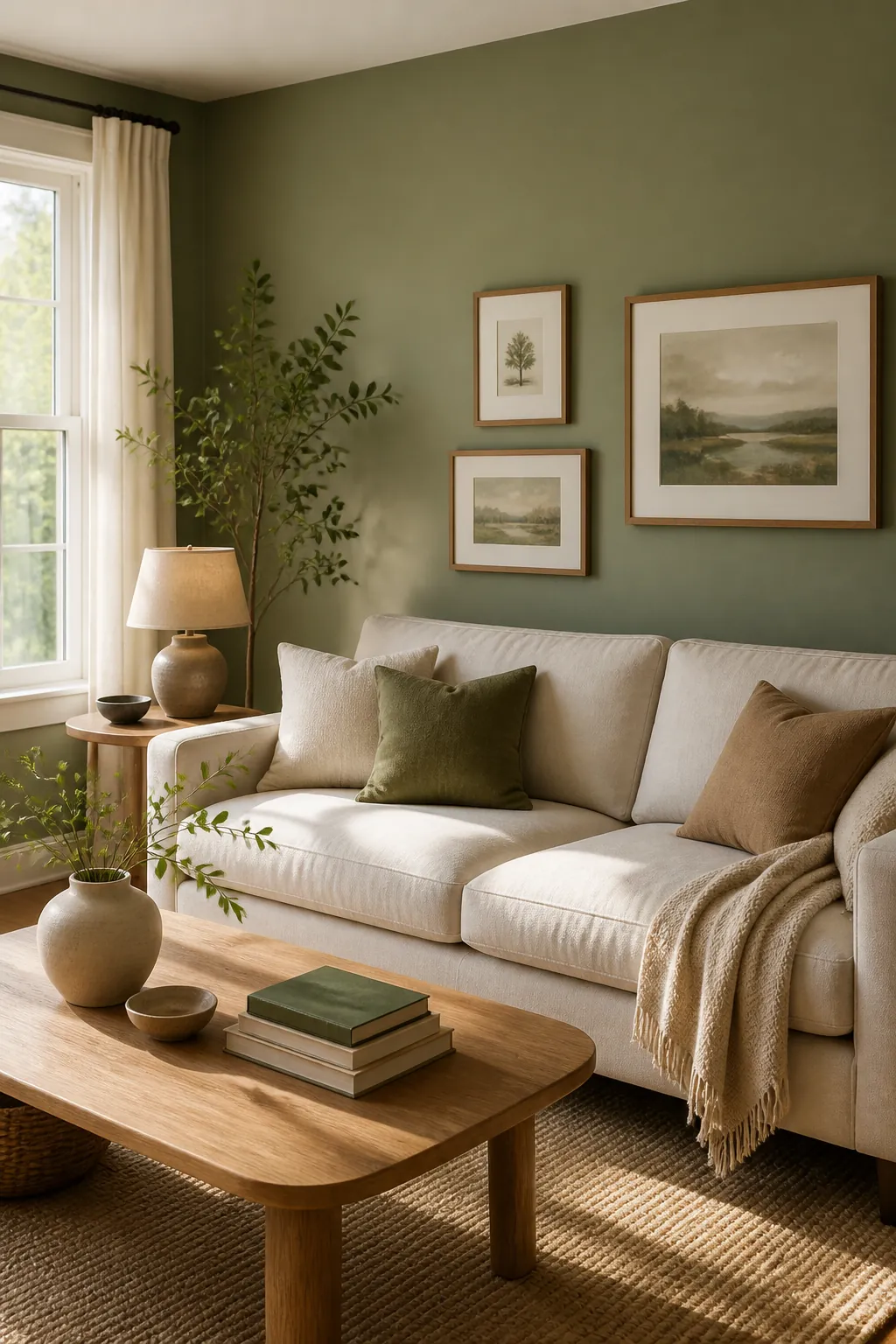
Warm the room before you add more color
Green naturally sits between warm and cool. That is why it can feel peaceful in daylight but chilly under the wrong lamp, or elegant in one room and muddy in another. The fix is not always a new paint color. Often, the room simply needs warmer materials.
Warm Wood Accents are one of the most reliable tools here. Walnut, oak, cane, rattan, bamboo, and medium-toned frames all soften green walls without making the room look busy. They also make the palette feel intentional because green and wood already make sense together.
For a cozy living room, pair green with cream, oatmeal, warm white, greige, camel, tan leather, jute, brass, clay, or muted terracotta. These tones add heat without fighting the green. Cool gray, stark white, and black can still work, but they need softness around them or the room may read sharp instead of cozy.
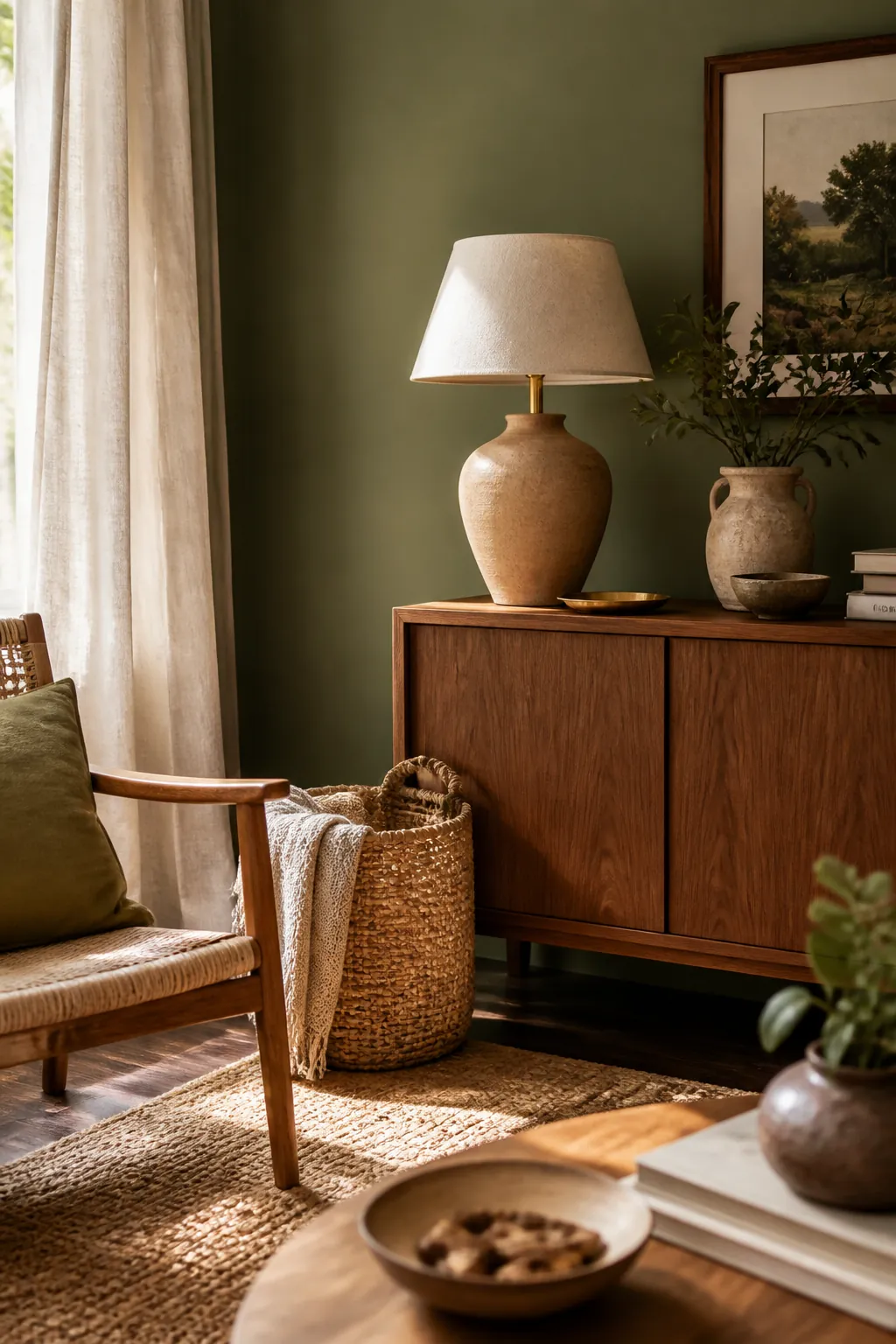
Let dark green breathe instead of filling every corner
Dark green can be beautiful, but it is not casual. It absorbs light, sharpens contrast, and makes anything placed against it more important. That is why a dark green wall behind dark frames, dark shelves, or dark art can make everything disappear.
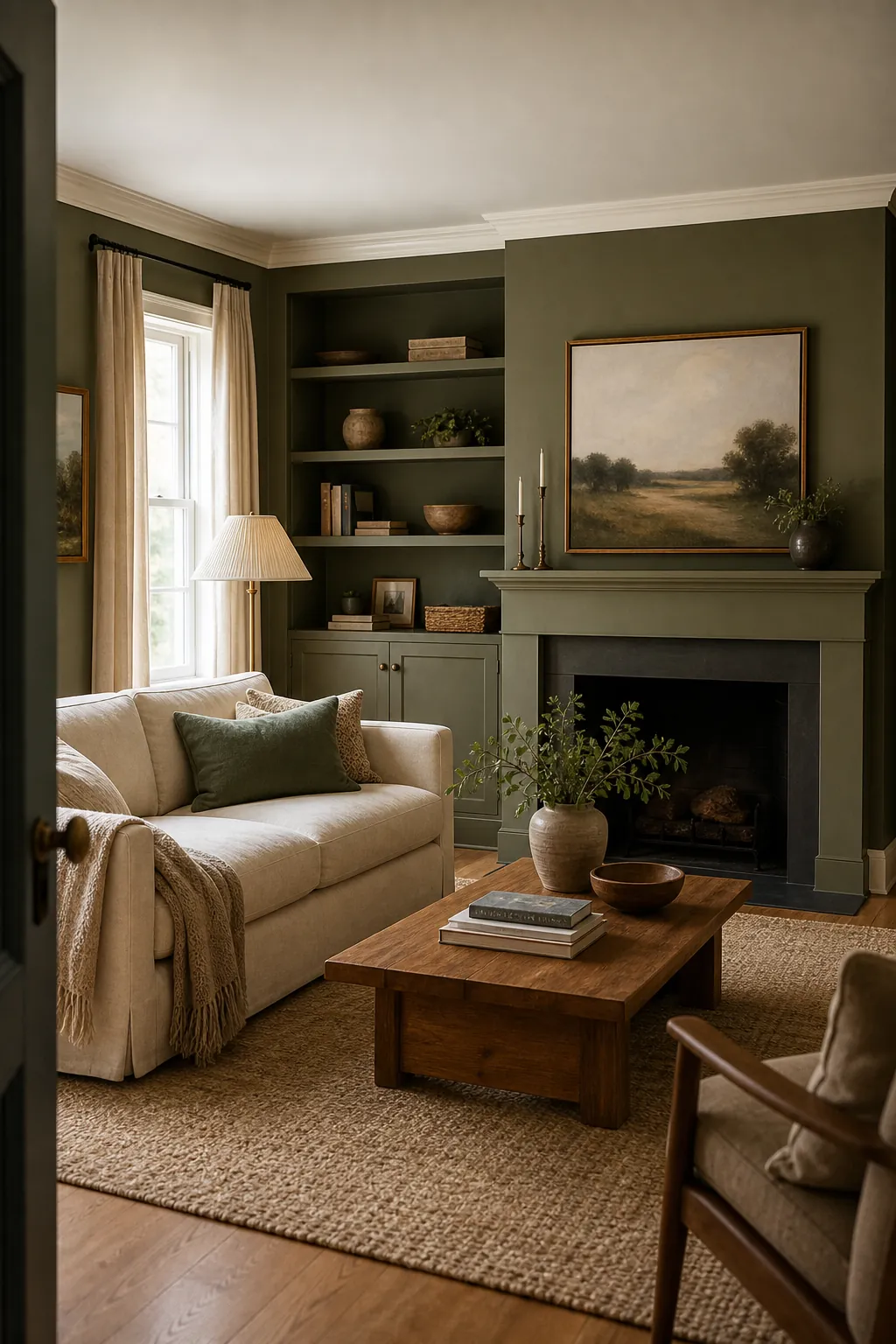
If you want deep olive, hunter green, or forest walls, give the room deliberate relief. Use lighter mats around artwork, warm metal frames, a pale lampshade, a cream sofa, or an open stretch of wall. The goal is not to dilute the drama. The goal is to keep the drama readable.
A moody green room still needs contrast. Picture lights, brass sconces, white matting, linen curtains, and a lighter rug can keep dark walls from feeling like a lid over the room.
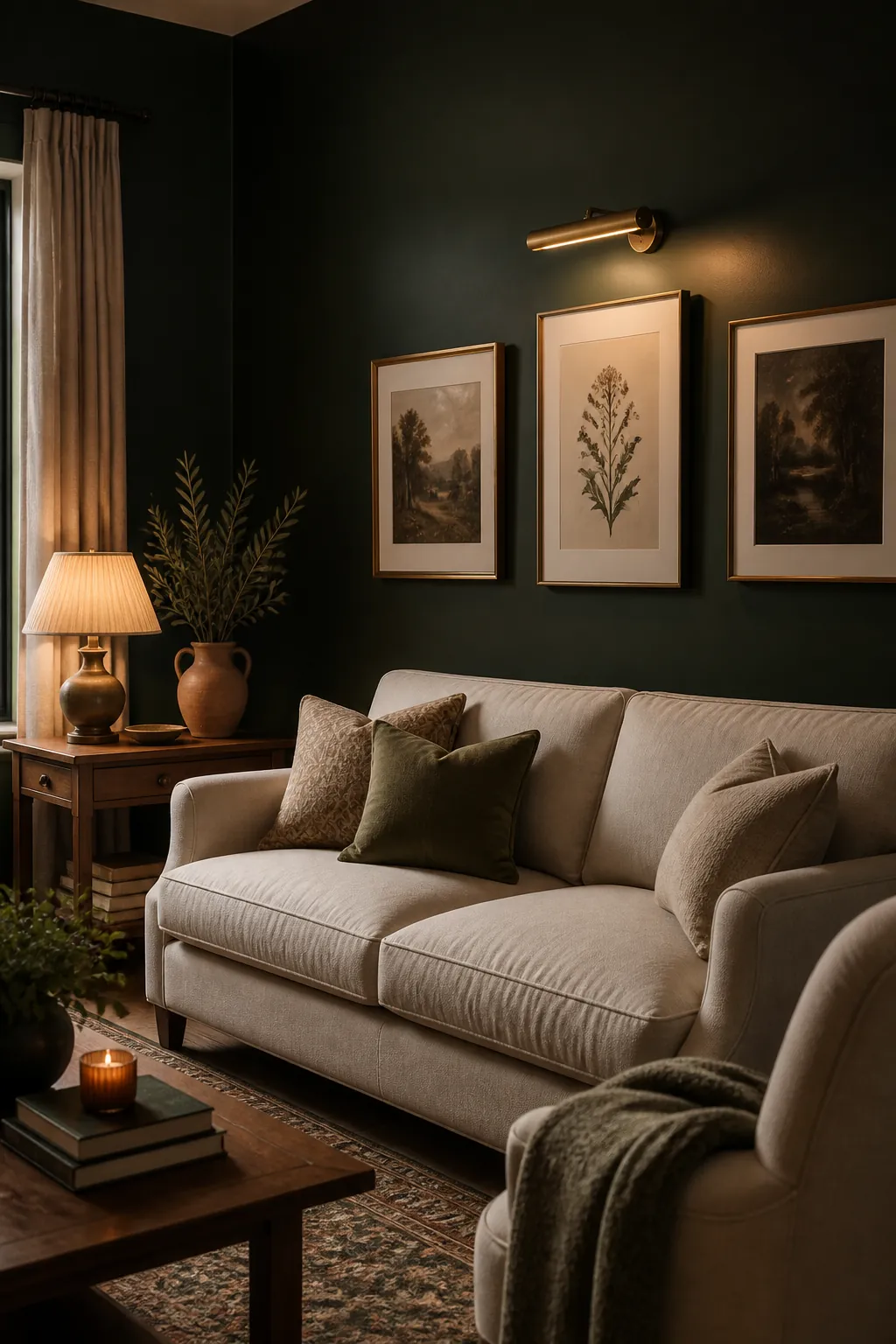
Use neutrals as the structure, not the leftovers
Neutral accents should not feel like a safe backup plan. In Balanced Decor, they are the structure that lets the green work. A cream sofa, linen shade, pale rug, or natural curtain gives the eye a place to rest. Without those pauses, even a beautiful green room can feel crowded.
Think of the room in three layers. The first layer is the main green surface. The second layer is the warm neutral foundation. The third layer is the small contrast: black lamp stems, brass hardware, terracotta pottery, an aged wood table, or one deeper textile.
This is also the simplest way to avoid a room that looks too coordinated. Do not match every accent to the wall. Repeat the feeling of green, not the exact color. Let the neutrals carry the room so the green can feel special.
Make lighting part of the color palette
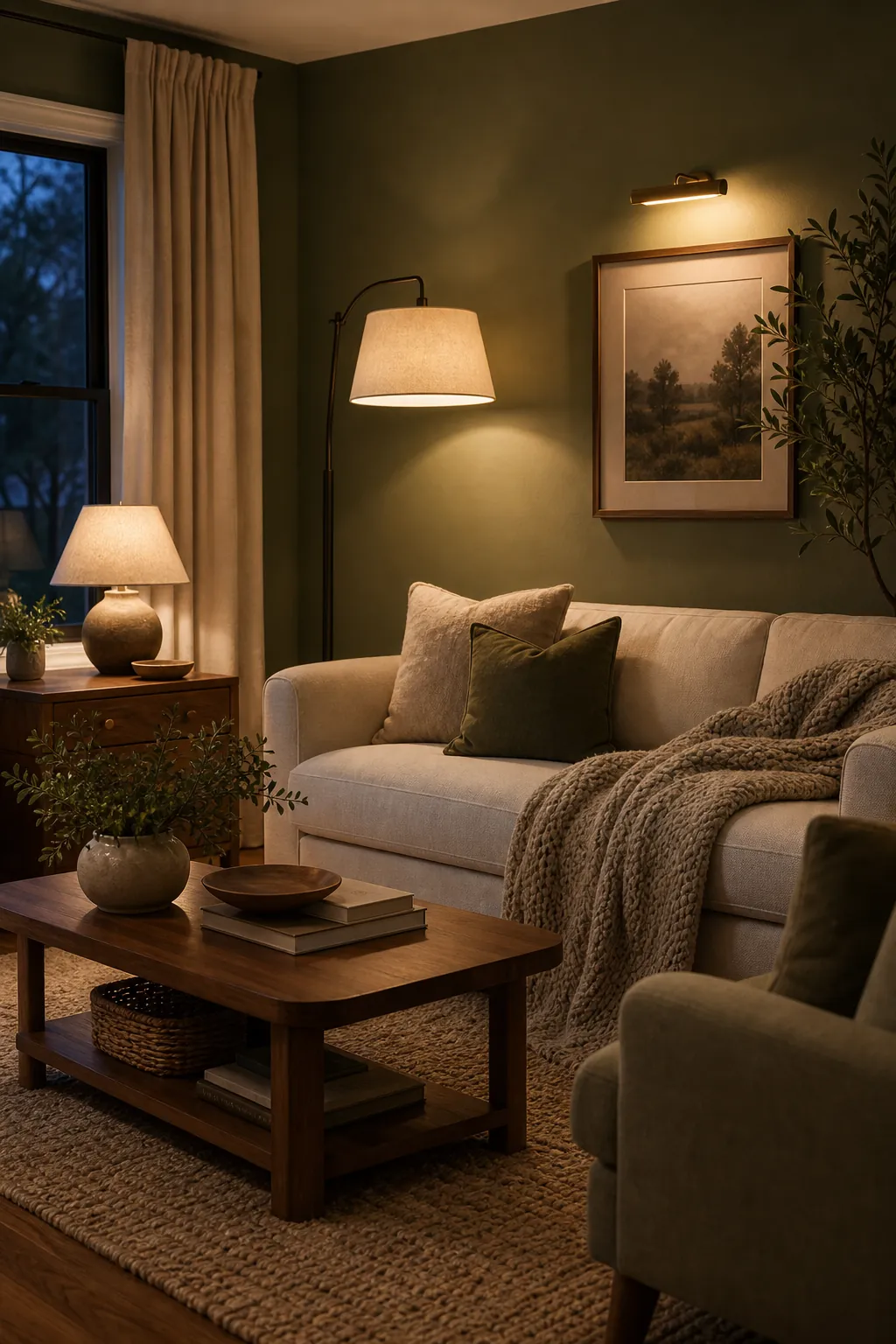
Soft Lighting changes green more than most people expect. Under cool bulbs, sage can look gray and olive can look dull. Under warm lamps, the same room can feel softer, more layered, and more comfortable at night.
Do not rely only on one ceiling light. Green rooms need layers: an ambient overhead source, a floor lamp near the sofa, a table lamp for glow, and one accent light on art, shelves, or a textured wall. These smaller pools of light create depth and stop green walls from becoming one flat block of color.
For Cozy Room Ideas, this is often the fastest upgrade. Choose warm white bulbs, use fabric or paper shades, and place lamps where they wash across wood, linen, books, art, or plants. A green room feels cozy when the lighting reveals texture.
Repeat green quietly so the room feels intentional
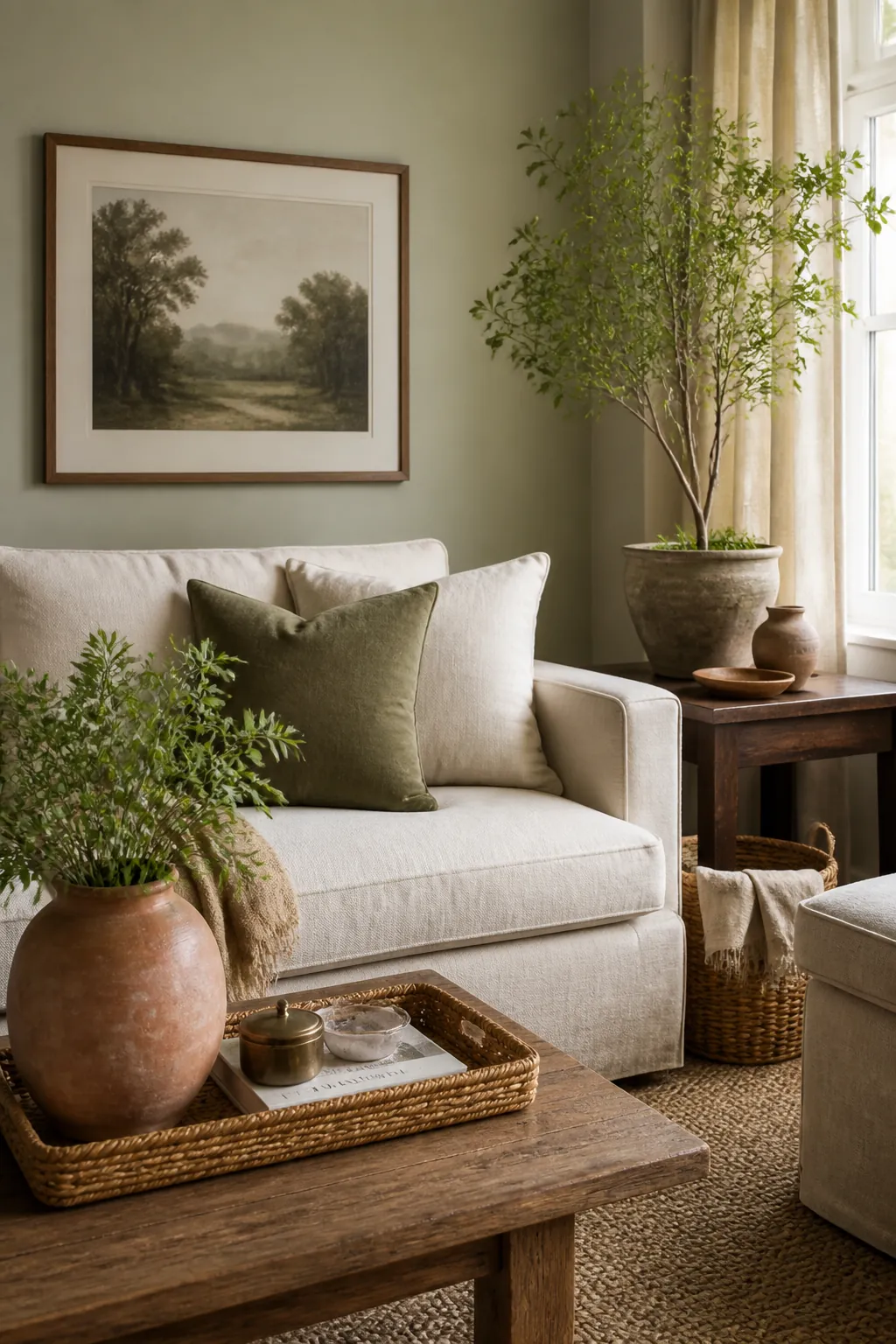
Once the big decisions are in place, use small repeats to make the room feel connected. A muted green pillow, a leafy plant, a stripe in the rug, or a landscape print can echo the wall without turning the room into a theme.
The best repeats are not identical. If the wall is sage, try olive, moss, eucalyptus, or fern in smaller details. If the sofa is deep green, add a paler green book cover, botanical art, or a plant with lighter leaves. This keeps the room dimensional.
Three quiet repeats are usually stronger than ten matching accessories. Interior Styling works when the eye notices a rhythm, not when it sees a shopping set.
Edit until the room has a clear place to rest
The last step is subtraction. Green is expressive, so clutter around it feels louder than clutter in a beige room. Too many small plants, too many tiny frames, or too many competing accent colors can make the room feel restless even when every individual piece is nice.
Stand at the doorway and look for the first thing your eye sees. Then look for the second. If the room has no order, simplify one area. Clear the coffee table. Remove one pillow color. Group books by tone. Swap a busy throw for a textured solid. Leave one wall section empty.
Earthy Decor works best when it has air around it. A cozy green room should feel collected, but not crowded. The comfort comes from warmth, texture, and quiet confidence, not from filling every surface.
The simple test for a balanced green room
When the room is close, ask three questions. Does the green have one clear job? Does the room include enough warm neutral and wood to soften it? Does the lighting make the green feel richer at night?
If the answer is yes, stop adding. The room does not need another green object. It needs the confidence to let the green do what it already does well: create calm, depth, and a lived-in sense of comfort.