
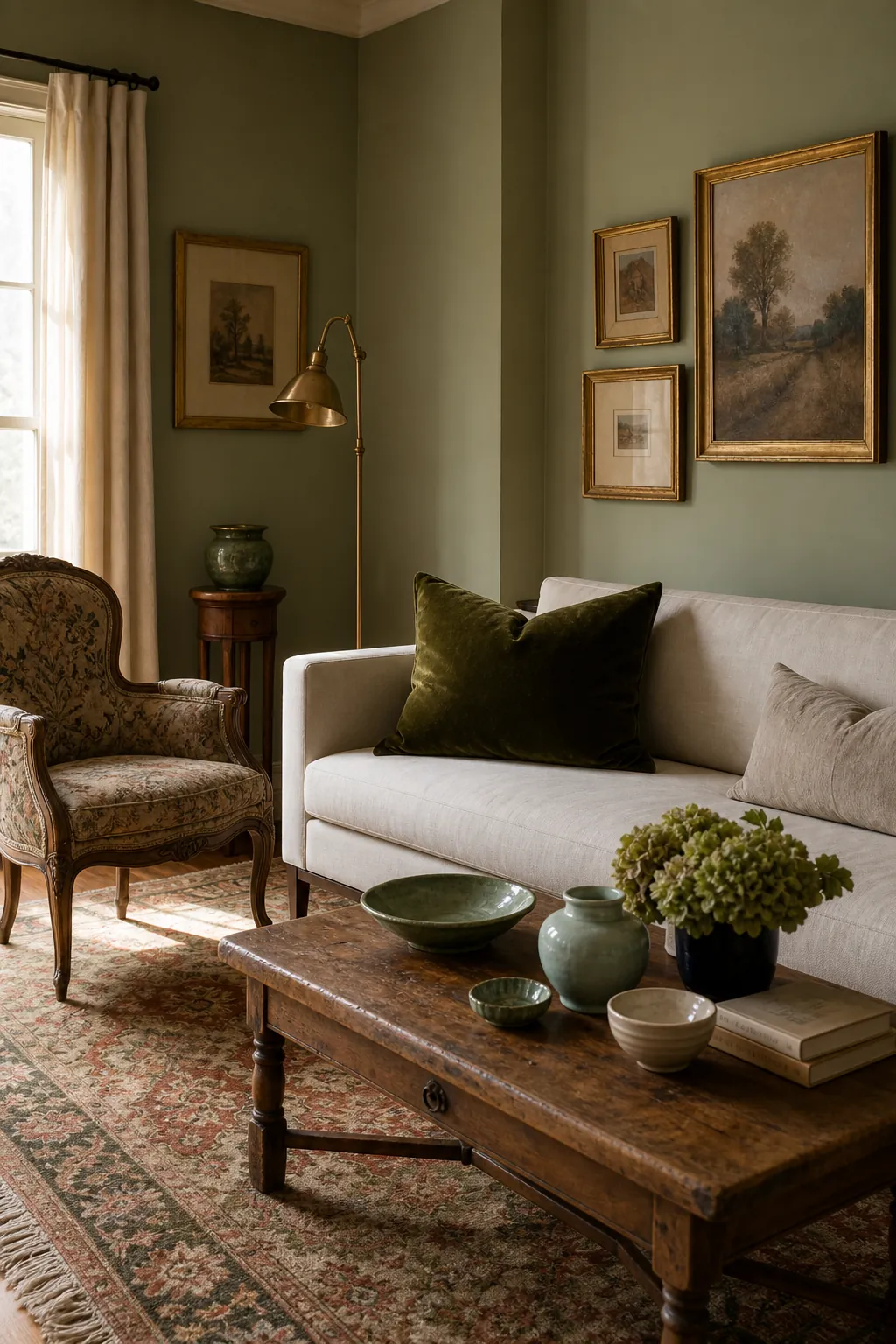
Green decor is easy to love and surprisingly easy to overdo. A sage wall, an olive chair, or a thrifted green vase can make a room feel warm and collected, but too many unrelated vintage pieces can push the same room into cluttered, dated, or accidental.
The trick is not to make everything match. It is to give the room a clear thread. Green can be that thread when you repeat it with restraint, balance old pieces with quiet modern basics, and let texture do more work than color alone. That is what makes mixed style decor feel layered instead of random.
Reddit decorating discussions show the same pattern again and again: people respond to green rooms when they feel warm, lived-in, and personal, but they also worry about where to start, which rug or art to choose, and whether vintage finds will look out of place. This guide is built around that real hesitation.
Start With One Green That Can Carry the Room
Before buying or moving anything, choose the main green family for the room. Sage, olive, moss, forest, celadon, and avocado all behave differently. Sage is calm and flexible. Olive is warmer and more vintage-friendly. Forest green feels dramatic. Celadon is lighter and works well with pottery, glass, and cottage-style details.
For most living room styling, the safest move is to make one muted green your anchor and let the other greens appear as small variations. A sage wall can handle an olive pillow, a moss vase, and a faded green rug. What usually looks messy is six strong greens competing at the same volume.
Think of green as the room’s rhythm, not its entire personality. Use it in enough places that the eye understands the decision, then stop before every object becomes part of a color theme.
Let One Vintage Piece Lead, Then Build Around It
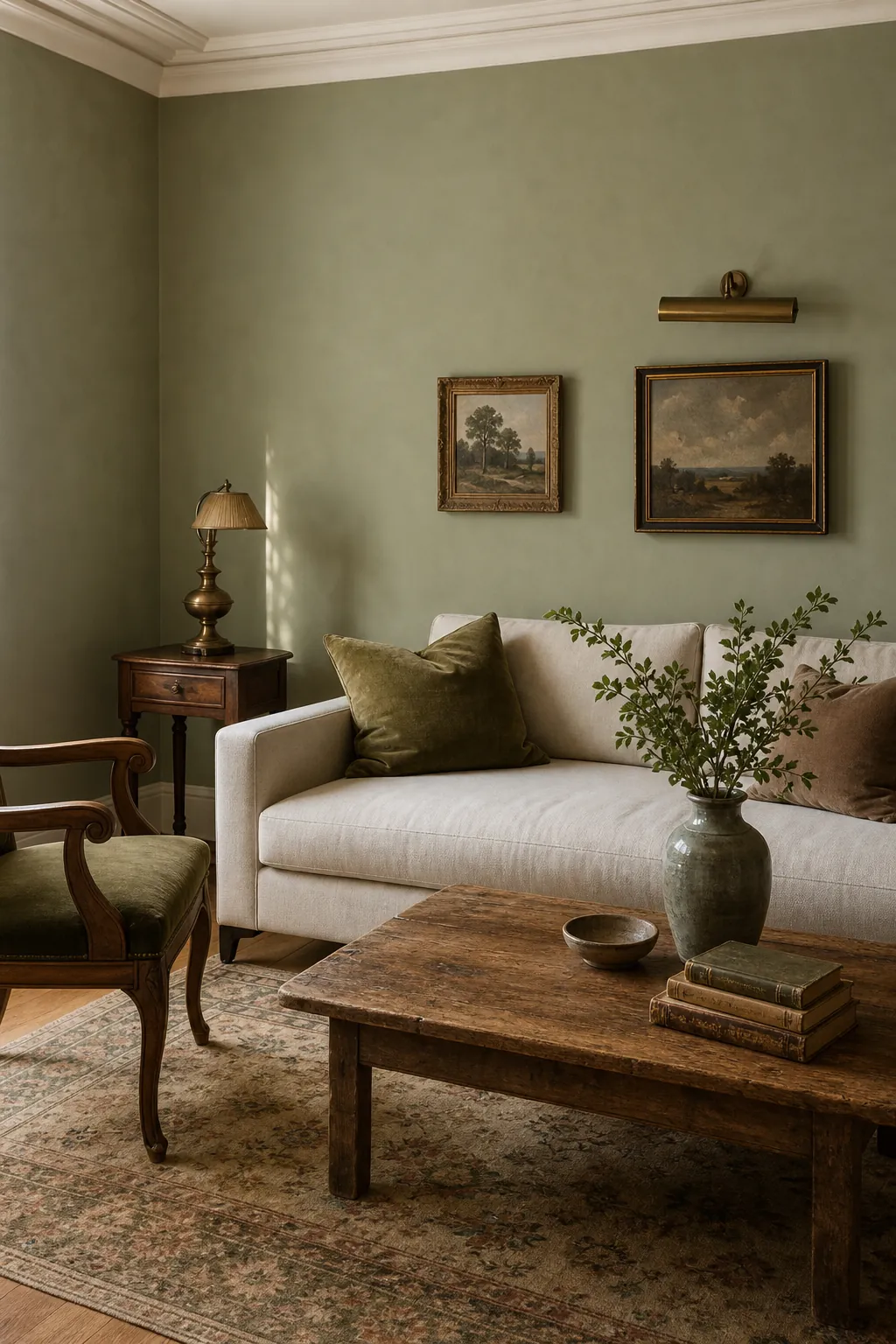
A collected home does not happen by scattering old objects everywhere. It usually starts with one strong vintage piece: a rug, a wood console, a chair, a brass lamp, a mirror, or framed art. Let that piece set the tone, then make the other decisions support it.
If you have a vintage rug with faded green, rust, and tan, pull one green from the rug and repeat it in pillows or pottery. If you have an old wood cabinet, place it against a green wall or near green textiles so the brown and green feel intentional. If your best thrifted decor is a brass lamp, echo the brass once or twice in frames or hardware.
The point is not to hide the age of the piece. Patina is the reason vintage decor works. Scratched wood, aged brass, worn books, and imperfect pottery keep green decor from looking too new or too styled.
Use Wood, Brass, Linen, and Wool as the Bridge
When green room decor and vintage pieces clash, the problem is often not the green. It is the missing bridge between eras. A sleek sofa, an antique table, and a retro lamp can sit together when they share compatible materials.
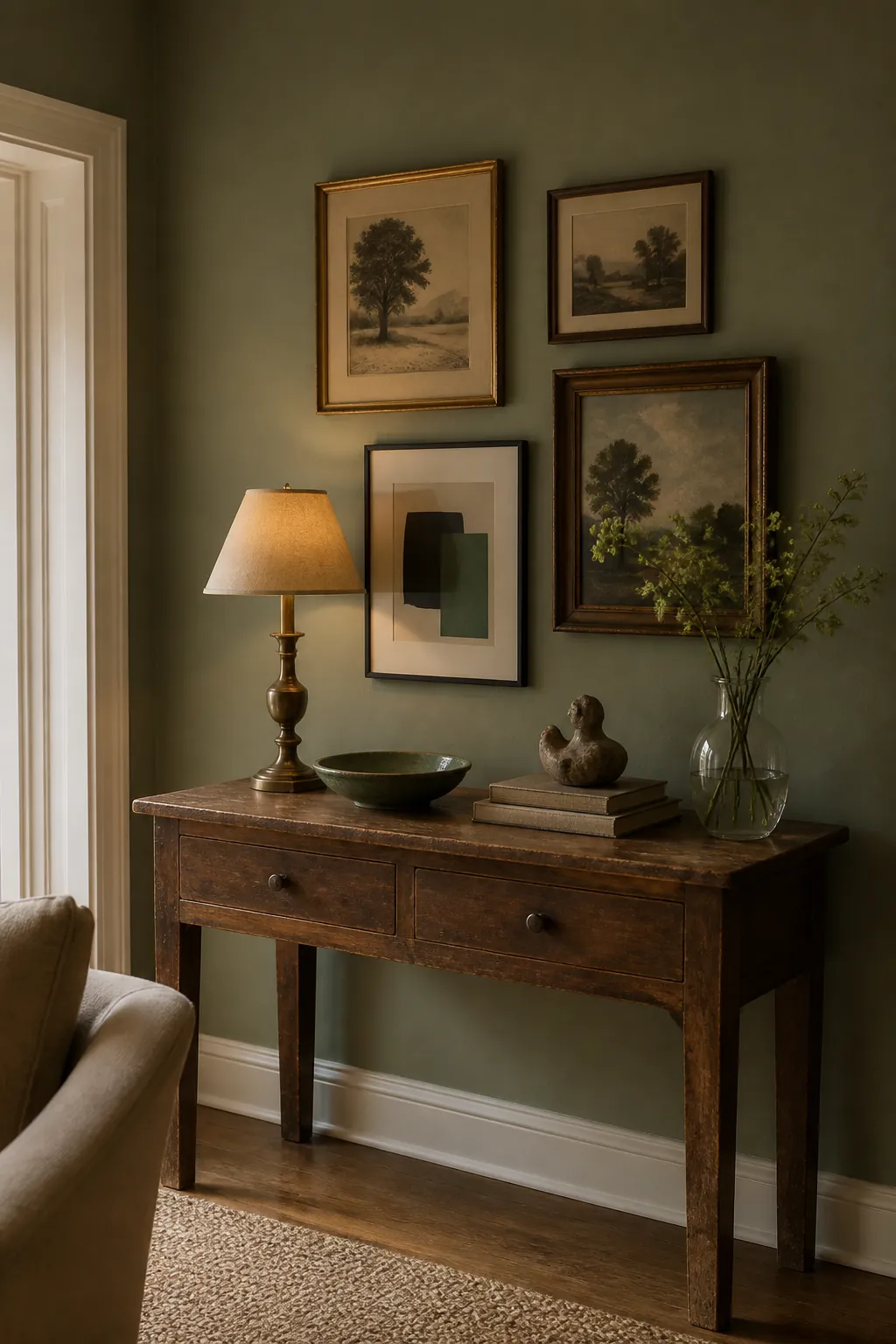
Warm wood softens green. Aged brass gives it depth. Linen keeps it relaxed. Wool rugs make it feel grounded. Glazed ceramics bring small hits of color without needing another painted wall. These materials help the room feel collected even if the pieces come from different decades.
This is also where green becomes more grown-up. A forest green pillow beside a plastic-looking surface can feel harsh. The same pillow beside walnut, brass, linen, and old paper looks richer. Texture makes green decor look layered instead of loud.
Keep the Modern Pieces Quiet
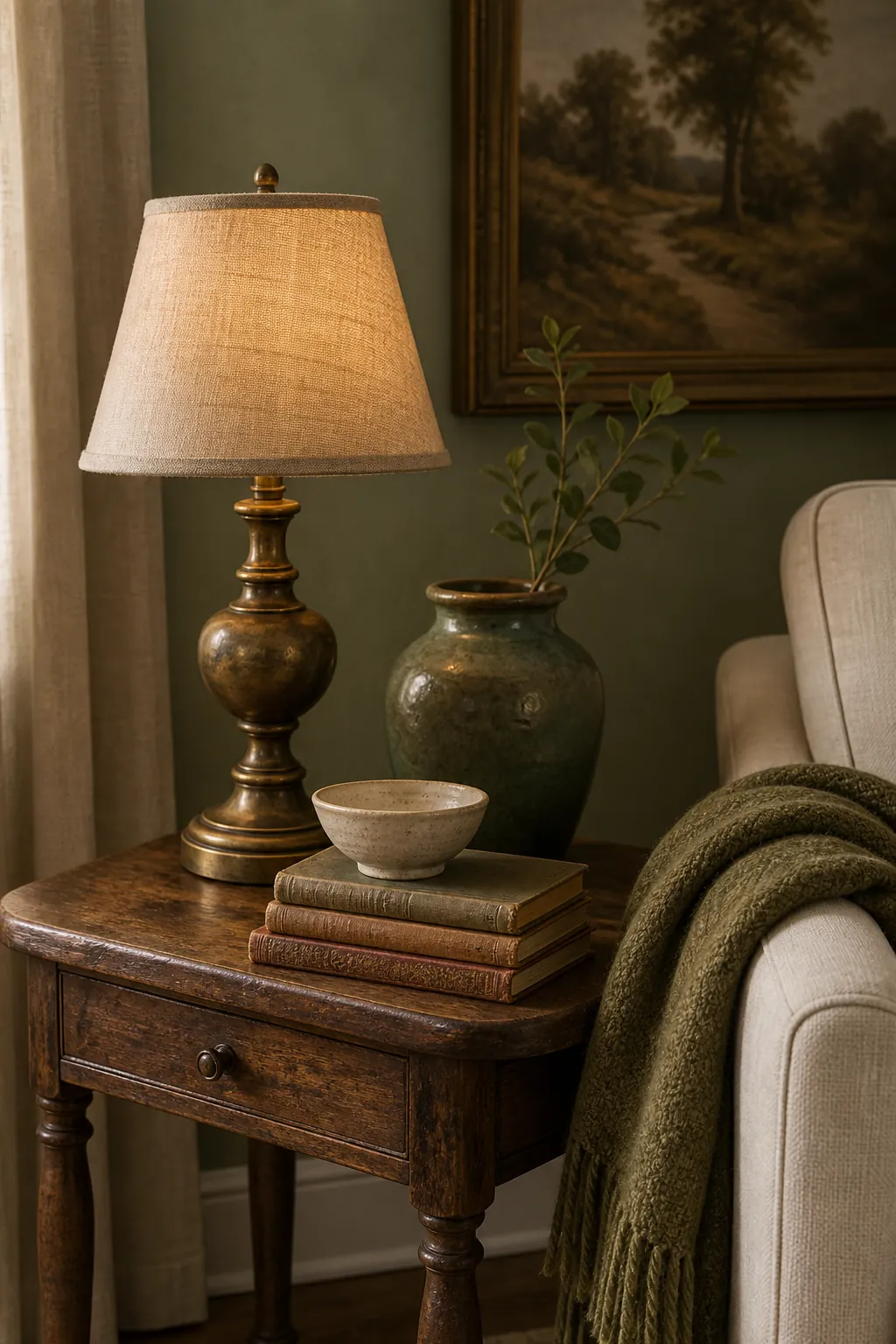
The easiest way to make vintage pieces look fresh is to avoid surrounding them with more visual noise. A clean-lined sofa, plain curtains, simple bedding, or a neutral wall gives the older pieces room to work. This does not mean the room has to be minimalist. It means the largest new pieces should not fight the pieces with history.
In a living room, try a modern cream or oatmeal sofa with a vintage chair, green pillows, and an old rug. In a bedroom, use simple linen bedding with a vintage nightstand, antique mirror, and olive quilt. In a home office, pair a plain desk with a thrifted lamp and green-painted shelves.
The mix works best when each side has a job: modern pieces provide function and calm, while vintage pieces provide character, shape, and story.
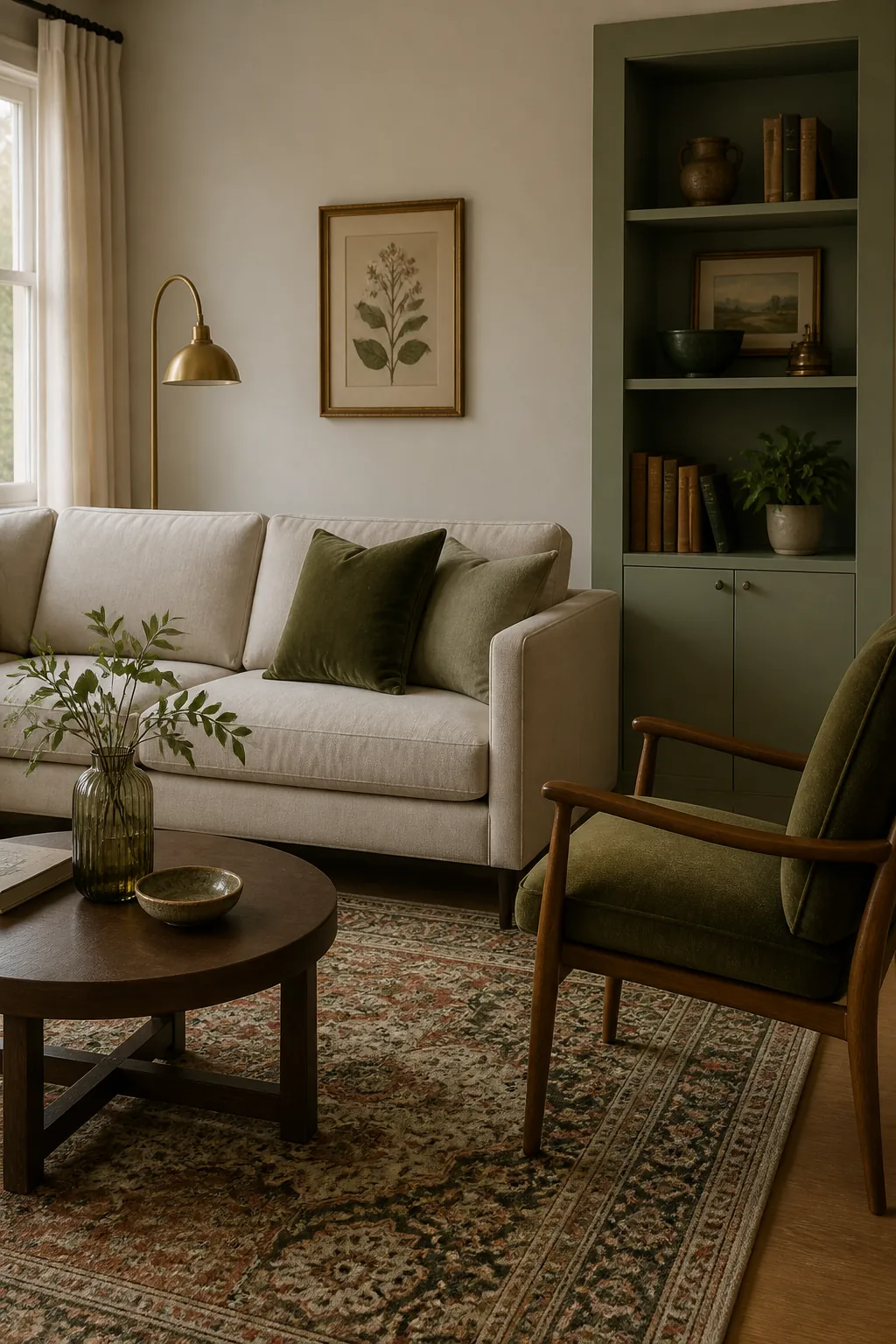
Repeat Green in Small Places So It Looks Intentional
A single green chair can look stranded. A single green wall can look like a paint experiment. A single vintage green vase can look like an impulse buy. Repetition solves that, but the repetition should be light.
Try three to five small green moments across the room: a pillow, a vase, a book spine, a plant, a lampshade, a stripe in the rug, or a small artwork. They do not need to be the same shade. In fact, a slight mix of sage, olive, celadon, and moss often feels more natural than a perfect match.
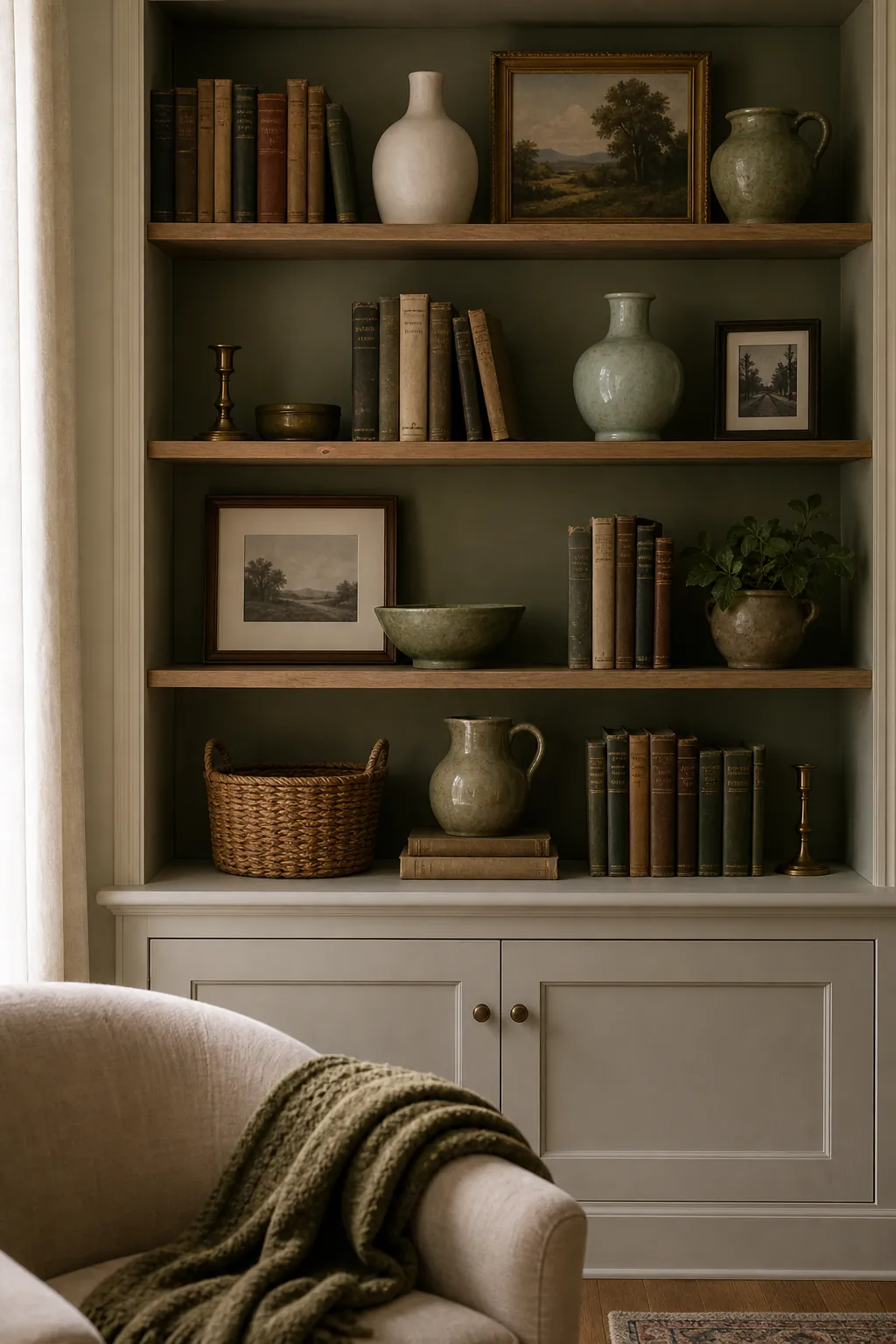
Shelves are especially useful because they let you test thrifted decor without committing the whole room. Place a green ceramic pitcher near old books, add one brass candlestick, leave empty space, then step back. If the shelf looks good from across the room, the styling is working.
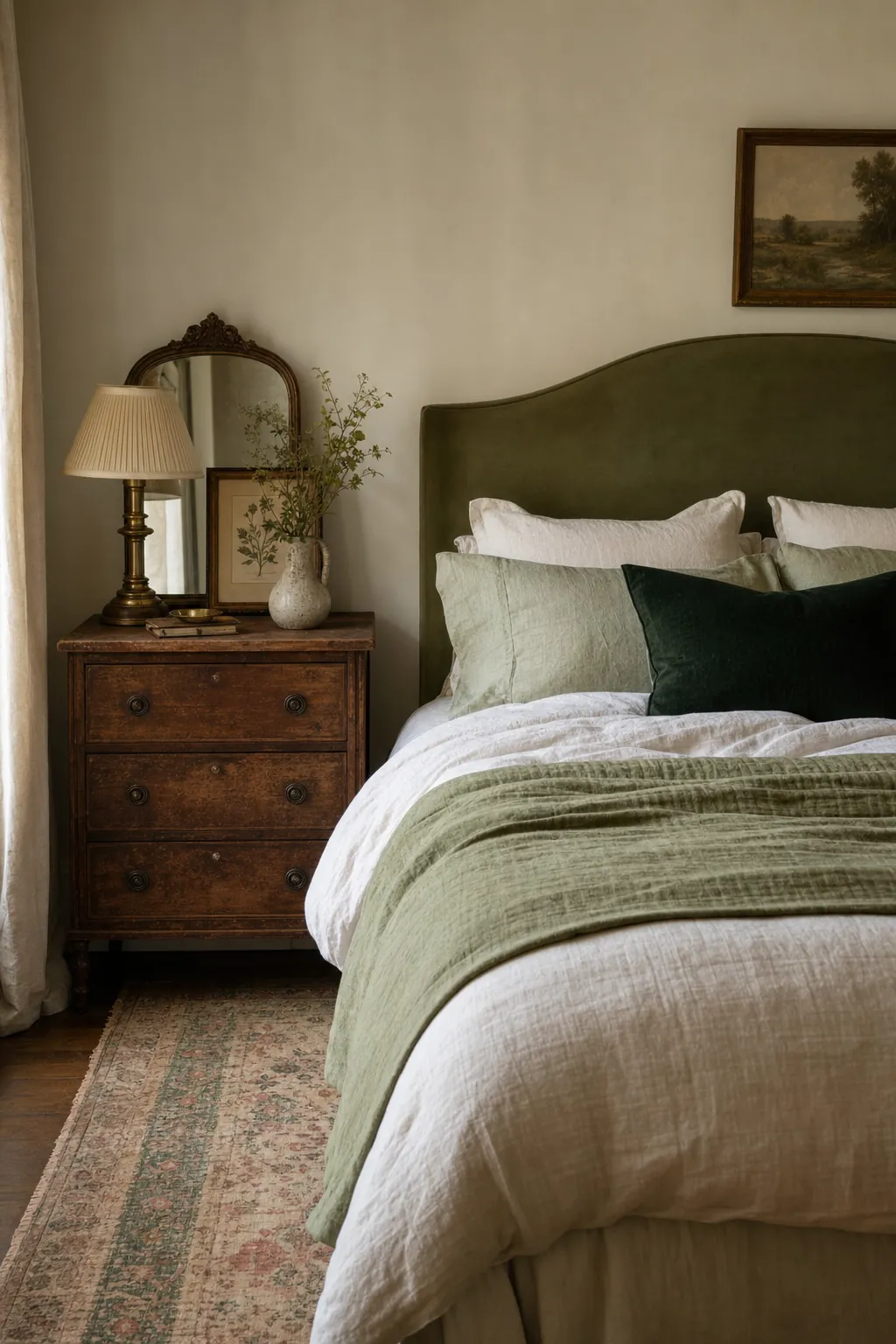
Make Bedrooms Softer Than Living Rooms
Bedroom styling needs a gentler version of the same idea. Green can be restful, but heavy vintage furniture plus dark green walls plus patterned bedding can make the room feel smaller and older than intended. Use fewer high-contrast choices here.
A soft olive quilt, sage linen pillowcases, or muted green headboard is usually enough. Then bring in vintage through the nightstand, lamp, mirror, rug, or artwork. Keep the bedding simple so the old pieces feel charming instead of fussy.
This is where collected home style should feel personal, not staged. A vintage book, a small framed print, and a pottery vase can do more than a fully themed retro bedroom. Let the room feel like it has memory, but not like it is stuck in one decade.
Edit Until the Room Feels Collected, Not Stored
The final step is editing. Vintage shopping can make every piece feel special because every piece was found, not ordered. But a room cannot give every object equal attention. If the eye has nowhere to rest, even beautiful pieces start to look like storage.
Use this simple test: remove three small items from the room, then look again from the doorway. If the green looks calmer, the vintage piece looks stronger, or the rug suddenly becomes visible, keep the edit. If the room loses warmth, bring one item back.
The goal is not a perfect formula. It is a room that feels like someone with taste, patience, and real life made decisions over time. Green decor gives the room continuity. Vintage pieces give it character. Editing gives it confidence.
A Simple Formula to Try
- Choose one main green: sage, olive, moss, forest, or celadon.
- Pick one vintage lead: rug, chair, console, mirror, lamp, or artwork.
- Add one quiet modern anchor: sofa, bed, curtains, desk, or shelving.
- Repeat green three to five times: pillows, pottery, books, art, plants, or rug details.
- Bridge with texture: wood, brass, linen, wool, glass, and ceramics.
- Edit last: remove anything that makes the room feel crowded or theme-heavy.
When in doubt, start smaller than you think. One green wall, one vintage rug, one brass lamp, and one clean-lined sofa can already say enough. The room will feel more convincing when it looks gathered slowly, not assembled in one afternoon.