

A blush bathroom usually goes wrong for one reason: the pink becomes the whole personality of the room. The color itself is not the problem. What makes a bathroom feel childish is the pileup of sweet signals: shiny pink accessories, tiny matching pieces, cool lighting, and no grown-up material to balance it.
The better move is to treat blush as a warm background color, not a theme. When it sits beside stone, warm white, oak, linen, black, greenery, and restrained brass accents, a blush bathroom can feel calm, elegant, and very adult.
After looking at the questions people keep asking about pink bathroom decor, the real worry is clear: they like soft pink decor, but they do not want the room to read as Barbie, princess, too girly, dated, or hard to live with. The fix is not to remove the pink. The fix is to make every supporting choice quieter and more intentional.
Start With a Blush That Belongs to the Room
Before choosing towels or bathroom accessories, look at the undertone of the pink. A blush with a little beige, clay, or peach in it usually feels more sophisticated than a cool baby pink. Cool pink can work, but it has to be paired carefully. If the floor is cream, beige, warm gray, travertine, oak, or limestone, a warmer blush will usually feel more settled.
Sample the color beside the existing floor, vanity top, tile, and toilet. The goal is not for everything to match. The goal is for the blush to look like it belongs to the same interior styling story. If the floor is warm and the wall pink is icy, the bathroom may feel off before you add a single accessory.
A grown-up blush bathroom starts with undertone discipline. Pick the pink that works with the room you already have, not the pink that looks prettiest on a paint card.
Anchor the Pink With Neutrals That Have Texture
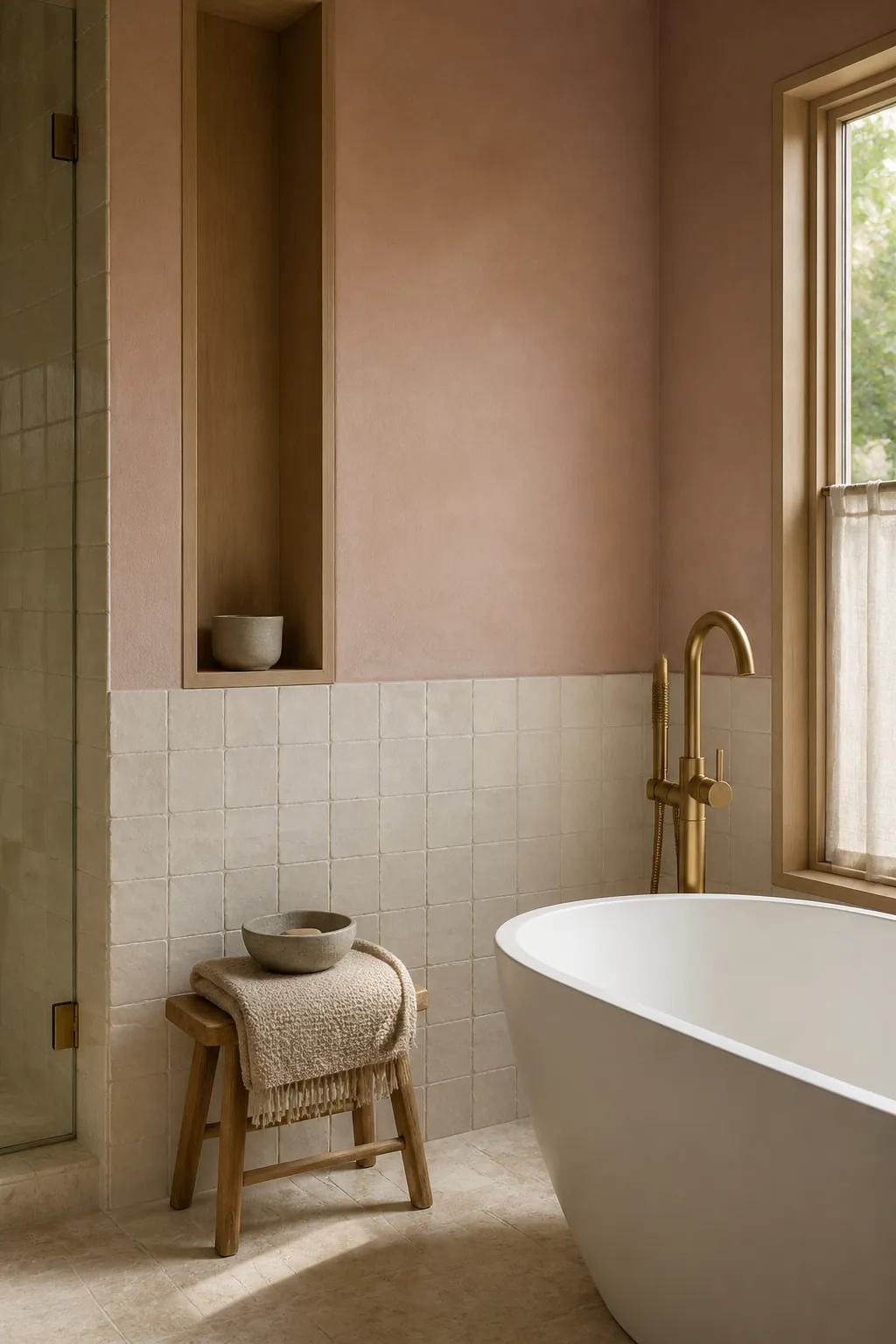
A neutral bathroom can handle blush beautifully when the neutrals have texture. Think honed stone, off-white tile, warm greige grout, oak drawers, linen towels, woven shades, and ceramic pieces with a matte finish. These materials stop the room from feeling flat or sugary.
Pure white can look crisp, but too much bright white around pink can make the color feel more artificial. Warm white, ivory, cream, mushroom, oatmeal, and pale oak are easier partners. They let the blush soften the room without turning it into a decorative theme.
If your bathroom already has a lot of white, add texture before adding more color. A stone tray, linen shower curtain, oak stool, or waffle towel does more for an elegant bathroom than another pink dispenser.
Use Brass Like Punctuation, Not Sparkle
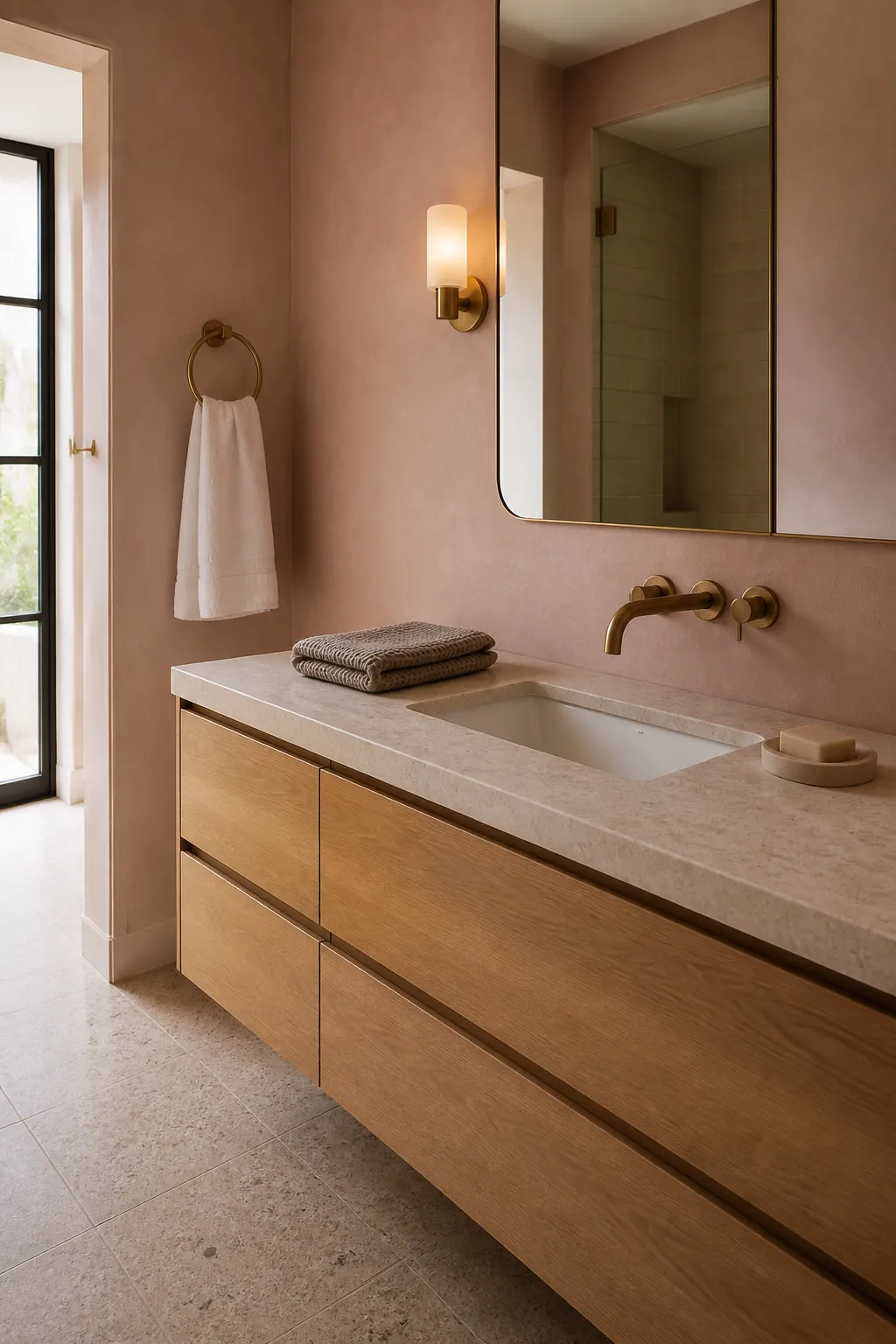
Brass accents are one of the easiest ways to make a blush bathroom feel polished, but only when they are used with restraint. Brushed, aged, or unlacquered brass usually looks more mature than high-shine gold. The finish should feel warm and architectural, not jewelry-like.
Choose a few places where brass makes sense: a faucet, mirror rim, towel ring, cabinet knob, or sconce stem. Then stop. When every hook, tray, bottle, frame, handle, and basket is shiny gold, the room can start to feel overdecorated.
The strongest pink bathroom decor often has a simple rhythm: soft blush, clean white, warm brass, and one grounding neutral. That combination gives you elegance without making the room feel precious.
Choose One Confident Pink Moment
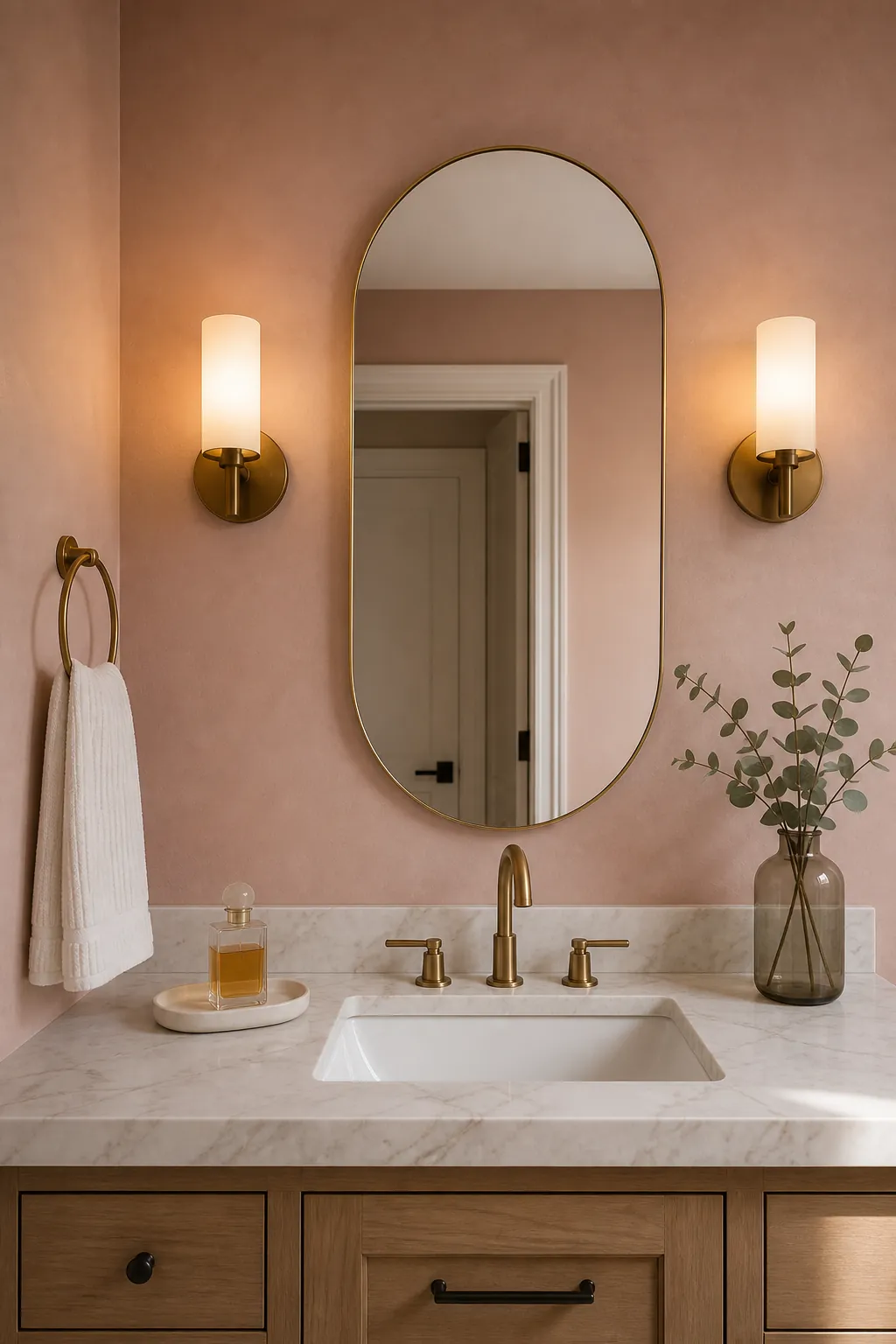
A bathroom feels too sweet when the pink is scattered across too many tiny things. Pink rug, pink towels, pink soap pump, pink art, pink flowers, pink storage bins, and pink shower curtain can make the room feel like a collection of cute items rather than a designed space.
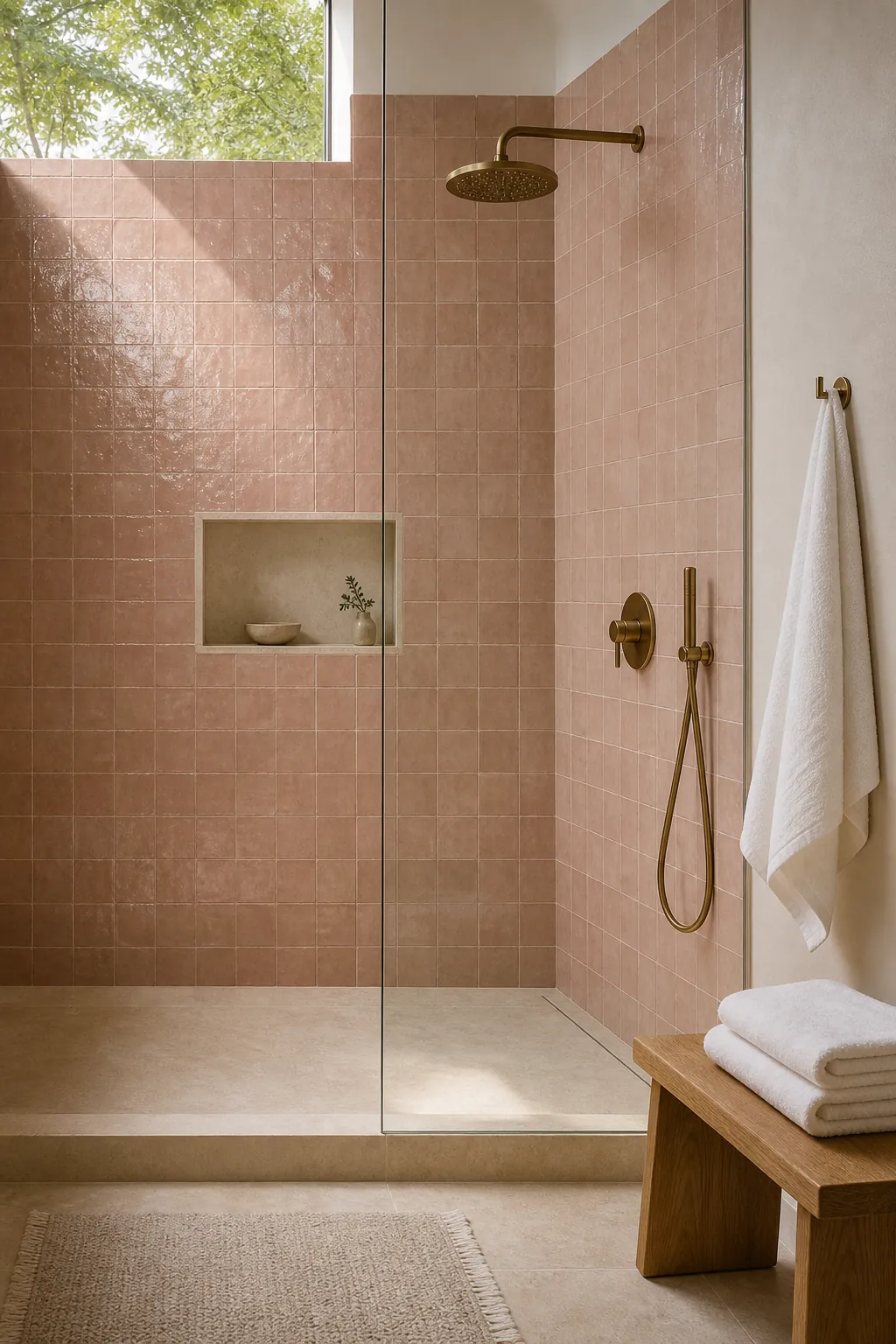
Instead, choose one confident pink moment. It might be blush walls, muted pink shower tile, a dusty rose vanity, or a single large-scale wallpaper. Then keep most of the smaller pieces neutral. This makes the pink feel intentional and expensive, even if the room is simple.
For renters or small bathrooms, the same rule still works. If the shower curtain is the blush moment, keep the bath mat neutral. If the towels are blush, keep the counter accessories stone, glass, wood, or white ceramic.
Make Bathroom Accessories More Tailored
Bathroom styling is where a blush room often tips from elegant to too cute. Matching accessory sets are the first thing to question. A coordinated pink soap pump, toothbrush cup, tray, trash can, and rug may be convenient, but it can also make the room feel like a theme kit.
Build the accessories like a wardrobe instead. Use one soft piece, one textured piece, one clean ceramic piece, and one darker or more grounded piece. For example: ivory towels, a travertine tray, a clear amber soap bottle, and a dark bronze hook. The blush wall or tile is still present, but the objects have enough weight to balance it.
The smaller the bathroom, the stricter the edit should be. Every item is visible, so every item needs to earn its place.
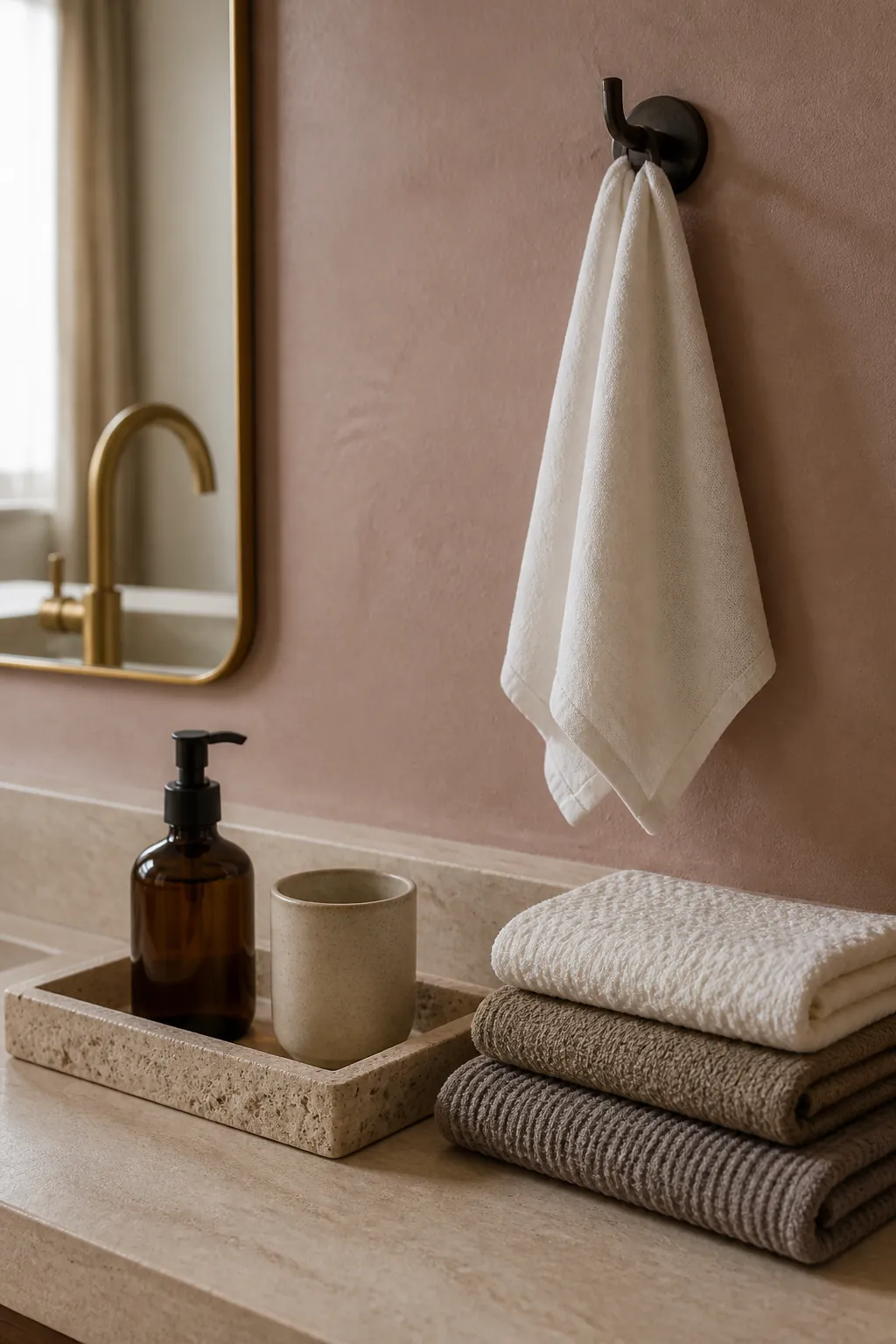
Fix the Lighting Before You Judge the Pink
Pink changes dramatically under different light. A blush wall that looks calm in daylight can look cold, flat, or strange under a cool bulb. This is why some pink bathrooms feel flattering in person and harsh in photos, or the other way around.
For a calm bathroom, use warm white bulbs and place light near face height when possible. Sconces on each side of the mirror are usually kinder than one harsh overhead fixture. If you only have an overhead light, choose a warmer bulb and add a small shaded lamp or wall light where it is safe and practical.
Lighting is not just functional here. It decides whether blush reads as soft and elegant or pale and awkward. Do not repaint until you have tested the color under the light you actually use.
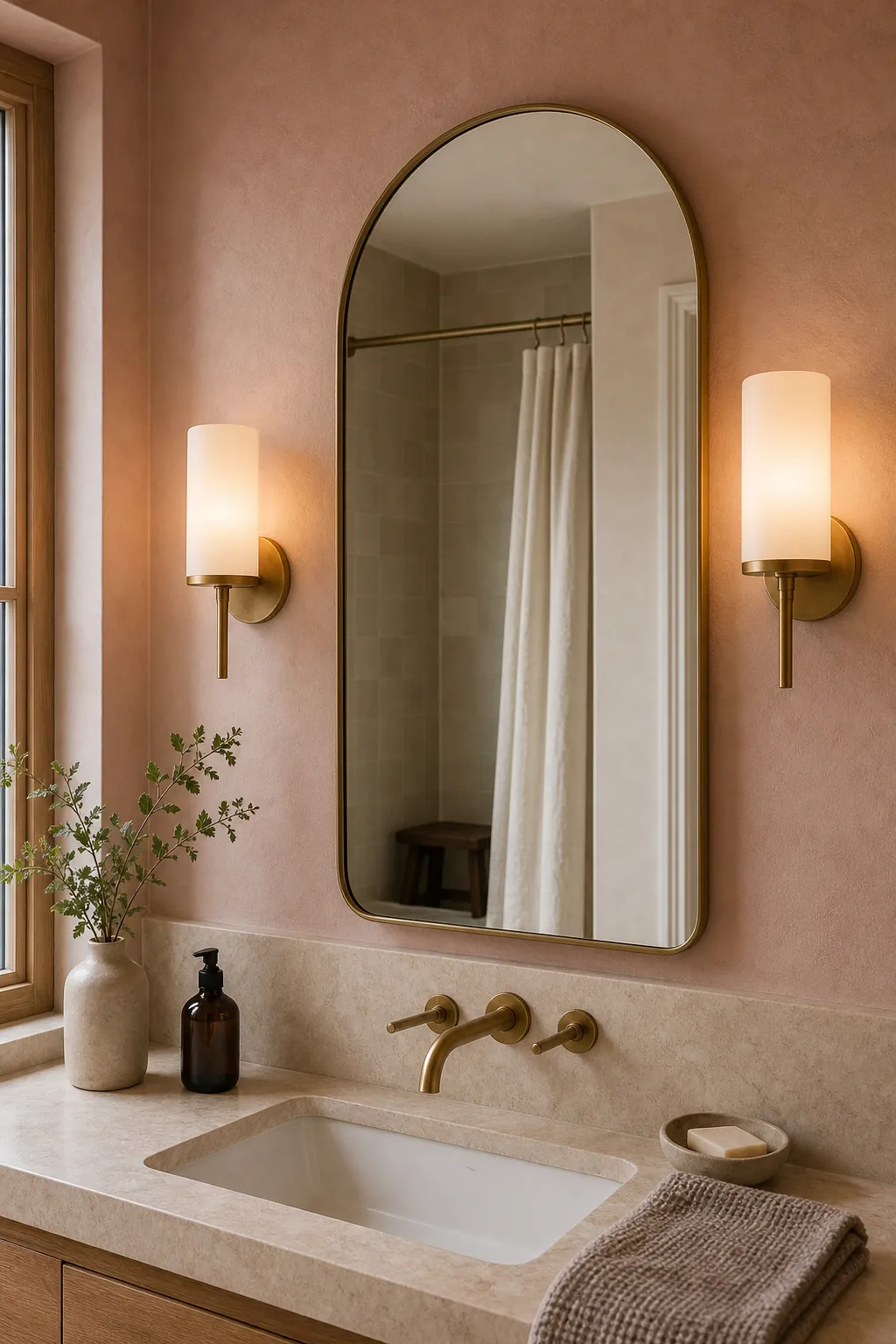
Add One Grounding Contrast
A blush bathroom needs one note that is not soft. This does not have to mean a black-and-pink scheme. It can be a slim black mirror, a dark bronze hook, olive greenery, walnut wood, charcoal art, or a deeper stone tone. The point is to give the eye something firm.
This is especially useful if the room has blush walls, brass accents, and warm white tile. Those elements are beautiful, but they all live in the same soft range. A small amount of contrast makes the room feel designed instead of delicate.
Keep the contrast clean. One dark line is enough. A black mirror frame, black towel hooks, or one olive plant can sharpen the whole room without taking away the calm bathroom feeling.
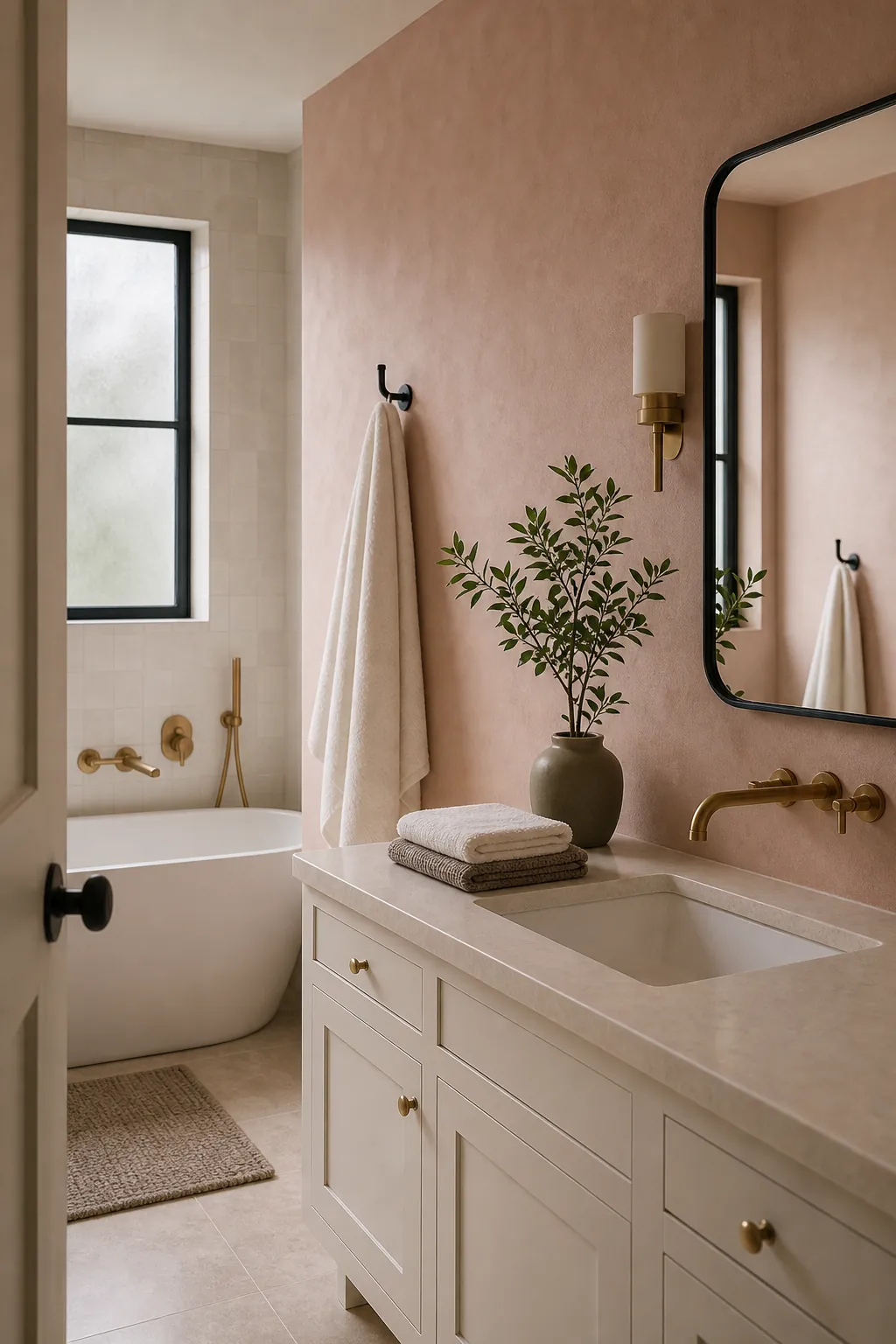
Use a Simple Final Edit
Before you call the room finished, take one photo from the doorway and one photo facing the mirror. Photos make the sweet spots obvious. If the room feels too cute, remove the smallest pink items first. If it feels unfinished, add texture before adding more color.
- If the room feels childish: remove matching pink accessories and add stone, linen, wood, or black.
- If the room feels cold: check the bulb temperature and bring in warmer whites or oak.
- If the room feels flat: add texture through towels, tile, plaster, or woven pieces.
- If the pink feels random: repeat it once in a larger, quieter way rather than many tiny ways.
- If the room feels too busy: simplify the pattern scale and clear the counter.
The best blush bathroom does not apologize for being pink. It simply gives the pink better company. When soft pink decor is balanced by neutral bathroom materials, restrained brass accents, tailored bathroom accessories, warm light, and one grounding contrast, the result feels calm, elegant, and lived in.