
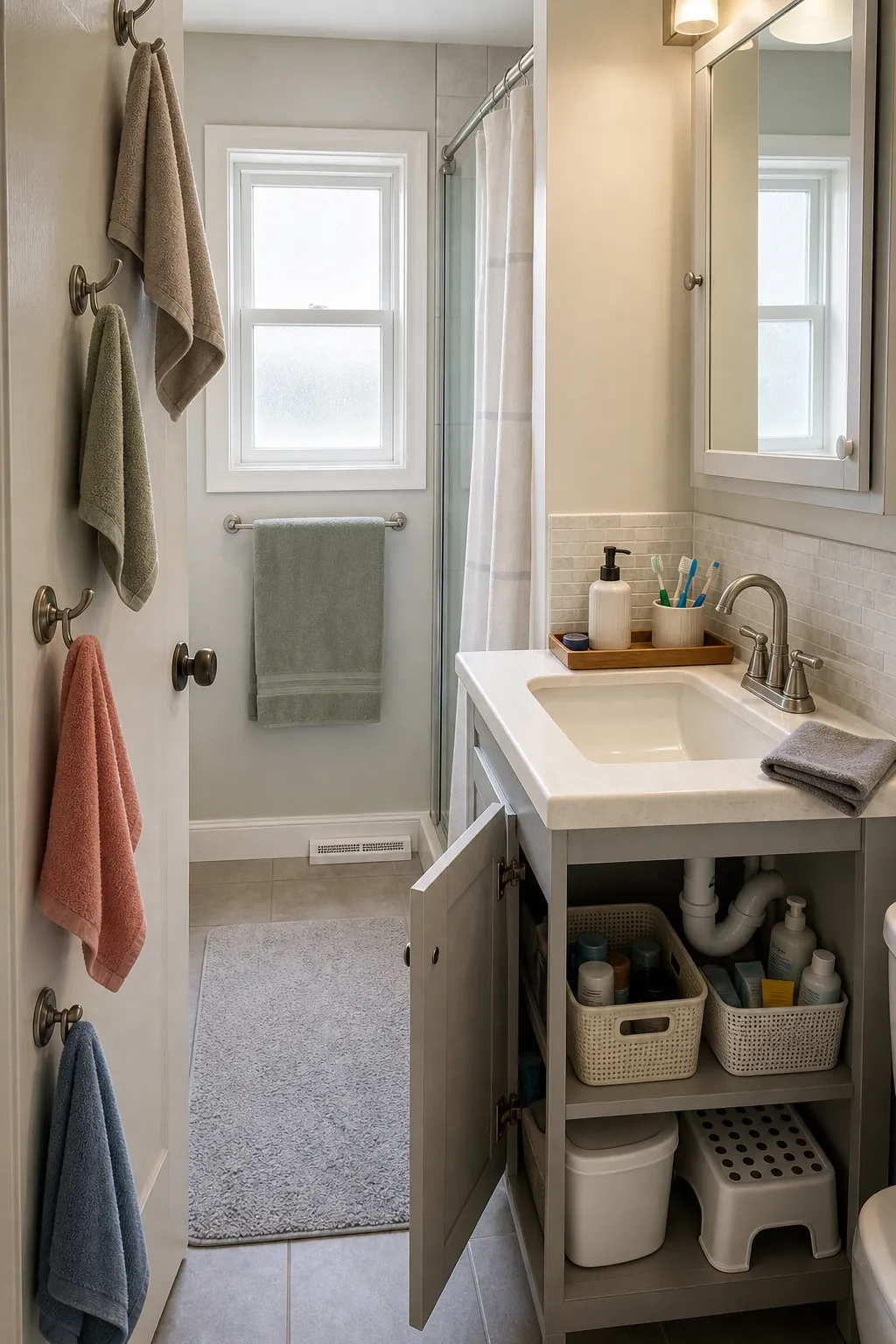
A tiny bathroom can work for two, four, or even five people in the morning, but only if the room stops pretending it is a full storage closet. The real problem is usually not the square footage. It is the pileup: toothbrushes on the counter, damp towels with no owner, shower products balanced wherever they fit, and one person blocking the only sink while everyone else waits.
The best tiny bathroom ideas for shared morning routines are not about buying every narrow cabinet you can find. They are about making the room run like a short, repeatable system. Daily-use items need a fixed landing zone, backups need to leave the room, towels need assigned hooks, and the counter needs to reset in less than one minute.
Start With The Morning Traffic, Not The Decor
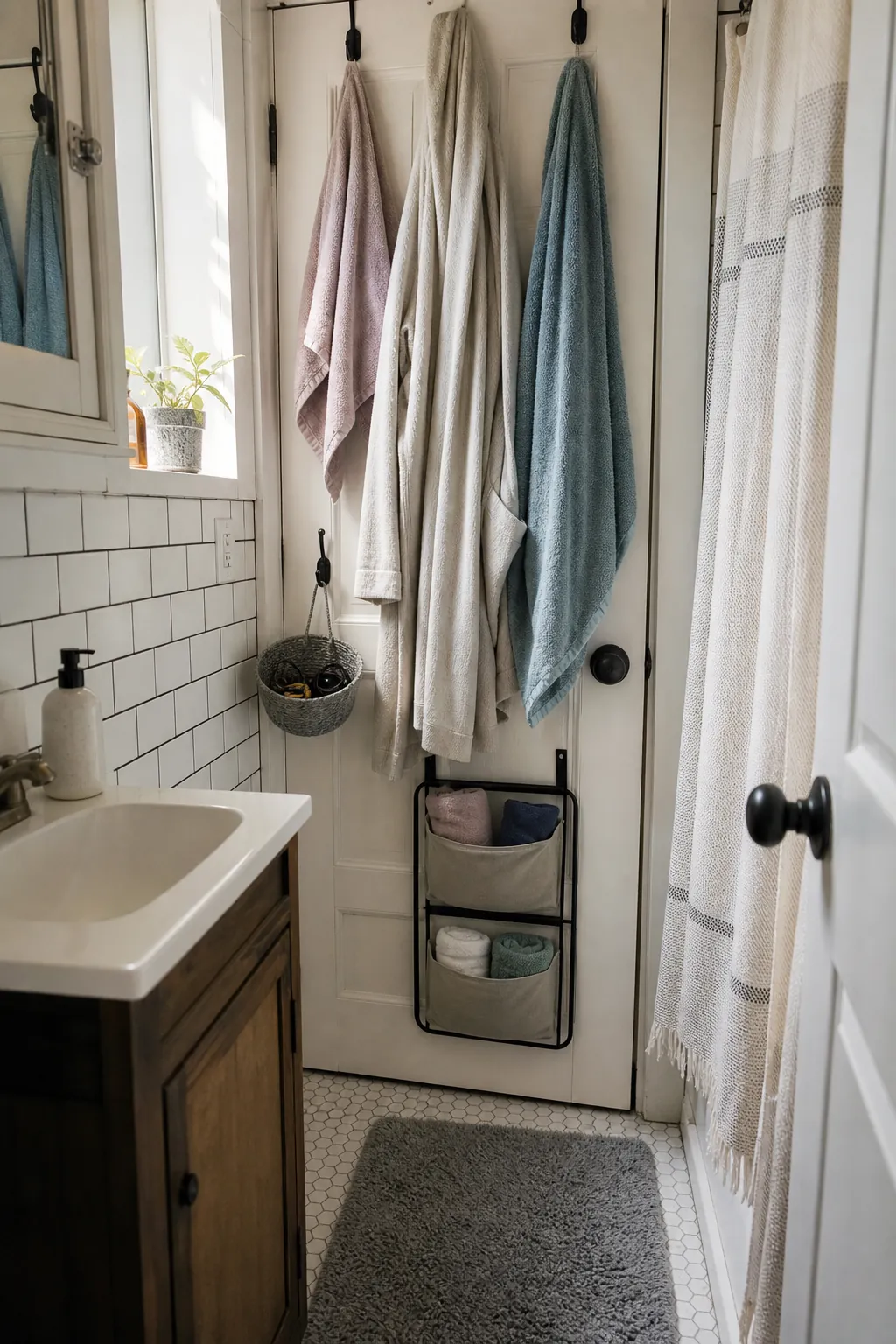
Before adding storage, watch the order people actually use the bathroom. One person showers, another brushes teeth, someone needs hair tools, and a child needs a towel they can reach. If the layout ignores that order, even pretty storage becomes another obstacle.
Give the room three zones: a wet zone for shower and towels, a sink zone for brushing and skincare, and a grab-and-go zone near the door for robes, hair ties, glasses, or the next person’s caddy. In a tiny bathroom design, these zones may be only a few inches apart, but naming them keeps items from drifting onto every surface.
- Wet zone: towels, bath mat, shower caddy, squeegee, daily shower spray.
- Sink zone: soap, toothbrushes, toothpaste, one shared tray, and nothing else.
- Grab-and-go zone: personal bins, hooks, and morning routine items that should leave with the person.
This is where many small bathroom ideas fail: they organize by product type instead of by moment. A shared bathroom needs storage that matches the sequence of use, not a perfect-looking shelf that everyone has to work around.
Keep The Counter For Active Use Only
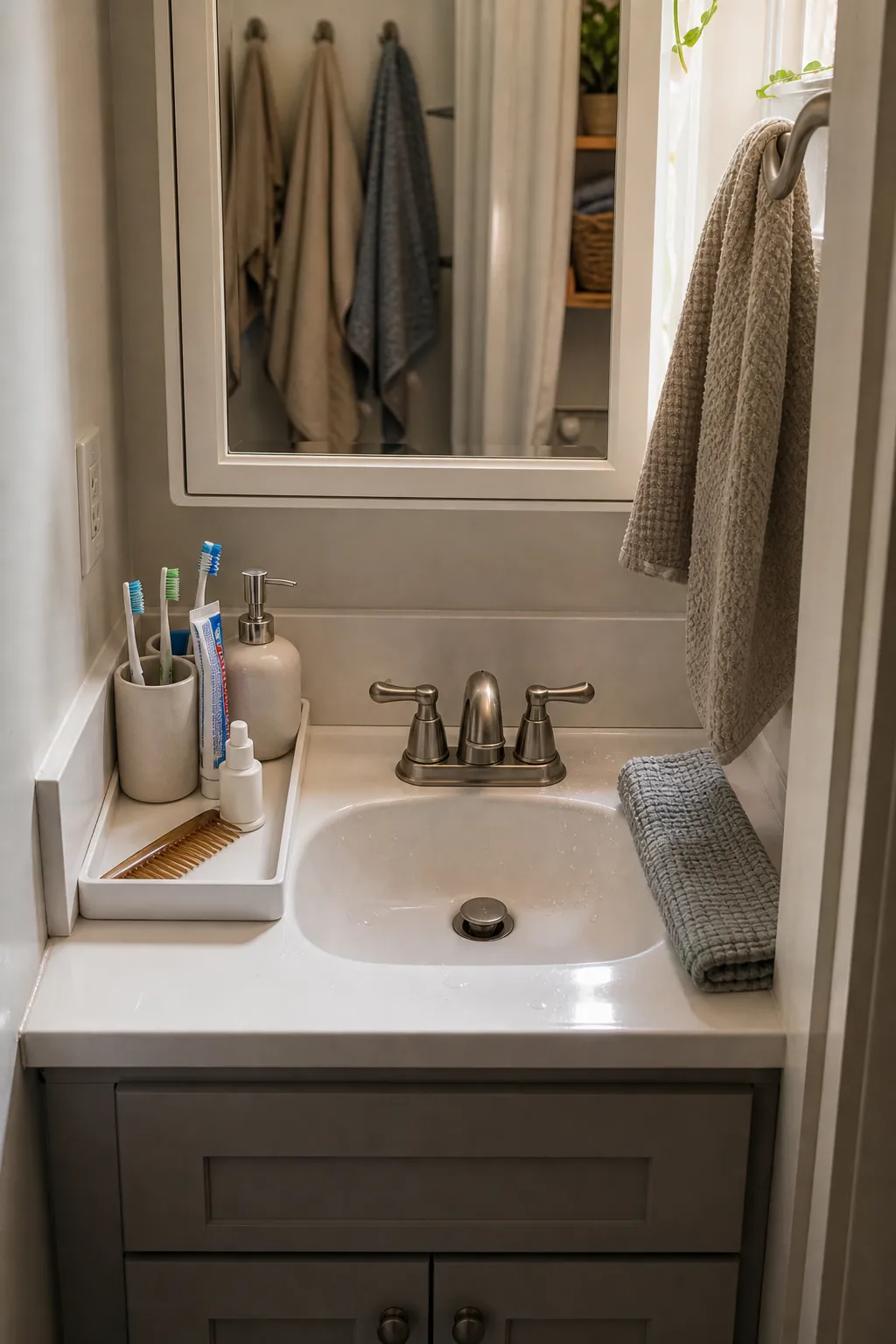
The bathroom counter is the pressure point in a shared morning routine. If every bottle lives there, nobody can move fast. The better rule is simple: only items used by almost everyone, almost every morning, can stay out. Usually that means hand soap, toothbrushes, toothpaste, and maybe one narrow tray.
Everything else should be sorted into personal morning kits. A small open bin, handled caddy, or clear drawer works better than one crowded cosmetic tower because each person can pull their kit out, use it, and put it away. This reduces friction in a family bathroom because nobody has to dig through someone else’s skincare to find floss.
If your tiny bathroom storage is limited to a medicine cabinet, use it for the highest-frequency items only. Backups, extra razors, unopened toothpaste, hair masks, and travel bottles should live outside the bathroom in a linen closet, bedroom drawer, or hallway bin. A tiny bathroom feels bigger when it stores the morning, not the whole household inventory.
Use Under-Sink Space For Personal Caddies
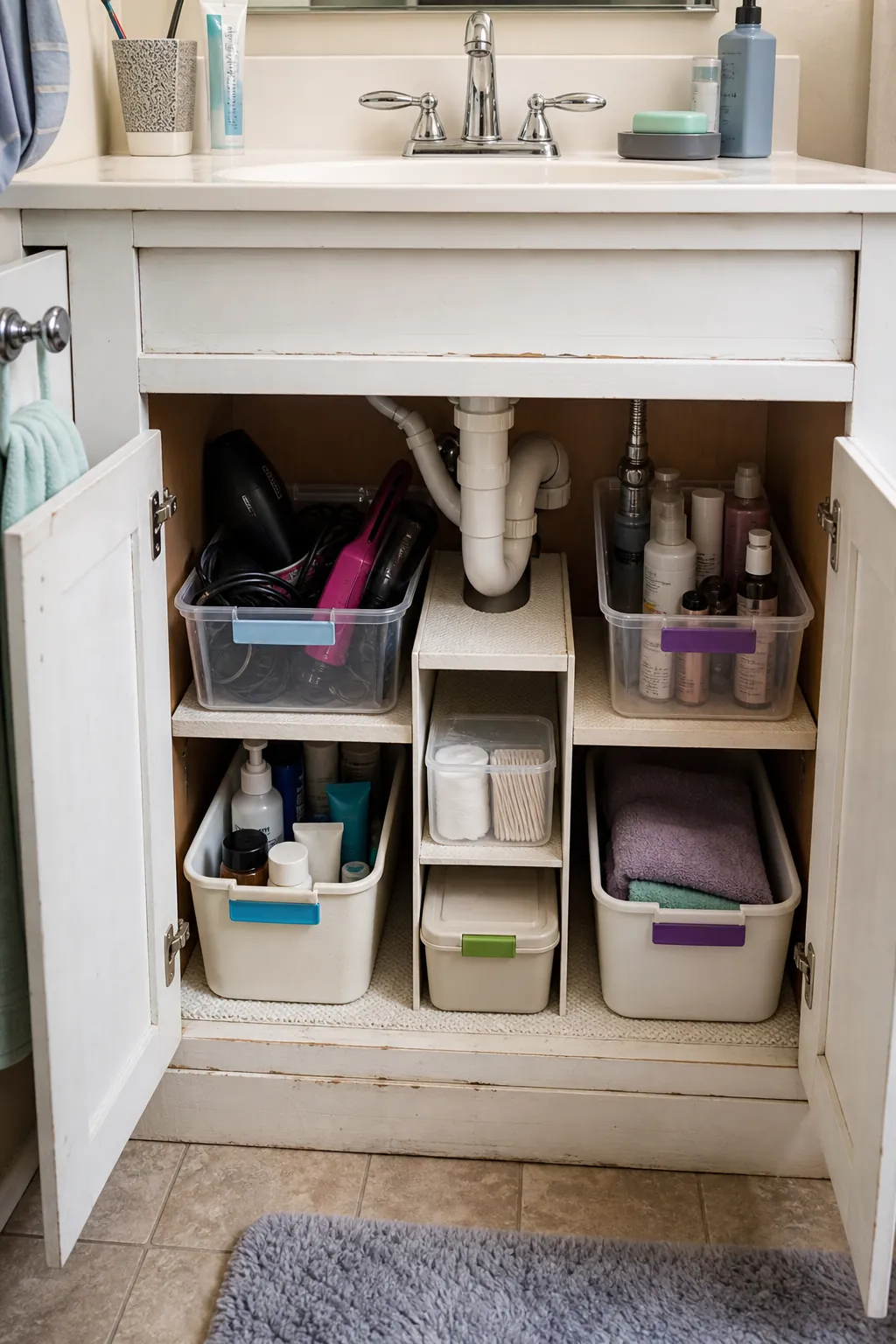
Under-sink storage is awkward because of pipes, but it is still one of the best places to protect the morning routine. Instead of one deep basket that becomes a mixed pile, divide the cabinet into small zones: one pull-out bin for hair tools, one lidded box for backups, one wipeable caddy per person, and a narrow riser where the plumbing leaves room.
The important part is ownership. In a shared bathroom, anonymous storage turns into blame. Assigned caddies make it clear whose items need to be reset. For kids, use color instead of labels if you want the space to stay calm and simple. For adults, a clear bin with only daily products is usually enough.
- Top priority: items used every morning and every night.
- Second priority: weekly items that would be annoying to fetch elsewhere.
- Remove: bulk refills, duplicate cleaners, expired products, and guest-only items.
This approach also makes cleaning faster. When the sink area needs a wipe, one person can lift a tray or caddy instead of moving ten loose bottles. That small reset is what keeps bathroom organization from becoming a weekend project.
Replace Towel Bars With Hooks People Can Actually Reach
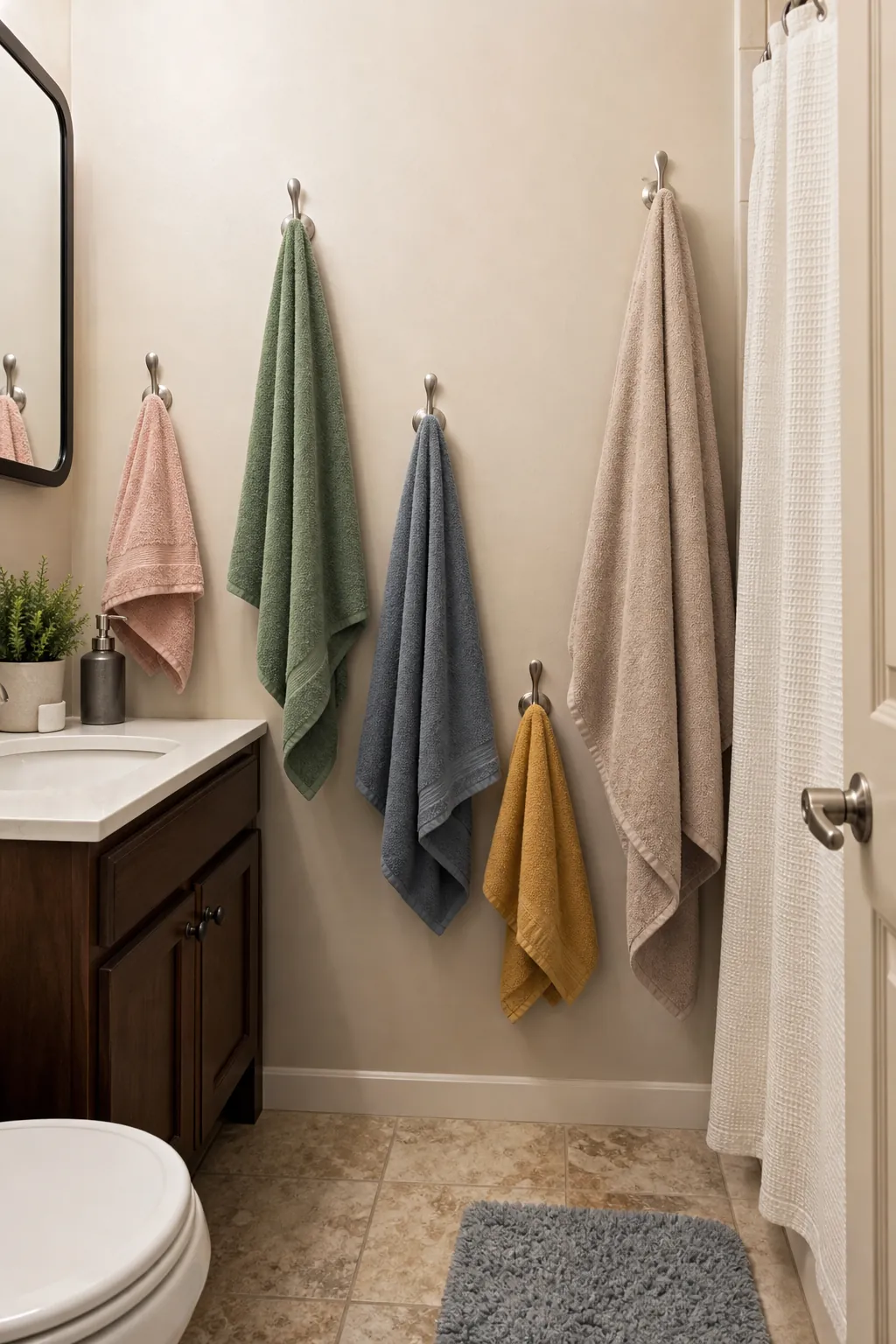
Towel bars look neat when one person uses the room. In a shared bathroom, they often waste wall space and still leave towels piled on the vanity. Hooks are usually better because they give every person a specific place and they can be installed at different heights.
For towel storage, think in two categories. A dry waiting towel needs to be reachable before the shower. A damp used towel needs enough air around it to dry. Those are not always the same location. If the bathroom is too tight, keep damp towels on bedroom doors, in a nearby laundry area, or on a hallway hook rail, then reserve the bathroom hook for the towel someone is actively using.
Color-coded towels solve more than style. They stop the morning argument about whose towel is on the floor, and they make it easier for kids to return the right item to the right hook. Hooks are not just storage; they are a visible responsibility system.
Move Shower Products Onto The Wall
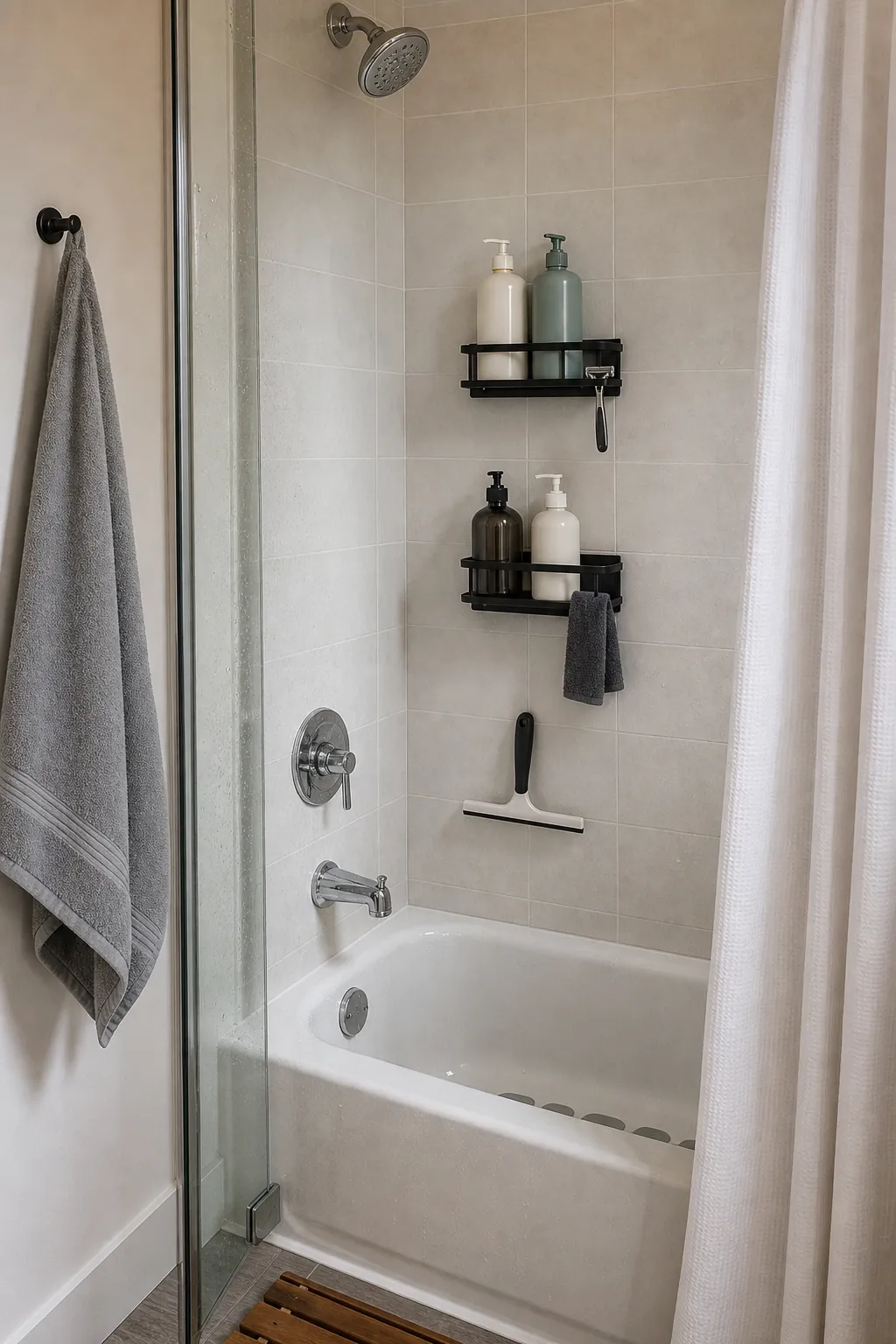
The shower is where tiny bathroom organization quietly breaks down. One bottle becomes six, then the ledge is full, then products move to the floor. A wall-mounted shower shelf, corner caddy, or tension-pole organizer keeps bottles off the tub edge and gives each user a clear place.
Do not give every product permanent shower space. Keep only what gets used several times a week. Specialty masks, backup shampoo, extra body wash, and guest products can live outside the bathroom. If several people use different products, assign one shelf per person or one row per category.
For renters, strong adhesive shelves and removable hooks are usually more realistic than drilling. For owners, a recessed niche or slim wall cabinet can be worth it, but the principle is the same: use vertical space so the floor, tub rim, and counter stay clear.
Build A One-Minute Reset Into The Routine
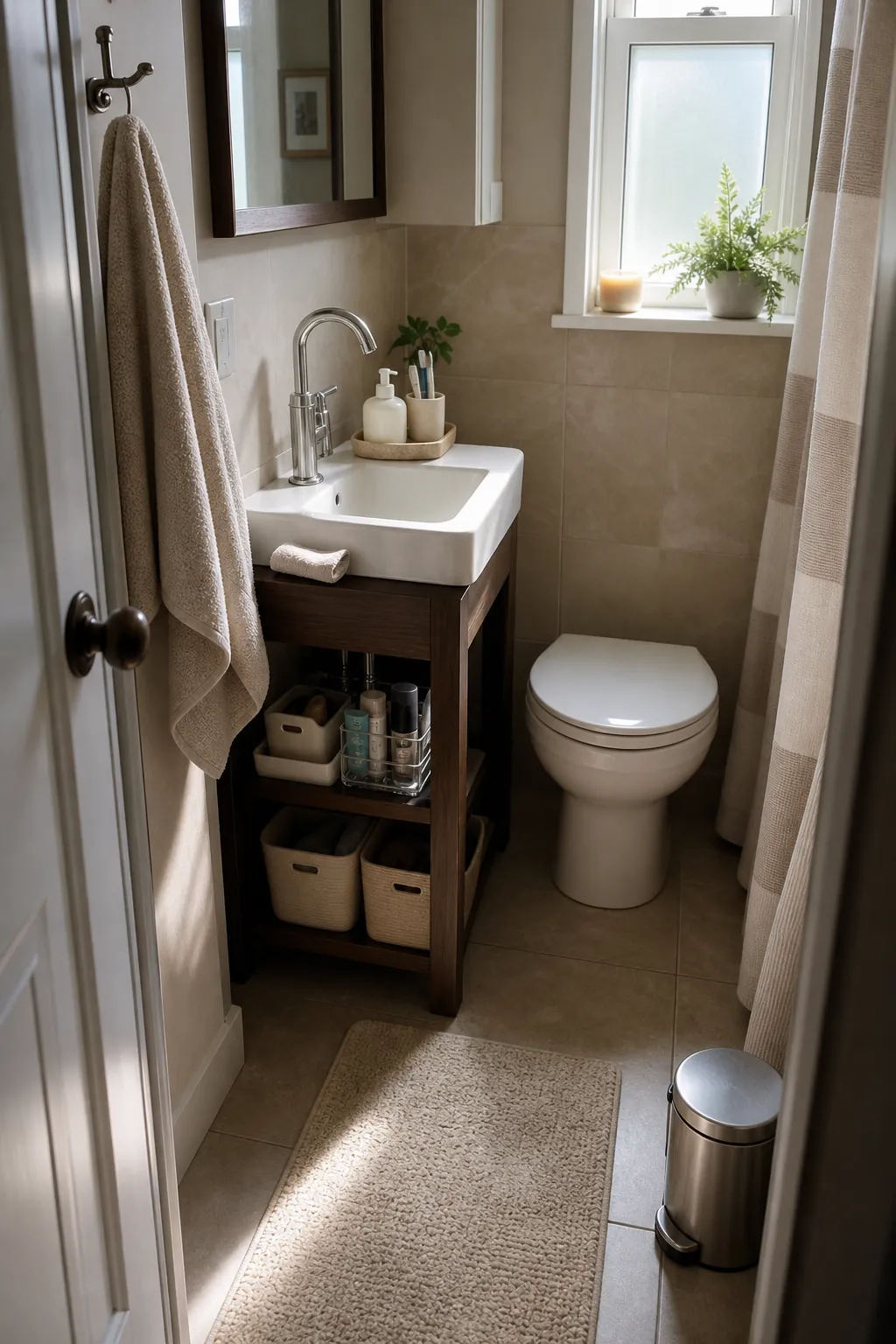
The best shared bathroom setup is the one people can reset while half-awake. Keep a small cloth, surface spray, or safe cleaning wipe where it is easy to grab. After the last person uses the sink, the counter gets cleared, the faucet gets wiped, and personal caddies go back under the sink or out of the room.
This is not a deep-cleaning routine. It is a friction reducer. The morning feels calmer when the first person walks into a clear sink instead of yesterday’s toothpaste, hair pins, and damp towel. A one-minute reset protects tomorrow’s morning routine.
- Hang towels before leaving the room.
- Return personal items to the assigned caddy.
- Put hair tools away only after they cool.
- Wipe the sink and faucet after the rush.
- Move laundry, trash, and backups out before they become floor clutter.
A Simple Shared Bathroom Setup That Works
If you want the fastest version, start with this setup: one narrow counter tray, one personal caddy per person, hooks instead of an overloaded towel bar, shower wall storage, and a backup bin outside the bathroom. That covers the main pain points in a tiny bathroom without remodeling.
The goal is not to make the bathroom look empty. It is to make the morning obvious. When each person knows where to stand, where to grab their things, where to hang a towel, and where to put items back, a small bathroom can support a busy household without becoming the first argument of the day.