
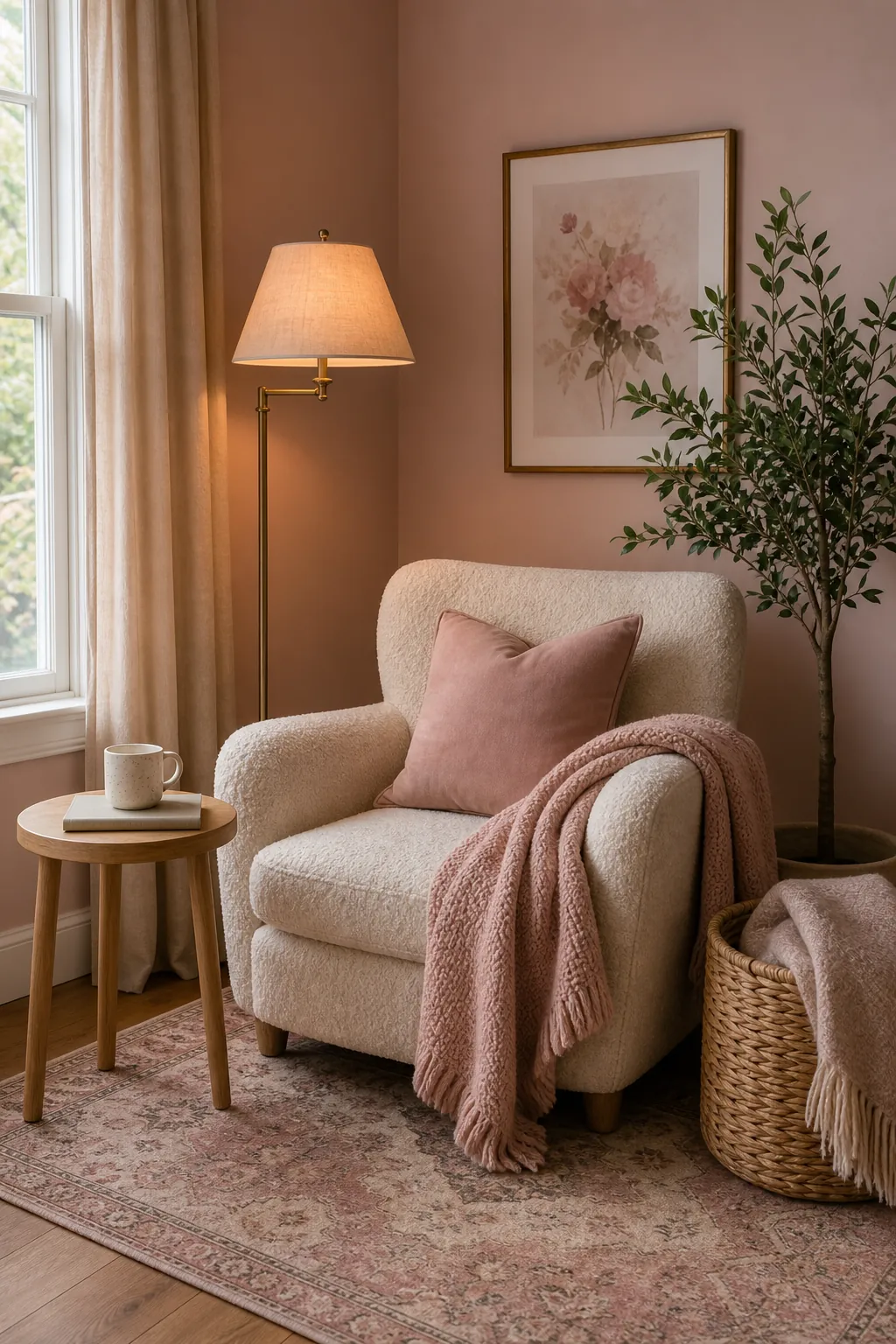
A blush pink cozy corner works best when it feels like a place you would actually sit in, not a staged chair waiting to collect laundry. The color can be soft, romantic, and warm, but the corner still needs the practical pieces that make people stay: a supportive seat, a surface within reach, a reading light, a rug that defines the zone, and textures that make the space feel quiet.
The goal is not to turn the whole room pink. The strongest blush pink decor usually looks calm because it is balanced with warm neutrals, natural wood, cream textiles, a little brass, and one or two deeper accents. That is what keeps a cozy corner from feeling overly sweet or visually flat.
Start with the chair corner you will actually use
The chair is the first decision because it decides whether the corner becomes a habit. A sculptural accent chair can look beautiful in photos, but if the seat is shallow, the back is low, or there is nowhere to rest your feet, it will not become a real reading corner. Choose a chair that lets you sit for more than a few minutes: a deep upholstered armchair, a swivel chair with a rounded back, a compact recliner, or a small chaise if the room has space.
For a blush palette, the chair does not have to be pink. In many rooms, a cream boucle chair, oatmeal linen armchair, or warm white slipcovered seat gives the corner more longevity. Then blush can arrive through a pillow, throw, rug, artwork, lampshade, or vase. If you do choose a pink chair, keep the shape relaxed and grown-up: muted blush velvet, dusty rose linen, or a soft mauve fabric feels more elevated than a bright candy pink.
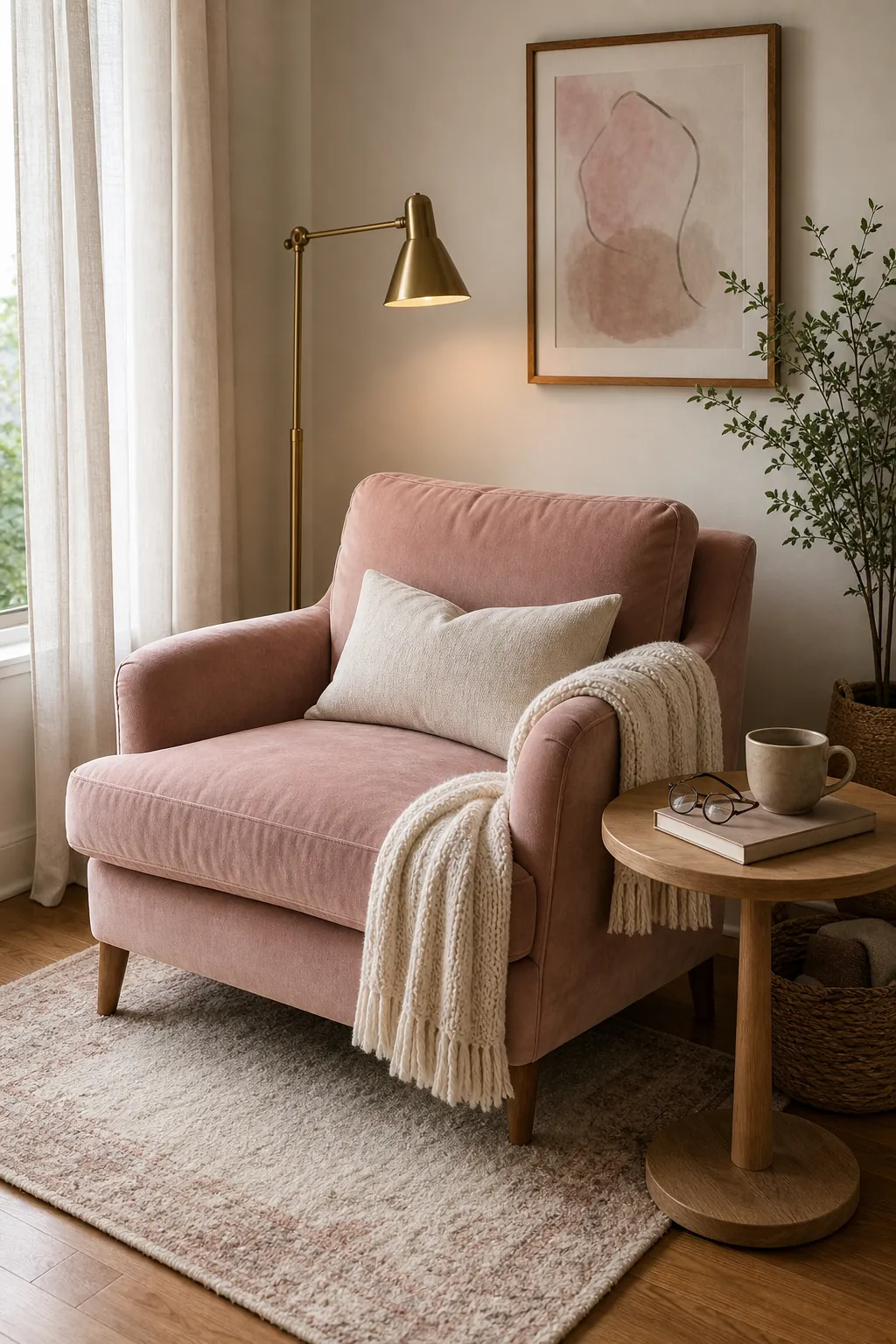
Placement matters as much as style. Angle the chair slightly toward the room instead of pushing it flat against two walls. This small shift makes the corner feel intentional and welcoming rather than abandoned. If the corner sits near a window, let the chair catch daylight without blocking the path. If it sits in a bedroom, keep it away from the hamper, dresser pile, or closet door so it does not inherit visual clutter.
Use blush pink as warmth, not wallpaper for every surface
The easiest way to make pink decor look polished is to control the percentage. Let blush cover about one quarter of the visual field, then support it with quiet materials. Cream walls, ivory curtains, pale oak, rattan, light walnut, linen, and warm white ceramics all make blush feel softer. If the room already has gray flooring or cool white walls, add more warm neutrals so the pink does not look icy.
A strong formula is one blush anchor, two neutral layers, and one grounding detail. The anchor might be a dusty pink chair, a rose-toned rug, a framed print, or a large pillow. The neutral layers might be a cream throw and natural wood side table. The grounding detail can be antique brass, dark walnut, olive green, charcoal, burgundy, or a black picture frame. That little bit of depth keeps the corner from becoming pastel-on-pastel.
- Warm blush plus cream feels soft and classic.
- Blush plus oak and rattan feels natural and relaxed.
- Blush plus olive or sage feels fresh without becoming childish.
- Blush plus brass adds a quiet polished finish.
- Blush plus charcoal or espresso gives a small corner more structure.
Layer soft textures so the corner feels finished
A cozy corner is felt before it is analyzed. If the chair, floor, wall, and side table are all smooth, the space can look clean but still feel cold. Texture is the fix. Bring in a nubby pillow, a cotton knit throw, a wool or jute rug, linen curtains, a boucle cushion, a ribbed ceramic lamp, or a woven basket. These soft textures absorb echo, catch light differently, and make the pink palette feel dimensional.
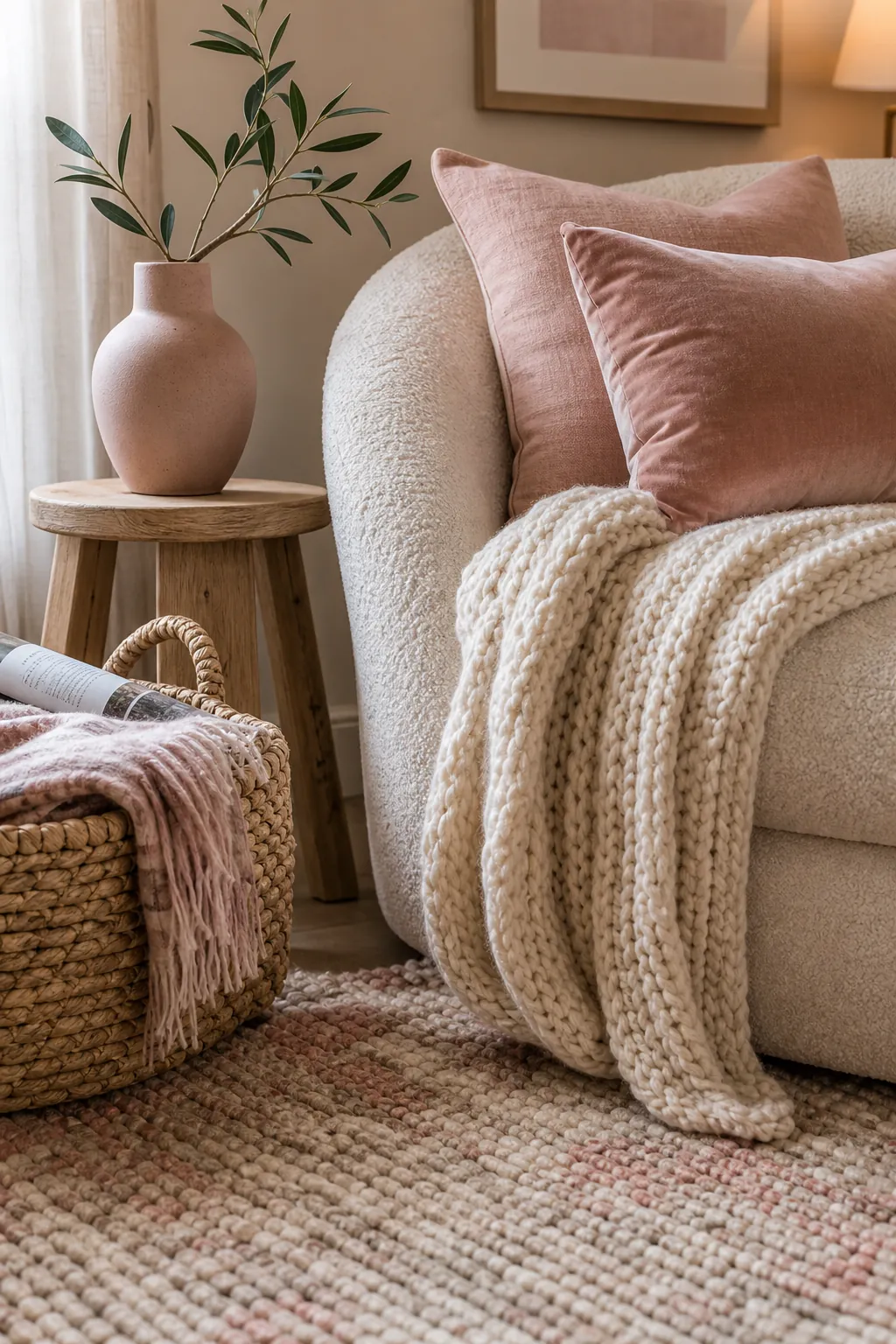
Do not layer everything at once. A chair only needs one lumbar pillow and one throw to look inviting. A side basket can hold the extra blanket, current book, journal, or remote. If you like a richer look, use texture variation instead of adding more objects: a velvet pillow beside a slubby linen pillow, a smooth ceramic vase near a woven tray, or a ribbed glass candle holder beside a matte pink book.
The best test is simple: remove one item. If the corner still feels cozy, the edit was right. If it suddenly feels bare, the missing piece was doing real work. This keeps interior styling practical instead of cluttered.
Make the nook useful with a light, table, and landing spot
Most cozy corners fail because they are missing one small functional piece. A chair without a lamp is not a reading nook at night. A chair without a table has nowhere for tea, glasses, a phone, or a book. A chair without a basket becomes the basket. If you want the space to stay tidy, give every habit a landing spot.
For a compact chair corner, choose a small round table, C-table, wall-mounted shelf, narrow pedestal, or stool. Round shapes are especially friendly in tight corners because they reduce hard edges. If the nook is beside the bed, a tiny drink table may work better than a second nightstand. If the corner is in a living room, repeat one finish from the main space so the nook feels connected instead of random.
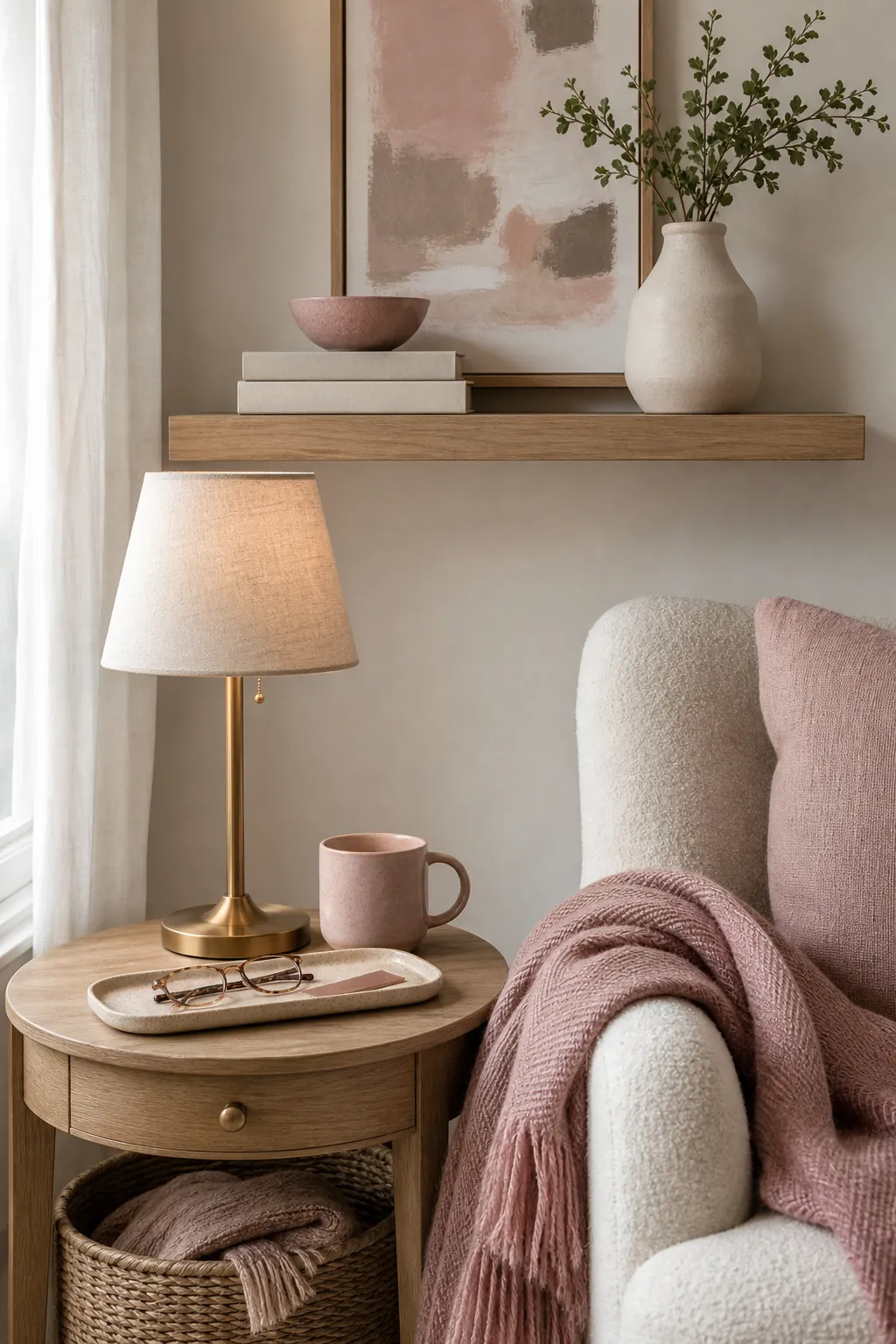
Lighting should create a pool around the seat. A floor lamp works when there is enough floor space. A plug-in wall sconce is better when the corner is narrow. A small table lamp is warm and pretty, but check the height: the light should reach the page or your lap, not just glow behind your shoulder. Use warm bulbs and avoid a harsh blue-white tone. Blush pink becomes much more flattering under warm, layered light.
Turn a bedroom corner into a small retreat
A bedroom corner has a different job from a living room corner. It should feel calmer, quieter, and easier to reset. If you know the chair might become a clothing pile, build the nook away from the clothes path. Place it by a window, beside a bookshelf, near a low dresser, or in the corner least connected to dressing and laundry routines.
Blush works beautifully in bedrooms because it softens hard edges, but it needs contrast. Pair blush with ivory bedding, a taupe rug, pale wood, a warm white shade, or a tiny olive plant. If the room already has a lot of pink, use the corner to add texture rather than more color: a cream chair, dusty rose throw, ribbed ceramic lamp, and natural woven basket can feel more expensive than matching pink everything.
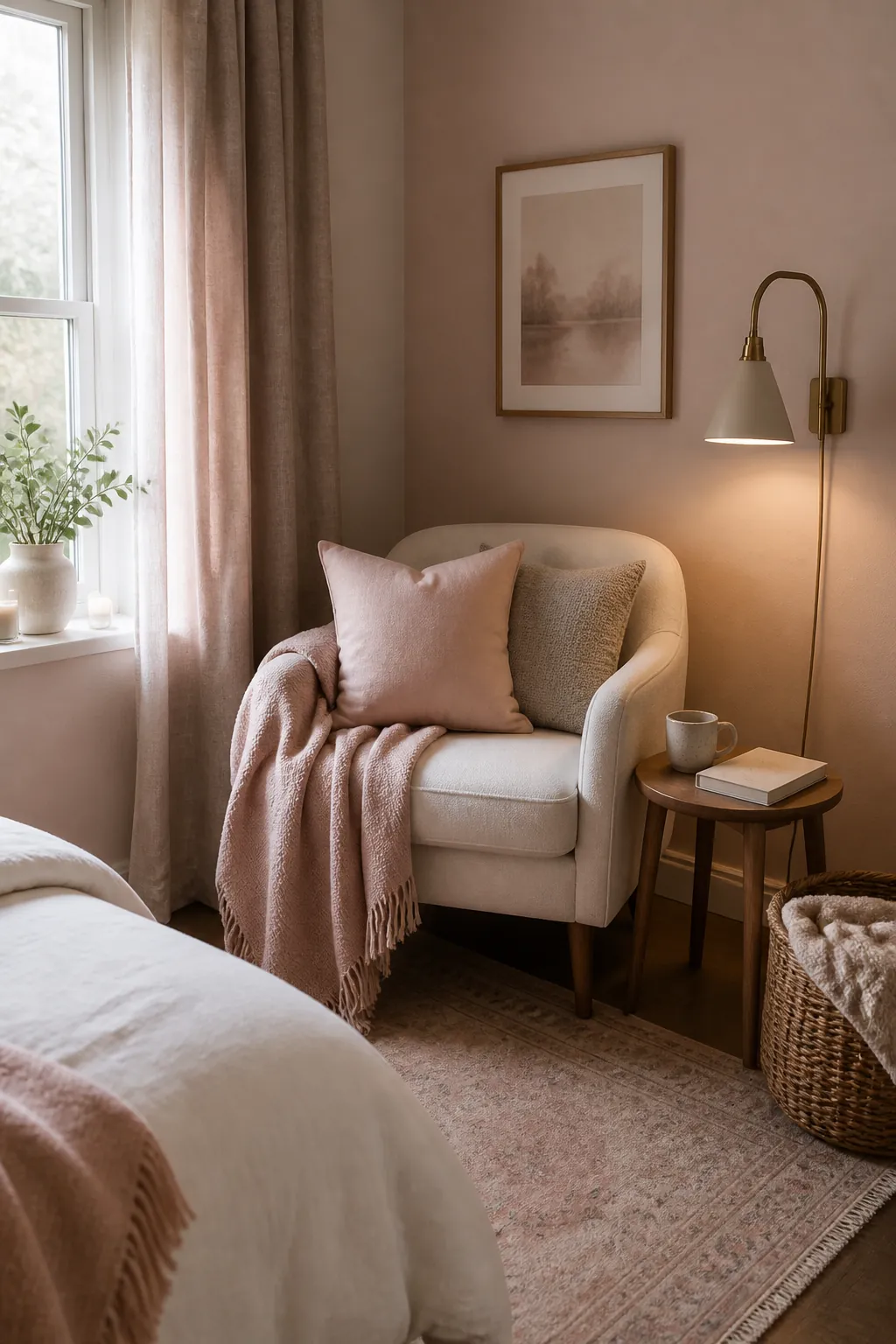
Keep the bedroom version edited. One chair, one throw, one small table, one lamp, one plant or vase, and one piece of art is enough. The restraint makes the corner feel restful and keeps the room from looking smaller.
Define the space with a rug before adding more decor
A rug is the quiet detail that tells the eye, “this is a zone.” Without it, a chair can look like extra furniture parked in a spare corner. With it, even a small setup feels designed. The rug does not need to be large, but the chair legs and side table should visually belong to it. A round rug can soften a square corner, while a small rectangular rug can connect the chair to a nearby shelf or window.
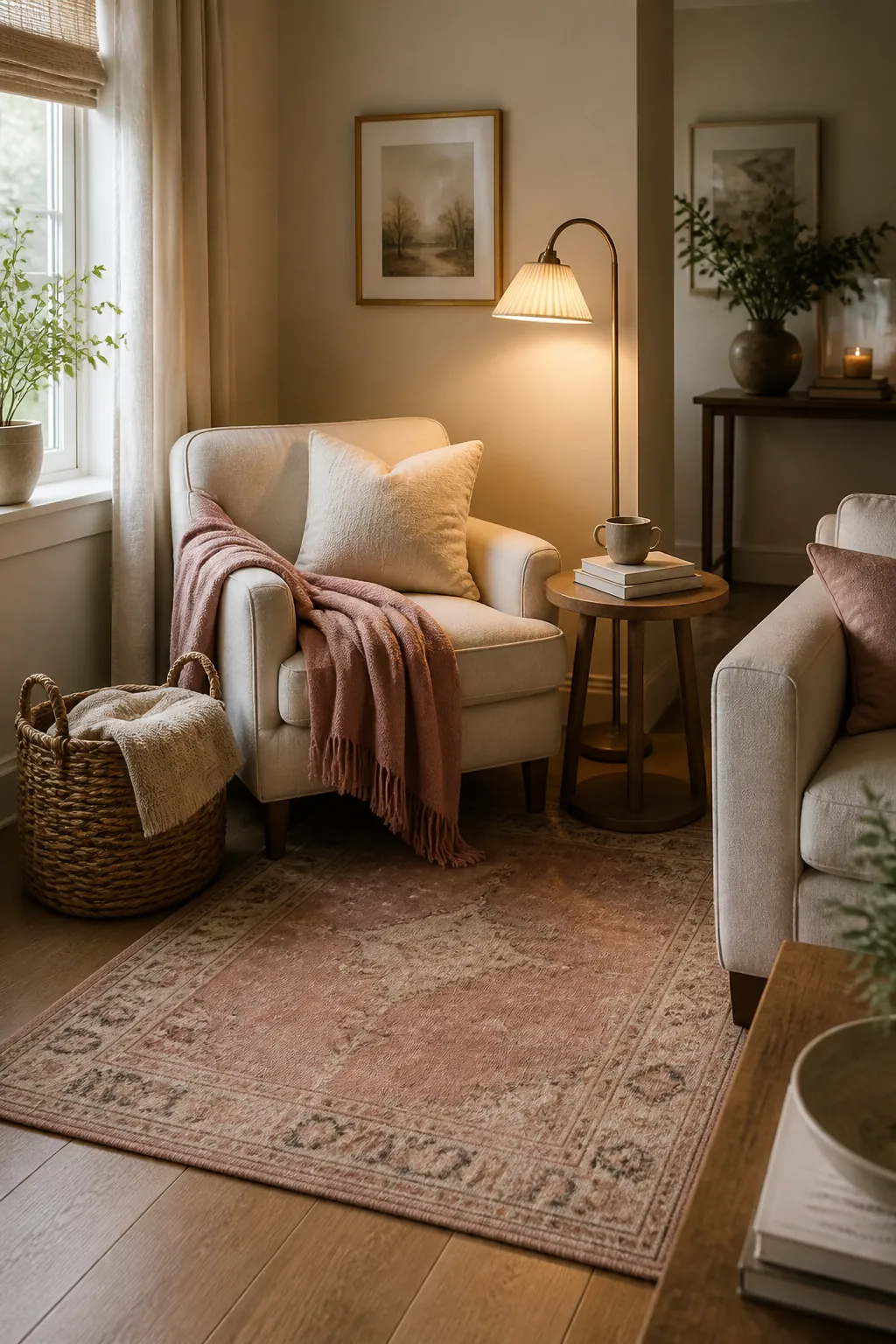
For blush pink, a rug can be the color moment or the neutral foundation. A faded rose vintage-style rug gives instant character. A cream wool rug makes a pink chair feel softer. A jute rug grounds feminine colors with natural texture. If the room is small, choose a lower-contrast rug so the corner feels larger. If the room is plain, use a patterned rug to bring in muted rose, cream, tan, and a little green or rust.
Rugs also help the corner feel warmer underfoot and quieter acoustically. That matters in apartments, bedrooms with hard flooring, and open-plan living rooms where a small nook needs its own mood.
Finish with accent decor that earns its place
The final layer is where home styling can either make the corner charming or make it busy. Choose accent decor by function first. Art gives the wall presence. A plant softens the vertical line. A small tray gathers objects. A basket hides extra textiles. A candle, diffuser, or tiny vase creates a ritual. Books add personality, but they should be reachable and intentional rather than piled everywhere.
If you want the blush pink corner to feel adult, repeat the color in small echoes instead of making every accessory pink. A rose stripe on a pillow, a pink spine on a book, a dusty floral print, and a blush ceramic dish are enough. The eye will connect them. Add one darker or organic element, such as a walnut frame, olive branch, woven basket, or antique brass lamp, so the corner has depth.
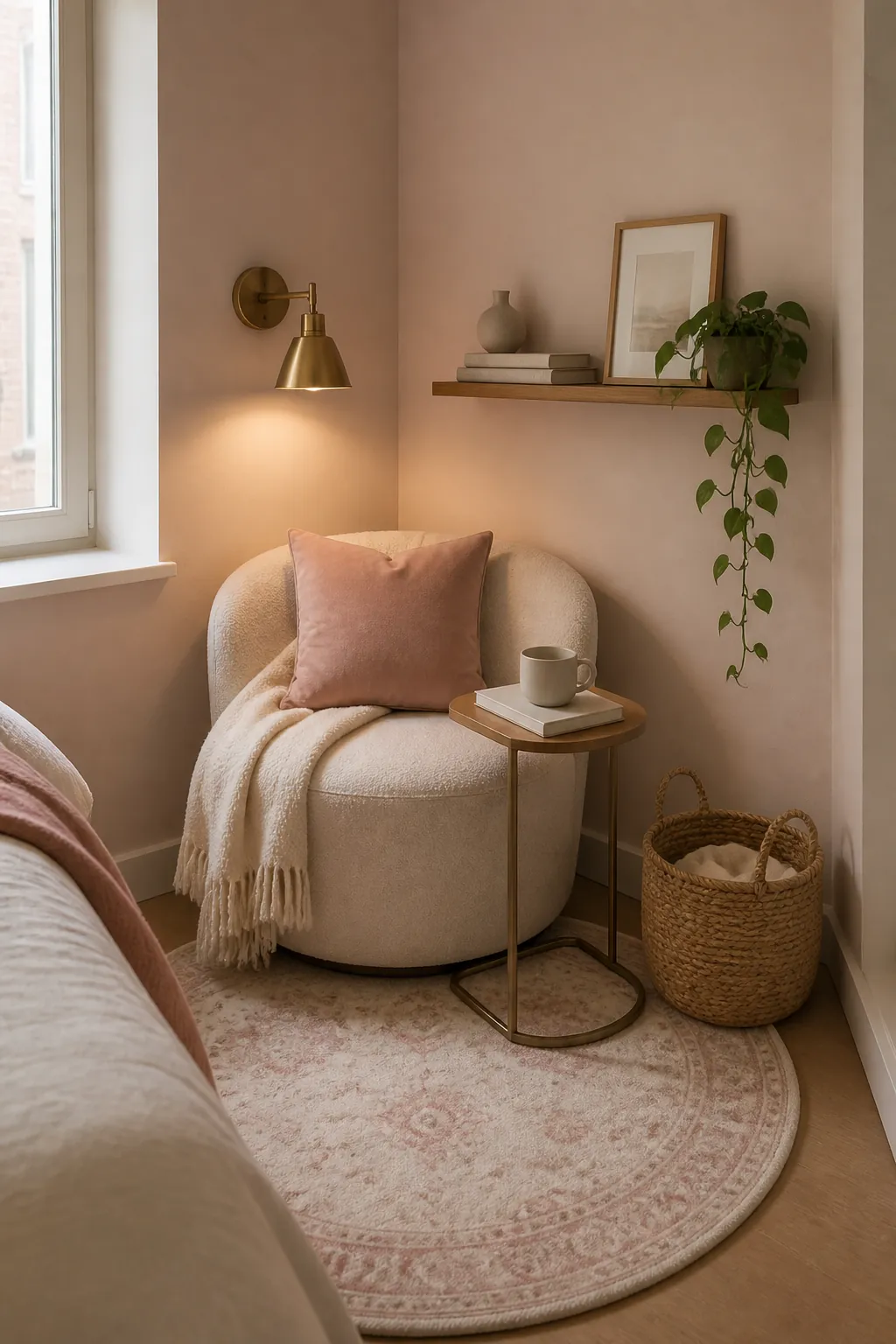
The corner is done when it has a reason to pull you in. The blush gives it softness. The chair gives it comfort. The lamp, table, rug, and storage make it usable. The accent decor makes it yours. That combination is what turns an empty corner into a small daily retreat instead of another pretty spot you never touch.