
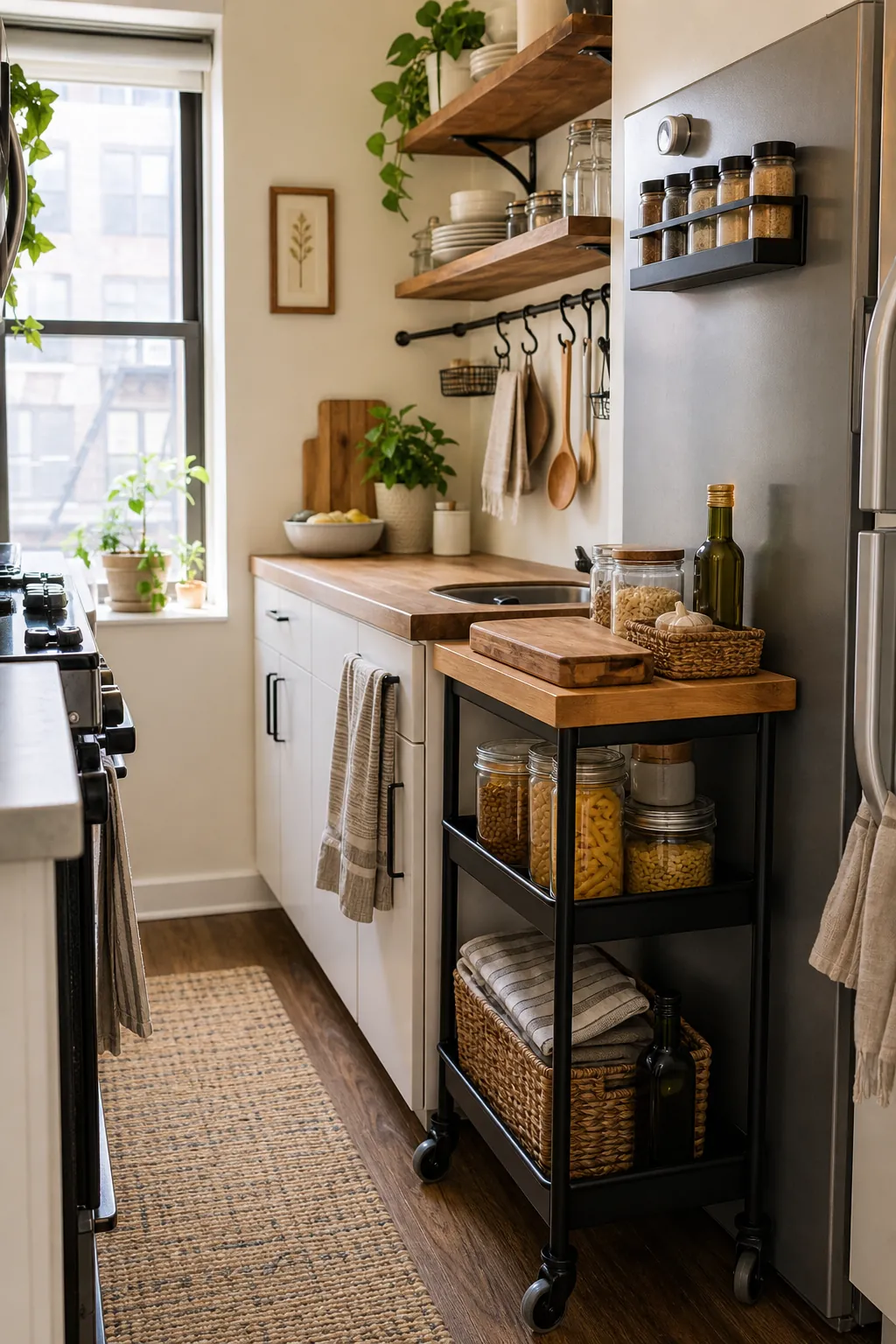
A small kitchen usually does not fail because it lacks one more basket. It fails because the things you use every day have nowhere obvious to live. The counter becomes a pantry, the stovetop becomes overflow storage, and every meal starts with moving clutter before you can chop an onion.
The best small kitchen ideas with rolling carts and wall storage do not try to make the room look bigger for a photo. They make the kitchen easier to use at 7 a.m. when you are reaching for coffee, at 6 p.m. when you need a clean prep spot, and ten minutes before guests arrive when the cart has to disappear into a corner. The win is not more storage everywhere. The win is storage that moves, stores vertically, and keeps the counter clear.
Start With The Gap That Already Exists
Most compact kitchens have one awkward space that gets ignored: the slot beside the fridge, the end of a cabinet run, the strip beside the range, or the wall just outside the kitchen. That is where a narrow rolling cart earns its place. A slim cart can become a pull-out pantry for oils, cans, baking supplies, snacks, tea, and lunch containers without stealing permanent counter space.
Measure before you buy. Check width, depth, handle clearance, and whether the cart can roll out without hitting the oven door or dishwasher. If the gap is deep, choose a cart with raised edges or bins so jars do not tip when you pull it forward. If the gap is shallow, use the cart for lighter daily items instead of heavy cookware.
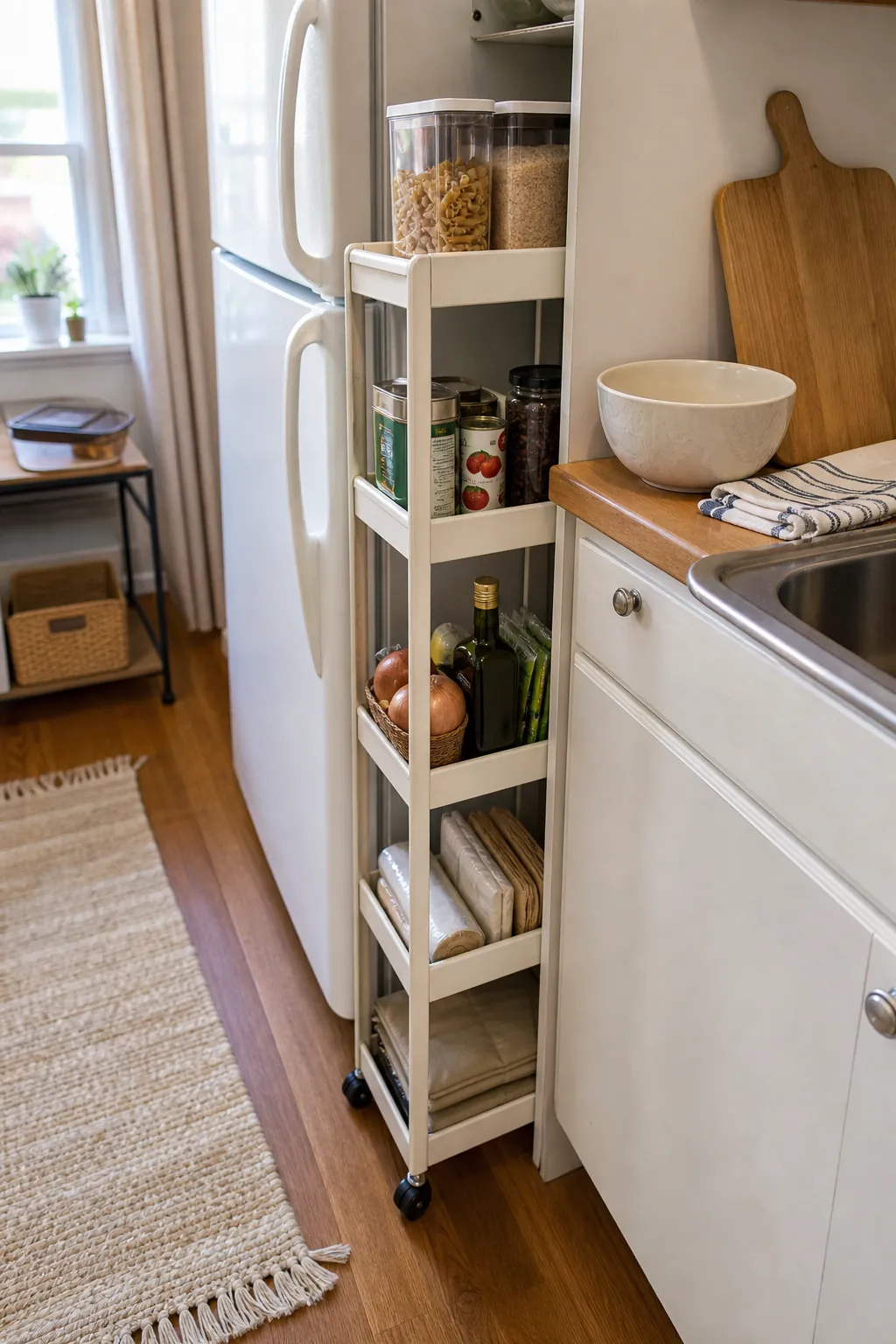
Use the cart for one job, not five. A rolling cart that holds pantry staples should not also become the junk drawer, mail drop, coffee station, and tool shelf. Small kitchen storage works when each zone has a job that is easy to remember.
Put Wall Storage Where Your Hands Already Go
Wall storage is strongest when it sits above the task it supports. A rail near the stove can hold a spatula, tongs, a small pan, and a towel. A shelf above the prep zone can hold bowls, measuring cups, or spices. A magnetic rack on the side of the fridge can hold the seasonings you actually reach for, not the entire spice collection.
The mistake is hanging every vertical organizer you can find. Too many visible tools make a compact kitchen feel louder. Choose one wall system, repeat the finish, and leave breathing room around it. Open wall storage should solve the daily reach problem while still looking intentional.
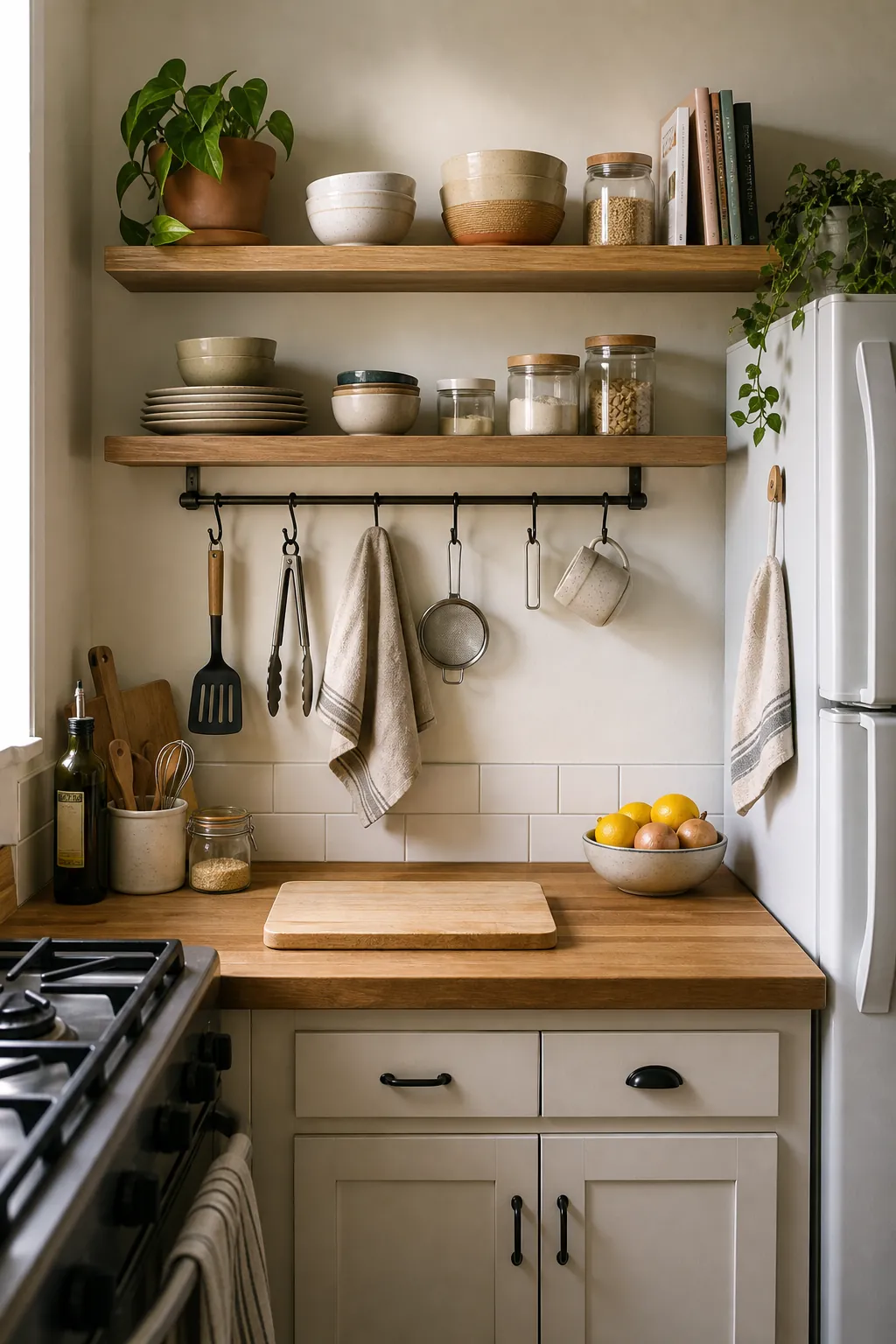
- Use rails for tools: utensils, towels, mugs, small strainers, and oven mitts.
- Use shelves for stable items: plates, bowls, canisters, cookbooks, and attractive everyday pieces.
- Use magnetic storage for narrow surfaces: fridge sides, metal splash panels, and appliance sides where heat is not an issue.
Turn The Kitchen Cart Into A Temporary Counter
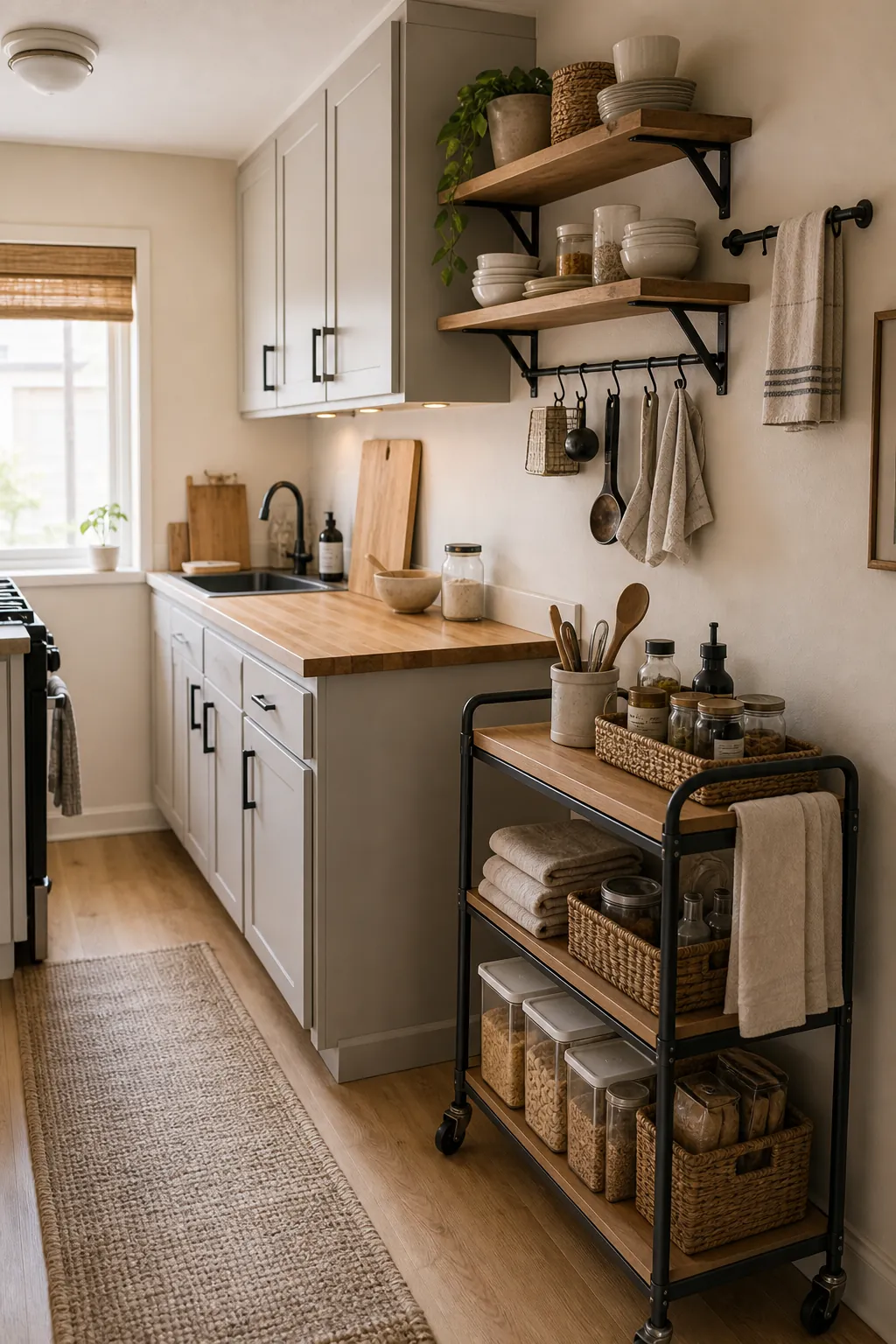
If your counter is too small for real cooking, a kitchen cart can act like a temporary island. The trick is to set it up for prep, not just storage. Keep the top clear enough for a cutting board or mixing bowl. Put heavier items on the bottom shelf. Use baskets or low bins on open shelves so onions, towels, and food containers do not slide around when the cart moves.
Look for locking casters if you will chop or mix on the cart. Choose a top that can handle wiping, moisture, and crumbs. A cart with a towel bar can also hold S-hooks for small tools, but keep the sides light. When the cart is too loaded, it stops feeling mobile and starts feeling like a cabinet on wheels.
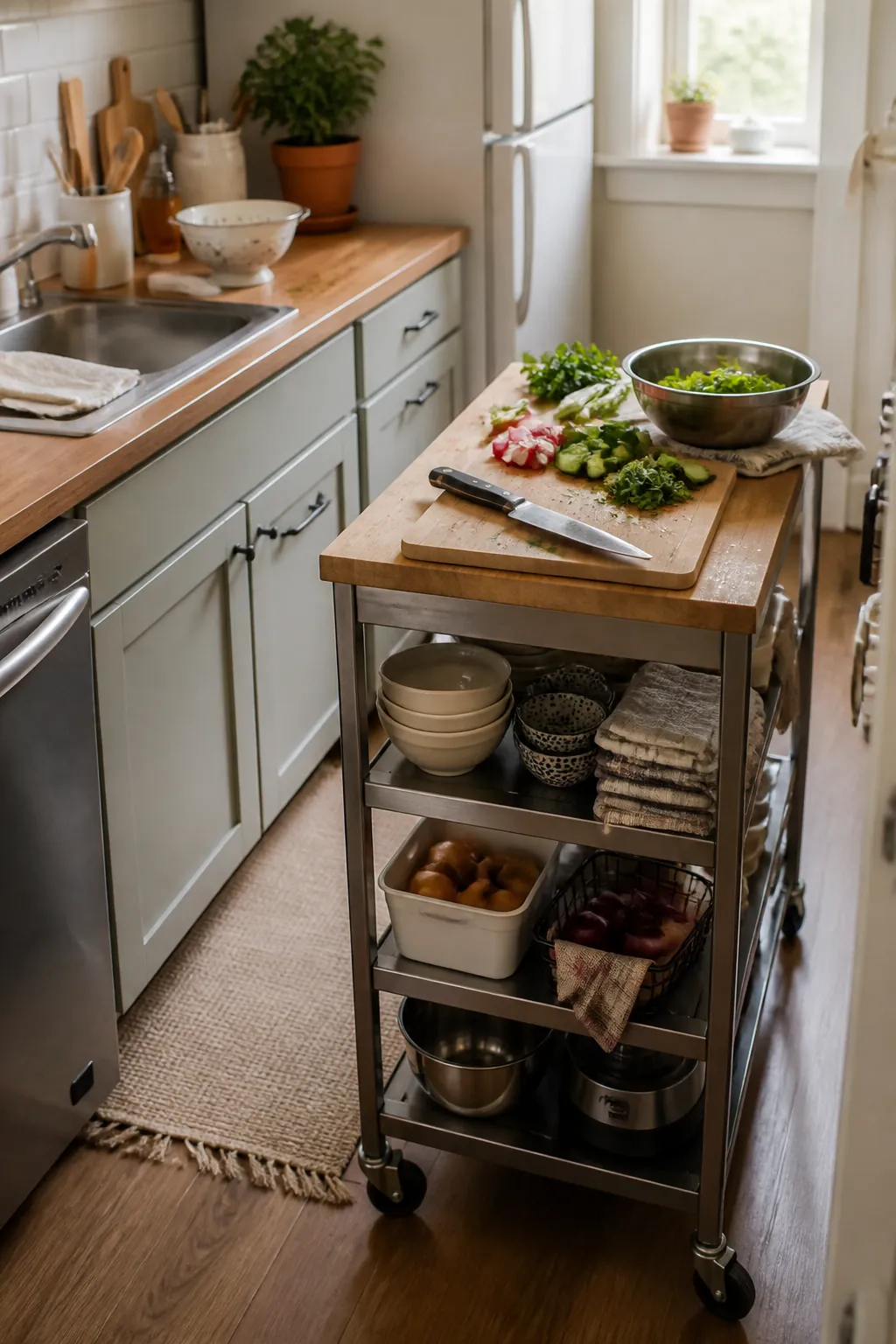
The cart should move between two positions: parked and working. Parked, it should sit against a wall, beside the fridge, under a counter overhang, or just outside the kitchen. Working, it should roll beside the sink, stove, or prep counter without blocking the main walkway.
Make Renter-Friendly Wall Storage Look Permanent
Renter kitchen ideas often get treated like temporary hacks, but no-drill storage can still look polished. Adhesive hooks, over-cabinet rails, magnetic spice racks, freestanding ladder shelves, and narrow baker’s racks can add serious function without changing cabinets. The key is to avoid random placement.
Group items by task and keep the spacing deliberate. A row of hooks under a shelf looks cleaner than six hooks scattered across the wall. A magnetic spice rack looks calmer when the jars match or sit in a tight group. A compact kitchen can handle visible storage, but it cannot handle visual noise from every direction.
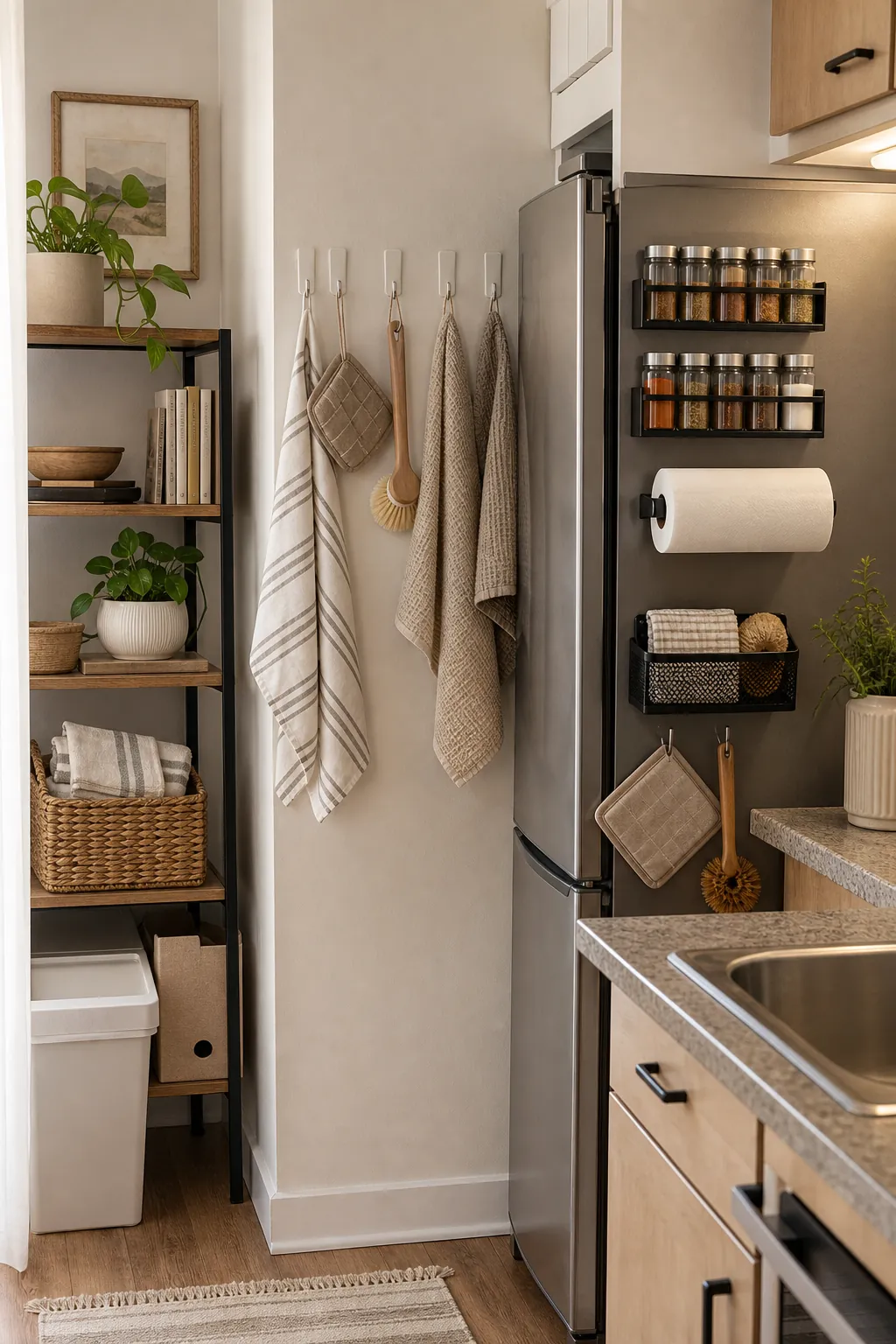
Before using adhesive products, clean the surface, check the weight rating, and wait the recommended cure time before loading them. For heavy pans, glass jars, or shelves, use a freestanding piece or approved wall anchors instead. Renter-friendly should still mean safe.
Build One Daily Ritual Zone
One of the easiest ways to calm a small kitchen is to move a repeated routine onto a cart. A coffee cart, breakfast cart, baking cart, lunch-packing cart, or tea cart keeps supplies together and frees cabinets for cookware. This works especially well in apartments where the kitchen shares space with the dining area or living room.
For a coffee zone, keep the machine or kettle on top, mugs and filters on the middle shelf, and backup beans or tea on the lower shelf. Add a narrow shelf or rail above it for cups, small jars, or a plant if the wall can handle it. The point is not to display everything you own. It is to stop opening four cabinets for one routine.
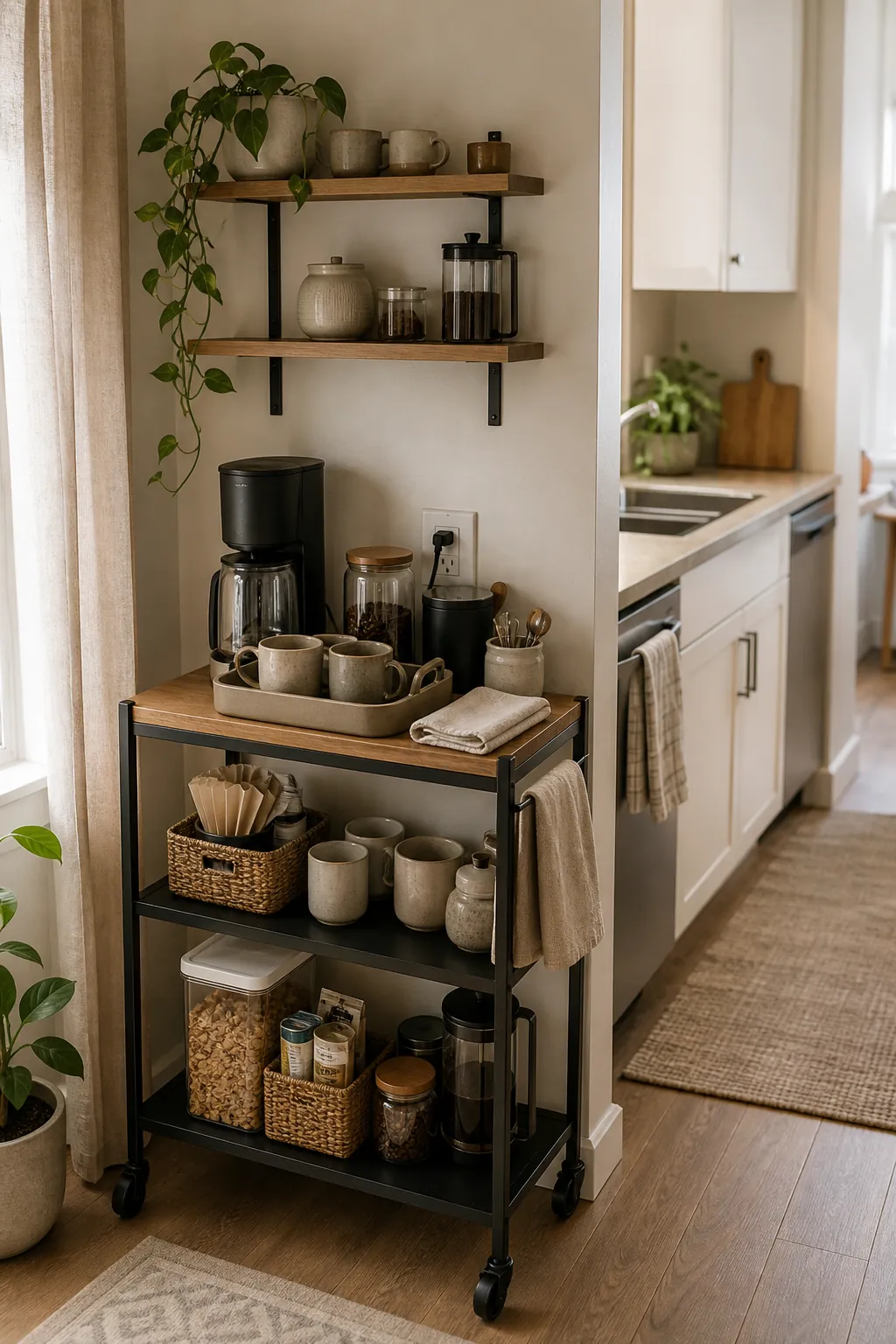
This is also where style can work hard. Matching baskets, clear containers, a tray on the cart top, and one repeated material such as wood, black metal, or brushed steel can make open storage feel designed instead of improvised.
Use The Counter As A Test, Not A Storage Area
After you add a rolling cart and wall storage, judge the setup by the counter. Can you make coffee without moving dinner supplies? Can you chop vegetables without clearing mail, appliances, or pantry overflow? Can the dish towel, knife, oil, and cutting board be reached without crossing the room?
If the counter is still crowded, remove before you add. Put rarely used appliances on the cart’s lowest shelf, a nearby closet shelf, or a high cabinet. Move duplicate mugs, seasonal bakeware, bulk food, and serving pieces out of the work zone. Small kitchen organization is not about keeping every item in the kitchen. It is about keeping the right items close and the rest out of the way.
A Simple Setup That Works In Most Small Kitchens
Start with one rolling cart and one wall zone. Use the cart for pantry overflow, daily prep, or a ritual station. Use the wall for the tools that should be off the counter but still visible. Then edit the counter until it holds only what earns its space every day.
- Choose a slim rolling cart for narrow gaps, pantry overflow, or a mobile prep surface.
- Add wall storage near the task instead of wherever the blank wall happens to be.
- Keep the cart top useful by resisting the urge to stack it full.
- Use matching bins or containers so open storage reads as calm, not chaotic.
- Recheck the counter after one week and move anything that still blocks cooking.
A tiny kitchen does not need a remodel to become easier to cook in. It needs a few storage decisions that respect how you actually move. Put the cart where the room has dead space, put the wall storage where your hands need it, and let the counter go back to being a place to cook.