
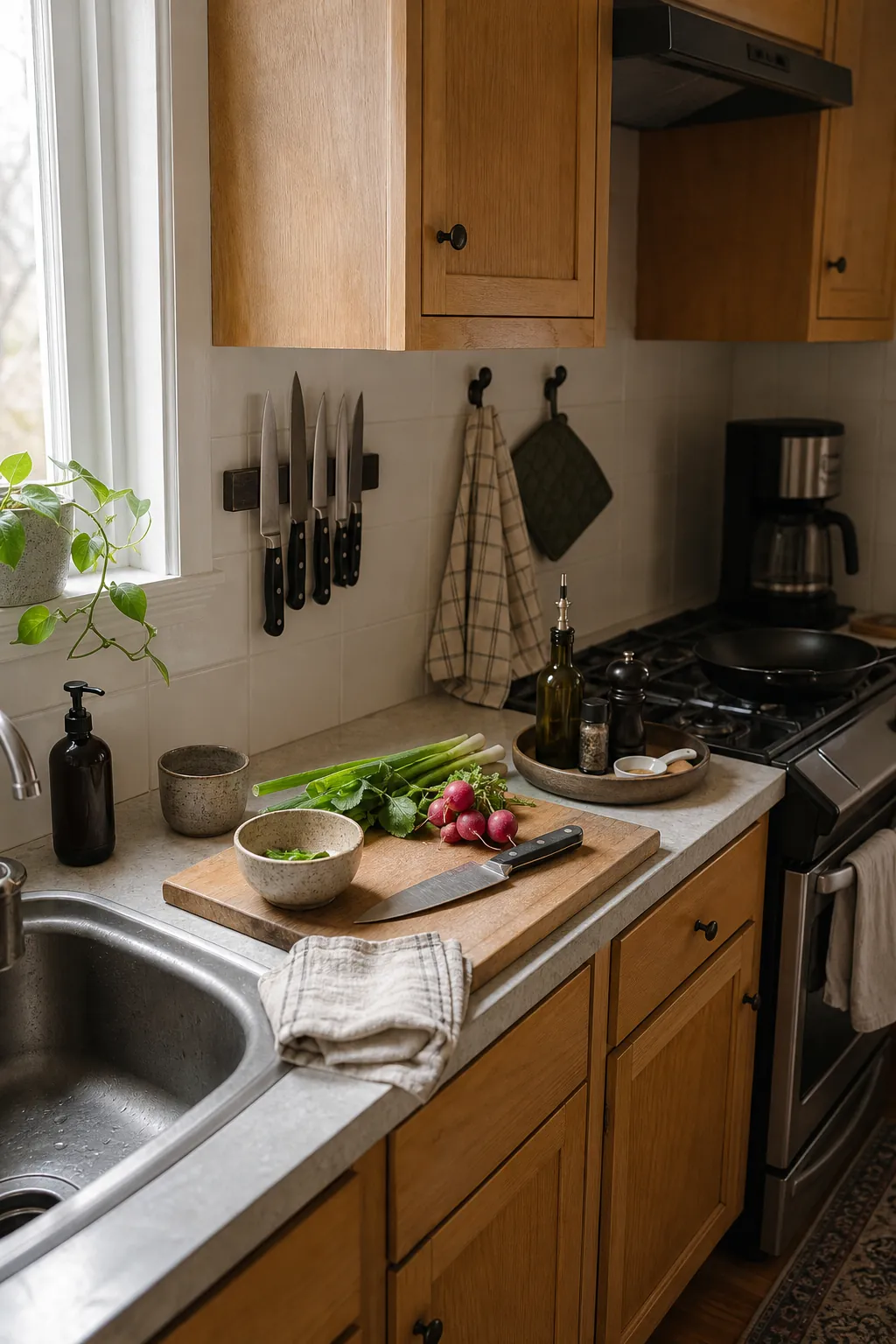
A small kitchen counter does not fail because it is small. It fails when every inch is asked to be storage, prep space, coffee station, drying rack, landing zone, and mail drop at the same time. For daily cooking, the goal is not a bare showroom counter. The goal is a counter that can be cleared in seconds, used without shifting five things first, and reset before the next meal.
The most useful small kitchen counter organization system starts with one rule: protect a real meal prep space before buying another organizer. Once that space is clear, the rest of the kitchen can be arranged around how you actually cook, clean, and put food away.
Protect One Counter Zone for Chopping and Plating
Pick one stretch of counter and make it the non-negotiable cooking zone. It does not have to be large. A board-sized area between the sink and stove, next to the refrigerator, or beside the main outlet can work if it stays clear. This is where the cutting board lands, the towel sits nearby, and the trash or compost bowl waits while you chop.
Do not use the best prep area as permanent counter storage. If the toaster, fruit bowl, mail pile, and spice jars live in the only place you can chop vegetables, cooking will always feel harder than it needs to. Move those items to a tray, shelf, cart, cabinet, or corner so the central workspace is ready when you are.
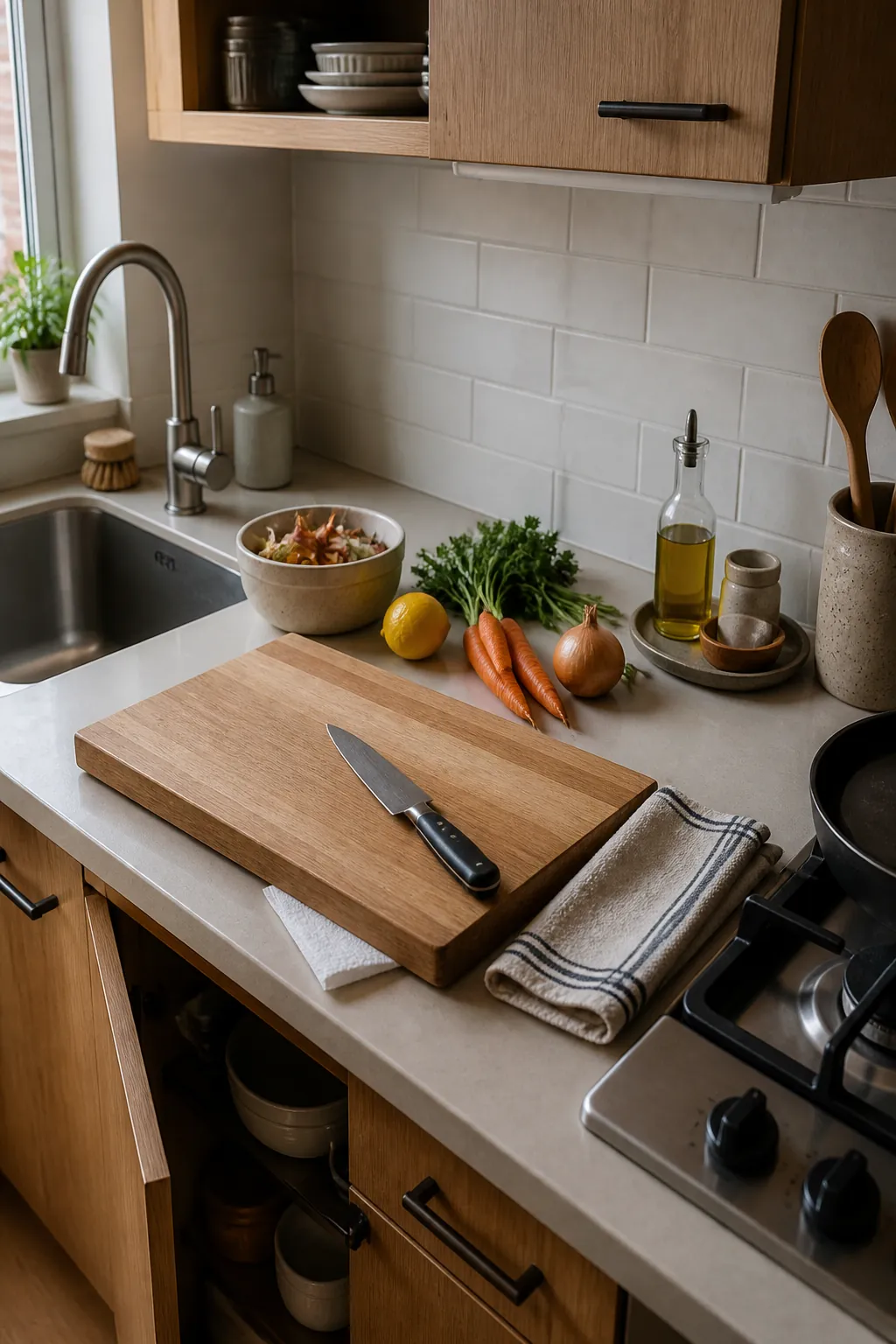
Keep Only True Daily Tools on the Counter
Counter storage works when it is selective. The coffee maker you use every morning can stay. The blender used twice a month should not compete with dinner prep. A good test is simple: if you would not reach for it during a normal weekday, it does not need prime counter space.
- Daily cooking tools: cutting board, knife, towel, oil, salt, pepper, and the utensil jar you use every meal.
- Occasional appliances: blender, mixer, waffle maker, extra toaster, slow cooker, and anything seasonal.
- Visual clutter: extra mugs, duplicate jars, loose supplements, paperwork, and decorative objects that block wiping.
When daily items do stay out, group them. A small tray beside the stove can hold oil, salt, pepper, and a spoon rest. A corner lazy Susan can hold the few seasonings you use every day. This makes the counter look intentional and makes cleaning faster because you lift one group instead of ten loose items.
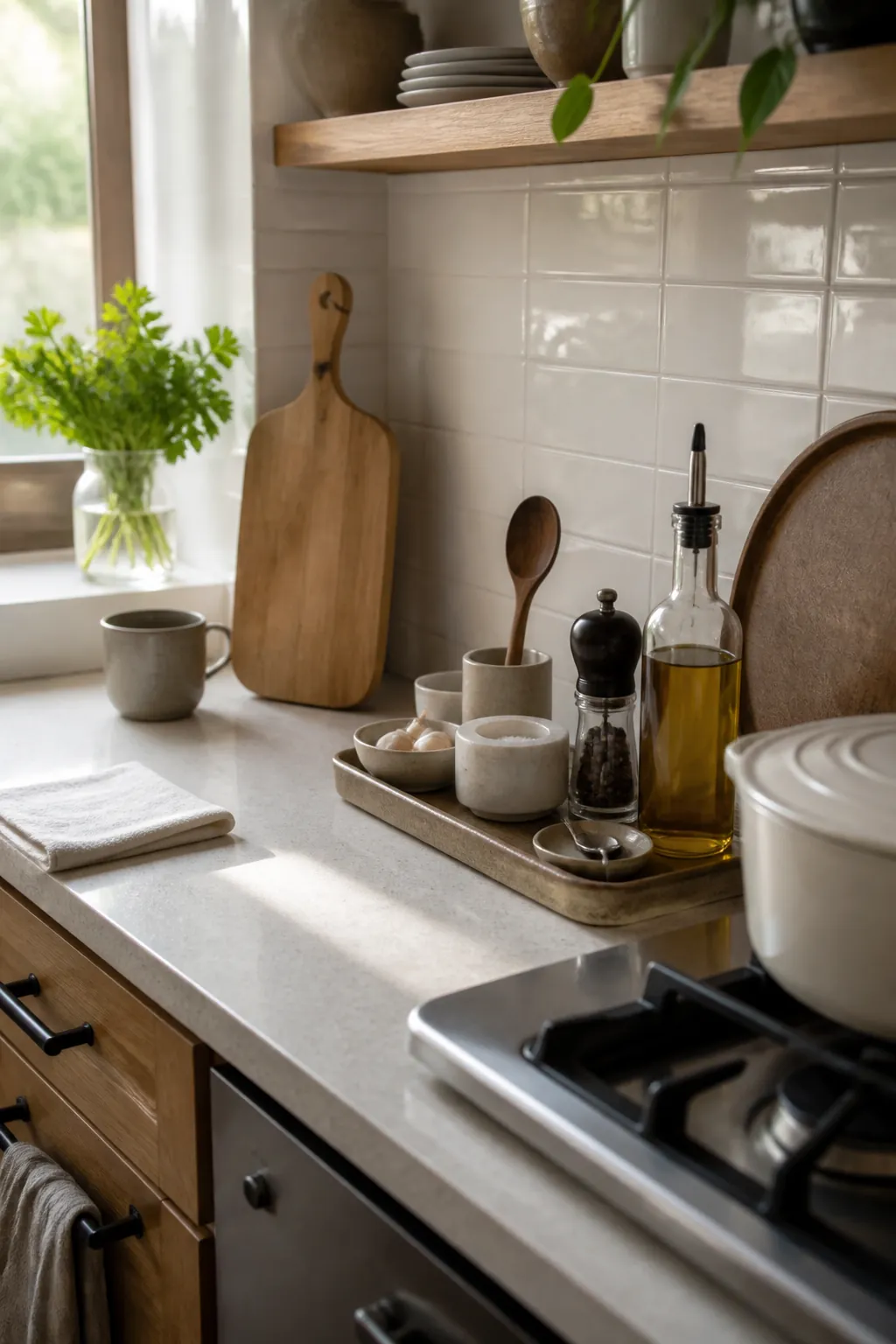
Move Storage Up Before You Move It Out
In a compact kitchen, the wall is often the missing cabinet. Magnetic knife strips, wall rails, narrow shelves, under-cabinet baskets, and hooks can remove the bulky things that steal counter storage without making the kitchen harder to use. The trick is to move items vertically only when they still make sense for your routine.
Use vertical storage for things you grab with one hand. Knives, measuring spoons, mugs, towels, potholders, a small spice row, and lightweight utensils are good candidates. Heavy appliances and awkward cookware should stay in cabinets, on a cart, or on a strong shelf where they can be lifted safely.
If open shelves make the kitchen feel busy, use closed wall cabinets, baskets with labels, or matching containers. Kitchen organization should make daily cooking easier, not turn every wall into a display project.
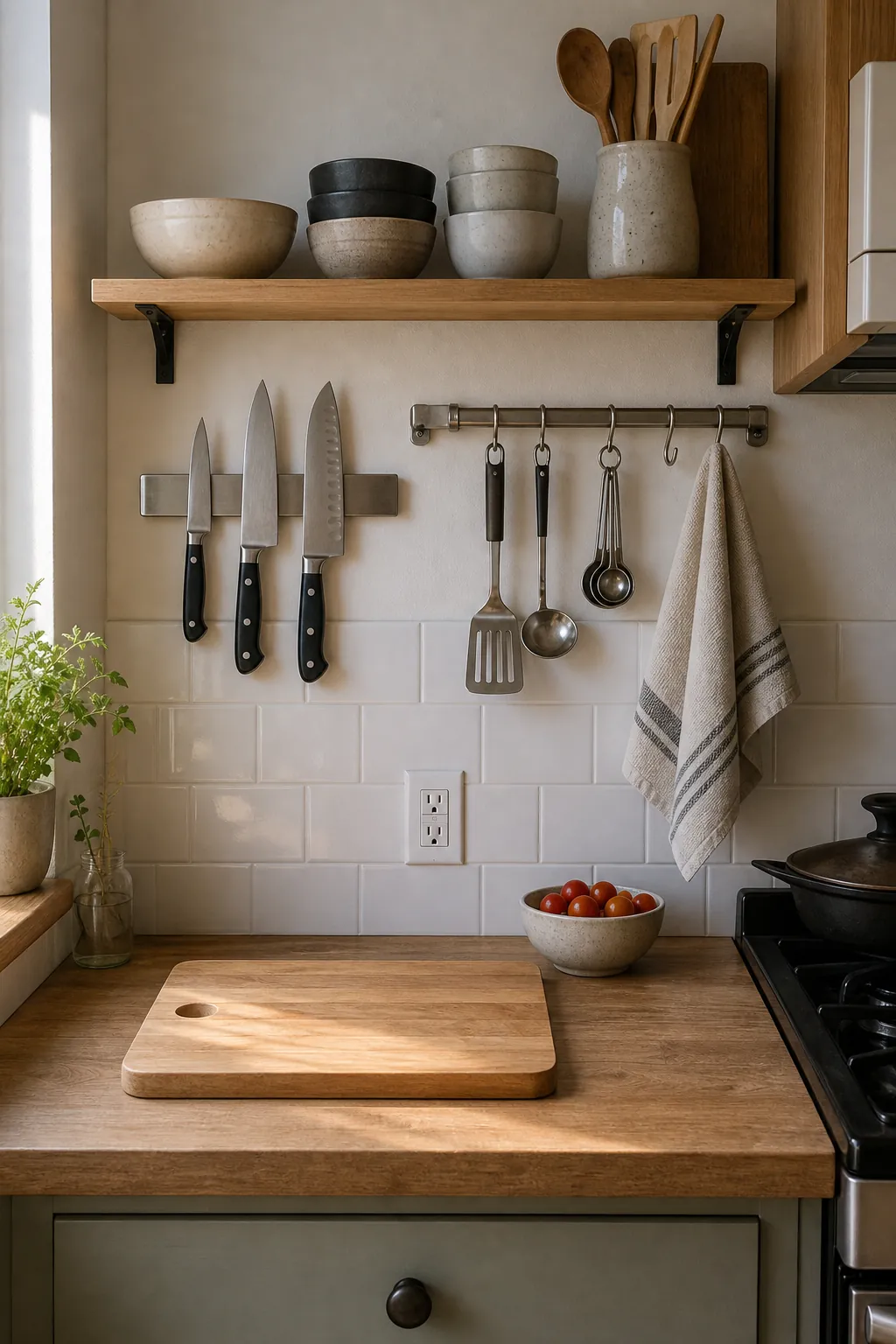
Create Temporary Counter Space When You Cook
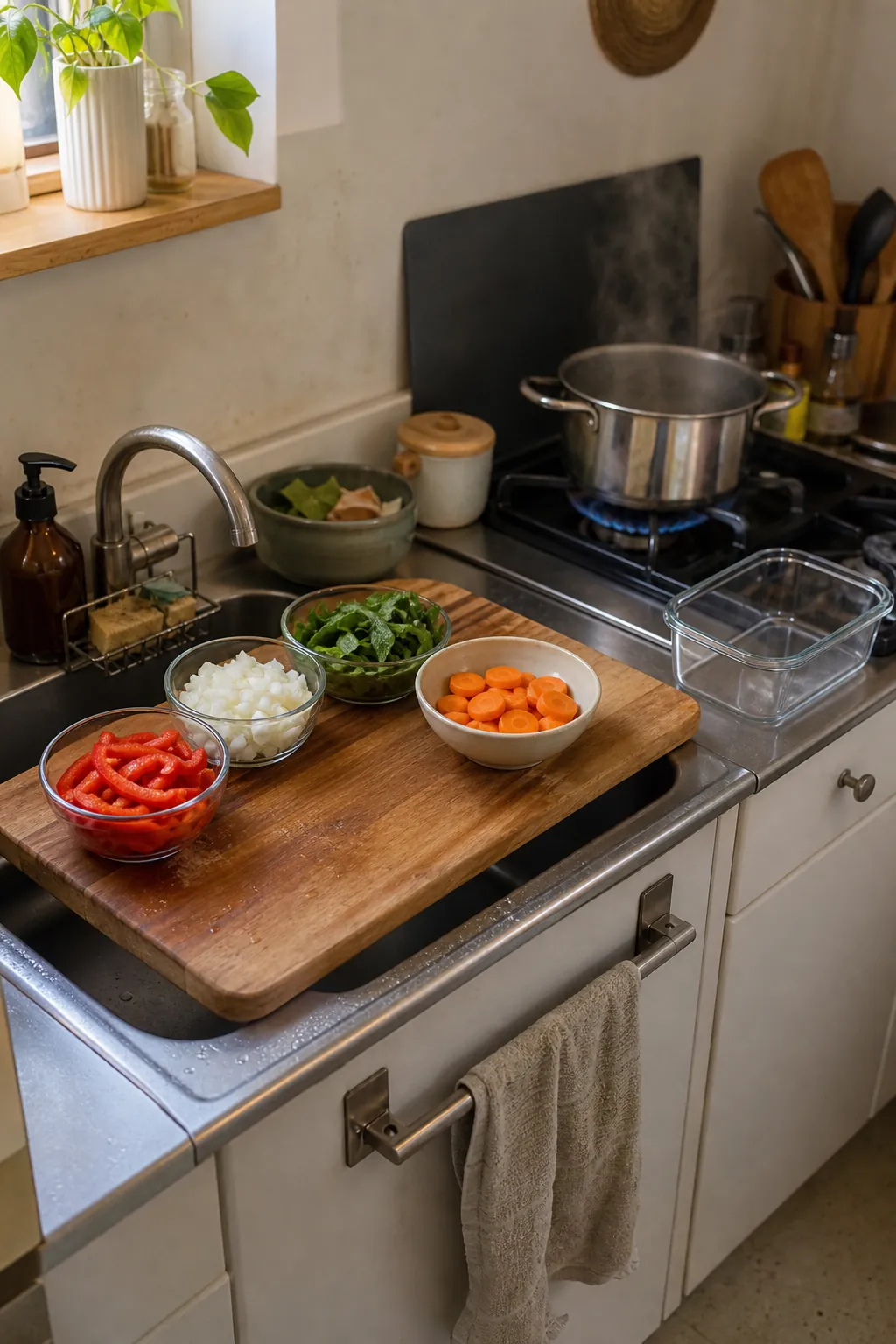
Some kitchens cannot be solved with decluttering alone. If your counter is barely wider than a cutting board, add temporary meal prep space that appears only when you need it. An over-sink cutting board, a sturdy stove cover used only when the burners are off and cool, a fold-down wall shelf, or a slim rolling cart can turn a cramped cooking session into a manageable one.
This is especially helpful for meal prep. Instead of spreading containers across every surface, work in stages: wash produce, chop one group, move it into a bowl or pot, cook, then fill containers one at a time. Sequential prep beats countertop sprawl.
Give Appliances a Parking Plan
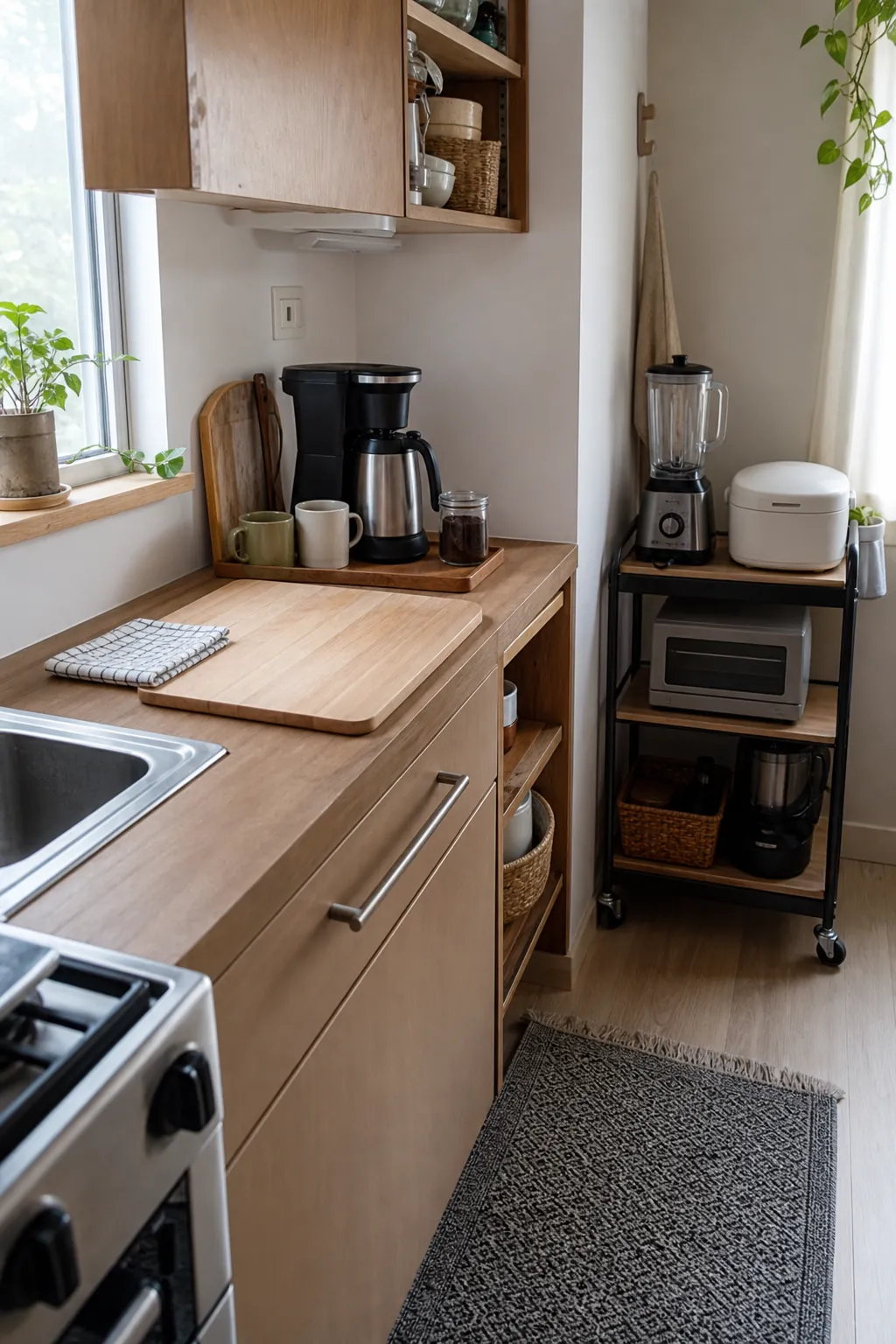
Small appliances are the fastest way to lose a small kitchen counter. The answer is not always to get rid of them. It is to give each appliance a parking spot based on frequency of use.
- Used every day: keep on the counter, preferably on a tray or in one appliance zone.
- Used weekly: place in a low cabinet, pantry shelf, or rolling cart where it is easy enough to pull out.
- Used rarely: store high, deep, or outside the kitchen if space is tight.
A compact kitchen often needs appliance rotation. The rice cooker can be out during a heavy meal prep week, then go back to the cabinet when the toaster oven becomes the main tool. Let the counter match your current cooking pattern instead of displaying every tool you own.
Reset the Counter Before It Becomes a Project
Small kitchens turn messy fast. A few dishes, one grocery bag, and an appliance left out can make the whole room feel unusable. That is why a reset routine matters more than a complicated storage system.
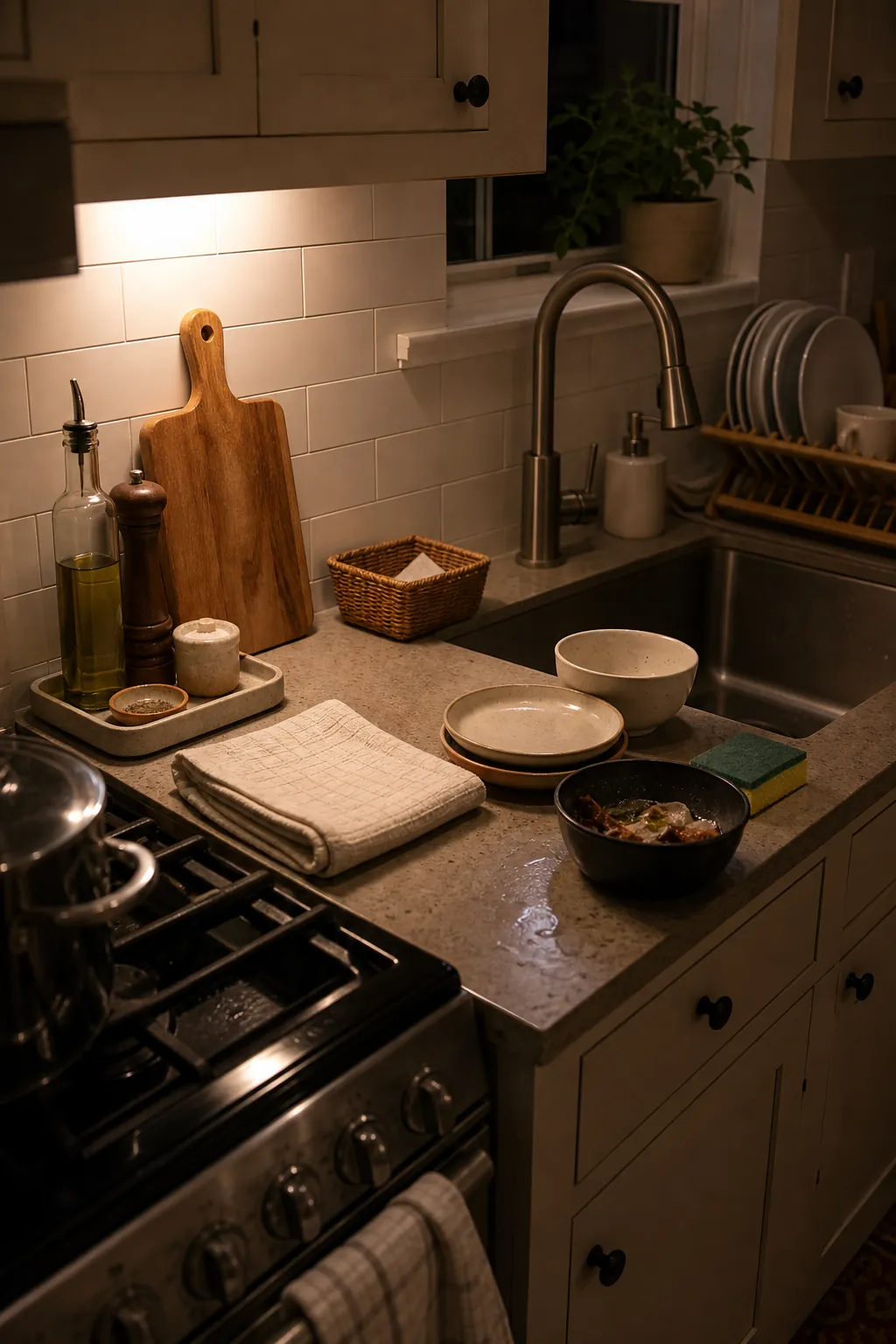
After cooking, clear the board, wipe the protected prep zone, put oils and spices back on their tray, move dishes to the sink or rack, and empty the small catch-all basket if you use one. Keep the routine short enough that you will actually do it. A two-minute reset every night is better than a perfect decluttering session once a month.
If random items keep landing on the counter, the problem is usually not discipline. It is missing storage. Add a small home for receipts, keys, vitamins, dish towels, coffee supplies, or snack bags so the counter is no longer the default holding area.
The Best Small Kitchen Counter System Is the One You Can Repeat
The strongest kitchen counter organization plan is not the one with the most bins. It is the one that leaves you enough open space to cook dinner on a tired weeknight. Start with the clear prep zone. Then limit counter items, move the easy-grab tools upward, add temporary prep space if needed, park appliances by use, and reset before bed.
Once the counter stops carrying everything, daily cooking feels different. You can put down a cutting board without negotiating with clutter first. That one change is what makes a compact kitchen feel workable.