
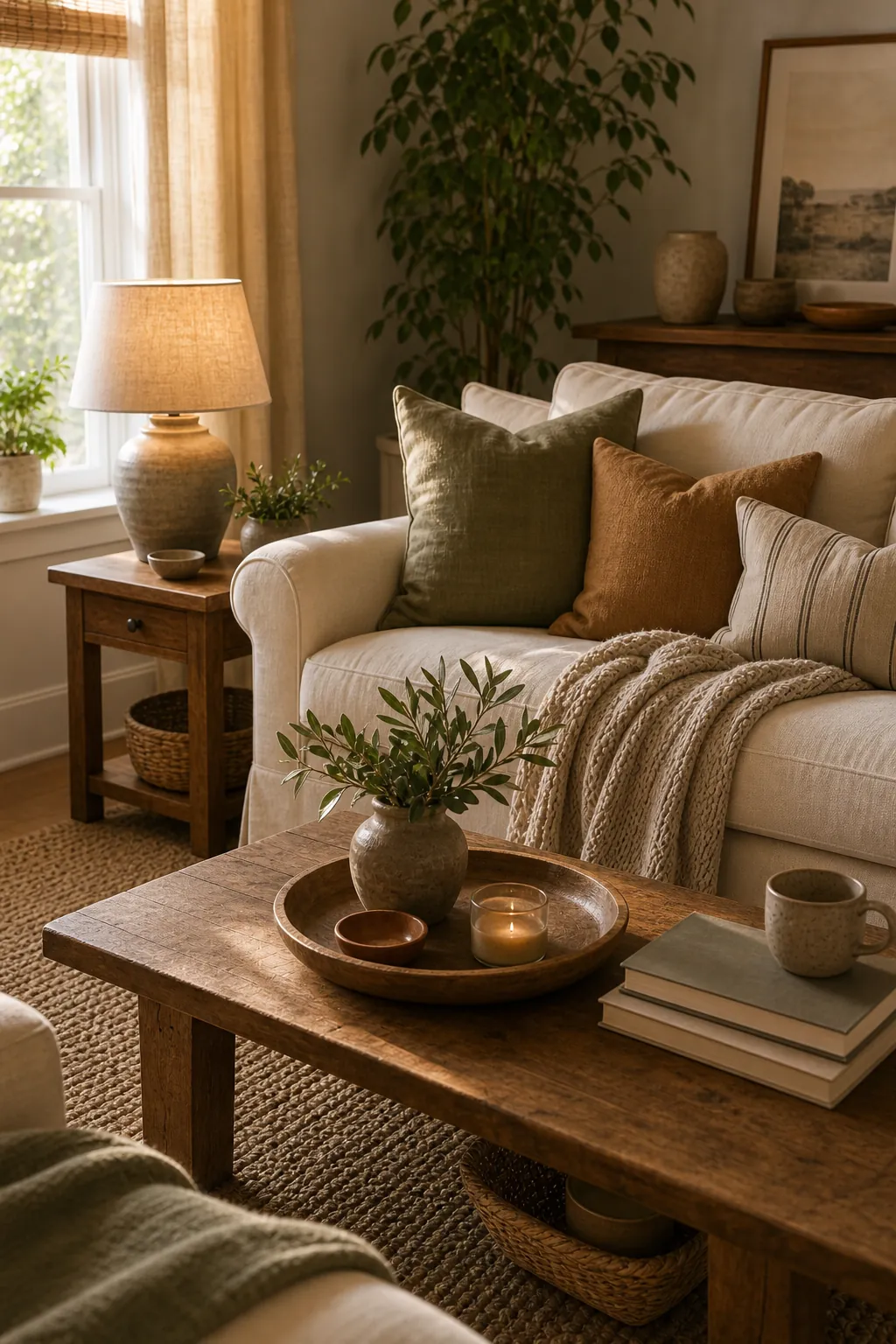
Some living rooms have all the right furniture and still feel cold. The sofa is there, the coffee table is there, and the rug might even be new, but the room does not invite anyone to stay. Warmth usually comes from smaller decisions: texture, light, wood, plant life, and a few accents that keep neutral decor from feeling flat.
The goal is not to make the room darker or more crowded. A warmer living room should feel easier to use, not heavier. Start with the surfaces and materials your eye touches first, then layer slowly.
Layer Textiles Where the Room Feels Bare
If the room feels cold, check the sofa, windows, and floor before buying more decor. A woven rug, linen pillows, a soft throw, and relaxed curtains can change the mood faster than another vase. These pieces add warmth because they soften sound, catch light, and give the room texture.
Keep the colors close but not identical. Cream, oatmeal, warm gray, muted green, and clay can all sit together without looking busy. The room will feel warmer when the textures vary more than the colors.
Repeat Warm Wood in More Than One Place
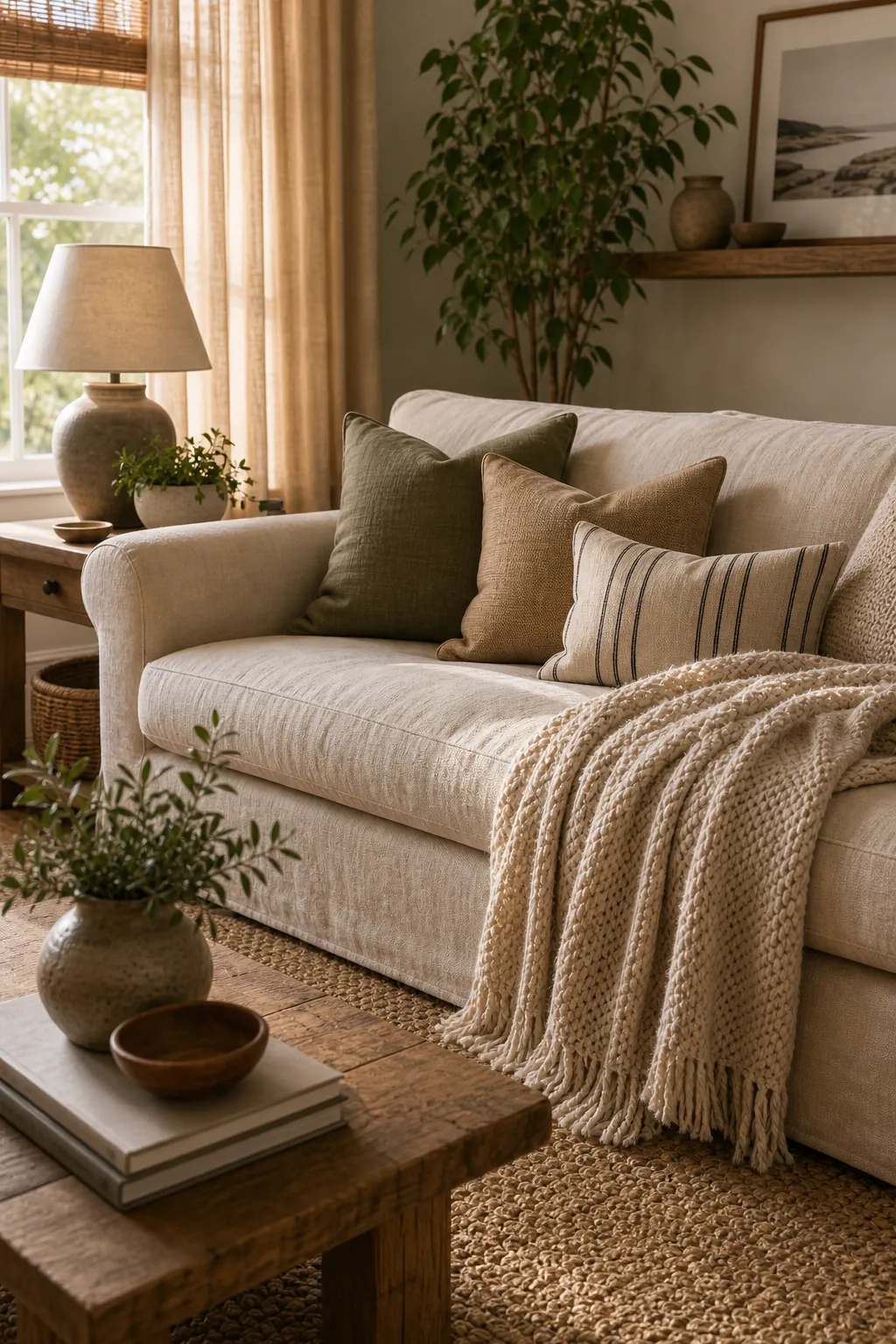
Wood is one of the easiest ways to make a living room feel more grounded. A coffee table helps, but the warmth is stronger when wood appears in two or three places: a picture frame, side table, shelf, tray, or small stool.
The pieces do not need to match. In fact, a collected room usually feels more natural when the wood tones are related but slightly different. Repeat the material, not the exact furniture set.
Use Lamps Before the Room Feels Dark
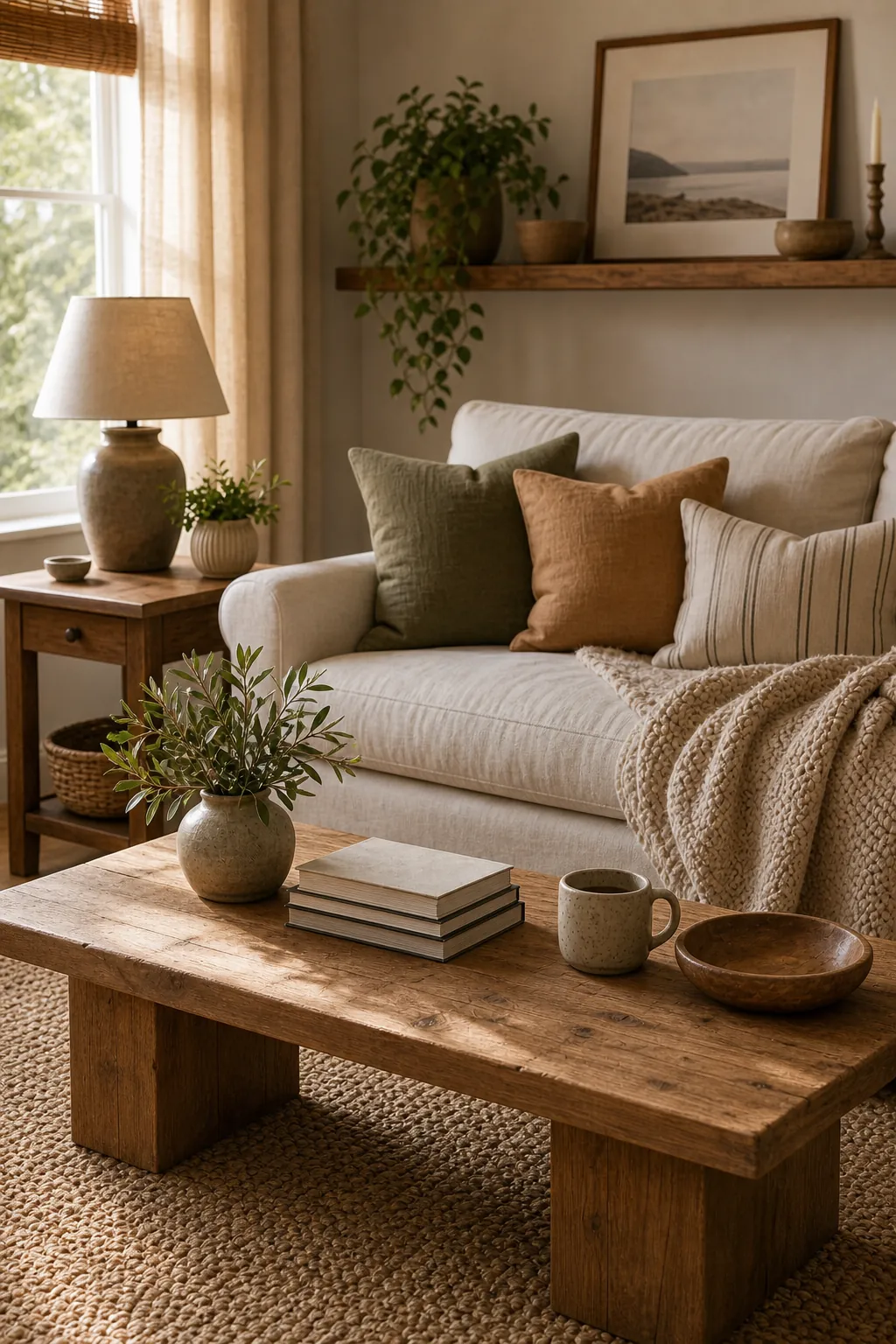
Overhead lighting can make a living room feel colder, especially at night. Add warmth by placing lamps where people actually sit: beside the sofa, near a reading chair, or on a console behind the couch. The light should land low and soft, not glare across the whole room.
Choose warm bulbs and shades that diffuse the light. A cozy living room usually has more than one small pool of light, so the room feels layered instead of flat.
Let Plants Add Life to Neutral Decor
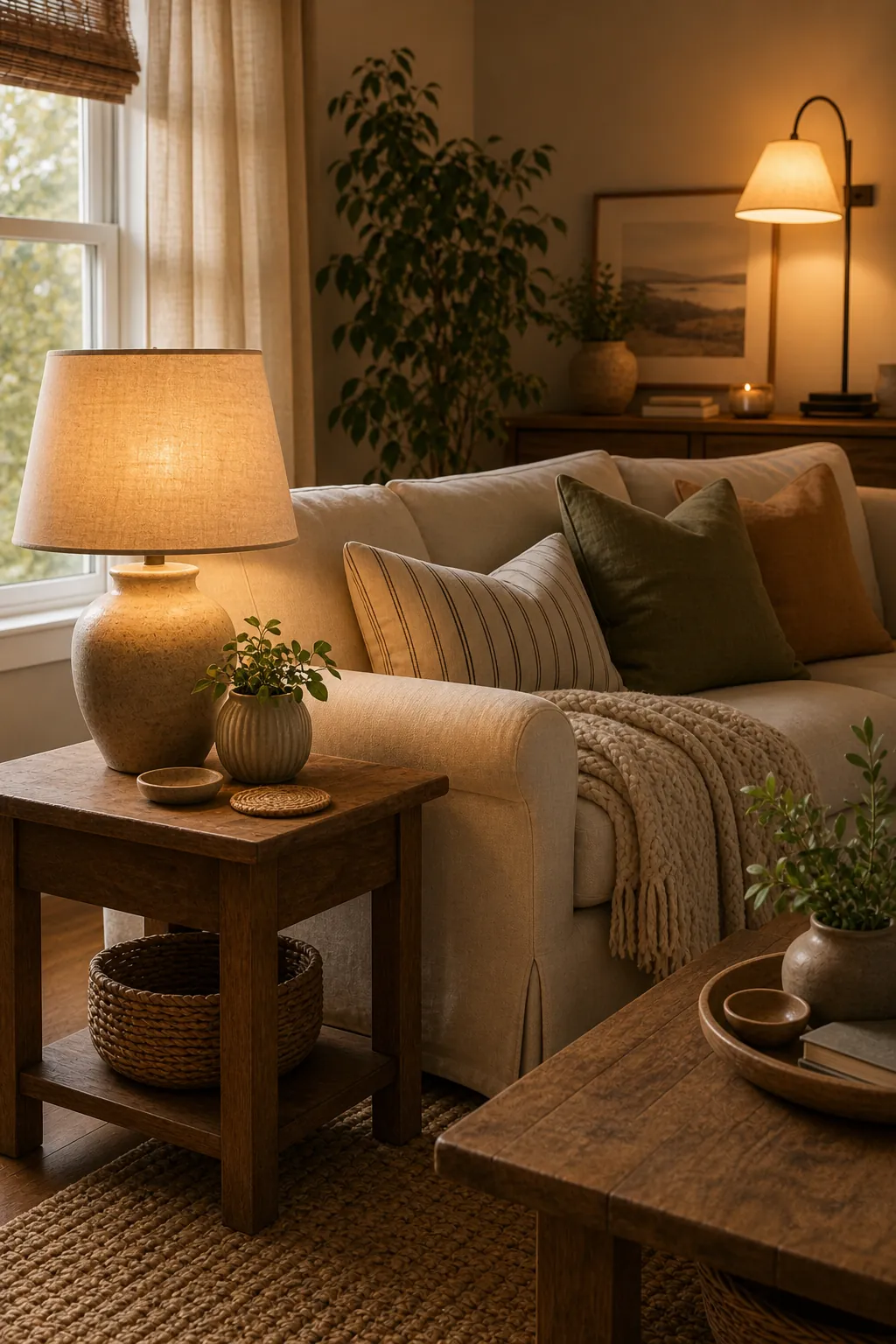
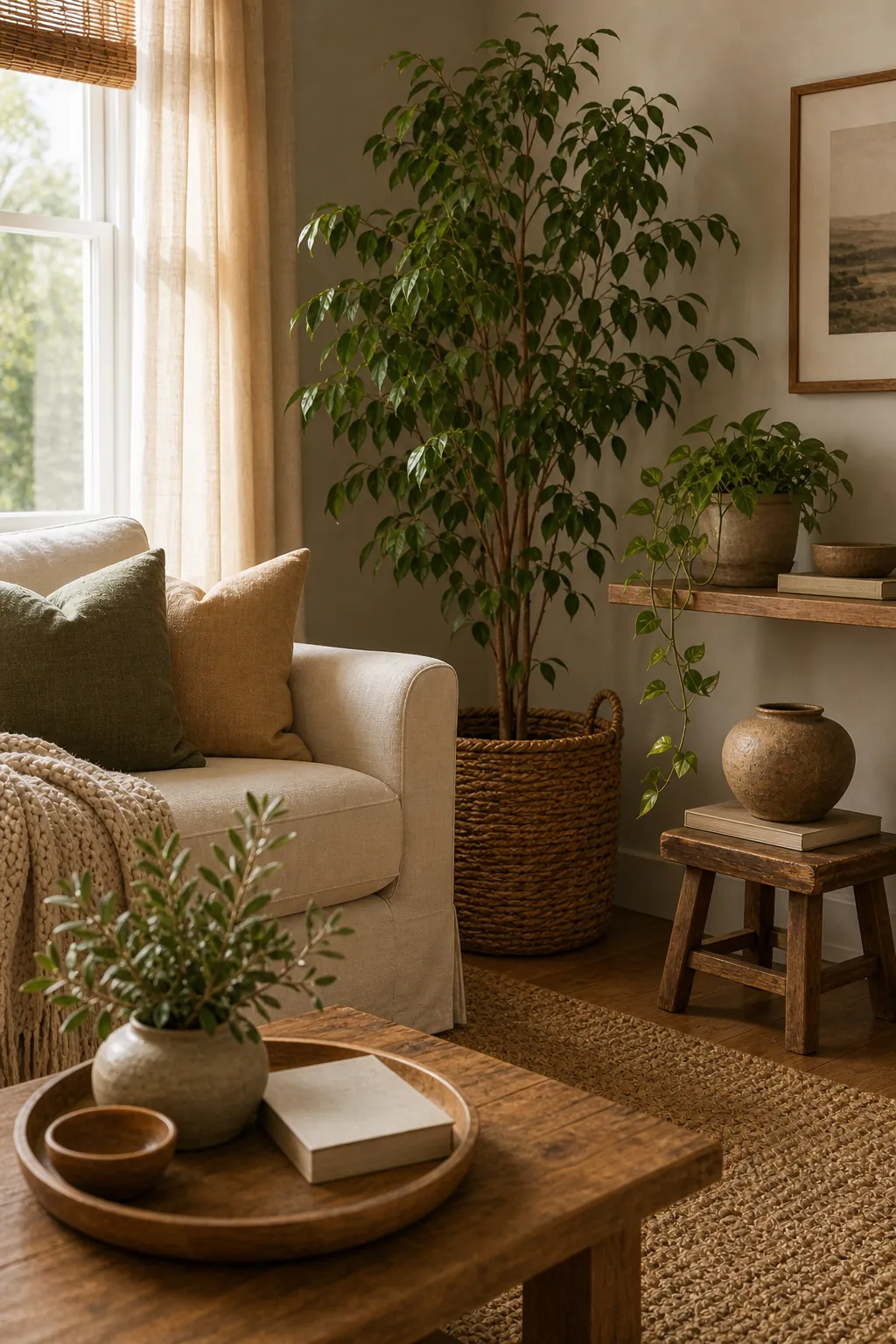
A neutral room can start to feel lifeless when every surface is beige, white, or gray. Plants solve that without forcing a new color palette. A tall plant in a woven basket can soften a blank corner, while a smaller plant on a table can connect the green back to the seating area.
Keep plant decor edited. One healthy plant in the right spot often does more than five tiny pots scattered around the room. The green should break up the neutrals, not become a new source of clutter.
Add Clay, Rust, or Olive in Small Doses
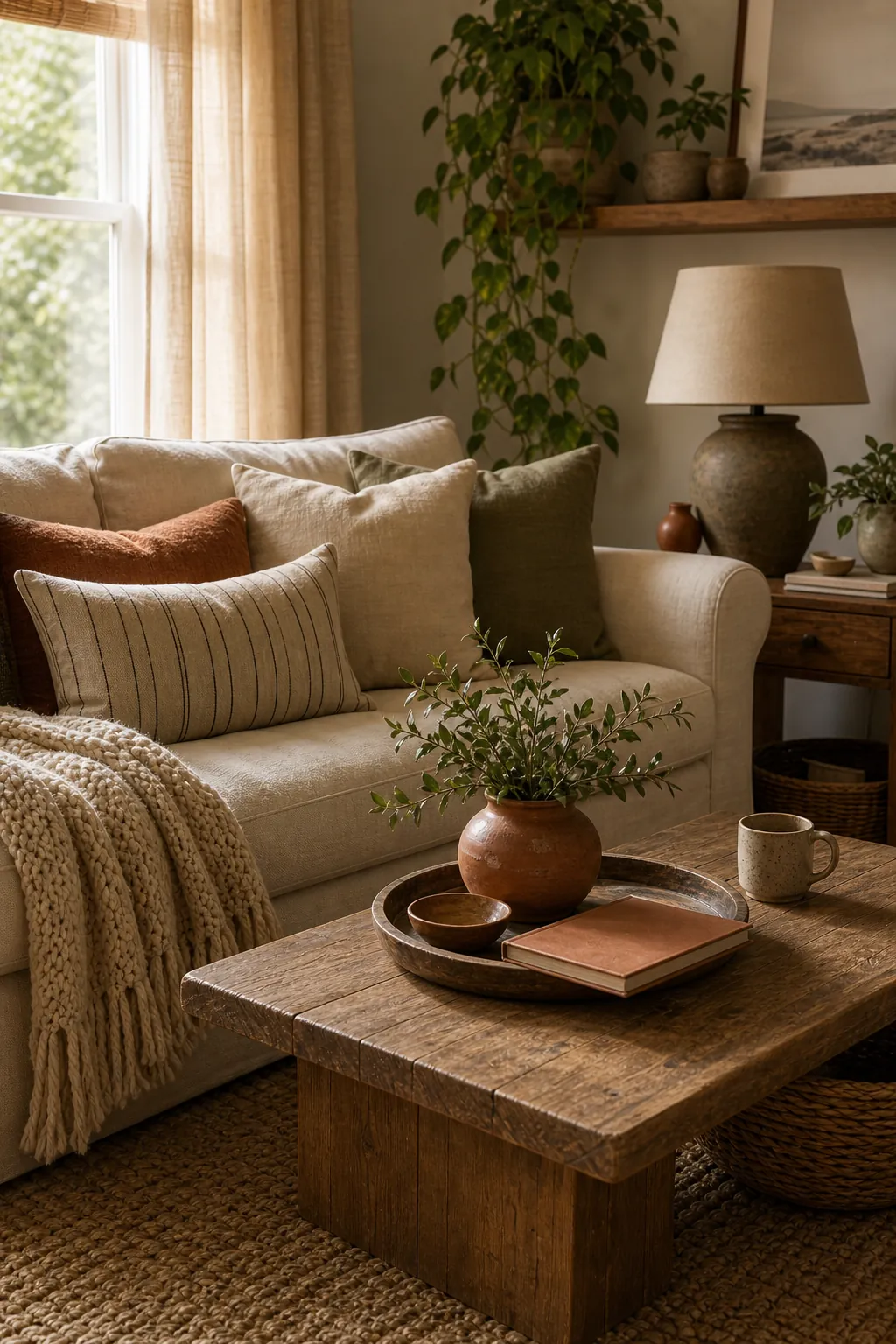
If your room still feels cool, add a small amount of warm color. Clay, rust, muted olive, and soft brown can warm a space without taking over. Try one pillow, one ceramic vase, one throw stripe, or one book stack with a warmer cover.
The restraint is important. A few warm accents look intentional; too many can make the room feel themed. Let the color appear in small places so the whole room still feels calm.
Make the Coffee Table Feel Useful and Soft
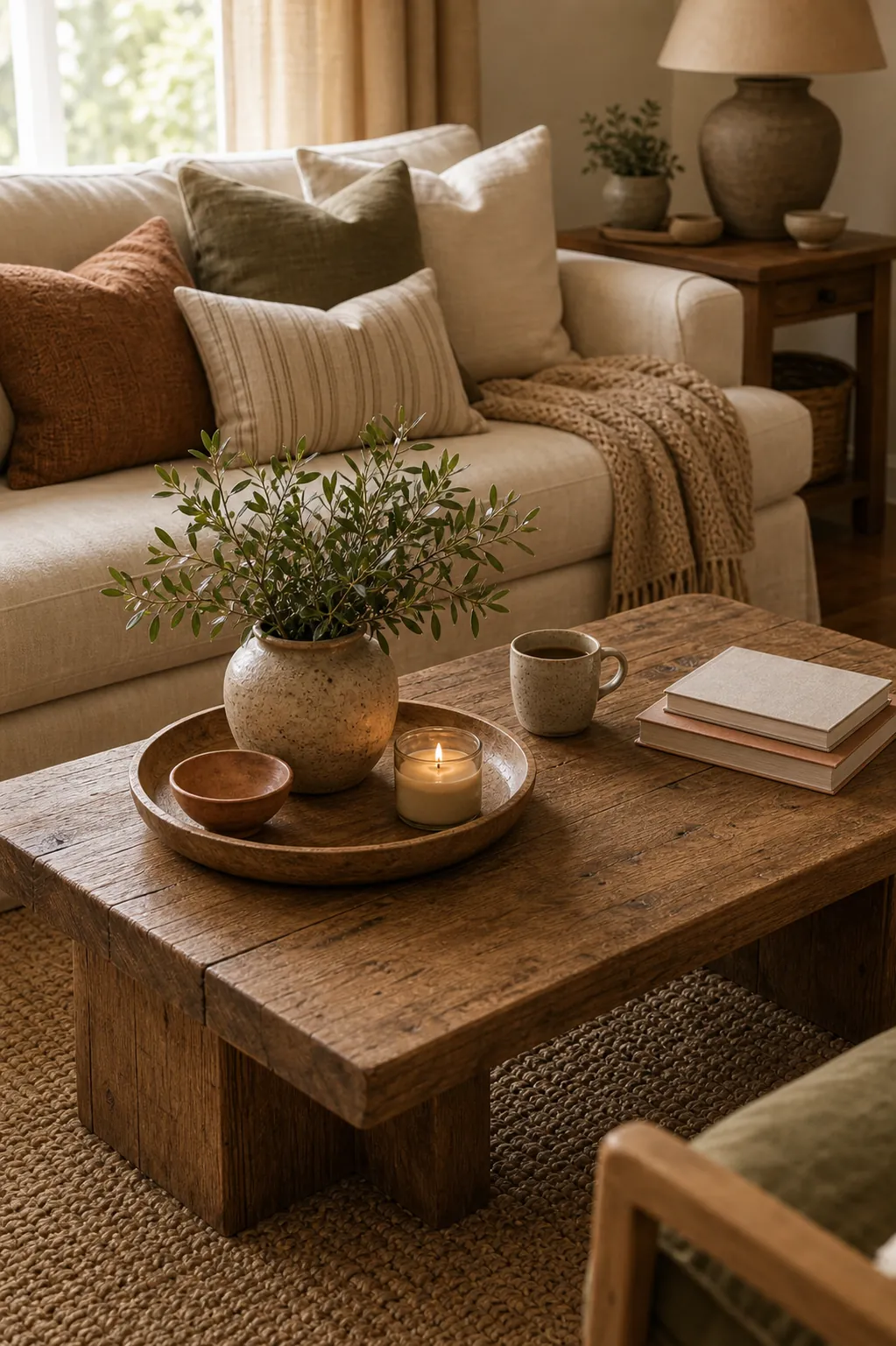
Coffee table decor is a small place to reinforce the room’s warmth. Use a tray, a low vase, a candle, a mug, and a little greenery, but leave room for everyday life. A warm living room should still have space for snacks, remotes, and a book you are actually reading.
Choose materials that echo the rest of the room: wood, ceramic, linen, woven fiber, and leaves. When the coffee table repeats the room’s textures, the whole space feels more finished.
Warmth is not one purchase. It is the way the room repeats comfort at every level: floor, sofa, table, corner, and light. When those layers work together, the living room feels welcoming before anyone sits down.