
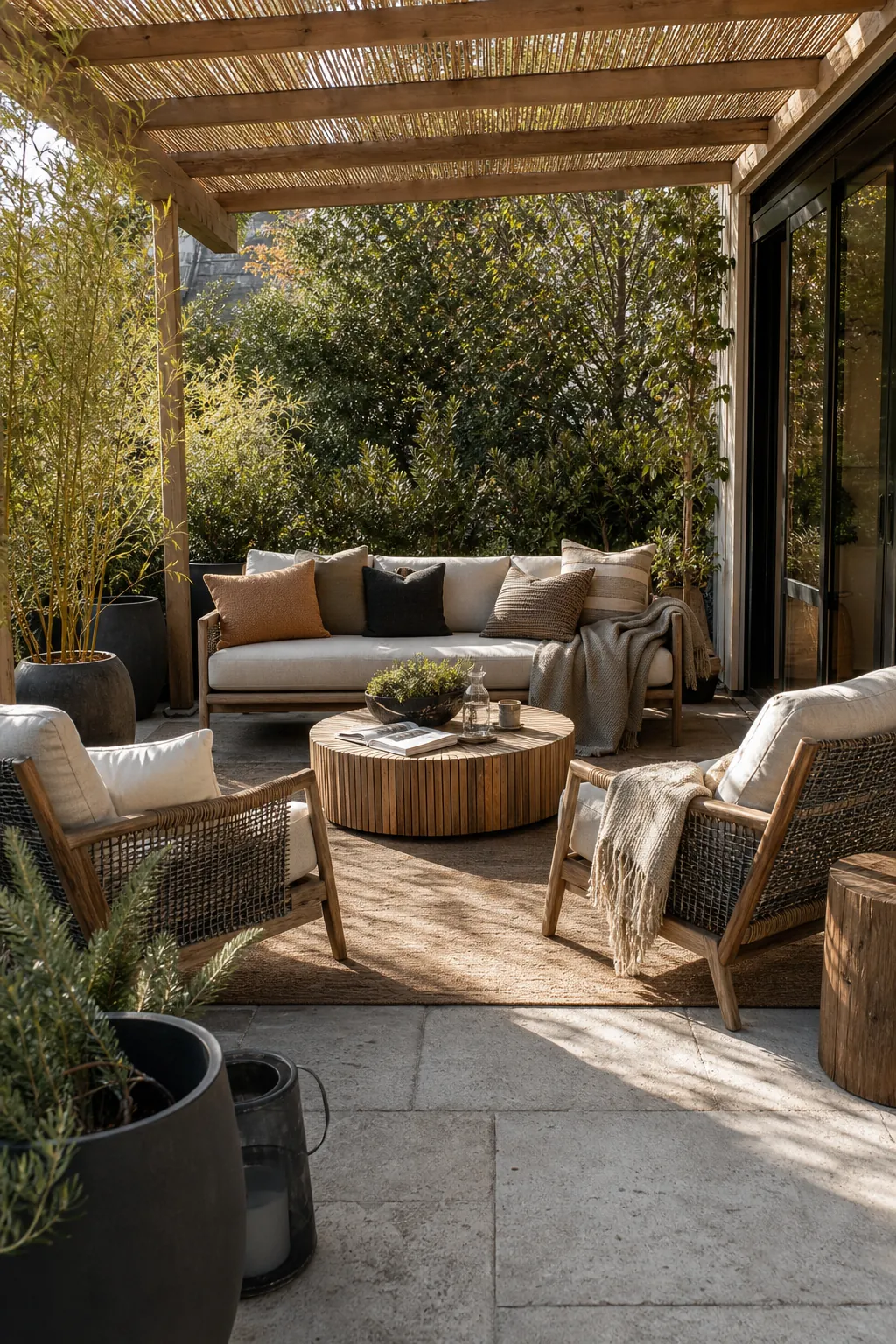
A backyard starts to feel like a real room when it stops being a leftover patch of patio furniture and starts behaving like a place people know how to use. The strongest outdoor lounge ideas are not about buying the largest sectional or filling every corner. They are about enclosure, flow, comfort, shade, and a clear reason to sit down.
That is the difference between a backyard that looks styled for one photo and an outdoor room that becomes part of daily life. You need a lounge zone that feels protected without being boxed in, open enough for movement, and comfortable enough for slow evenings, family weekends, and casual dinners that drift outside.
Start With The Room Shape, Not The Sofa
Before choosing patio furniture, mark the lounge footprint. A square, broad rectangle, or softly rounded seating zone usually works better than a long narrow strip because people can face one another without blocking the path through the yard. If the main route from the back door cuts through the middle of the seating, the space will always feel temporary.
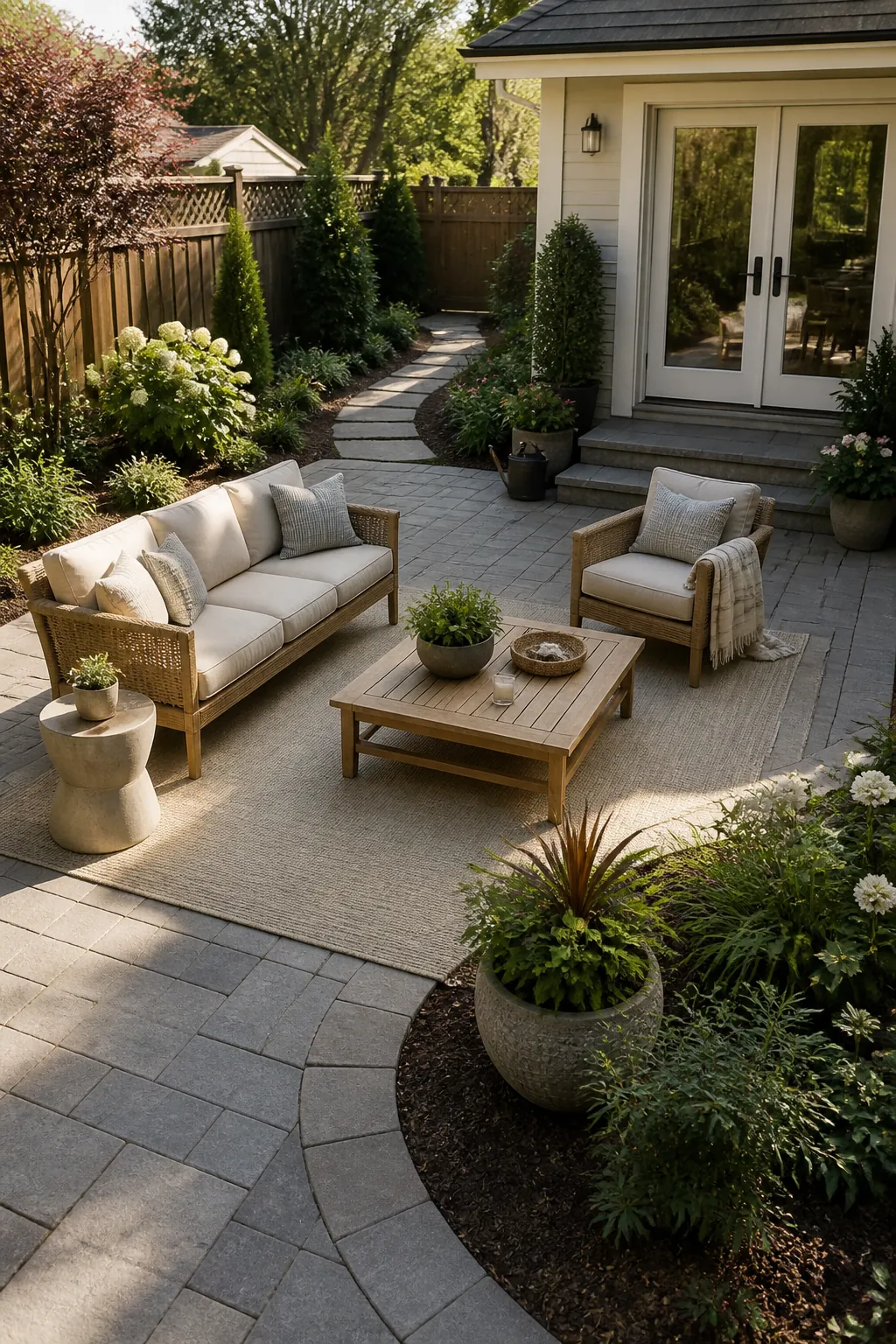
Think like you would indoors. The lounge needs a floor, a focal point, a traffic edge, and enough open space around the seating. For most backyard ideas, the best first move is to tape or chalk the furniture footprint before buying anything. Keep the walking path outside the conversation area so guests can move between the kitchen, grill, garden, and lawn without stepping over ottomans.
- Small patio: one loveseat, two chairs, a compact table, and one strong plant grouping.
- Medium patio: an L-shaped sofa or four-seat conversation set with room for a dining edge.
- Large backyard: separate lounge, dining, play, and garden design zones connected by paths.
Give The Lounge A Ceiling
An outdoor lounge rarely feels like a room when it is fully exposed from above. A ceiling can be a pergola, shade sail, roof extension, umbrella, or tree canopy. It does two jobs at once: it makes the space easier to use in bright weather, and it gives the eye a clear boundary so the lounge feels intentional.
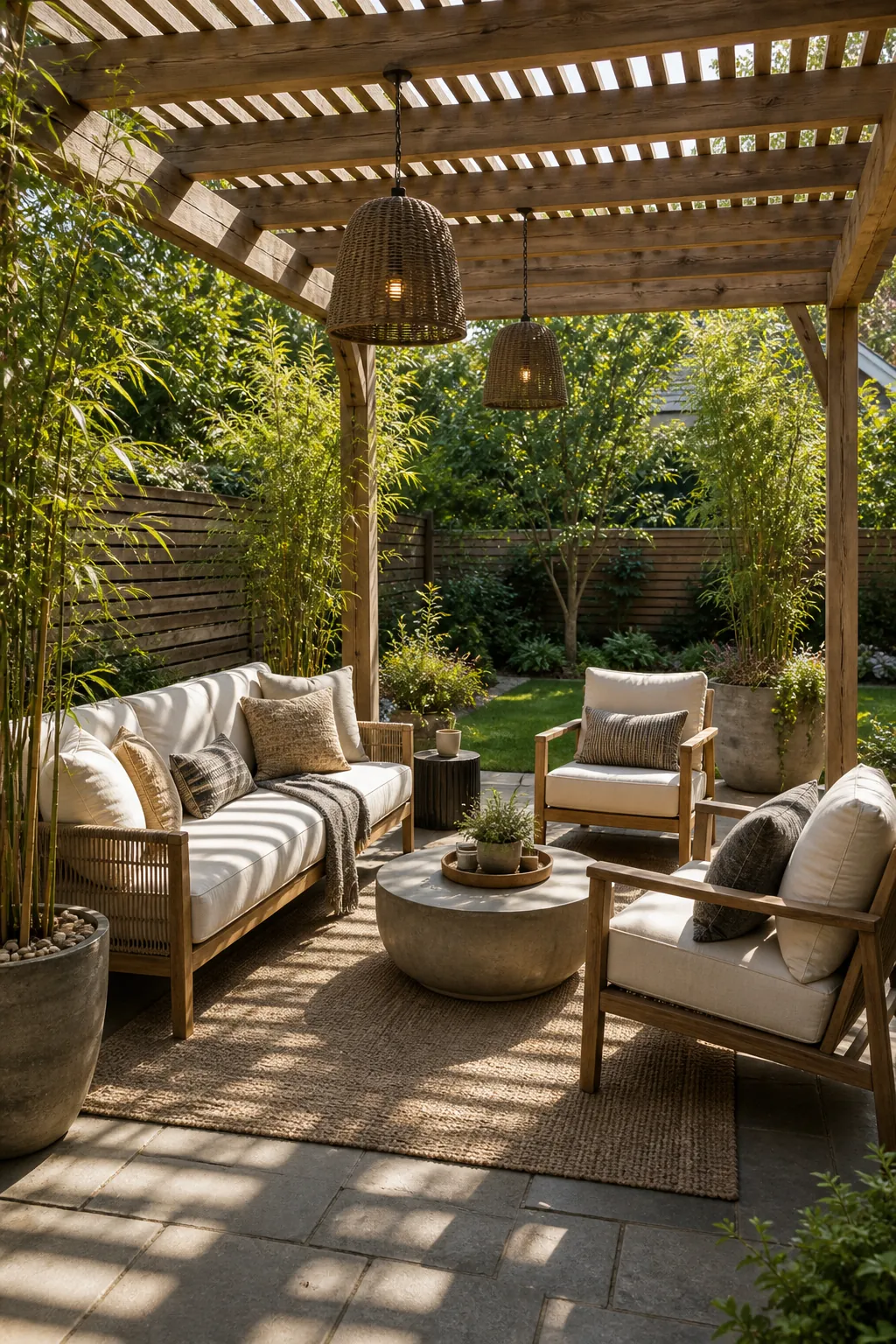
The key is to cover the sitting zone, not the entire yard. A partial ceiling keeps the backyard breathable and lets the garden stay visible. Add woven pendants, a fan where wiring allows, or simple string lights under the structure. If the budget is smaller, a cantilever umbrella over the main seats can still create the same psychological effect: this is the place to settle in.
For hot climates, shade is not just patio decor. It decides whether the family backyard gets used at noon, after school, and on long summer weekends. Map where the sun hits in the afternoon, then place the lounge where shade can actually protect faces, cushions, and tabletops.
Use Privacy As A Design Layer
Privacy ideas matter because people relax differently when they do not feel watched. The goal is not to build a blank wall around the patio. The goal is to soften the exact sight lines that make the lounge feel exposed: a neighbor’s deck, a side gate, a street view, or a utility corner.
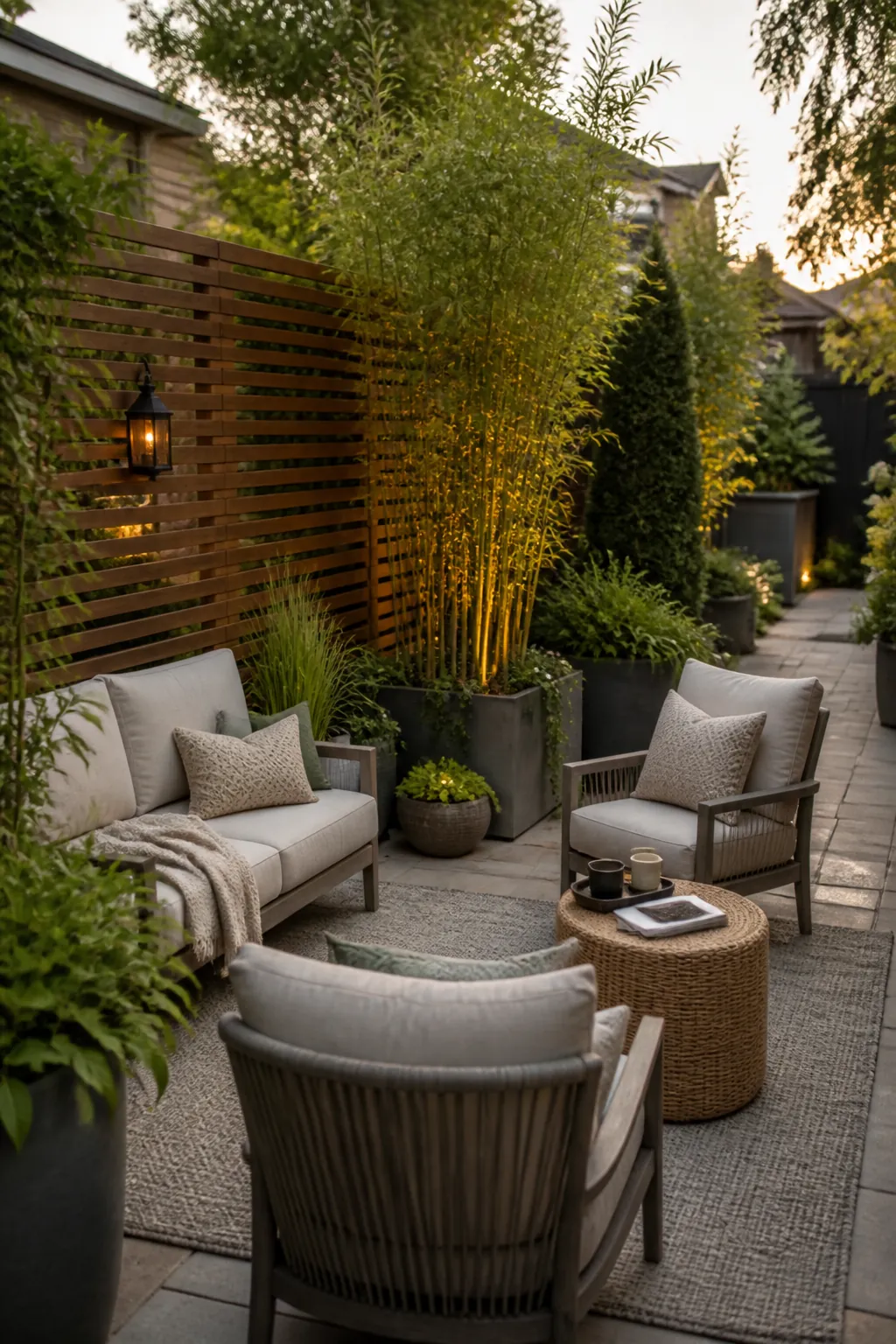
Use a mix of hard and living screens. A slatted panel gives instant structure. Tall planters add height without a construction project. Evergreen shrubs, ornamental grasses, bamboo in controlled containers, vines on a trellis, or small trees can make the boundary feel alive instead of fenced off.
The most natural outdoor living spaces usually have both explicit and implied walls. A fence blocks a view. A row of grasses simply tells the body where the lounge begins. That softer edge is often what makes a patio feel like it belongs to the garden instead of sitting on top of it.
Arrange Seating For Conversation First
Good outdoor seating faces inward. That sounds obvious, but many patios fail because every seat faces the same direction, like a waiting area. A lounge should let people talk without turning their chairs, shouting across empty space, or balancing drinks on the ground.
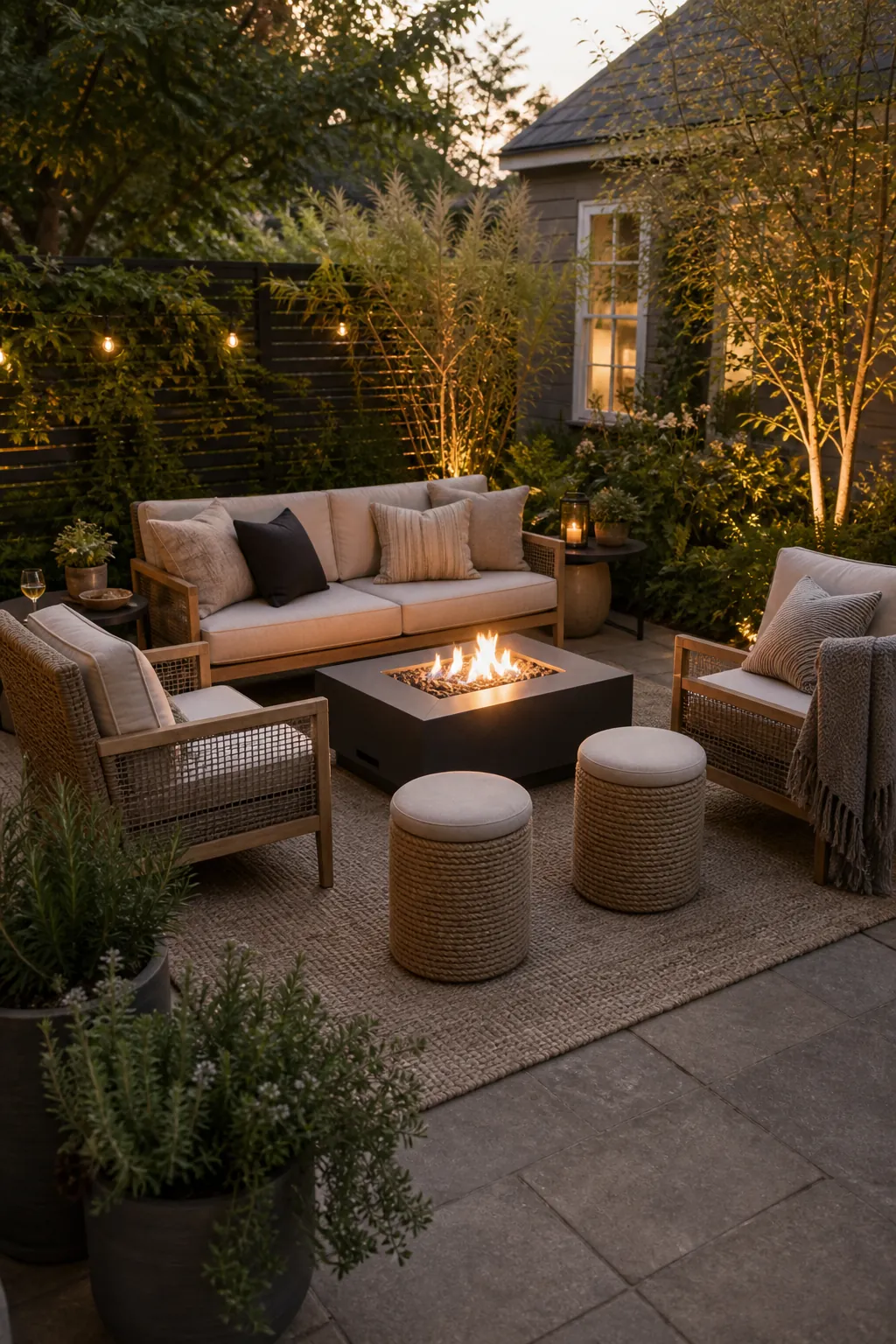
Use a coffee table, fire table, ottoman, or large tray as the anchor. Then pull seats close enough that conversation feels natural. A sectional can work beautifully, but it should not be the default answer for every yard. Two lounge chairs and a sofa can feel more flexible, especially when family members want different seats, shade angles, or views into the garden.
- L-shape: best for corners, compact patios, and clear views from the house.
- U-shape: best for entertaining because everyone faces the same center.
- Loose circle: best around a fire pit, fountain, or low table.
- Mixed seating: best when kids, guests, and older relatives need different comfort levels.
Make Room For Family Life
A beautiful outdoor lounge that cannot handle real family life will not last. Leave an open edge for kids to move through, a visible play patch, a washable rug, and a landing place for sandals, towels, toys, or gardening tools. The lounge can still look polished; it just needs a little forgiveness built into the plan.
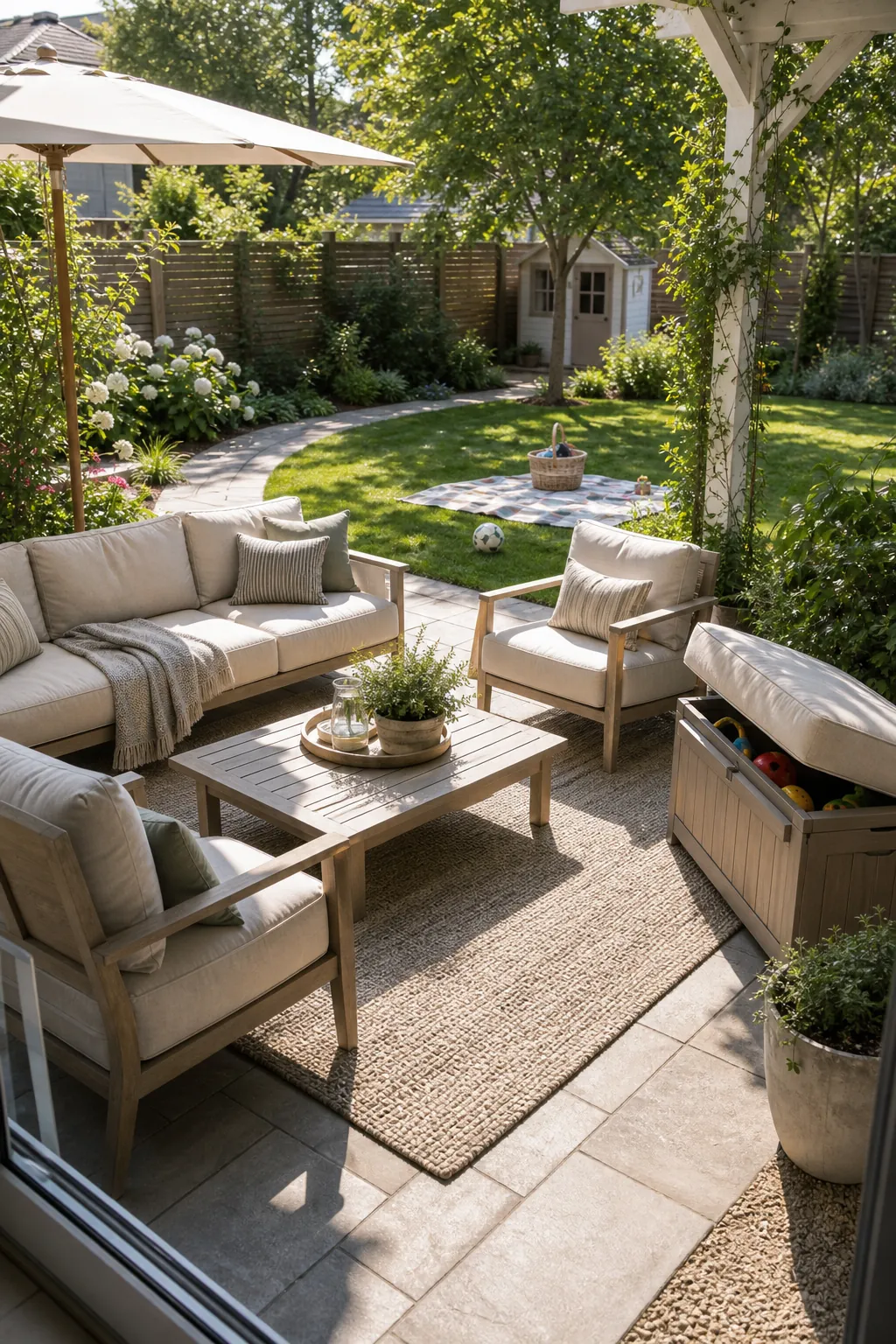
For a family backyard, the best layout often keeps the lounge close enough to supervise the yard but not directly in the path of every game. A bench along one side can double as extra seating and toy storage. Poufs or small stools can move between the lounge, dining table, and fire pit. Choose performance fabrics, washable cushion covers, and side tables that can take a few bumps.
The practical test is simple: if someone brings out snacks, a blanket, a book, and a soccer ball, does the space still work? If yes, you have an outdoor room, not just a staged patio.
Turn A Small Patio Into A Complete Outdoor Room
A small patio can feel more room-like than a large backyard if the boundaries are clear. The mistake is trying to fit every function into the same footprint. Pick one primary use. If the goal is lounging, skip the oversized dining table and build a tight, comfortable seating zone with a small table, layered plants, and one strong vertical feature.
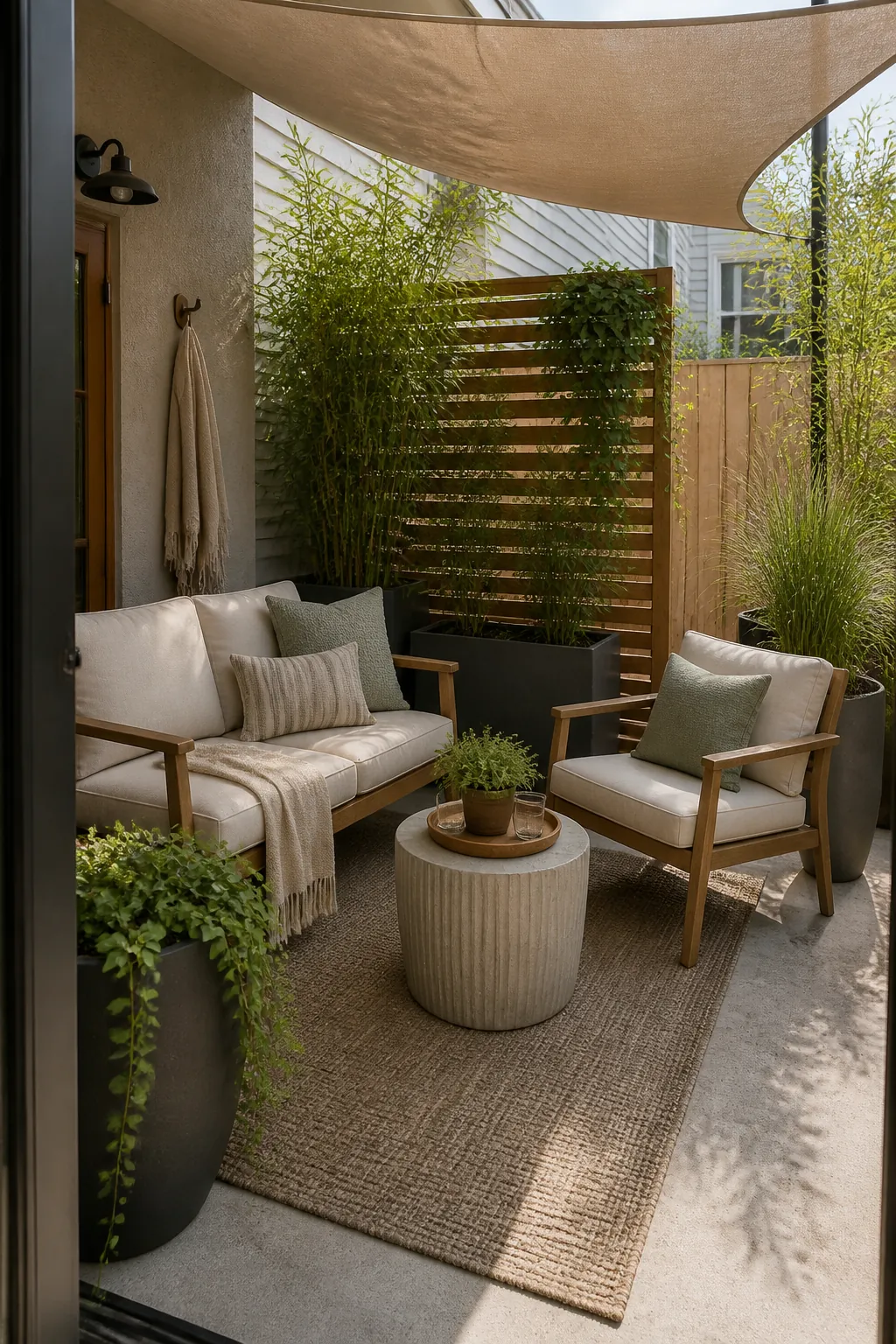
In a compact outdoor lounge, every piece needs a job. Use a loveseat instead of a deep sectional, a drum table instead of a bulky coffee table, and tall planters instead of a wide garden bed. Keep the floor simple. One outdoor rug, one main seating group, and two or three plant heights can make the patio feel finished without crowding it.
Small spaces also benefit from repetition. Matching planters, consistent cushion colors, and one material family for wood, rattan, or metal will make the patio feel calmer. The fewer visual interruptions you create, the more the space reads as a single outdoor room.
Layer Light Like An Interior
Lighting is where many backyard lounge ideas become usable after sunset. One overhead bulb is rarely enough. Think in layers: general glow for the whole patio, task light near dining or reading spots, low accent light for plants, and a small flame or lantern near the seating anchor.
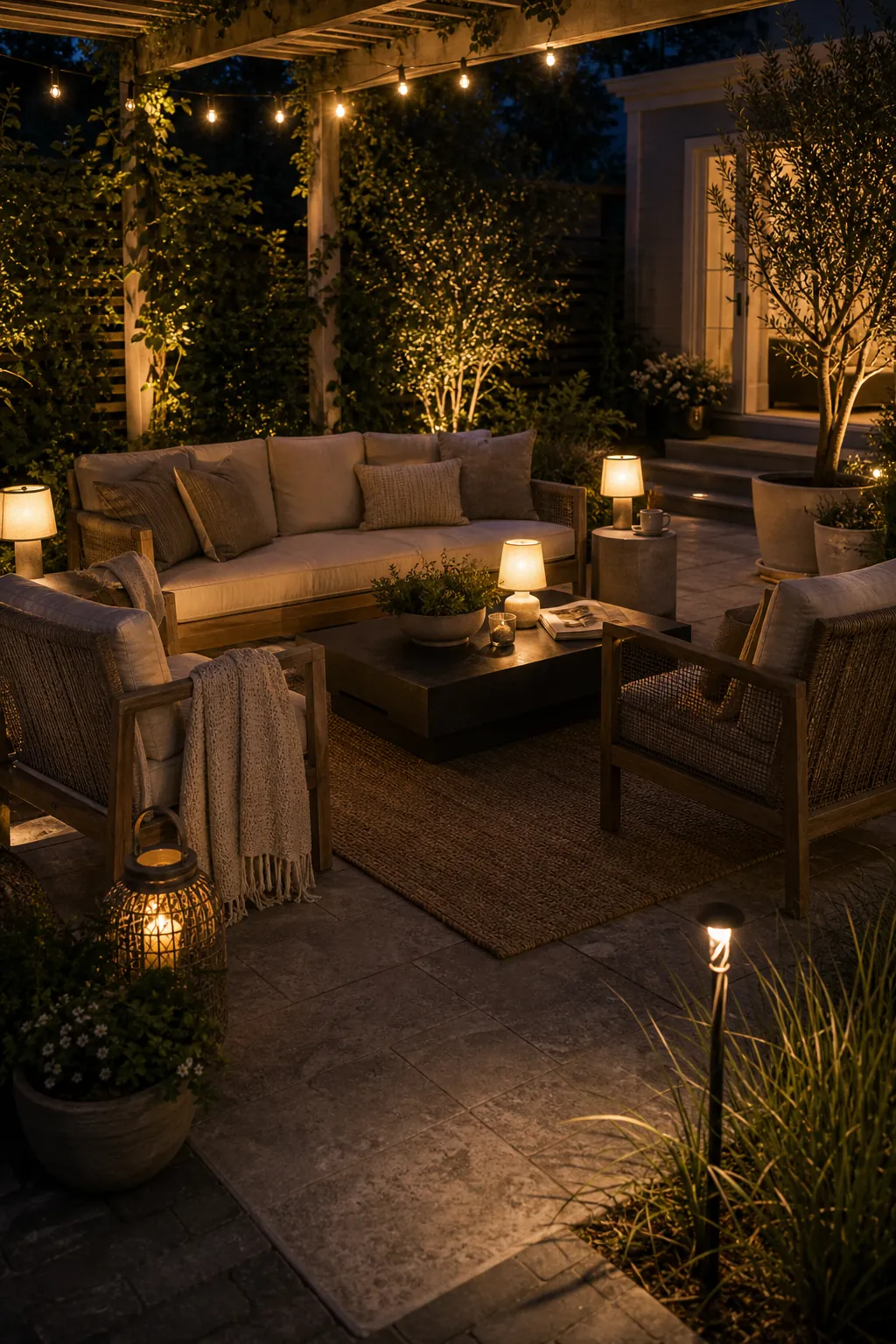
Warm light is usually more flattering than bright white light outside. Put path lights along the edge rather than in the center of the lounge. Uplight a tree or tall shrub to give the space depth. Add a dimmable lamp or rechargeable table light where drinks and books land. The goal is a gentle evening room, not a security floodlight.
When lighting is planned well, the patio feels larger at night because the eye can read layers: seating in the foreground, plants in the middle, and the garden edge beyond.
Choose Patio Decor That Can Handle Weather
Patio decor should make the lounge feel soft without creating a weekly maintenance chore. The pieces that matter most are the ones people touch: cushions, throws, rugs, trays, tables, and shade controls. Choose fewer pieces with better texture instead of many small accessories that have to be rescued every time it rains.
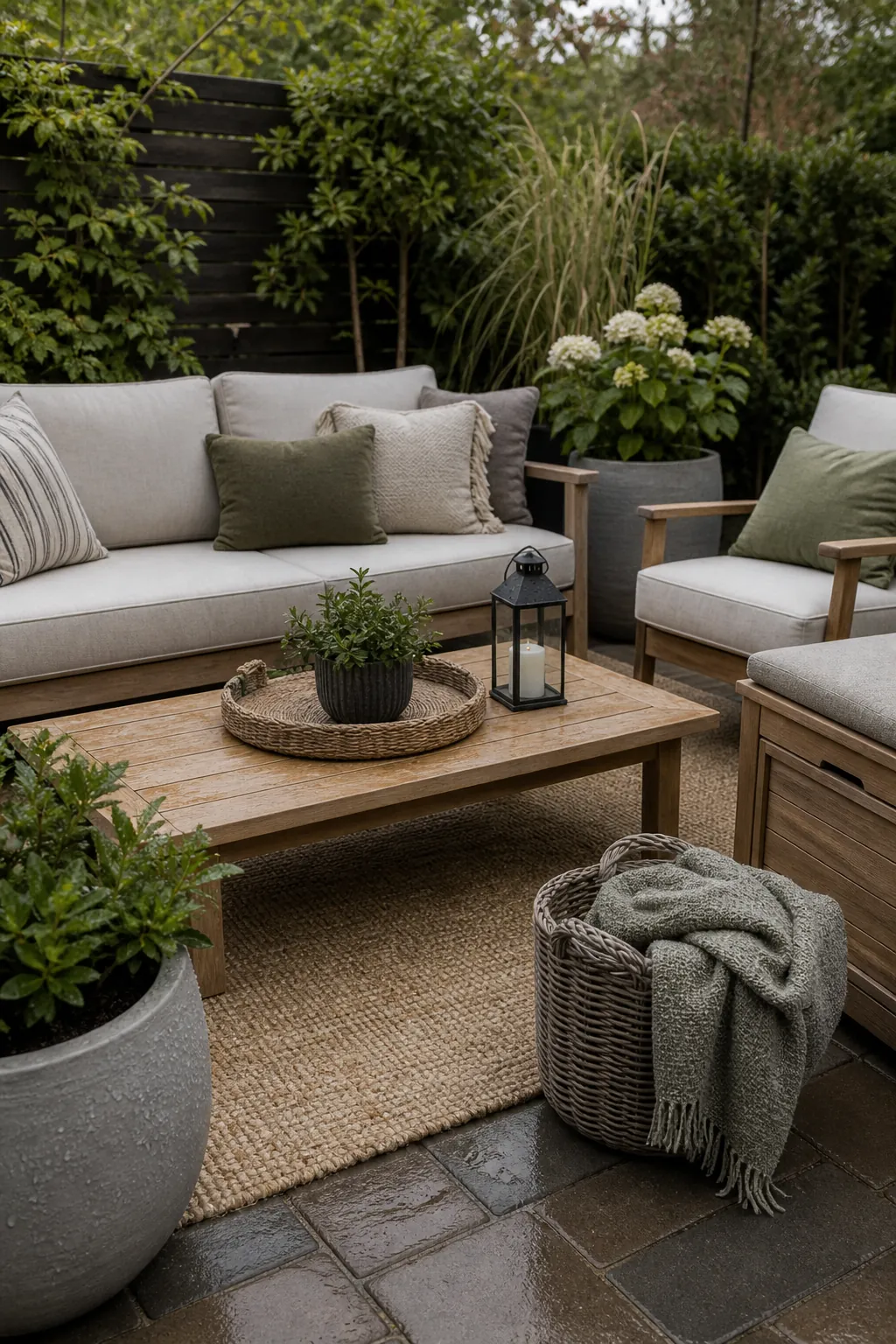
Use an outdoor rug to define the floor, but make sure it can dry. Keep cushions in a tight palette that connects to the house so the outdoor room feels like an extension of the interior. Add one or two organic materials, such as bamboo, teak, stone, clay, or woven fiber, to keep the lounge from looking like a showroom set.
The final detail is storage. A deck box, covered bench, or nearby cabinet protects throws, games, and small decor. When the easy cleanup spot is already built in, the lounge is more likely to stay ready for real use.
The Best Outdoor Lounge Feels Settled
The backyard does not need to become a second living room in a literal way. It needs the same sense of purpose. A clear floor, a bit of ceiling, softened walls, comfortable seating, layered light, and honest space for family life will do more than any single statement chair.
Start with the seat you actually want to use at the end of the day. Then build the outdoor room around that moment: shade over your head, privacy at your back, a table within reach, plants at the edge, and a path that lets the rest of the yard keep moving.