
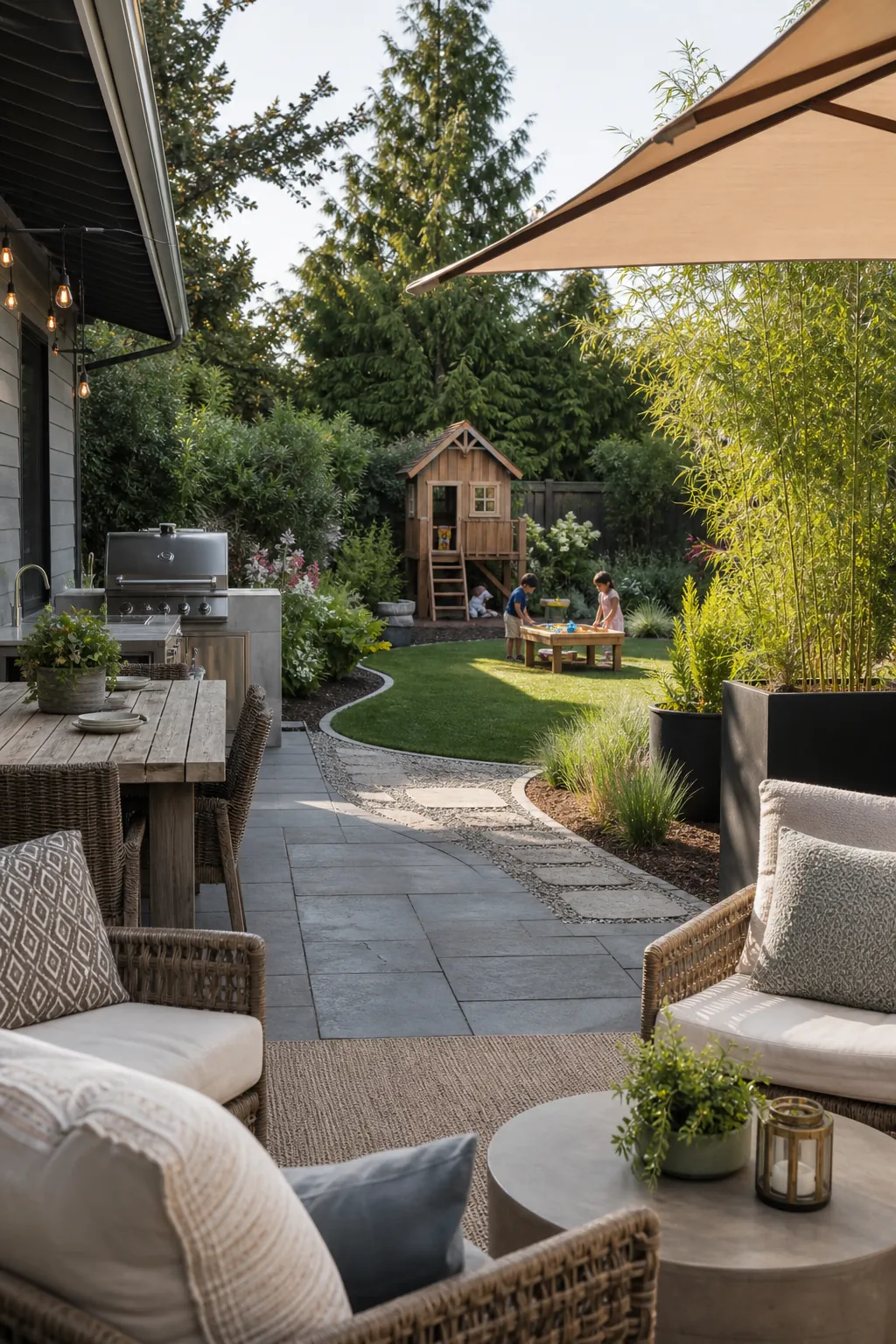
The best family backyard is rarely the one with the most furniture, the biggest playset, or the longest list of backyard ideas. It is the one where everyone can use the space without constantly negotiating for it. Kids need room to move, spill, dig, toss, and invent games. Adults need a place to sit down without staring at scattered toys, wet pavement, or a fence line that feels too exposed.
That is why a strong backyard layout starts with zones. Not rigid rooms. Not expensive hardscaping everywhere. Just clear outdoor zones that tell each part of the yard what job it has: play here, eat here, relax here, store things here, grow plants here. When those jobs are clear, a family backyard can feel calmer even when it is full of life.
Start With How Your Family Actually Uses the Yard
Before buying patio decor or sketching a fire pit, walk outside and notice the boring facts. Where do you naturally step out from the house? Which corner gets harsh afternoon sun? Where does water collect after rain? Which neighbor window makes the yard feel less private? Where can you see kids clearly from a chair?
Those answers matter more than style. A beautiful seating set placed across the yard from the play area will not get used by parents of young kids. A dining table in the prettiest corner will annoy everyone if plates have to cross a wet lawn. A play zone on slippery patio paving will become a daily safety argument. The useful layout is the one that respects supervision, traffic, shade, and cleanup.
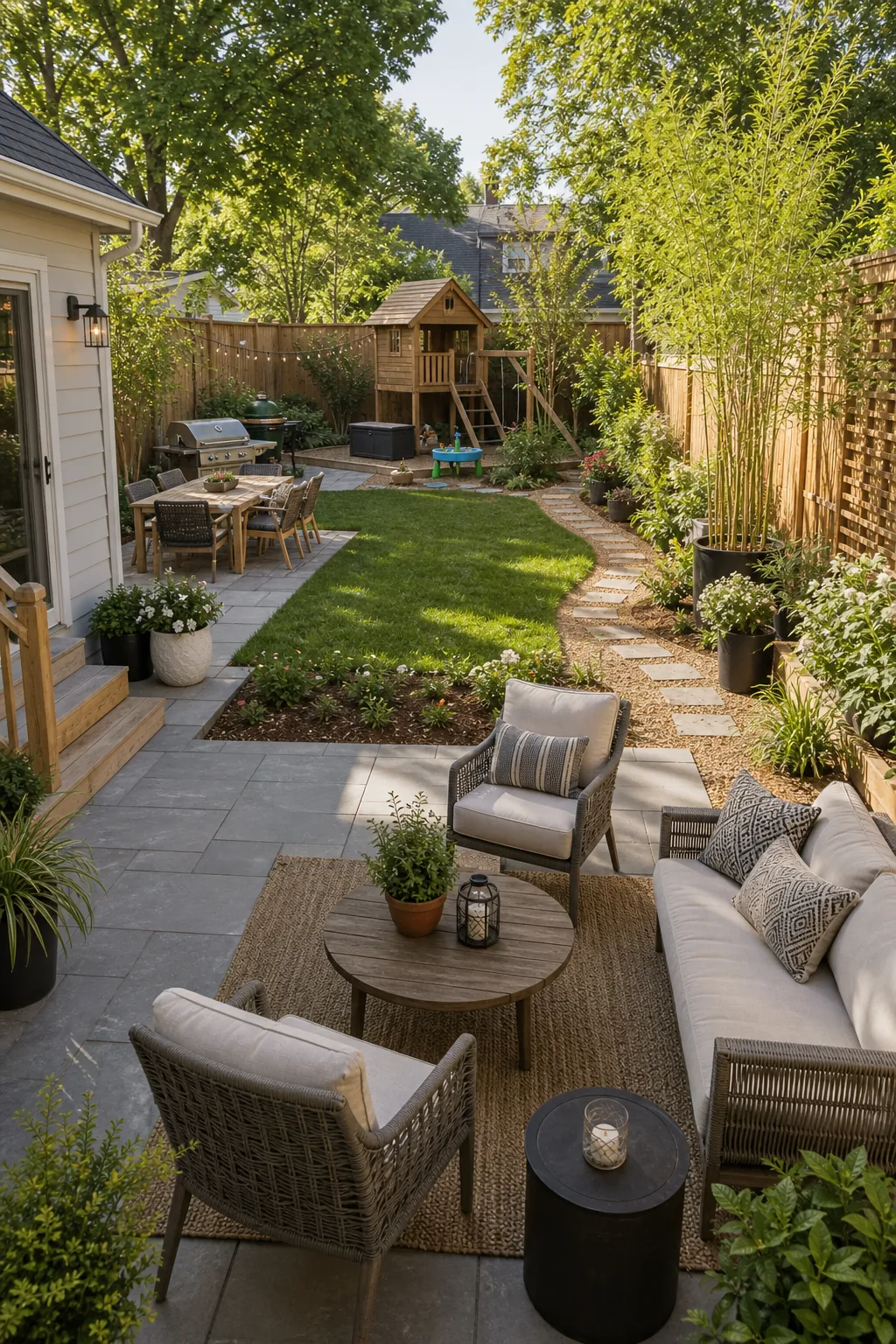
Think in four simple layers: a daily play zone, an adult landing zone, a food zone, and a green buffer. Some yards can also hold a fire pit, garden beds, a storage run, or a quiet nook. Smaller yards may only need two strong zones. The point is not to divide every square foot. The point is to give the yard enough order that play and relaxing can happen at the same time.
Put the Play Zone Where It Can Be Watched, Drained, and Changed Later
A play zone should be close enough to adult seating for conversation and supervision, but separate enough that water tables, scooters, chalk, and toy kitchens do not take over the patio. For many families, the best spot is not the center of the lawn. It is a slightly underused edge: a shady side strip, a thinning grass area near trees, or a back corner that can become a defined mulch bed.
This is where smart garden design beats random equipment. A broad curved edge, a simple timber border, or a change from turf to playground chips can make the play area feel intentional without making it permanent. When kids outgrow the toys, that same area can become shrubs, raised beds, a hammock pocket, or a woodland garden transition.
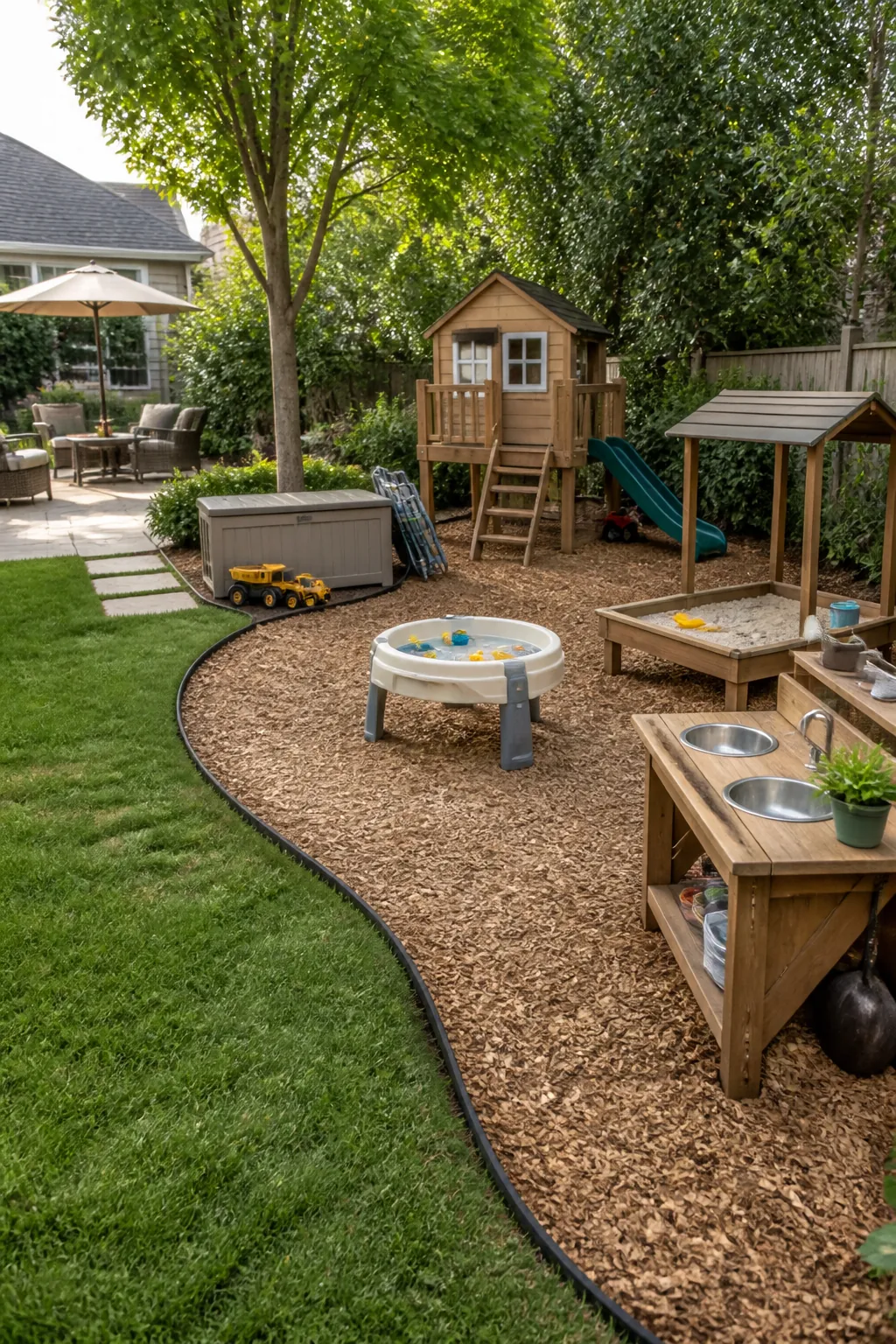
If you add a swing set, climbing frame, or elevated play structure, treat the surface as a safety decision, not a decorative one. Check the equipment maker’s fall-zone guidance and current safety recommendations for depth, drainage, and material. Loose fill that is too shallow, compacted, or sitting on poor drainage loses its purpose fast. If the play zone is mostly for low toys, water play, mud kitchens, or open running, the priority shifts toward easy cleanup, soft boundaries, and a place to stash small items.
Give Adults a Real Seating Zone Beside the Action
Many backyards fail because the adult zone is treated like leftover space. A pair of chairs gets pushed against the fence, or a sofa is placed where it looks good in a photo but feels disconnected from family life. In a working outdoor living space, seating should be both comfortable and strategic.
Place the main outdoor seating where adults can see the play zone without sitting inside it. Leave room for side tables, a drink ledge, a basket for towels, and an easy path back to the kitchen or bathroom. If the yard is small, choose a compact sectional, two lounge chairs with a shared table, or a bench built into a planter edge. The goal is not a showroom patio. The goal is a seat that people actually choose at 4:30 p.m. when the kids still have energy.
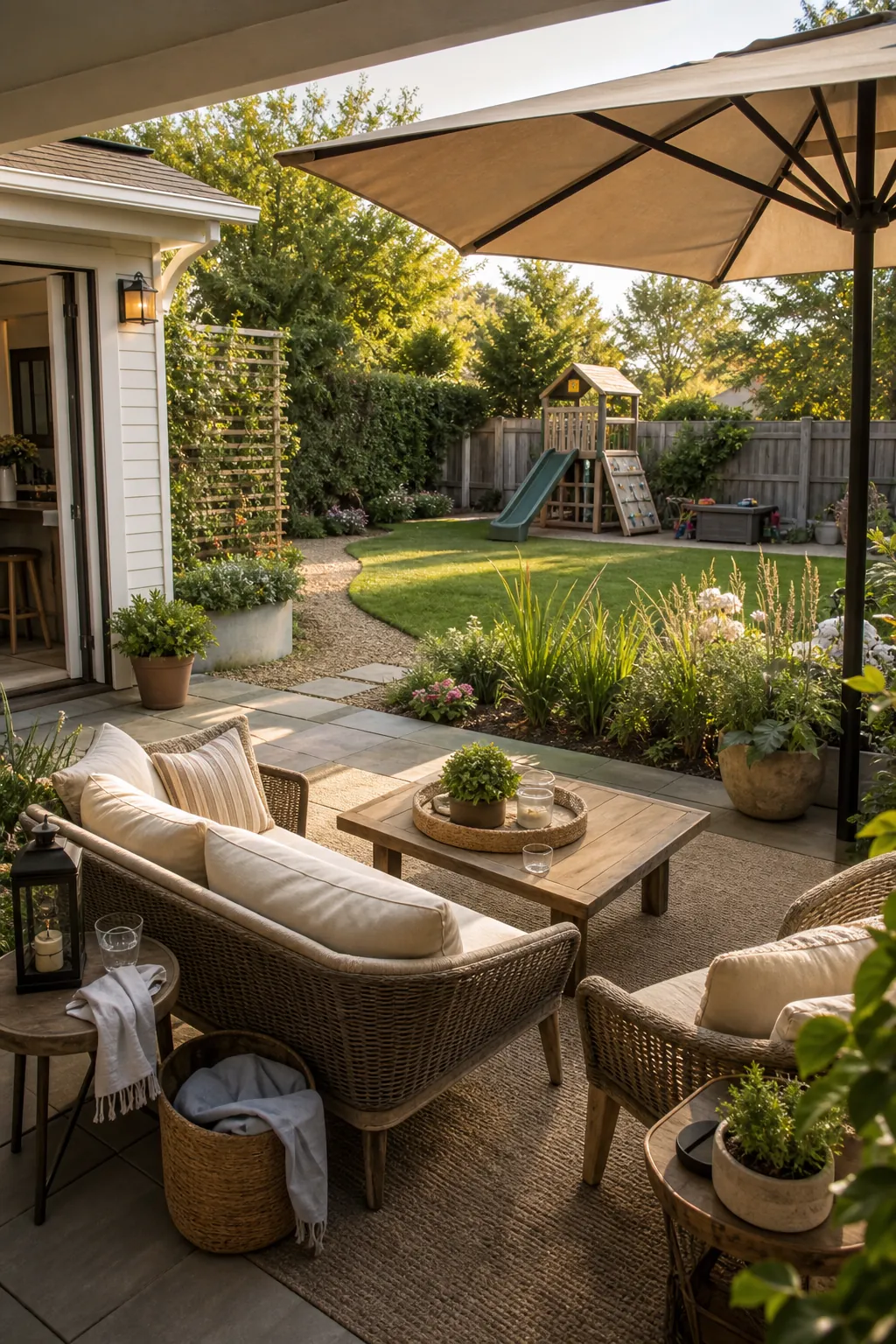
Shade matters here. A pergola, umbrella, shade sail, small tree, or covered porch can turn a rarely used chair into the most important zone in the yard. Add one warm material, one washable textile, and one plant grouping, and the seating area starts to feel settled without becoming fragile.
Keep Outdoor Dining Close to the Kitchen and Out of Traffic
Outdoor dining sounds relaxed until someone has to carry plates, condiments, ice, and a tired toddler across the lawn. If your family eats outside often, keep the dining zone near the house or along a clear hard-surface route. A grill, prep shelf, or serving cart can sit nearby, but avoid making the cook stand in the same path kids use to reach the play zone.
For a smaller patio, do not force a full lounge set and a full dining table into the same square. Pick the function that matters most. A round table can double as homework, snacks, and dinner. A narrow bench against a wall can save circulation space. Folding chairs can live on hooks until guests arrive. Good outdoor dining is less about the table size and more about whether movement around it feels easy.
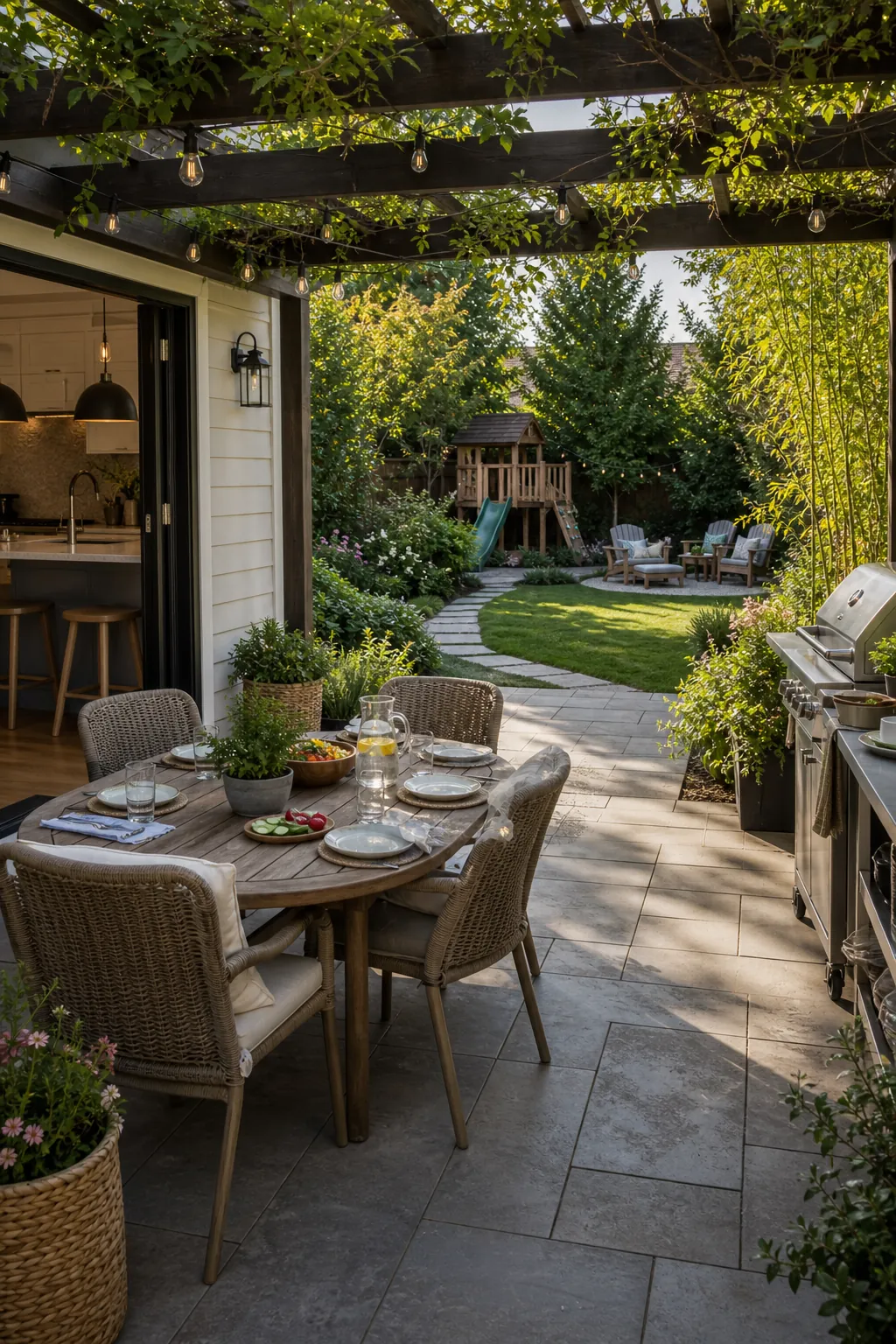
Lighting should match the job. Dining needs enough light to see food and faces. A lounge zone can be softer. A play route needs safe, visible edges. Instead of lighting the whole yard evenly, let each zone have its own mood.
Use Plants and Materials as Gentle Walls
Backyard zones do not need to be boxed in. In fact, most family yards work better when boundaries are visible but porous. A change from pavers to gravel, a band of low shrubs, a row of large planters, a trellis with vines, or a curved garden bed can signal a new activity without making the yard feel smaller.
This is also where privacy ideas become more comfortable. A solid fence may be necessary, but layered planting usually feels softer. Tall grasses, bamboo in properly contained planters, evergreen shrubs, espaliered trees, climbing vines, and mixed perennials can interrupt sight lines while still letting light move through the space. If neighbors overlook one side of the yard, screen that exact view instead of enclosing everything.
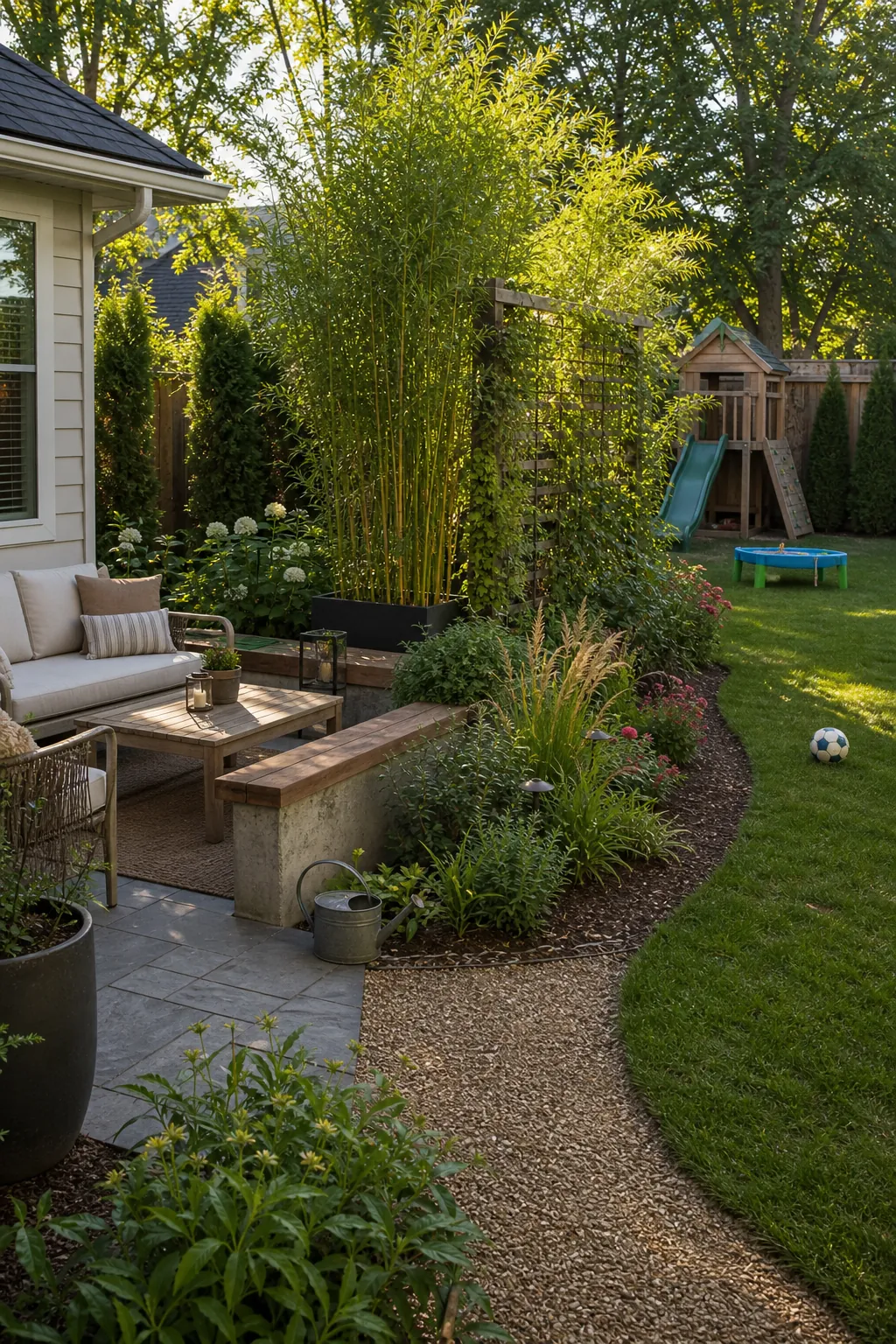
Choose plants by maintenance honestly. A family with small children may not want a fussy border that needs constant deadheading and delicate watering. Tough shrubs, ornamental grasses, native perennials, mulch paths, and a few large containers can do more for daily life than a complicated garden that looks perfect only for one week.
Plan the Paths Before You Add More Features
Flow is the quiet part of a good backyard. If the route from the house to the play zone crosses the dining chairs, the layout will always feel messy. If the mower has to weave around toys, planters, and table legs, maintenance becomes a weekly irritation. If the path to storage is blocked, clutter stays outside.
Use paths to connect zones, not just decorate them. A simple gravel walk can lead to a back fire pit. Stepping stones can guide kids from lawn to play bed. A wider paved strip can handle strollers, wagons, coolers, and muddy shoes. Curves are useful when they make movement natural, but they should still have a reason. A path that solves a daily problem is worth more than a path that only fills empty space.
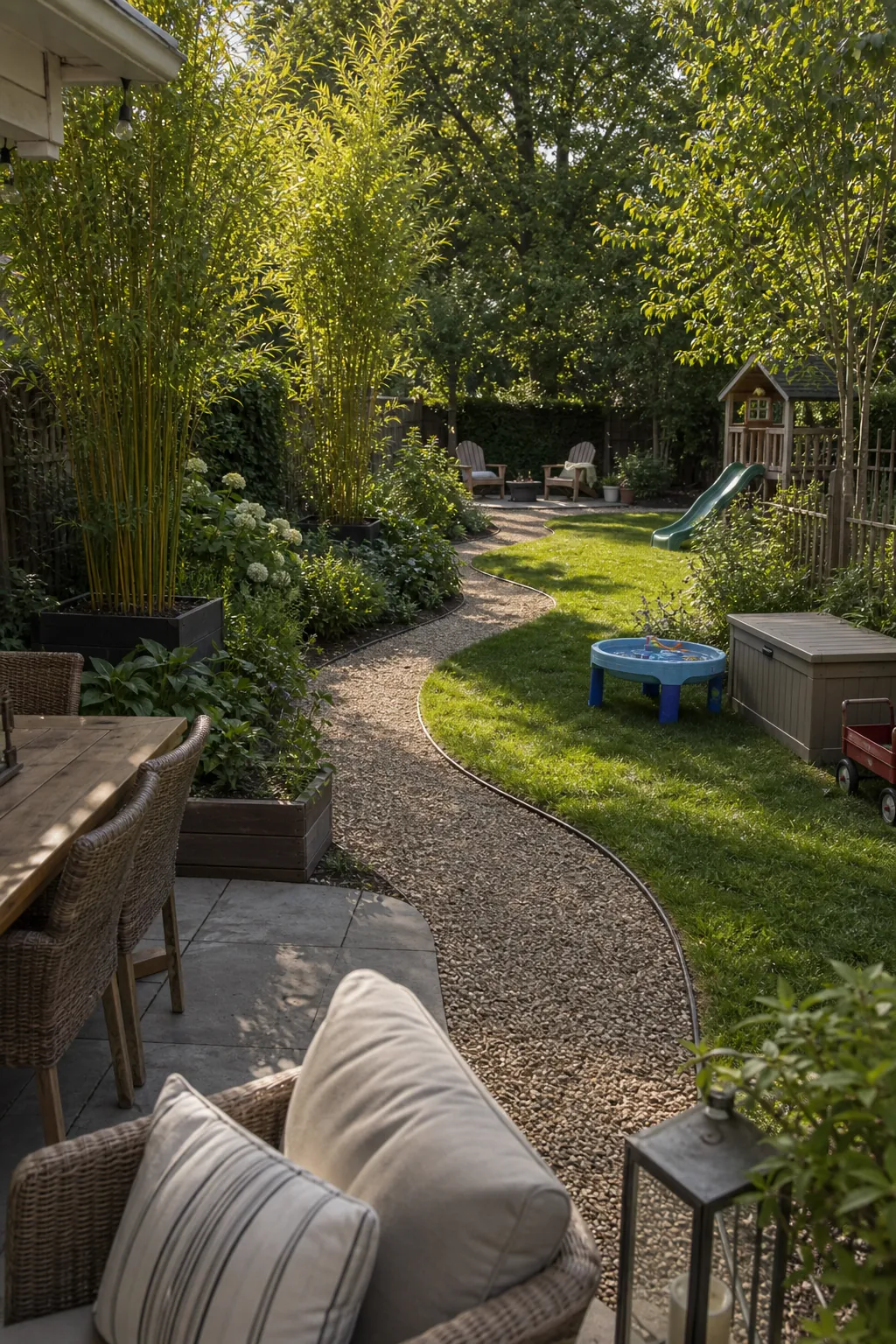
Paths can also create breathing room. Instead of pushing every feature to the edges, let movement thread through the yard. The result feels more like a sequence of outdoor rooms and less like one overstuffed rectangle.
Make the Relaxing Zone Work After the Kids Go Inside
A family backyard should not become useless once bedtime starts. The relaxing zone is the adult reward for all the planning: a place for a quiet drink, a book, a fire bowl, a hammock, or a conversation that does not happen beside a pile of plastic toys.
The difference is atmosphere. Use lower lighting, warmer textures, and a little separation from the play zone. A planted screen, a change in paving, or a corner bench can create enough psychological distance. Keep the best view in mind, too. If the prettiest part of your yard is a tree, a garden bed, or a clean stretch of lawn, aim the chairs there.
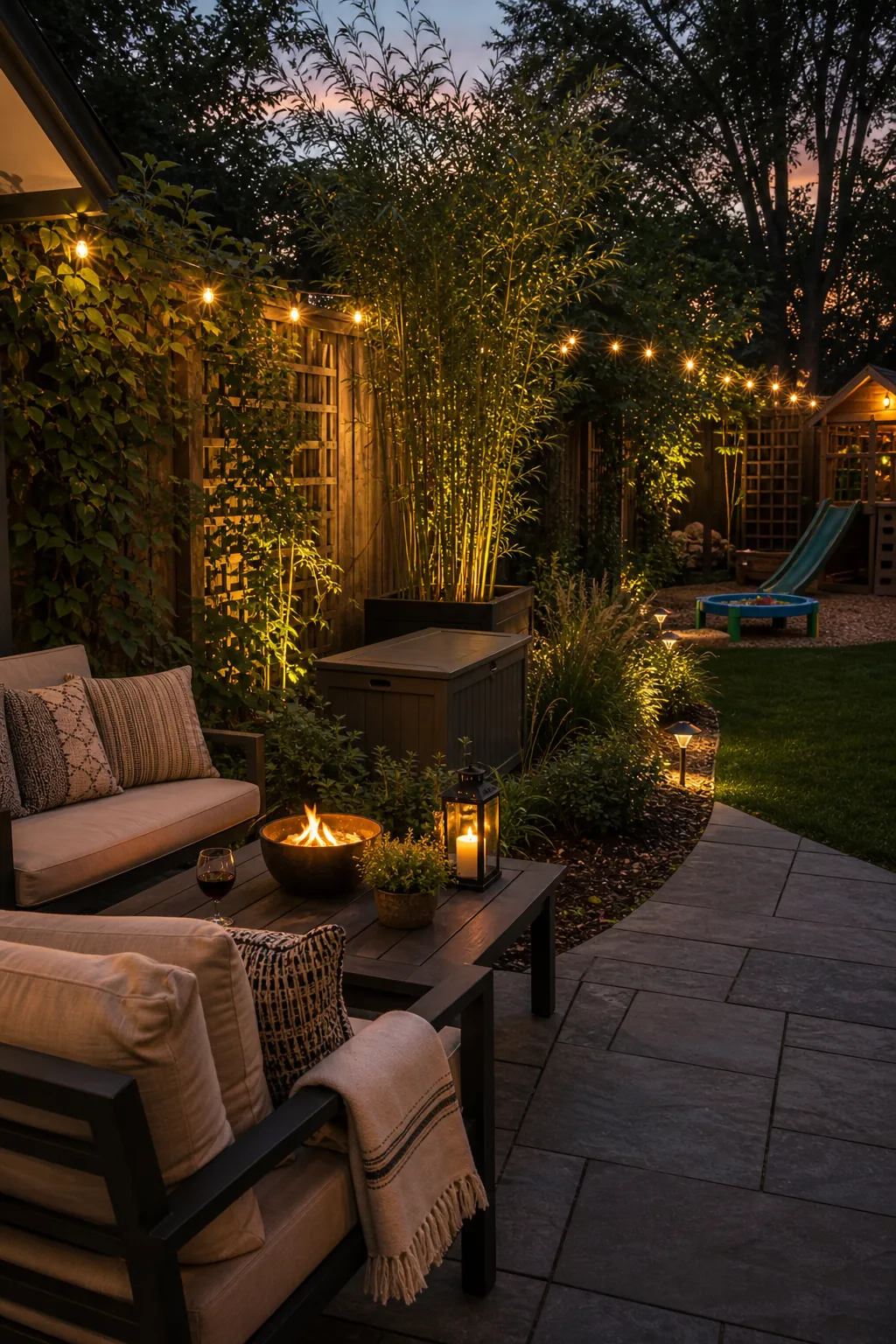
Storage is part of the mood. A deck box, bench drawer, hooks, or a small shed keeps balls, cushions, gardening gloves, and water-play pieces from becoming the main visual feature. Relaxing space needs less stuff in view, not more decor.
For Small Yards, Choose Two Strong Zones Instead of Five Weak Ones
Small yards punish indecision. A tiny dining set, tiny sofa, tiny playset, tiny garden, and tiny fire pit can make the whole yard feel crowded. If your space is compact, choose the two functions your family uses most and make them work properly.
A common small-yard formula is a combined patio zone near the house and a flexible play-green zone beyond it. The patio handles meals, morning coffee, and adult seating. The second zone stays open enough for kids, pets, and future changes. Vertical privacy helps: trellises, narrow trees, wall planters, and tall containers create enclosure without taking much ground.
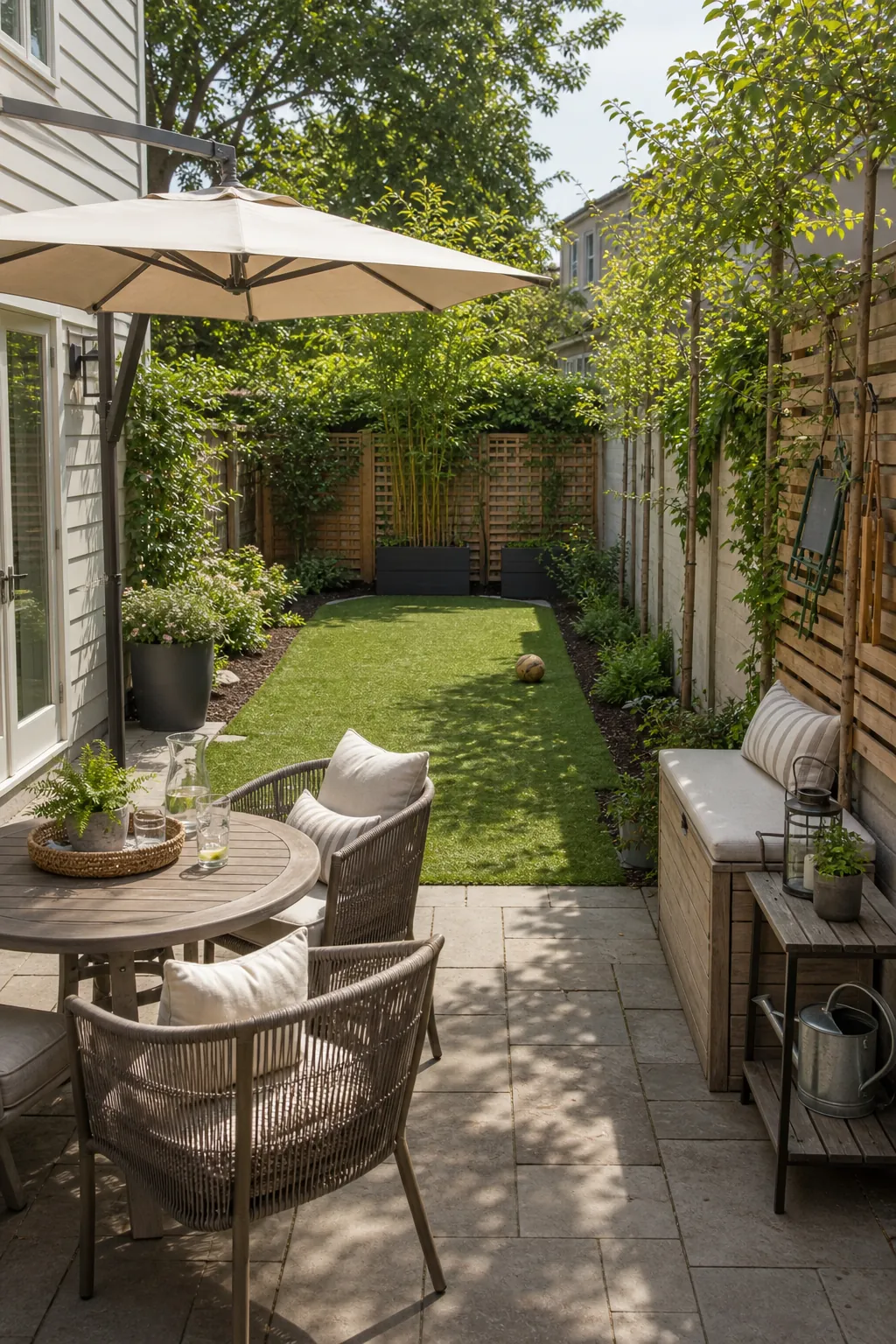
Use furniture that earns its footprint. Benches can store cushions. A round table is easier to move around than a rectangle in a tight space. Planters can define a boundary and hold herbs. A low wall can be extra seating. In a small family backyard, every object should either support a daily routine or make another zone feel better.
A Practical Backyard Zoning Checklist
- Watch the sight lines: adults should be able to supervise the play zone from the main seating area.
- Separate wet play from slick paving: keep water tables, mud kitchens, and splash toys where drainage and footing make sense.
- Protect the dining path: plates, grilling tools, and guests need a clean route that does not cross the busiest play traffic.
- Use soft boundaries: planting, gravel, edging, rugs, planters, and paving changes can define outdoor zones without heavy walls.
- Plan shade early: the best zone on paper will sit empty if it is brutal in afternoon sun.
- Design the exit plan: ask what the play area can become when the kids outgrow it.
- Leave open space: not every square foot needs a feature. Open lawn, mulch, or gravel gives a family backyard room to adapt.
The strongest backyard zones do not separate family life into adult territory and kid territory. They let those needs overlap without fighting each other. A chair close enough to talk from. A play edge that cleans up fast. A dining spot that does not block the yard. A little privacy where it counts. When those pieces line up, the backyard stops feeling like a project and starts acting like an outdoor room your family can use every day.