
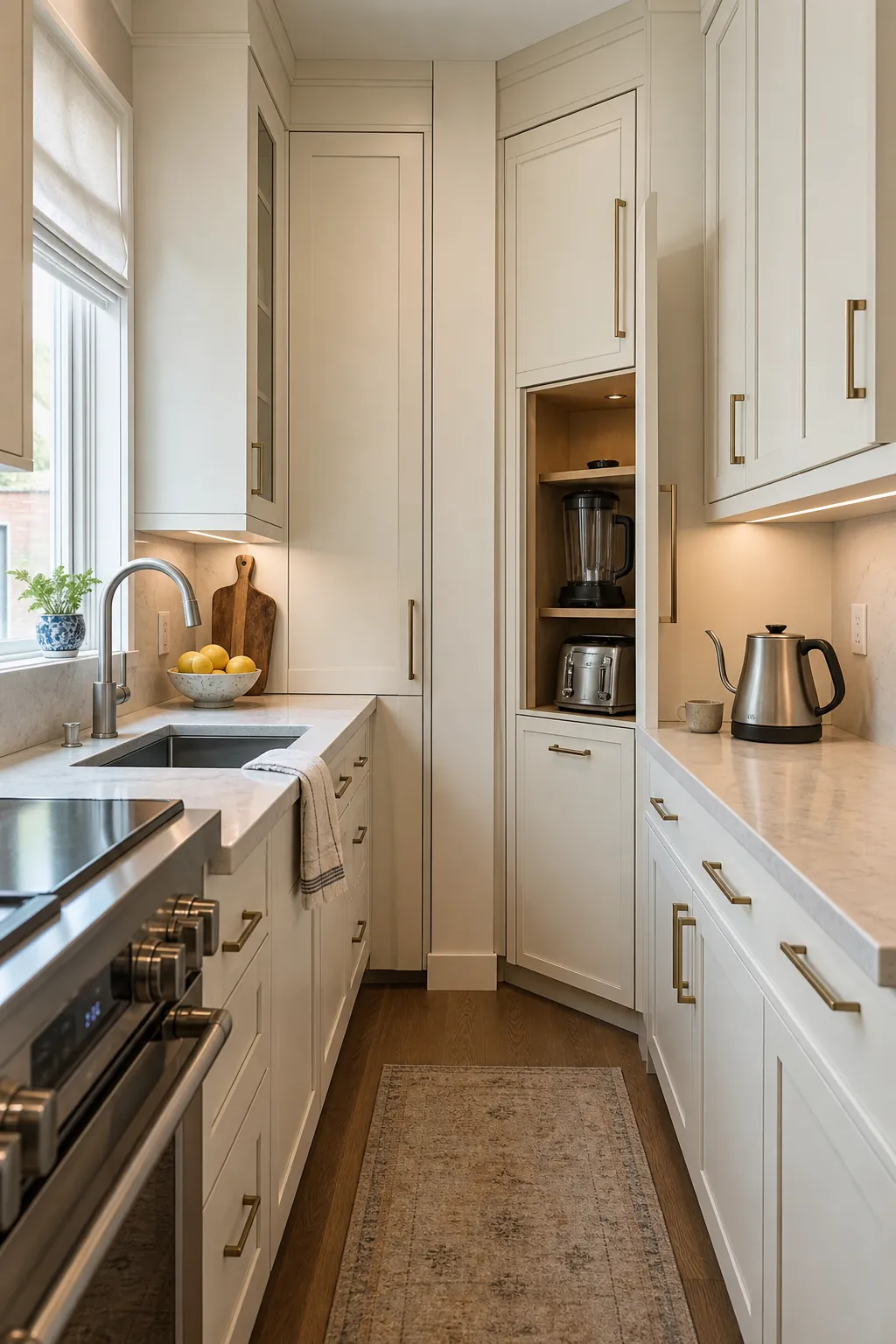
A small kitchen rarely feels crowded because of one big mistake. It usually feels crowded because the appliances have no real home. The toaster sits out because crumbs are annoying. The blender stays out because the cabinet is too deep. The air fryer claims a corner because it is heavy. Before long, the counter stops being a prep surface and becomes appliance storage.
The best hidden appliance storage is not about hiding everything. It is about making a compact kitchen easier to cook in. Daily items should be close, heavy items should be low, and occasional items should stop competing with the counter. That simple rule creates a clutter free kitchen without pretending every home has a walk-in pantry or custom cabinetry budget.
Start With The Appliances That Actually Earn Counter Space
Small kitchen ideas get frustrating when they begin with products instead of habits. Before buying a cabinet insert or an appliance garage, sort every appliance into three groups.
- Daily: coffee maker, kettle, toaster, or anything used almost every day.
- Weekly: blender, rice cooker, food processor, waffle maker, or hand mixer.
- Occasional: slow cooker, party appliances, specialty baking tools, extra coffee gear, or anything used a few times a month.
Reddit threads about tiny kitchens repeat the same pain in different words: people do not hate appliances, they hate moving five things just to chop vegetables. That is why frequency matters. Counter decluttering only works when the new storage location is easier than leaving the appliance out.
Use An Appliance Garage For The Daily Mess
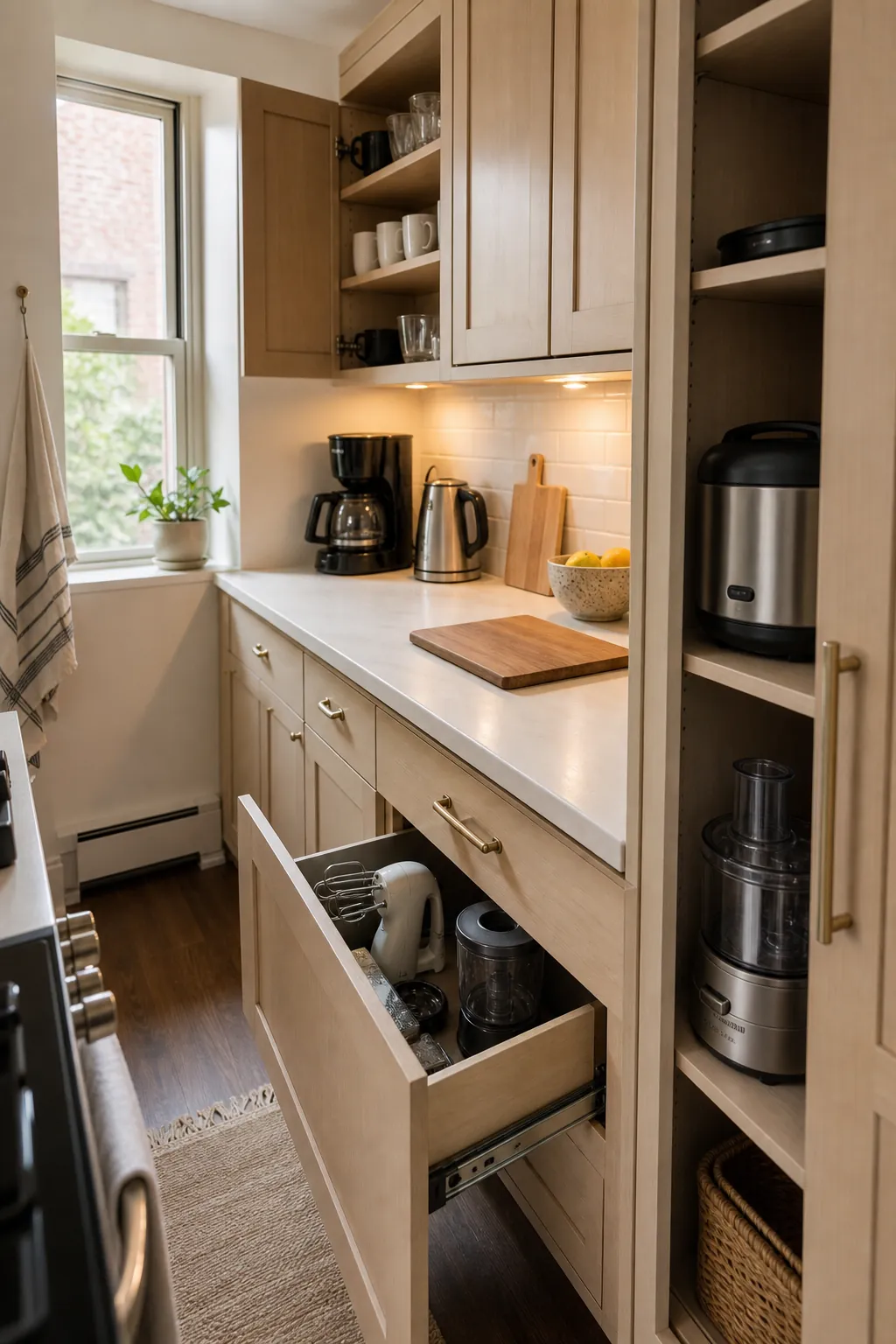
An appliance garage works best for the small items you use often but do not want visually taking over the room: a toaster, coffee grinder, milk frother, compact blender, or breakfast station. It can be a cabinet that comes down to the counter, a tambour door, a pocket door, or a simple countertop cabinet with a finished front.
The trick is choosing the right appliance for that prime location. A breakfast zone makes sense because mornings are repetitive. Mugs, filters, bread, spreads, and small tools can live in the same hidden kitchen storage area, so the routine happens in one place and the rest of the counter stays clear.
One caution matters: do not operate heat-producing appliances behind closed doors. Toasters, toaster ovens, air fryers, and coffee machines need safe clearance, ventilation, and access to a proper outlet. Use the garage as a home base, then open the door fully and follow the appliance instructions before running anything hot.
Put Heavy Appliances In Pull-Out Base Cabinets
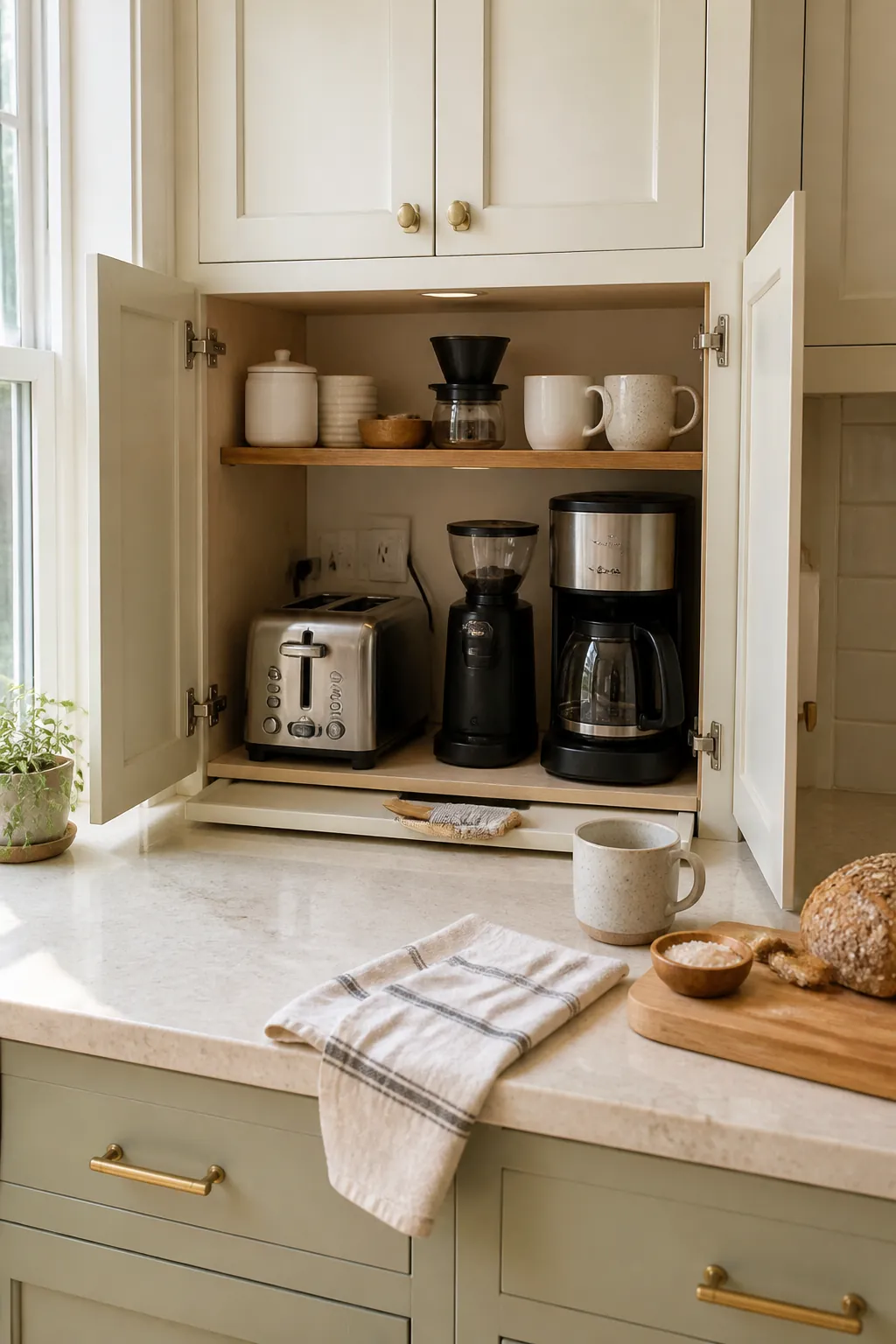
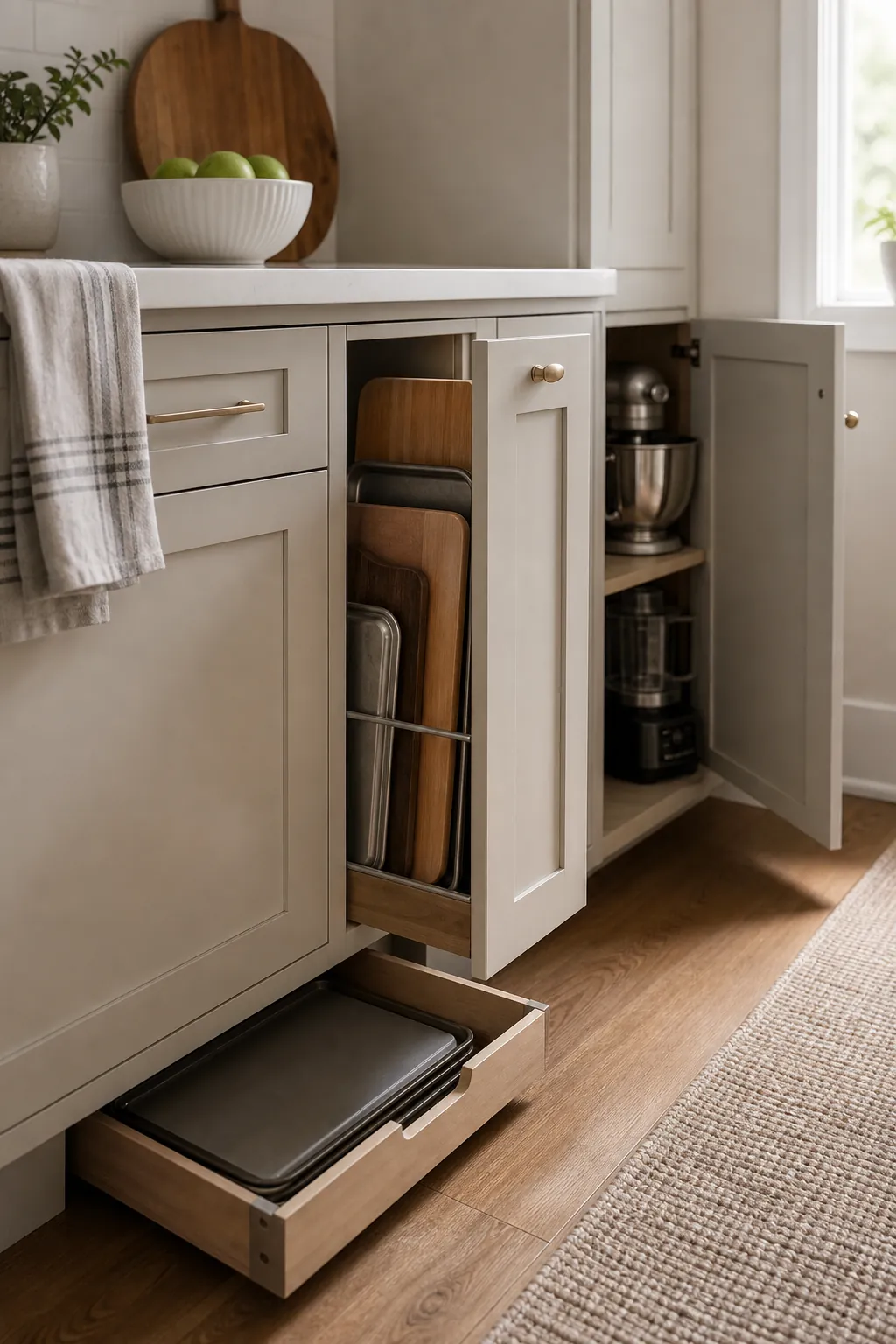
The worst cabinet storage is the deep lower cabinet where a stand mixer disappears behind a pile of pans. It technically stores the appliance, but it makes the appliance harder to use. Pull-out shelves solve the real problem: access.
For a compact kitchen, pull-outs are especially useful for stand mixers, air fryers, pressure cookers, rice cookers, bread machines, and food processors. Heavy appliances belong below counter height, not above your head. A full-extension shelf lets you see what you own and pull the item toward you instead of kneeling and reaching into the dark.
If you rent or are not ready for new cabinet storage, a sturdy freestanding shelf in a pantry closet or nearby utility area can do the same job. The key is still the same: weekly items should be close enough that using them does not feel like a chore, but hidden enough that they do not steal the prep zone every day.
Turn A Narrow Pantry Into Appliance Storage
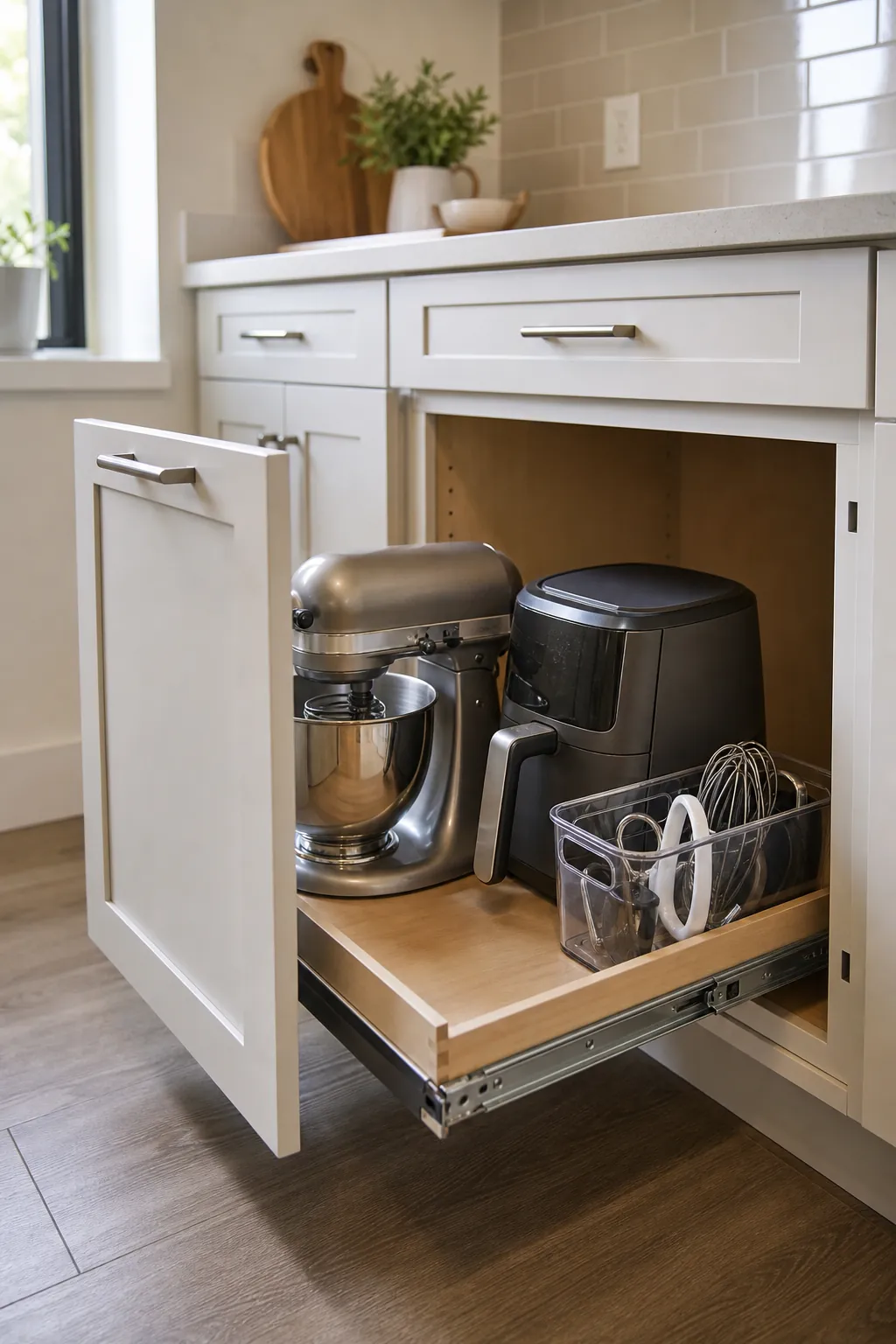
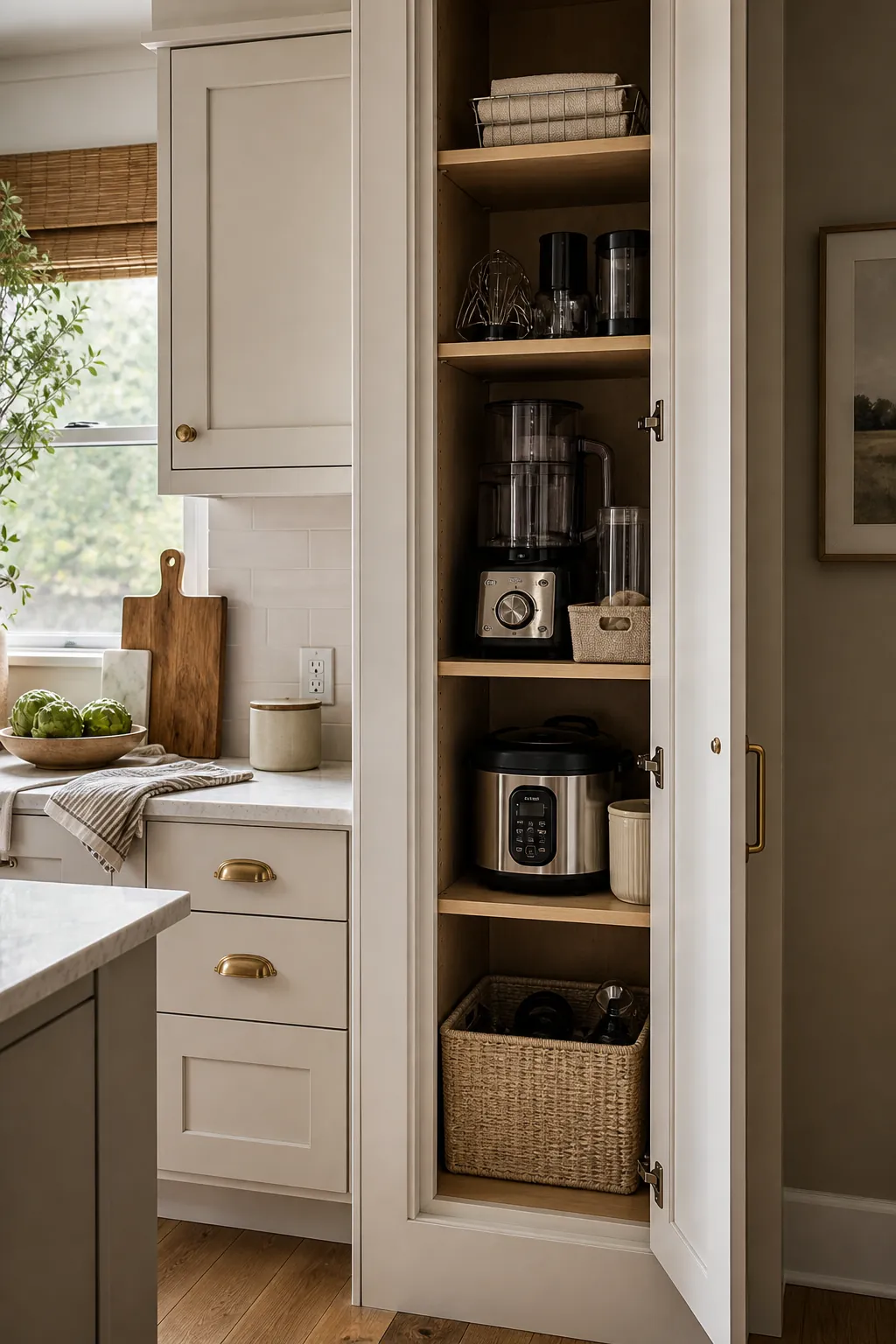
Many small kitchens do not have a pantry, but they do have a narrow cabinet, a hall closet, a dining-room cupboard, or a slim freestanding unit near the kitchen. That can become a small appliance pantry. It does not need to be fancy. It needs shelves with enough depth, a clear weight plan, and a door that hides visual noise.
Use the middle shelves for weekly appliances. Use the lowest shelf for the heaviest pieces. Use upper shelves for light accessories, extra attachments, coffee filters, baking tools, or the appliance boxes you genuinely need to keep. Do not waste the easiest shelf on something you use twice a year.
This is where kitchen organization becomes personal. Someone who makes smoothies every morning may need the blender in the daily zone. Someone who only blends soup once a month can store it in the pantry. The right hidden storage plan follows your cooking life, not a perfect magazine kitchen.
Make Awkward Corners Work Harder
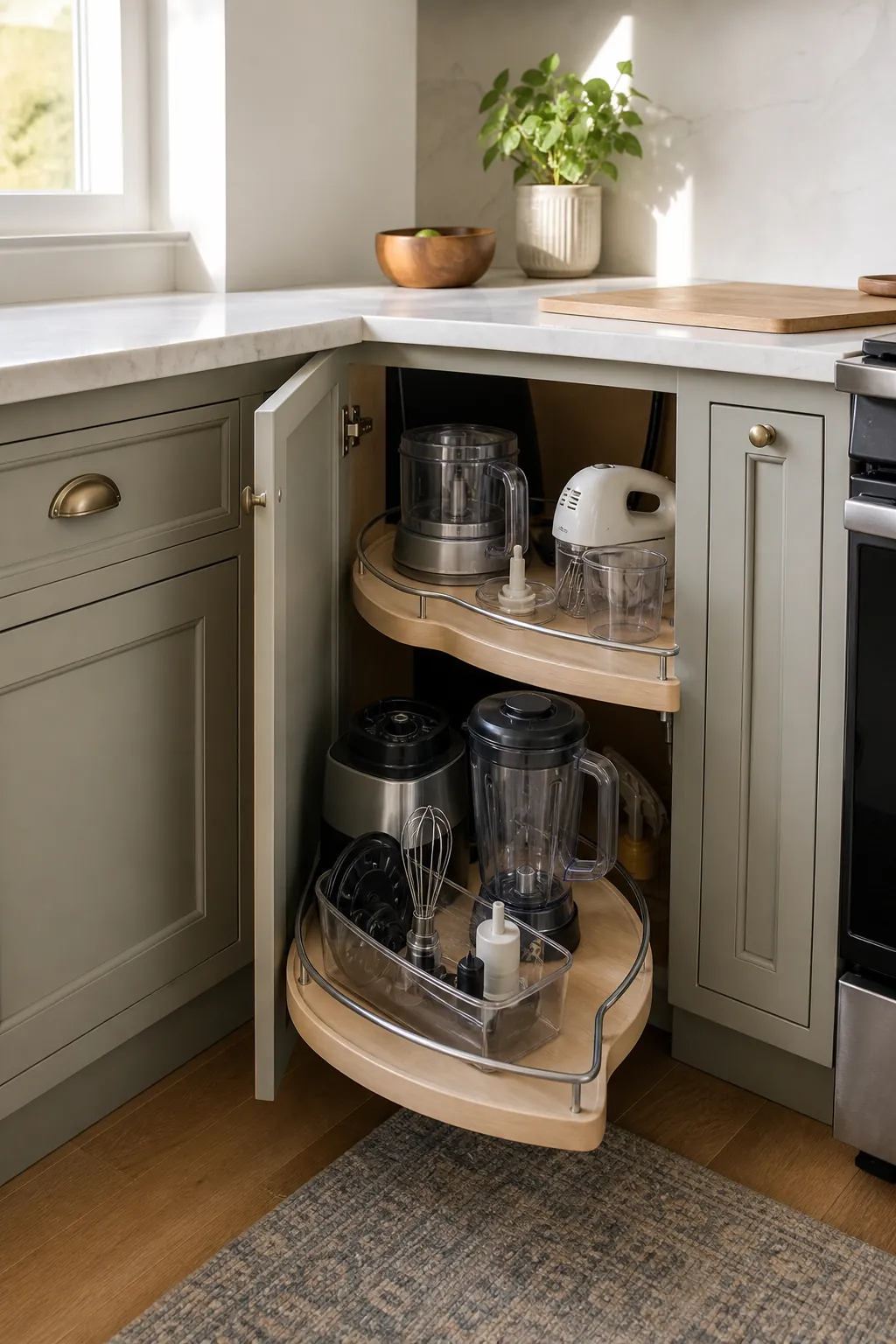
Corner cabinets are famous for swallowing useful things. A blender goes in. Six months later, nobody wants to fish it out. If your small kitchen has a blind corner, consider a swing-out shelf, lazy Susan, half-moon pull-out, or corner drawer system.
The goal is not just more storage. It is better visibility. A corner accessory can turn dead cabinet space into a practical home for a hand mixer, compact food processor, toaster, or baking tools. Hidden kitchen storage should reduce friction, not create a secret cave of forgotten appliances.
If a full corner system is outside the budget, use the corner for light, occasional items and keep the weekly appliances somewhere easier. That is still a win. The biggest mistake is putting your most-used appliance in the hardest cabinet and then wondering why it migrates back to the counter.
Use A Closed Rolling Cart When Cabinets Are Already Full
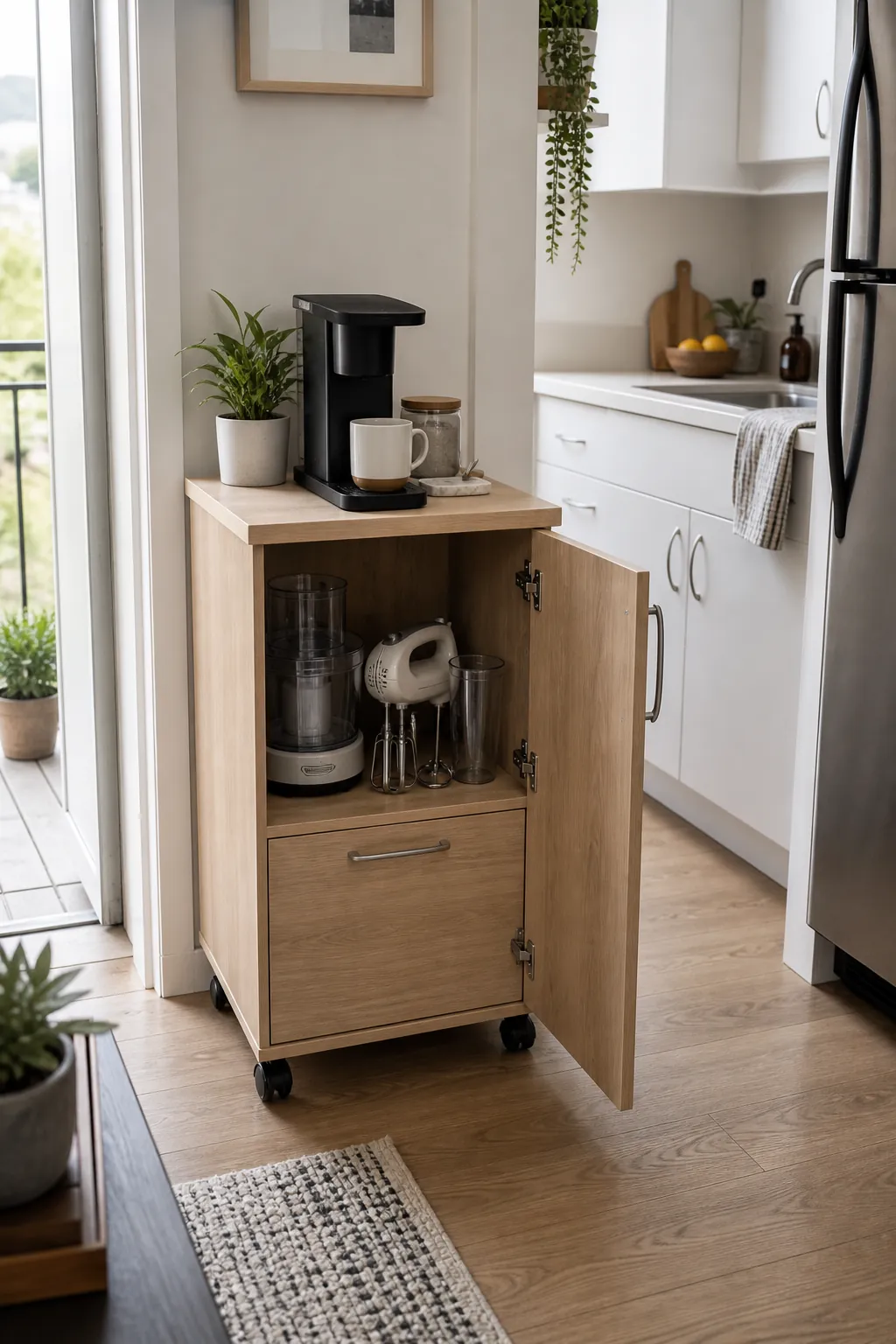
Renters and studio apartment cooks often cannot drill, remodel, or add built-ins. A rolling cart with doors can be the difference between a stressful counter and a usable one. The best version has closed storage on the bottom and a solid top that can become a coffee station, landing zone, or extra prep surface.
This is not the same as an open cart packed with gadgets. Open shelves can look busy fast. If the point is counter decluttering, choose a cart that hides appliances behind doors or a simple curtain panel. Store lighter items higher and heavy appliances lower. Keep cords contained so the cart does not become a new mess on wheels.
A cart also helps when your kitchen design does not have enough drawers. It can hold a hand mixer, immersion blender, food scale, coffee supplies, cutting boards, or baking accessories. The cart should replace clutter, not add another surface to clutter.
Use Vertical Space Without Making The Kitchen Look Crowded
Vertical storage is tempting in a small kitchen, but not every wall should become open shelving. Open shelves can be useful for dishes, jars, or pretty everyday items. They are usually less successful for appliance storage because cords, plastic housings, bulky shapes, and attachments create visual clutter.
If you are remodeling, cabinets that reach the ceiling can hide occasional appliances without wasting the dusty gap above upper cabinets. If you are working with an existing kitchen, use high shelves for light, seldom-used pieces only. A rarely used waffle maker can go high. A heavy mixer should not.
There are also quiet storage opportunities below the obvious line of sight: toe-kick drawers for flat tools, narrow vertical cabinets for trays and cutting boards, and slim pull-outs for spices or oils. These do not replace appliance storage, but they free the cabinets that appliances need.
Build One Beautiful Daily Zone Instead Of Many Tiny Clutter Spots
Most small kitchens can handle one visible appliance zone. They struggle when the coffee maker, toaster, blender, knife block, fruit bowl, dish rack, and mail pile all claim separate pieces of counter. A better approach is to create one intentional daily zone and protect the rest of the worktop.
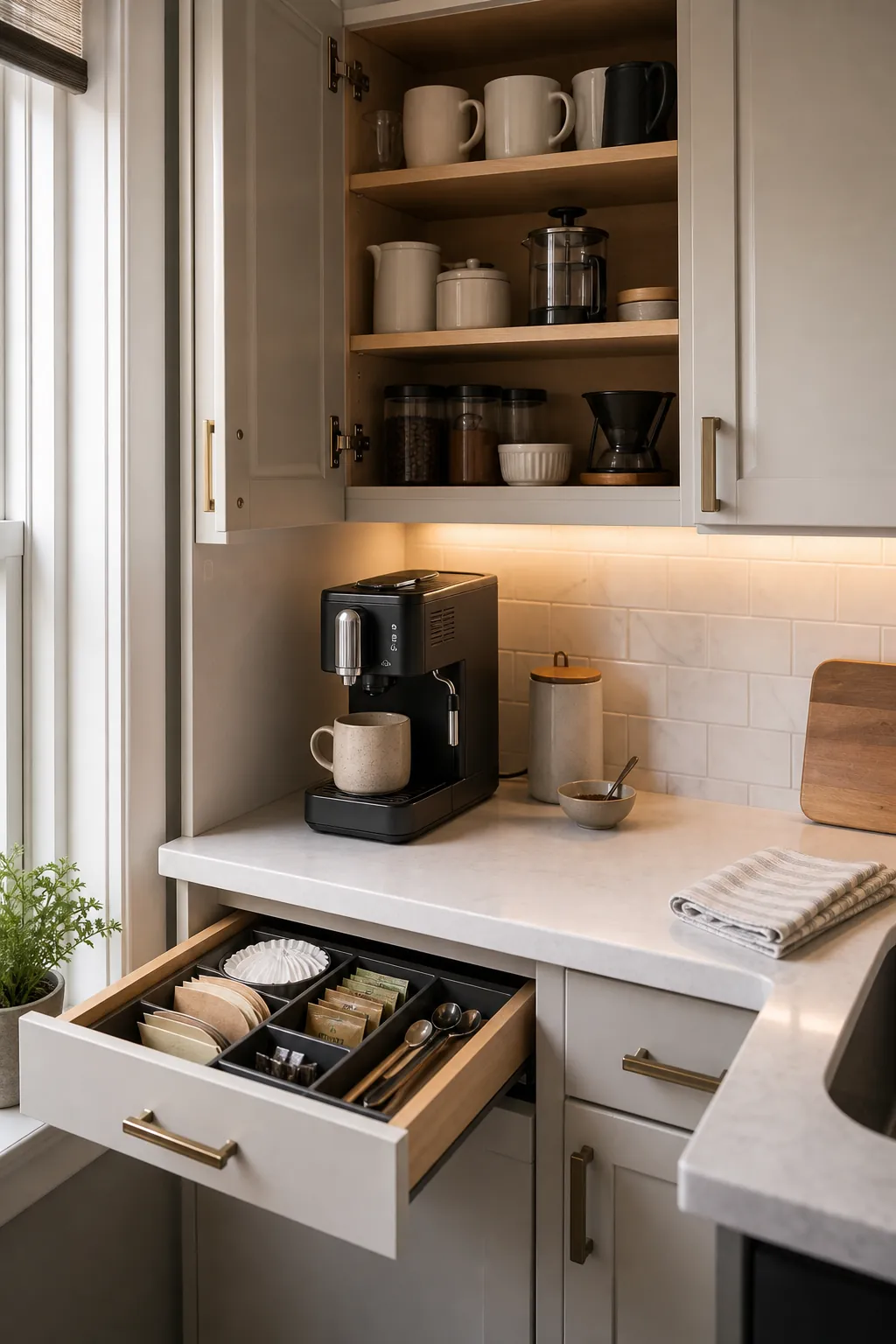
A cabinet coffee station is a good example. Keep the coffee maker out if you use it daily, but move mugs, pods, filters, sweeteners, tea, and tools into the cabinet above or drawer below. Add a tray only if it makes cleaning easier. Contain the routine, then keep the neighboring counter empty enough to prep food.
This also makes a compact kitchen feel calmer. Instead of chasing every item into hiding, you are giving the visible things a purpose. The counter can have personality and still function.
Choose Hidden Storage That Matches The Appliance
Not every storage idea fits every appliance. Use this quick match instead of buying random organizers.
- Toaster: appliance garage, ventilated breakfast cabinet, drawer with crumb tray, or daily zone.
- Stand mixer: low pull-out shelf, mixer lift, or permanent corner if it is used constantly.
- Blender: pantry shelf, pull-out base cabinet, or daily smoothie zone.
- Air fryer: low cabinet, nearby pantry, closed cart, or countertop only if used daily and safely ventilated.
- Food processor: pull-out shelf with blades and attachments stored in one bin.
- Slow cooker: low pantry, garage shelf, hall closet, or utility cabinet if it is occasional.
This is where related small kitchen storage decisions matter. If pots, pans, lids, wraps, and cleaning products are disorganized, appliances will never find a stable home. Hidden appliance storage often begins by moving non-appliance clutter out of the best cabinets.
Keep The System Easy To Reset
The best kitchen organization system is the one you can reset in three minutes. If putting away the blender requires removing a stack of mixing bowls, the blender will live on the counter. If the toaster tray catches crumbs and slides back into a cabinet, it has a chance.
Use fewer bins than you think. In very small kitchens, too many containers can waste the exact cabinet space you are trying to save. Choose one bin for attachments, one tray for crumb-prone items, or one shelf label for shared appliances. Stop there unless a specific mess keeps coming back.
A hidden storage plan should also leave some empty space. That sounds unrealistic, but even a hand-width of breathing room makes it easier to return appliances after use. If every shelf is packed edge to edge, the counter becomes the overflow shelf again.
A Small Kitchen Can Still Feel Like A Real Kitchen
The goal is not a kitchen with no appliances. The goal is a kitchen where appliances stop blocking the work you actually do there. One daily zone, one hidden weekly zone, and one farther-away occasional zone can change how the whole room feels.
Start with the appliance that annoys you most. Give it a better home first. Then protect the counter space you win back. That is the hidden storage move that makes small kitchen ideas work in real life: less lifting, less digging, less visual noise, and more room to cook.