
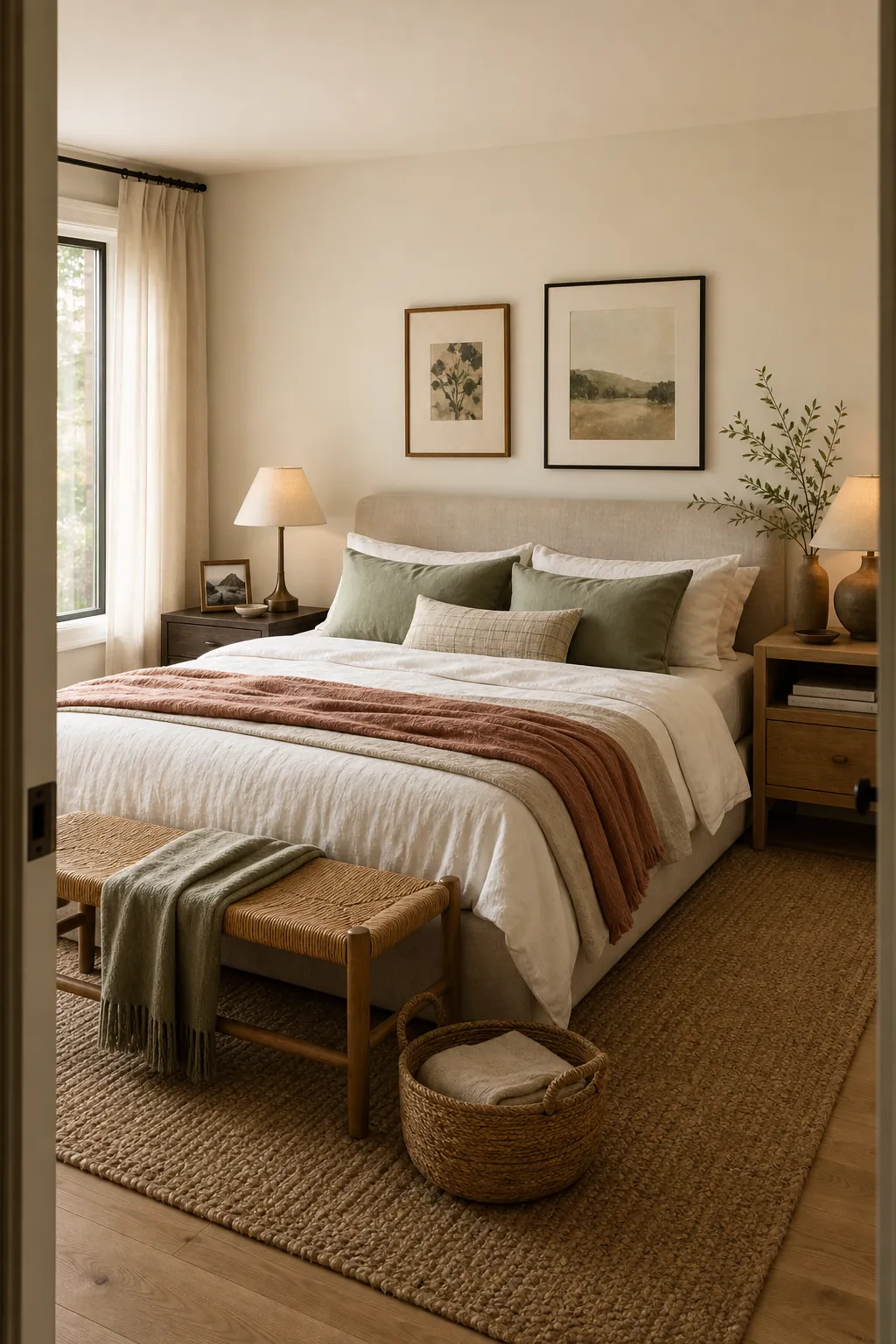
A couple bedroom can look finished and still feel strangely impersonal. The bed is made, the lamps match, the walls are painted, and the nightstands are tidy, but the room could belong to almost anyone.
The problem is usually not a lack of decor. It is that the bedroom has no visible agreement between the two people who use it. One person adds personal objects, the other edits them out. One person wants cozy bedroom layers, the other wants clean surfaces. One person likes wall art, the other worries it will feel busy.
A personal couple bedroom needs a better rule: make room for both people, then make the shared parts feel intentional. That means using texture, lighting, wall art, nightstand decor, and storage in ways that feel lived-in without turning the bedroom into a memory box.
Start With a Calm Shared Base
The easiest way to make personal bedroom decor look chaotic is to start with a room that is already visually loud. If the bedding, rug, curtains, wall color, and furniture are all competing, every photo, book, candle, and keepsake becomes one more argument.
Build a calm base first. For most couples, that means a limited palette, simple furniture lines, comfortable bedding, and enough negative space for personal pieces to matter. Neutral bedroom does not have to mean beige everything. It means the foundation is quiet enough to hold both personalities.
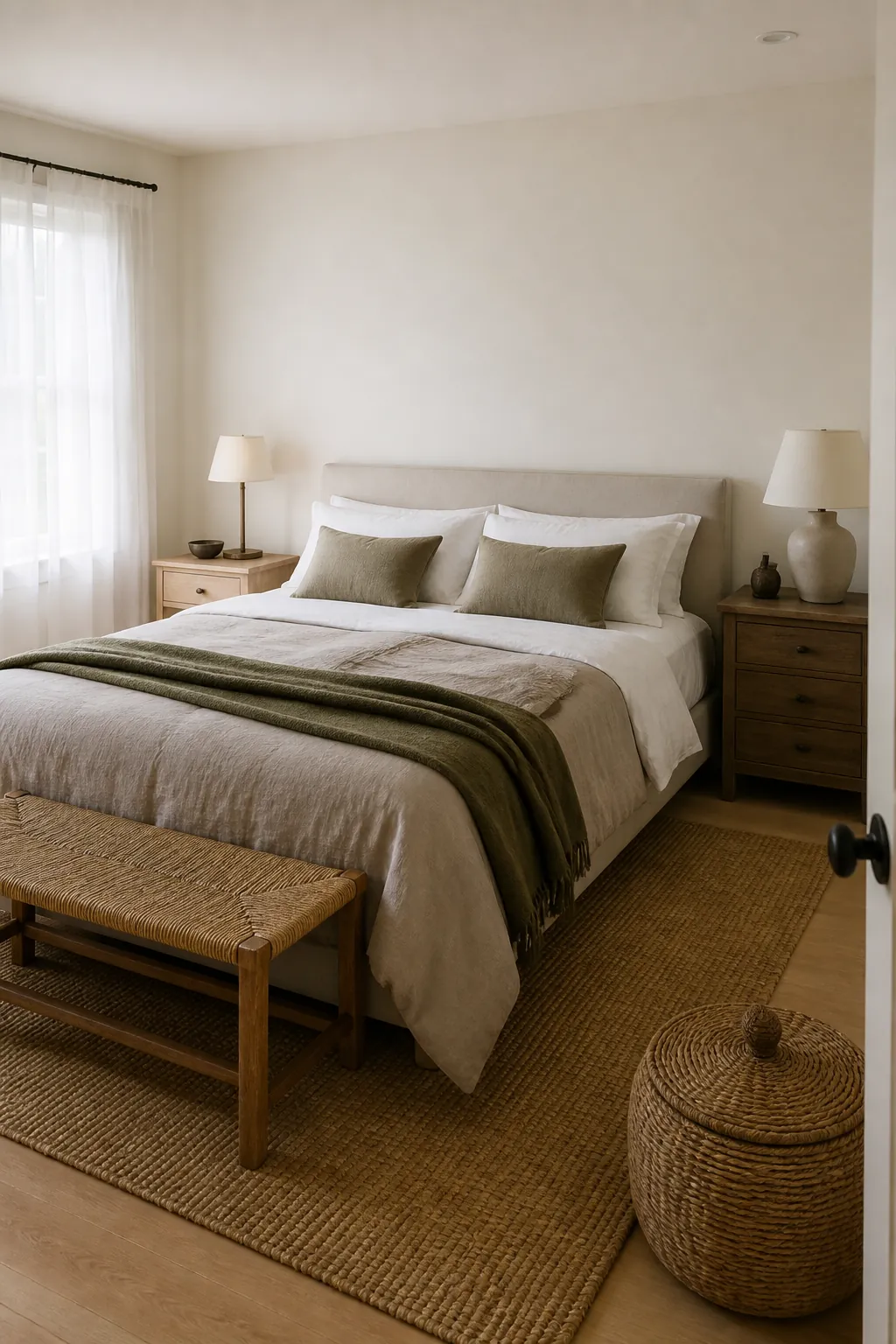
Use the bed, rug, curtains, and large furniture as the room’s background. Then let smaller pieces carry the personality. This prevents the shared bedroom from becoming a competition between two styles.
Make Nightstands Personal, Not Identical
Matching nightstands are useful, but identical styling can make a couple bedroom feel like a hotel room. The better approach is balance. Each person gets a side that works for their real habits, while the overall height, lighting, and clutter level still feel connected.
One nightstand might hold a book stack, reading lamp, and small dish. The other might hold a framed photo, water carafe, and drawer for chargers. They do not need to match item for item. They need to feel equally cared for.
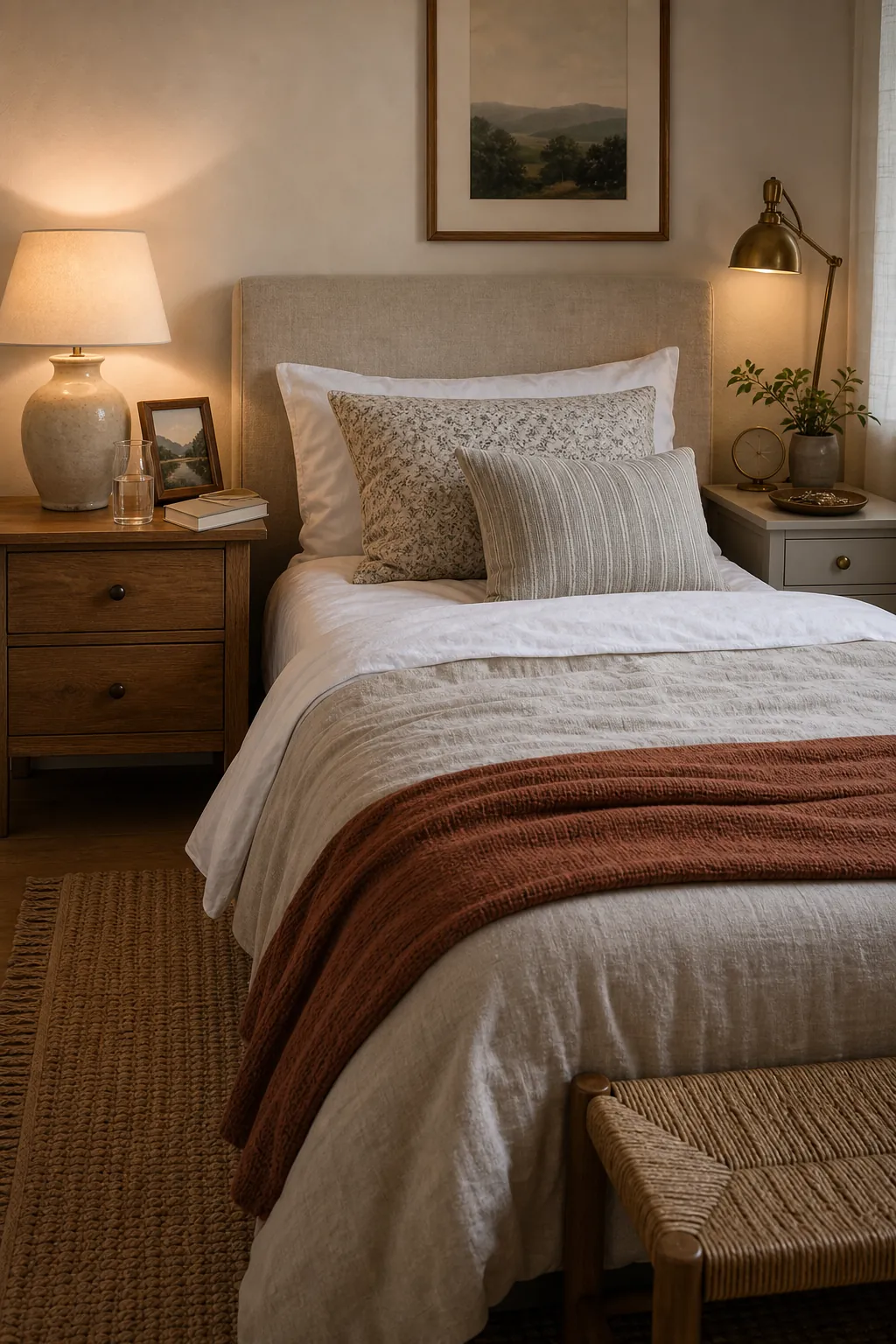
Keep the rules simple: one lamp or wall light per side, one personal item, one useful landing spot, and hidden storage for the things that do not need to be seen. Personal does not mean every object gets to stay visible.
Use Layered Bedding as Shared Texture
Layered bedding is one of the easiest ways to make a couple bedroom feel personal because it adds warmth without demanding a strong style opinion. Linen, cotton, quilts, throws, and textured pillows can make the room feel chosen instead of assembled.
The trick is to layer for comfort first. If the bed takes fifteen minutes to rebuild every morning, the styling will not last. Use a practical formula: good sheets, one duvet or coverlet, two sleeping pillows per person if needed, two to three decorative pillows, and one throw at the foot of the bed.
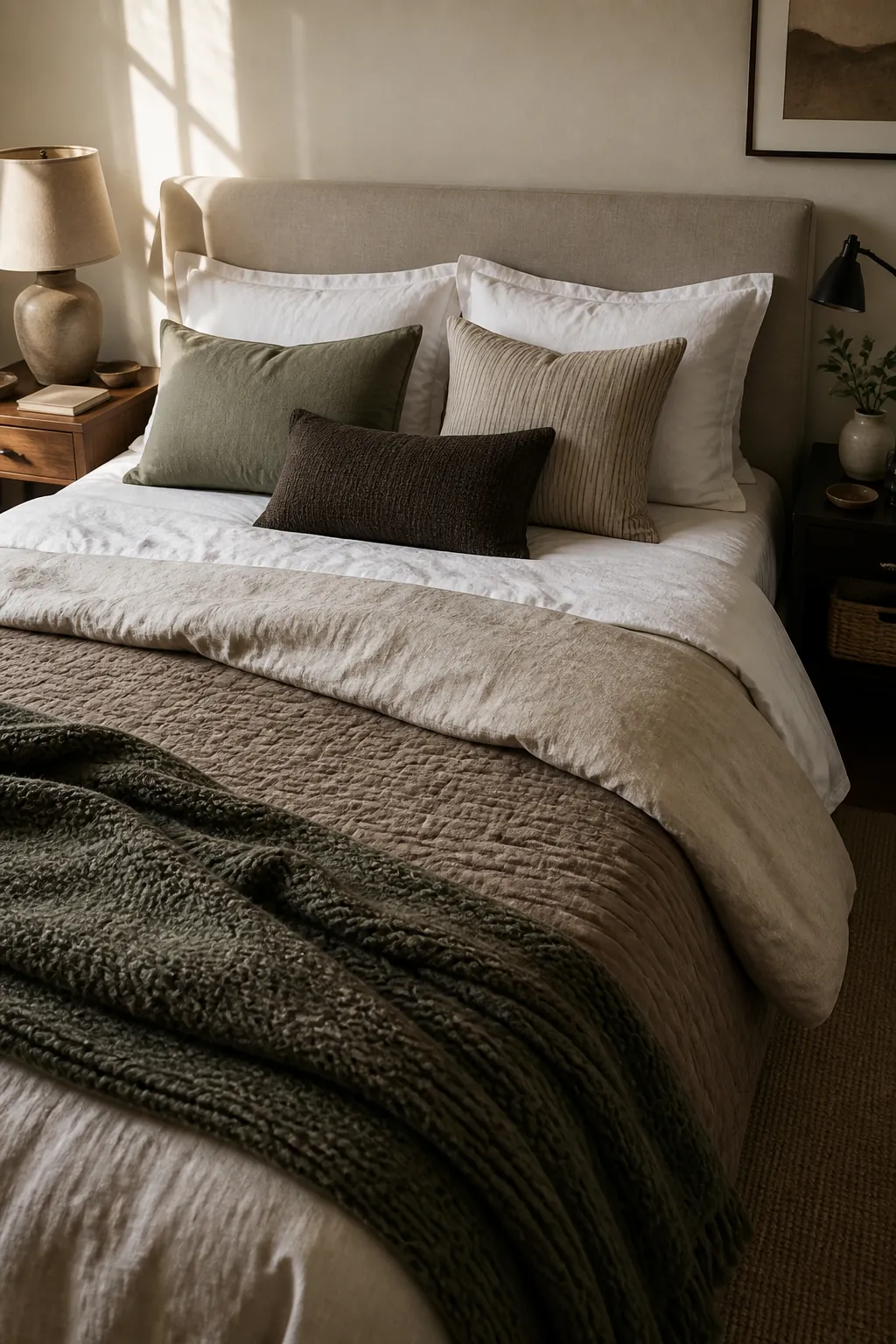
Use texture to do the emotional work: washed linen, waffle cotton, nubby wool, velvet, boucle, or a soft quilt. Color can stay restrained while the bed still feels warm, personal, and cozy.
Choose Wall Art That Says Something Without Taking Over
Wall art is where many shared bedrooms get stuck. Personal photos can feel too private or visually busy. Generic prints can feel empty. The middle ground is art that has a reason to be there but still supports the room.
Use one strong piece over the bed, a small pair of frames, or a narrow gallery wall in a secondary spot. Mix personal and quiet: a travel photo in a beautiful frame, an abstract print in colors from the bedding, a landscape from a place that matters, or a black-and-white image that feels intimate without shouting.
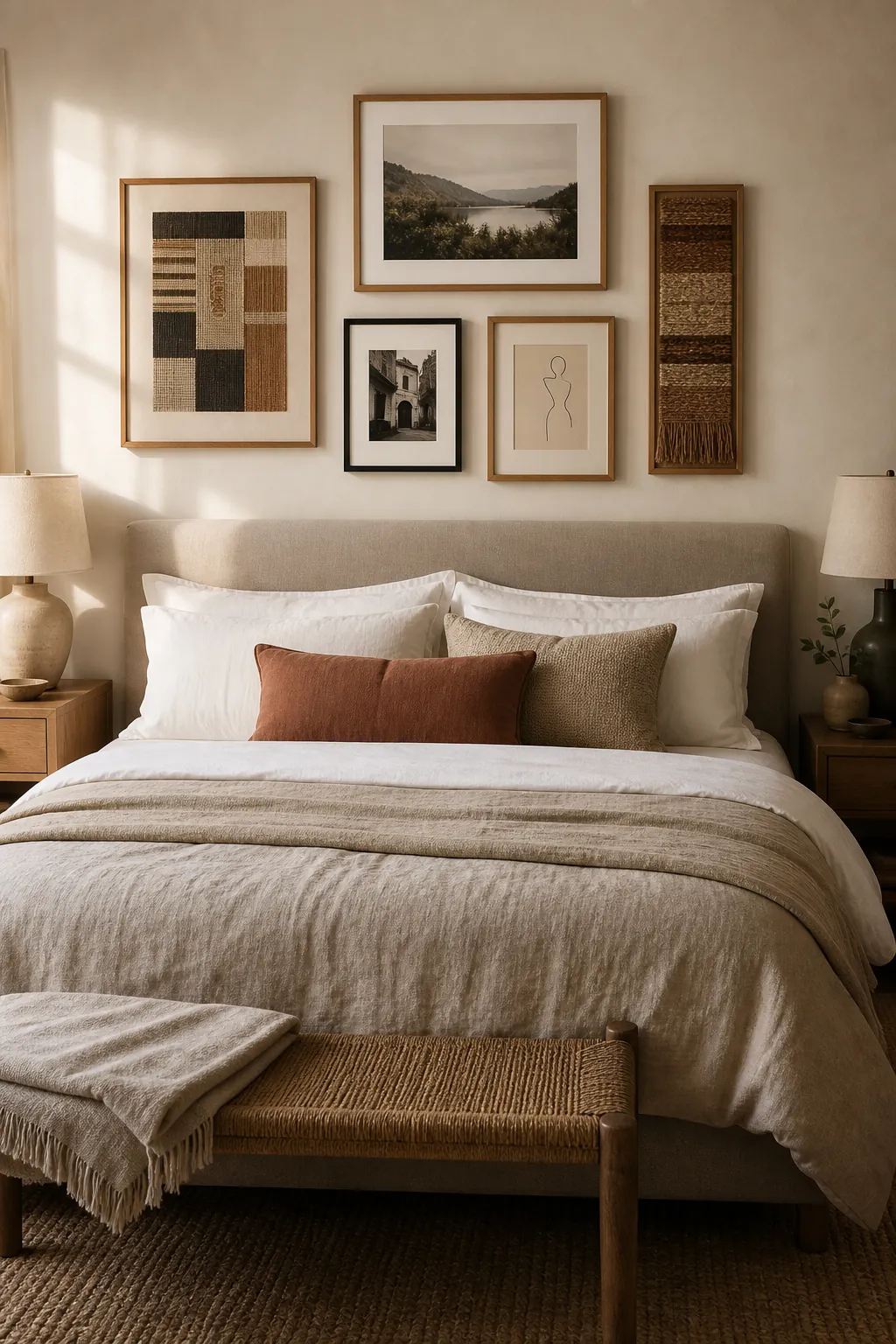
The frame style matters as much as the image. Repeating wood, brass, black, or white frames helps different memories look like one design decision. That is how personal bedroom decor becomes interior styling instead of clutter.
Give Personal Objects a Designed Place
The fastest way to make a bedroom feel personal and messy at the same time is to let meaningful objects scatter across every surface. The better move is to choose where personal objects are allowed to gather.
A shelf, dresser tray, picture ledge, nightstand drawer, or small cabinet can hold the personal layer. Keep the display edited: a few books, one framed photo, a ceramic bowl, a small plant, a candle, or one collected object. Everything else can live behind doors.
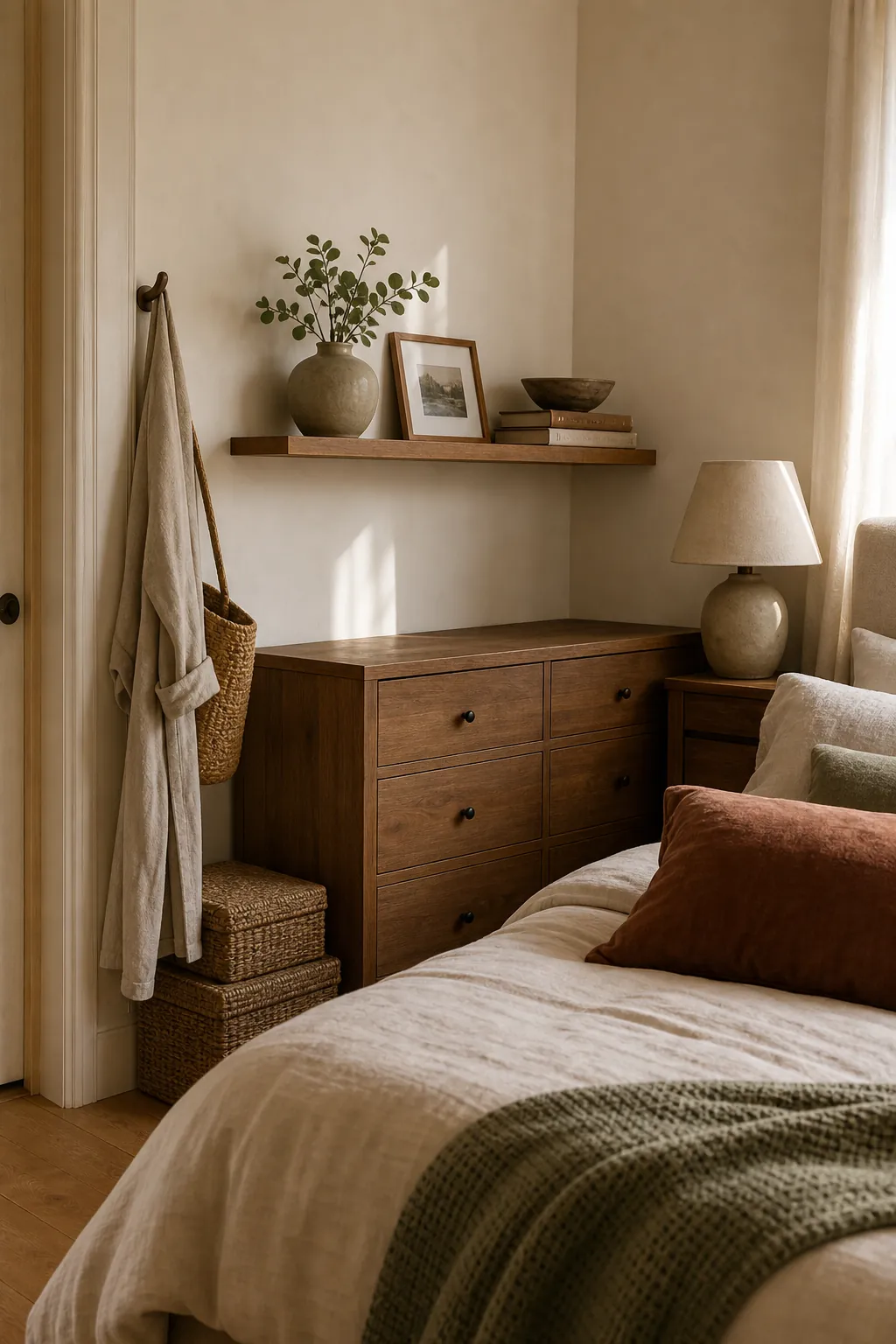
This is not about hiding your life. It is about giving the meaningful pieces enough space to be noticed. When every object is visible, nothing feels special.
Use Lighting to Make the Room Feel Intimate
Soft lighting does more for a personal couple bedroom than another decorative object. Overhead light can make even good bedroom decor feel flat. Lamps, sconces, shaded bulbs, and low evening light create the atmosphere that makes a room feel like yours.
Use at least two light levels: practical light for reading or getting dressed, and low warm light for winding down. If one person reads and the other sleeps, use focused bedside lighting instead of one bright lamp that fills the room.
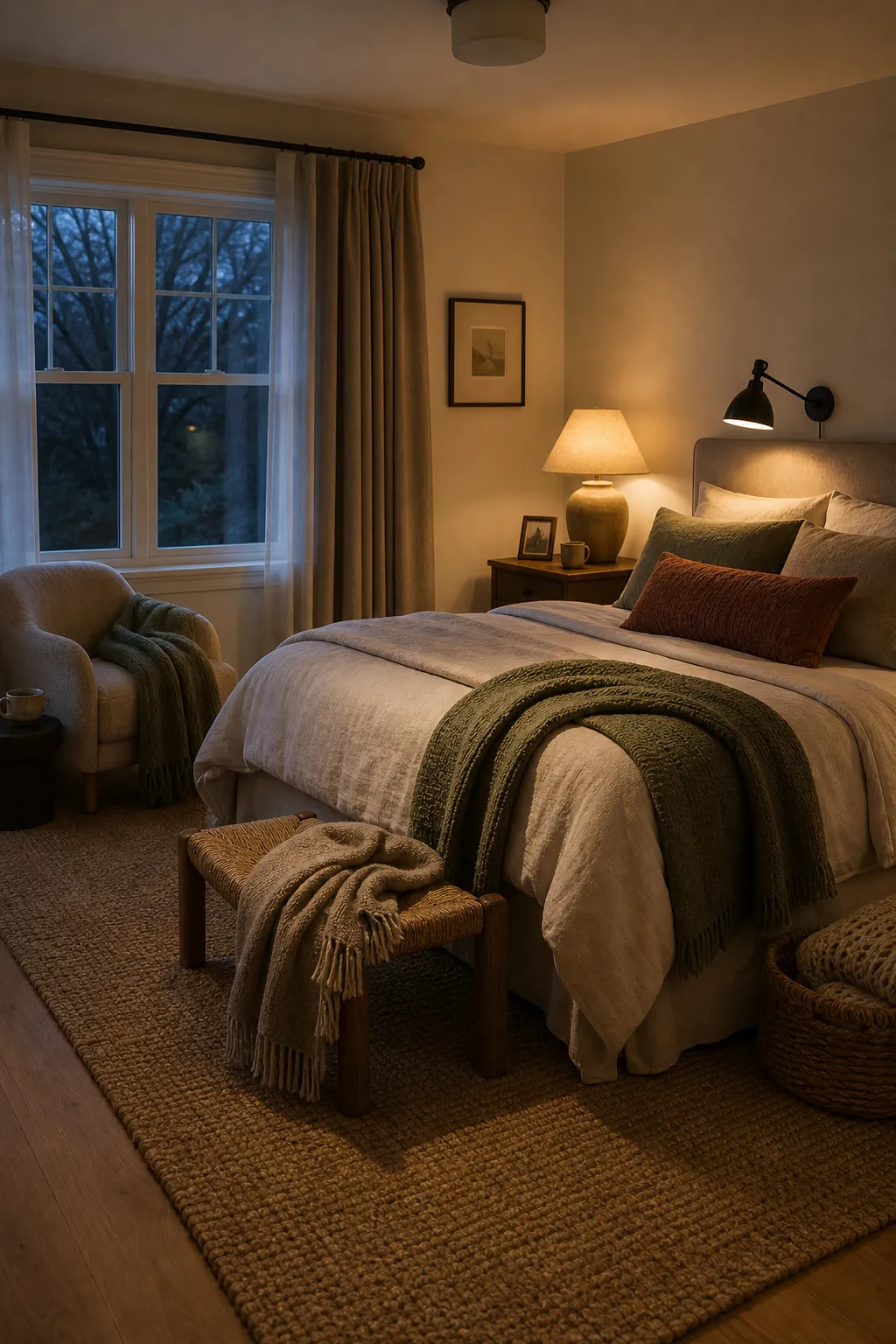
Warm bulbs, fabric shades, dimmers, and a rug underfoot can make the same furniture feel more personal. The room starts to support the way the couple actually ends the day.
Create Personal Zones in a Small Shared Bedroom
Small bedrooms need personal style even more carefully because there is less room for trial and error. Each side of the bed should have enough function that one person does not have to borrow space from the other.
If the room is tight, use wall-mounted lights, slim nightstands, hooks behind a door, under-bed storage, and a narrow shelf instead of a full dresser display. Personal zones can be small. They just need to be clear.
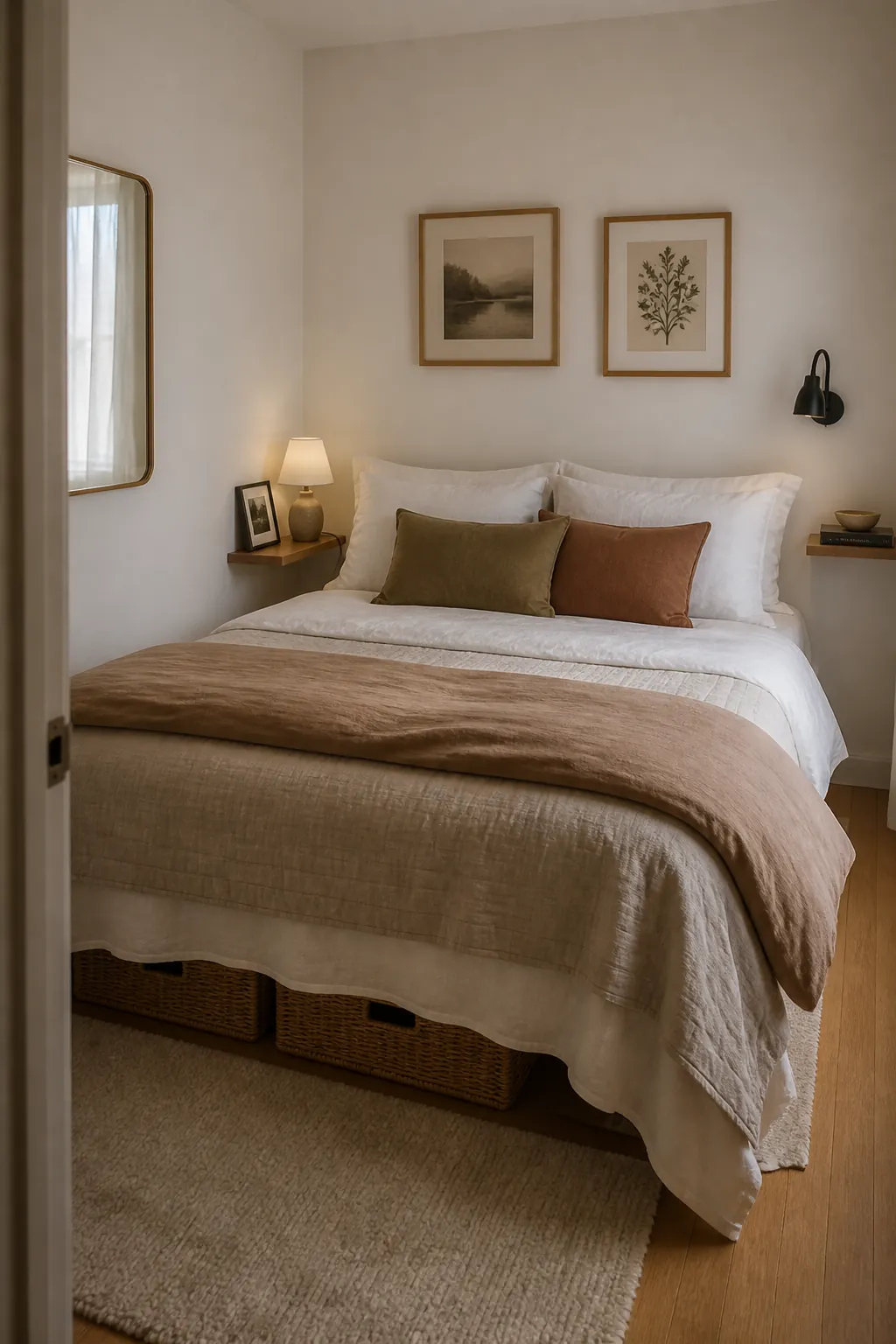
One side may need a charging drawer and a book. The other may need jewelry storage and a lamp. Equal does not mean identical. Equal means each person has a place to land.
Finish With a Shared Edit
The final step is not adding more. It is editing together. Walk through the room and ask three questions: What feels like both of us? What feels like only one of us? What is visible only because nobody decided where it belongs?
Keep the pieces that carry memory, comfort, or beauty. Store the pieces that are useful but ugly. Remove the items that only stayed because they were already there. This edit is what makes the bedroom feel personal without becoming crowded.
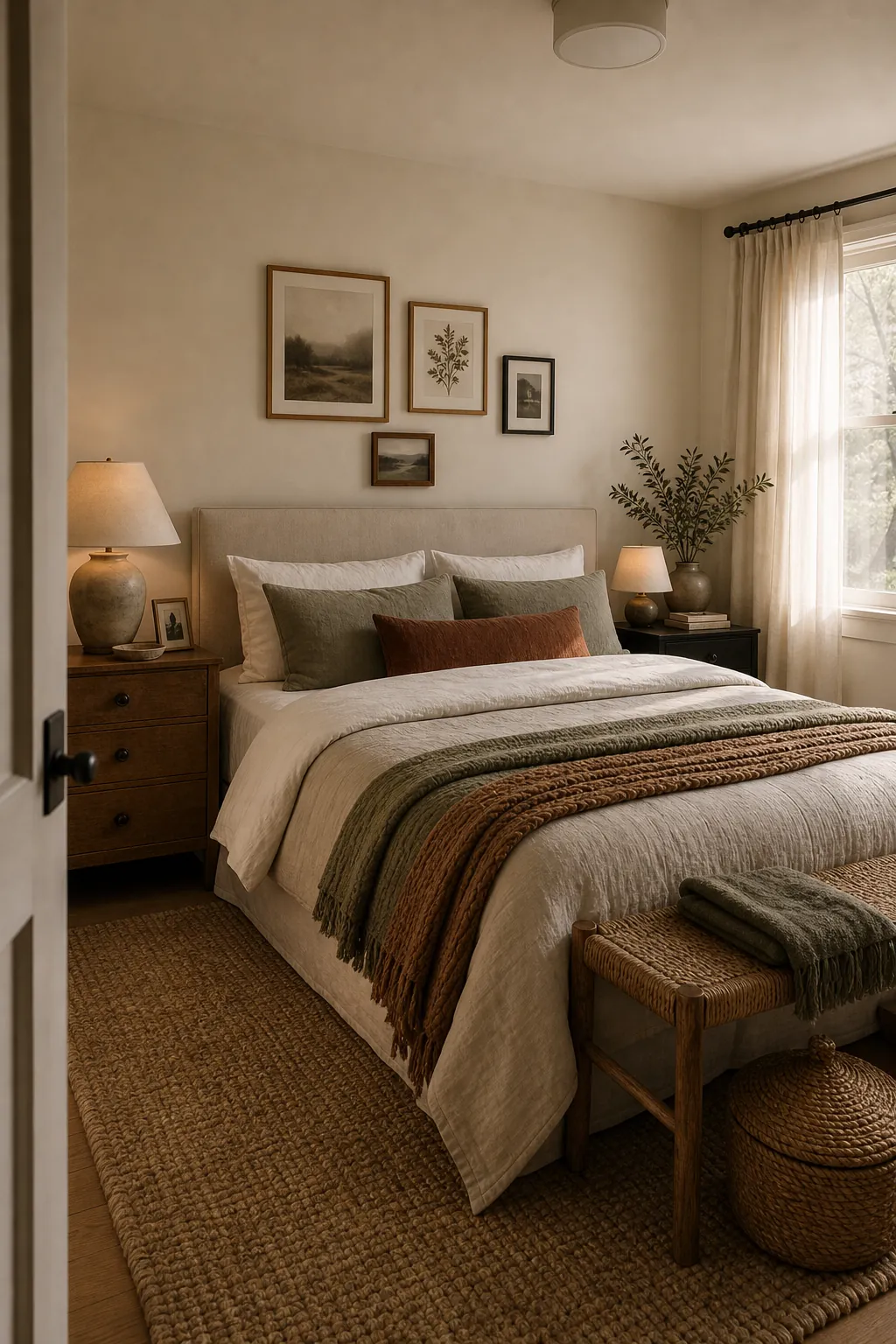
A personal couple bedroom is not built by splitting the room in half or making everything match. It is built by choosing a calm base, giving each person room for real habits, and letting the shared details feel deliberate. That is what makes the bedroom feel less like a styled space and more like a life two people actually share.