
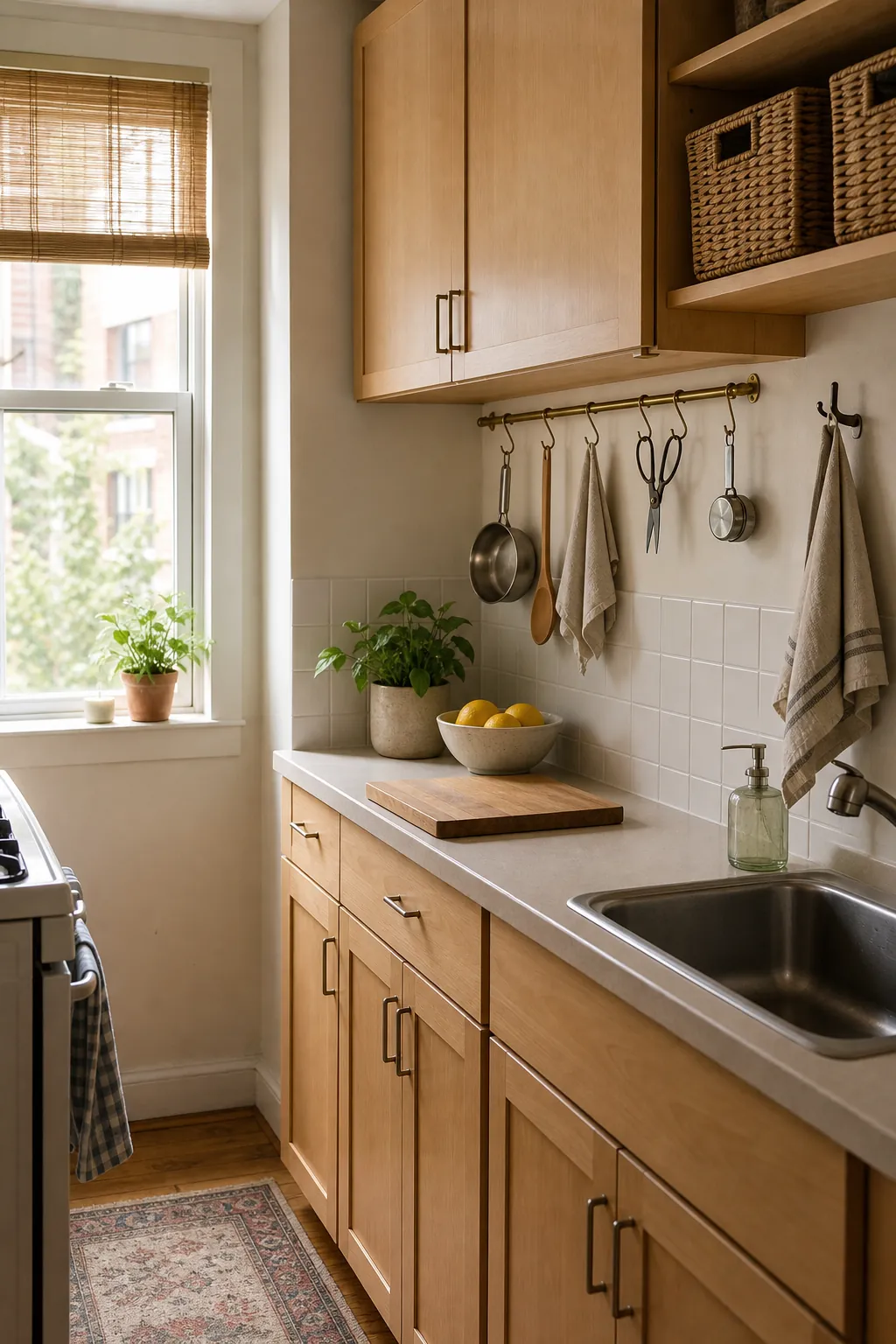
A small kitchen does not need more stuff on display. It needs fewer objects fighting for the same counter. Hooks, rails, and baskets work when they turn the wall into a working surface, not a second junk drawer.
The best setups have a simple test: if the item is used often, light enough to hang safely, and better seen than buried, it can earn a spot outside a cabinet. Everything else should be hidden, grouped, or let go.
Start With What Actually Lives on the Counter
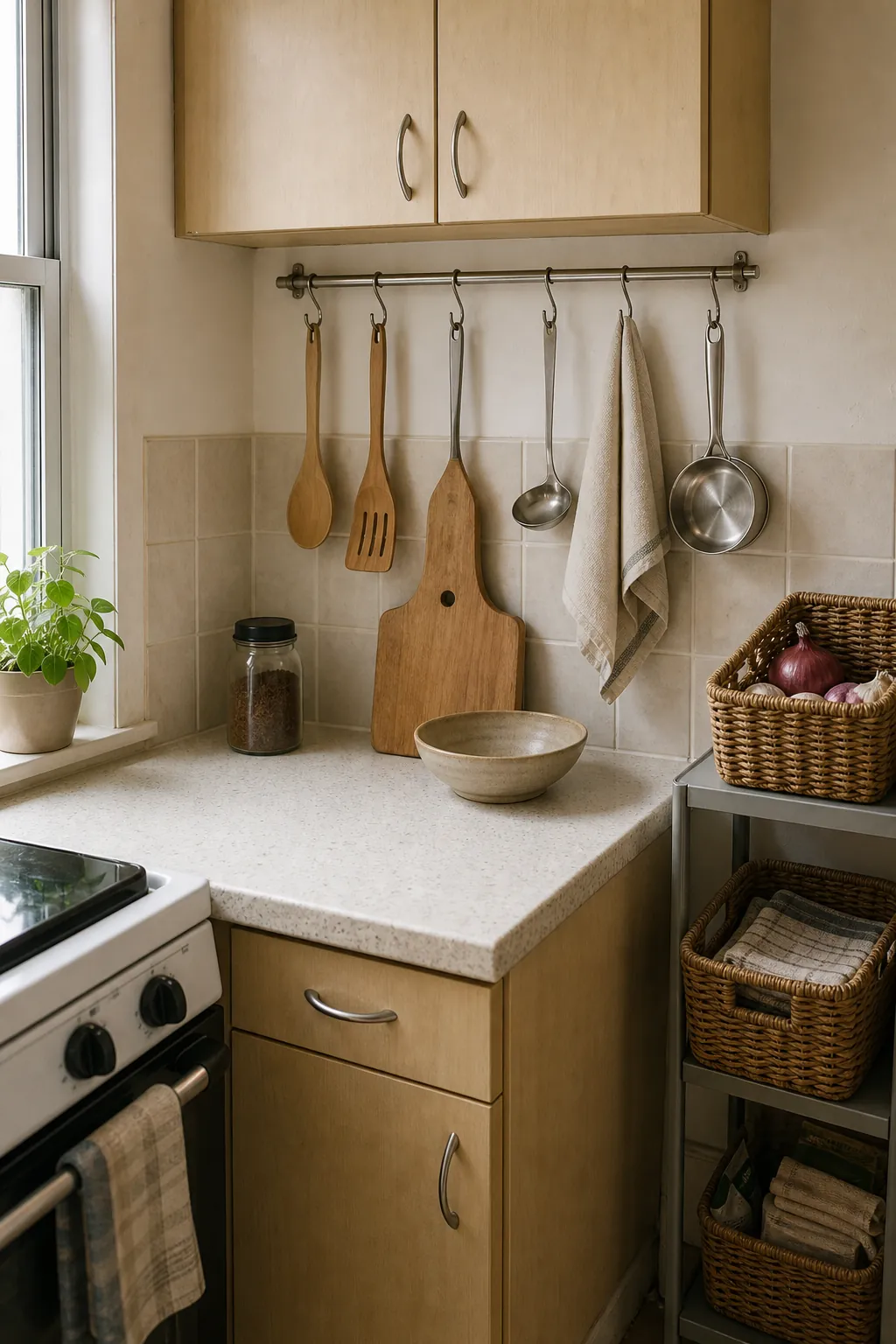
Most small kitchen storage problems show up as counter clutter first: towels drying over the faucet, utensils in a crowded crock, onions rolling near the cutting board, and reusable bags stuffed wherever there is a gap. Before buying a rail or basket, stand in the kitchen and name the objects that keep escaping.
That list gives you the right storage type. Hooks are for light, repeated-grab items. Rails are for a short row of tools used in one task zone. Baskets are for soft or irregular shapes that make open shelves look messy. If you skip this step, wall storage becomes decoration that still leaves the counter full.
- Use kitchen hooks for towels, measuring spoons, pot holders, small brushes, and lightweight bags.
- Use kitchen rails for the four to six tools that belong beside the stove, sink, coffee station, or prep zone.
- Use basket storage for produce, packets, extra cloths, cleaning refills, or pantry overflow you do not want to see individually.
Put Rails in Task Zones, Not Random Empty Spots
A rail is most useful when it shortens a motion. If the spatula is used at the stove, the rail belongs near the stove. If the dish brush is used at the sink, it should not hang across the room just because that wall is empty.
For a compact kitchen, one short rail usually looks better than a long rail packed end to end. Leave a little blank space at both ends and keep the count low. A rail with five useful things can look intentional; a rail with fifteen things starts to read as noise.
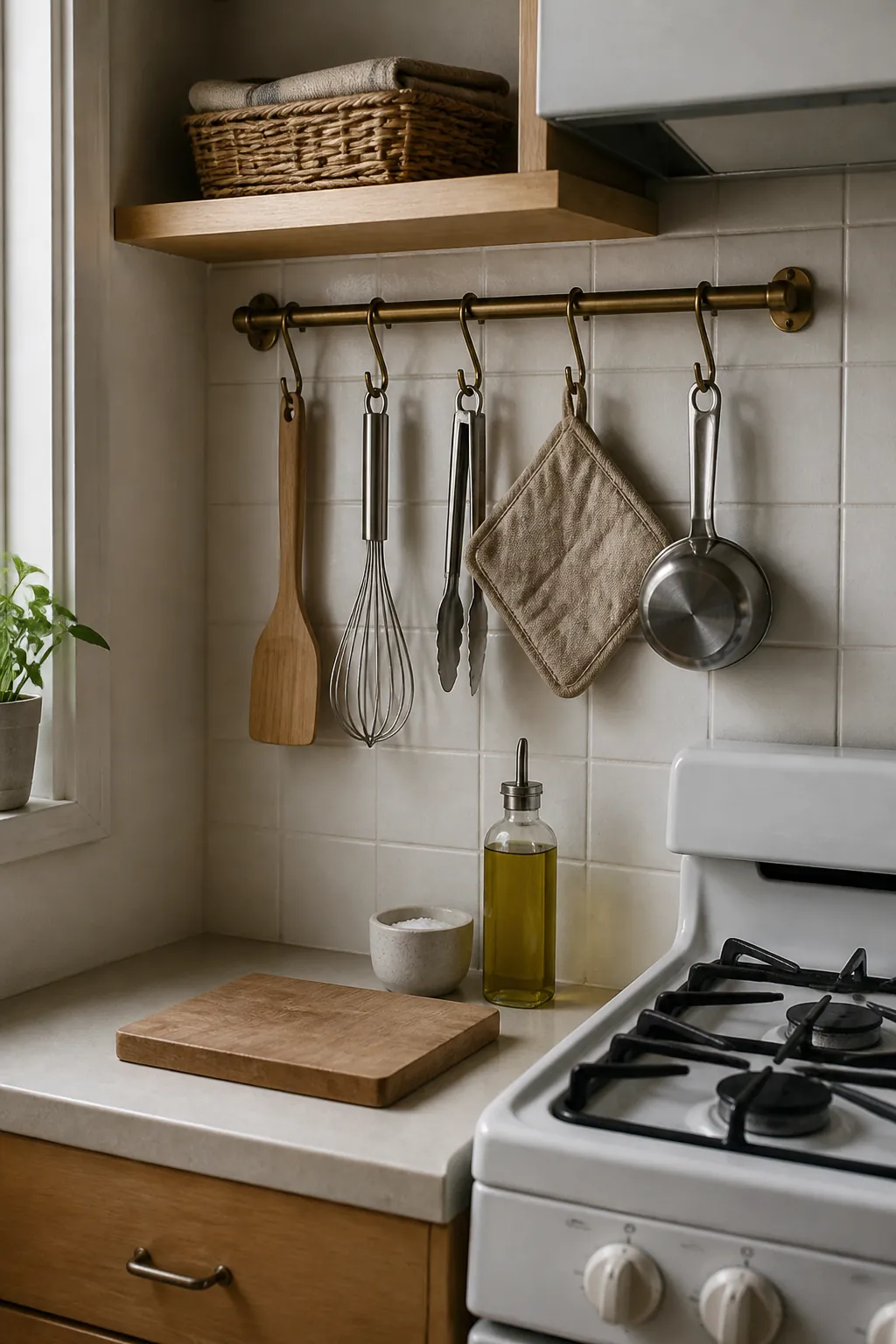
The same idea works for renters. A freestanding shelf with a rail, a tension rod, a magnetic rack on the side of an appliance, or a removable system on a suitable smooth surface can give you the same daily reach without committing every open wall to hardware.
Use Hooks for Light Frequent Items First
Hooks are tempting because they are cheap and fast. They are also where small kitchen organization can go wrong. The mistake is treating every hook like it can solve every object. In a renter kitchen, especially with adhesive hooks, follow the product directions, prep the surface, respect the weight rating, and reserve them for light items.
The safest hook plan is boring in a good way: towels, measuring spoons, a small brush, a lightweight bag, one apron, one oven mitt. Heavy pans, stacked mugs, and anything breakable deserve stronger storage.
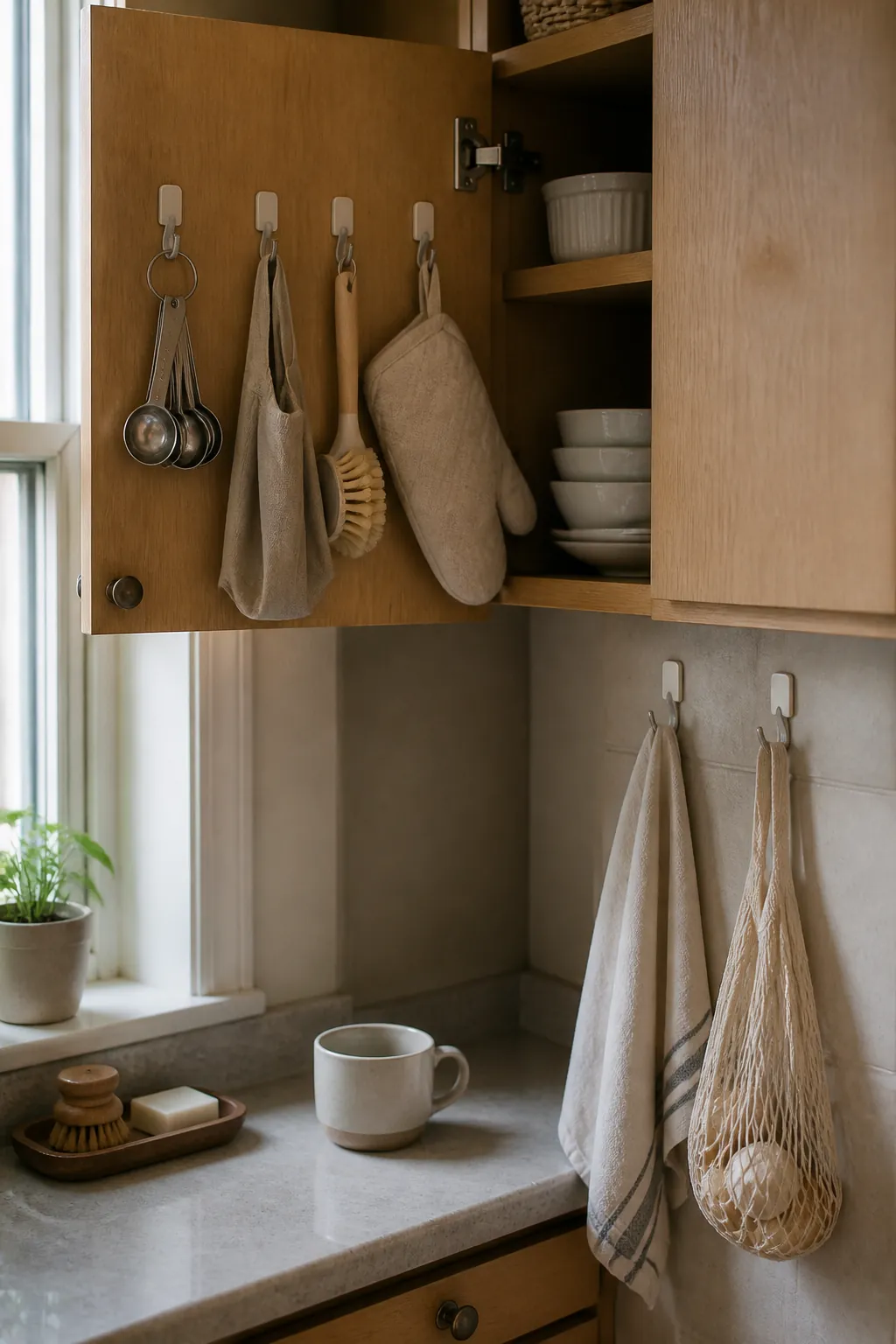
Inside cabinet doors are underrated because they keep visual clutter out of the main room. Use them for measuring spoons, bottle brushes, pot holders, or reusable bags. If the door closes cleanly and the item is light, you have created storage without making the kitchen look busier.
Make Baskets Hide the Messy Shapes
Open shelves can look calm in photos because the awkward shapes are usually edited out. Real kitchens have packets, twist ties, onions, dish cloths, snack bags, and small refill pouches. That is where baskets earn their space.
Use baskets as a visual filter. If the contents are useful but ugly together, put them in a basket. If the contents are beautiful and used daily, they can stay visible. This is the difference between natural kitchen decor and a shelf that always looks half cleaned.
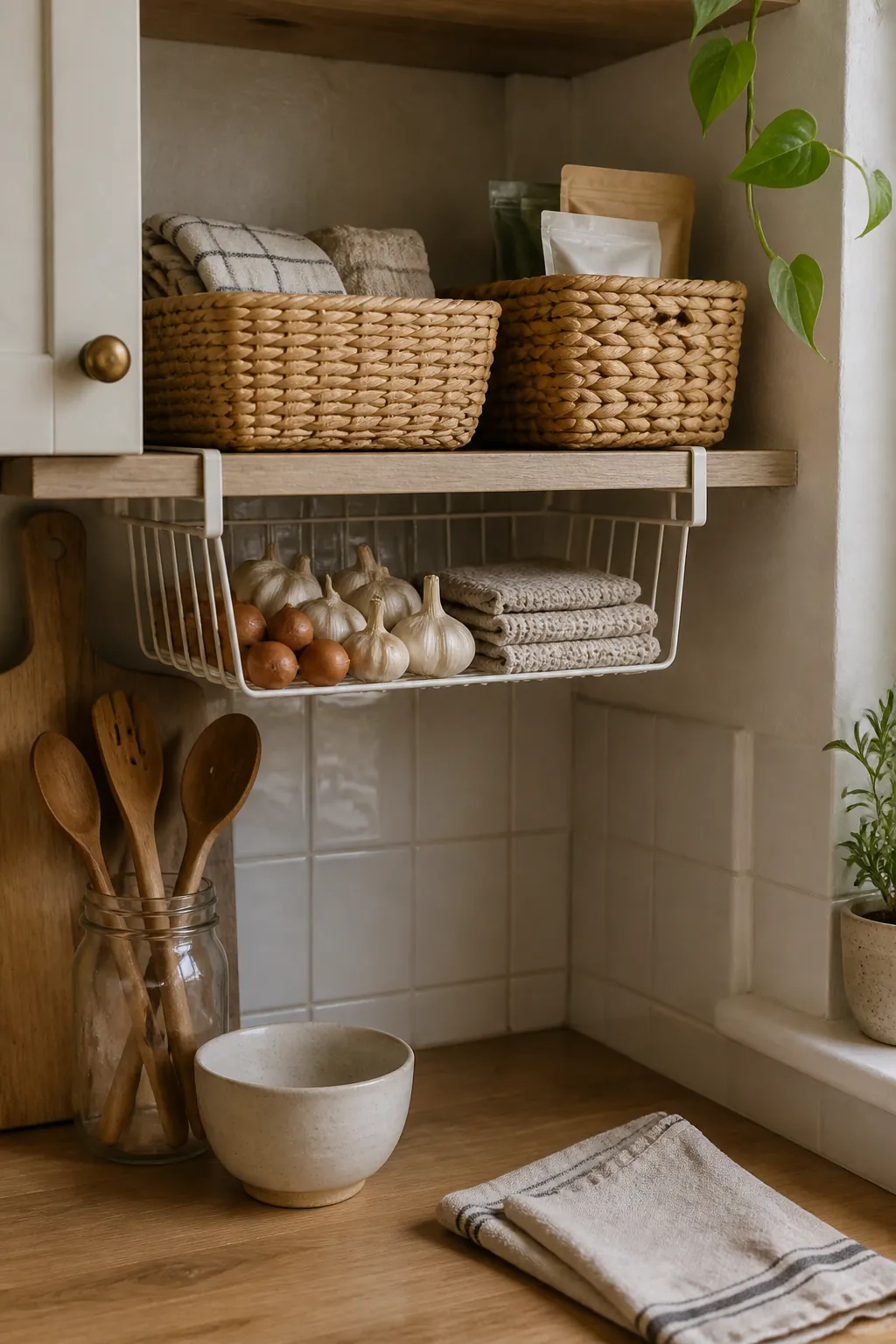
Under-shelf baskets are useful when cabinet shelves are tall but half empty. Keep them for light things: towels, wraps, produce, or small packets. If a basket sags, blocks the shelf below, or requires two hands to use, it is no longer helping a small kitchen.
Fix the Sink Zone Before It Spreads
The sink creates a lot of small clutter because wet things need air. A dish brush, sponge, towel, scrubber, and soap bottle can swallow a narrow counter even when the rest of the kitchen is tidy.
The goal is not to display cleaning supplies. The goal is to get them off the counter and let them dry. A short rail, two hooks, and one shallow basket or caddy are usually enough. Give every wet item a place to hang, then keep the counter as the landing zone, not the storage zone.
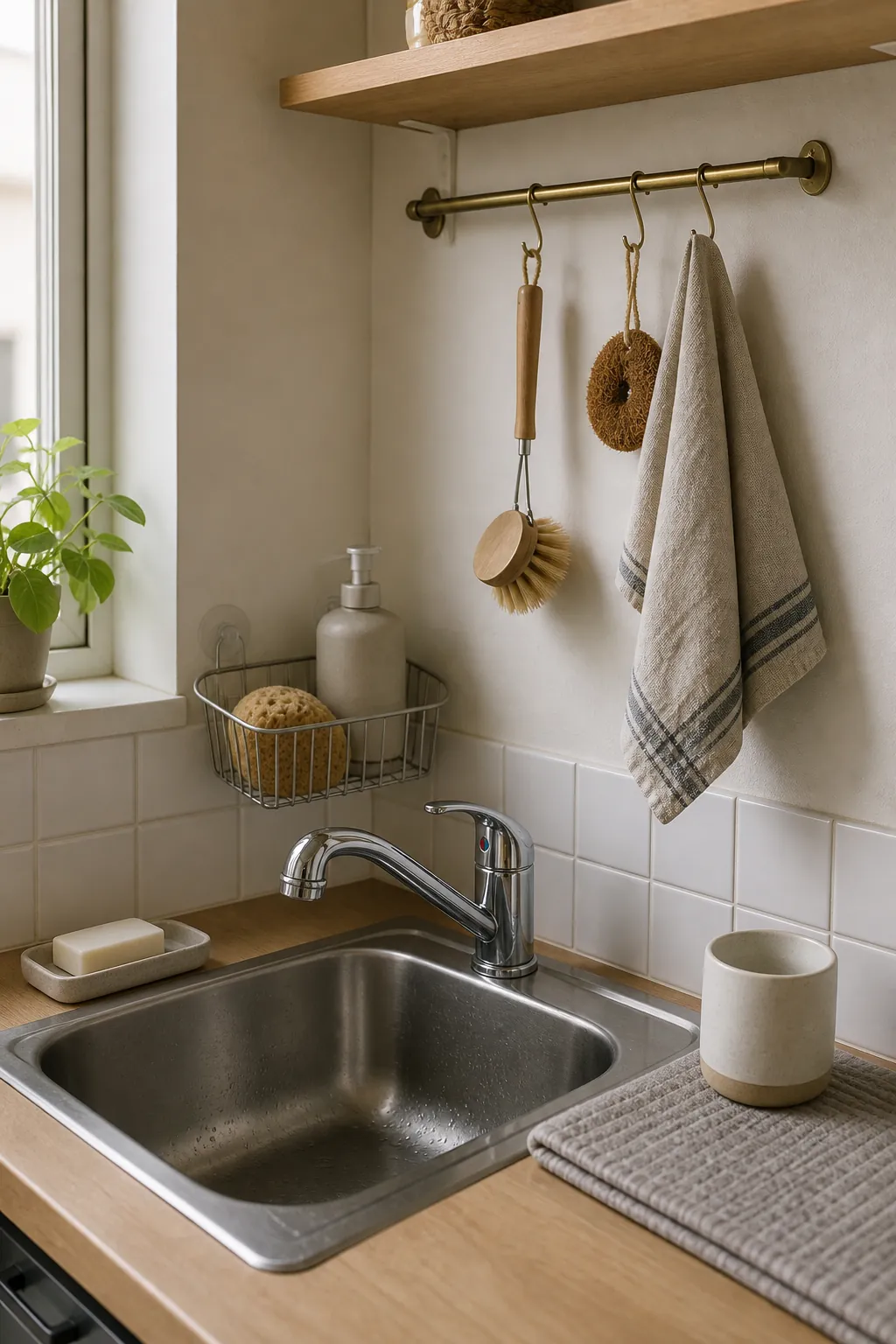
If the sink area still looks crowded after you add storage, reduce the number of bottles first. One refillable soap bottle, one brush, one sponge, and one towel will look calmer than five products arranged in a perfect row.
Use One Skinny Wall Like a Pantry Strip
Small kitchens often have useless-looking vertical gaps: the side of a cabinet, the wall beside the fridge, the strip near a doorway, or the narrow space under a shelf. These are good places for compact kitchen wall storage because they are already too thin for normal furniture.
Keep the strip focused. A couple of shallow baskets can hold onions, towels, coffee filters, or light pantry overflow. A few hooks can hold a tote, apron, or lightweight tools. Do not spread storage across every open wall; choose one zone and make it work hard.
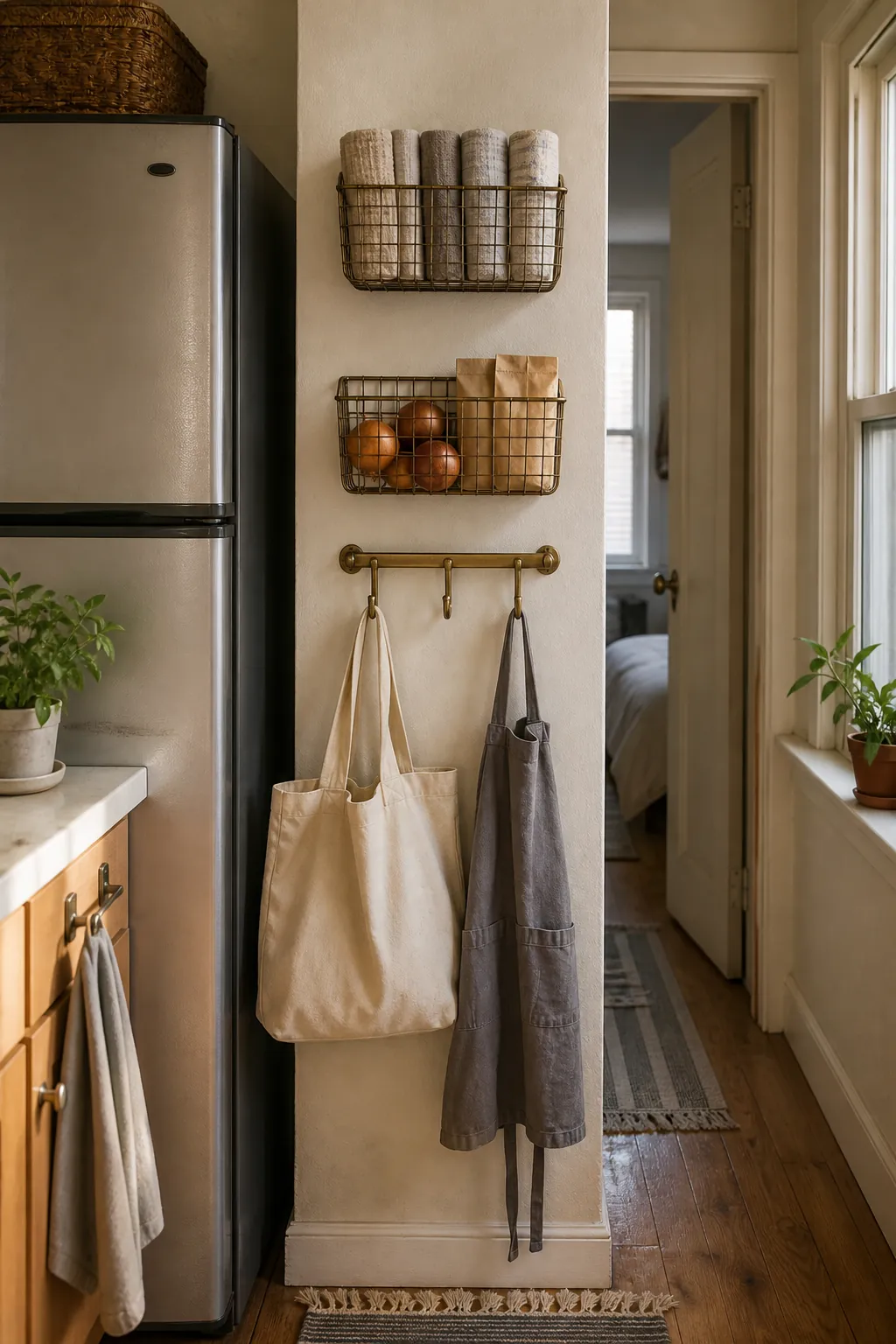
This is especially useful when you do not have a real pantry. The trick is to store categories, not random leftovers. One basket for cloths, one for produce, one for packets. When the category is full, it is time to use things up before buying more.
Borrow the Fridge Side Before You Drill
For renter kitchen ideas, the side of the refrigerator can be more useful than another wall. Magnetic racks, rails, and hooks can hold light tools, towels, wraps, or spice jars without permanent holes, as long as the setup is stable and not overloaded.
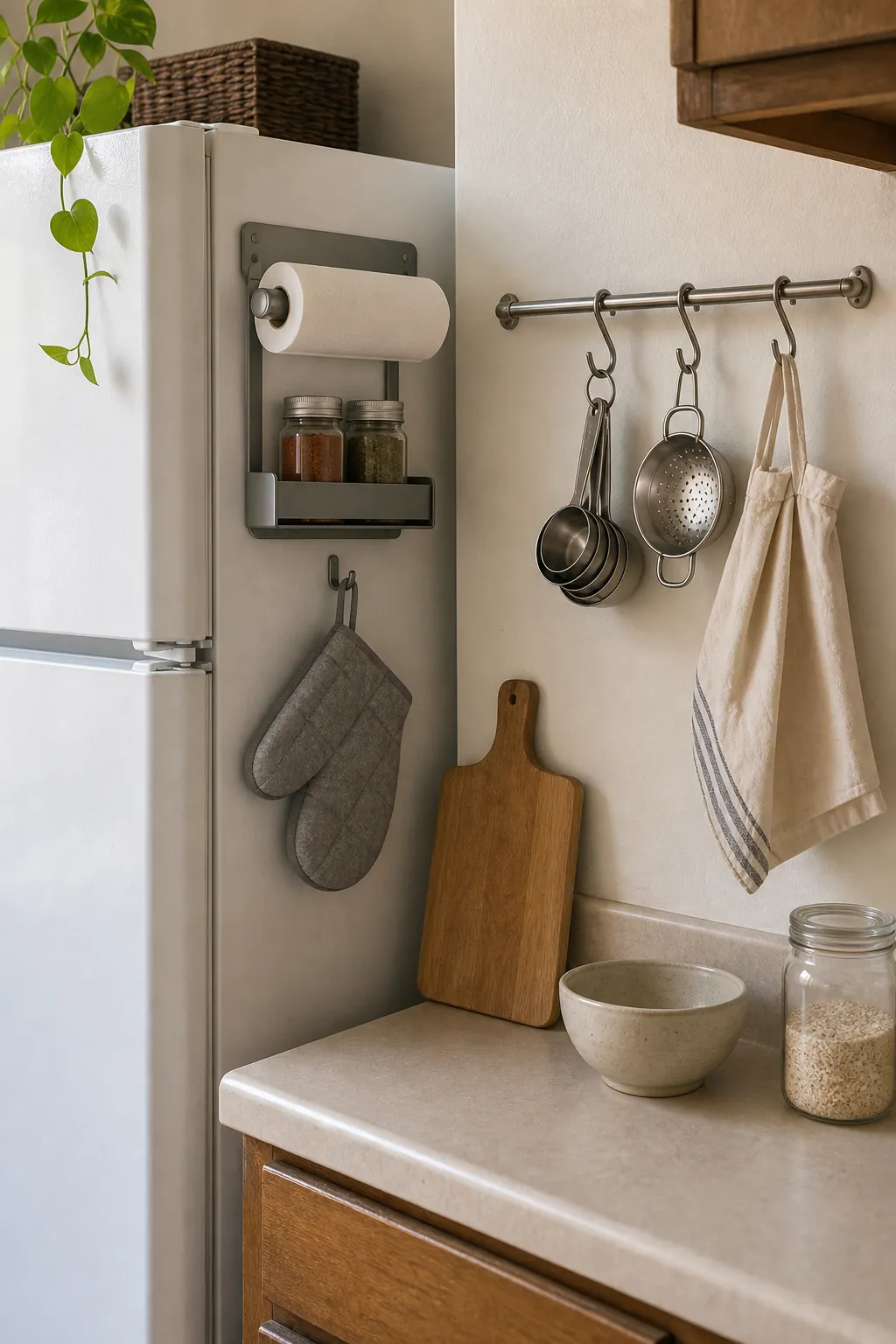
Use the fridge side for support items, not the whole kitchen. If it becomes a wall of magnets, spice jars, towels, mail, and tools, the room will feel smaller. The fridge side works best as a slim utility panel with one job.
The Rule That Keeps Open Storage From Looking Cluttered
Visible small kitchen storage has to be edited more strictly than closed storage. Behind a cabinet door, five mismatched things are normal. On a wall, the same five things become part of the room.
Use a simple visual rule: repeat one material, leave blank space, and stop before the wall is full. If the hooks are metal, keep the rail metal too. If the baskets are woven, use a similar tone. If a shelf has three objects, let one section stay empty.
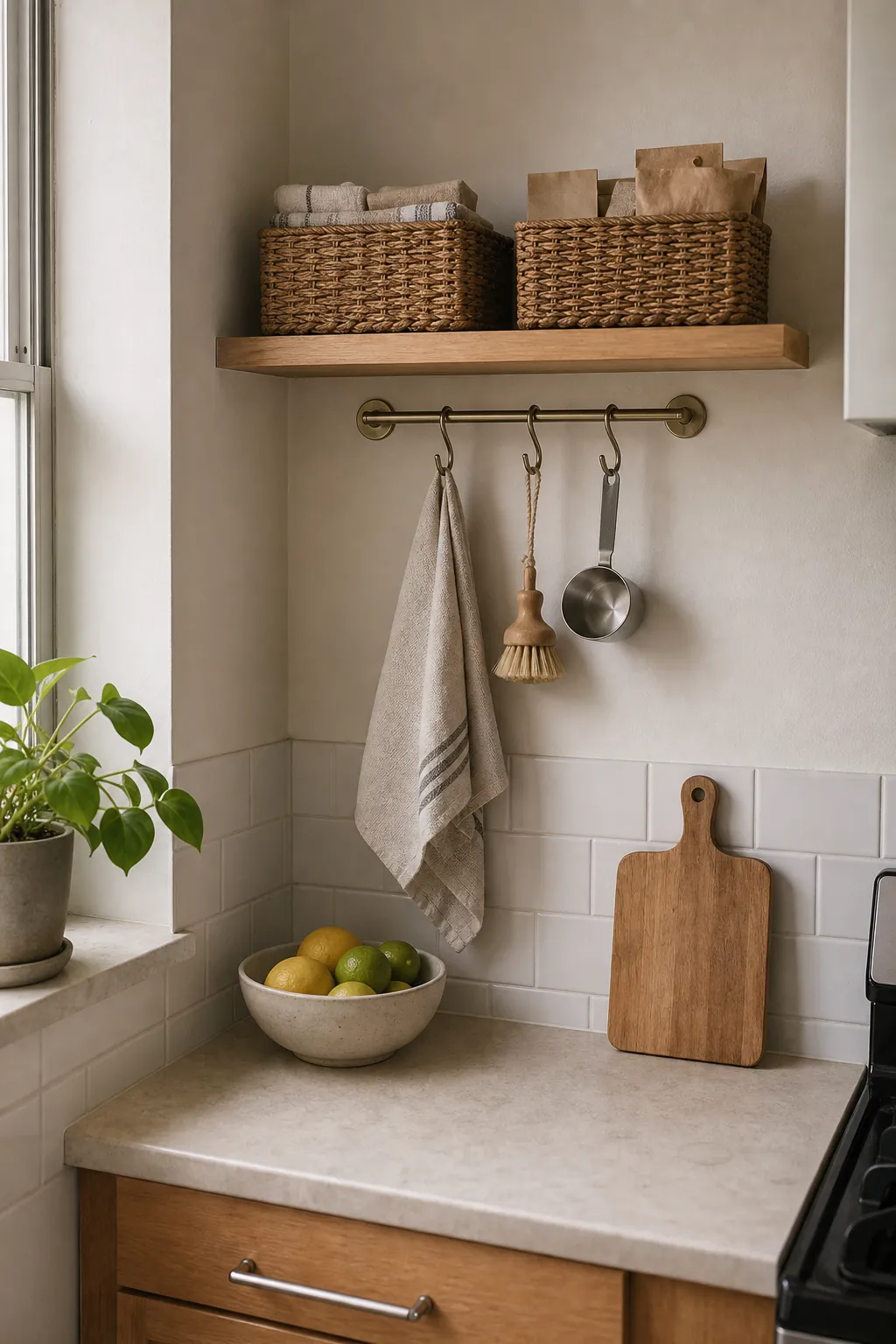
This is why natural baskets often work well in a small kitchen. They soften hard cabinets, hide irregular packaging, and make kitchen organization feel like part of the kitchen decor rather than a storage emergency.
A Simple Setup Plan
If you are starting from a crowded counter, do not install everything at once. Build the system in small tests so you can see what actually improves the room.
- Clear one counter zone and name the items that return within two days.
- Choose one rail zone near the task: stove, sink, prep, or coffee.
- Add hooks only for light daily items and keep the first setup under six hanging objects.
- Use baskets for ugly categories like packets, cloths, produce, or refills.
- Wait a week before adding more. If the kitchen feels calmer, expand. If it feels busier, remove one visible category.
The point is not to fill the wall. The point is to give your smallest kitchen a few reliable places to breathe. When hooks, rails, and baskets are chosen by use instead of by empty space, they can make a compact kitchen easier to cook in and easier to look at.