
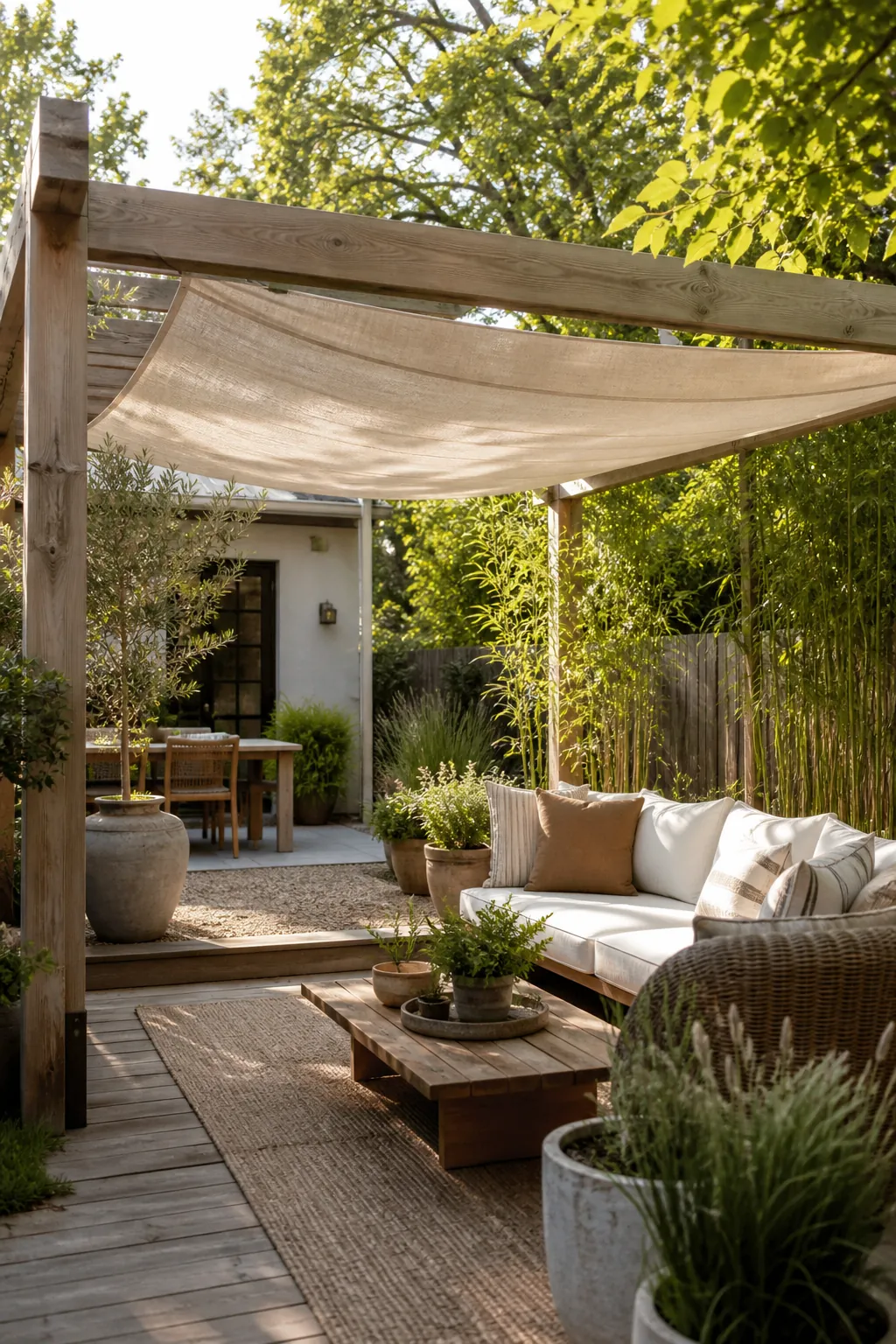
The best backyard shade does not start with the prettiest pergola kit or the biggest umbrella. It starts with a more useful question: where does the sun actually ruin the space? That one detail changes everything.
Homeowners asking for Backyard Shade help tend to run into the same problems. The umbrella is too small. The pergola looks finished but still lets harsh afternoon light through. A shade sail sounds affordable, then wind and anchors make it feel complicated. The patio needs privacy too, not just overhead cover. And nobody wants a beautiful outdoor living area to end up looking like a temporary party tent.
So the goal is not simply to block sun. The goal is to create shade that feels intentional: useful in the hottest seat, balanced with the house, and polished enough to support your Patio Decor, Outdoor Seating, Garden Design, and Family Backyard plans.
Map the Sun Before You Buy Anything
Most failed Shade Ideas are not ugly. They are misplaced. A gorgeous canopy over the middle of the patio will still disappoint if the late-day sun cuts in from the west and hits everyone sideways at dinner.
Spend one clear afternoon watching the shadows at the times you actually use the space. For many homes, the critical window is not noon. It is the late afternoon stretch when the patio surface is hot, the house wall is throwing heat back, and the seating is still exposed.
- Mark the hot seats. Put a chair where people really sit and check whether the body, table, and walking path are shaded.
- Look at the sun angle. Overhead shade helps at midday, but side shade matters for west-facing patios.
- Test the footprint. Use string, painter’s tape, or temporary poles before committing to posts, sails, or a roof extension.
- Plan for wind and rain. Shade fabric and sails should not be treated like solid roofing unless the product and structure are designed for it.
The stylish choice is usually the one that fits the shadow pattern, not the one that covers the largest square footage.
Use Shade Sails for Modern Coverage Without Heavy Structure
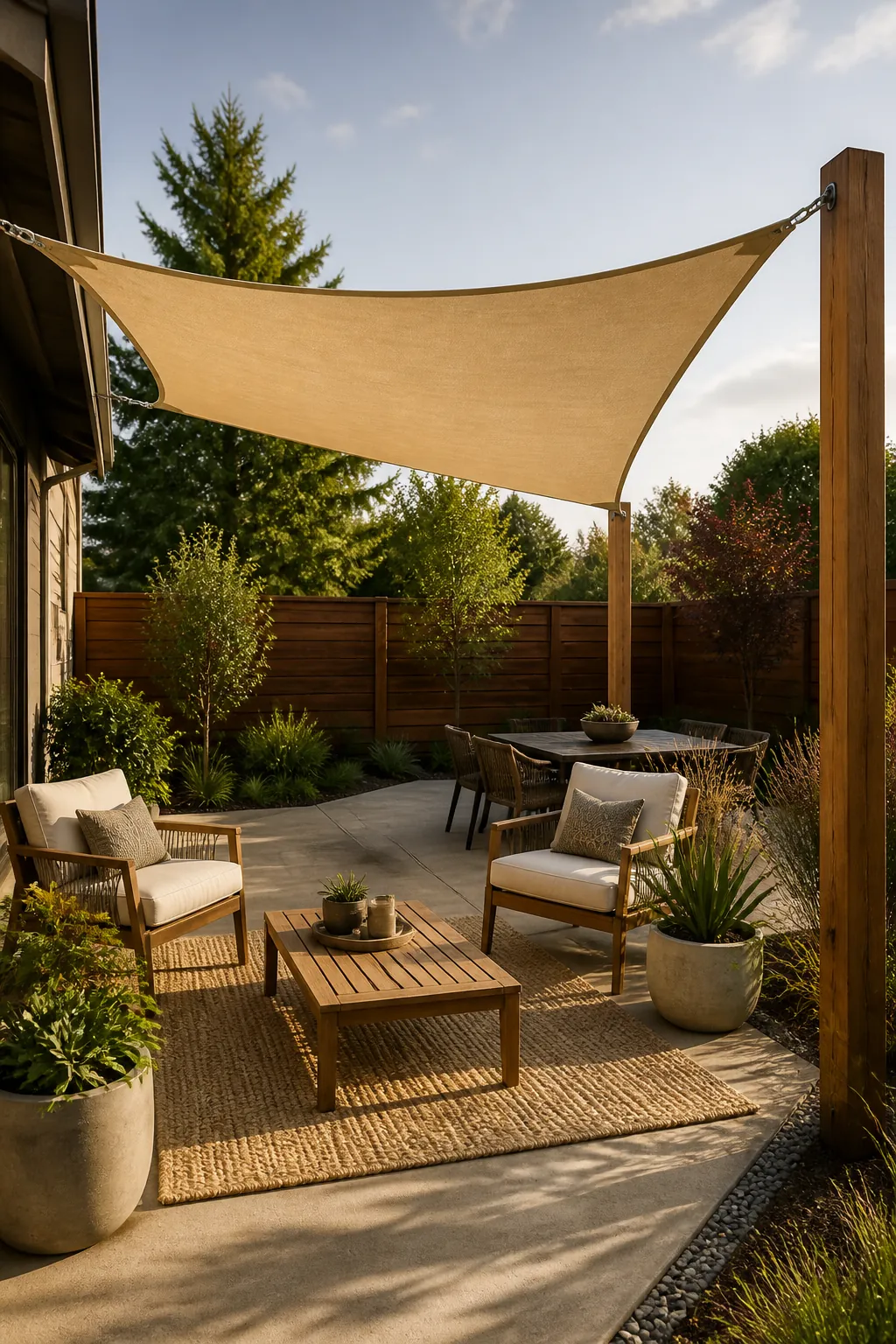
A shade sail is one of the most searched Backyard Ideas because it can cover a large seating zone without the visual weight of a gazebo. It works especially well over a concrete patio, a dining corner, a poolside lounge, or a small yard where bulky posts would crowd the layout.
The trick is to make it look designed instead of improvised. Choose one neutral fabric color, pull it tight, and avoid a flat installation. A high-low angle gives the sail a cleaner architectural line and helps it shed wind. If the area is large, two smaller overlapping sails usually look better and behave better than one enormous sheet.
- Best for: modern patios, open yards, exposed dining spaces, and renters who need a semi-permanent solution.
- Style move: choose sand, warm gray, charcoal, or canvas white so the sail supports the landscape instead of stealing attention.
- Common mistake: trying to shade the entire backyard. Focus on the table, sofa, play area, or grill zone first.
- Comfort upgrade: add a slim outdoor rug and low planters under the sail so the covered area reads like an outdoor room.
For a Family Backyard, shade sails are useful because they can protect the exact activity zone: a picnic table, a sandbox, a lounge chair pair, or the spot where kids actually play. That is more practical than blanketing the entire lawn.
Make a Pergola Work Harder Than a Pretty Frame
Pergola Ideas are popular because a pergola gives a backyard structure. It frames the seating area, makes string lights easier, and turns a loose patio into a destination. But a standard slatted pergola is not always deep shade. It creates rhythm, partial cover, and style. For real comfort, it often needs a second layer.
If your pergola is already in place, add shade where the sun enters. A woven canopy panel, bamboo roll-up shade, outdoor roller screen, or weather-resistant curtain can solve the problem without replacing the structure. On west-facing patios, side panels can matter more than the top.
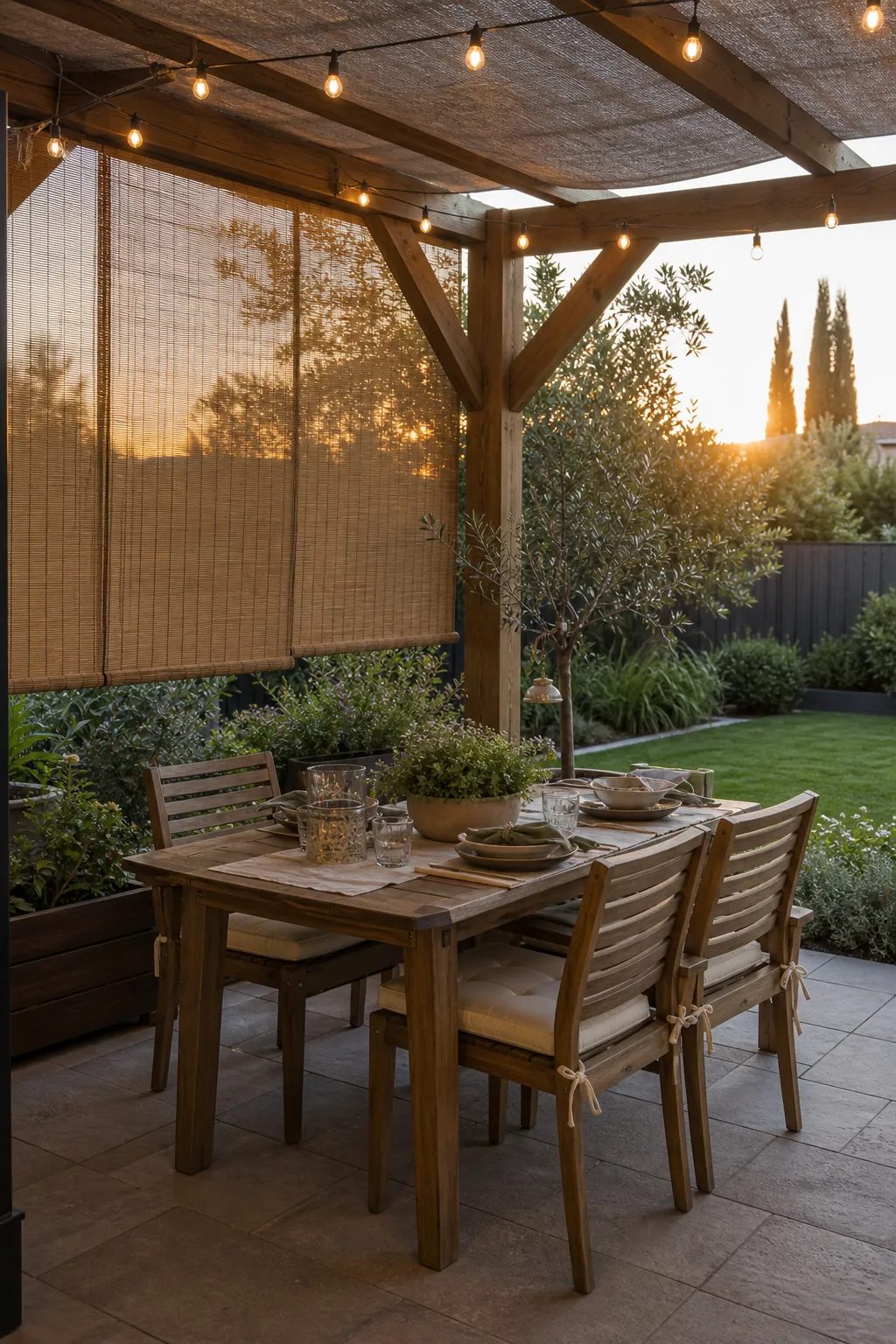
- For a clean look: use one repeated material across the top or sides, not a mix of random panels.
- For more shade: place slats, fabric, or vines based on the sun direction, not just the pergola grid.
- For privacy: add one solid or semi-solid side screen where neighbors, street views, or evening sun are strongest.
- For flexibility: use roll-up shades or curtains so the patio can open back up in mild weather.
A pergola looks most stylish when it feels connected to the rest of the Garden Design. Repeat the color of the house trim, use natural wood tones, or echo nearby fencing. Then soften the structure with climbing plants, planters, lanterns, and furniture that feels proportional to the frame.
Layer Living Shade With Trees, Vines, and Tall Planters
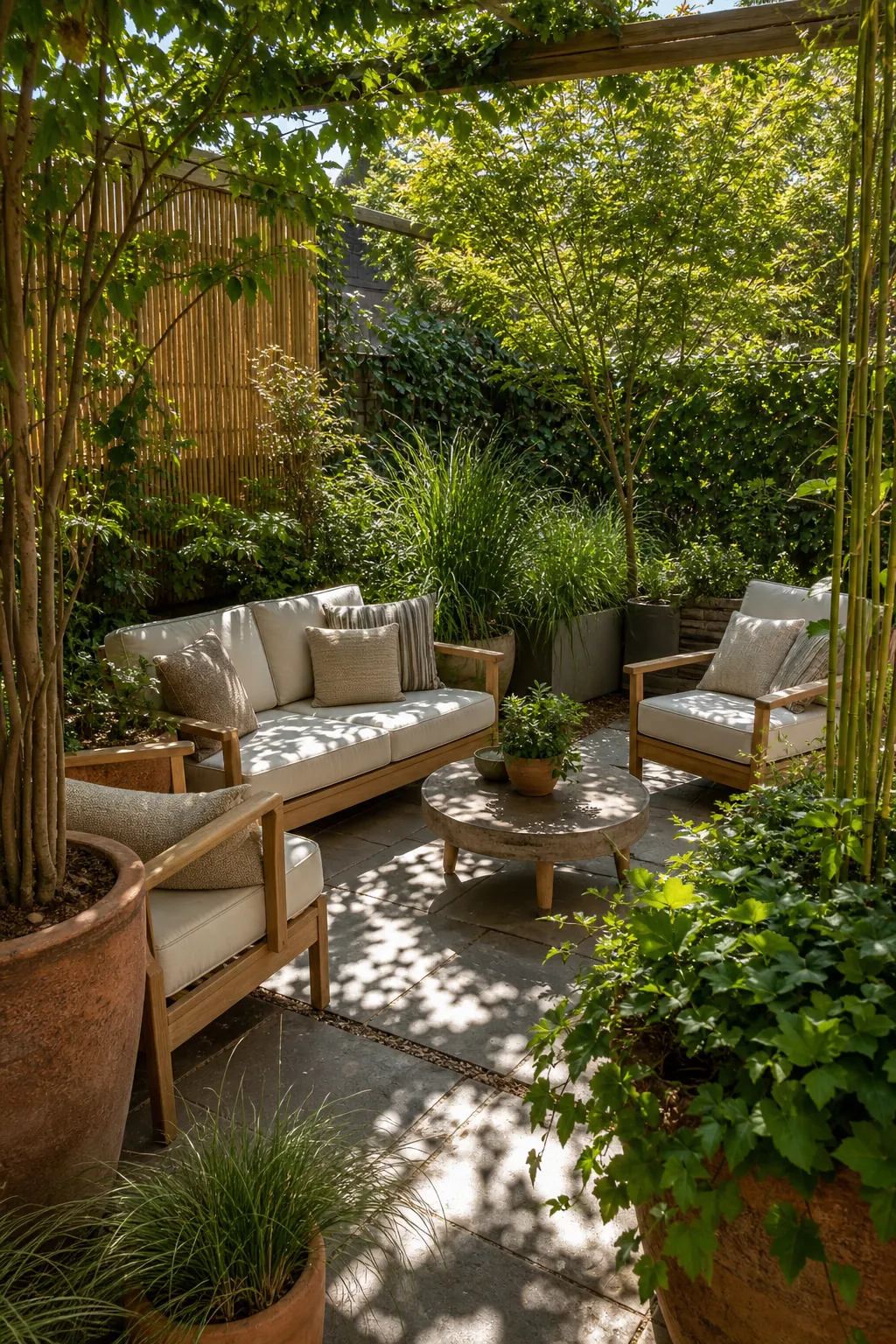
Fast shade is helpful, but living shade is what makes a backyard feel settled. Trees, vines, and tall planting add movement, privacy, texture, and cooler air around the seating zone. They also make temporary structures feel less temporary.
For small patios, a row of large planters can do more than decorate. Tall grasses, bamboo-style screens, columnar evergreens, or potted trees can filter side sun while giving the space a softer edge. If you need true overhead cover, combine plants with a pergola, trellis, sail, or umbrella while the landscape matures.
- Best long-term move: plant a shade tree where it will cool the patio, not where it simply fills an empty lawn corner.
- Best renter-friendly move: use tall potted plants on wheeled platforms so the privacy screen can shift with the season.
- Best style move: repeat planter finishes, such as black metal, terracotta, weathered wood, or fiberstone, for a calmer outdoor room.
- Best comfort move: keep airflow open. Dense planting on every side can make a hot patio feel still and heavy.
Living shade is slower, but it is also the most forgiving. It blends with almost every architecture style and keeps the backyard from feeling like a collection of hardware solutions.
Choose Portable Shade When the Space Changes Often
Not every backyard needs a permanent structure. If your Outdoor Living setup changes between weekday coffee, weekend grilling, kids playing, and family dinners, portable shade may be the smarter first step.
A cantilever umbrella can cover a sofa without dropping a pole into the middle of the conversation area. A market umbrella can define a bistro table. A canopy daybed works when you want shade and seating in one piece. A pop-up canopy is not the most elegant everyday Patio Decor, but it can be useful for parties, projects, and temporary summer coverage.
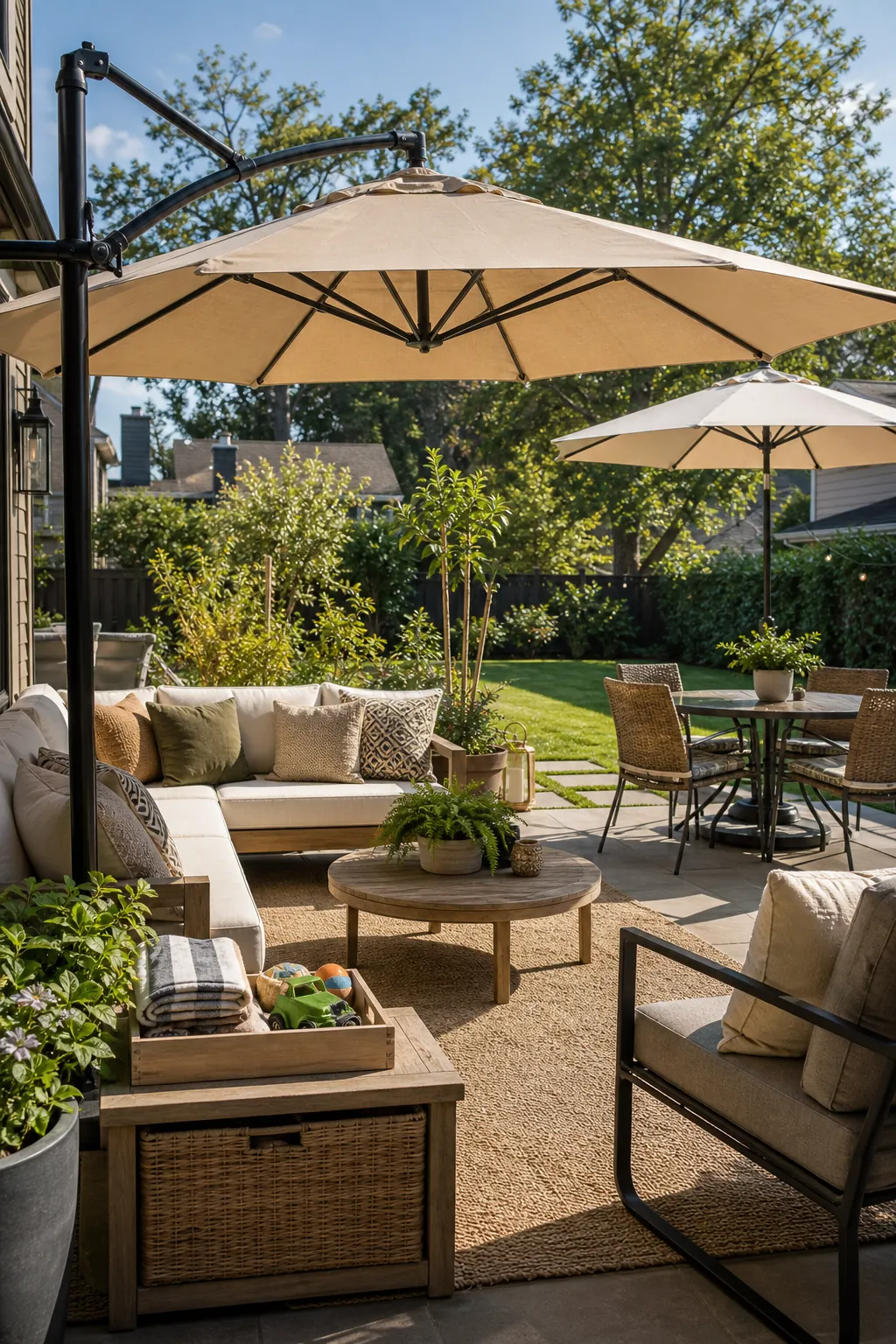
- Use a cantilever umbrella when you need shade over a sectional, lounge chairs, or a dining table without a center pole.
- Use a market umbrella for small patios, compact dining corners, and balcony-style backyard spaces.
- Use a pop-up canopy for events, not as the main design feature unless it is styled carefully and stored when not needed.
- Use two smaller shade points when one large umbrella leaves half the seating exposed.
The key is scale. A too-small umbrella makes the furniture feel stranded. A too-large umbrella can overpower a modest patio. When in doubt, shade the exact seating group and repeat the umbrella color in cushions, planters, or an outdoor rug.
Give Small Yards a Defined Shade Corner
Small backyards often become awkward when shade is treated as a giant overhead problem. A better approach is to build one excellent shaded corner. It can be a bench under a sail, a cafe table under a wall-mounted awning, or a pair of chairs tucked beside a trellis.
This is where Backyard Shade and Privacy Ideas work together. A corner can use two vertical edges: fence plus house wall, hedge plus pergola post, or planter row plus curtain rail. Add overhead shade only where people sit. Then make the floor and furniture feel intentional.
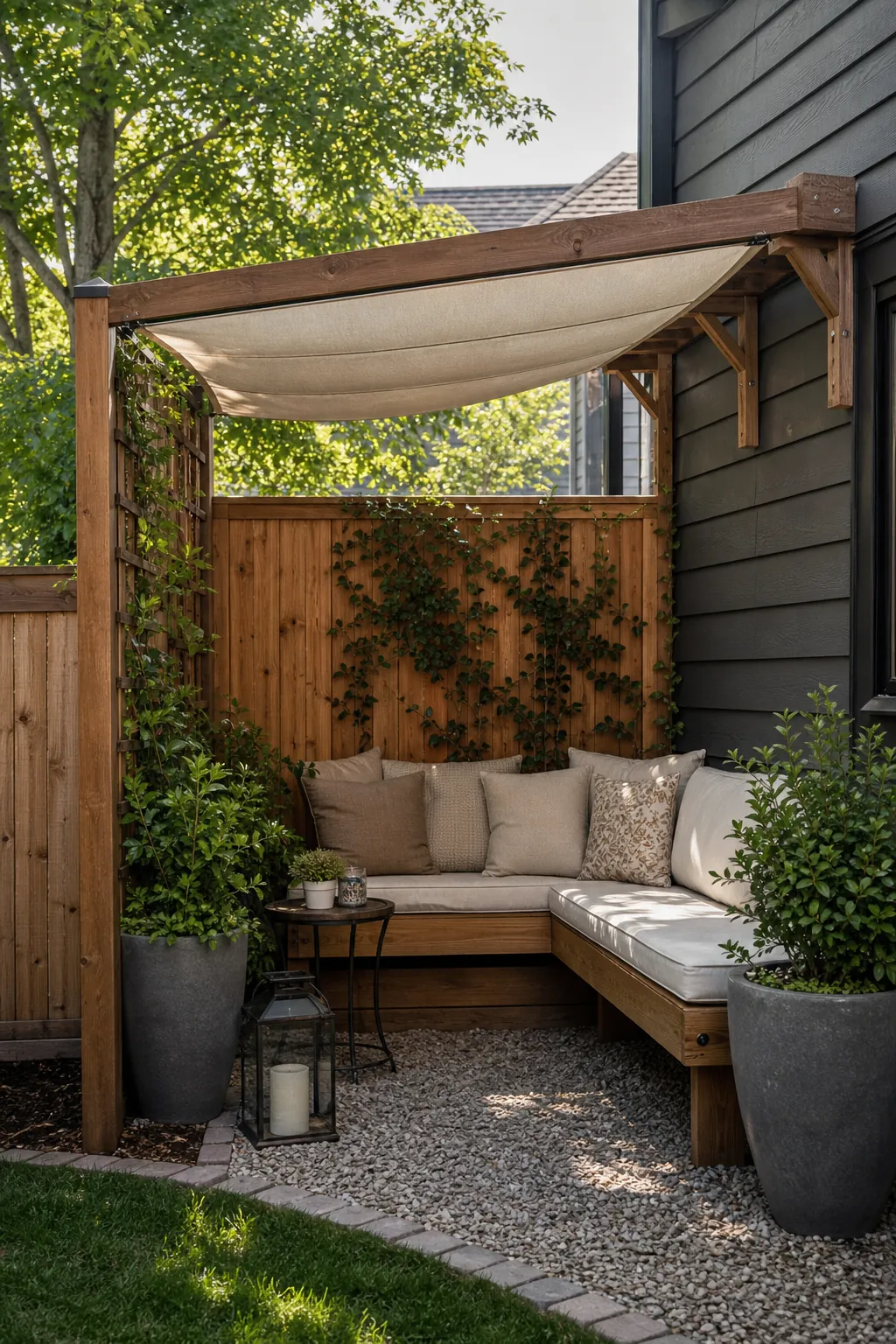
- Anchor the corner with a bench, loveseat, or compact dining set.
- Add vertical softness with climbing vines, bamboo screening, tall planters, or outdoor curtains.
- Keep the palette restrained so the small space feels calm rather than crowded.
- Use lighting under the shade so the corner still works after the sun drops.
A small shaded corner can feel more finished than a large exposed patio because the boundaries are clear. It tells people exactly where to sit.
Solve Side Sun and Privacy at the Same Time
Side sun is the detail that makes many homeowners frustrated. The patio has a roof, pergola, or umbrella, but the evening sun still hits faces, plates, screens, and lounge chairs. This is where side shade earns its place.
Outdoor curtains, roll-up bamboo blinds, slatted privacy screens, tall planter walls, and angled shade cloth can all block low sun while making the seating area feel more intimate. They also solve the neighbor-view problem without building a full fence extension.
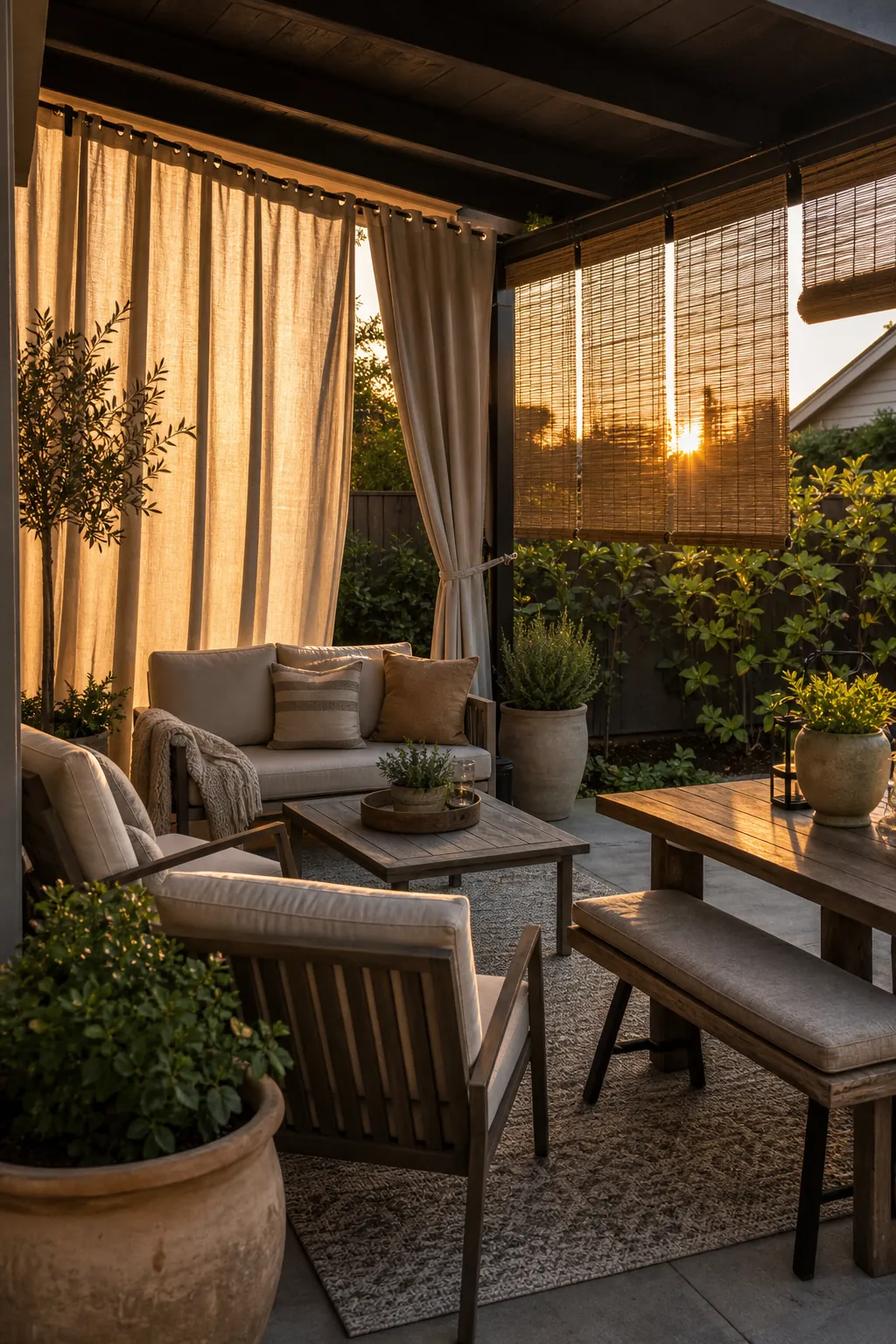
- Use curtains when you want a soft resort look and flexible privacy.
- Use roller shades when you want cleaner lines and easier daily operation.
- Use slatted screens when the patio needs structure even when the shade is open.
- Use tall planters when you want privacy that feels natural instead of walled-in.
Side shade should look like part of the room. Match curtain hardware to the pergola or fence. Choose fabric that relates to the cushions. Keep screens aligned with furniture edges. These small choices make practical shade feel like design.
Match the Shade Idea to the Backyard Problem
If you are choosing between several Backyard Shade options, start with the problem instead of the product.
- Hot concrete patio: use a shade sail, pergola canopy, or cantilever umbrella, then add a rug and planters to reduce the hard-surface feeling.
- West-facing dining area: prioritize side shade with curtains, roller shades, angled fabric, or tall planting.
- Open family yard: shade the table, play zone, or lounge group first, then add trees for long-term cooling.
- Small backyard: create one defined shaded corner instead of trying to cover every inch.
- Modern patio: use geometric sails, crisp black or natural wood posts, neutral fabric, and simple furniture lines.
- Natural outdoor living space: use a pergola with vines, woven screens, potted trees, and warm wood furniture.
The most stylish shade plan usually layers three things: overhead cover, side comfort, and landscape softness. That combination cools the space without making it look like the backyard was solved with one oversized product.
A Simple Stylish Shade Plan
For most patios, a polished plan can be built in phases. Start with the seat that gets used most. Add the shade solution that fixes that exact spot. Then make it look permanent with furniture, planting, lighting, and repeated materials.
- Phase one: map the sun and shade the main seating or dining zone.
- Phase two: add side shade where low sun or privacy is the real problem.
- Phase three: soften the edges with planters, vines, or a long-term tree.
- Phase four: repeat colors and materials so the shade structure feels connected to the patio.
That is how Backyard Shade becomes part of the design instead of a last-minute fix. The patio gets cooler, the furniture finally makes sense, and the backyard feels like a room you meant to build.