
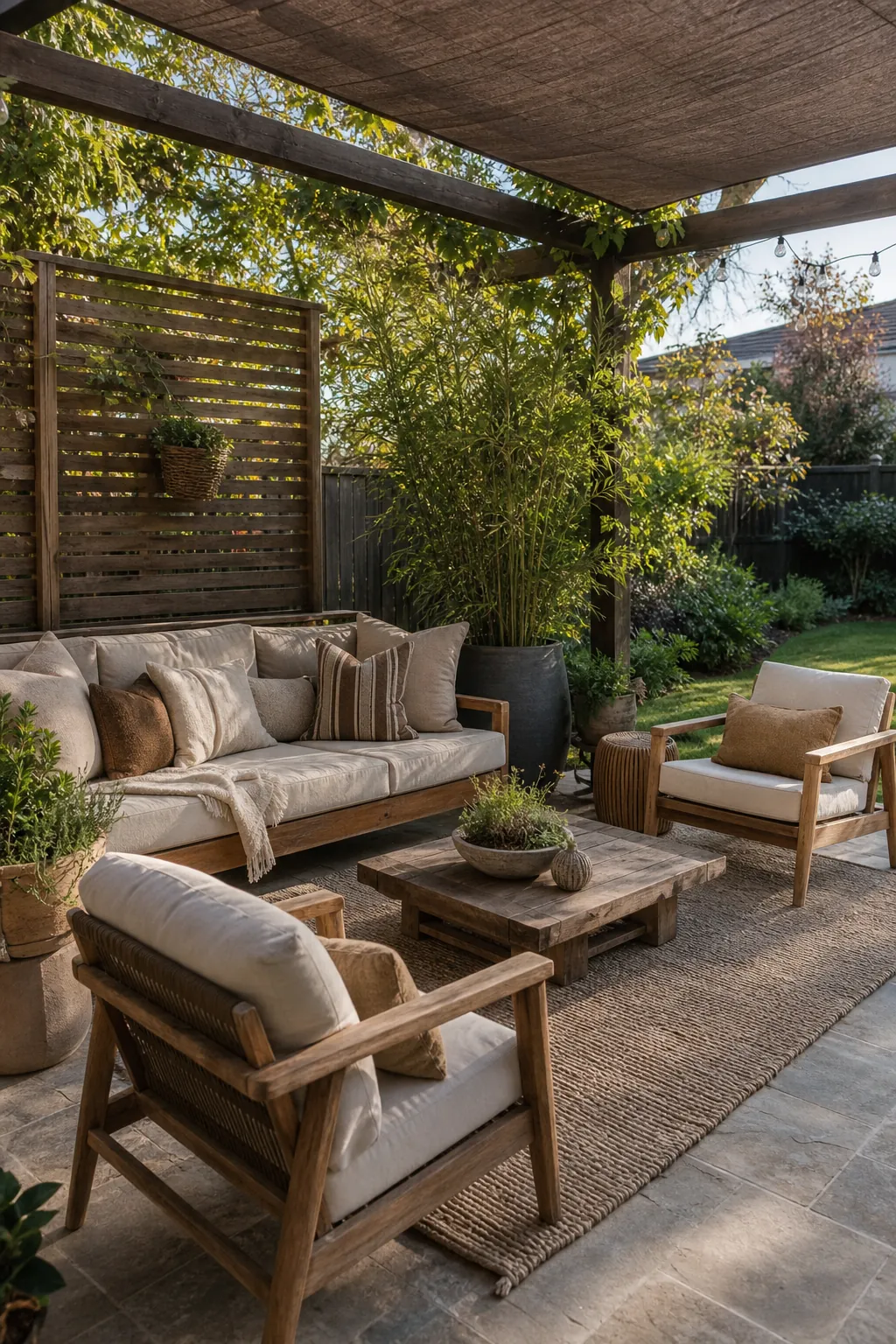
A patio starts feeling like an outdoor living room when it stops being a leftover slab with chairs on it. The change is less about buying more patio decor and more about making the space behave like a room: a clear place to sit, a reason to stay, a little privacy, comfortable light, and a layout that does not fight the way your family actually moves through the backyard.
That is the pattern that keeps showing up in real patio questions. Homeowners are not usually asking for one more cute planter. They are asking why a 16-by-20 patio still feels underused, where to put the grill, how to make room for kids, how to screen neighbors without planting the wrong hedge, and whether the seating should face the yard, the house, the fire pit, or the view. The best outdoor room solves those decisions first, then decorates around them.
Start With The Room You Actually Need
Before you buy a sofa, rug, pergola, or new set of planters, choose the patio’s main job. A living-room patio should not try to be every backyard idea at once. It can host dinner, but the center of gravity should be an outdoor lounge: a comfortable conversation area where people naturally sit down after work, stay after a barbecue, or watch kids move between the patio and the lawn.
Use this simple test: if you walked outside with a drink, where would you instinctively sit? If the answer is not obvious, the patio furniture layout is not doing enough work. Pick one anchor first, such as a sofa, loveseat, pair of lounge chairs, fire table, or coffee table. Then arrange everything else around that anchor.
- For conversation: place seats close enough that people can talk without raising their voices.
- For a family backyard: keep one edge open toward the lawn so adults can sit while kids move in and out.
- For outdoor dining: keep the table near the kitchen door or grill, but do not let it swallow the only lounge zone.
- For a small patio: choose fewer, deeper pieces instead of many skinny chairs that make the space feel temporary.
Give The Patio A Floor, Walls, And A Ceiling
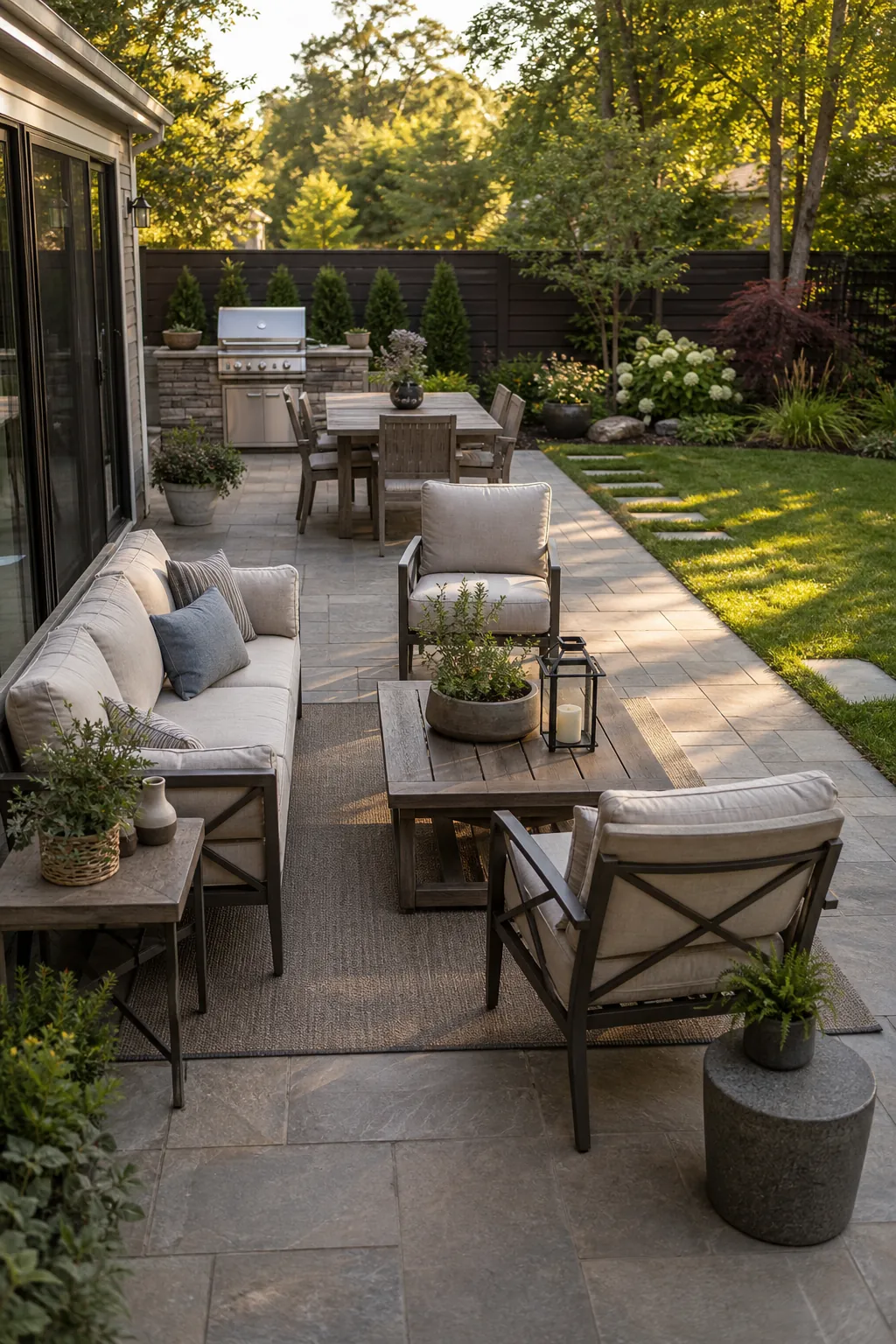
Indoor rooms feel finished because they have boundaries. Outdoors, you have to suggest those boundaries without boxing yourself in. The easiest floor is an outdoor rug that is large enough to sit under the front legs of the seating. A rug that floats in the center like a mat makes the furniture look disconnected. A generous rug makes the seating group read as one outdoor room.
The walls can be softer: tall planters, a mixed border, a slatted screen, a trellis, a hedge, or even a row of large pots. This is where many privacy ideas go wrong. People often choose plants that are too wide for the space, too slow to help, or too narrow to create real screening. Privacy has to match the patio’s scale, mature plant size, and the sightline you are trying to block.
The ceiling can be a pergola, shade sail, umbrella, vine-covered trellis, covered porch roof, or tree canopy. It does not need to cover the whole patio. Even partial shade over the main seating zone makes the space feel more intentional and usable during the hours you actually want to be outside.
Plan The Walking Paths Before You Style Anything
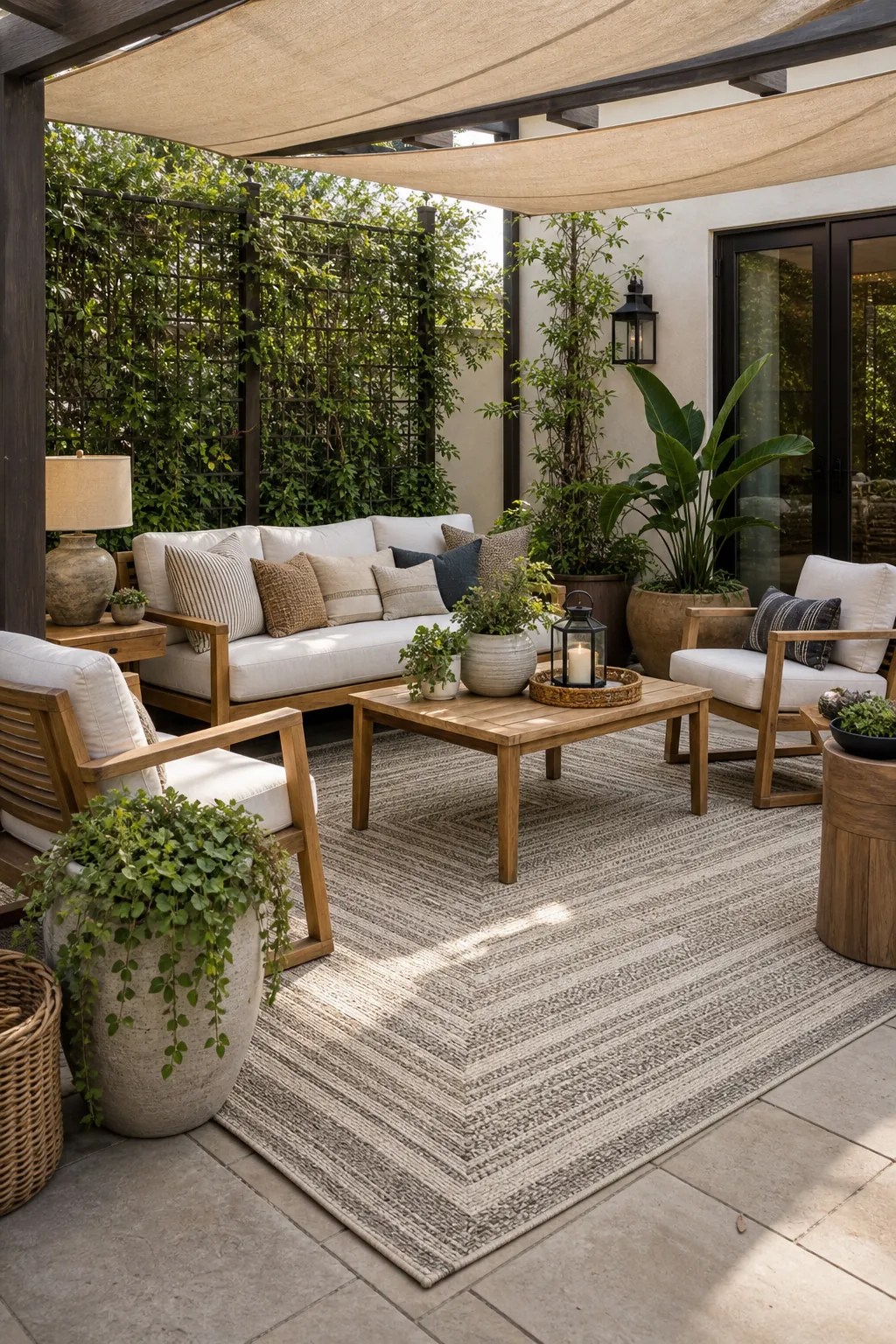
A patio can look beautiful in a photo and still feel annoying in real life. The usual reason is flow. Guests squeeze behind seated diners. Kids cut through the grill zone. A chair blocks the door. The sofa faces a fence instead of the yard. The outdoor seating looks nice, but nobody wants to cross the space to use it.
Walk the routes before you commit: door to sofa, sofa to lawn, kitchen to grill, dining table to trash, lounge chair to side table. Leave enough clear space that people can move without apologizing. As a practical starting point, keep the main route around the patio roughly three feet wide. Smaller side routes can be tighter, but they still need to feel deliberate.
For most patios, the strongest layout puts the longest seating piece along the longest edge or cleanest boundary, then faces it toward the best view: garden, fire feature, pool, open yard, or another seat. Do not make the back of the house the default focal point unless it is actually the nicest thing to look at.
Use Privacy As A Comfort Layer, Not A Wall
Privacy is one of the biggest differences between a patio people pass through and an outdoor living room people settle into. The goal is not to hide from the world completely. The goal is to remove the feeling of being on display.
Start by identifying the exact view that makes the patio feel exposed: a neighbor’s window, a driveway, a fence gap, a street angle, or the under-deck storage area. Then block that view with the smallest effective move. A full hedge may be right for a long fence line, but a single screen panel plus two tall planters may fix the actual problem faster and with less maintenance.
- Use tall planters at corners where people sit, not only along the property line.
- Mix plant heights so the screen feels like garden design rather than a flat green wall.
- Check mature sizes before planting, especially in narrow side yards and small patios.
- Keep sightlines open toward the lawn if kids, pets, or garden views matter.
Make The Seating Feel As Easy As The Living Room
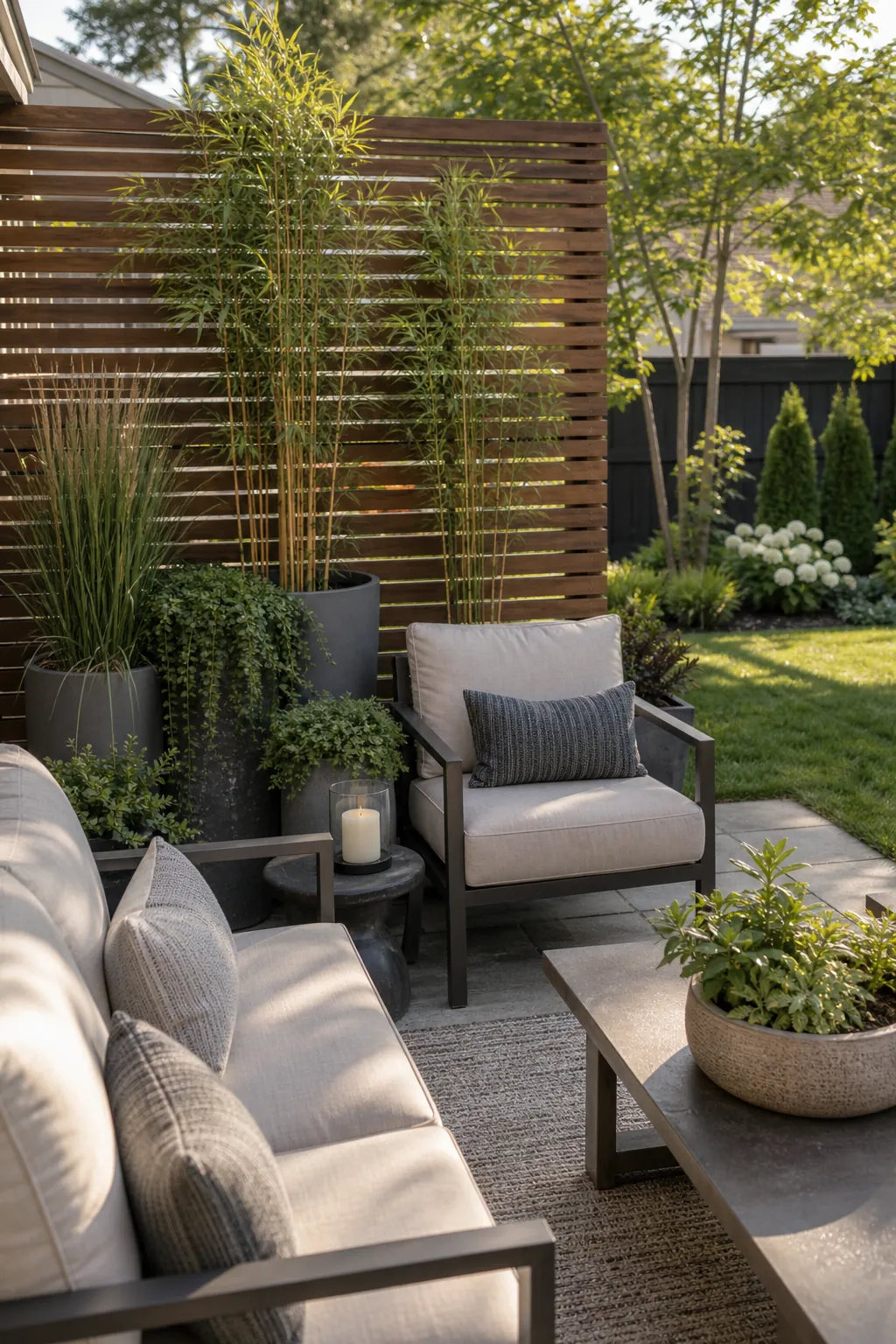
The fastest way to make an outdoor room feel unfinished is to choose patio furniture that looks durable but feels punishing. Outdoor seating should invite the same behavior as indoor seating: leaning back, setting down a drink, putting up your feet, shifting into shade, and staying through a second conversation.
Choose a seating mix with layers. A sofa or loveseat gives the patio a true living-room signal. Lounge chairs add flexibility. A coffee table or two sturdy side tables make the space usable. Ottomans, poufs, or a low bench can double as extra seats when family or guests spill outside.
Materials matter, but comfort matters more. Wood, wicker, metal, and performance fabric can all work if the proportions are right. What you want to avoid is a patio full of pieces that are technically outdoors but emotionally read like waiting-room furniture. If no one would choose that seat indoors, they probably will not choose it outdoors either.
Light The Patio Like A Room, Not A Parking Lot
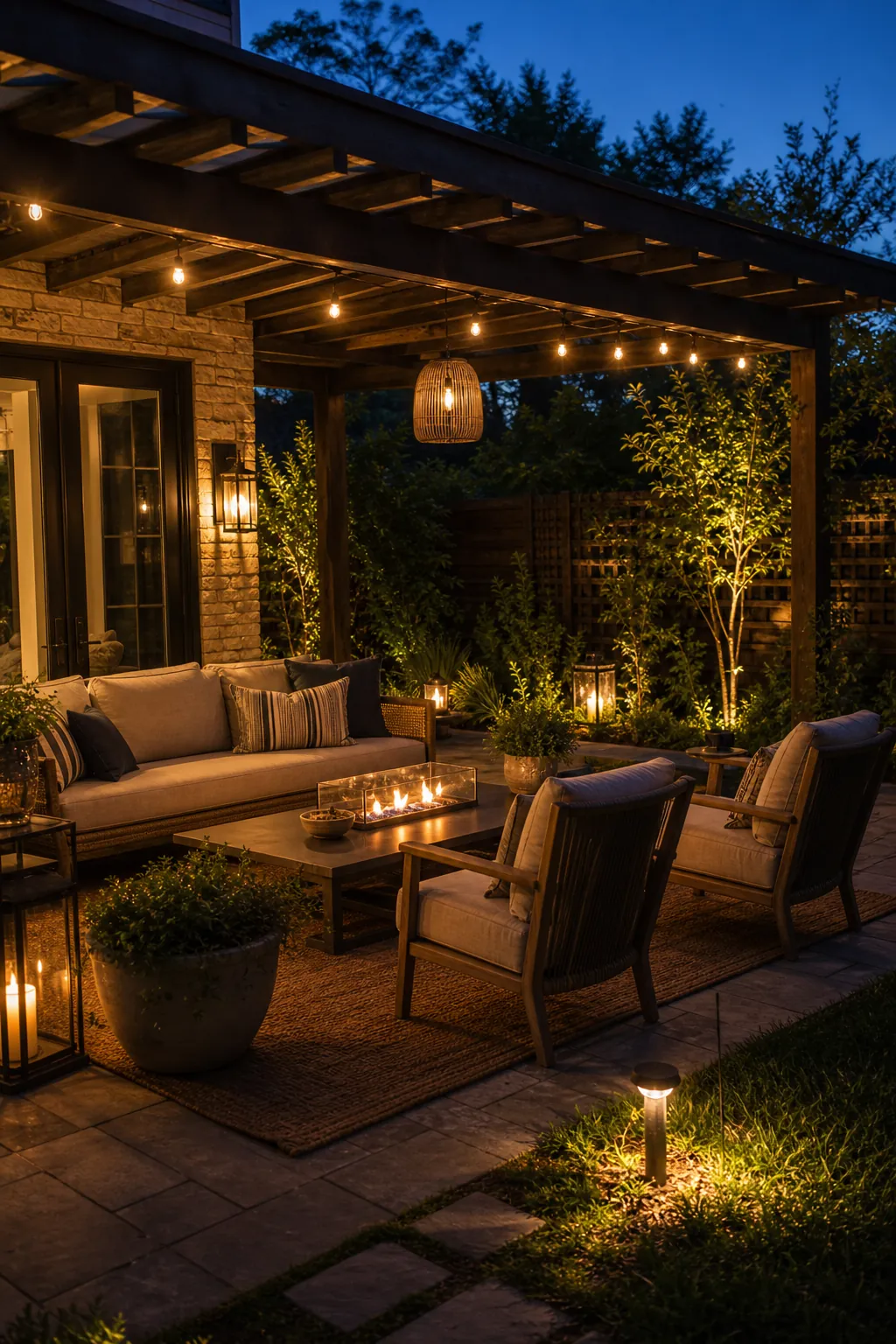
Outdoor lighting is where many patios lose their magic. One bright floodlight can make dinner safer, but it rarely makes an outdoor lounge feel warm. A living-room patio needs layers: soft overhead or wall light for general glow, task light where people cook or walk, and low accent light on plants, steps, or a focal point.
Warm light usually feels better than cool white outdoors. Keep the mood low and consistent, especially near the seating area. Lanterns, sconces, string lights, step lights, and small table lamps can all work, but the principle is the same: reveal the patio in pockets instead of blasting every corner equally.
Think of lighting as a habit tool. If the patio looks inviting at dusk, you will use it more often. If it feels harsh or too dark to move around, you will keep walking back inside.
Add Decor That Solves Real Outdoor Problems
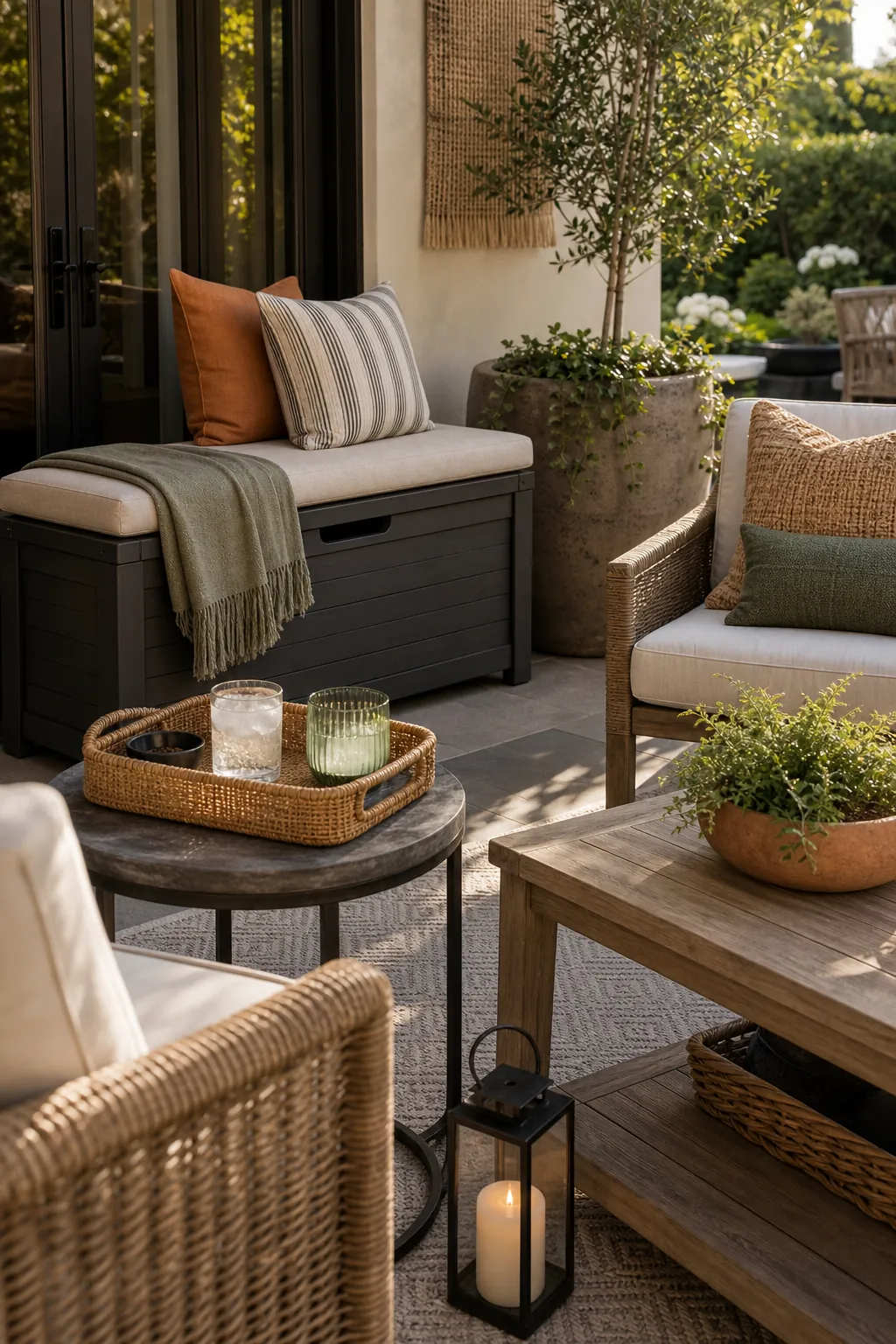
Patio decor should do more than fill space. The right pieces make the outdoor living area easier to use. A tray keeps drinks stable on an uneven table. A storage bench keeps cushions from becoming a daily chore. Washable pillow covers make the lounge feel softer without turning every rain shower into a crisis. A planter can hold herbs, screen a view, and soften a hard corner at the same time.
This is where the patio begins to feel personal. Repeat a few materials or colors from inside the house so the transition feels natural, then let the garden add texture. Bamboo, teak, rattan, linen-look performance fabric, terracotta, stone, black metal, and leafy green planting all work well for a natural outdoor living look when they are used with restraint.
- One outdoor rug to anchor the room.
- Two or three pillows that echo indoor colors without looking too precious.
- At least one side table per two seats so the space functions.
- Large planters instead of many tiny pots that create clutter.
- A storage plan for cushions, throws, toys, grilling tools, and seasonal decor.
Design For The Way Your Family Uses The Backyard
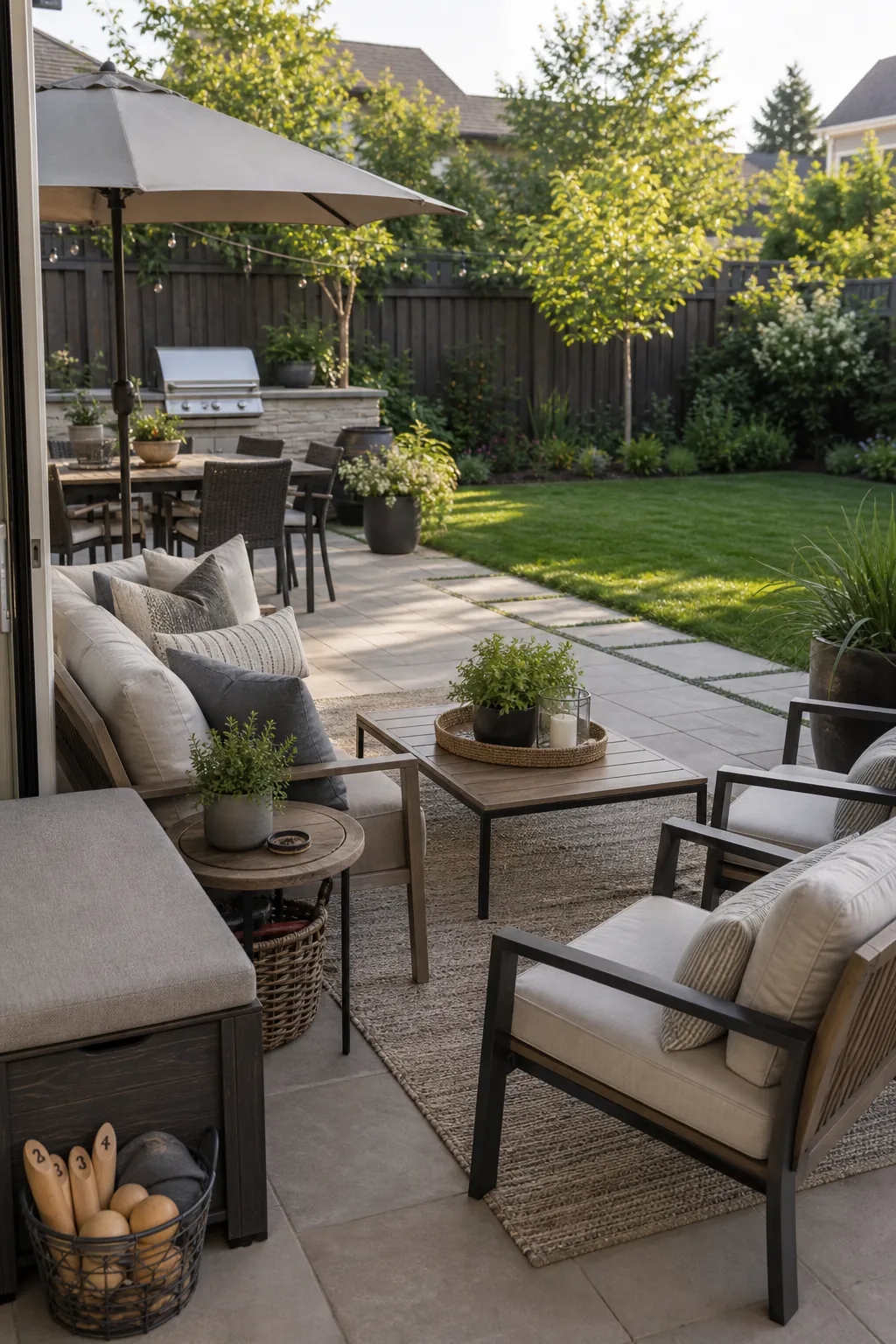
A beautiful patio that ignores family life will not stay beautiful for long. If kids need grass, preserve a clear view and easy route to the lawn. If you grill every weekend, do not place the outdoor room so guests must walk through smoke or the cook has to turn their back on everyone. If you relax outside after work, pay attention to where the sun hits at that exact hour, not just how the patio photographs at noon.
This is the difference between a styled patio and a lived-in outdoor room. One is arranged for a picture. The other is arranged for repeated use. The room should make your best backyard habit easier. Morning coffee, weekend barbecue, quiet reading, family dinner, fire pit nights, container gardening, or watching kids play can each lead to a different layout.
The Simple Patio Living Room Formula
If your patio feels scattered, use this order. First, decide the main use. Second, anchor the lounge with comfortable seating. Third, define the floor with a large rug or furniture grouping. Fourth, add privacy where people feel exposed. Fifth, create shade for the hours you use the space. Sixth, layer warm lighting. Seventh, bring in patio decor only after the layout works.
The best patio does not need to look like an indoor room dragged outside. It needs to borrow the logic of a living room: comfort, boundaries, flow, lighting, and a clear reason to gather. When those pieces are in place, the patio stops feeling like extra space and starts feeling like one of the best rooms in the house.