
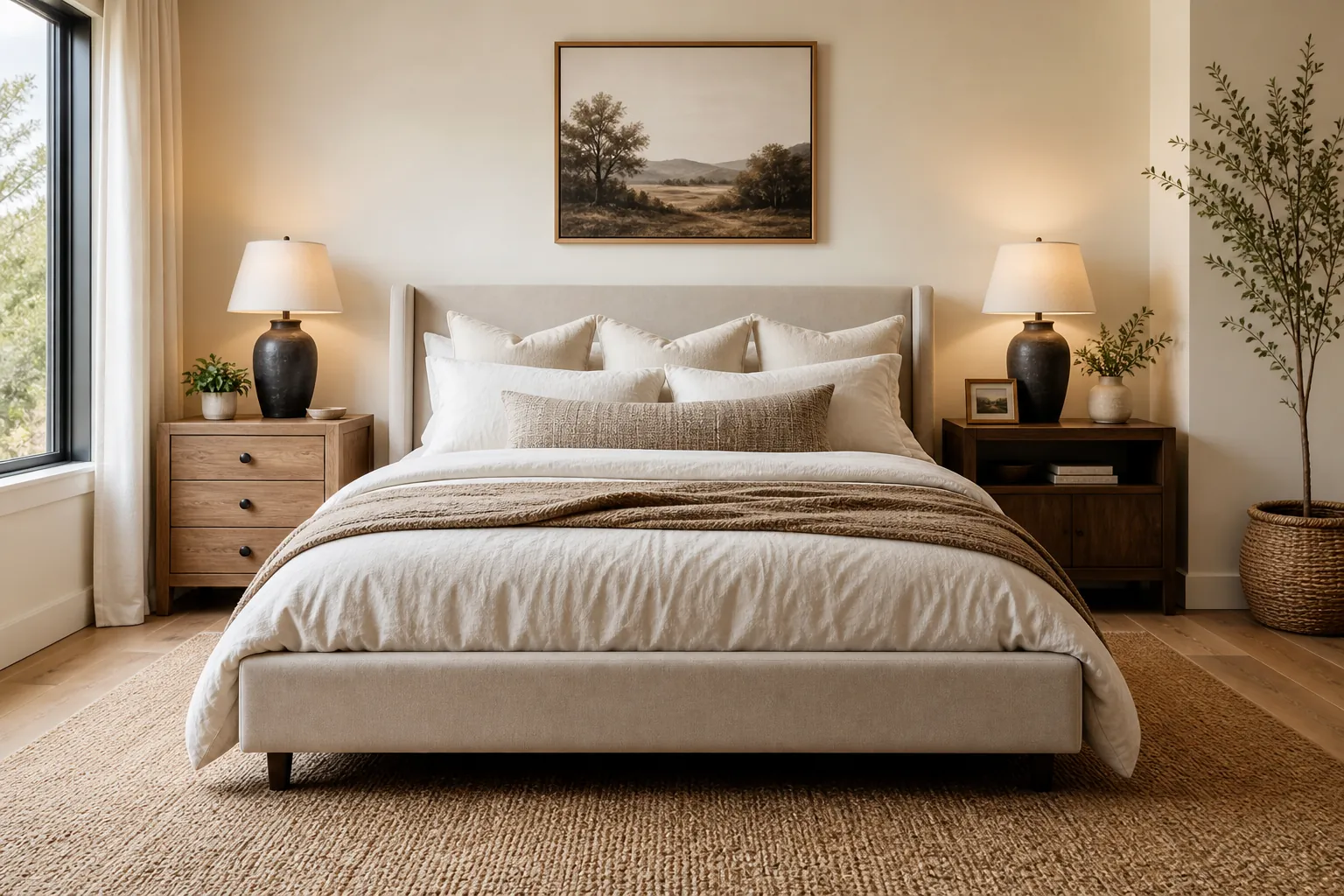
A couple bedroom rarely goes wrong because one nightstand is different from the other. It usually goes wrong because nothing explains the difference. One side feels heavy, the other side feels spare. One finish looks warm, the other looks cold. One person gets a real bedside setup, the other gets whatever was left over.
The best couple bedroom ideas with matching but not identical decor sit in the middle. The room should not feel like a furniture showroom, and it should not feel like two separate bedrooms collided. The goal is simple: repeat enough details to create calm, then vary enough details to make the room feel personal.
That is the difference between a shared bedroom that feels balanced and one that feels accidental. You are not trying to match every piece. You are trying to make both sides speak the same design language.
Start with a shared axis, not a matching set
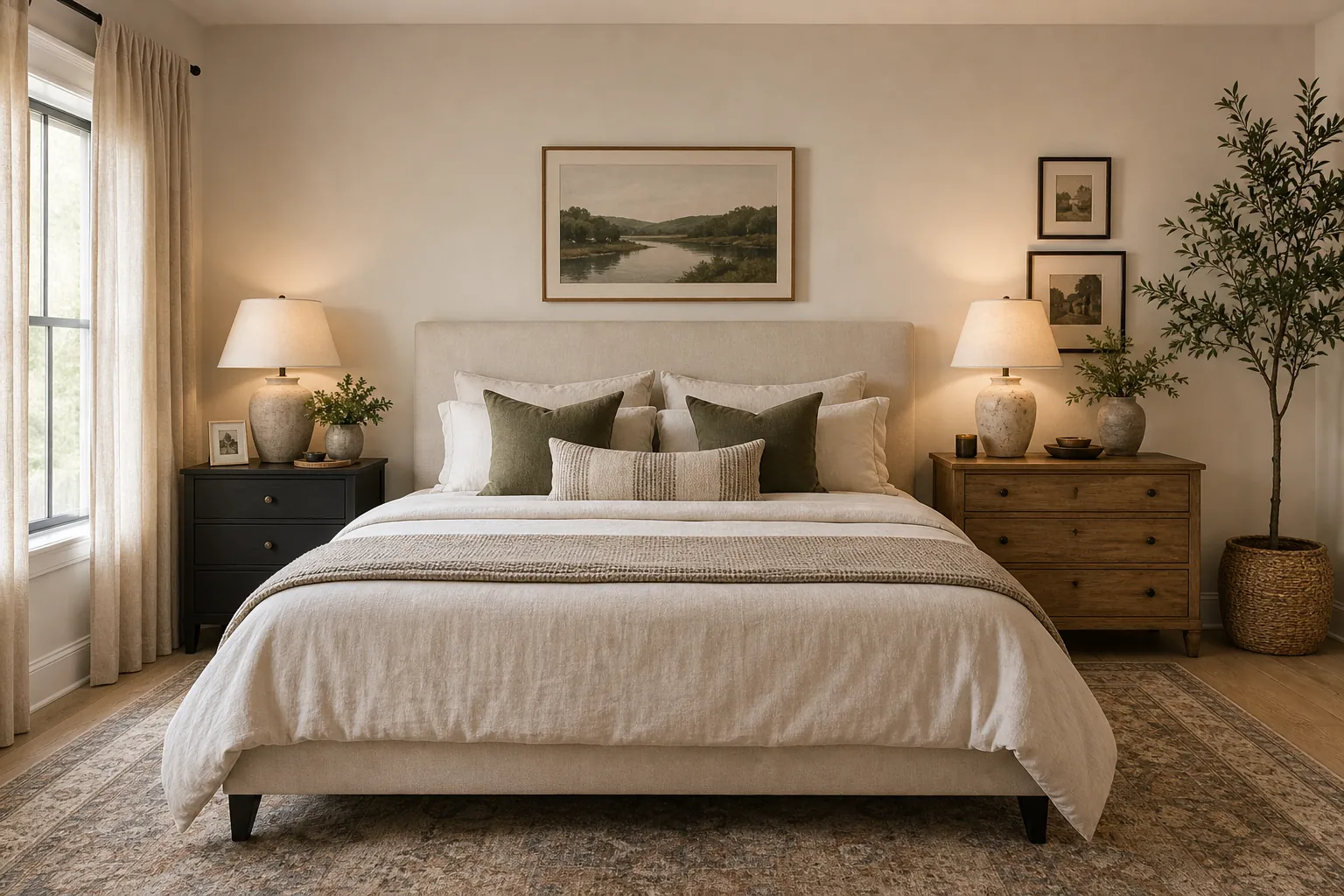
Before shopping for new nightstands, lamps, bedding, or art, look at the room from the doorway. In most bedrooms, the bed is the natural center line. If the bed is floating off-center, the rug is too small, or the wall above the headboard is empty, even good decor can look unresolved.
For a matching-but-not-identical bedroom, the bed should do the grounding work. Center it where possible. Give it a rug large enough to connect both sides. Use a headboard, art, or a wall color that both people can live with. Once the bed feels intentional, the side differences become easier to read as design choices.
- Use the bed as the shared anchor. The side pieces can vary, but the bed should feel like the main agreement.
- Give both sides visual weight. A tiny table on one side and a bulky chest on the other will feel lopsided even if the colors match.
- Repeat one clear detail. Lamp color, hardware finish, wood warmth, textile tone, or art frames can tie the room together.
This is why a balanced bedroom often feels more expensive than a perfectly matched one. The room looks collected, but not random.
Choose one piece you both genuinely like
When two people have different tastes, the fastest way to stall is to debate every item separately. The better move is to choose one anchor that both people like enough to build around. It might be the bed frame, a vintage dresser, a rug, a large artwork, a wall color, or a pair of lamps.
That anchor becomes the filter. If one partner likes rustic texture and the other prefers clean modern lines, choose a shared anchor that has both: a simple upholstered bed with warm wood, a woven rug with a quiet pattern, or a neutral duvet with a heavier linen texture. The room does not need equal amounts of each style. It needs a common starting point.
Once that piece is chosen, ask a practical question before buying anything else: does this new item support the anchor, or is it trying to start a second room? That single question prevents the bedroom from becoming a collection of compromises that never quite connect.
Make the nightstands sisters, not twins
Nightstands are where most people get nervous. Should they match? Can they be different? Will two different pieces look curated or chaotic? The answer depends less on whether they are identical and more on whether they share enough traits.
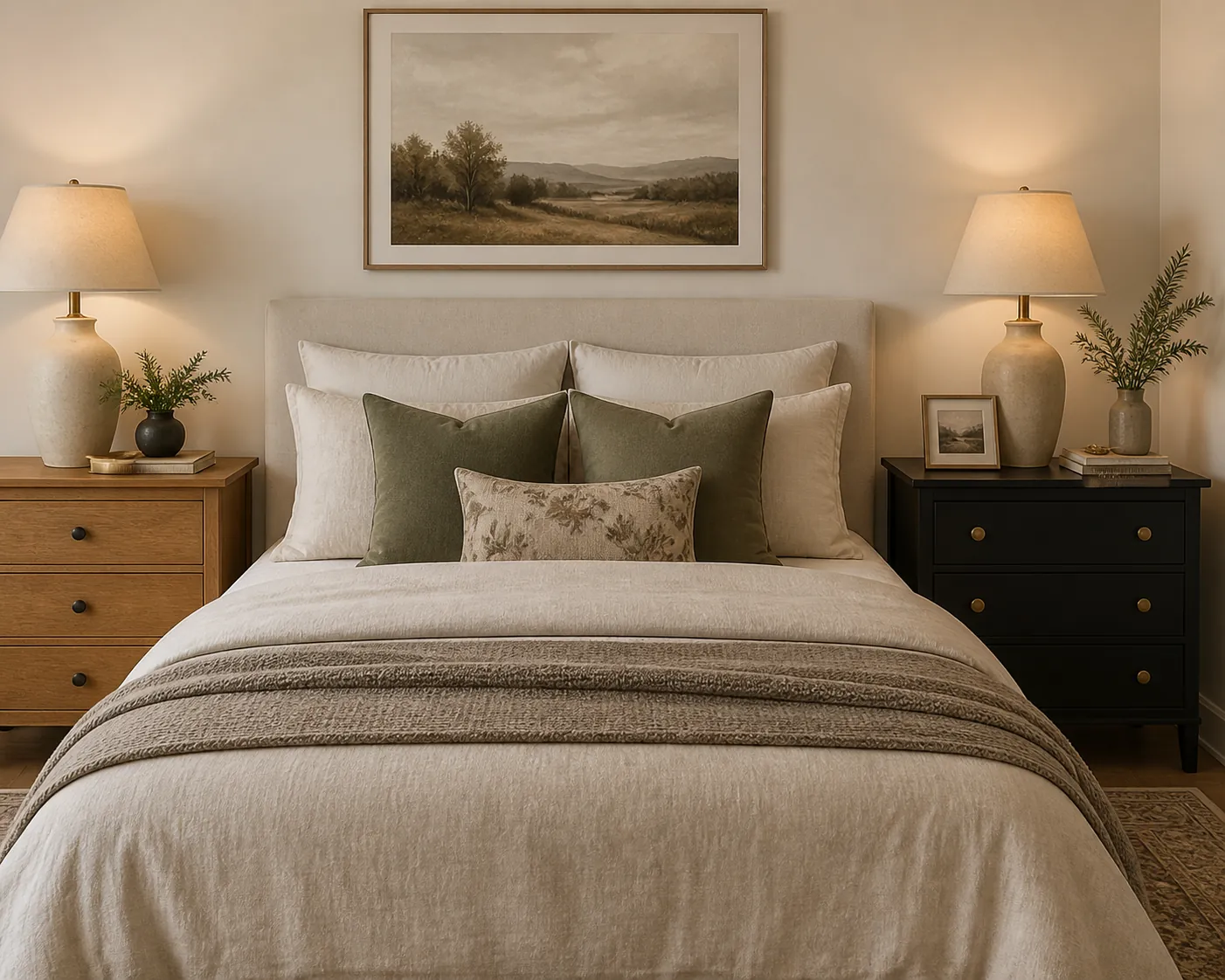
A good pair of mismatched nightstands usually has at least two things in common: height, visual weight, material temperature, leg shape, hardware tone, or lamp scale. They can be different colors. They can even be different shapes. But if one is much taller, much heavier, or much busier than the other, the bed will feel tilted.
Use this quick test before committing:
- Keep the tops close to mattress height. A small difference is fine. A major reach up or down will look and feel wrong.
- Balance storage needs. If one person has drawers, the other side should not look like an afterthought.
- Repeat lamp height. The lamps do not have to be identical, but the shade height should feel level across the bed.
- Contrast on purpose. Light oak and slightly different light oak can look like a missed match. Light oak and painted black often look intentional.
If you already own two very different pieces, do not assume one must go. Try matching the lamp finish, adding similar trays, or repeating the same art frame color above each side. Styling can create the pair even when the furniture does not.
Use a neutral bedroom base without making it bland
Neutral bedroom decor is popular for couples because it gives both people room to breathe. But neutral does not mean gray walls, white bedding, and nothing else. A neutral couple bedroom works best when it has temperature, texture, and a few quiet contrasts.
Start with two or three base tones: warm white, oatmeal, mushroom, taupe, stone, camel, clay, olive, sage, charcoal, or soft black. Then add texture through linen, woven shades, a wool rug, wood grain, a ceramic lamp, or a cane-front cabinet. The palette stays calm, but the room does not feel flat.
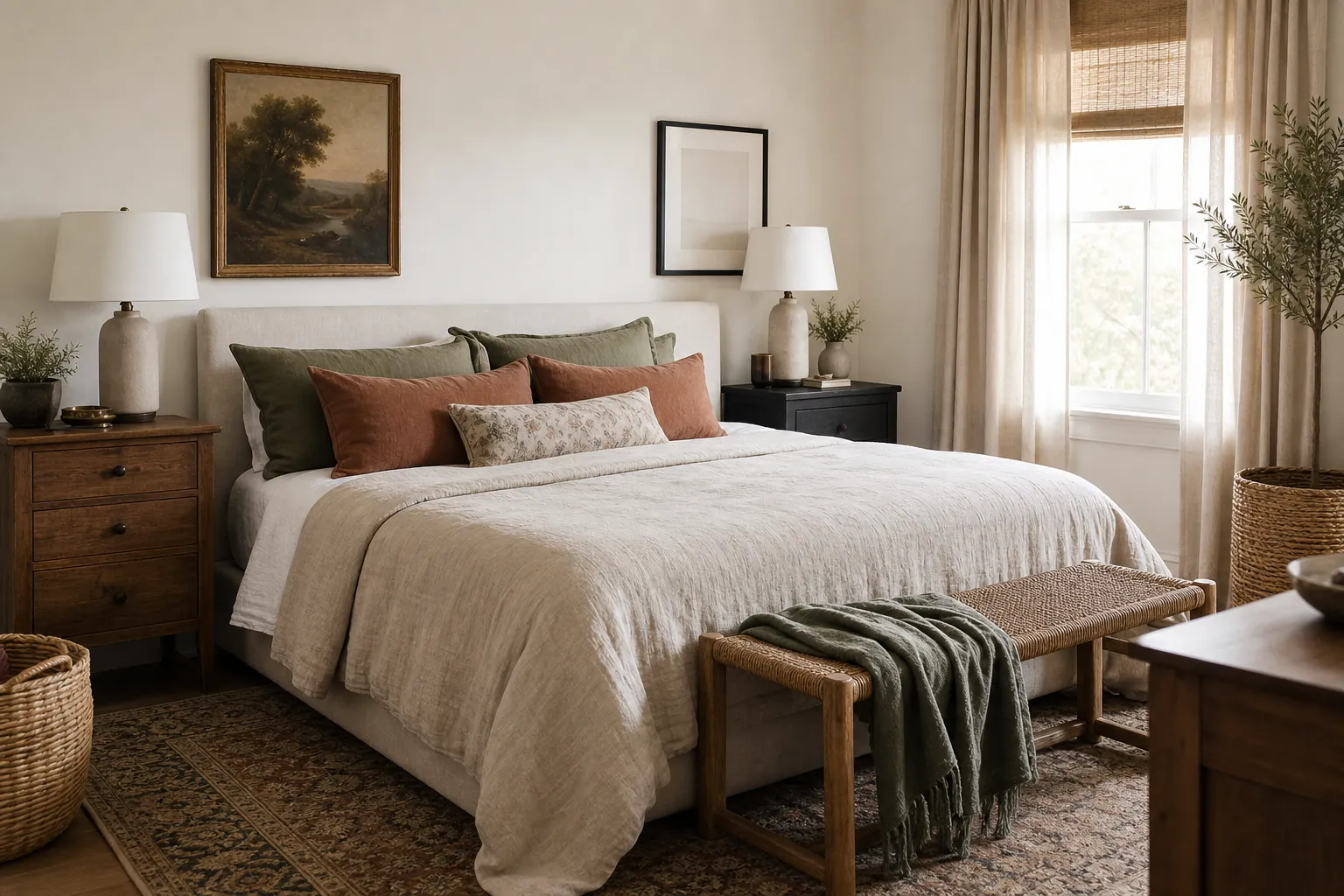
This is also where two personalities can show up without fighting. One person might prefer vintage art, the other clean-lined furniture. One might want earthy colors, the other black accents. In a neutral bedroom, those details can coexist because the base is quiet enough to hold them.
The mistake is making every personal choice loud. If the bedding, rug, wall art, lamps, and furniture all compete, the room starts to feel busy. Let the biggest surfaces stay calm, then give personality to the smaller, easier-to-change layers.
Balance the bedding so the bed belongs to both people
Bedding is the easiest place to make a couple bedroom feel shared. It is also the easiest place to overcorrect. Too many decorative pillows can feel fussy. Too little layering can make the room feel unfinished. The sweet spot is a bed that looks styled but still usable every night.
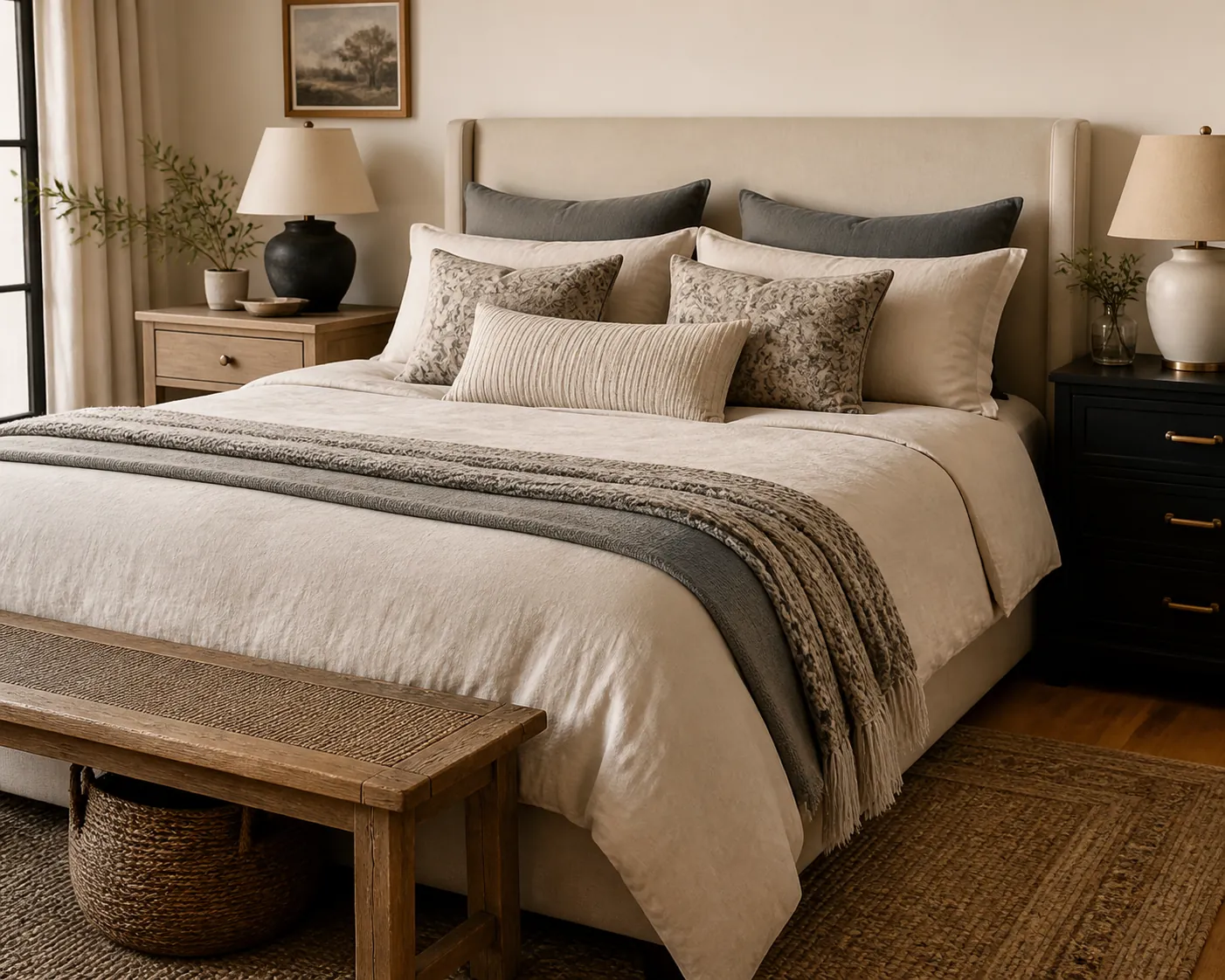
A strong formula is simple: sleeping pillows, one larger decorative pillow layer, one long lumbar or two smaller accent pillows, and a folded throw at the foot of the bed. That gives the bed shape without turning bedtime into a cleanup routine.
- If one person likes pattern, keep it contained. Use it on a lumbar pillow, throw, or small accent, not every surface.
- If one person wants minimalism, keep the bed easy to remake. Limit the number of pieces that must be removed every night.
- If the room feels too plain, change texture before color. Linen, boucle, waffle weave, wool, and washed cotton add depth quietly.
For a cozy bedroom, do not choose bedding by gender stereotypes. Choose it by weight, color, and maintenance. A warm neutral duvet, a darker throw, and one textured accent pillow can feel soft, grounded, and grown-up at the same time.
Give each person a side, then repeat the room language
A shared bedroom does not mean both nightstands need the same objects. In real life, one person may read in bed, one may need a charging station, one may keep hand cream nearby, and one may want a totally clear surface. The trick is to make the personal objects look edited.
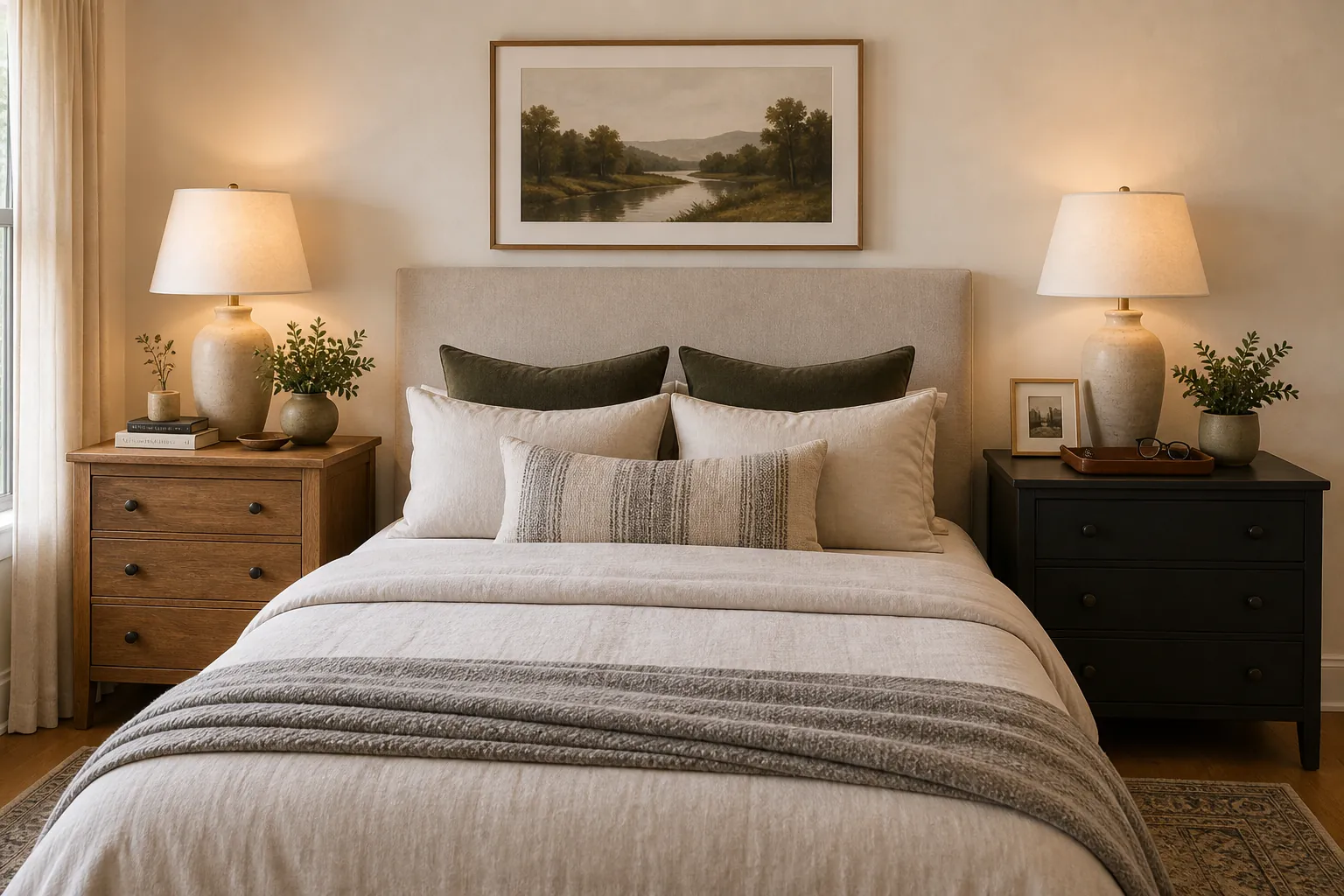
Use a tray, box, bowl, basket, or drawer to contain the small things. If one side has a book stack, the other might have a lidded box of similar size. If one side has a ceramic lamp, the other might repeat the ceramic finish through a small vase. These little echoes matter because they tell the eye the two sides belong together.
Think of nightstand decor in pairs of function, not pairs of identical objects:
- One lamp on each side, but not necessarily the same lamp.
- One contained landing zone on each side, such as a tray, catchall, or box.
- One softening detail on each side, such as a book, plant, small frame, or vase.
- One hidden storage solution for cords, remotes, glasses, and daily clutter.
The most polished nightstand decor is not the most decorative. It is the most controlled. Give each person what they need, then make the surfaces feel calm from across the room.
Mix wood, metal, and fabric on purpose
One of the hardest parts of matching decor without identical pieces is choosing finishes. The danger zone is not contrast. The danger zone is almost-matching. Two wood tones that are close but not quite the same can make the room feel like you tried to match and missed.
A stronger approach is to choose a finish plan. For example: warm oak, matte black, and linen. Or walnut, antique brass, and cream upholstery. Or painted taupe, cane, and dark bronze. Once the finish plan is clear, you can mix furniture more confidently.
- Use contrast when wood tones are different. A light wood nightstand with a black painted dresser often works better than two slightly mismatched light woods.
- Repeat metal in small doses. Hardware, lamp stems, curtain rods, and picture frames can quietly connect the space.
- Add fabric to soften hard furniture. Upholstered headboards, linen shades, curtains, and rugs make mixed furniture feel less abrupt.
- Limit the number of dominant finishes. Three main finishes are usually easier to control than six.
If you inherited furniture or are slowly replacing pieces, this rule is especially helpful. You do not have to start over. You may only need one strong contrast piece, a repeated metal, and calmer bedding to make the bedroom decor feel intentional.
Use lighting and rug scale to make the whole room feel connected
Some bedroom styling problems are really scale problems. A small rug can make both sides of the bed feel separate. One harsh overhead light can flatten even beautiful furniture. A single lamp on one side can make the room feel unfinished.
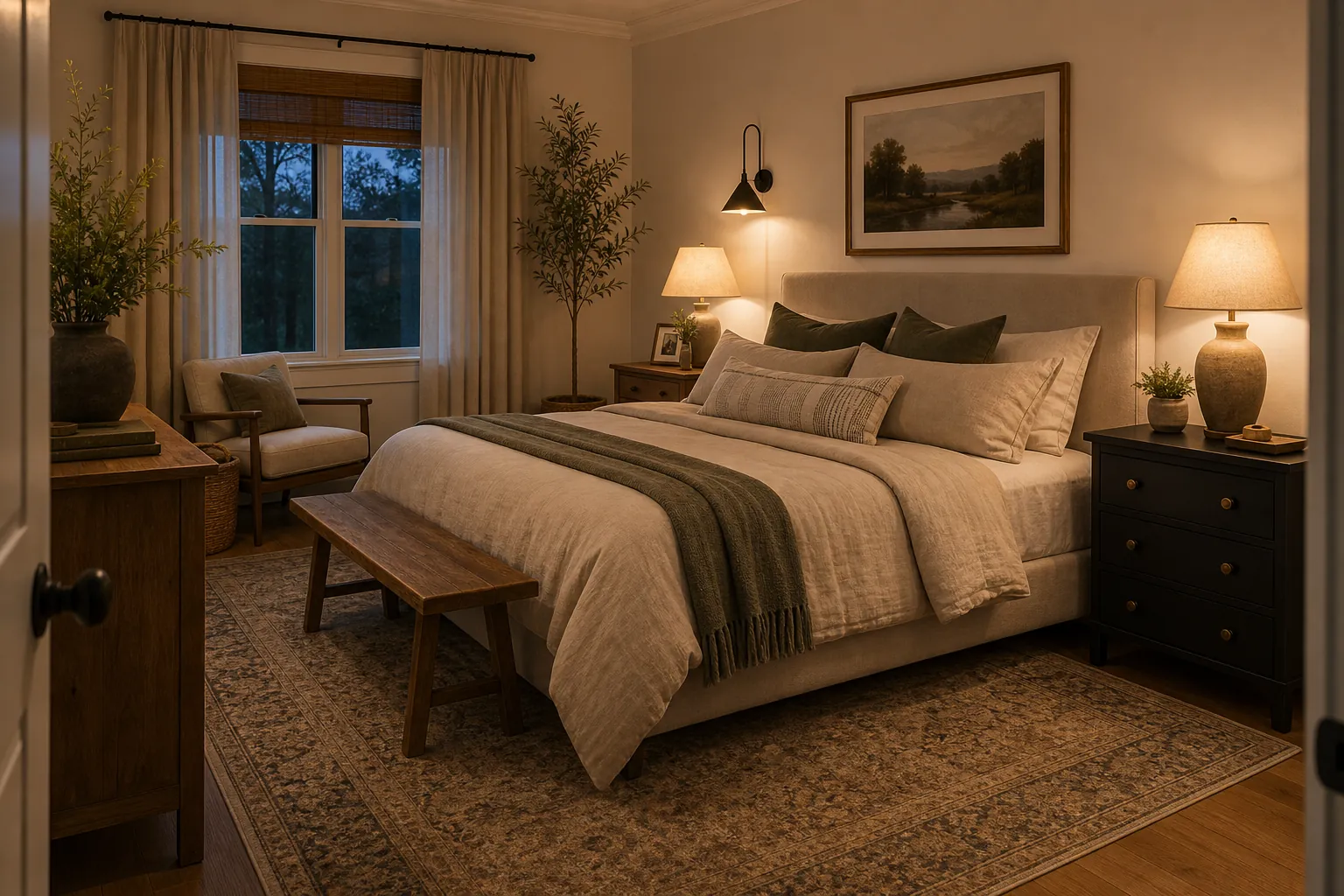
For a queen or king bed, the rug should usually extend beyond both sides of the bed enough that each person steps onto softness. This one move visually connects the left and right zones. It also makes mismatched nightstands look more anchored because the rug creates one shared base.
Lighting should do the same work. Use a lamp, sconce, or pendant on each side. The fixtures can differ, but their height, warmth, and brightness should feel compatible. Add one softer ambient source if the room needs more glow, such as a shaded floor lamp, a dimmable ceiling fixture, or hidden warm light near a dresser.
A cozy bedroom is usually layered, not bright. Think warm bulbs, fabric shades, curtains that soften the wall, and a rug that makes the bed feel settled.
Fix the most common couple bedroom disagreements
When a couple bedroom feels stuck, the real issue is often not taste. It is decision order. People try to choose the perfect dresser before agreeing on the room mood. Or they debate color before agreeing on how calm or expressive the bedroom should feel.
Use these fixes for the disagreements that come up most often:
- One person wants rustic and one wants modern. Use modern shapes with rustic materials, such as a clean-lined wood bed, woven rug, and simple black lamps.
- One person wants color and one wants neutral. Keep walls and bedding neutral, then add color through art, pillows, or a bench cushion.
- One person is tidy and one is not. Choose nightstands with drawers on both sides and use trays for daily items.
- One person wants matching furniture and one wants character. Match the lamps or hardware, then vary the nightstands or dresser.
- The bedroom is small. Use wall sconces, slimmer nightstands, under-bed storage, and one strong rug instead of many small pieces.
- Different sleep routines are causing clutter. Give each side its own light control, charging spot, and storage so function does not spill into the room.
The best shared bedroom is not the one where both people got every preference. It is the one where both people can point to something and say, yes, that feels like me.
A simple formula for matching but not identical decor
If you want a practical shopping and styling formula, use this:
- One shared anchor: bed, rug, art, or wall color.
- Two nightstands with similar height and visual weight.
- Two bedside lights with a shared finish, shade color, or overall height.
- One calm bedding base with one or two personality layers.
- Three repeated finishes across the room, such as oak, black metal, and linen.
- One large rug that visually connects both sides of the bed.
- Two personal bedside zones, edited with trays, drawers, or boxes.
This formula works because it gives you both structure and freedom. You can choose different lamps, different nightstands, different art, or different personal objects, as long as the major relationships stay steady.
The final checklist before you buy
Before ordering anything for a couple bedroom, stand back and ask these questions:
- Does the bed feel like the main shared anchor?
- Do both sides of the bed have similar visual weight?
- Are the nightstands close enough in height to feel comfortable?
- Is at least one detail repeated on both sides?
- Do the wood tones contrast clearly, or are they almost-matching?
- Is the bedding easy enough to maintain every day?
- Does each person have storage for the things they actually use?
- Does the room feel calm from the doorway?
If the answer is mostly yes, the room does not need to be identical. It already has what matters: rhythm, balance, and a shared point of view. Matching decor creates order, but matching-but-not-identical decor creates a bedroom that feels lived in by two real people.