

A small home usually does not need more bins first. It needs better height. When everything sits on counters, chairs, the floor, and the one reachable closet shelf, the room feels crowded even if you technically have storage. Vertical storage works because it moves the right things upward without stealing walking space.
The trick is not to cover every wall with shelves. That can make a small room feel busy fast. The better method is to decide what belongs at eye level, what can live above reach, and what should stay hidden. Use this guide as a room-by-room way to make wall mounted storage, tall shelves, door storage, and narrow vertical zones feel intentional instead of desperate.
Start With The Items That Keep Landing On The Floor
Before buying another shelf, look at the clutter pattern. Shoes near the door, chargers on the table, towels stacked on a stool, pans crowding the counter, and bags hanging from dining chairs are all clues. The best vertical storage solves a repeated drop zone problem. If you start with random empty wall space, you may add storage that looks good but does not change daily behavior.
Sort the items into three simple groups. Daily-use pieces should stay between waist and eye level. Weekly-use pieces can go higher or lower. Seasonal, backup, and occasional items can use the high zones above doors, above cabinets, and near the ceiling. This keeps small home storage practical instead of turning every shelf into a ladder chore.
- Daily: keys, bags, mugs, spices, toiletries, headphones, mail, pet leashes.
- Weekly: linens, hobby supplies, extra pantry goods, workout gear, office refills.
- Occasional: guest bedding, seasonal decor, paper goods, travel bags, keepsakes.
Use High Shelves For Backup Storage, Not Daily Storage
High shelves are one of the easiest wins in small space storage, especially in bedrooms, hallways, laundry corners, and living rooms with plain walls. The mistake is using them for things you touch every morning. That makes the system annoying, and annoying systems fall apart. Keep high storage for light, contained, occasional items.

A shelf mounted 12 to 18 inches below the ceiling can hold matching baskets, lidded boxes, folded blankets, extra pillows, or off-season accessories. In a small bedroom, a shelf above the door or above the headboard can replace a bulky extra cabinet. In a hallway, a long high shelf can store paper towels, spare bedding, and supplies without making the path narrower.
Leave a little breathing room. If every high shelf is packed edge to edge, the wall starts to feel heavy. Choose containers that match the wall or trim color when you want the storage to disappear. Choose warm baskets or wood boxes when you want the storage to look like decor. Either way, keep a folding step stool nearby so the setup stays usable.
Build One Wall Mounted Drop Zone Near The Entry
Entry clutter spreads because small homes often do not have a real foyer. The fix is a narrow vertical zone that catches the things you already bring in. A shelf, hooks, and a few shallow pockets can replace a console table when floor space is tight.
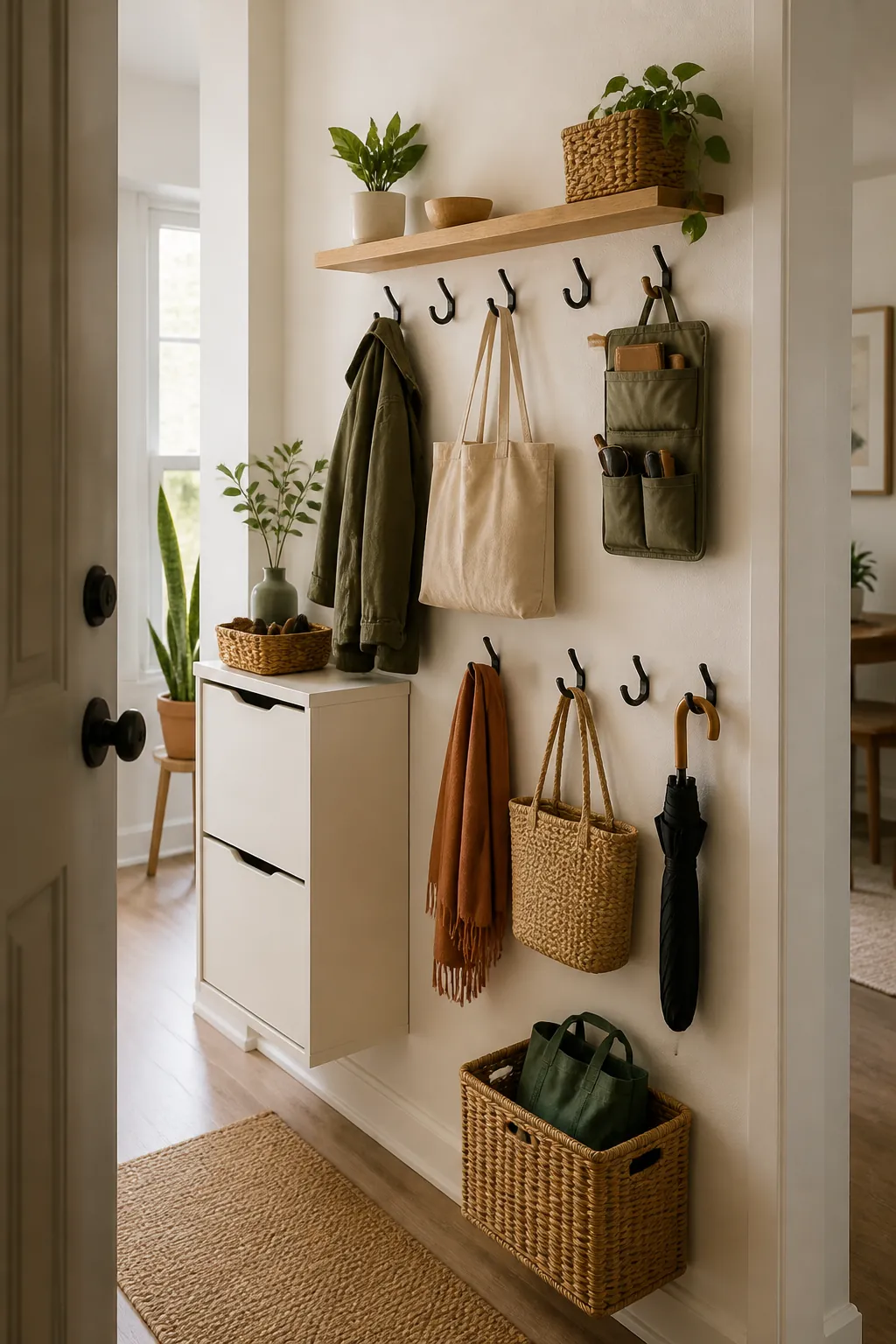
Start with hooks at two heights. Higher hooks work for coats, tote bags, and backpacks. Lower hooks work for kids, umbrellas, dog leashes, or reusable grocery bags. Add a slim shelf for keys and sunglasses, then use a wall pocket or small basket for mail that must be handled. If shoes are the issue, a narrow wall mounted shoe cabinet keeps the floor clearer than an open pile.
The key is restraint. A drop zone should hold what you use this week, not every coat you own. If the wall starts bulging with bags, move extras to a closet or high shelf. Vertical storage should create a clear landing routine, not a public storage closet.
Choose Tall Shelves That Are Shallow, Stable, And Closed Where Needed
Tall shelves are useful because they trade height for footprint. But in a small home, depth matters as much as height. Deep shelving can swallow a room and invite messy stacks. Shallow tall shelves, narrow bookcases, ladder shelves, and wall anchored cabinets keep storage close to the wall while leaving the center of the room open.
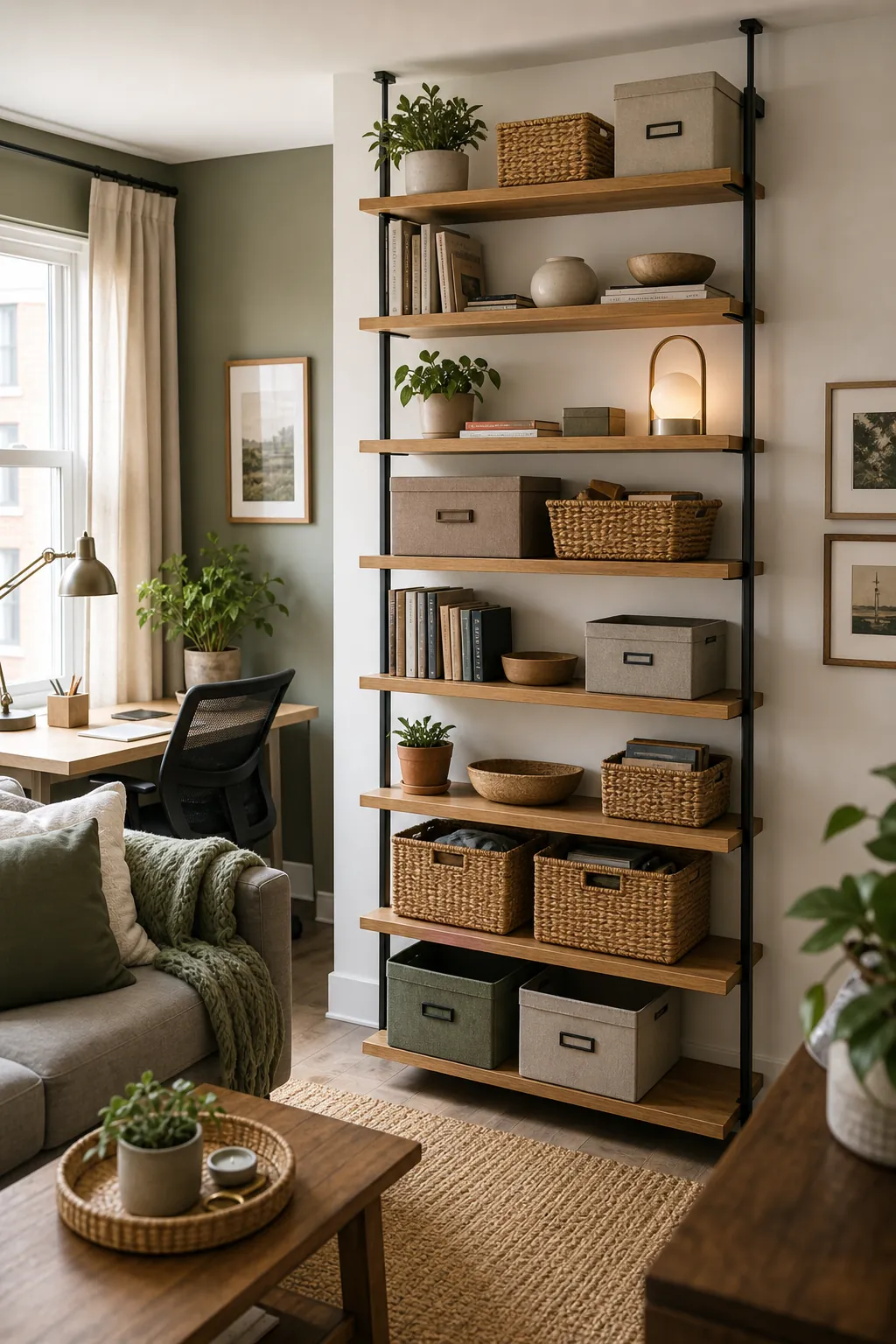
Use open shelves for attractive items you can keep neat: books, a few baskets, plants, bowls, ceramics, and folded textiles. Use doors, drawers, bins, or fabric boxes for things that create visual noise: cords, medicines, documents, cleaning supplies, craft tools, and product backups. Open storage expands function, but closed storage protects calm.
If a tall shelf will hold heavy items, place the heaviest things on the lower shelves and anchor the unit properly. In rentals, freestanding pieces are often easier than drilling rows of shelves, but anti-tip safety still matters. A beautiful storage idea is not worth it if it wobbles every time you grab a basket.
Make The Kitchen Wall Work Before Adding Another Cart
Small kitchens often lose function at the counter first. Knife blocks, spice jars, mugs, paper towels, and utensils spread out because they are used often. A rolling cart can help, but it also takes floor space. Wall storage keeps the work surface open while keeping daily tools visible.
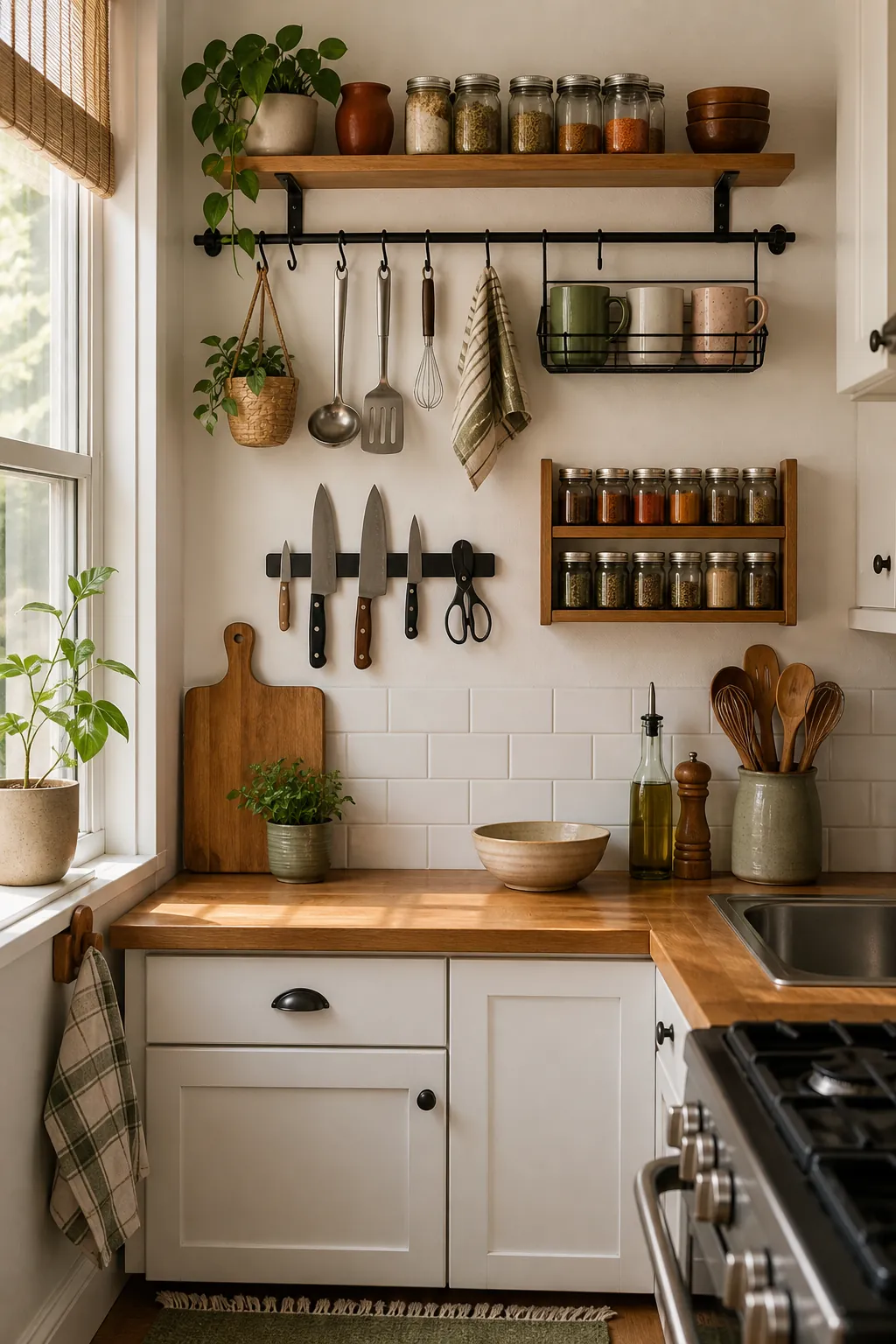
Try a rail with S-hooks for utensils, a magnetic strip for metal tools, a narrow spice shelf, or a mug rail under a cabinet. Keep only the useful pieces out. If you hang every pan and gadget you own, the kitchen can feel more crowded, not less. The best kitchen vertical storage is edited: the tools you reach for daily, arranged where cooking actually happens.
Over-the-sink shelving can also work when the counter is extremely limited. Use it for dish soap, a scrub brush, a small plant, and one contained basket. Avoid loading wet zones with paper goods or anything that will warp. Small space living depends on storage that matches the room, not just the wall.
Use Doors And Cabinet Interiors As Hidden Vertical Storage
The backs of doors and the inside of cabinet doors are often easier to use than open wall space. They are especially helpful in bathrooms, closets, laundry corners, and kitchens because they hide supplies in places that already belong to storage. Hidden vertical storage is the easiest way to reduce visual clutter.
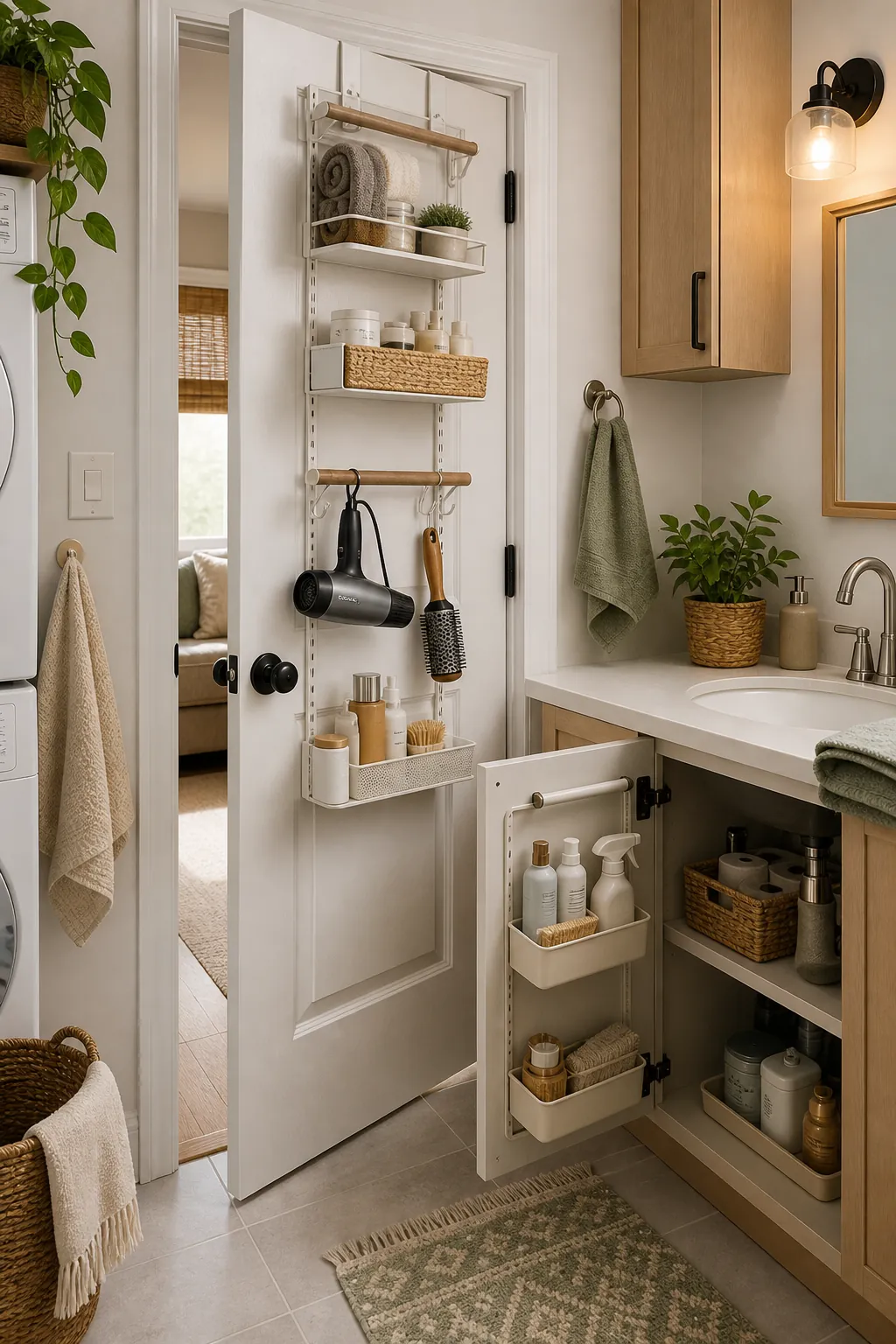
Use an over-door rack for scarves, hats, cleaning tools, pantry overflow, or bathroom extras. Use cabinet-door caddies for hair tools, wraps, cutting boards, cleaning sprays, or small toiletries. In a closet, cascading hangers and hook rails can use the unused drop below a shelf. In a bathroom, towel hooks usually save more wall space than a wide towel bar.
Measure the door swing before installing anything. A basket that looks shallow in the store can still hit the shelf inside a cabinet or keep a door from closing. In tight apartments, every added inch matters.
Turn Corners, Narrow Gaps, And Dead Strips Into Useful Storage
Vertical storage is not only for big empty walls. Small homes often have narrow strips that are too awkward for furniture but perfect for storage ideas: beside a fridge, above a toilet, next to a desk, at the end of a hallway, between a door frame and a corner, or above a radiator-safe area. These slim zones can do quiet work without changing the room layout.
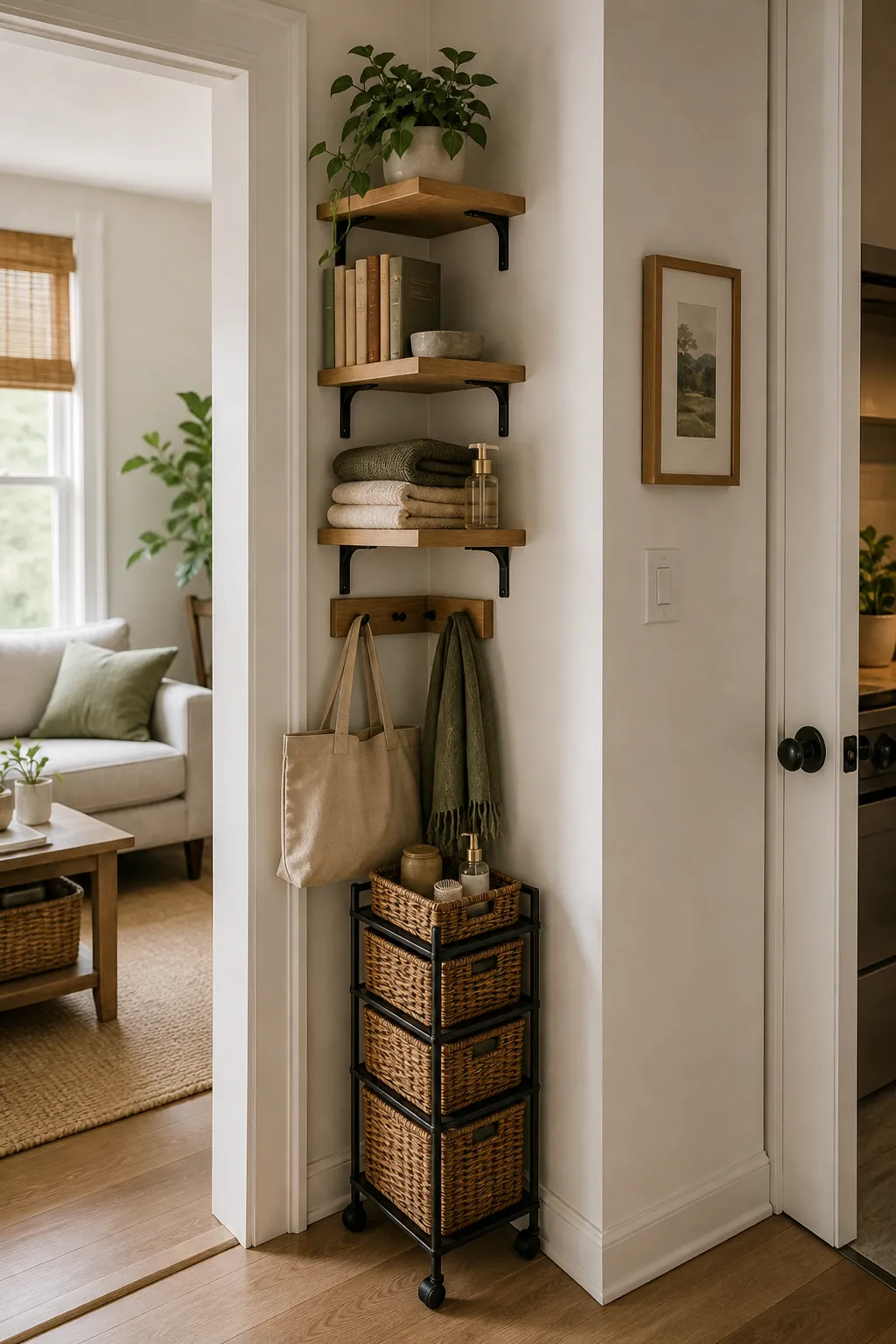
A corner shelf can hold plants, small baskets, and books. A narrow rolling tower can store pantry goods or office supplies. A peg rail can turn a short hallway wall into a place for bags and outerwear. A slim shelf above a desk can hold notebooks, chargers, and a small lamp without taking desktop space.
The best test is simple: can you still walk through the room without turning sideways? If not, the storage is too deep. Choose thinner pieces and go taller instead.
Keep Vertical Storage Calm With Repetition
Vertical storage can easily become visual clutter because it puts more items in sight. Repetition keeps it calm. Use the same basket style across one wall, repeat one wood tone, keep hooks aligned, and limit the number of container colors. The smaller the home, the more every storage decision becomes part of the room design.
Do not hide everything, though. A small home still needs warmth. Mix closed baskets with a few visible pieces that make the room feel lived in: a plant, a favorite bowl, a stack of books, framed art leaning on a shelf, or a pretty tray for daily items. The goal is organized personality, not blank perfection.
A Simple Vertical Storage Plan For This Weekend
If the whole home feels overwhelming, start with one wall and one category. Choose the clutter that annoys you most, then give it a vertical home before buying more general organizers.
- Pick one problem zone: entry, kitchen counter, bathroom sink, bedroom chair, or desk.
- Remove anything that does not belong there.
- Choose a vertical solution that fits the item: hooks, rail, shelf, pocket, tall cabinet, or door rack.
- Keep daily items reachable and move rare items higher.
- Leave one-third of open shelving visually empty so the room can breathe.
That last step matters. Small home organization is not about using every possible inch. It is about using enough height that the floor, counters, and daily surfaces feel lighter. When vertical storage gives your routines a clear place to land, the whole home feels bigger.
FAQ
What is the best vertical storage for renters?
Freestanding tall shelves, over-door organizers, tension systems, hook rails with approved anchors, and furniture with vertical storage are usually the most renter-friendly. Use removable solutions only for lightweight items and follow the weight limits carefully.
How do I stop wall storage from looking cluttered?
Use matching containers, repeat finishes, keep daily items grouped by category, and avoid filling every shelf. Closed baskets or cabinets help hide small objects that look messy in the open.
Should small homes use open shelves or cabinets?
Use both. Open shelves are best for attractive, easy-to-maintain items. Cabinets, drawers, and bins are better for cords, paperwork, toiletries, cleaning supplies, and backup products.