
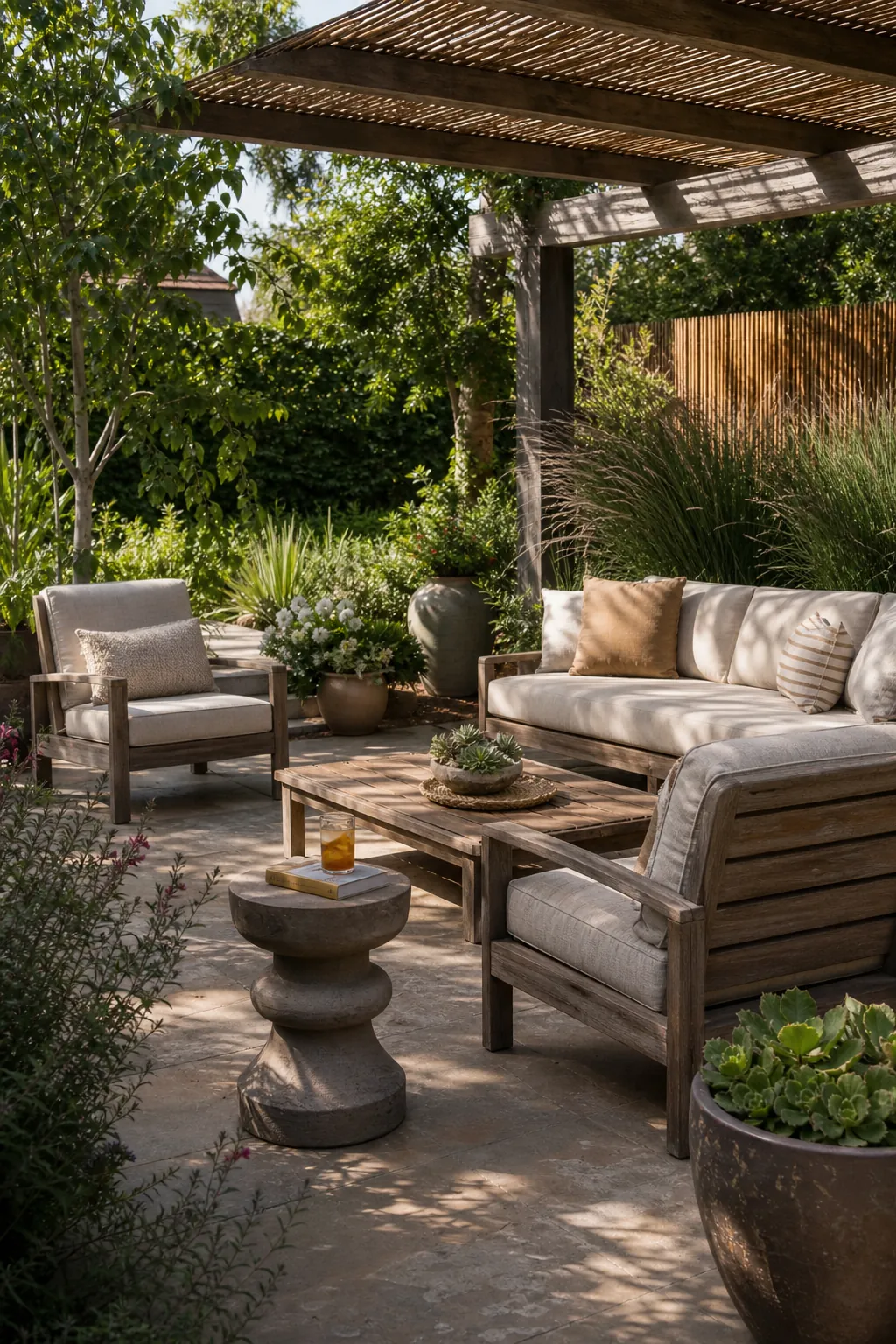
A relaxing garden seating area rarely starts with the perfect outdoor sofa. It starts with a small decision most people skip: where will this spot feel calm at 8 a.m., at 3 p.m., and after dinner? If the chair looks good but faces the neighbor’s windows, bakes in the afternoon sun, wobbles on gravel, or blocks the path to the grill, nobody will use it for long.
The best garden seating feels almost effortless because the hard work is hidden in the planning. The shade arrives when you need it. The chairs are close enough for conversation. The ground is stable after rain. The planting gives privacy without turning the backyard into a wall. That is the difference between a patio seating set that photographs well once and an outdoor living area your family actually drifts toward.
Start With The Moment You Want To Repeat
Before buying furniture, name the main moment you want from the space. A quiet coffee corner needs a different garden design than a family backyard built around outdoor dining. A reading spot can live in a tucked-away corner. A conversation area needs seats facing each other. A dinner zone needs enough room to pull chairs back without stepping into a flower bed.
Pick one primary use first: morning coffee, after-work lounging, weekend hosting, family meals, reading, or a shaded place to watch children play. You can layer secondary uses later, but the first choice keeps the seating area from becoming a cluttered compromise.
- For conversation: use a sofa with two chairs, four lounge chairs, or an L-shaped sectional with a low table in the middle.
- For outdoor dining: choose the table size first, then add a nearby perch for after-dinner conversation.
- For quiet retreat: use one generous chair, a footstool, a side table, and planting that frames the view.
- For family backyard use: keep sightlines open to the lawn, play area, or kitchen door.
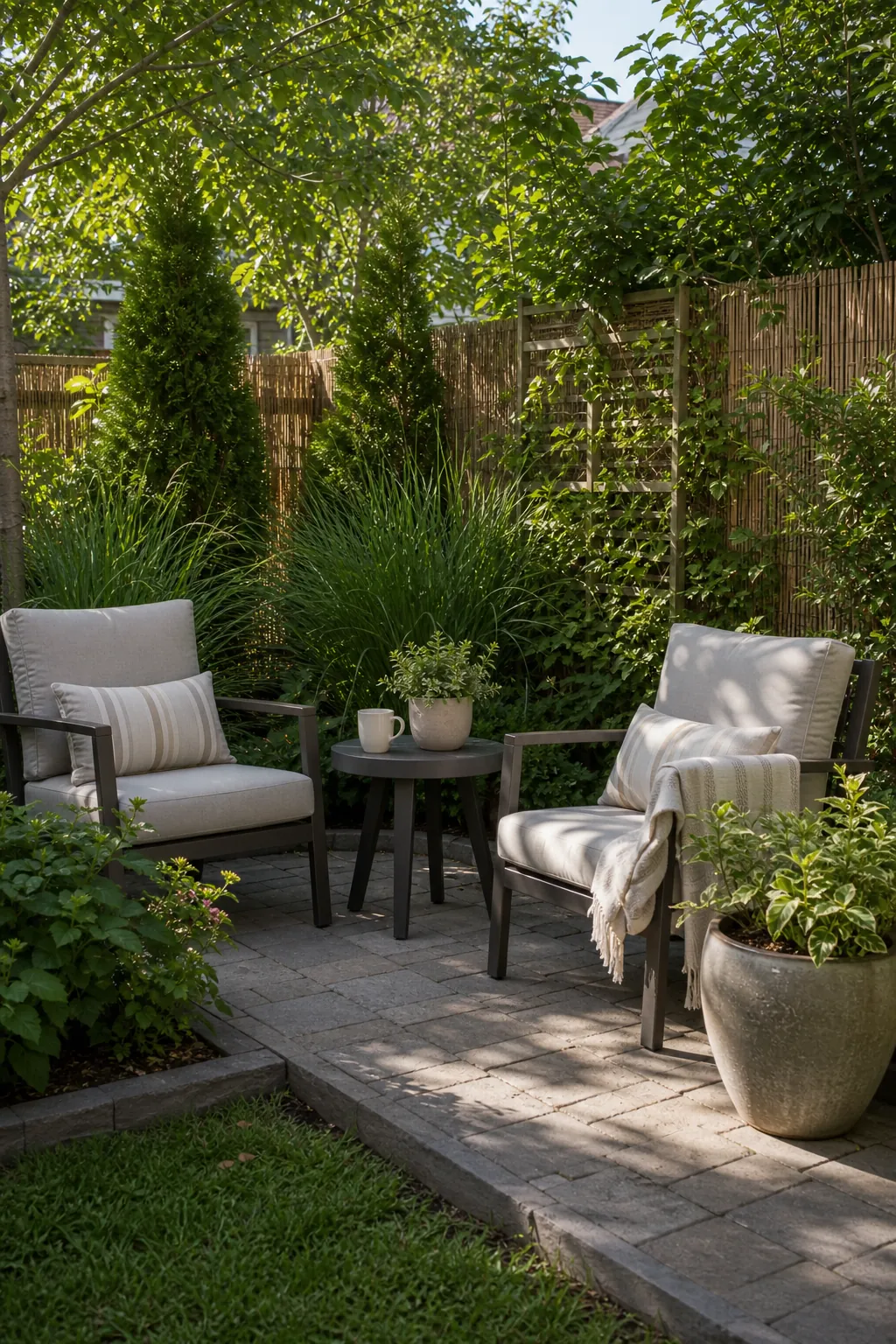
Choose The Spot By Sun, Privacy, And Convenience
A common backyard mistake is placing outdoor seating wherever the patio already exists, then trying to solve every problem with cushions and decor. Existing hardscape matters, but comfort depends on three simple tests.
1. Track the sun before committing
Stand in the yard during the times you expect to sit there. Morning sun may be welcome for coffee. Midday sun can make a dining table unusable. Late afternoon glare can hit faces even when the space technically has shade. A relaxing seating area needs shade at the hour you use it, not just shade somewhere in the garden.
2. Notice the views into and out of the space
Privacy ideas work best when they are specific. You may not need to screen the entire yard. You may only need to block one upstairs window, one side fence, or the view from the street when people are seated. Sit in a temporary chair and check the eye line from that height before adding a fence, trellis, hedge, or bamboo screen.
3. Keep the useful routes short
A secluded garden seating area can be beautiful, but if every drink, plate, cushion, and toy has to travel too far, the space starts to feel like work. For outdoor dining, stay close enough to the kitchen or grill that carrying food feels natural. For a quiet retreat, a longer walk is fine if the destination feels intentionally tucked away.
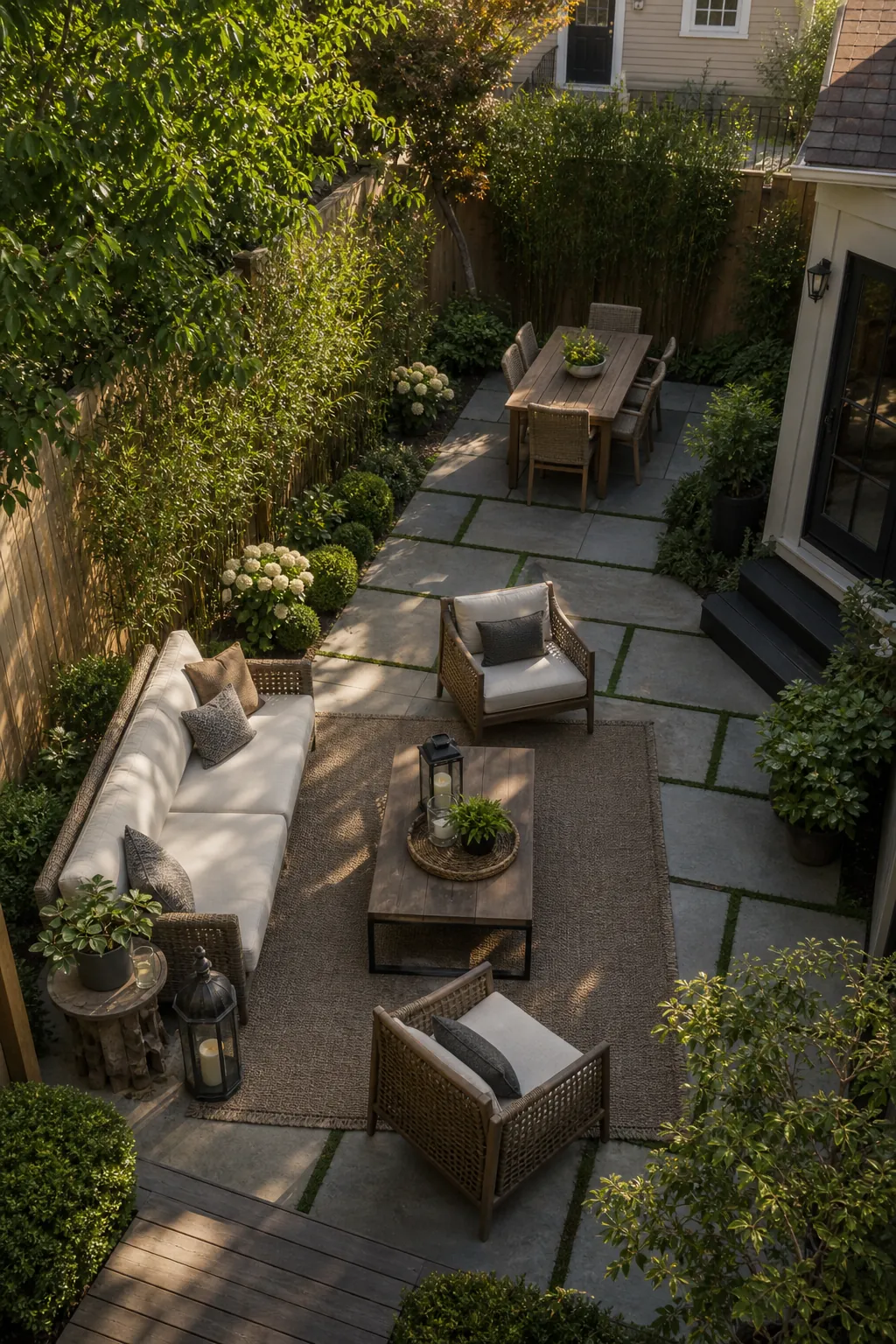
Size The Area Around Real Furniture, Not Hope
Garden seating gets uncomfortable when the furniture technically fits but people cannot move. A chair needs space behind it. A dining table needs pull-back room. A low coffee table needs enough clearance that knees, drinks, and feet are not fighting for the same square foot.
Use tape, string, stakes, cardboard, or an outdoor rug to mark the footprint before you buy anything. Then walk the route from the house to the table, from the grill to the seating, and from the seating to the lawn. If you have to turn sideways during the test, the finished area will feel cramped.
- Leave a clear route behind chairs where people need to pass.
- Keep the main seats close enough that people can talk without leaning forward.
- Use a round or oval table when a square table makes corners feel tight.
- Float chairs inward instead of pushing every piece against the fence.
- Choose fewer, better-sized pieces rather than filling every edge.
For small backyard ideas, an L-shaped bench can be more useful than several separate chairs. It defines the corner, saves floor space, and leaves the center open. For larger yards, a main lounge zone plus a smaller side perch can make the garden feel layered instead of empty.
Build A Stable, Dry Base First
The ground under the furniture decides whether the seating area feels finished. Grass looks casual, but chair legs sink after rain and tables wobble. Loose round stones look charming until a dining chair drags through them. A low spot may seem like wasted lawn, but it can become a calm seating nook if the surface is built up and edged properly.
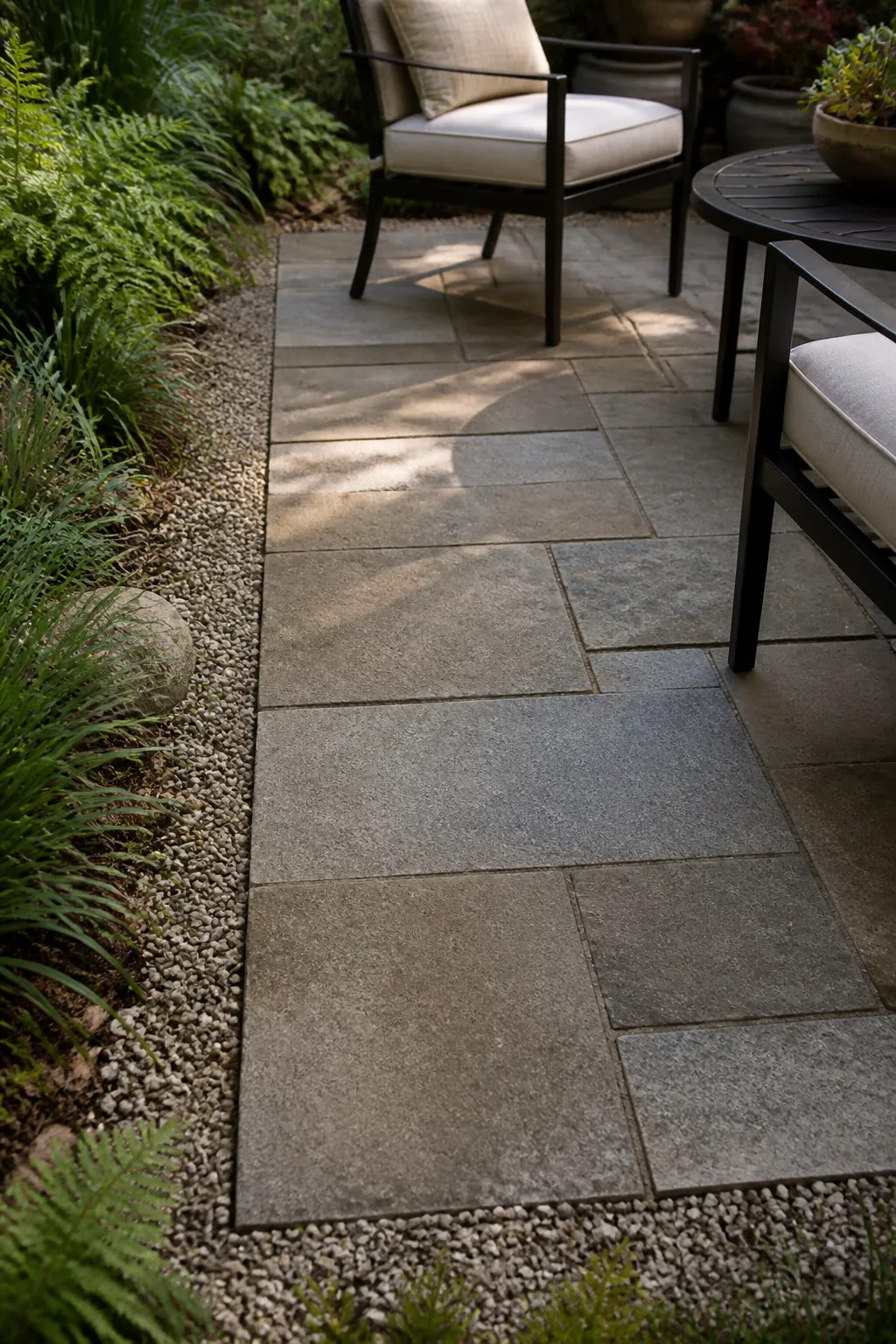
For a true outdoor living zone, prioritize stability and drainage before patio decor. Pavers, brick, stone, decking, compacted decomposed granite, and crushed angular gravel can all work in the right setting. The key is not the most expensive material; it is a surface that drains, supports furniture, and stays neat at the edges.
When pavers make sense
Pavers are a strong choice for outdoor dining because chairs slide more predictably and table legs stay level. They also make the area feel intentional. If the seating area is near the house, make sure water moves away from the foundation, not toward it.
When gravel makes sense
Gravel can be beautiful around planting and informal garden seating, but choose the type carefully. Angular gravel or compacted decomposed granite behaves better under furniture than smooth river rock. Add firm edging so the surface does not migrate into lawn and garden beds.
Create Shade Without Making The Space Feel Heavy
Shade is one of the fastest ways to make garden seating feel restful. The best option depends on whether you need permanent structure, flexible coverage, or a soft seasonal screen.
- Umbrella: simple, movable, and useful for patio seating that changes through the season.
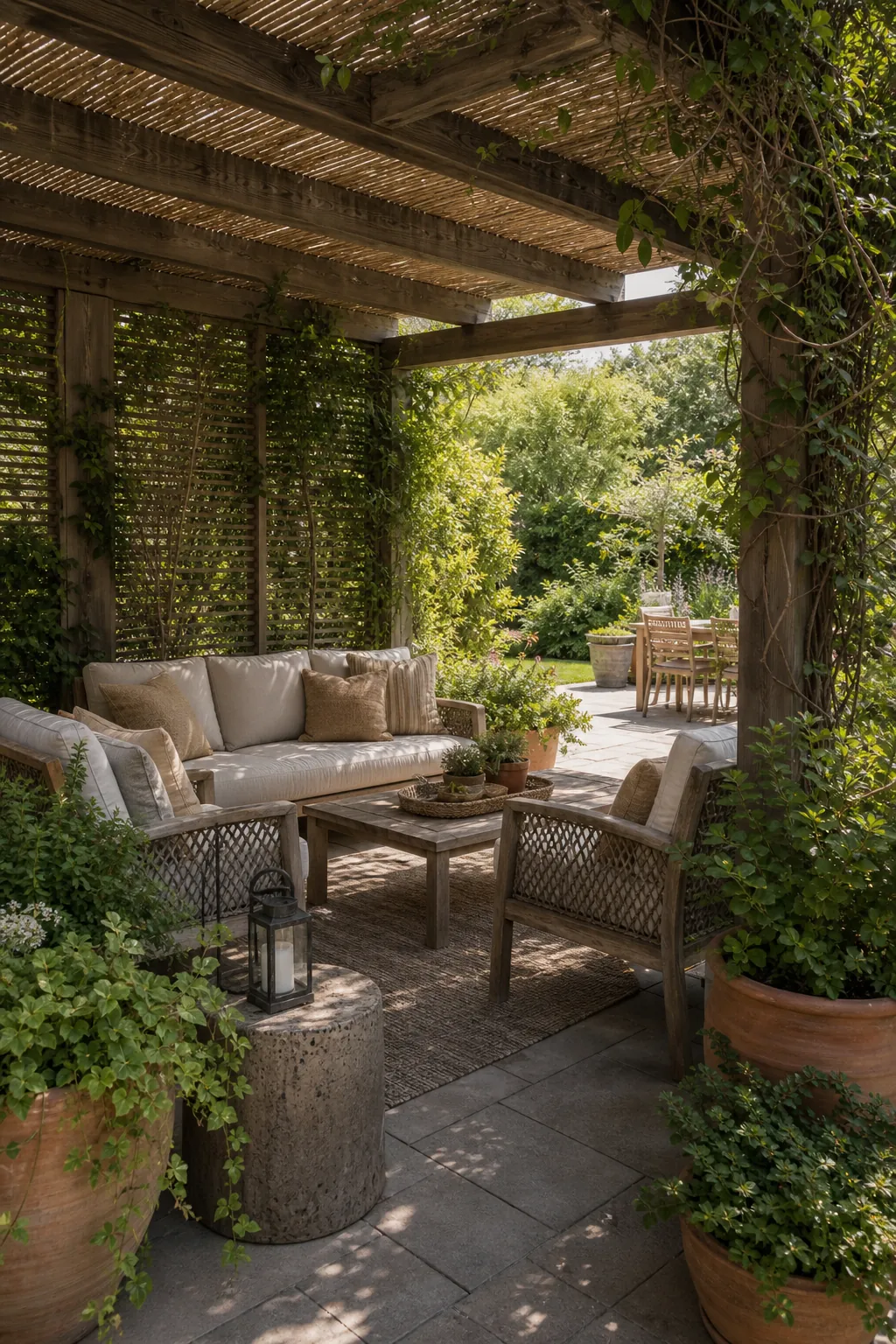
- Pergola: gives the space a room-like feeling and can support climbing plants, curtains, or light shade cloth.
- Shade sail: useful where a center umbrella pole would interrupt conversation or dining.
- Deciduous tree: offers summer shade while allowing more winter light.
- Bamboo or tall planters: adds privacy, texture, and a softer edge around the seating zone.
Do not only think overhead. Low evening sun often needs side shade from a screen, hedge, trellis, outdoor curtain, or tall container planting. A calm seating area is protected from glare, wind, and awkward views at seated eye level.
Use Privacy Layers Instead Of One Big Barrier
Privacy should make the space feel settled, not trapped. A single tall fence can solve the view problem but leave the seating area feeling flat. Layering usually works better: a fence or wall at the boundary, planting in front of it, and one more detail near the seating such as a trellis, screen, large pot, or climbing vine.
This layered approach also helps with scale. A large yard may need trees or hedges to define the outdoor room. A compact patio may only need a slatted panel and three generous planters. A family backyard may need privacy on one side while leaving the rest open for play.
- Use tall grasses or bamboo-style planting for movement and filtered screening.
- Place a trellis where it blocks the exact sightline, not automatically along the whole fence.
- Use evergreen structure if the seating area matters outside summer.
- Keep fragrant plants near the edges, not directly where bees will gather beside drinks and food.
- Leave one good view open so the area still feels connected to the garden.
Pick Seating That Matches How People Actually Sit
Outdoor seating fails when it is chosen only for style. Deep lounge furniture is wonderful for lingering, but it can be awkward for eating. Upright chairs are better for meals and alert conversation, but they do not always invite a long evening. Adirondack-style chairs are great for leaning back, but older guests may prefer arms and a seat height that makes standing easier.
The most relaxing garden seating area usually mixes two types of comfort: a supportive place to sit upright and a softer place to settle in. If the space is small, use cushions, a footstool, and a side table to make one chair work harder. If the space is larger, pair a dining table with a lounge pair nearby so people can move naturally after eating.
- Choose weather-resistant frames before choosing cushion colors.
- Make sure cushions dry quickly or have a realistic storage spot.
- Add side tables within reach of every main seat.
- Use an outdoor rug only where it can dry and be cleaned easily.
- Test seat height if children, grandparents, or frequent guests will use the area.
Blend Lounge Seating And Outdoor Dining Without Crowding
Many homeowners get stuck deciding between one large seating area and separate lounge and dining zones. The answer depends on what happens most often. If you mostly relax with drinks, one generous conversation area may be better. If you grill, eat outside, or host family meals, separate zones make more sense.
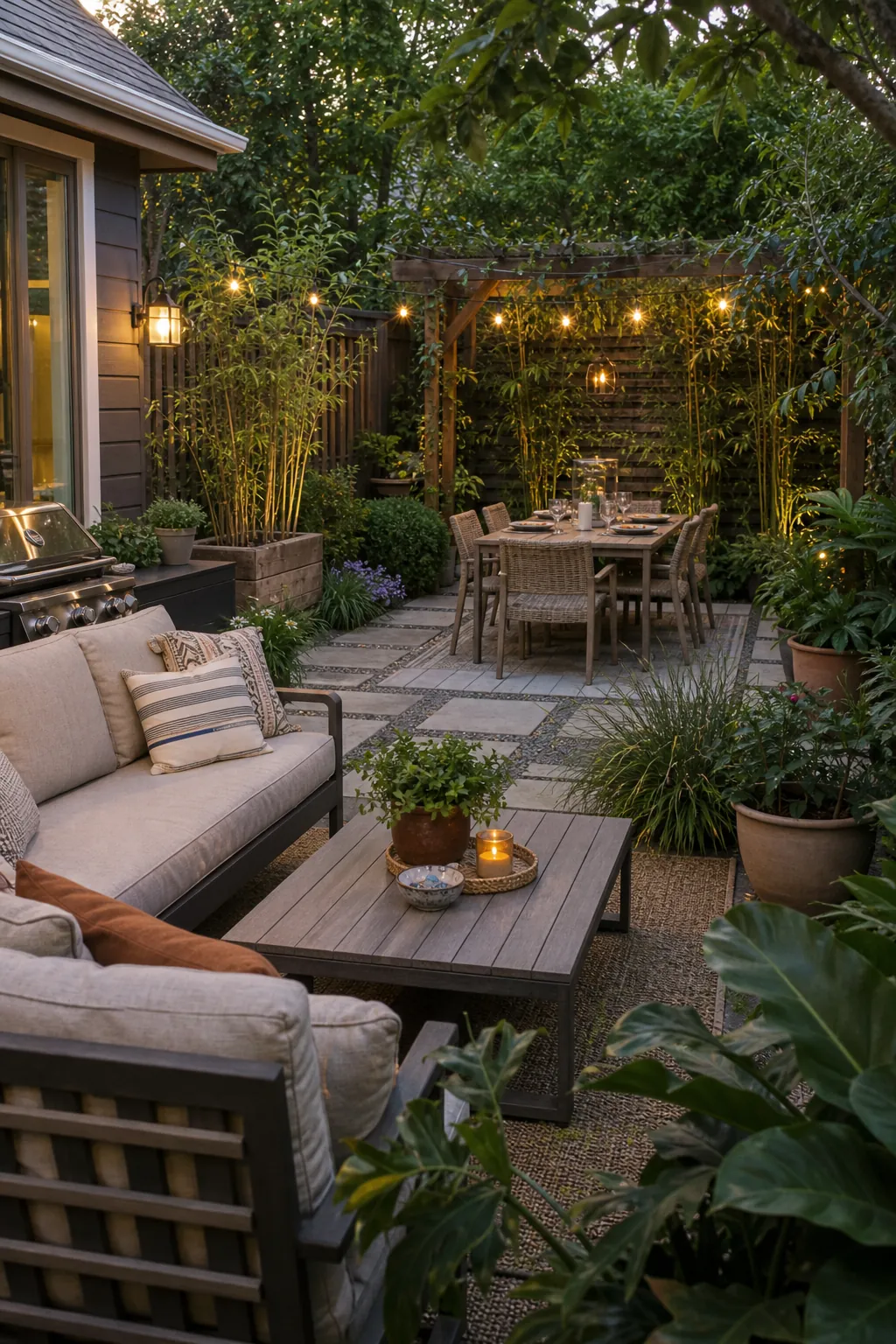
In a medium backyard, the easiest layout is a dining table closer to the house and a smaller lounge area just beyond it. In a narrow garden, place the dining table along one side and create a bench or pair of chairs at the end. In a large yard, use planting, a rug, a pergola, or a change in paving to signal each zone without building walls between them.
Finish With The Details That Make People Stay
Once the location, base, shade, privacy, and seating are right, patio decor can do its real job. It should support comfort instead of hiding design problems. Think of the finishing layer as a set of small invitations.
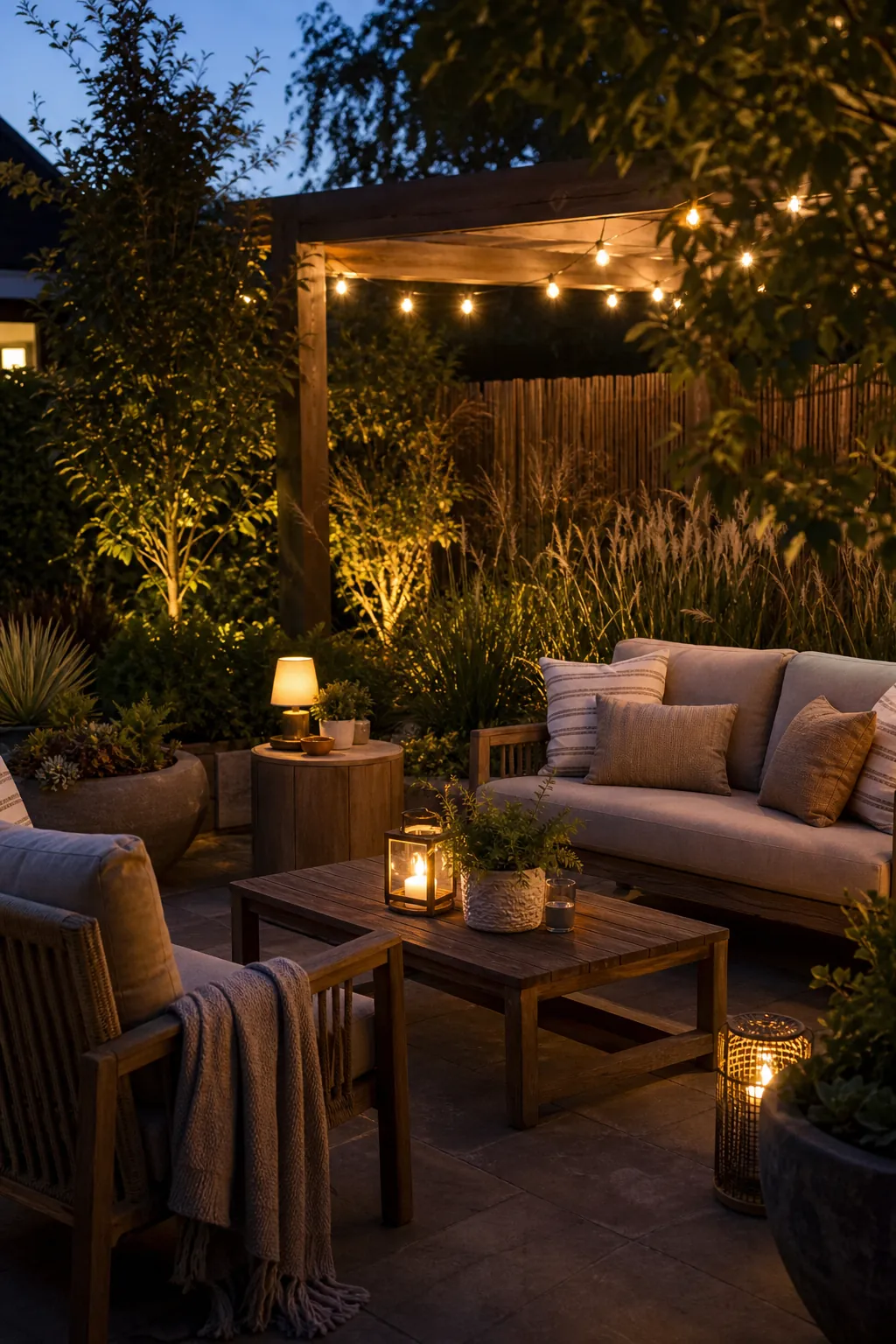
- Lighting: low path lights, lanterns, and warm string lights make the area usable after sunset.
- Tables: every seat needs somewhere to put a drink, book, or plate.
- Textiles: use outdoor cushions and throws where they can be stored or dried easily.
- Planters: repeat a few generous pots instead of scattering many small ones.
- Sound: planting, a small fountain, or distance from mechanical noise can make the space feel calmer.
- Heat: a fire bowl, patio heater, or sheltered corner can stretch the season.
The final test is simple: sit there for ten minutes with nothing to do. If you notice glare, a missing table, a wobbly chair, a loud view, or a path that feels awkward, fix that before adding more decor. A relaxing garden seating area is not the one with the most pieces. It is the one with the fewest reasons to leave.
Quick Planning Checklist
- Name the main use: lounging, reading, family meals, hosting, or quiet retreat.
- Check sun, wind, privacy, and views from seated height.
- Mark the furniture footprint before buying anything.
- Choose a stable surface that drains and supports chair legs.
- Add shade for the exact time of day you will use the space.
- Layer privacy with plants, screens, trellis work, or bamboo-style natural materials.
- Mix supportive seating with softer lounge comfort.
- Keep outdoor dining close enough to the kitchen or grill to feel easy.
- Add lighting, side tables, and storage only after the layout works.
When those decisions line up, garden seating stops feeling like furniture placed outside and starts feeling like a real outdoor room. It becomes a private pause in the backyard: comfortable enough for one person, flexible enough for family, and practical enough to use again tomorrow.