
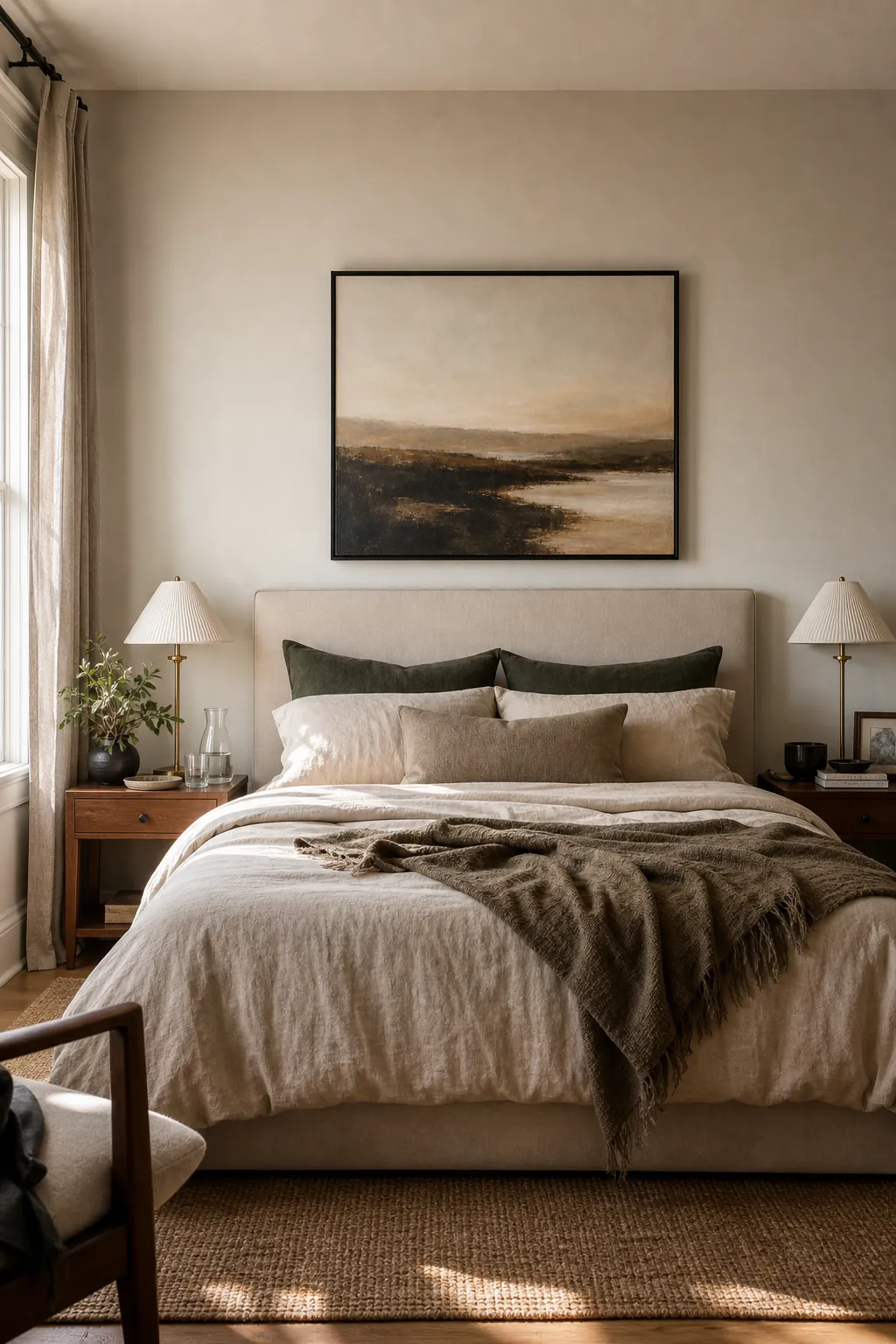
The wall above the bed does more work in a couple bedroom than most people expect. It is the first thing that frames the room, but it also sits in the most personal part of the home. If the art feels too loud, too tiny, too generic, or too much like one person’s taste won the argument, the whole bedroom can feel unsettled.
The best approach is simple: treat the art above bed as a shared anchor, not a random empty-wall fix. Start with proportion, choose a mood you both want to wake up to, then add enough personal detail that the bedroom feels intimate without becoming visually busy.
Start With What the Headboard Wall Needs to Do
Before shopping for wall art, decide what the headboard wall is missing. A couple bedroom with a tall upholstered headboard may only need one calm horizontal piece. A low platform bed may need more height. A neutral bedroom may need warmth, texture, or contrast. A bedroom with strong lamps, patterned bedding, or a dramatic headboard may need less art than you think.
Ask this first: should the art make the room feel calmer, warmer, taller, more balanced, or more personal? That one answer prevents most styling mistakes. Without it, it is easy to buy something because it fills a rectangle, then wonder why the room still feels unfinished.

Choose One Focal Point, Then Let Everything Else Support It
The most common mistake with bedroom wall decor is letting the headboard, lamps, pillows, and art all compete. A couple bedroom usually feels better when the bed wall has one clear focal point and the rest of the room is quieter.
- If the headboard is plain, use the art as the main statement.
- If the headboard is tall, curved, carved, or patterned, choose quieter art with more breathing room.
- If the bedding is already colorful, pull one color from it instead of adding a new palette.
- If both partners like different styles, keep the large piece calm and express personality in smaller bedside details.
This is especially useful in a shared bedroom. The art above the bed does not have to announce every preference. It can simply create a calm center so both sides of the room feel connected.
Get the Size Right Before You Worry About Style
Scale is what makes art above bed look intentional. A beautiful piece that is too small will feel like it is floating. A piece that is too wide can make the headboard wall feel heavy. As a working rule, aim for art that spans about two-thirds to three-quarters of the headboard or bed width.
For a queen bed, that often means one large horizontal piece, two medium pieces, or a tight set of three. For a king bed, one small frame almost always looks under-scaled unless it is part of a larger layered wall treatment. If you love a smaller piece, pair it with sconces, tall lamps, or side art so the whole composition has enough width.
Height matters too. In most rooms, keep the bottom of the frame roughly 6 to 10 inches above the headboard. The art should feel visually connected to the bed, not stranded halfway to the ceiling. If your headboard is very low, judge from the pillow line and the center of the wall instead of following the number blindly.

Pick a Mood Both People Can Live With
A shared bedroom works best when the mood is agreed on before the exact art is chosen. Instead of debating “masculine” or “feminine,” use words that describe the room experience: calm, grounded, warm, hotel-like, organic, moody, airy, romantic, tailored, or collected.
That language makes compromise easier. One person may want cozy bedroom softness; the other may want cleaner lines or darker accents. The answer may be warm neutral bedding, black or walnut frames, linen texture, low lighting, and art with soft movement rather than a very floral or very stark print.
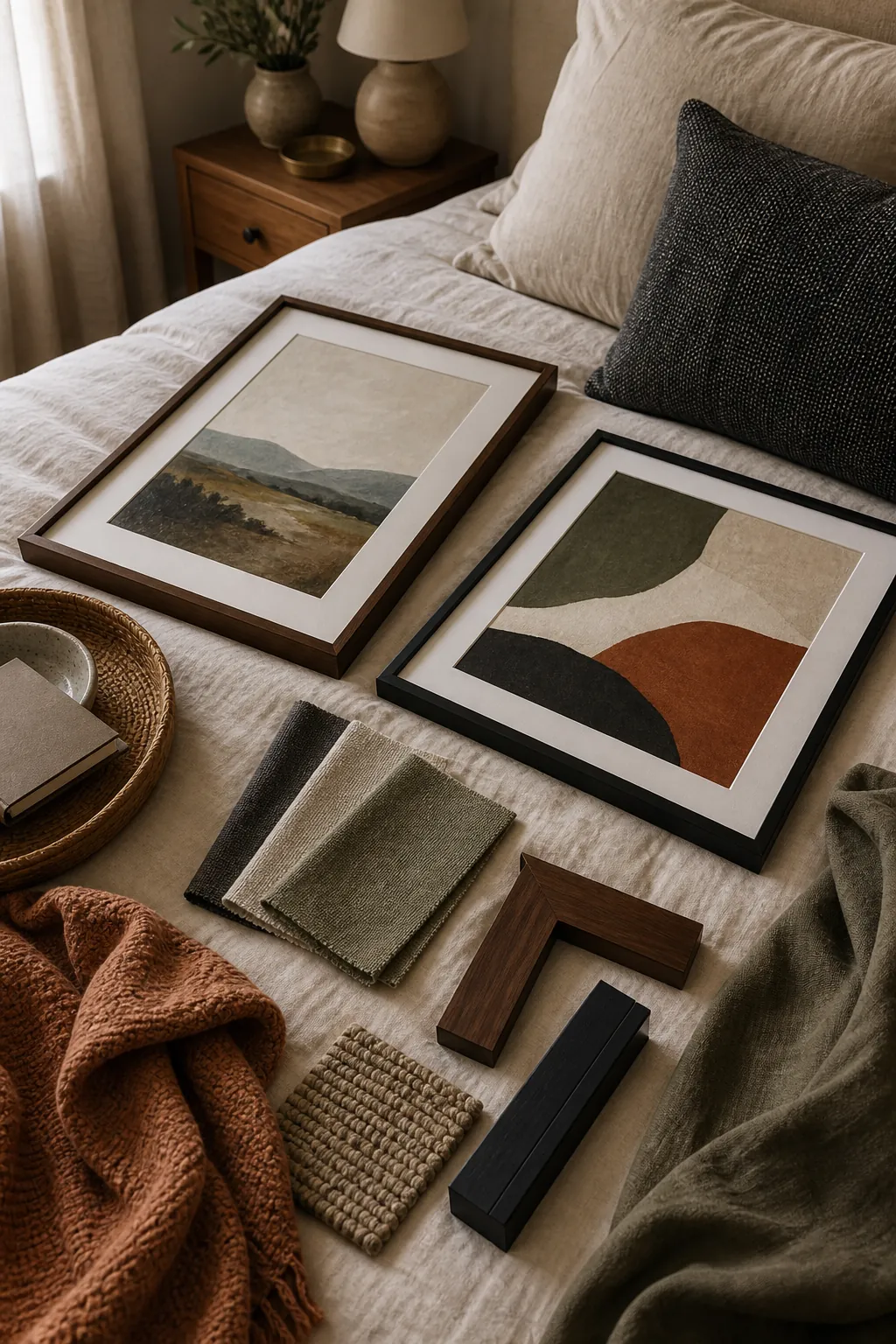
For a couple bedroom, the safest shared palette is not always beige on beige. A neutral bedroom can still include olive, rust, charcoal, clay, muted blue, aged brass, or deep wood. The goal is a room that feels restful, not blank.

Make the Art Personal Without Making It Too Literal
Personal art is powerful in a bedroom, but the above-bed spot asks for restraint. Wedding photos, travel memories, meaningful landscapes, abstract pieces in favorite colors, or art from a place you both love can all work. The trick is to choose something that feels intimate when you know the story, not something that overwhelms the room with a private scrapbook effect.
If you want photos, consider one enlarged black-and-white image, a soft landscape from a trip, or a pair of understated frames rather than a busy gallery wall directly above the pillows. If you prefer abstract wall art, look for shapes and colors that echo the bedding, rug, lamps, or headboard wall instead of matching everything perfectly.
A good test: from the doorway, the art should read as part of the bedroom styling; up close, it can reveal the personal meaning.
Use the Right Layout for Your Bed Wall
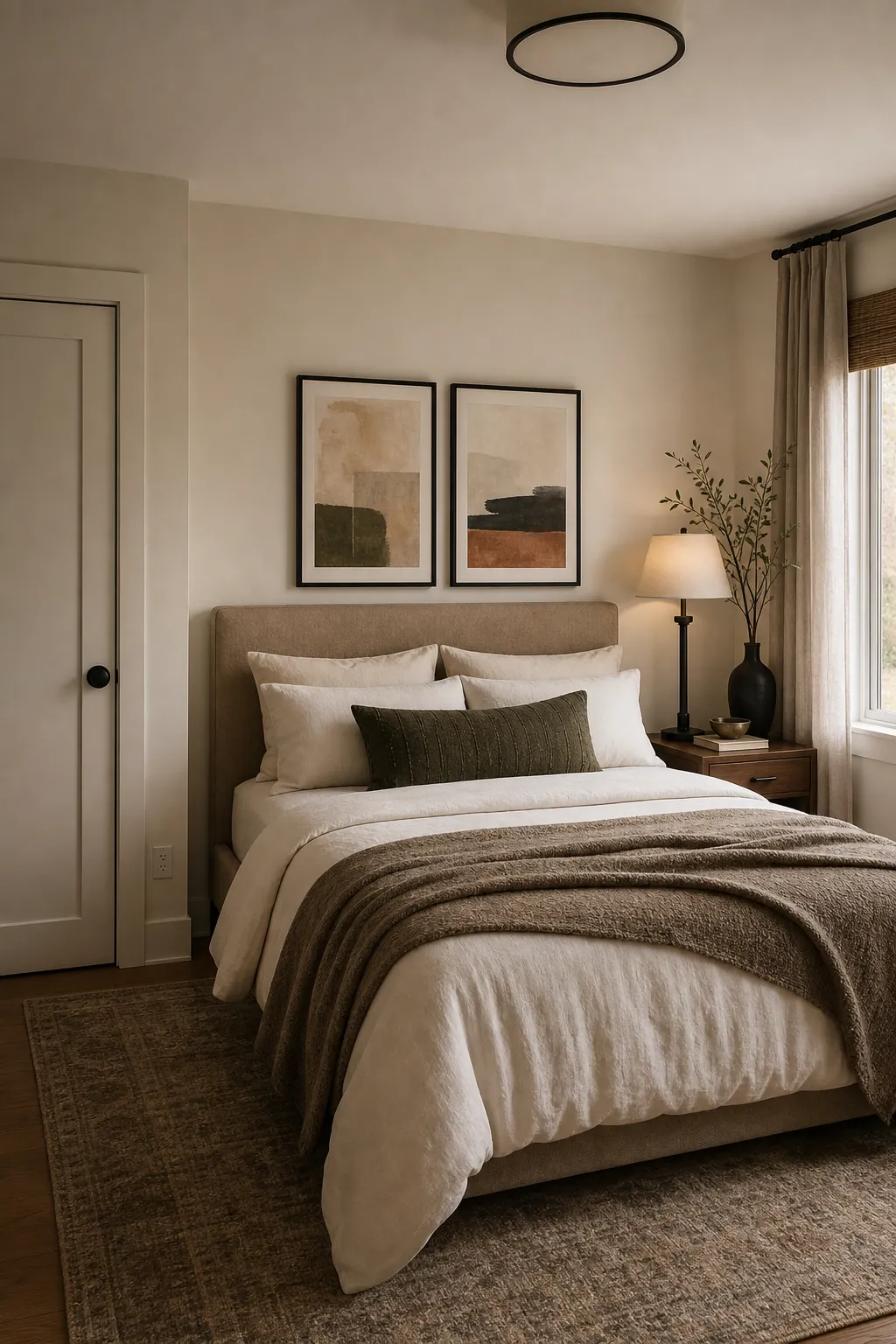
One large horizontal piece is the cleanest choice for most rooms. It looks calm, adult, and easy to center. A pair of frames works well when each partner wants a side of the room to feel represented, as long as the frames are the same size and hung close enough to act as one unit. A trio can look polished above a wide headboard, but it needs consistent spacing and a simple subject so it does not feel restless.
If the bed is not centered on the wall, do not panic. You can center the art over the bed rather than the whole wall, then balance the awkward side with a curtain panel, a taller lamp, a plant, or a narrow frame above the nightstand. Balance matters more than perfect symmetry, especially in real bedrooms with doors, windows, vents, and outlets in inconvenient places.
- Single large piece: best for a calm modern bedroom or a busy bedding palette.
- Two frames: best for shared taste, subtle symmetry, and narrow rooms.
- Three frames: best for a king bed or a long headboard wall.
- Textile or woven piece: best when safety, softness, or renter-friendly hanging matters.
- Side art instead of above-bed art: best when the headboard is already decorative.
Keep Safety and Sleep in the Decision
Because the art sits above pillows, weight matters. Heavy glass, oversized mirrors, deep shelves, and anything poorly anchored can make a bedroom feel less restful even if it looks good in a photo. If either person is uneasy about objects overhead, listen to that. The bedroom should not create tension right where you are trying to sleep.
For safer above-bed wall decor, use lightweight framed canvas, acrylic glazing instead of glass, textile art, fabric panels, baskets with secure mounts, or a shallow ledge placed high enough that pillows cannot hit it. Renters can use removable hooks only when the art is within the weight rating and the wall surface is appropriate. When in doubt, use proper anchors or move the art to the side walls.

Style the Bed So the Art Looks Intentional
Art above the bed rarely works alone. It needs a few quiet repeats around the room. If the art has a charcoal frame, repeat charcoal in a lamp base, curtain rod, or small tray. If the art has warm clay tones, echo that warmth in a pillow, throw, or wood nightstand. If the art is very soft, add one grounding element so the bedroom decor does not become washed out.
Keep the bed styling simple enough that the wall art can breathe. Two sleeping pillows, two shams, one lumbar pillow, and a folded throw are often enough. In a couple bedroom, too many decorative pillows can feel staged and impractical, while too little texture can make even good wall art look disconnected.
A Quick Checklist Before You Hang Anything
- Width: does the art fill roughly two-thirds to three-quarters of the bed or headboard?
- Height: does the bottom edge sit close enough to feel connected to the headboard?
- Mood: does it support the way both people want the room to feel?
- Balance: do the lamps, nightstands, bedding, and frame finish speak to each other?
- Safety: is it lightweight enough and anchored well enough for above-bed placement?
- Calm: would the room still feel restful at night, with only bedside lighting on?
The right wall art above bed should make the room feel more settled the moment you walk in. It does not need to be dramatic, expensive, or perfectly matched. In a shared bedroom, the strongest choice is usually the one that gives the bed wall proportion, warmth, and a point of agreement.