

A small home rarely feels crowded because one shelf is missing. It feels crowded because everyday things do not have a clear place to land. The best small space storage ideas with baskets, hooks, and shelves start with a simple rule: keep the things you touch daily visible and reachable, keep backup items contained, and stop asking one basket to hold five unrelated categories.
That matters because baskets, wall hooks, and shelves can either calm a room down or turn into prettier clutter. A basket full of mail, chargers, receipts, gloves, and half-finished tasks is still a pile. A hook rail that carries every bag you own becomes wall noise. A shelf packed to the edge makes a small room feel even smaller. This guide is built for real apartments and small homes where storage has to work without a remodel.

Start With The Places Where Clutter Actually Lands
The strongest storage plan begins with a walk through your routine, not a shopping list. Look for the spots where things naturally pile up: the front door, the side of the sofa, the bed, the bathroom counter, the kitchen prep zone, the closet floor. These are your real storage locations, even if they do not look like storage yet.
Before buying anything, assign each zone one job. The entry needs a landing zone. The kitchen needs reachable cooking tools. The bathroom needs towel and backup product storage. The bedroom needs a clean handoff for clothes that are worn once but not dirty. When every storage idea is tied to a routine, it stops becoming decorative clutter control and starts becoming home organization.
- Baskets are best for loose categories: winter accessories, remotes, charging cords, extra toiletries, pet supplies, craft supplies, and backup linens.
- Hooks are best for items that should never touch a surface: bags, jackets, robes, towels, keys, hats, headphones, and frequently used tools.
- Shelves are best for vertical storage: books, folded linens, baskets, pantry jars, daily dishes, decor, and labeled overflow.
Use Baskets Only When They Have One Clear Job
Basket storage works beautifully in a small home when the basket has a narrow purpose. It fails when it becomes a soft-sided junk drawer. The difference is not the basket style. It is the rule behind it.
A good basket category can be named in two words: dog toys, guest towels, winter hats, return items, spare cords, cleaning cloths, hair tools, paper mail. If you need a sentence to explain what belongs inside, the category is too broad. Small home storage needs fewer mystery bins, not more bins.
Pick The Basket By Visibility
Use woven, fabric, or lidded baskets where the basket will be seen. Use clear bins or labeled boxes inside closets and cabinets. In open living areas, one beautiful basket can hide the visual mess of remotes, blankets, or toys. In closed storage, clear containers are usually better because you do not have to rummage.
For deep shelves, choose baskets with handles so the whole category can slide forward. For low shelves, use baskets that are not too tall, so you can see what is inside without pulling everything out. For paperwork, use upright folders inside a basket instead of stacking papers flat. If you cannot retrieve the item in one move, the basket is hiding the problem.

Turn Blank Walls Into Useful Wall Storage
Wall storage is the fastest way to free floor space in an apartment because it uses surfaces that are often doing nothing. But the goal is not to cover every wall. The goal is to give high-friction items a place that is easier than dropping them on a chair.
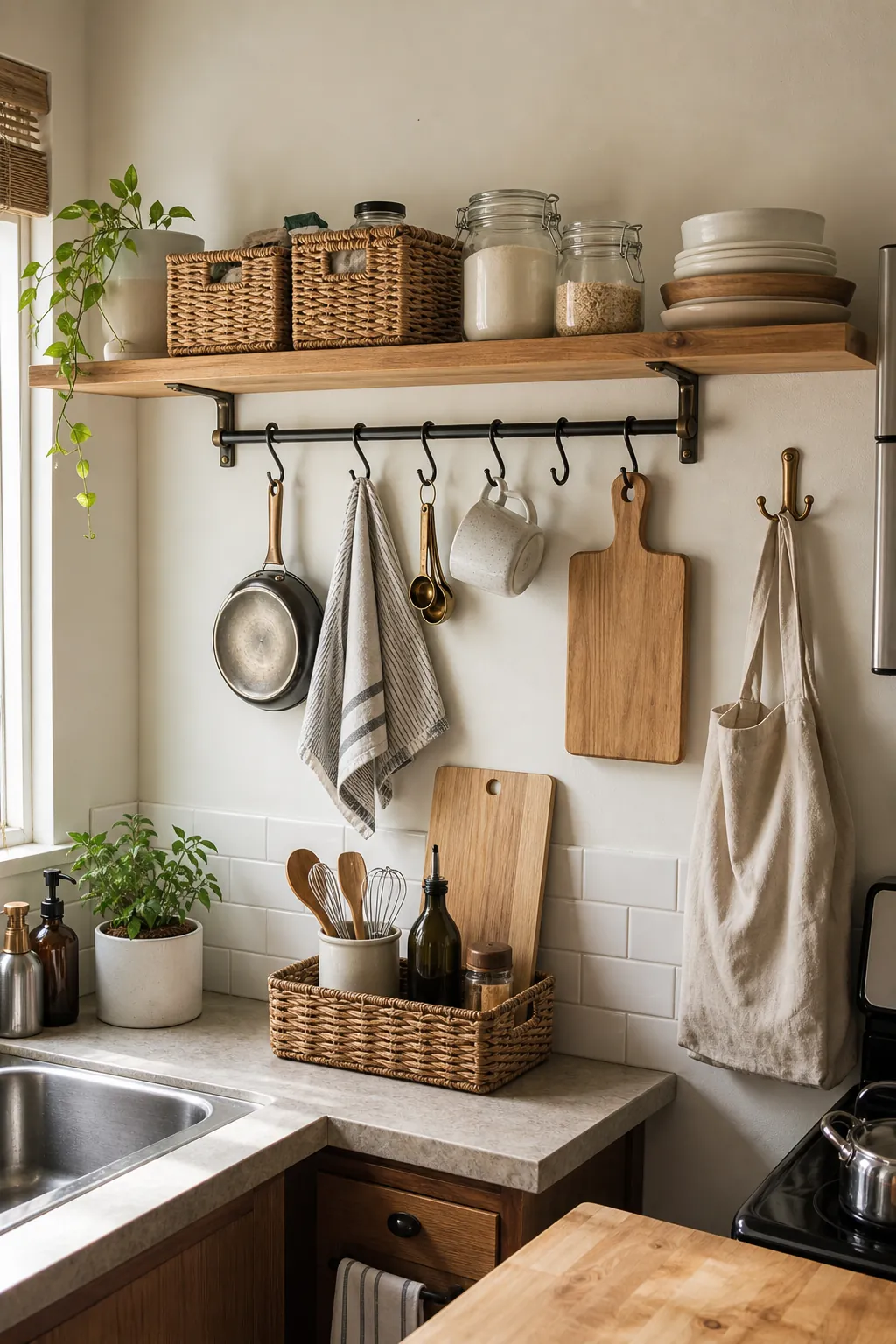
In an entry, a short hook rail plus a shallow shelf can replace a bulky console. In a kitchen, a rail with S-hooks can hold mugs, measuring spoons, towels, or pans. In a bathroom, two sturdy hooks can solve the towel pile better than one crowded bar. In a bedroom, a row of hooks behind a door can handle robes, bags, and tomorrow’s outfit without stealing closet space.
- Use hooks for the things you grab while standing. Bags, jackets, keys, towels, and headphones should be stored where your hand already goes.
- Keep visible hooks half empty. A hook rail looks intentional when there is breathing room between items.
- Match the hook to the weight. Adhesive hooks are useful for light items, but heavy coats, backpacks, pans, and loaded bags need hardware rated for the job.
- Vary heights when people share the space. Lower hooks help children and guests use the system without asking where things go.
Make Shelving Ideas Look Lighter In A Small Room
Shelves add storage, but they also add visual information. In a tiny room, that visual weight matters. A shelf packed edge to edge may technically hold more, yet it can make the wall feel heavier and the room feel busier. The cleaner approach is to use shelves as a mix of open space, repeatable containers, and items that deserve to stay visible.
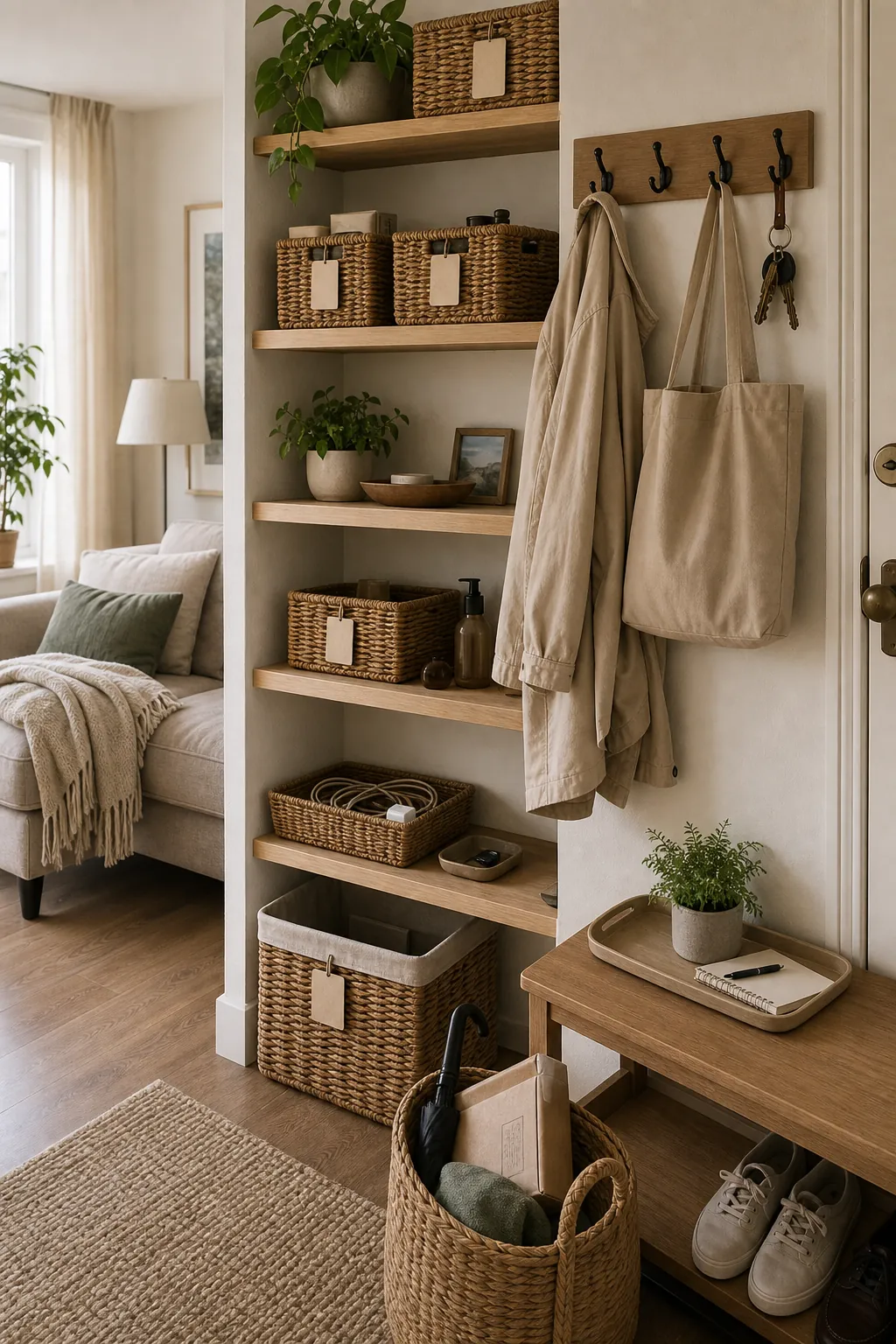
For renter-friendly apartment storage, start with the shallowest shelf that can do the job. A narrow shelf near the door can hold a small basket for keys and sunglasses. A higher shelf above a desk can hold labeled boxes for office supplies. A shelf above a bathroom door can hold backup towels or toilet paper. A bookcase can become a vertical closet when the lower shelves hold baskets and the upper shelves hold lighter items.
The Shelf Formula That Keeps Things Calm
- Bottom shelves: heavier baskets, folded blankets, shoes, books, or items that need stability.
- Middle shelves: daily-use baskets, trays, jars, and items you want to reach without stretching.
- Upper shelves: seasonal storage, backup supplies, decorative pieces, and light boxes.
- Every shelf: leave a little empty space so the whole wall can breathe.

Build One Storage Stack Per Room
The easiest way to combine baskets, hooks, and shelves is to build a storage stack: shelf above, hooks below, basket under or beside it. This gives you three kinds of storage in one narrow footprint. It works especially well in small entryways, bathrooms, kitchens, laundry corners, and bedrooms.
| Room | Storage Stack | Best Use |
|---|---|---|
| Entryway | Shallow shelf, hook rail, floor basket | Keys, bags, hats, scarves, returns |
| Kitchen | Wall shelf, rail hooks, counter basket | Mugs, towels, utensils, produce, pantry overflow |
| Bathroom | Over-toilet shelf, towel hooks, lidded basket | Towels, backup toiletries, daily products |
| Bedroom | Closet shelf, door hooks, under-bed baskets | Accessories, bags, seasonal clothes, extra bedding |
| Living room | Bookcase, decorative baskets, hidden hooks | Blankets, remotes, chargers, hobby supplies |
This stacked approach is practical because small rooms need storage ideas that overlap without fighting each other. The shelf carries what can sit. The hooks carry what hangs. The basket catches what would otherwise scatter. When those three tools work together, you get more storage without adding another piece of furniture.

Keep Small Storage From Becoming A New Mess
Most clutter control systems fail because they do not include a reset. A small space can look messy fast, so the reset has to be fast too. Do not design a system that requires a full weekend to maintain. Design one that can be restored in ten minutes.
- Use a one-in, one-out basket rule. If the basket is full, something leaves before something new goes in.
- Label closed storage. Labels are not about perfection. They stop every basket from becoming a general dump zone.
- Create a return basket. Keep one small basket for library books, packages, borrowed items, and things that need to leave the house.
- Limit the number of visible hooks. Extra hooks feel helpful until they invite every tote bag, hoodie, and hat into view.
- Leave prime storage for daily life. Eye-level shelves and easy hooks should hold current items, not seasonal overflow.
If a basket repeatedly overflows, do not buy a bigger basket first. Empty it and ask whether the category is too broad, whether the item belongs somewhere else, or whether you are keeping things that no longer earn space. The point of small space storage is not to store everything. It is to make the right things easy to live with.
A Simple Plan For This Weekend
Pick one room, not the whole apartment. Choose the surface that annoys you most, then trace the clutter back to its missing home. If the pile is made of small loose items, use one labeled basket. If it is made of things with straps, handles, or loops, add hooks. If the floor is crowded but the wall is empty, add shelving. If the shelf is already full, edit before expanding.
For most small homes, the best first project is a small entry or daily drop zone: one shallow shelf, two to five sturdy wall hooks, and one basket with a strict category. That single setup can stop bags from landing on chairs, mail from drifting across counters, and keys from disappearing. Once that works, repeat the same logic in the kitchen, bathroom, bedroom, and living room.
The best storage does not announce itself. It makes the room easier to use. Baskets should contain the loose pieces. Hooks should clear the surfaces. Shelves should lift useful items into view without crowding the wall. Get those three jobs right, and even a tiny apartment can feel calmer before you add a single extra square foot.