
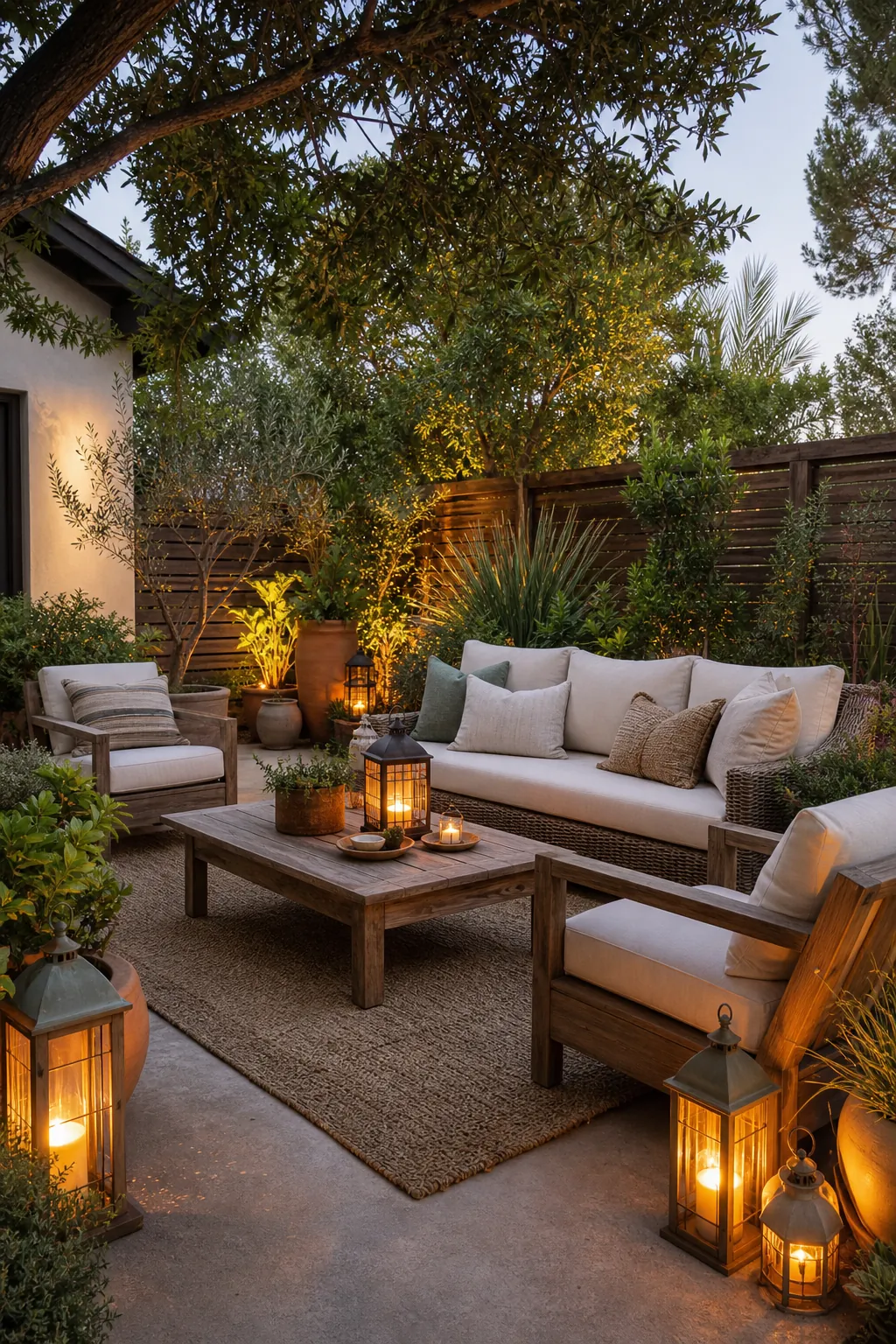
A patio usually starts to feel finished when three things work together: warm light, living greenery, and touchable texture. The furniture matters, but the mood comes from the layers around it. Lanterns soften the edges after sunset, plants make the hard surfaces feel intentional, and rugs, cushions, stone, wood, baskets, and pots give the space enough depth to feel like an outdoor room instead of a concrete pad with chairs.
The best patio styling ideas are also practical. They solve the problems people actually complain about: the patio feels bare, the seating looks like it came straight from a set, the neighbors can see everything, the floor is cold or stained, the lights are either too dim or too bright, and every pretty item seems like one more thing to clean, store, or protect from weather. The answer is not to buy more decor at random. It is to build a simple system that gives each layer a job.
Start With the Base Before Adding Decor
Before styling the patio, make the base worth styling. Sweep, scrub, or pressure wash the floor if you can. Wipe down the furniture, remove anything that has become outdoor clutter, and look at the patio from the door you use most. That first view tells you where the strongest focal point should go.
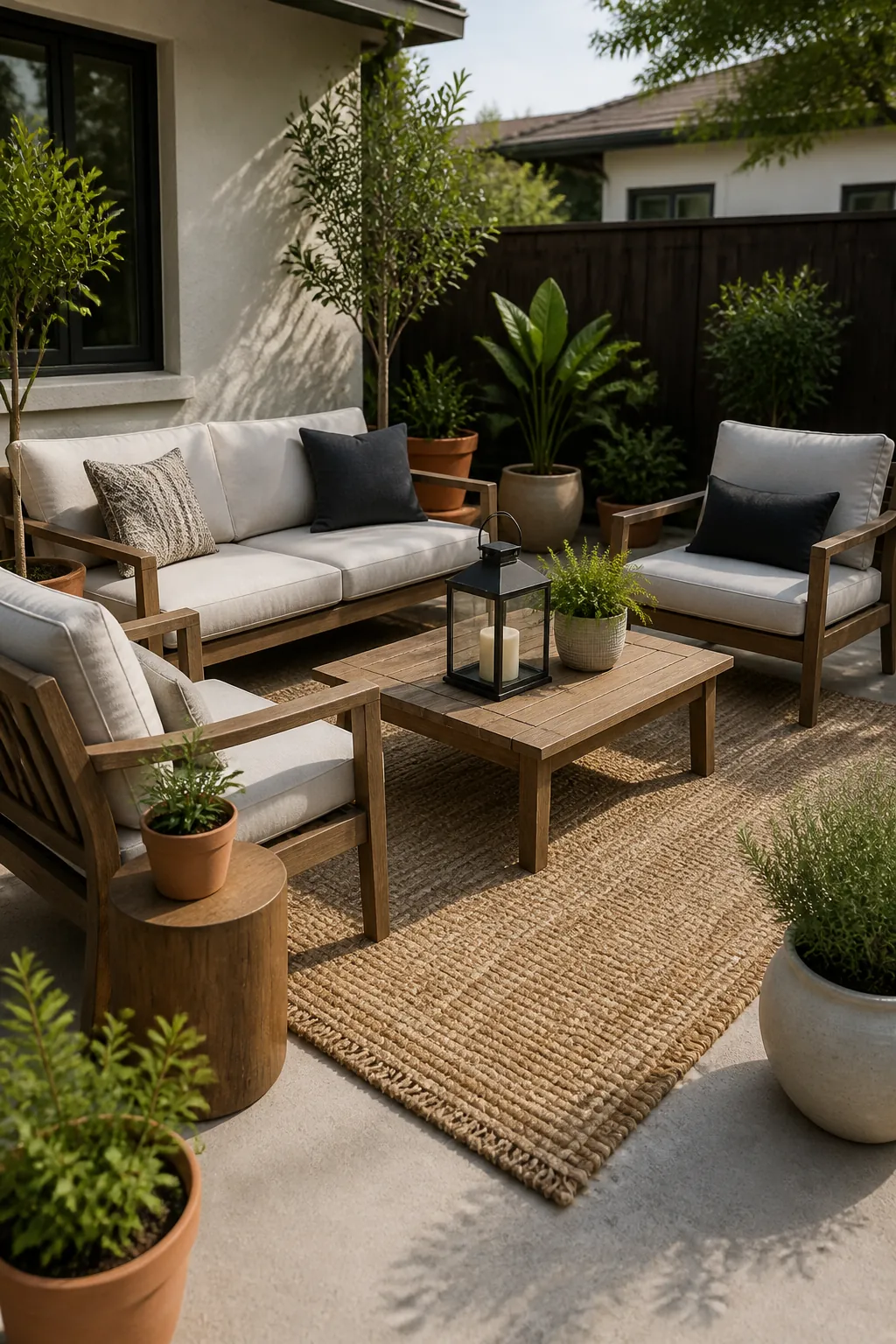
A rug is often the fastest way to make outdoor seating feel like a real zone, but it should not fight the patio. If the floor has a drain, keep the drain clear. If the surface gets soaked after every storm, choose a quick-drying outdoor rug and leave enough exposed edge for runoff. On a small concrete patio, one rug under the front legs of the seating can be enough. On a larger backyard patio, two coordinated rugs can separate a dining area from a lounge area without building anything permanent.
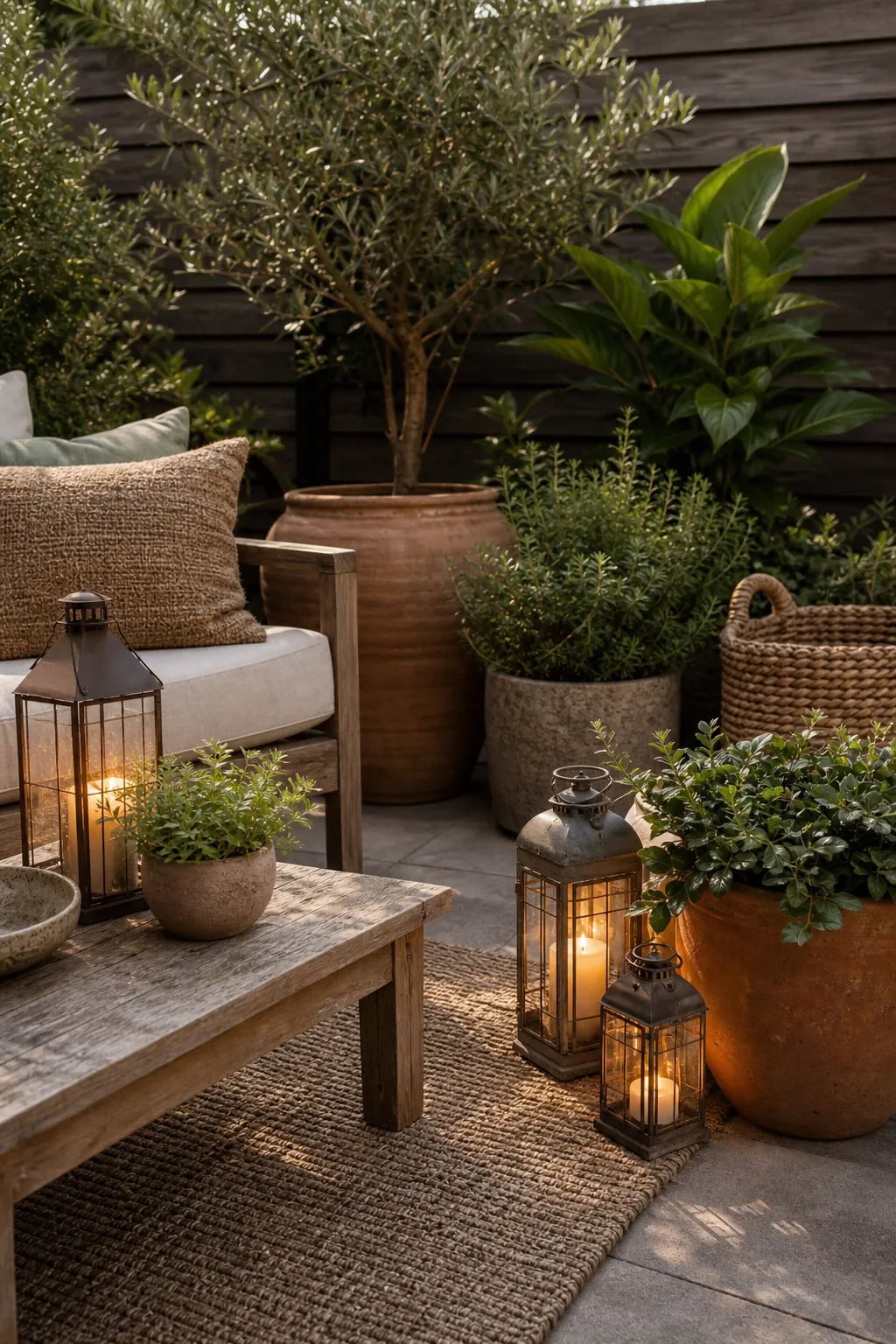
Once the floor feels intentional, repeat one or two materials across the whole patio. A terracotta pot near the door, another by the sofa, and a smaller one on the table will feel calmer than six unrelated planters. A woven basket, a wicker chair, and a jute-look rug can do the same. Repeating texture is what makes budget patio decor look designed.
Use Lanterns as a Lighting Layer, Not Just Decoration
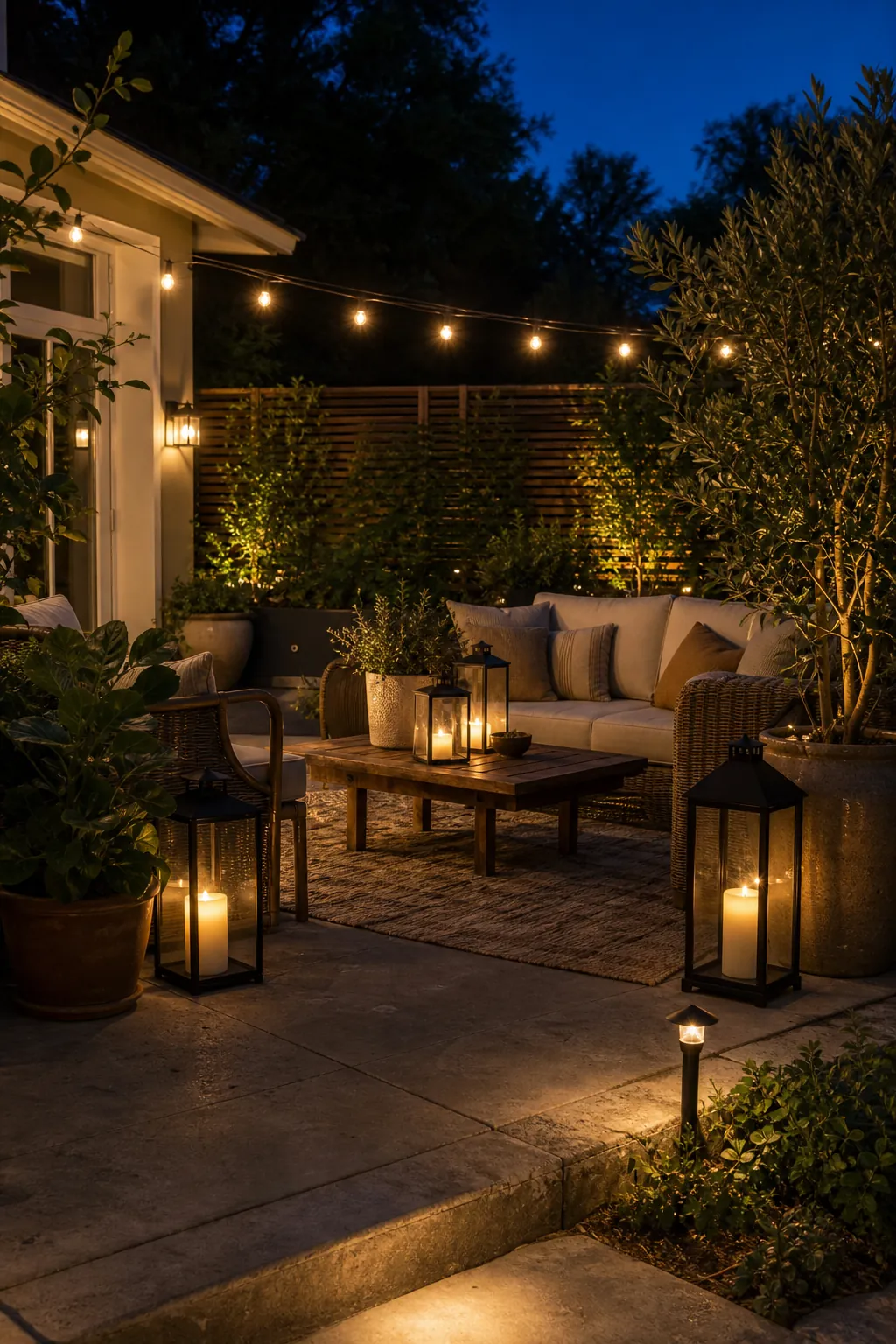
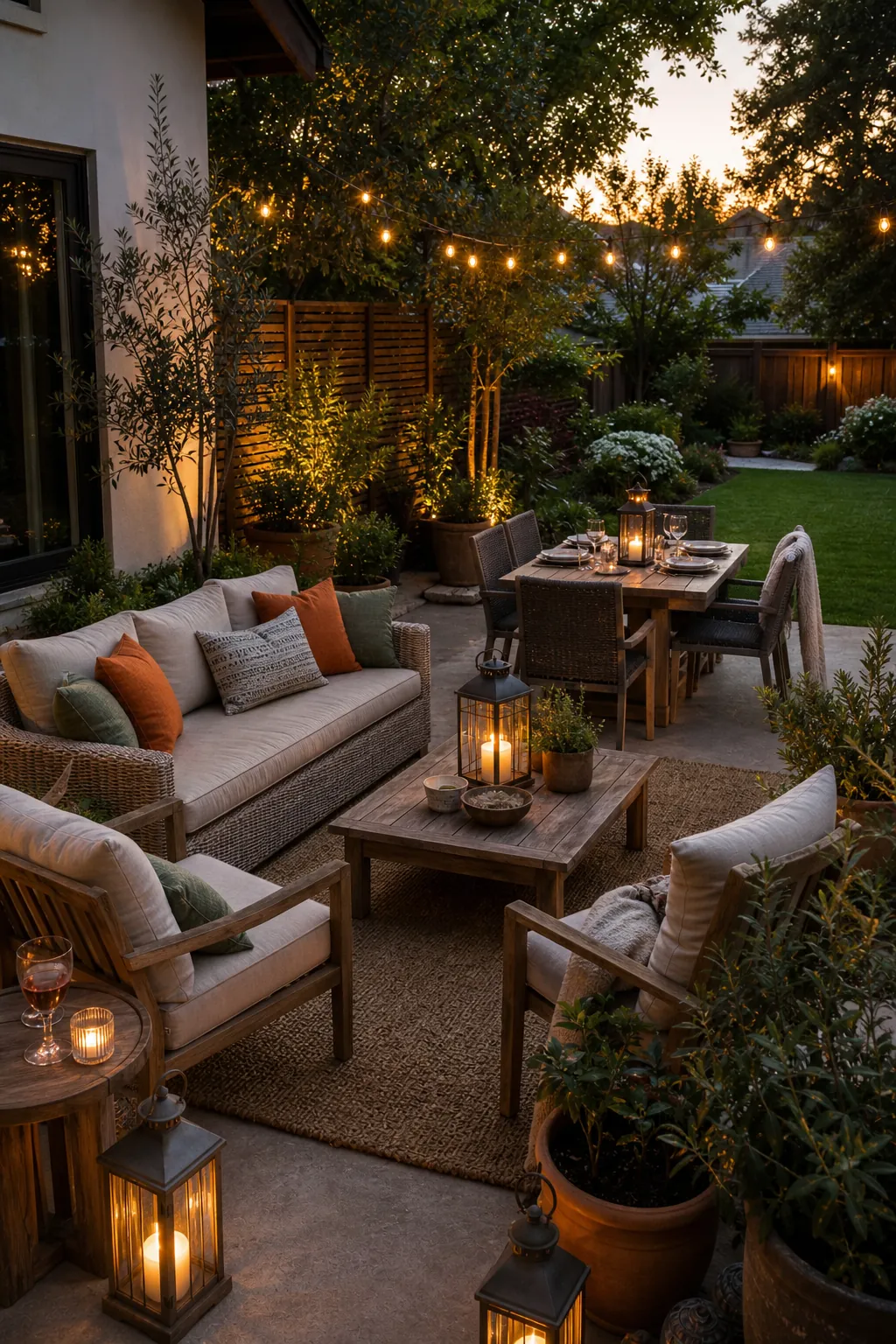
Good patio lighting has more than one height. A single overhead fixture can make people and plants look flat. Lanterns help because they bring light down to human level. Place one lantern on a coffee table, a pair on the ground beside a planter, and a third near the path or step where people need guidance. Add string lights or wall sconces only if they support the same warm mood.
Think in three layers. Ambient light lets the patio glow. Task light helps near the grill, dining table, or serving cart. Accent light catches leaves, woven textures, stone, and the side of a pot. The trick is to leave some shadows. A patio with every corner lit evenly can feel exposed, while a patio with pools of warm light feels relaxed and private.
If you use plug-in fixtures, choose outdoor-rated products, protect cords from walkways, and use weather-appropriate outlets and extension cords. If you want a simpler setup, solar lanterns, battery candles, and rechargeable table lamps can create the same feeling with less wiring. The key is consistency: keep the color temperature warm and avoid mixing cool white path lights with amber lanterns unless you want the contrast to be obvious.
Build a Plant Cove Instead of a Solid Wall
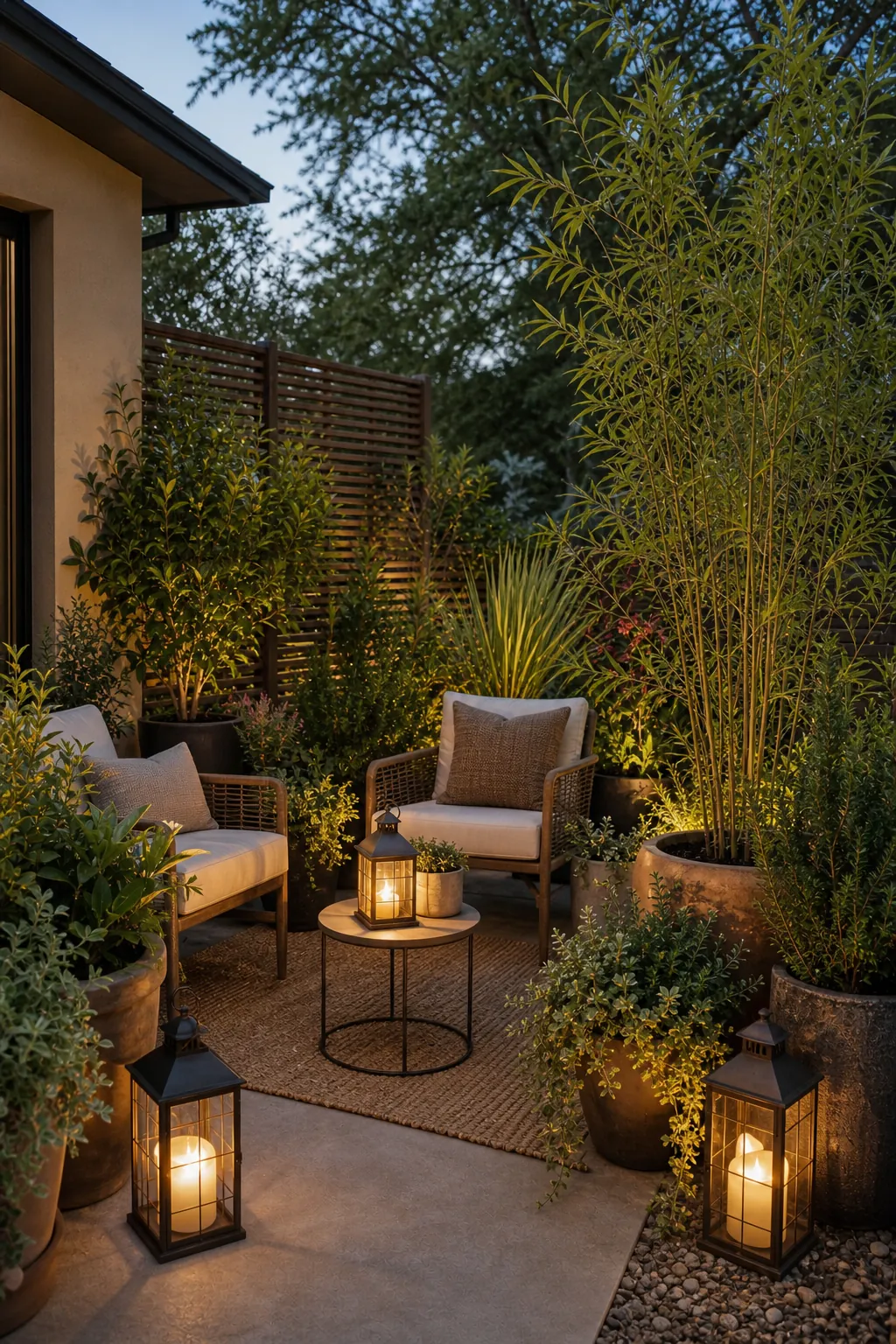
Privacy ideas do not have to mean blocking the entire yard. For many patios, the better move is a plant cove: taller greenery behind or beside the seating, medium planters at the corners, and smaller pots near the table. This gives the feeling of enclosure while keeping the patio open enough for airflow, light, and conversation.
Start with the sight line that bothers you most. It might be the street, a neighbor’s second-story window, a blank fence, or the side of the garage. Put your tallest planters there first instead of lining the entire perimeter. Bamboo in large containers, clumping grasses, compact evergreens, trellised vines, or leafy shrubs can all work depending on your climate and maintenance tolerance. If deer, wind, winter, or rental rules are an issue, solve those constraints before buying the biggest plant you can find.
A plant cove looks best when the containers vary in height but still relate to each other. Use two or three large pots rather than a row of tiny ones. Mix leaf shapes: something upright, something soft and spilling, and something broad or glossy. The goal is not a perfect screen. It is a seated feeling of shelter.
Let Texture Carry the Style
Outdoor textures do the quiet work that color alone cannot do. A patio can be mostly neutral and still feel rich if the surfaces are varied. Pair smooth concrete with a woven rug. Put linen-look cushions on wood or metal seating. Add terracotta, stone, ceramic, bamboo, rattan, or weathered teak near glossy leaves. When sunlight and lantern light hit those surfaces, the patio gains depth.
The safest formula is one smooth texture, one woven texture, one natural texture, and one leafy texture. For example: a concrete or stone floor, a flatweave outdoor rug, teak or bamboo accents, and layered green plants. If you already have wicker furniture, avoid adding too many woven pieces at once. Bring in stone, ceramic, or smooth metal so the look does not become one-note.
Color still matters, but texture should decide the mood first. Earthy terracotta and olive feel grounded. Black metal with pale cushions feels crisp. Warm wood with cream fabric feels relaxed. When the texture palette is clear, even a few lanterns and pillows feel deliberate.
Arrange Seating Around the Moment You Want
Outdoor seating should answer a real use, not just fill the slab. If the patio is for morning coffee, two comfortable chairs and a small table may be stronger than a full sectional. If it is a family backyard hub, use a sofa, two movable chairs, and a table large enough for snacks, toys, and drinks. If you entertain, define the dining and lounge zones separately so guests are not forced to gather around one crowded table.
Face the seating toward the best view or the most comfortable conversation. Many patios accidentally point every chair back toward the house because the furniture was pushed against the wall. Pulling the seating a little forward can make the layout feel more generous, especially when plants sit behind it. Add a side table wherever someone would naturally set a glass. Add a lantern where someone would naturally linger after dark.
Curves help when everything else is square. A round table, arched trellis, curved planter, or circular lantern can soften blocky pavers, fences, and rectangular sofas. If the patio feels like a furniture showroom, it probably needs a few personal shapes and living edges.
Make Budget and Rental Upgrades Look Intentional
A rental patio or tight-budget refresh can still look finished if the choices are concentrated. Do not scatter small decor everywhere. Spend the first effort on the three things people notice fastest: a cleaner floor, one textile layer, and greenery at eye level. Then add lanterns for evening atmosphere.
Portable pieces are your friend. Outdoor rugs, folding bistro chairs, clamp lights, battery lanterns, freestanding trellises, plant stands, and large lightweight planters can move with you. If you cannot drill into walls or railings, use height through containers, shelves, and hanging baskets on approved hooks. If you cannot run a hose or pressure washer, a stiff brush, bucket, and outdoor cleaner can still change how the floor reads.
Secondhand finds work best when you edit them. A used table, mismatched chairs, and inherited pots can look charming if they share a color family or material. Paint the chairs, repeat black metal, use all terracotta pots, or choose cushions that tie the mix together. The budget secret is not finding perfect pieces. It is making imperfect pieces speak the same language.
Keep the Patio Comfortable After Sunset
Patio lighting gets people outside, but comfort keeps them there. Think about the hour when the space usually fails. Is it too exposed at dinner? Too chilly after sunset? Too buggy near the plants? Too dark by the steps? Style around that specific problem.
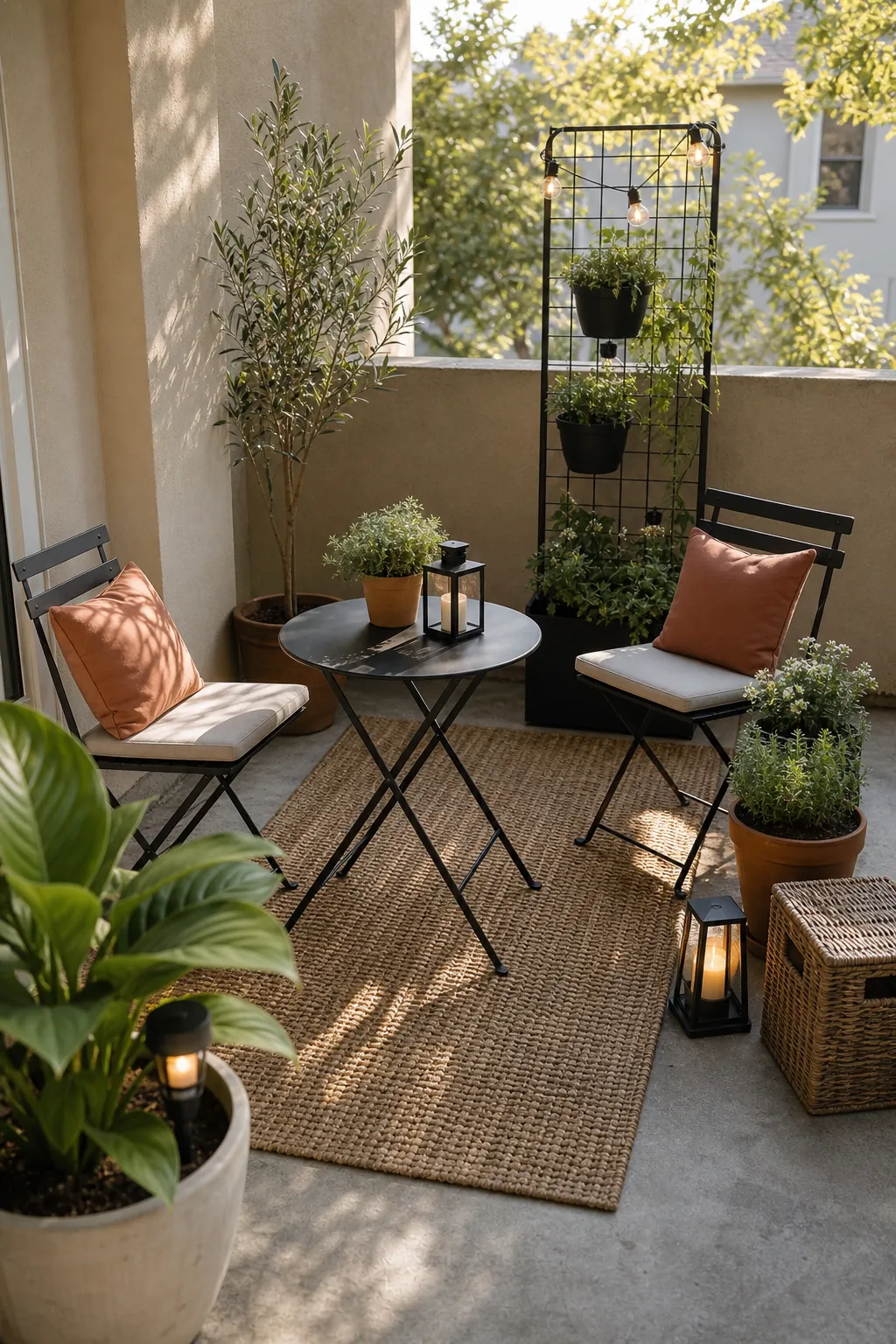
A storage bench or lidded outdoor box can hold cushions, throws, tablecloths, and battery candles when rain is coming. A tray on the coffee table makes lanterns and small pots easy to move. Washable outdoor pillow covers are easier to live with than delicate fabrics. If the patio gets windy, choose heavier lanterns and low planters instead of lightweight tabletop decor.
For a warm evening look, place light near texture. Put a lantern beside a woven pouf, under the leaves of a potted tree, next to a stone wall, or on a wood table. The glow will reveal the materials and make the patio feel layered without adding more objects. After sunset, fewer better lights beat more random lights.
Style Small Patios With Vertical Layers
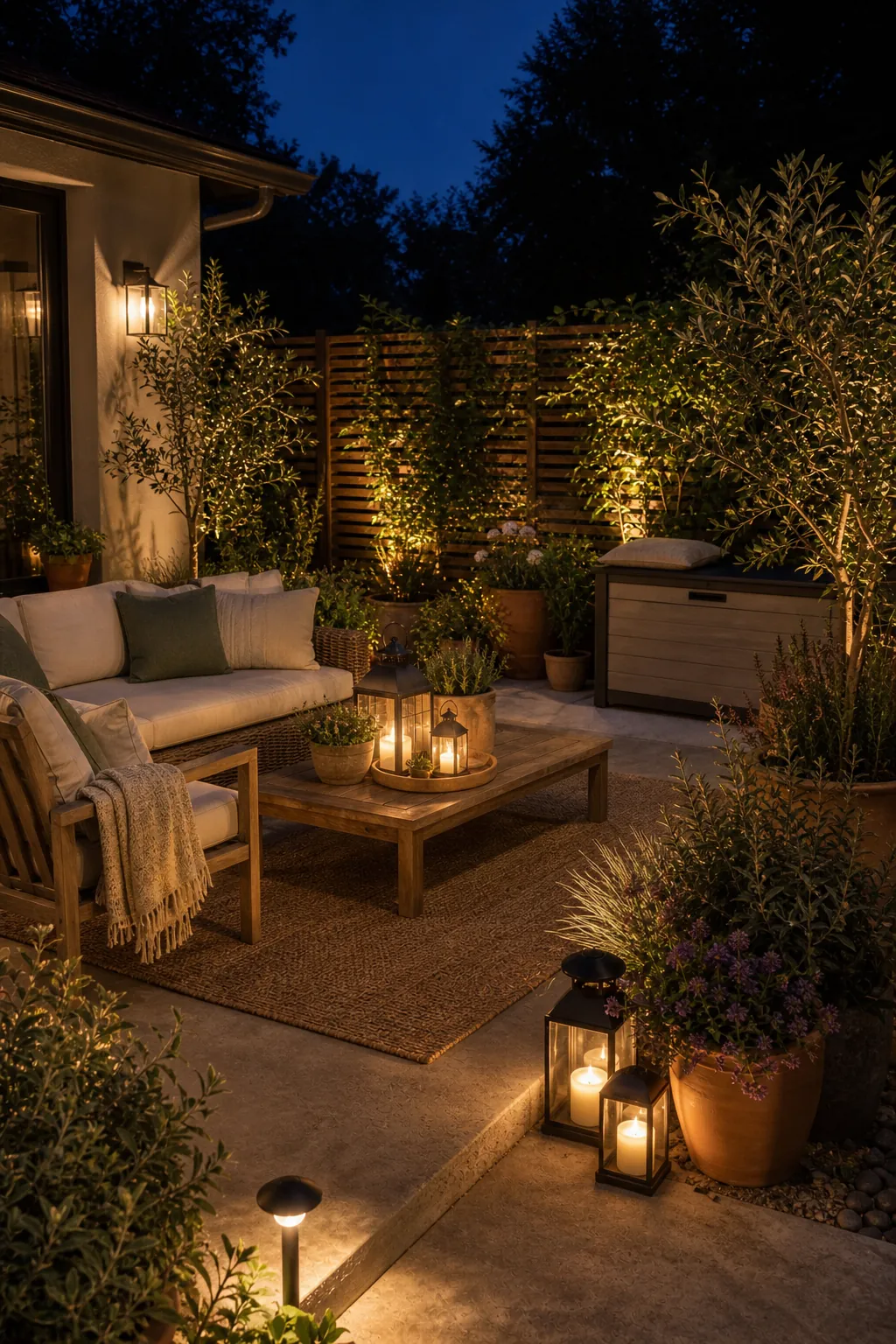
Small patios need the same ingredients as large ones, but the layers have to move upward. Use a narrow bench instead of deep chairs, a slim bistro table instead of a full dining set, and wall or railing planters where rules allow. A vertical trellis can hold vines, lanterns, or a simple privacy panel without stealing floor space.
Keep the walking path obvious. A patio that looks cozy in a photo can feel irritating if every step catches a plant stand or lantern handle. Put the tallest pieces at the back, medium pieces along the sides, and the smallest decor on the table. If you use a rug, size it so the main seating feels anchored but doors and drains still work.
Small spaces also benefit from fewer colors. Let the plants provide most of the variation, then repeat one warm metal, one wood tone, and one textile color. A pair of lanterns can be enough if they are placed where they catch the wall, the leaves, and the seating. The smaller the patio, the more each object needs a reason to be there.
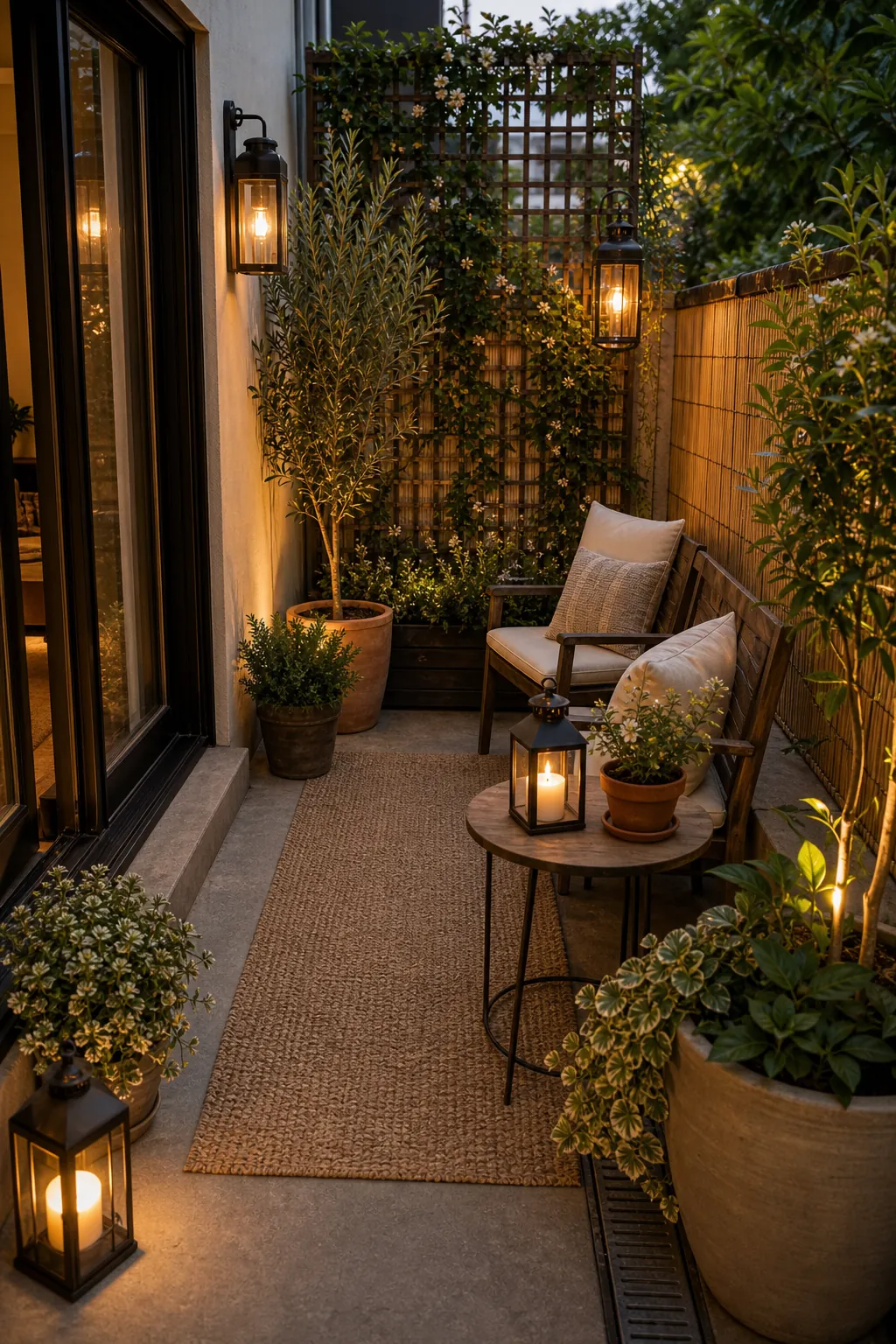
A Simple Patio Styling Formula
If you want the patio to feel finished without overthinking every purchase, use this order:
- Clean and edit first: remove visual noise before buying decor.
- Anchor the seating: use a rug, layout shift, or planter pair to define the zone.
- Add plants for height: build privacy and softness around the main sight line.
- Repeat textures: choose a woven, wood, stone, ceramic, bamboo, or terracotta thread and repeat it.
- Layer lanterns: place warm light at table height, floor height, and near movement paths.
- Check maintenance: make sure water, wind, storage, and seasonal changes will not make the setup annoying.
The most inviting patios rarely depend on one dramatic purchase. They feel good because the parts support each other. The rug makes the seating look settled. The plants soften the edges. The lanterns make the textures visible after dark. The containers, cushions, and natural materials repeat just enough to feel calm. That is the sweet spot: a patio that looks styled, but still feels easy to use.