
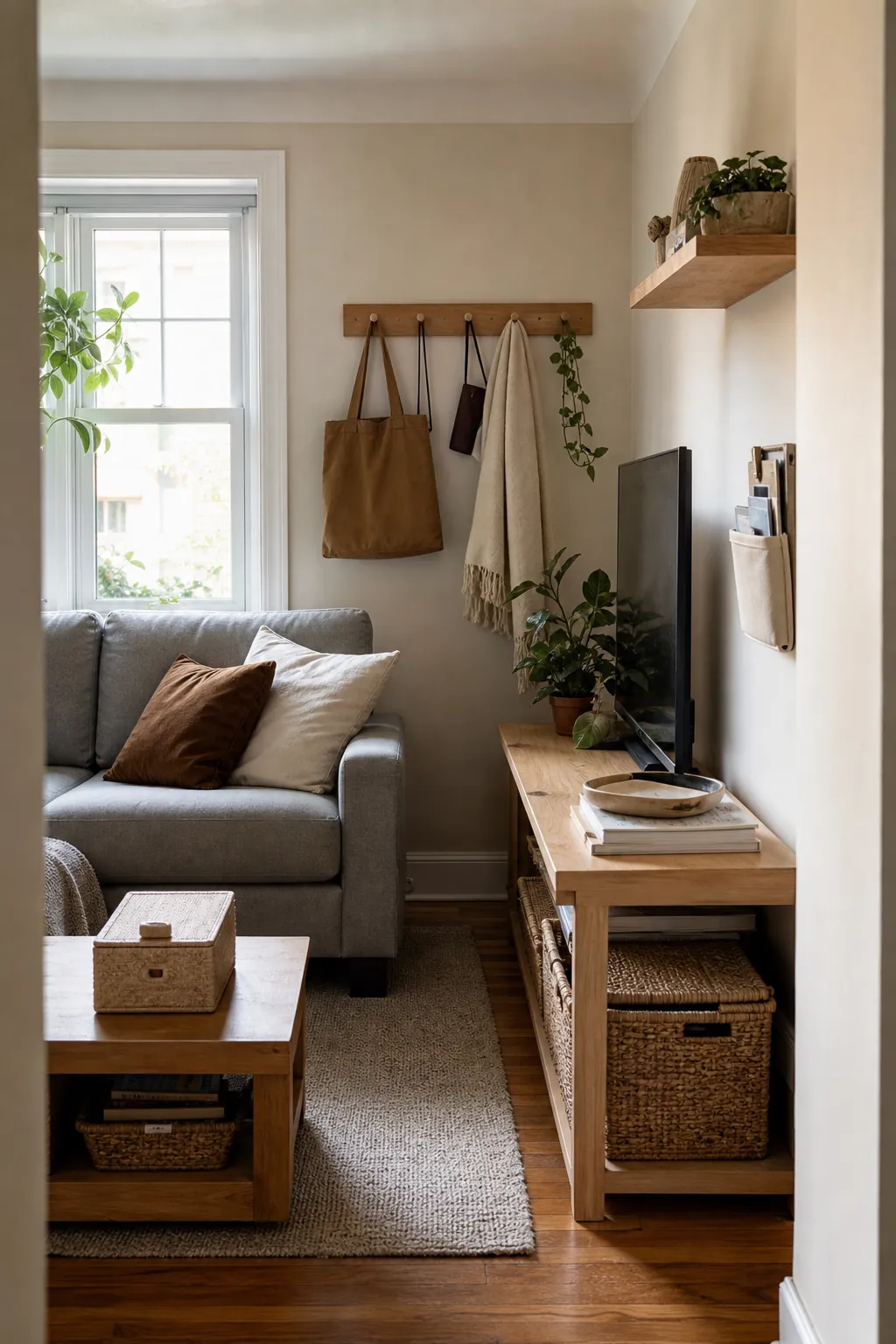
The quickest way to create more storage in a small home is not to squeeze in another cabinet. That usually steals floor space, narrows walkways, and makes the room feel more crowded than before. The better move is to find the storage your home is already offering: empty wall height, backs of doors, the inside of cabinets, shallow floor gaps, and furniture you already own.
If you want more storage without buying big furniture, think smaller and more specific. A hook is not just a hook. It is a home for tomorrow’s bag. A basket is not just a basket. It is a closed category for blankets, chargers, returns, or pet supplies. The real fix is not more containers. The fix is giving everyday items a place that is easy to reach and easy to reset.
Start with the storage audit that keeps you from buying the wrong thing
Before adding wall storage, hidden storage, storage baskets, or compact storage tools, walk through your home with a simple question: what keeps landing in the wrong place? Shoes by the door, mail on the counter, blankets on the sofa, toiletries on the sink, cords on the desk, and pantry overflow on the floor are all clues. They show where your existing system is failing.
Write down the repeat offenders by category, not by room. For example: daily bags, shoes, paper clutter, cleaning supplies, extra linens, chargers, hobby tools, pantry overflow, and bathroom backups. Then match each category to a storage type. Daily items need open access. Ugly extras need closed storage. Occasional items can go high, low, or behind something. This one step prevents the classic small space mistake: buying a beautiful organizer that does not match the way you actually live.
- Visible storage is best for items you touch every day.
- Hidden storage is best for backups, bulk goods, and visual clutter.
- High storage works for seasonal or rarely used pieces.
- Basket storage works only when each basket has one clear job.
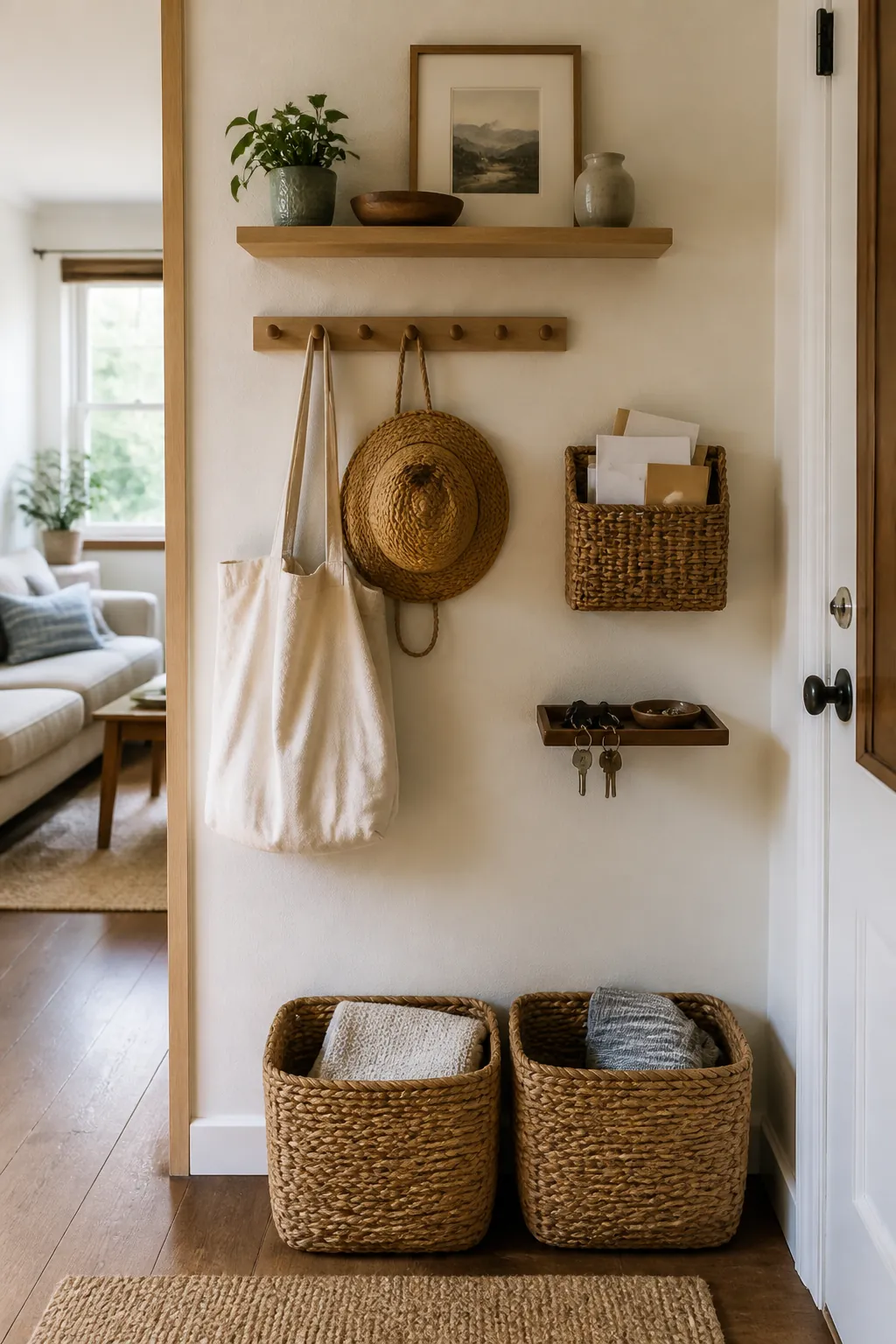
Use walls for daily lightweight items, not for everything you own
Wall storage is powerful in a small home because it adds capacity without taking floor space. It also fails quickly when every empty wall becomes a display of random stuff. The trick is to use walls for light, active, grouped categories: keys, bags, hats, pet leashes, mugs, spices, office tools, or bathroom basics.
For renters or anyone avoiding permanent changes, look for tension systems, over-door hooks, freestanding leaning shelves, adhesive hooks rated for the right weight, or narrow rails that use a few small anchor points. Keep the wall system shallow. A rail, peg rack, or shelf that projects a few inches can make a room work harder. A deep wall unit can feel like furniture you were trying not to buy.
The rule is simple: one wall zone, one purpose. A kitchen rail for measuring cups and utensils. A hallway rack for coats and bags. A desk wall for headphones, notebooks, and chargers. Once the zone starts collecting unrelated items, it turns into visible clutter.
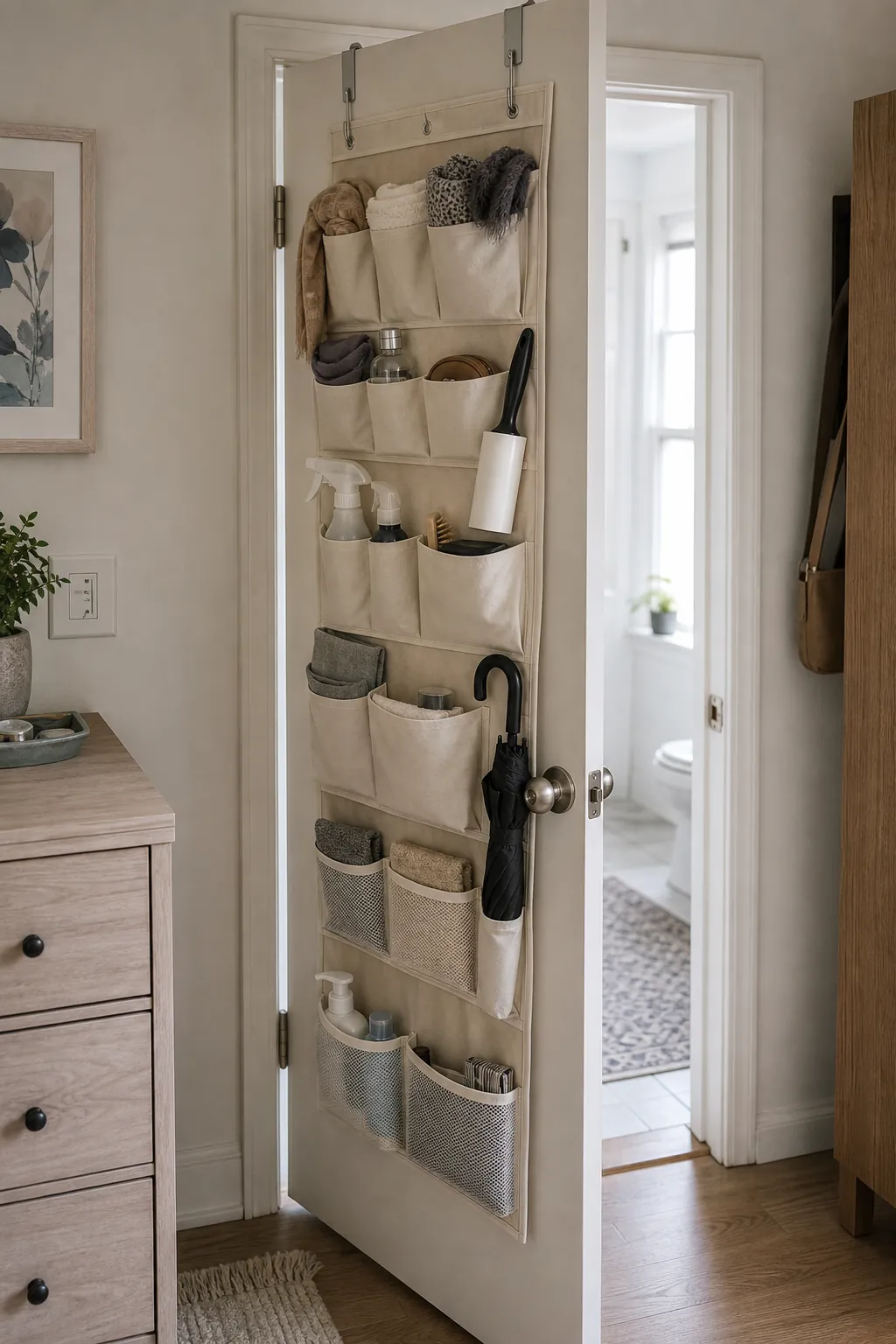
Claim the back of every door before adding another shelf
Doors are underrated small space storage. Bedroom doors, bathroom doors, pantry doors, closet doors, cabinet doors, and laundry doors all create shallow vertical space that is easy to access and easy to hide. This is where small home ideas become practical: you are not changing the layout, just using a surface that already swings open and closed.
Use over-door racks for shoes, cleaning bottles, toiletries, wrapping paper, hair tools, hats, or pantry overflow. Use cabinet-door caddies for cutting boards, lids, foil, brushes, and small bathroom backups. Before buying, measure door clearance and check whether the rack will block the door from closing flush. A storage idea is only successful if it disappears into the daily rhythm of the room.
This is also one of the easiest ways to create hidden storage without big furniture. The room looks calmer because the storage is behind a plane you already had.
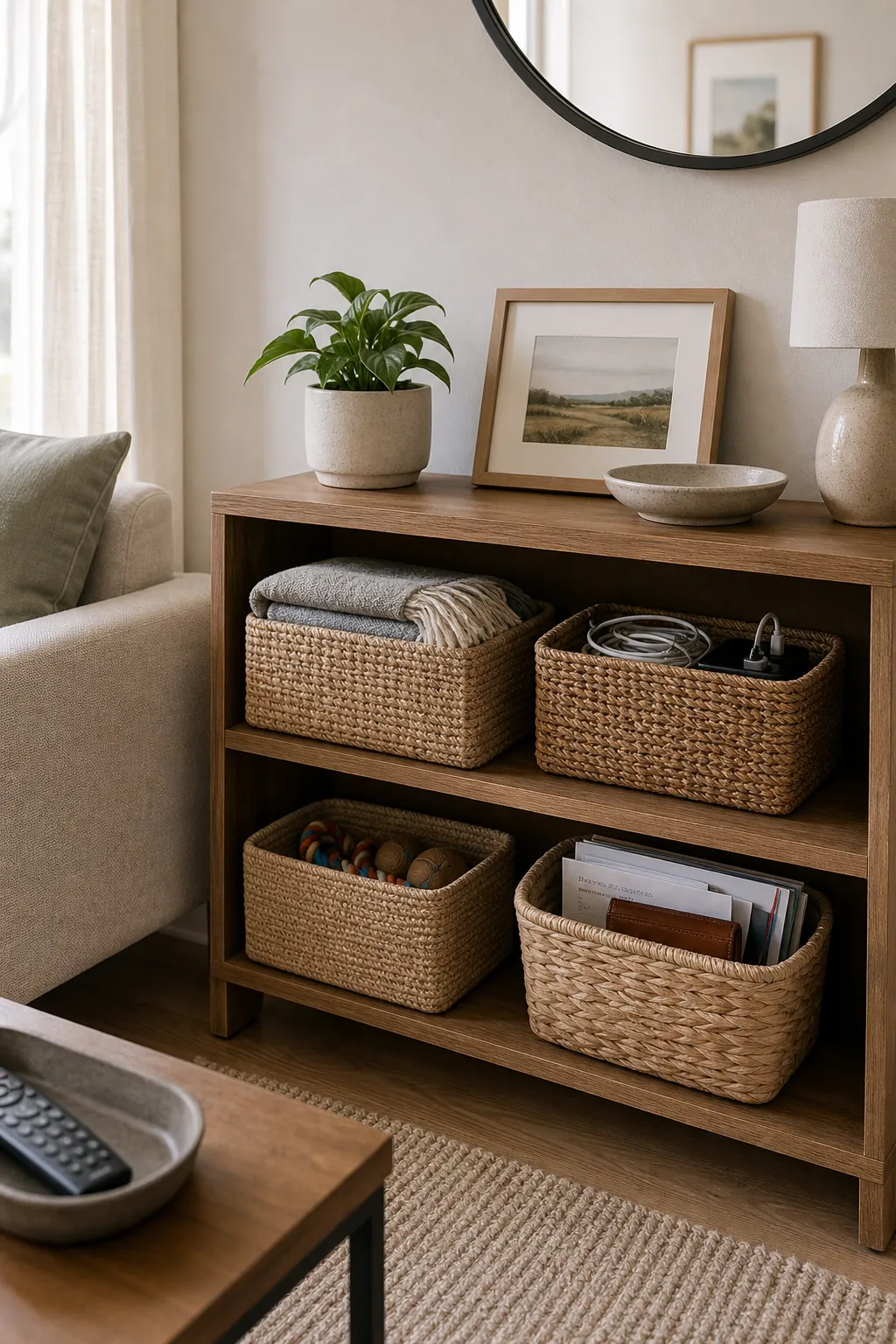
Make baskets work by giving each one a narrow job
Storage baskets are useful when they hide texture and group one category. They become clutter when they act as decorative junk drawers. In a small room, a row of baskets can either make the space feel calm or make it feel like you moved the mess into nicer containers.
Choose fewer baskets, label them simply, and keep each one specific: throws, returns, pet gear, guest bedding, workout bands, paper mail, toys, chargers, or winter accessories. Avoid a basket called miscellaneous. That word means the system has stopped making decisions.
For open shelving, baskets are often better than more shelves. They reduce visual noise, keep small items from spreading, and let you pull out one category at a time. The important part is sizing. A basket should fit the shelf with enough room to slide out easily. If it scrapes, jams, or hides items too deeply, it will become annoying and stop getting used.
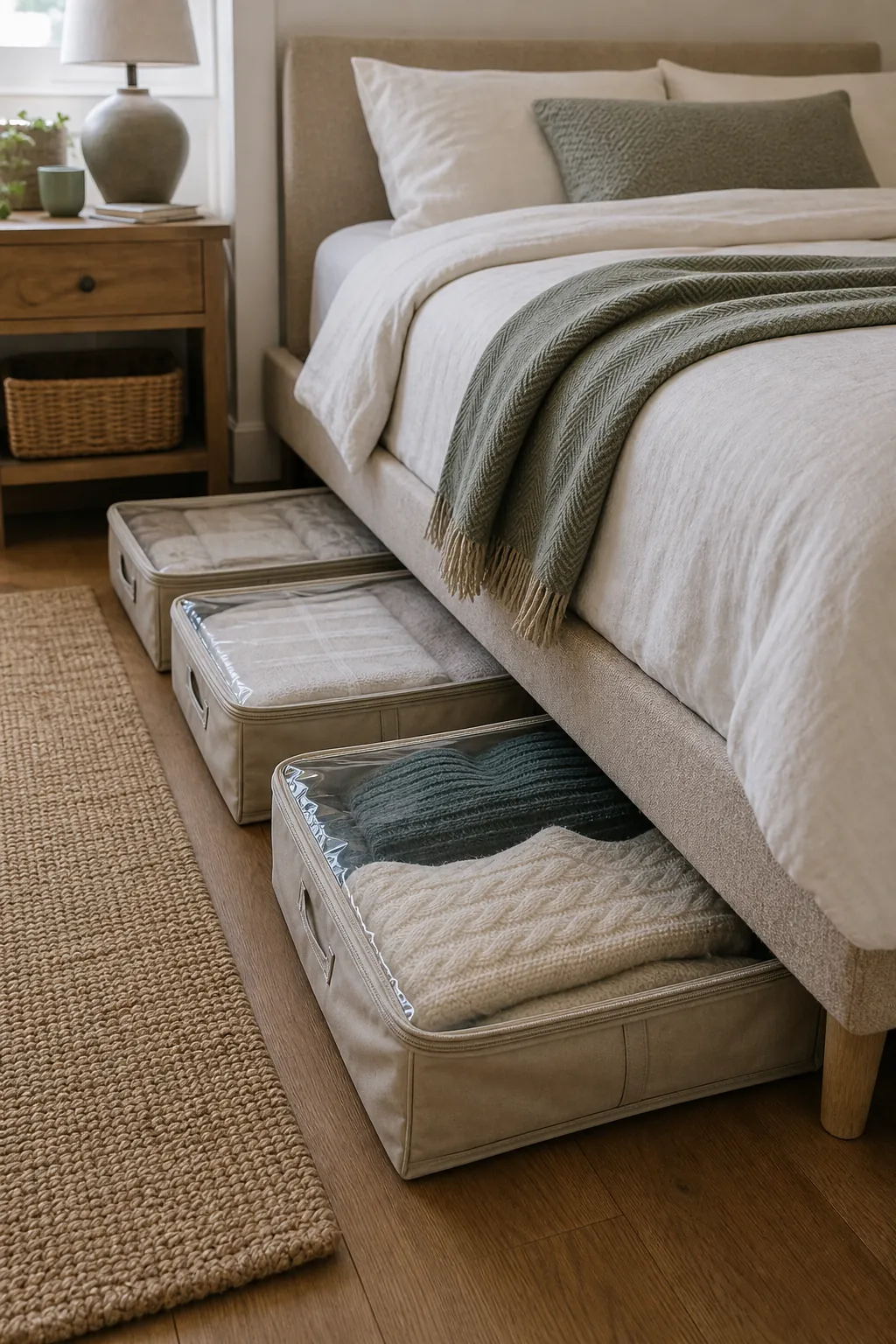
Use low storage for bulky items you do not need every day
Under-bed, under-sofa, and under-bench areas are valuable because they are already visually low. They are not the right place for anything you need twice a day, but they are excellent for seasonal bedding, guest linens, sweaters, holiday decor, spare towels, and hobby supplies.
Pick shallow bins that pull out cleanly. Soft zip bags are good for fabric items. Rigid rolling bins are better for heavier items. Clear tops help when the bin lives under a bed, while woven or fabric fronts look better when the storage is partially visible under an open bench or sofa.
The biggest mistake is pushing loose items underneath and calling it storage. Low storage needs boundaries. If you cannot pull the whole category out in one motion, it will turn into a dust trap and you will forget what is there.
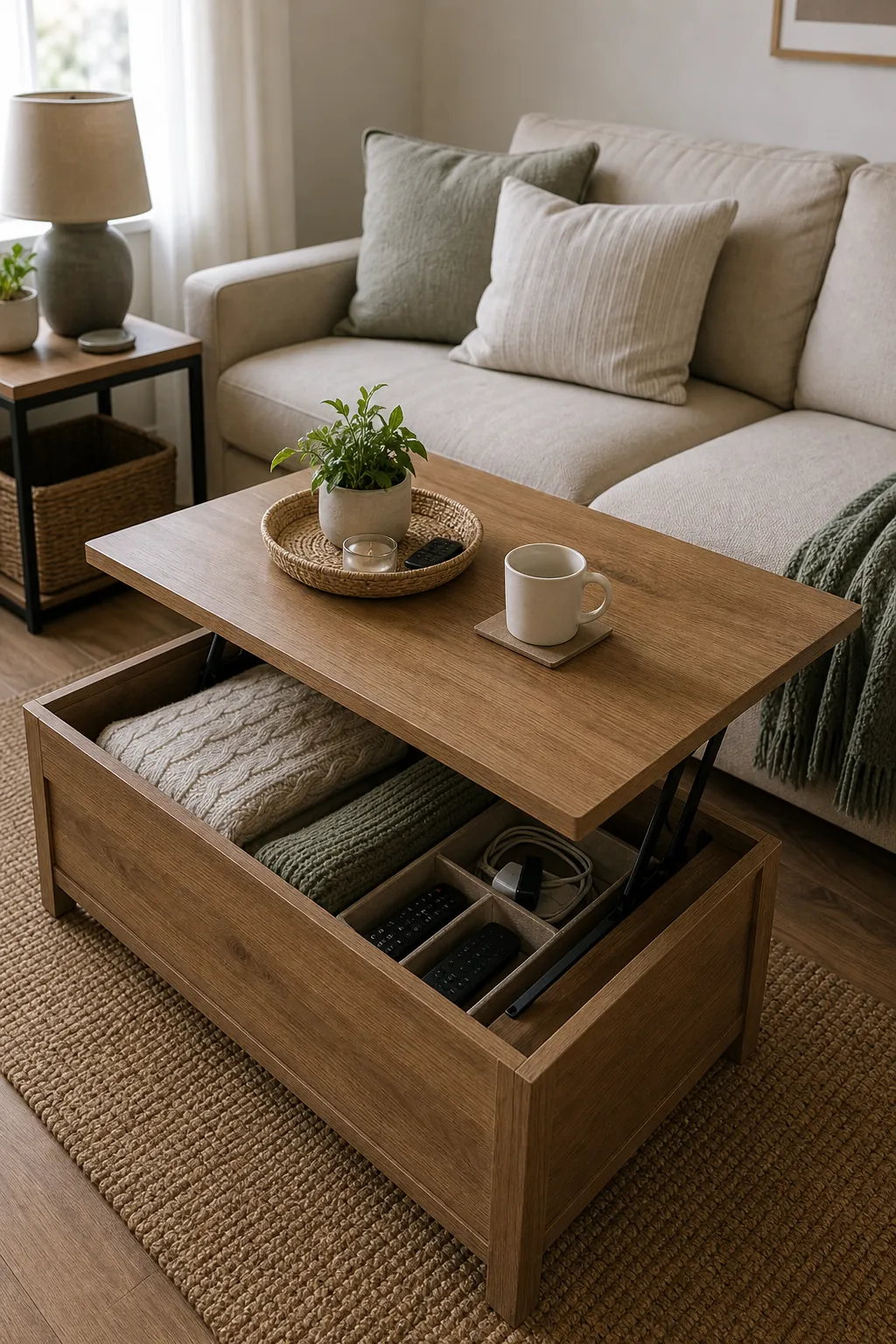
Turn existing furniture into multi purpose furniture
You do not have to buy a large storage cabinet to benefit from multi purpose furniture. Start with what you already own. A coffee table can hold a tray and a lidded box. A bench can hide shoes underneath. A nightstand can get drawer dividers instead of a second dresser. A desk can use a clip-on cable basket, a slim file box, and a wall pocket instead of a full bookcase.
If you do replace a piece later, replace only one thing and make it work harder. A small storage ottoman can replace a side table. A lift-top coffee table can replace a table plus a paperwork pile. A bed frame with drawers can replace under-bed bins. The goal is not to own more furniture. The goal is to make each existing footprint earn its space.
In small space storage, every floor item should answer two questions: what does it do, and what does it hold? If it only occupies space, it has to justify itself.
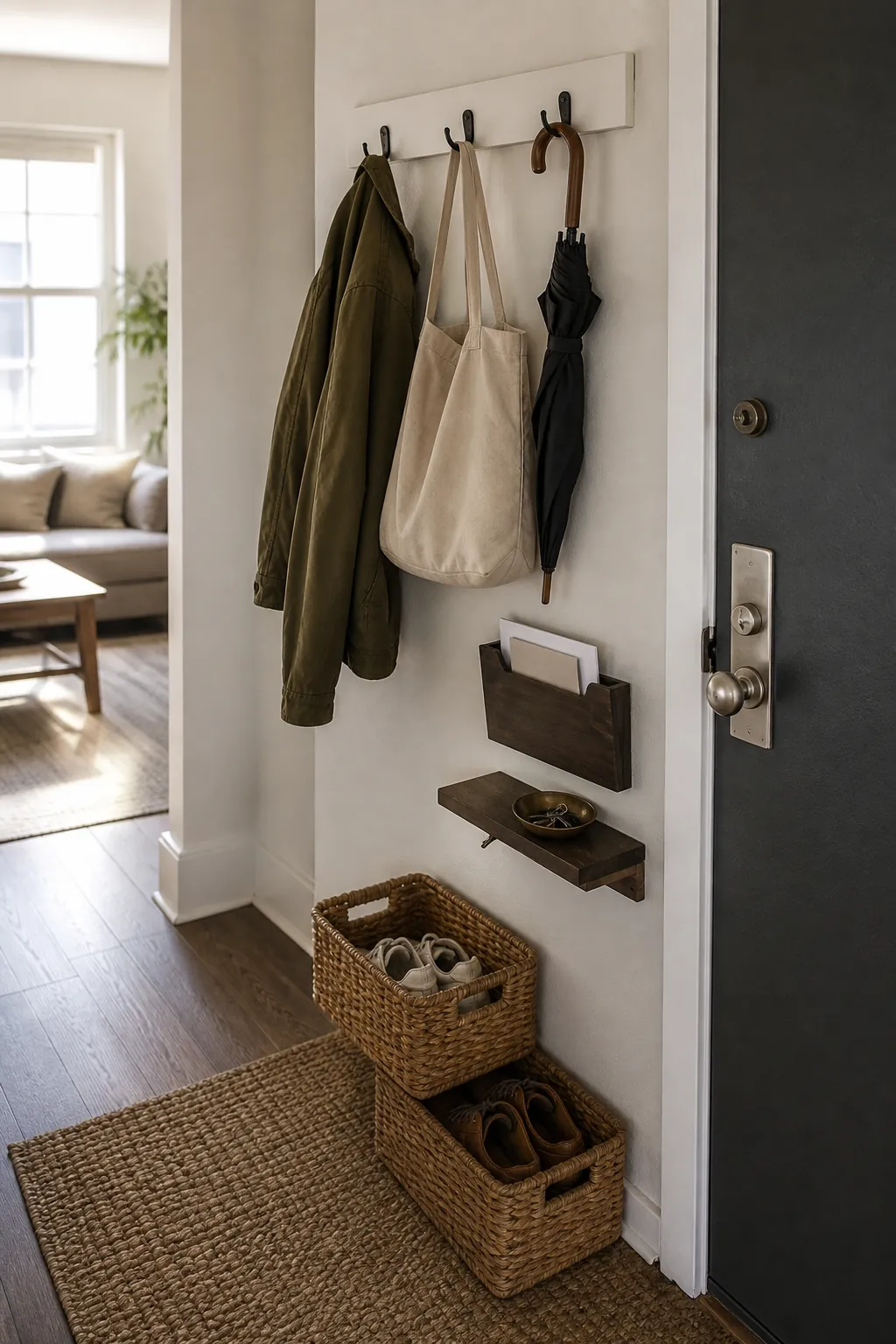
Create a tiny entryway even if you do not have an entryway
Many small homes do not have a real foyer, which is why clutter spreads from the door to the table, sofa, kitchen counter, and bedroom chair. You can fix that with a narrow landing zone. It does not need to be big. It needs to catch the predictable items: keys, mail, bags, shoes, umbrellas, sunglasses, and reusable totes.
Use wall hooks, a small tray, a vertical mail pocket, and one or two shoe baskets. If there is no wall, use the inside of a closet door. If there is no closet, use a narrow strip beside the door or the back of the main door. Keep the zone tight. Once the entry system grows beyond the daily essentials, it becomes another clutter station.
A compact entry zone improves the whole home because it catches mess at the point of entry. That is why it is one of the highest-impact home organization moves for a small space.
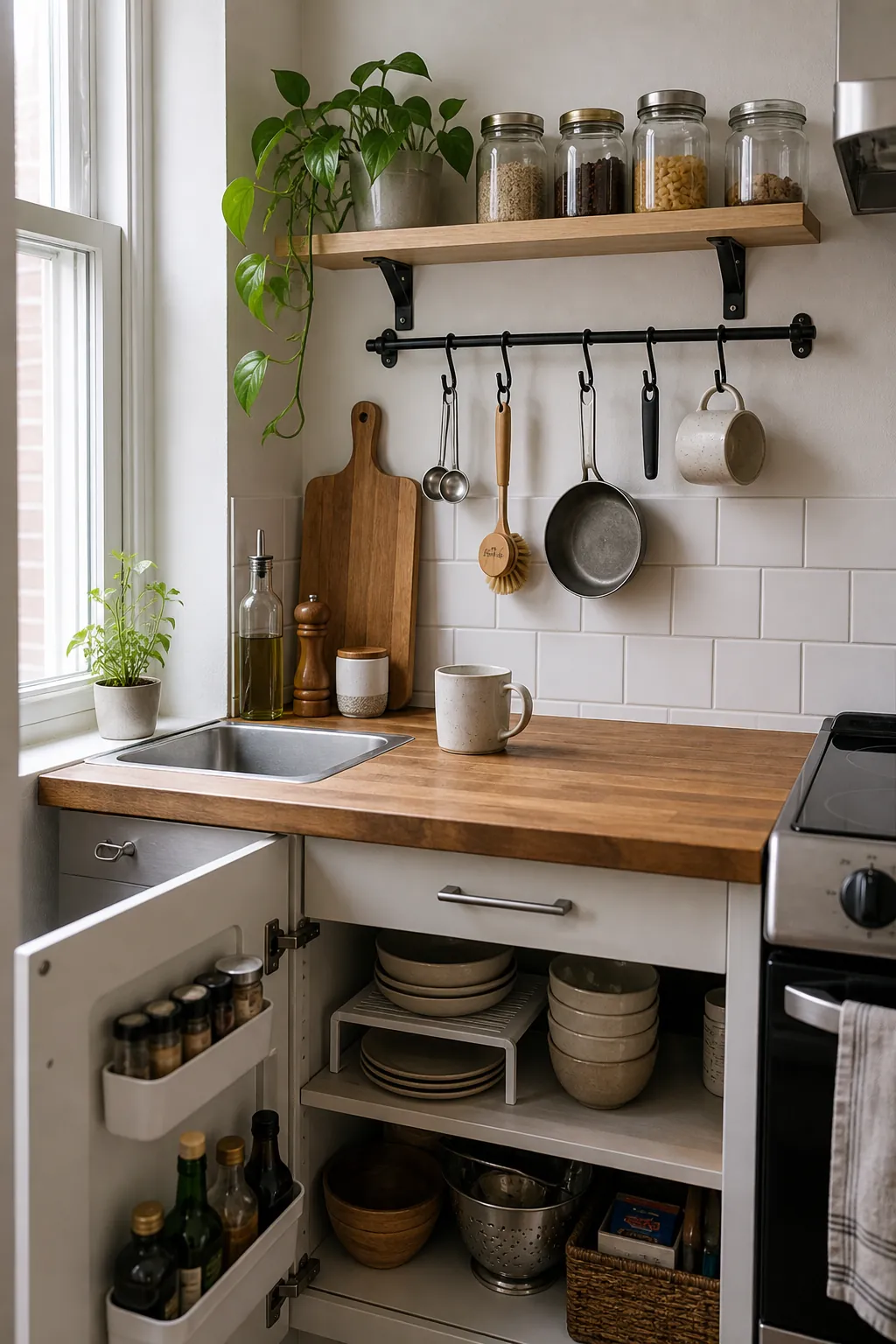
Move kitchen overflow onto rails, risers, and cabinet doors
A small kitchen often feels short on storage because cabinets are deep, shelves are tall, and counters become the overflow zone. You can create more storage without big furniture by splitting the kitchen into shallow layers. Use shelf risers so plates, mugs, and bowls do not waste vertical cabinet space. Use turntables for oils, spices, and jars. Use cabinet-door racks for wraps, cutting boards, lids, or cleaning supplies.
For the wall, use a slim rail only for tools you reach for constantly: measuring spoons, a small pan, a favorite mug, a dish brush, or a few utensils. Keep the rest closed away. A small kitchen looks bigger when the counter has breathing room, so the priority is not displaying everything. The priority is getting repeat-use items off the work surface.
If your kitchen has no pantry, choose one narrow backup zone for extras. That might be a high shelf, a door rack, a lidded basket, or a slim cart that can tuck beside the fridge. Do not spread pantry overflow across five spots. Small homes need fewer storage zones, not more random ones.
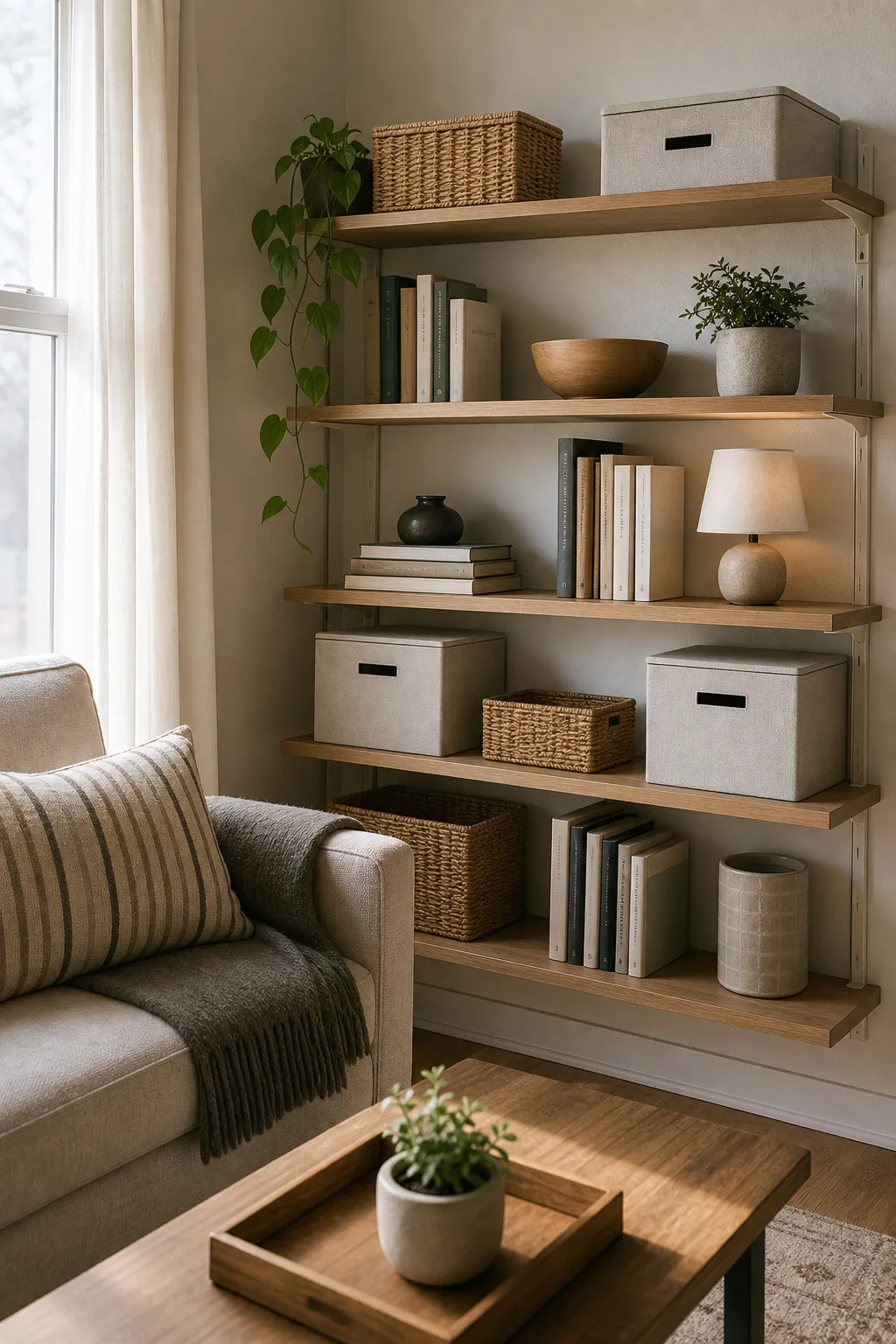
Leave breathing room on open shelves
Open shelves can help a small room, but only when they are edited. If every inch is filled, the shelf becomes visual noise. Use open shelves for a mix of closed boxes, a few attractive everyday items, and empty space. The empty space is not wasted. It is what lets the room feel organized instead of packed.
A practical formula is one-third closed storage, one-third useful display, and one-third breathing room. Closed boxes hide cords, documents, extra toiletries, craft supplies, and backup items. Useful display might be books, a lamp, a plant, a tray, or daily dishes. Breathing room keeps the shelf from looking like the storage problem moved upward.
This is where no big furniture storage becomes a design choice, not a compromise. You are not trying to hide the fact that you need storage. You are choosing which items deserve to be visible and which ones should disappear.
Keep the system small enough to maintain
The best storage setup is the one you can reset in five minutes. If a solution requires folding, stacking, unlatching, moving three things, or remembering a complicated category map, it will fail on a busy week. Small space storage works when the return path is obvious.
Start with one pressure point: the entry, the kitchen counter, the bedroom floor, the bathroom sink, or the living room drop zone. Add one clear storage answer. Live with it for a week. If the item returns to its new home without effort, keep it. If it still drifts, the storage is too far away, too hidden, too small, or too fussy.
More storage is not always a bigger piece of furniture. In a compact home, more storage is often a better decision repeated in small places: a wall hook where the bag lands, a basket with one job, a door rack that hides supplies, a low bin that pulls out cleanly, and a shelf with enough empty space to breathe.