
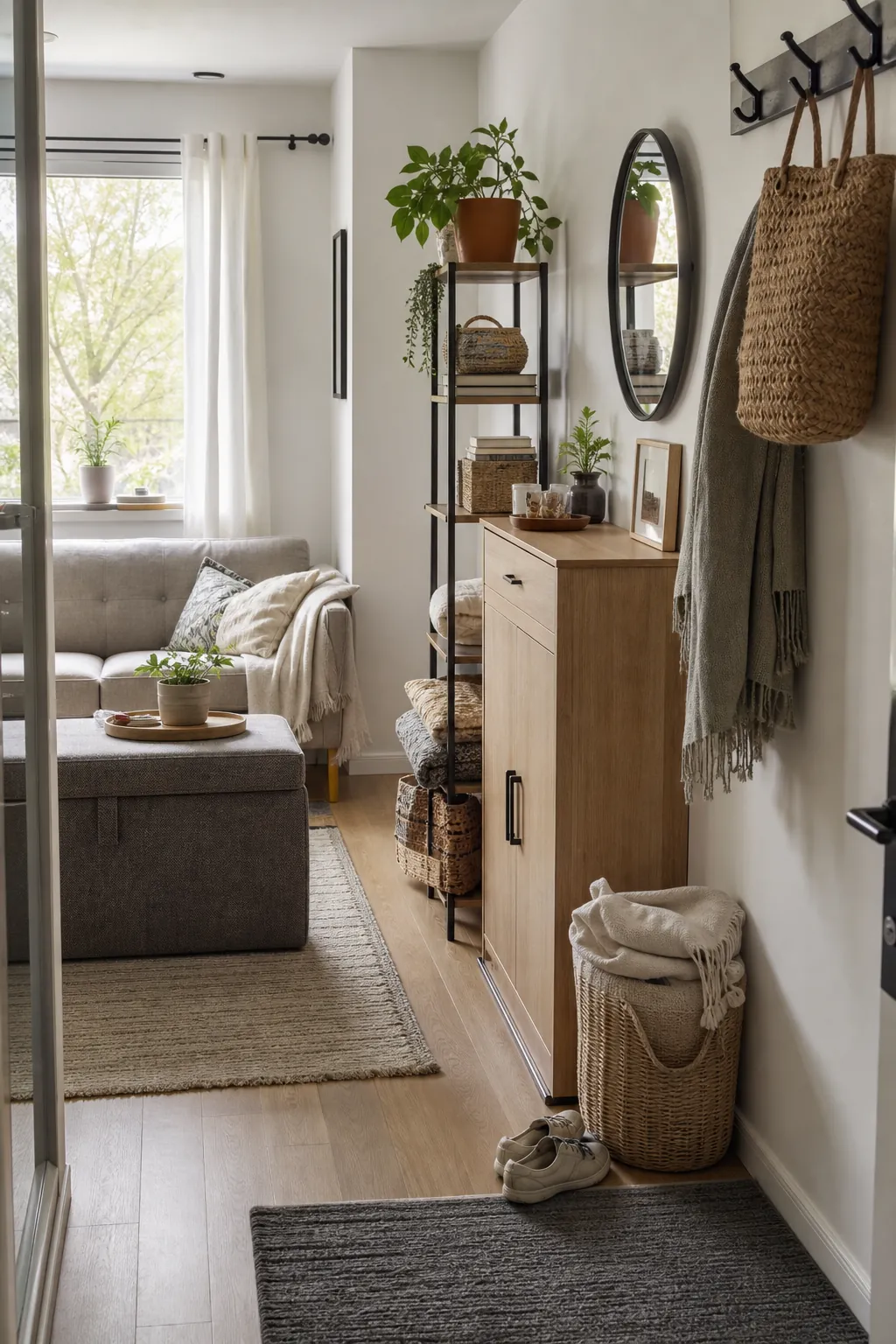
A small home without built ins can make every object feel public. Shoes sit by the door because there is no entry closet. Pantry food lands on the counter because there is no pantry. Extra linens migrate from chair to chair because the bedroom has one narrow closet and no cabinet wall to absorb the overflow.
The fix is not to pretend you have custom cabinetry. The fix is to build a movable storage system that acts like built ins: vertical, shallow, assigned by category, and easy to reset. The best small space storage ideas for homes without built ins are not random baskets. They are renter friendly storage zones that give everyday items a home without drilling into every wall or blocking the room.
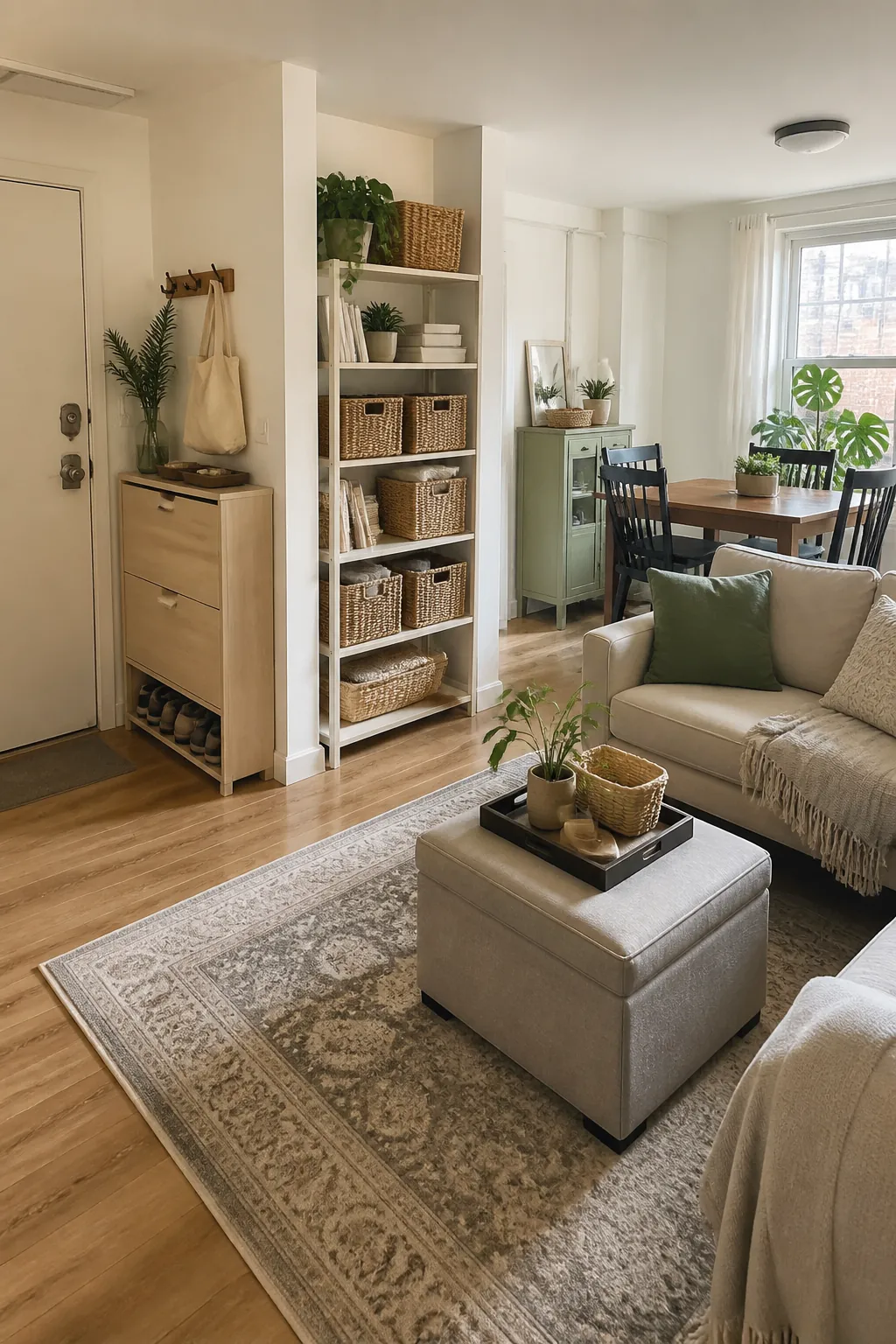
Start With Zones Before You Buy More Storage
The biggest mistake in a home with no built ins is buying one storage piece at a time and hoping the room will organize itself. A cabinet cannot fix a home if it is unclear what belongs inside it.
Start with the pressure points. Most small homes need a landing zone near the door, a daily-use kitchen zone, a visible-surface reset zone, a private clothing or linen zone, and one overflow zone for items that are useful but not touched every day. Once those zones are named, the right storage furniture becomes obvious.
- Entry zone: shoes, keys, bags, mail, pet leashes, and umbrellas.
- Kitchen zone: snacks, dry goods, small appliances, cleaning supplies, and food wrap.
- Living zone: remotes, chargers, blankets, books, games, and hobby supplies.
- Bedroom zone: off-season clothes, extra bedding, laundry, accessories, and small bags.
- Bathroom zone: towels, toiletries, hair tools, paper goods, and cleaning refills.
This is the difference between home organization and container shopping. If a shelf has a job before you load it, it stays useful. If it has no job, it becomes another horizontal surface.
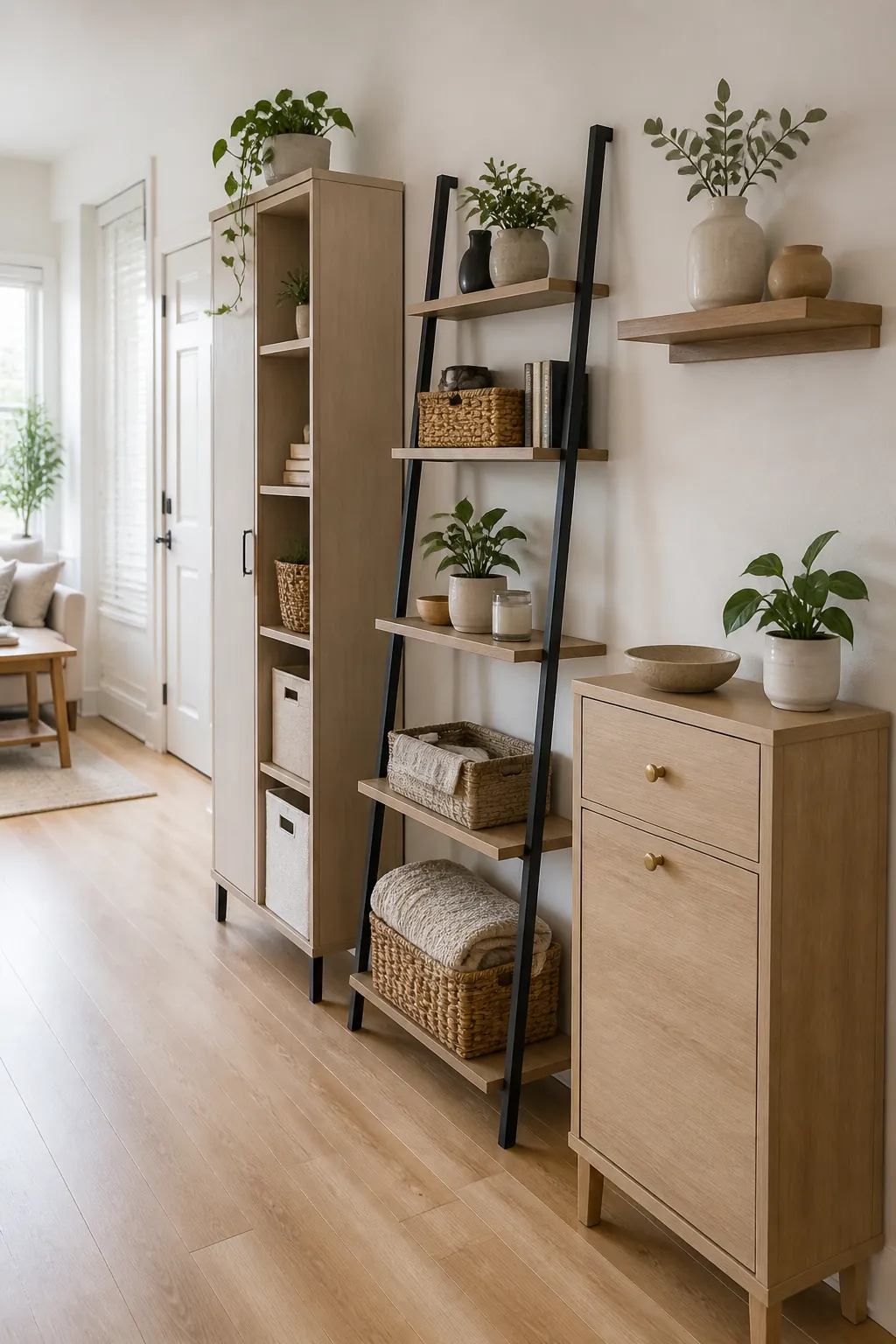
Use Tall Freestanding Storage Where Built Ins Would Normally Go
Freestanding storage is the backbone of a small home that lacks cabinets, closets, and custom shelving. A tall, narrow bookcase or closed cabinet gives you the same vertical benefit as a built in, but it can move with you and usually does not require permanent installation.
The key is depth. In a compact room, a deep cabinet can steal the walkway and make the whole space feel smaller. Look for pieces that are tall enough to use the wall height but shallow enough to leave clear floor circulation. For many rooms, a slim cabinet, ladder shelf, corner shelf, or narrow etagere works better than a wide low console.
- Use closed doors for visual clutter: paper goods, backup toiletries, cords, and hobby supplies.
- Use open shelves for attractive daily items: baskets, folded throws, books, trays, and ceramics.
- Keep the heaviest items low so the unit feels grounded and stable.
- If children, pets, or earthquake risk are a concern, choose a safer placement and follow the furniture anchoring guidance allowed in your home.
Freestanding storage works best when it is treated like architecture. Place it where a builder would have put a cabinet wall: beside a sofa, next to the dining area, at the end of a hallway, beside the bed, or in the dead gap near a fridge.
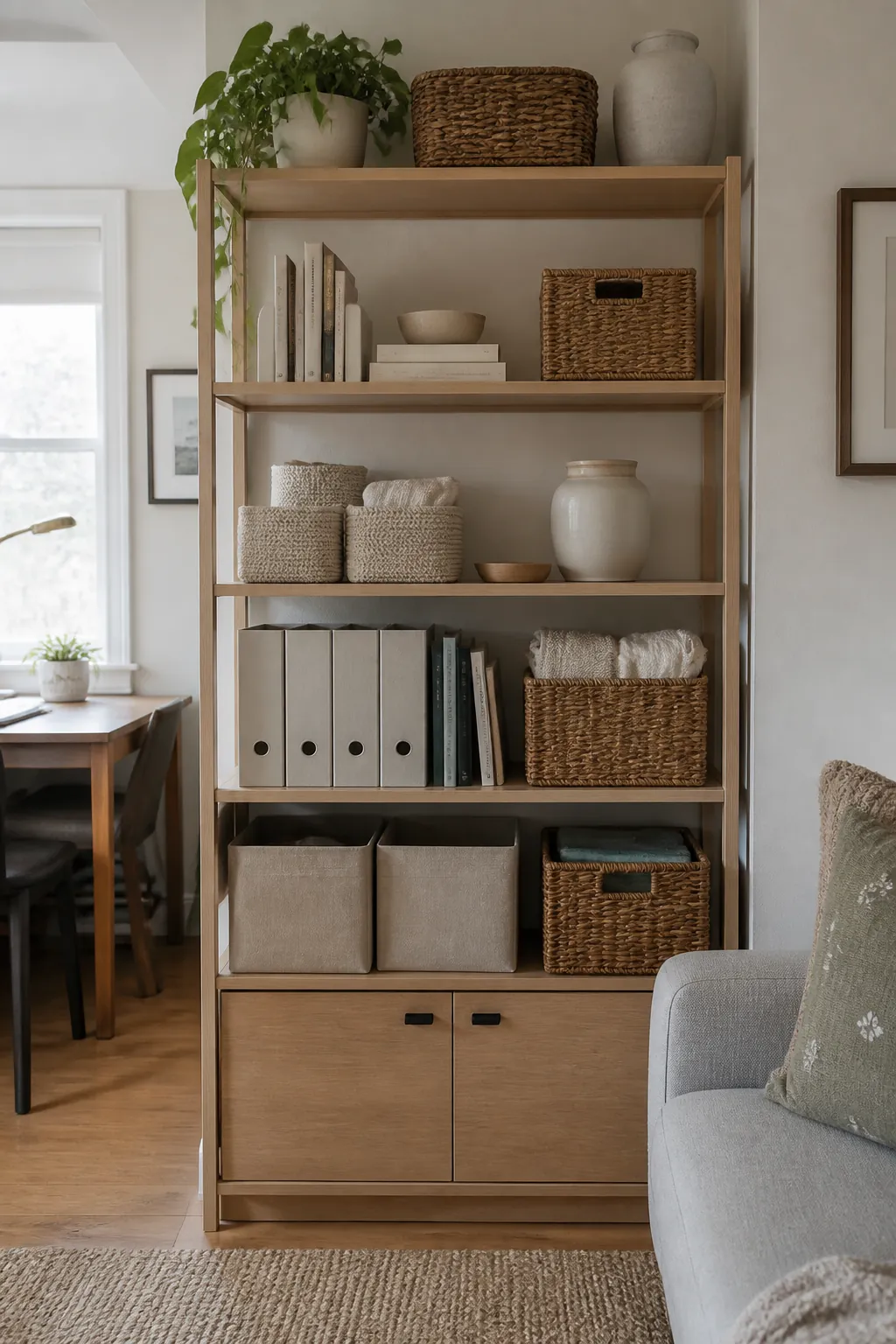
Make Open Shelves Look Calm With Baskets And Empty Space
Open shelving is useful in a small home, but it also exposes everything. That is why many apartments with shelves still feel cluttered. The problem is not the shelf. The problem is that every object is visible at once.
Use baskets, boxes, magazine files, trays, and fabric bins to turn small loose items into larger visual blocks. Keep one category per container: cords in one, pet items in one, extra candles in one, office supplies in one. Then leave some breathing room on each shelf so the unit reads as intentional instead of overloaded.
A good rule for small space organization: if an item is ugly but necessary, contain it. If it is attractive and used often, display it. If it is neither attractive nor used often, it probably belongs in a closed cabinet, under-bed bin, or off-site donation pile.
Create An Entry Drop Zone Without A Mudroom
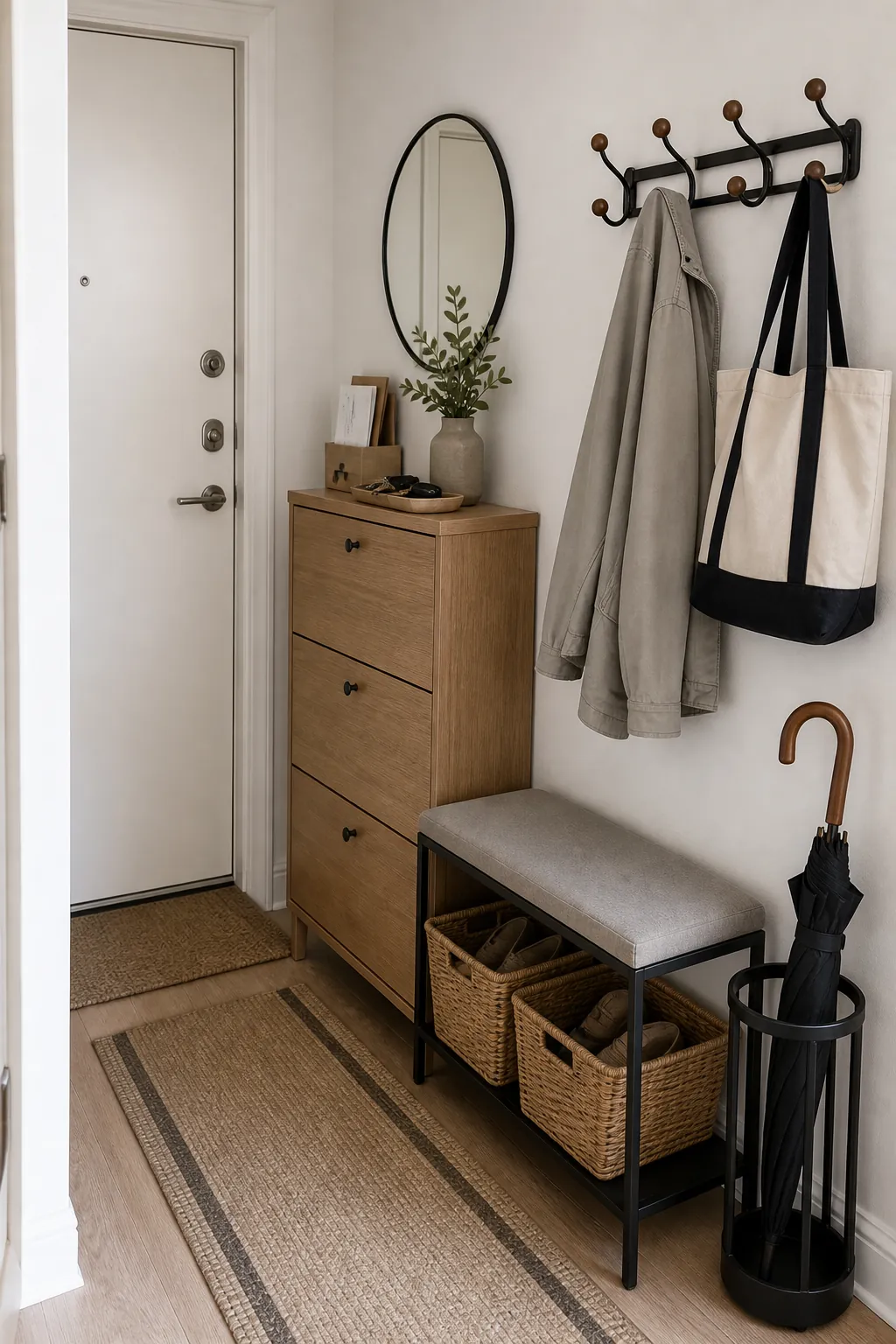
A home without built ins usually fails first at the door. If there is no coat closet or mudroom, the entry becomes a pile of shoes, tote bags, packages, and mail. The solution is a compact drop zone, not a bigger cleaning routine.
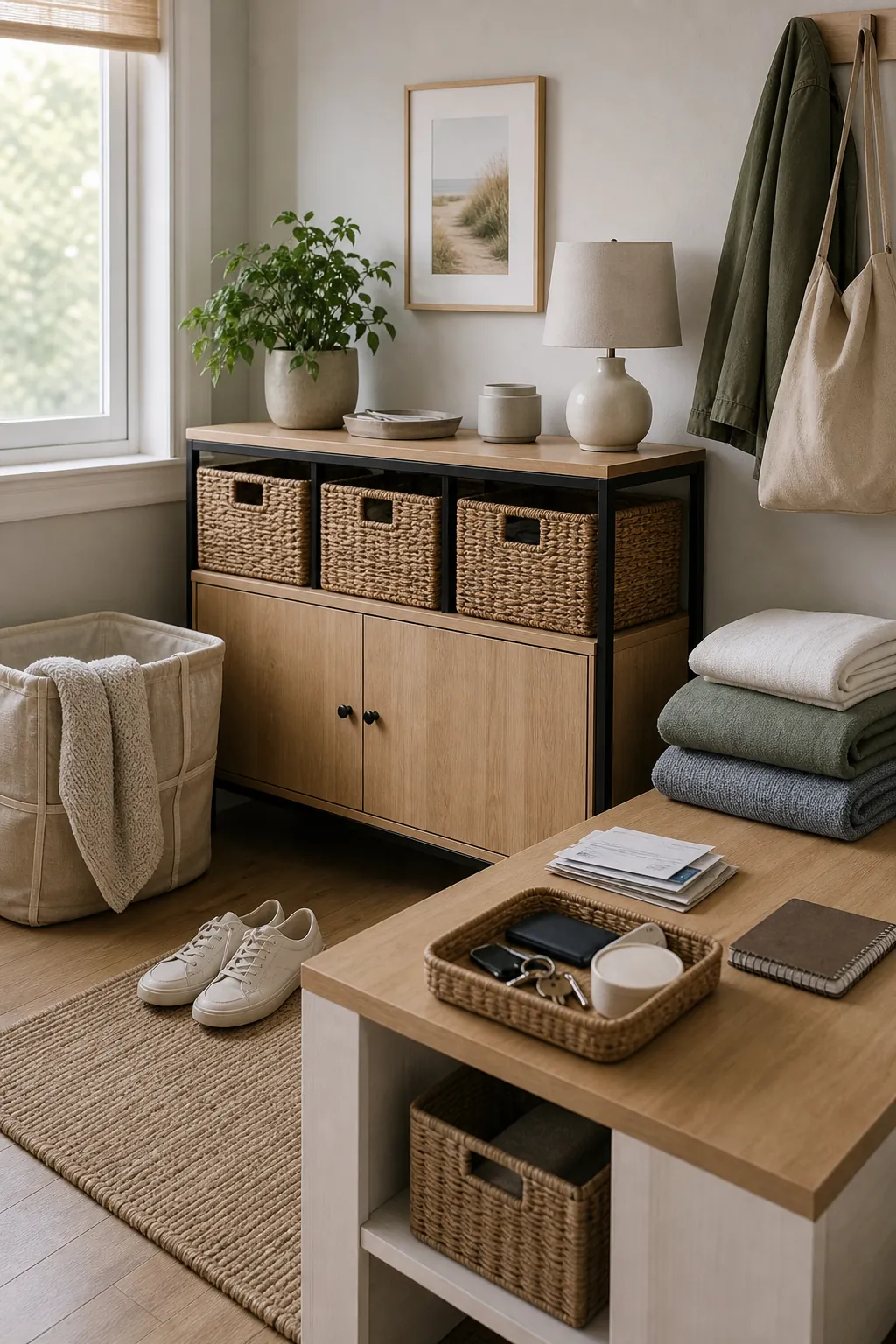
Choose the shallowest useful pieces: a slim shoe cabinet, a wall rail if your lease allows it, an over-door rack, a narrow bench with baskets underneath, or a small console with a tray for keys and mail. The goal is not to store everything you own at the door. The goal is to catch the daily items before they spread into the living room.
- Keep only current-season shoes at the entry.
- Use one tray for mail and clear it twice a week.
- Give each bag or backpack a hook, cubby, or basket.
- Store backup shoes, sports gear, and seasonal items somewhere else.
A small entry needs strict limits. The smaller the space, the more important it is to decide what is allowed to live there.
Add Wall Shelves Carefully, Especially In Rentals
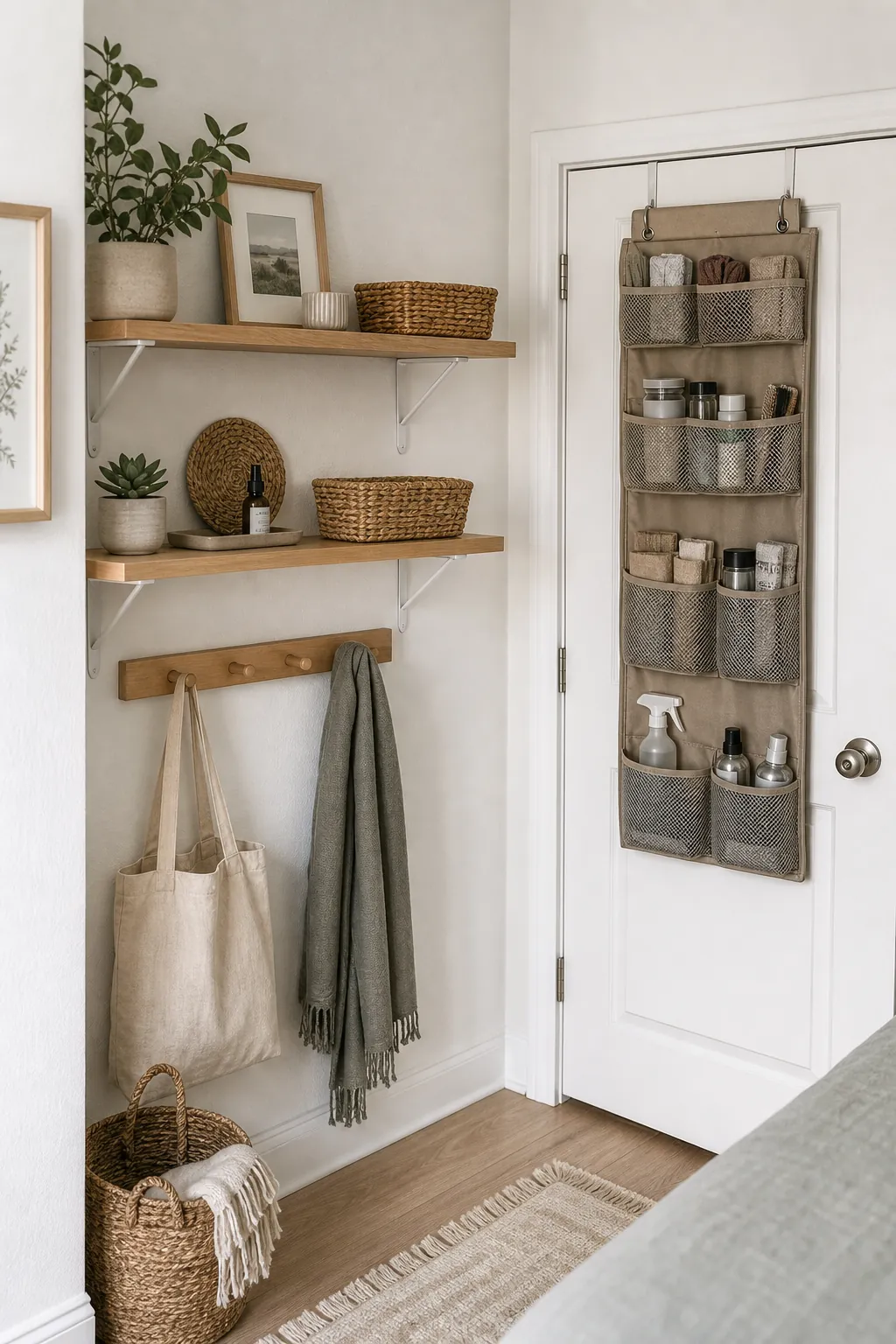
Wall shelves are tempting because they free up floor space, but they need a realistic job. In a small home, shelves are best for light categories, attractive objects, and items you can reach without dragging over a chair. They are not the right answer for heavy boxes, overloaded dishes, or anything that needs deep storage.
For renter friendly storage, check your lease before drilling. If you cannot make holes, use freestanding shelves, over-door organizers, tension systems, or furniture with vertical storage instead. Adhesive shelves can work for very light items, but humidity, textured walls, and weak paint can make them fail faster than expected.
The safest small-space wall strategy is usually a mix: one or two real shelves where they make a visible difference, plus movable storage furniture everywhere else. That keeps the room functional without turning every wall into a risky experiment.
Choose Storage Furniture That Replaces Missing Cabinets
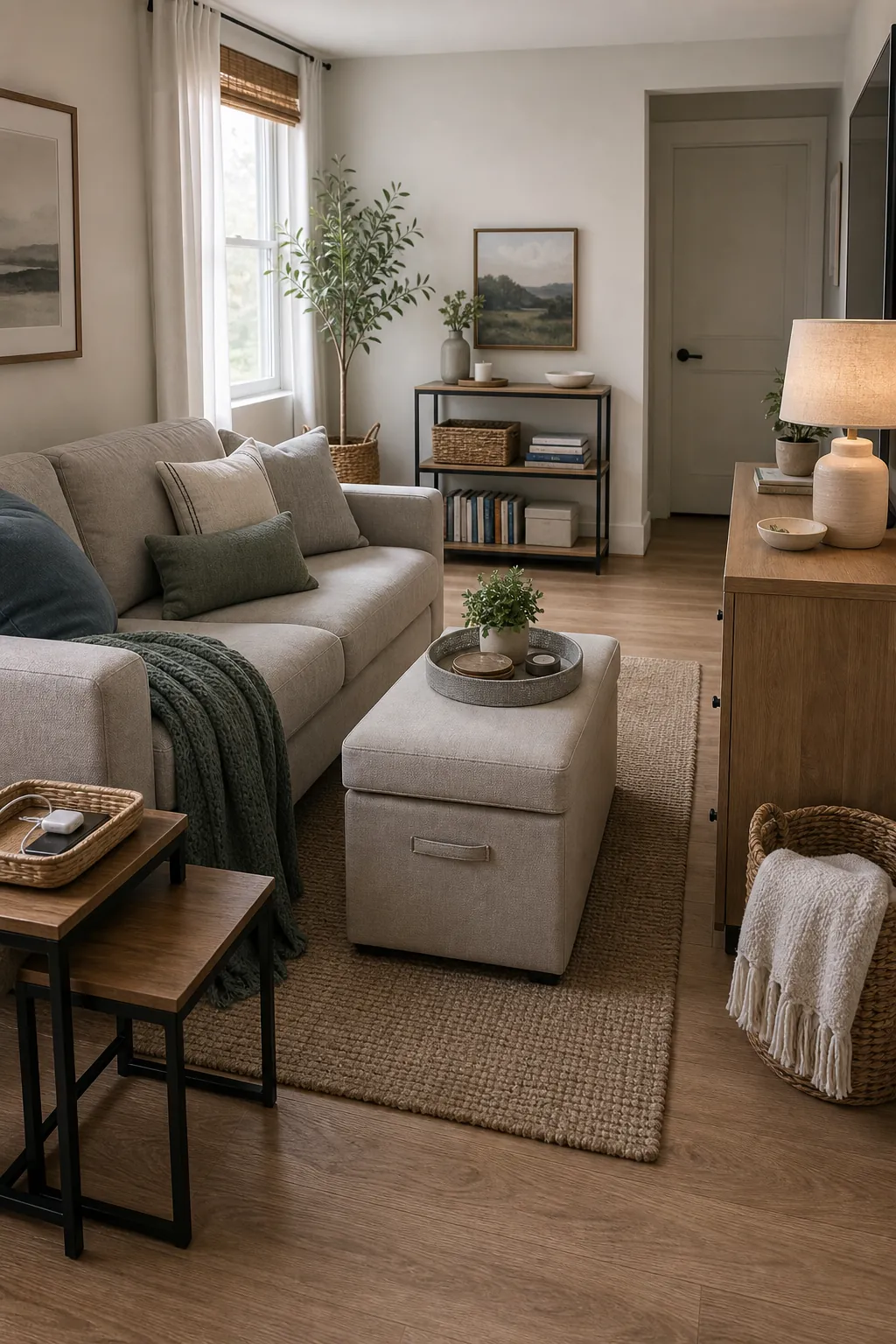
When there are no built ins, ordinary furniture has to work harder. A storage ottoman can replace a blanket cabinet. A sideboard can replace a dining room built in. A lift-top coffee table can hide remotes, chargers, notebooks, and craft supplies. A bed with drawers can replace half a linen closet.
The best storage furniture in a small home does two jobs without looking busy. It gives you closed storage and still behaves like normal furniture. Avoid pieces that solve one problem while creating another, such as a bulky trunk that blocks the sofa path or a giant cabinet that makes the room feel narrower.
- In the living room, use closed consoles, ottomans, nesting tables, and cabinets with legs.
- In the bedroom, use under-bed drawers, a wardrobe, a small dresser as a nightstand, or a bench with storage.
- In the dining area, use a sideboard or shallow cabinet for dishes, candles, linens, and extra pantry goods.
- In the home office, use a rolling file cart, wall pockets, and a cabinet that hides papers after work.
The test is simple: if a piece is taking up floor space, it should earn that floor space every day.
Use Movable Storage In Kitchens And Bathrooms
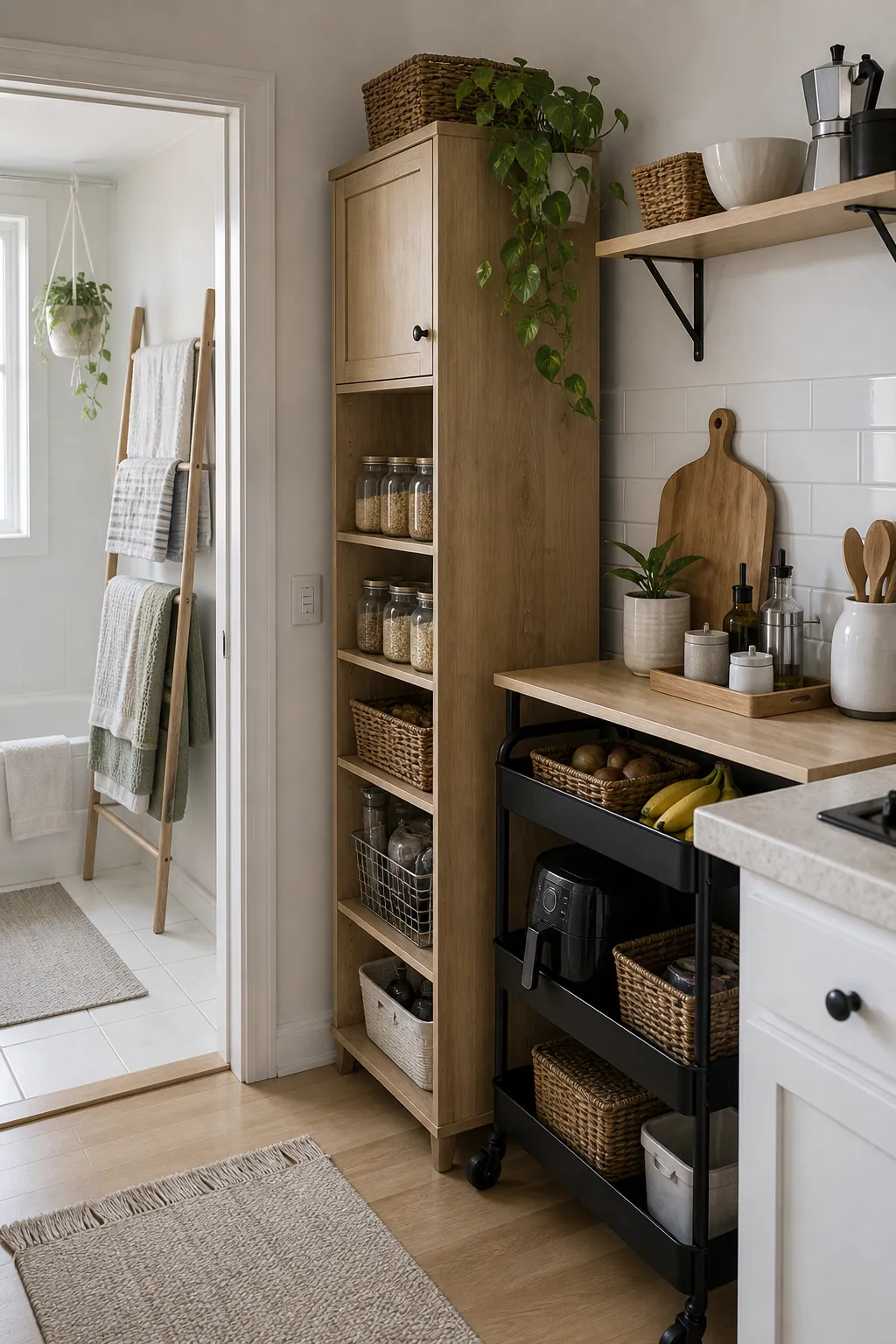
Kitchens and bathrooms expose missing built ins quickly because they contain many small items. A kitchen with no pantry needs a place for dry goods, backup paper products, and small appliances. A bathroom with no cabinet needs a place for towels, toiletries, hair tools, and cleaning supplies.
In the kitchen, look for a freestanding pantry cabinet, a narrow rolling cart, a sideboard, a baker’s rack, or a small island with shelves. Keep daily food at eye level, heavy appliances low, and messy packaging inside bins. If the back of a door is available, use it for light categories like spices, wraps, snacks, or cleaning refills.
In the bathroom, think vertically but stay realistic about moisture. An over-toilet shelf, a narrow floor cabinet, an over-door rack, or a tension shower caddy can add capacity without remodeling. Use closed bins for backup products and leave only daily-use items visible.
Keep The System Easy To Reset
The best small home storage system is not the one that looks perfect on day one. It is the one you can reset when you are tired. That means fewer mystery bins, fewer overfilled shelves, and fewer categories fighting for the same space.
Before you call the room done, check three things. First, every daily item should have a home you can reach in seconds. Second, every open shelf should include enough closed containers to quiet the visual clutter. Third, every piece of furniture should leave the walkway, doors, drawers, and windows usable.
If a storage idea makes the room harder to move through, it is not a storage idea. It is clutter wearing a better outfit. Homes without built ins need storage that disappears into the rhythm of the room: tall where the wall is empty, shallow where the walkway is tight, closed where the items are messy, and movable when the home is rented.
Start with one pressure point, not the whole home. Fix the entry, the kitchen counter, the bedroom closet overflow, or the bathroom towel problem first. A small home feels larger when the everyday mess has fewer places to land.