
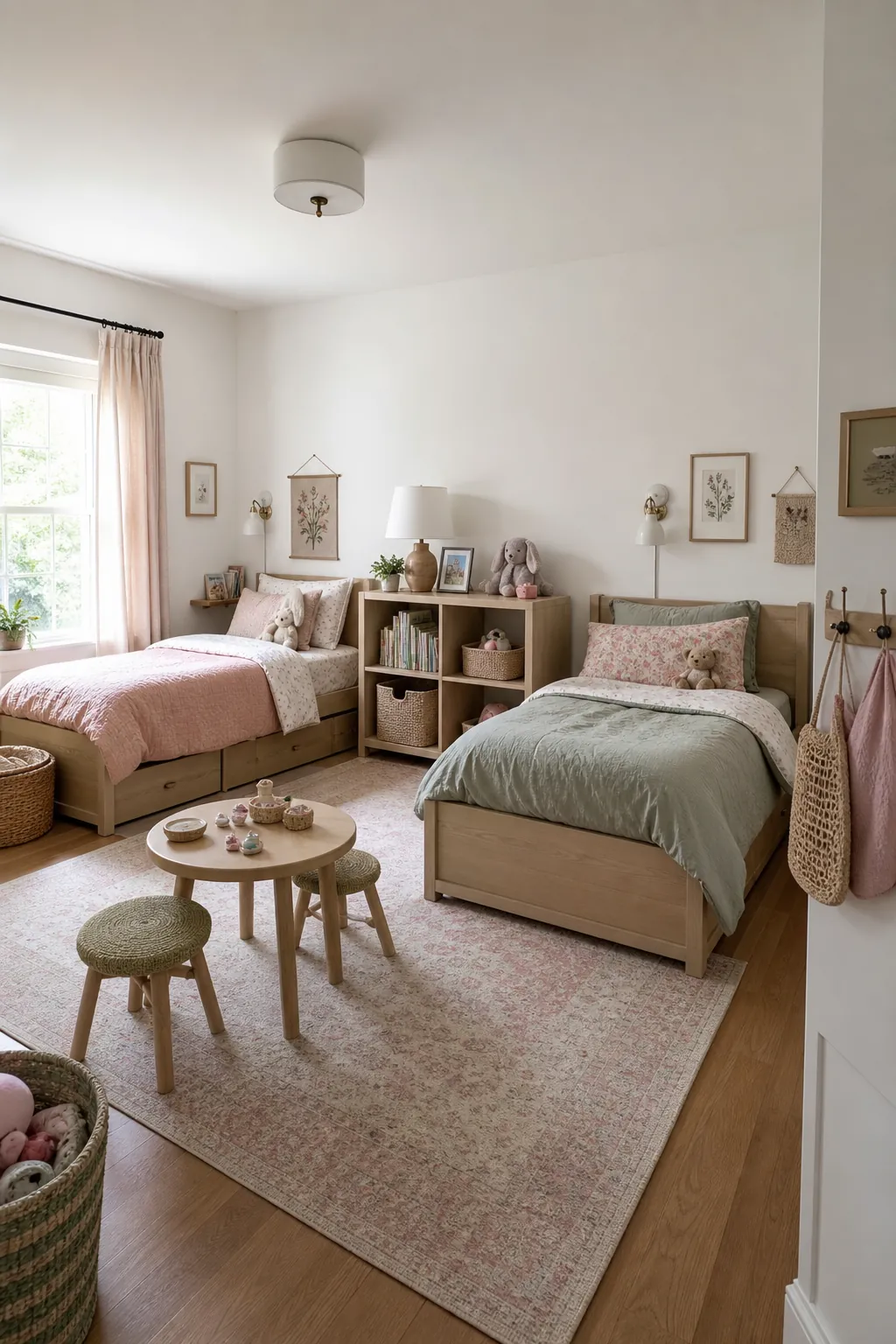
A shared girls bedroom works best when it stops feeling like one big compromise. The goal is not to split everything perfectly down the middle. The goal is to make each child feel, this part is mine, my things have a place, and I can relax without fighting for every inch.
Parents searching for shared girls bedroom ideas usually run into the same problems: the room looks crowded, toys drift everywhere, one child wants privacy sooner than the other, and the decor becomes either too matchy or too chaotic. The fix is to design small but obvious bedroom zones: a personal sleep corner, private storage, individual wall decor, and one shared middle area that both kids can use without competing.
Start With A Fair Floor Plan
Before buying new girls room decor, decide what each corner must do. Most shared kids room layouts need four things: sleep, storage, a surface for books or treasures, and a little visual identity. If the room is small, put the beds on opposite walls or in opposite corners so each child has a clear side. If the room is narrow, bunk beds can still work, but the lower and upper bunks need separate lights, shelves, and baskets so one child does not feel like the room belongs to the other.
The easiest test is the bedtime path. Can each child get to bed, grab pajamas, reach a book, and turn off a light without crossing through the other child’s things? If yes, the floor plan is already calmer. If no, fix that path before styling anything.
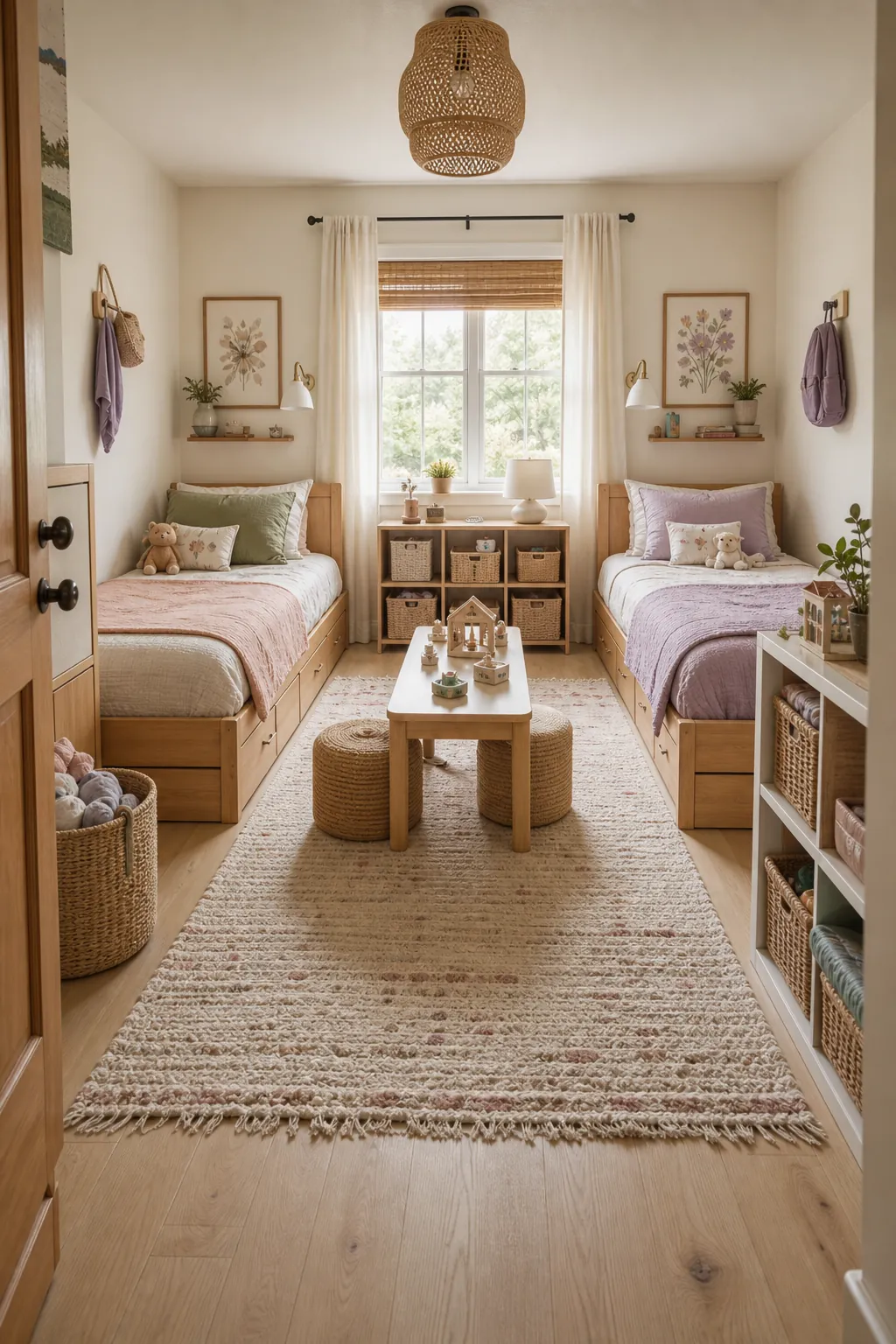
Give Each Bed A Real Personal Corner
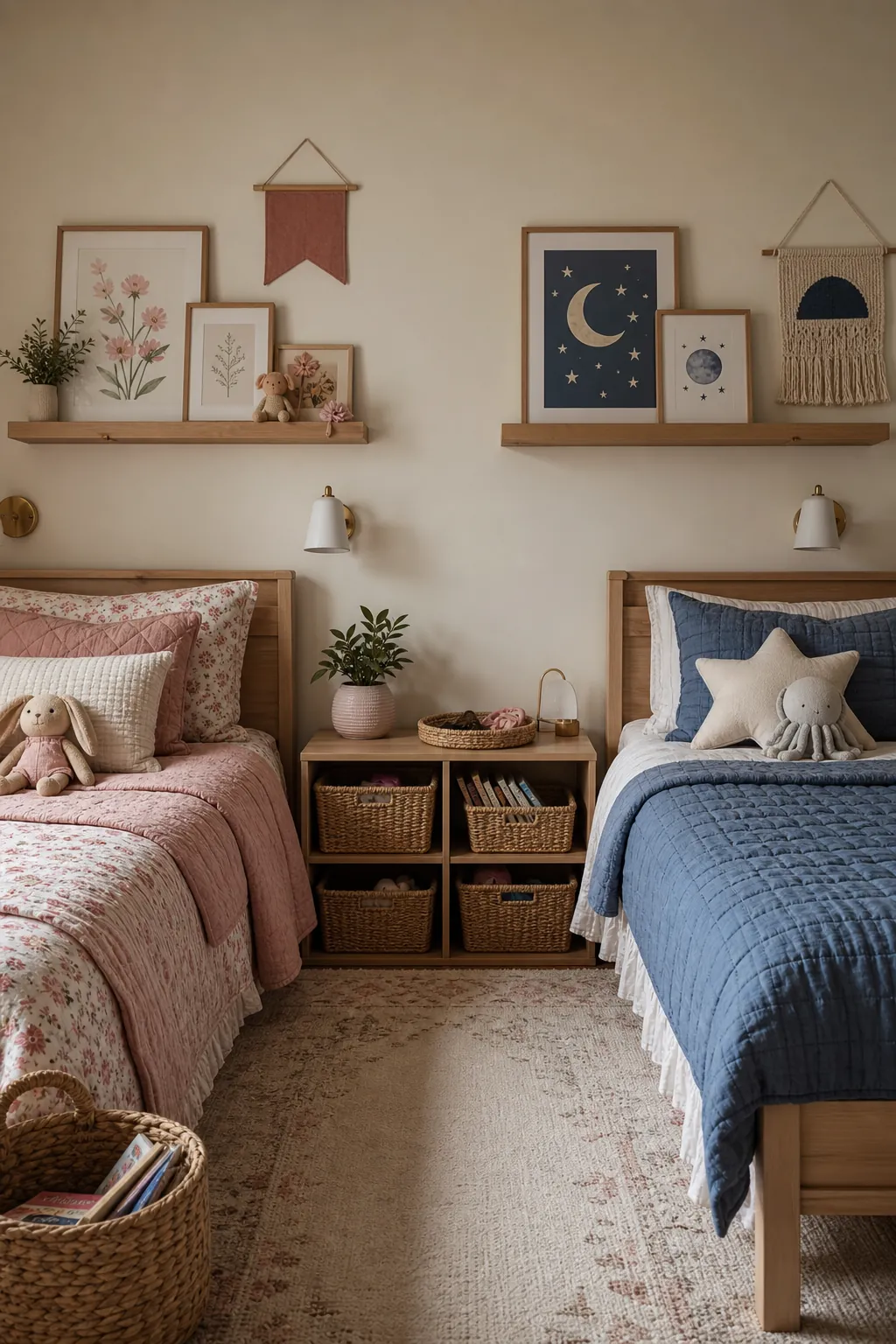
The bed corner is the strongest signal of ownership in a kids bedroom. Even when the beds match, each side should have its own small shelf, reading light, hook, and soft textile. This gives both girls a place for favorite books, hair clips, headphones, stuffed animals, or a small framed print without turning the whole room into a collection zone.
For younger kids, keep the personal corner simple: one wall color accent, one picture ledge, one basket, and one lamp. For older girls, add more choice through bedding, art, or a pinboard. The furniture can match; the details should belong to the child. That balance keeps the bedroom styling cohesive while still giving each girl her own identity.
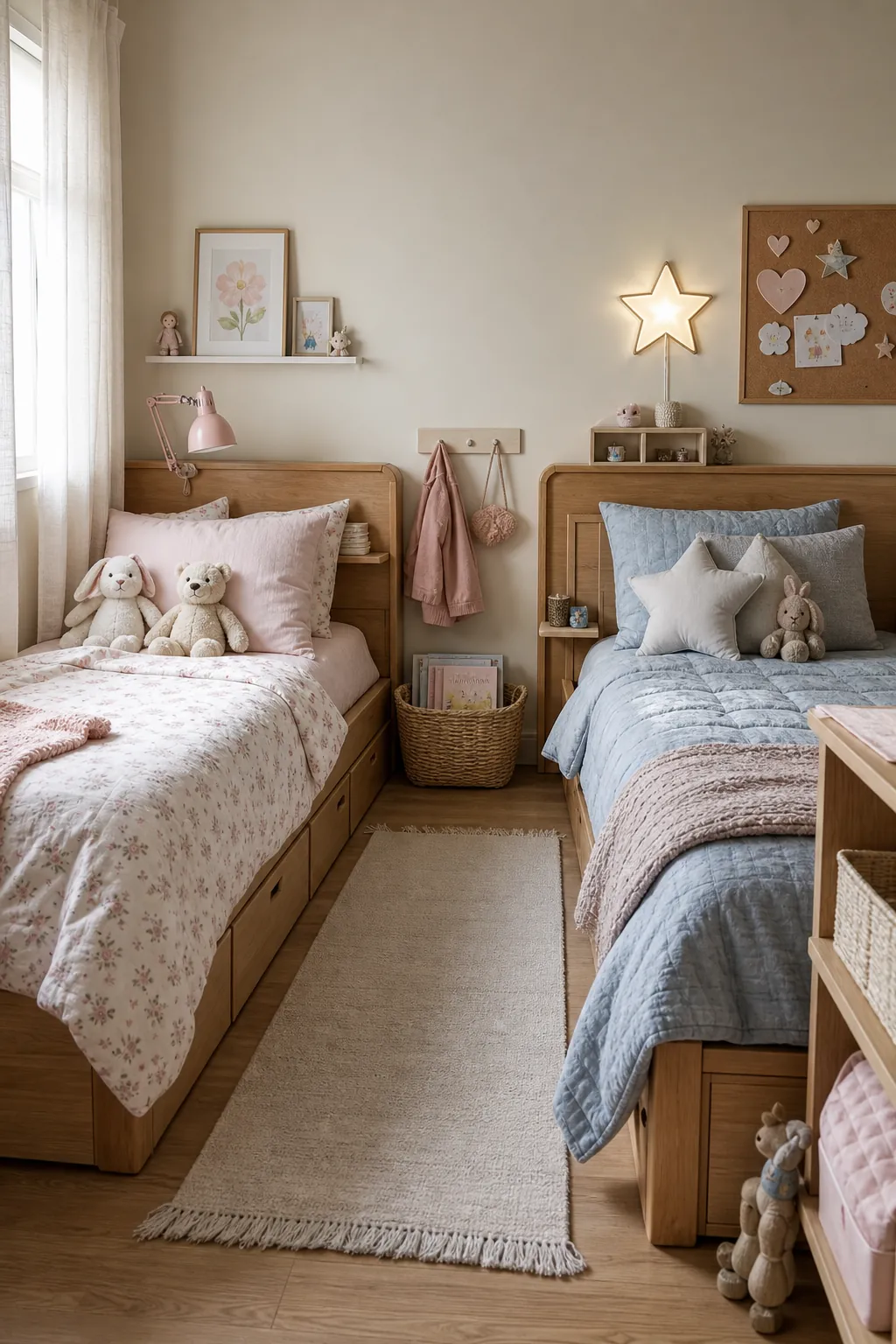
Use Storage As A Soft Divider
Storage ideas matter more in a shared bedroom than almost any paint color. When two kids share one room, clutter does not double neatly; it spreads. A low bookcase, cube organizer, pair of dressers, or open wardrobe can become a soft divider that creates two bedroom zones without closing off light.
The key is to avoid mystery storage. Give each child clearly labeled drawers, bins, or baskets, then keep shared items in the center or closet. Under-bed drawers are useful for off-season clothes and bulky toys. Wall hooks are better for bags, robes, and dress-up pieces because kids can use them without opening a drawer. Storage only works when a tired child can understand it in three seconds.
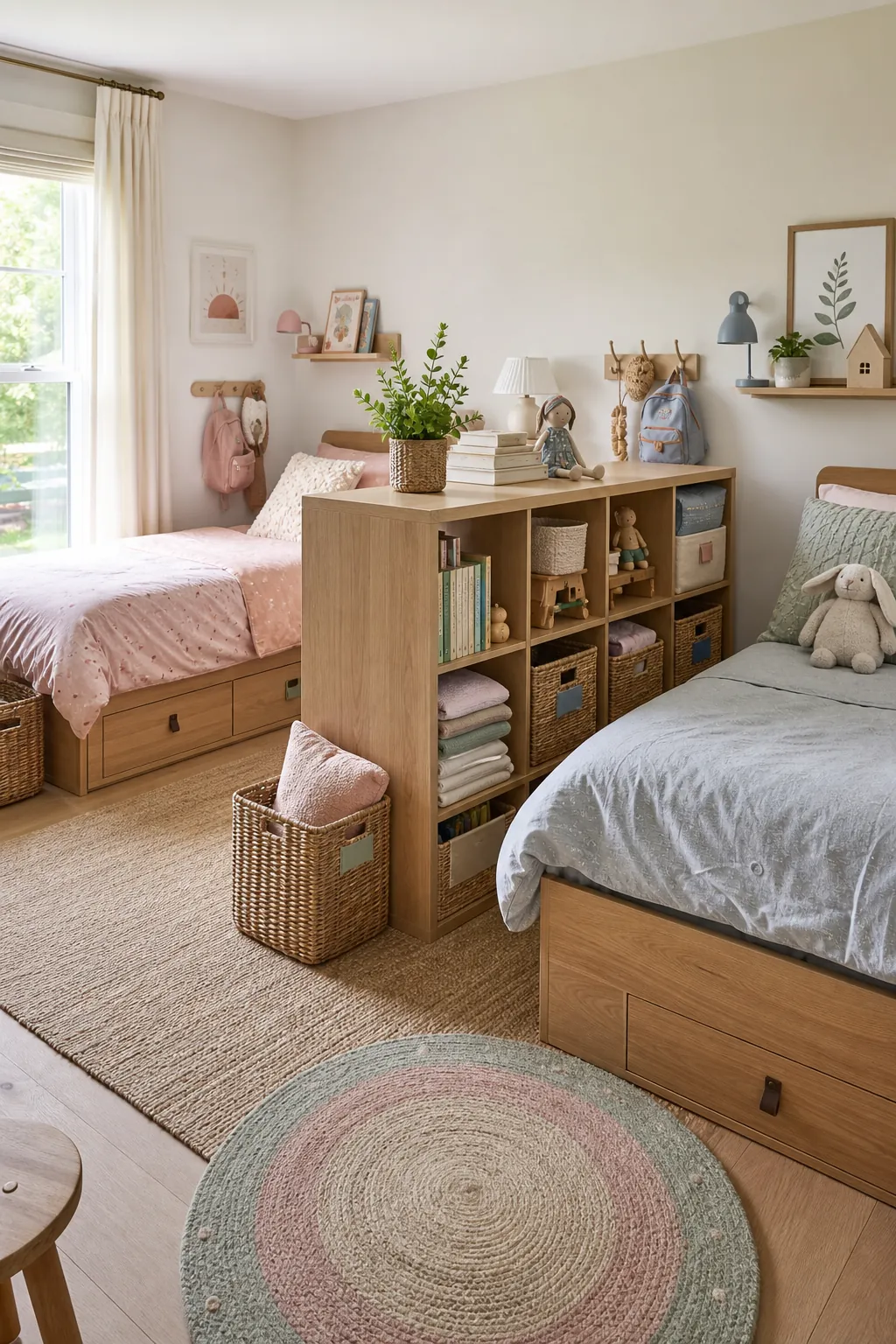
Make Wall Decor Personal But Balanced
Wall decor is where a shared girls bedroom can feel special without needing more square footage. Use the same frame style or shelf style on both sides, then let the art be different. One side might have florals, ballet prints, or soft pastels. The other might have stars, animals, sports, crafts, or brighter colors. Matching the frame, spacing, and scale keeps the room from looking split in half by accident.
If the girls want very different colors, repeat a neutral base across the room: white, warm wood, woven baskets, or one shared rug. Then each personal corner can carry a stronger accent. The room should say sisters share this space, but each girl gets a voice.
Build One Shared Middle Zone
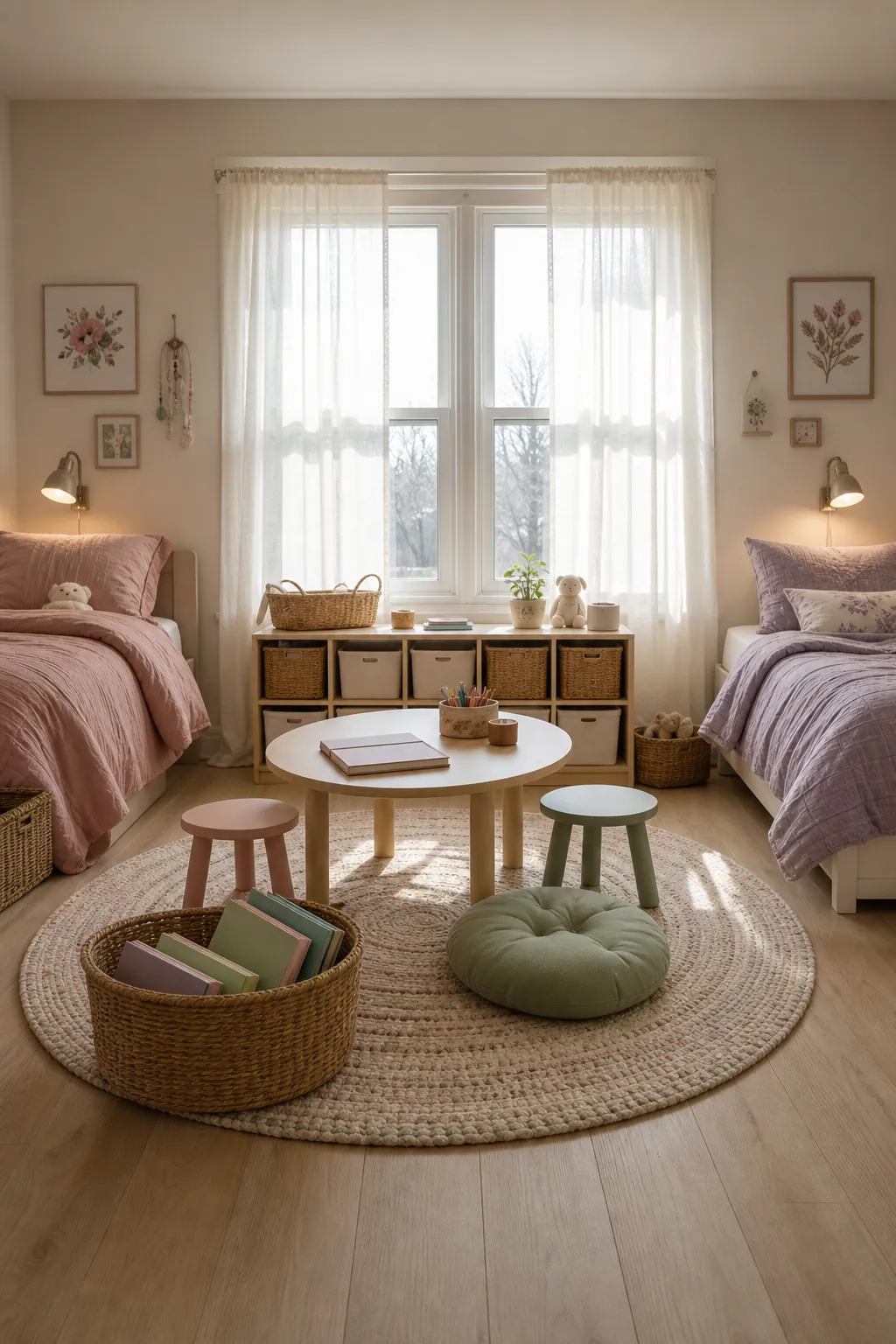
Separate personal corners do not mean the whole room has to become two tiny bedrooms. A shared middle zone keeps the room friendly. Depending on the children’s ages, this can be a play rug, reading nook, dollhouse area, craft table, or small homework desk. The middle zone should hold the activities that belong to both girls, while the corners hold the items that feel private.
This is especially helpful in a small shared kids room. Instead of squeezing in two desks, use one compact table with two stools and wall-mounted supplies above it. Instead of two bulky toy chests, use one open shelf with divided bins. The shared zone should reduce duplicate furniture, not erase personal space.
Create Privacy Without Building A Wall
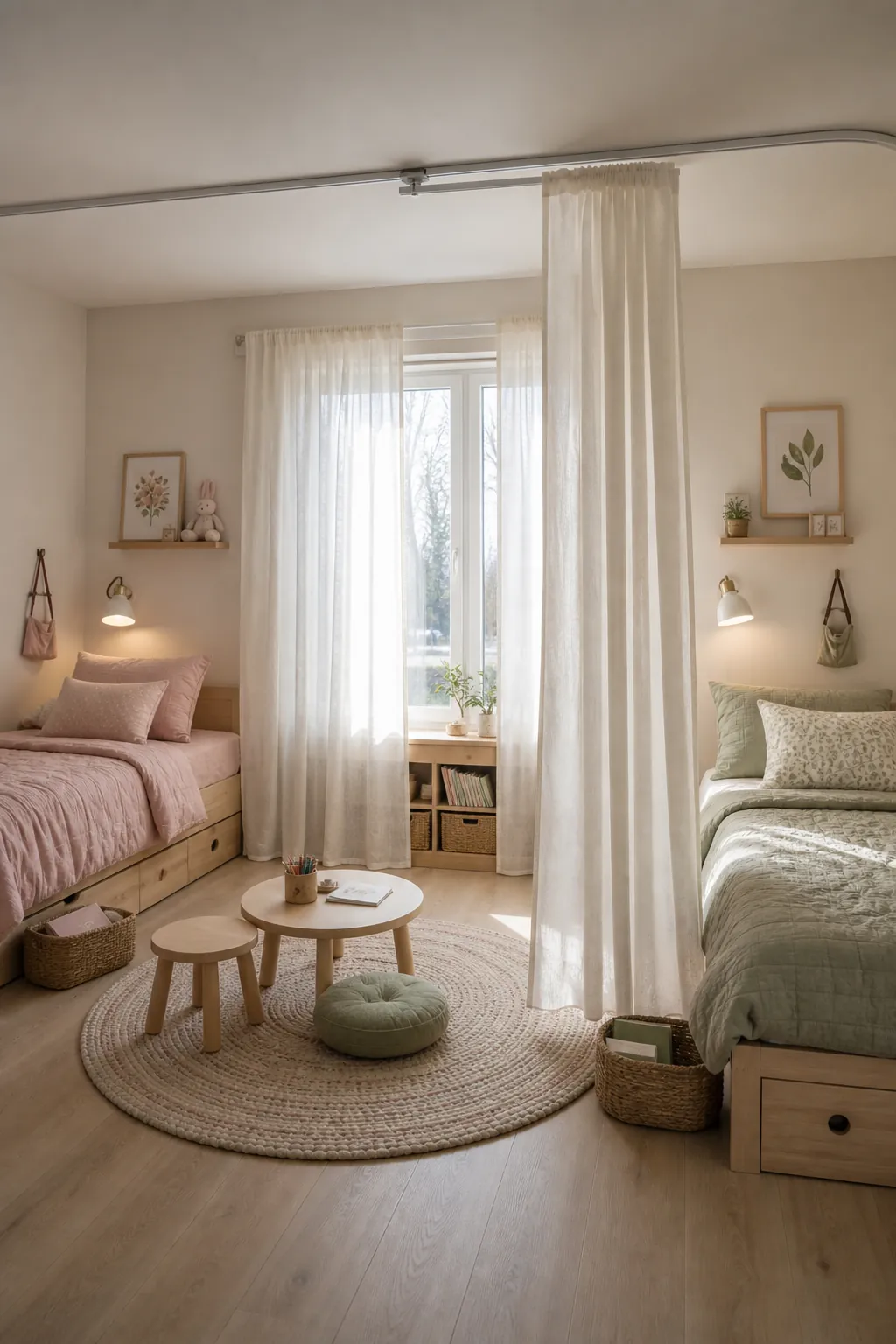
Many kids start asking for separate rooms before the house can offer them. That does not mean the shared bedroom has failed. It usually means the room needs better privacy cues. A ceiling-mounted curtain track, canopy around each bed, tall bookshelf, folding screen, or even a high-backed daybed can create a sense of retreat without making the room dark.
Use privacy features carefully. A curtain works best when it is light, washable, and easy to open. A tall shelf should be stable and not block the only window. A canopy should frame the bed, not swallow the room. Privacy in a shared bedroom is about choice: open when they want company, closed when they need quiet.
Keep The Styling Calm Enough To Grow
The best kids room decor lasts longer when the expensive pieces stay calm. Choose simple beds, practical storage, washable rugs, and flexible lighting. Then use bedding, art, cushions, curtains, and small accessories for personality. Those are easier to change when one child outgrows pink, another wants blue, or both suddenly want a more grown-up bedroom.
A good shared bedroom is not perfectly symmetrical every day. It is a room where cleanup is obvious, bedtime feels fair, and both children can point to a corner that belongs to them. Start with layout, then storage, then personal wall decor, then styling. In that order, a shared girls bedroom can feel organized, warm, and personal without needing a bigger house.