
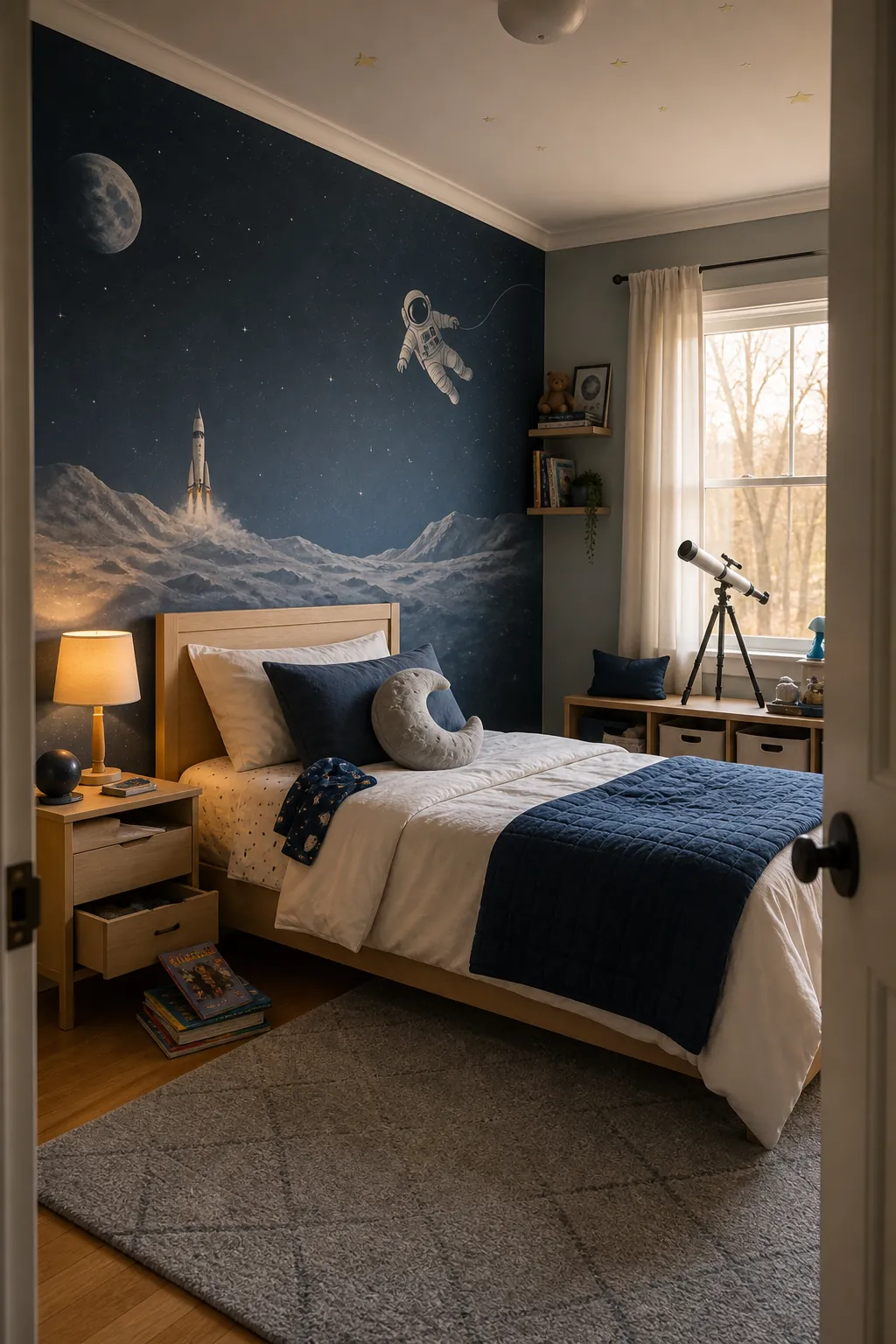
An astronaut bedroom works best when it feels like a place a child can actually live in, not a room that has been turned into a display window. The goal is not to cover every surface with rockets. The stronger approach is to create a space bedroom with one clear story, practical storage, soft lighting, and enough calm space for sleep.
That balance matters because kids use bedrooms in different ways across the day. In the afternoon, the room may become a launch pad, a reading cave, a playroom, or a drawing station. At night, the same room has to settle down. The best astronaut bedroom ideas keep both needs in view: wonder first, clutter second, and sleep always protected.
Start With a Room That Can Calm Down at Night
The easiest mistake with a themed bedroom is making every decision loud. A deep navy wall, a bright galaxy mural, astronaut bedding, planet curtains, star lights, rocket shelves, and glowing decals can all be fun on their own. Together, they can make the room feel restless. A more livable astronaut bedroom starts with a calm base and lets the space details rise from it.
Try giving the bed wall the strongest visual moment, then keeping the remaining walls quieter. A single galaxy wall, painted arch, moon mural, or astronaut print gives the room a focal point without forcing the child to sleep inside a busy pattern. If the room is small, this matters even more. One strong feature wall often feels more imaginative than four competing walls.
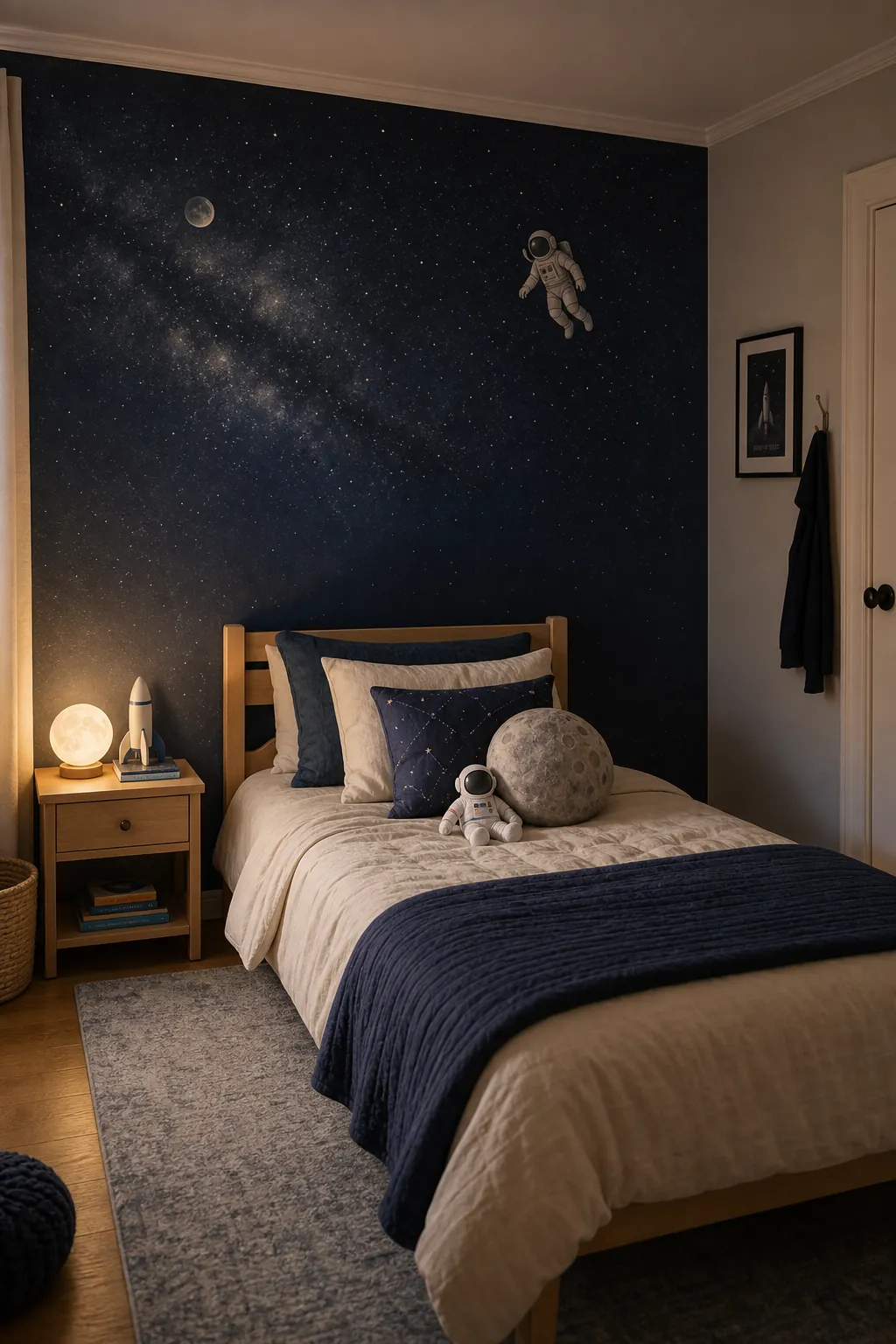
For younger kids, use bigger shapes that are easy to recognize: a crescent moon, a rocket, a few large planets, or one floating astronaut. Older kids may enjoy star maps, mission patches, framed planet prints, or a more realistic night-sky look. The key is matching the detail level to the child. A preschooler may see tiny constellations as random dots, while a curious older child may want the constellations to feel intentional.
Choose One Astronaut Moment, Not a Whole Space Museum
An imaginative room needs a point of view. For an astronaut bedroom, that point of view can be as simple as “mission control at bedtime,” “quiet moon base,” “orbiting reading nook,” or “future explorer’s cabin.” Picking one idea helps every choice feel connected. Without that spine, the room can become a pile of unrelated space decor.
A framed astronaut helmet print above the bed, a moon lamp on the nightstand, and star sheets can say more than a room filled with every possible space object. This is especially useful for parents who want boys room decor or kids room styling that still looks tidy from the hallway. The theme should be easy for a child to recognize and easy for an adult to maintain.
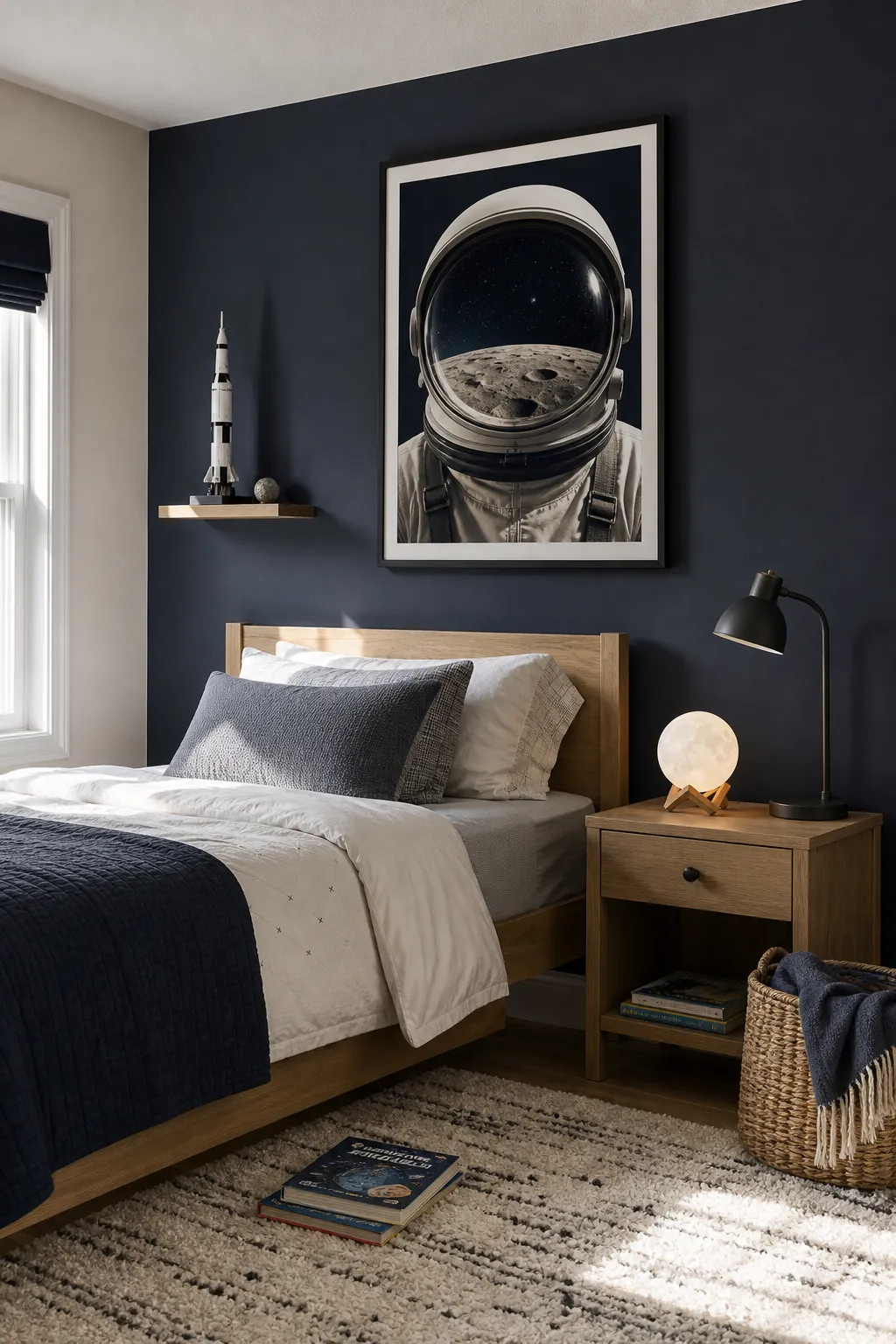
If the child already has space bedding, use it as the starting point instead of buying a complete matching set. Pull one color from the bedding into a lamp, rug, or wall shelf. Let another color stay neutral. This makes the room feel designed rather than overmatched. It also makes the theme easier to refresh later if the child moves from astronauts to planets, dinosaurs, sports, or something completely different.
Use the Ceiling as the Magic Layer
The ceiling is often the best place to make a space bedroom feel special. It is visible from bed, it does not steal floor space, and it can turn the bedtime routine into something memorable. Glow stars, a soft projector, painted constellations, or a simple moon-and-stars pattern can give the room its astronaut feeling without crowding the walls.
The trick is to keep the glow gentle. A bedroom should not feel like an arcade when the lights go out. Place glow stars in loose clusters instead of perfect rows. Let one corner feel denser, then fade the stars out across the ceiling. If using a projector, treat it as a bedtime tool, not all-night lighting. Soft wonder beats bright spectacle in a room meant for sleep.
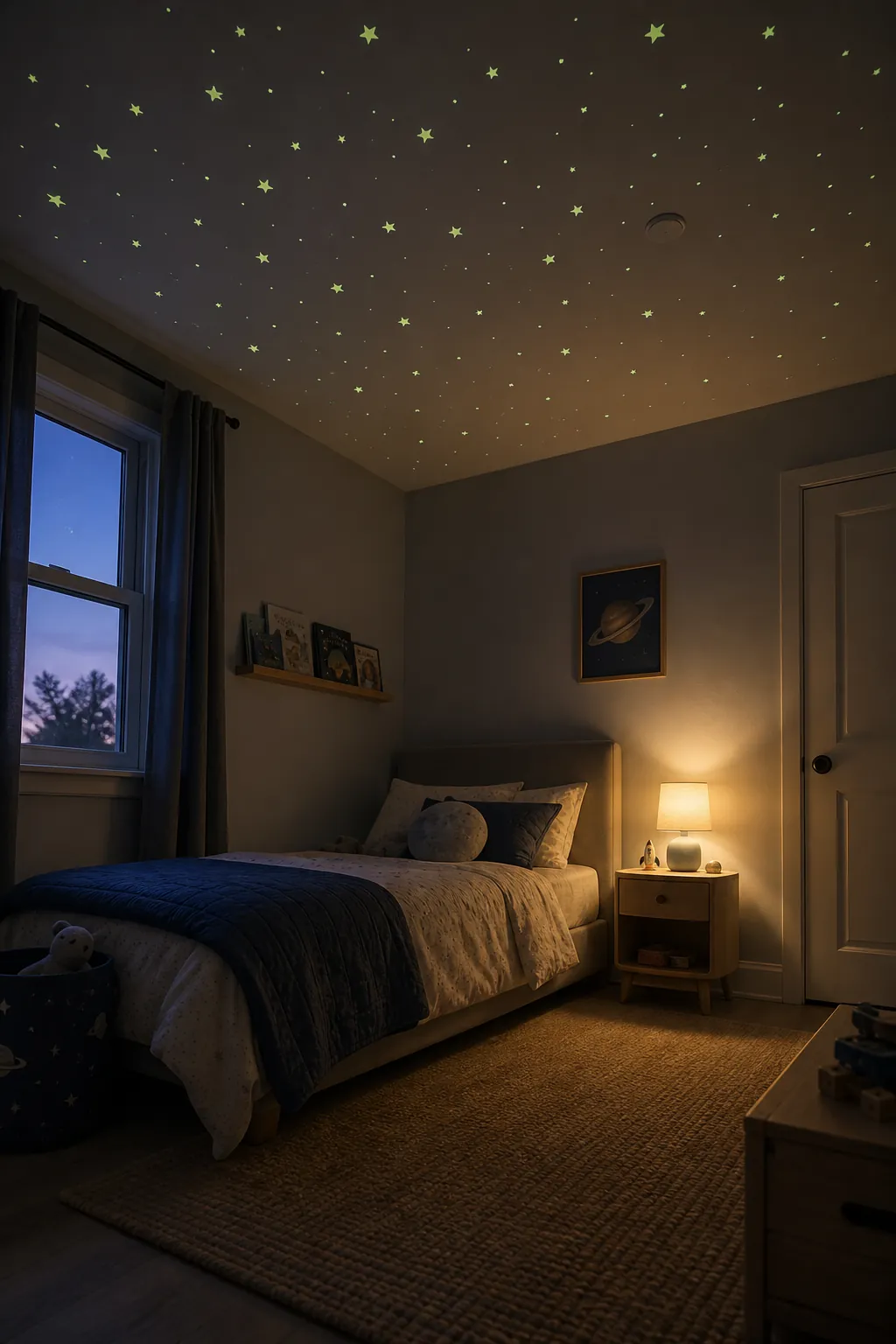
A ceiling treatment also works well for renters because it can be temporary. Peel-and-stick stars, removable decals, or lightweight paper planets can create a themed bedroom without paint or permanent wallpaper. If you do hang anything overhead, keep it well away from the bed and use secure hardware. For a child’s room, visual magic should never depend on anything fragile, heavy, or loose above where they sleep.
Make Wall Art Personal and Easy to Change
Kids wall decor is where an astronaut room can become more than a store-bought theme. A child’s drawing of a rocket, a framed print of the moon, a small gallery of planet art, or a photo-style astronaut poster can all work. The room feels more loved when at least one piece looks personal instead of perfectly coordinated.
Use frames, ledges, cork strips, or shallow picture shelves so art can rotate as the child grows. This solves a common parent concern: kids often change their mind faster than a full bedroom makeover can keep up. If the astronaut theme lives mostly in wall art, bedding, lamps, and a few accessories, it is much easier to evolve.
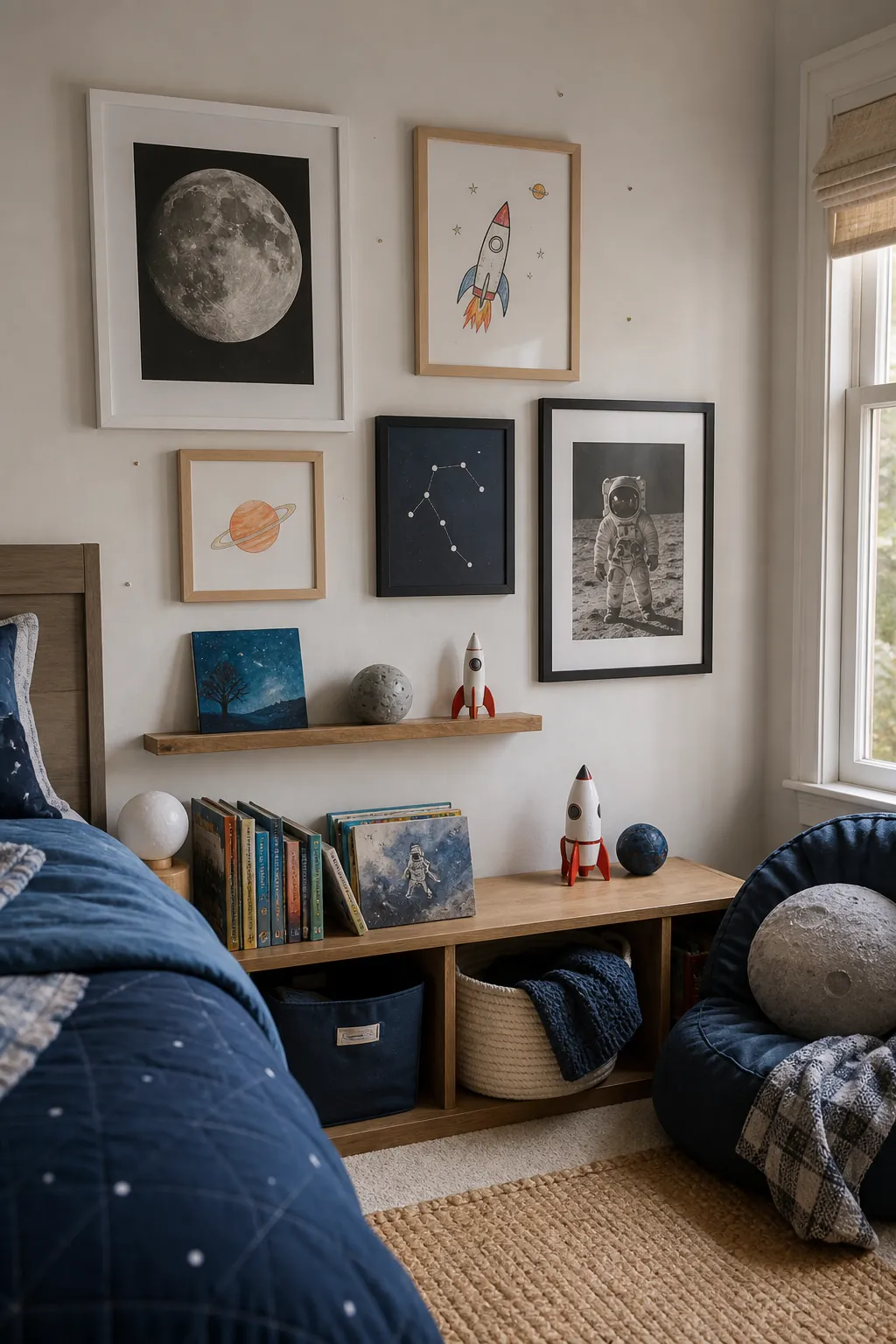
For a more polished look, keep the frames consistent and vary the art inside them. For a playful look, mix frame sizes and include one three-dimensional object, such as a small model rocket on a ledge. Avoid placing precious or glass-heavy pieces low on the wall in a busy playroom decor zone. The lower the wall, the more kid-proof the decor should be.
Keep the Color Palette Grounded
Astronaut bedrooms often default to dark blue, black, silver, and neon. Those colors can work, but the room usually feels better when they are softened with warm neutrals, pale wood, off-white bedding, muted green, clay, or soft gray. A grounded palette keeps the theme from feeling harsh and gives toys, books, and wall art room to breathe.
If the child wants a dark wall, consider using it behind the bed or on the lower half of the room with a lighter color above. This keeps the room from closing in, especially in a small kids bedroom. Another option is to use a lighter wall color and bring the space theme through navy pillows, a lunar rug, a rocket lamp, or framed wall art.
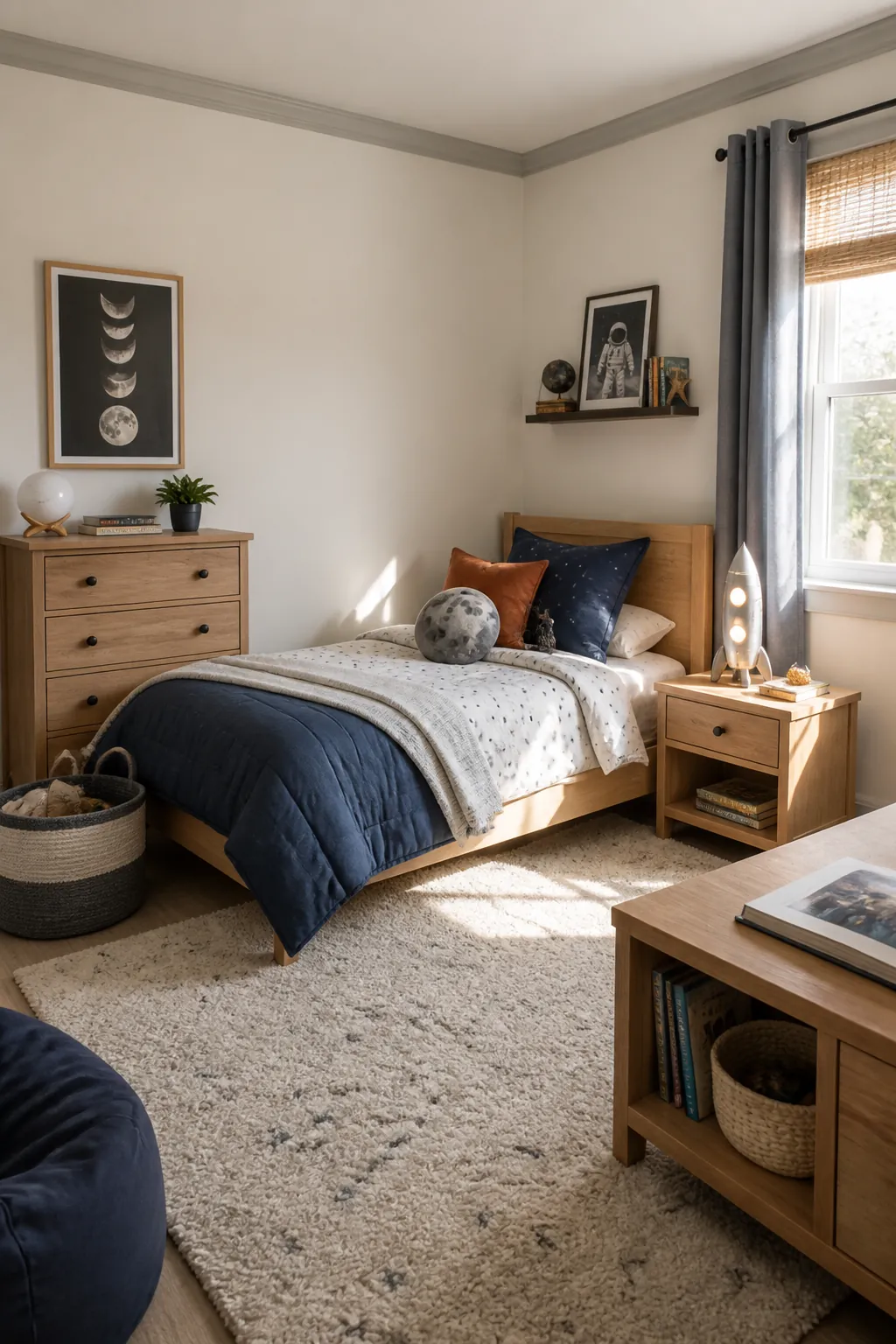
The best test is simple: remove the themed accessories in your mind. Would the room still feel pleasant? If yes, the base is strong. If no, the room may be leaning too hard on novelty. An imaginative room lasts longer when the furniture, colors, and lighting still make sense without the theme.
Build Storage Into the Mission
A space room still needs places for pajamas, books, craft supplies, stuffed animals, blocks, and random treasures from the floor. Storage is not the boring part of the design. In a kids bedroom, storage is what keeps the theme visible. When the floor is buried, the astronaut bedroom disappears.
Use low bins for toys the child can reach, a small shelf for favorite books, and a few display spots for the space objects that matter most. Clear or labeled bins can become “moon rocks,” “mission tools,” or “planet parts” without buying novelty furniture. Wall shelves are useful, but heavy shelves, dressers, and bookcases should be properly secured. Anything a child might climb, pull, or lean on needs safety before styling.
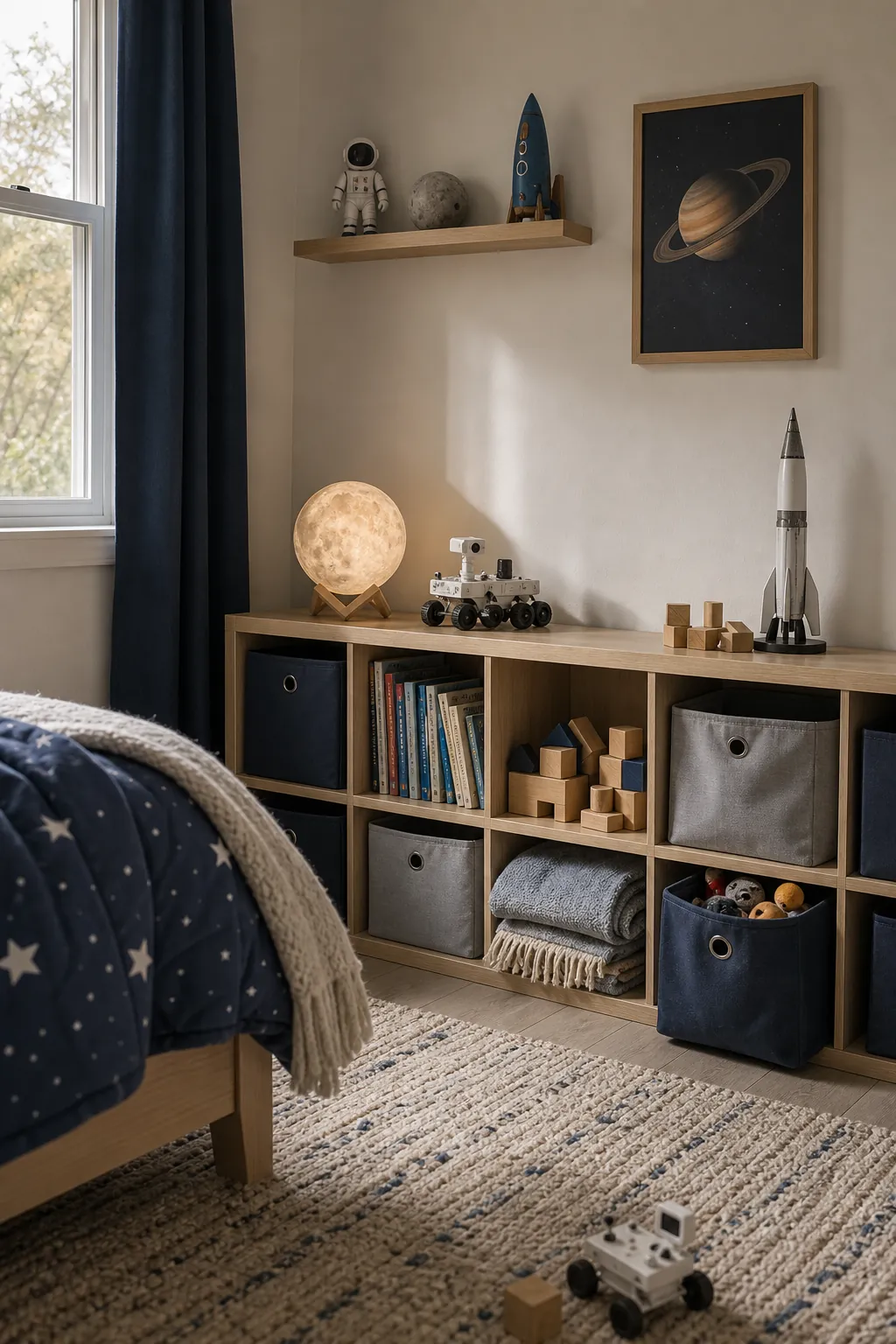
For small rooms, think vertically but keep daily-use items low. Put display pieces and seasonal decor higher, then keep books, pajamas, and favorite toys within reach. This lets the room work as both a bedroom and an imaginative room without turning cleanup into a nightly argument.
Add a Reading or Launch Pad Corner
The most memorable part of an astronaut bedroom may be a tiny corner, not the biggest purchase. A floor cushion under a planet mobile, a bean bag beside a bookshelf, or a curtain beside the bed can become the place where the child reads, listens to stories, draws rockets, or plans imaginary missions.
This corner does not need much. Use a washable rug, two soft pillows, a small wall light, and a reachable shelf. Add one piece of wall art that gives the corner a name, such as a moon print, a constellation map, or an astronaut floating above the books. A small launch pad gives the theme a daily use beyond looking cute.
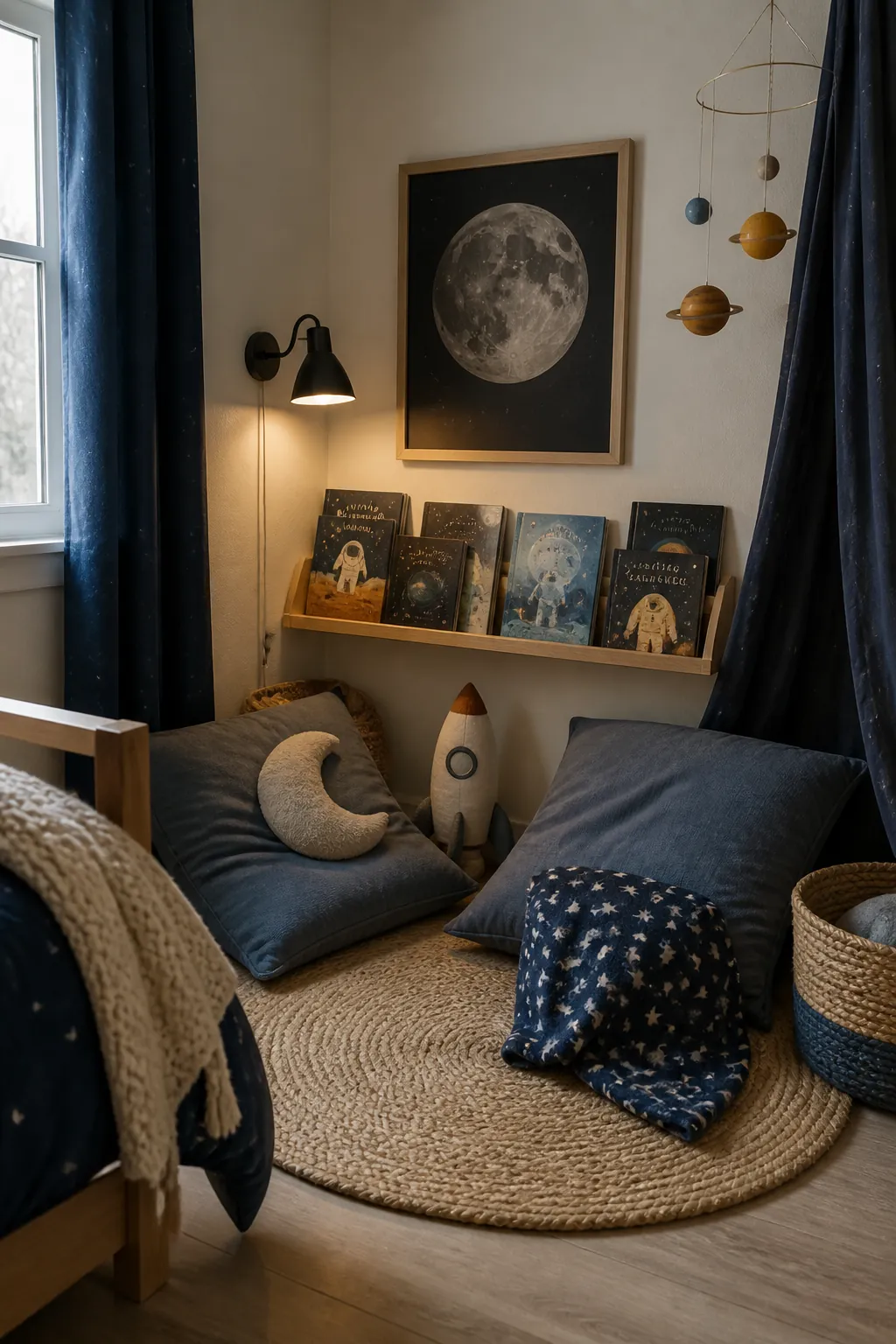
If the room doubles as a playroom, this corner can also act as a visual boundary. The bed stays calmer, the floor has a place for play, and the shelf gives small treasures somewhere to land. That separation is useful in themed rooms because it keeps the excitement from spreading everywhere.
Make the Theme Grow With Your Child
The best astronaut bedroom is not frozen at one age. A toddler may love big rockets and glow stars. A school-age child may want planets, facts, maps, and a desk for drawing or building. An older child may prefer a quieter space bedroom with subtle lunar art, deep colors, and better lighting. Design the room so the expensive pieces can survive those changes.
Keep the bed frame, dresser, rug, and main curtains flexible. Let the astronaut theme live in pieces that are easier to swap: bedding, posters, decals, lamp shades, knobs, pillows, and display shelves. This is the difference between a themed bedroom that becomes dated and a room that can keep absorbing the child’s interests.
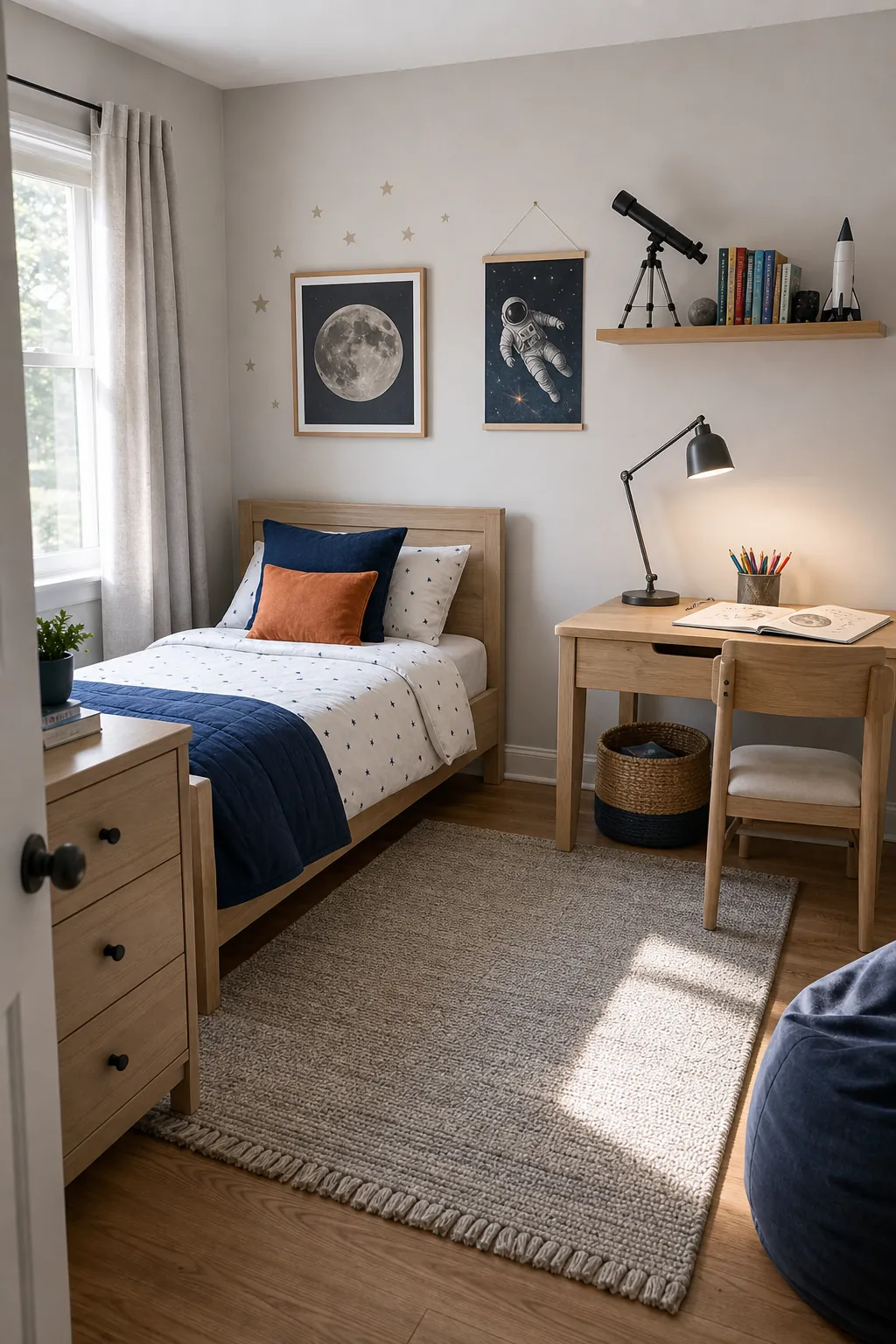
That flexibility also gives the child more ownership. Leave room for their drawings, favorite books, souvenirs, and odd little collections. A room that feels imaginative is not perfectly staged. It has a few surprises, a few practical decisions, and enough open space for the child to add their own story.
The Room Should Invite Imagination, Then Sleep
If there is one rule for astronaut bedroom ideas, it is this: build the room around the child, not around the theme. The astronaut details should make the room feel brave, curious, and playful. The layout should still make bedtime easy, cleanup possible, and the room comfortable when the lights are off.
Start with one strong space moment, keep the palette grounded, use the ceiling for quiet magic, make the wall art personal, and give storage a real role. That is how an astronaut bedroom becomes more than a themed room. It becomes a place where imagination can take off and still come home to rest.